
Journalist

Lee Hugh
=
-
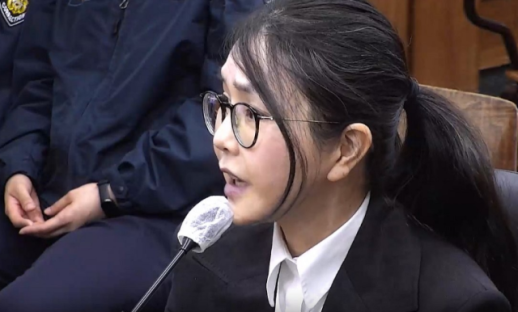 Kim Keon Hee case heads to South Korea’s top court as both sides appeal The special counsel team led by Min Jung-gi has taken to the Supreme Court the case of Kim Keon Hee, who was sentenced on appeal to four years in prison over allegations including Deutsche Motors stock manipulation and receiving valuables tied to the Unification Church. Kim’s side had already filed an appeal, setting up a final round of arguments over guilt and sentencing. According to the legal community on Monday, the special counsel filed its notice of appeal with the Seoul High Court’s Criminal Division 15-2, which heard the second trial. Kim’s attorneys filed their appeal on April 30. On April 28, the appeals court sentenced Kim to four years in prison and fined her 50 million won on charges of violating the Capital Markets Act, violating the Political Funds Act and bribery for influence-peddling under the Act on the Aggravated Punishment of Specific Crimes. The court also ordered forfeiture of one seized Graff diamond necklace and imposed an additional 20.94 million won in collection. The prison term was increased by two years and four months from the first trial’s sentence of one year and eight months. A central issue on appeal was the Deutsche Motors stock-manipulation allegation, which the first court had found not guilty in full. The appeals court found Kim guilty in part, ruling that in October and November 2010 she provided Black Pearl Invest with a securities account holding 2 billion won and sold 180,000 shares of Deutsche Motors stock, acts the court said amounted to participation in price manipulation. The court said Kim had at least been aware that the account could be used for manipulation. The appeals court also broadened the scope of guilt on the Unification Church-related influence-peddling charge. It found Kim guilty of receiving, from April to July 2022, two Chanel bags, a Graff necklace and Cheonsusam concentrated tea along with requests to support church-related issues. Parts of that allegation had been found not guilty at the first trial. However, as in the first trial, the appeals court acquitted Kim of violating the Political Funds Act over allegations that she received free public-opinion polling worth 270 million won from Myeong Tae-gyun and used influence in the nomination of former People Power Party lawmaker Kim Young-sun. The court said it was difficult to conclude Kim and her husband gained a financial benefit equivalent to the polling costs because Myeong provided polls to multiple people, not only the couple. That acquittal is expected to be a key point in the special counsel’s appeal, with prosecutors likely to argue the appeals court misread facts and misapplied the law. Kim’s side is expected to challenge the guilty findings on the Deutsche Motors and Unification Church allegations. The appropriateness of the sentence is also likely to be contested. While the appeals court more than doubled the first-trial prison term, it fell short of the 15-year sentence the special counsel sought in closing arguments at both trials. The special counsel has also appealed other related rulings. It filed an appeal on April 30 in the case of Yoon Young-ho, a former Unification Church international headquarters chief, who was indicted over allegations including providing valuables while seeking favors tied to church issues involving Kim and People Power Party lawmaker Kwon Seong-dong. Yoon received a 1 1/2-year prison term on appeal on April 27, increased from one year and two months at the first trial. The special counsel also appealed on Monday in the case of Kim Ye-seong, described as a key figure in the so-called “butler gate” case, who was indicted on embezzlement charges. The appeals court found Kim not guilty and dismissed part of the prosecution, and the special counsel asked the Supreme Court to review that decision.* This article has been translated by AI. 2026-05-04 11:30:18
 -
 U.S. Catholic Churches Draw Gen Z as Mass Attendance and Baptisms Rise Catholic churches in the United States are drawing growing interest among young people, The Wall Street Journal reported May 3. The trend has been compared to the way Buddhism in South Korea has gained a “cool religion” image among younger generations in recent years. The Journal visited St. Joseph’s Church in Lower Manhattan, where the 6 p.m. Sunday Mass was packed. Some worshippers sat on balcony steps or leaned against walls through the 90-minute service. When it came time for Communion, the narrow aisles became difficult to navigate because of the crowd. Many of those attending had first gone to a nearby pizza shop for a gathering called “Pizza to Pew.” Young adults meet, eat pizza and talk, then walk together to church. The Journal said some come as far as Boston by train. For some, church has become part of a weekend routine and a place for spiritual community; some also attend in hopes of meeting a date. Citing the Barna Group, which studies religion in the United States, the Journal reported that Gen Z Christians attend church more than members of Generation X, millennials or baby boomers. Barna has tracked monthly attendance since 2020 and said that in 2025, young people went to church on weekends twice a month, the highest level in five years. The Journal also noted rising interest in religion among young men over the past three years. As of April last year, 42% of young men in the United States said religion is important, up 14 percentage points from 28% in a 2023 survey and higher than the share among women, it said. Some older Catholics who emphasize doctrine and tradition may have concerns. According to a Catholic newspaper, canon law says Catholics should abstain from food and drink for one hour before receiving Communion, except for water and medicine. It also says spiritual life and faith should come before social gatherings at church. Clergy, however, have encouraged the influx of young worshippers. In a recent homily, a priest said, “There is only one reason to attend Mass: the Lord’s love,” adding that he had heard people had other reasons as well. As laughter spread through the pews, he added that “the thrill of falling in love with a beautiful woman” could be strong, too. Videos of religious figures encouraging young churchgoers at pizza gatherings are also easy to find on TikTok. As Catholicism gains popularity among young people, the number of new members is rising. At St. Joseph’s in New York, 90 people were baptized and received First Communion this Easter. At nearby Old St. Patrick’s Cathedral, 70 were baptized. Both totals were double the previous year. The New York Times reported that 1,428 new members were baptized in the Archdiocese of Detroit this Easter, the highest figure in 21 years. Some have linked the rise to the inauguration of Leo XIV, the first pope from the United States, the paper said. Mitchell Thomas Rozanski, archbishop of St. Louis, said technology has isolated people and the COVID-19 pandemic deepened that isolation. “In an era full of uncertainty and anxiety, people are returning to faith to satisfy their thirst for the Lord,” he said. Cardinal Robert McElroy of the Archdiocese of Washington told CBS, “Unfortunately, we live in a world without moral leaders,” adding that this is drawing young people, especially young adults, to church. According to Pew Research Center, the United States has 53 million Catholics, and 8% are converts from other religions.* This article has been translated by AI. 2026-05-04 11:13:06
 -
 KOSPI Jumps More Than 3% as Foreign and Institutional Buying Lifts Seoul Stocks South Korean stocks surged in intraday trading Monday, led by semiconductor shares, with the benchmark KOSPI rising more than 3% and setting a fresh record high. As of 11:02 a.m., the KOSPI was up 242.98 points, or 3.68%, at 6,841.85, according to the Korea Exchange. The index opened up 184.06 points, or 2.79%, at 6,782.93 and extended gains on foreign buying. In the main market, foreigners and institutions were net buyers of 2.3264 trillion won and 1.2675 trillion won, respectively, while individuals were net sellers of 3.4957 trillion won. Among top market-cap stocks, Samsung Electronics rose 3.63%, SK hynix gained 8.94% and SK Square jumped 12.72%. Hyundai Motor added 1.51%, LG Energy Solution rose 2.28%, Hanwha Aerospace gained 3.11% and HD Hyundai Heavy Industries advanced 1.75%. Doosan Enerbility slipped 0.31% and Samsung Biologics fell 0.34%. The tech-heavy KOSDAQ was up 24.57 points, or 2.06%, at 1,216.92 at the same time. It opened up 19.93 points, or 1.67%, at 1,212.28. In the KOSDAQ market, foreigners and institutions were net buyers of 602.7 billion won and 10.3 billion won, respectively, while individuals were net sellers of 605.9 billion won. Among leading KOSDAQ shares, EcoPro rose 2.22%, EcoPro BM gained 4.37%, Alteogen added 3.80%, Rainbow Robotics rose 3.46%, Kolon TissueGene gained 2.45% and HLB advanced 2.14%. Samchundang Pharm fell 2.41%, Lino Industrial slipped 1.34% and ABL Bio lost 0.59%.* This article has been translated by AI. 2026-05-04 11:12:06
 -
 Fed’s Kashkari Says Next Rate Move May Not Be a Cut The Middle East war and a resulting oil shock could alter the Federal Reserve’s interest-rate path, a Fed official warned. According to Reuters on May 4, Neel Kashkari, president of the Federal Reserve Bank of Minneapolis, said economic uncertainty has increased because of the war involving Iran, making it harder for the Fed to give clear signals about the direction of future rates. He said that if disruptions to crude oil supplies through the Strait of Hormuz persist, inflation pressures could intensify. In that case, he indicated, policymakers should factor in not only the possibility of rate cuts but also rate hikes. Kashkari also said the Federal Open Market Committee should revise its policy language. Bloomberg reported that he said the Fed needs to make clear to markets that the next rate move could be either a cut or a hike. He suggested that language that only leaves the door open to future cuts does not adequately reflect surging oil prices and inflation uncertainty. At its April meeting, the Fed held its benchmark rate at 3.50% to 3.75%, but its statement retained some wording that left open the possibility of future cuts. Kashkari, Cleveland Fed President Beth Hammack and Dallas Fed President Lorie Logan opposed that wording, underscoring renewed differences within the Fed over the path of rates.* This article has been translated by AI. 2026-05-04 11:06:16
 -
 KOSPI tops 6,800 on AI-driven chip rally amid easing Hormuz tensions SEOUL, May 04 (AJP) - South Korea’s benchmark KOSPI jumped more than 3 percent at the open on Monday to test a new plateau above 6,800 on strong institutional buying in chip and other large-cap stocks. Market sentiment was also influenced by geopolitical developments after U.S. President Donald Trump said the United States would begin safely escorting ships from “neutral and innocent” countries through the Strait of Hormuz under a new initiative referred to as “Project Freedom.” He described the move as a humanitarian effort but warned that the U.S. would respond strongly to any interference, while also noting ongoing positive discussions with Iran. As of 10:42 a.m., South Korea’s benchmark KOSPI rose 3.40 percent to 6,822.94. Shares of SK hynix and its largest shareholder SK Square surged in early trading, supported by improved investor sentiment driven by strong earnings from global Big Tech firms and growing investment in artificial intelligence infrastructure. The chipmaker was 8.7 percent higher at 1,399,000 won, hitting an intraday record high, while SK Square jumped 12.84 percent to 949,000 won. Among other heavyweights, tech shares led the gains, with Samsung Electronics rising 2.15 percent and its preferred shares up 2.84 percent, while Samsung Electro-Mechanics climbed 5.17 percent. Auto stocks were also strong, with Hyundai Motor and Kia gaining 1.88 percent and 2.83 percent, respectively. In the industrial and defense sector, Hanwha Aerospace rose 4.02 percent and HD Hyundai Heavy Industries added 1.17 percent, while Doosan Enerbility slipped 0.71 percent. Battery makers showed modest gains, with LG Energy Solution up 1.41 percent and Samsung SDI rising 1.29 percent. Biotech and financial stocks were mixed, as Samsung Biologics fell 0.61 percent and KB Financial Group declined 1.25 percent, while Samsung Life Insurance edged up 1.20 percent. On the junior KOSDAQ, most major stocks traded higher, with the index up 1.93 percent to 1,215.35, led by battery and materials names such as EcoPro and EcoPro BM, which gained 2.94 percent and 4.13 percent, respectively. Pharmaceutical and biotech stocks also advanced, including Alteogen, HLB, ABLBio and LigaChem Biosciences, which rose 2.44 percent, 2.14 percent, 0.07 percent and 0.87 percent, respectively, alongside Peptron, up 3.07 percent. Industrial and equipment-related shares also moved higher, with Rainbow Robotics gaining 3.77 percent, LEENO Industrial up 0.25 percent, Kolon TissueGene climbing 4.12 percent, Jusung Engineering edging up 0.24 percent and Wonik IPS rising 1.37 percent. Only Samchundang Pharm bucked the trend, slipping 0.36 percent. Meanwhile, the Korean won strengthened to 1,472.40 per dollar from 1,483.30 in the previous session. Elsewhere in Asia, Hong Kong’s Hang Seng Index rose 1.74 percent to 26,225.42. Japan’s Nikkei 225 was closed on Monday for Greenery Day, while China’s Shanghai Composite Index remained closed for the Labor Day holiday period. 2026-05-04 11:01:37
 -
 Gold Holds Steady as Markets Watch U.S. Hormuz Shipping Plan, U.S.-Iran Talks International gold prices were little changed as investors weighed a U.S. plan to steer some ships away from the Strait of Hormuz and hopes for progress in U.S.-Iran talks. Demand for safe-haven assets eased somewhat, but gold avoided a sharper drop as energy prices stayed elevated, tempering expectations for interest-rate cuts in major economies. Bloomberg reported that spot gold in Singapore trading on Monday morning was $4,609.23 an ounce (about 6.78 million won), down 0.1%. It traded around $4,620 an ounce (about 6.80 million won) during the session. Gold has posted a second straight weekly decline and is down about 12% since the outbreak of war in late February. Markets are focused on U.S. President Donald Trump’s Hormuz initiative. Trump said on social media the previous day that the United States would begin, from the 5th, guiding some vessels not related to the Iran conflict away from the Strait of Hormuz. He also said “positive talks are underway” with Iran. Tensions, however, have not fully eased. Trump previously suggested Iran’s latest peace proposal alone might not be enough. If energy prices rise further due to the war, inflation pressure could build again, weakening expectations for rate cuts by major central banks. That would weigh on non-yielding gold. U.S. fiscal and monetary policy events this week are also in focus. Investors are watching the Treasury’s borrowing plans for the next three months, remarks from Federal Reserve officials, and key economic releases including monthly employment data. The updates are expected to offer clues on the future path of interest rates and the direction of the U.S. fiscal deficit. Over the medium to long term, bullish views on gold remain. The World Gold Council said central bank gold purchases in the first quarter rose 17% from the previous quarter to 243.7 metric tons. Bloomberg said that was the fastest pace of increase in more than a year. Bloomberg also reported that Tether Holdings has continued buying gold and has become the world’s largest known holder outside banks and governments. At the same time, spot silver rose 0.3% to $75.57 an ounce (about 110,000 won), while platinum and palladium also gained. The Bloomberg Dollar Spot Index fell 0.1%. The index tracks the dollar’s value against currencies of major trading partners.* This article has been translated by AI. 2026-05-04 10:55:01
 -
 Gas Explosion Injures Resident at Apartment in Eumseong During City Gas Hookup A gas explosion at an apartment in Daeso-eup, Eumseong County, North Chungcheong province, injured a resident in their 30s at about 9:40 a.m. on May 4, authorities said. The resident, identified only as A, suffered minor injuries and was taken to a nearby hospital for treatment. Officials said the injuries were not life-threatening. Yonhap News Agency reported the blast appeared to have occurred inside the unit. A had moved in the day before and called a company to start city gas service. A was quoted as saying, in effect, that gas hookup work was being done after the move. Authorities are investigating possible causes, including a gas leak and equipment problems. An Eumseong County official said emergency safety steps were completed, including immediately cutting off gas supply to the unit. No additional injuries or damage spreading to nearby units had been confirmed as of Monday. Officials said they will conduct an on-site inspection to determine the exact cause and carry out checks aimed at preventing similar accidents.* This article has been translated by AI. 2026-05-04 10:54:14
 -
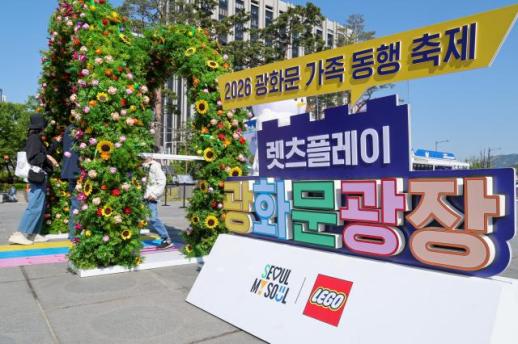 No Children's Day without LEGO: Gwanghwamun turns into brick playground SEOUL, May 04 (AJP) -For Koreans, Children’s Day and LEGO are nearly inseparable — a pairing as familiar as balloons, picnic mats and spring sunshine. At Gwanghwamun Square over the weekend, that bond unfolded on a citywide scale as the “2026 Gwanghwamun Family Festival – Let’s Play Gwanghwamun” transformed the heart of Seoul into a sprawling outdoor LEGO playground packed with families, strollers and towering brick creations. Organized with the Seoul Metropolitan Government and LEGO Korea, the festival featured installations made from some 6 million LEGO bricks, turning one of Seoul’s busiest civic spaces into a colorful landscape of imagination and noise. Children crouched over giant building tables assembling miniature cities, while parents — many appearing just as absorbed — helped snap pieces into place with competitive seriousness. Elsewhere, families raced LEGO cars down custom-built tracks or hurried through relay-style missions designed to turn play into teamwork. The square moved with the rhythm of a holiday carnival. Giant mascots wandered through crowds, stage performances echoed against surrounding government buildings and long lines formed at photo zones where children posed proudly beside oversized LEGO sculptures. The festival’s free-flowing layout encouraged visitors to wander without a fixed course, allowing families to drift naturally between activities much like children moving from one toy to another at home. For many parents in their 30s and 40s, the festival also carried a layer of nostalgia. LEGO, once a prized Children’s Day gift of their own childhoods, has become a shared ritual passed to another generation — one of the rare toys capable of surviving changing trends, screens and short attention spans. The festival continues through May 5 from 11 a.m. to 7 p.m., keeping central Seoul briefly suspended in the bright logic of childhood: build freely, play loudly and never underestimate the power of a small plastic brick. 2026-05-04 10:50:42
 -
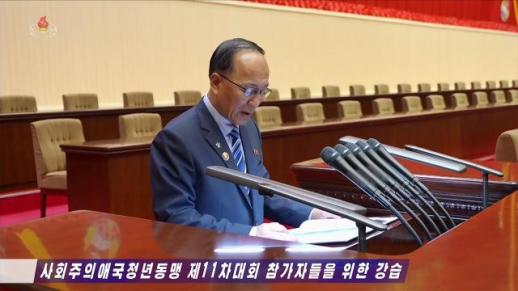 North Korea Calls Japan’s Planned Security Document Revisions a ‘Blatant Challenge’ North Korea on Monday criticized Japan’s push to revise its “three major security documents,” calling it a “blatant challenge to international peace and humanity,” Yonhap News Agency reported. The Workers’ Party newspaper Rodong Sinmun carried the remarks in an article titled, “Evolving into a war state and war merchant will only recreate the shameful fate of the old Japanese empire.” The paper said Japan was exploiting rising regional tensions to move quickly toward becoming a “war state” and “war merchant,” and described the effort as a “sinister scheme” by “Japanese reactionaries” to pursue what it called ambitions of renewed aggression. It said the planned revisions focus on increasing defense spending, lifting restrictions on arms exports and expanding what it called offensive military capabilities. The paper argued that Japan’s drive to export weapons is aimed not only at profit but also at reviving its arms industry and improving the war-fighting capability of the Self-Defense Forces. It warned that what it called the “reckless rampage” of a former aggressor state would face a “merciless counterattack” from an angered international community. Japan is seeking to revise by year’s end its National Security Strategy, National Defense Strategy and Defense Buildup Program, with China’s expanding Pacific presence in mind.* This article has been translated by AI. 2026-05-04 10:50:38
 -
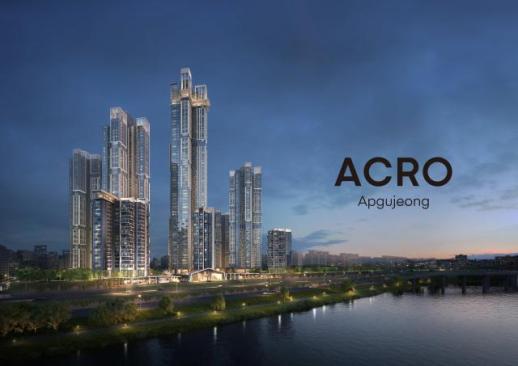 Hyundai E&C, DL E&C Face Off for Apgujeong District 5 Reconstruction Contract Competition is intensifying between Hyundai Engineering & Construction and DL E&C as the selection of a builder for Apgujeong District 5, one of Seoul’s biggest redevelopment battlegrounds, nears. Industry officials said Monday the contractor will be chosen at a homeowners association general meeting on May 30. The project will rebuild the Hanyang 1st and 2nd apartment complexes near 490 Apgujeong-dong in Seoul’s Gangnam district into eight buildings ranging from five basement levels to as high as 60 stories, with 1,397 households. Total project costs are estimated at about 1.5 trillion won. While some observers say Hyundai E&C has an edge on the strength of the “Apgujeong Hyundai” brand, DL E&C is countering with financing terms and changes to the project structure aimed at improving profitability. DL E&C said Monday its bid proposal is designed to reduce members’ financial burden by basing construction costs on project feasibility, cutting financing expenses and optimizing technology. The company proposed a construction cost of 11.39 million won per 3.3 square meters, more than 1 million won below the association’s planned estimate. DL E&C said it is focusing not only on price but also on structurally limiting the risk of cost increases. DL E&C also proposed differentiating the 29 units slated for general sale with high-end designs such as penthouses to maximize revenue. It said it would seek to raise the sale price of about 5,060 pyeong of commercial space through cooperation with a global specialist firm, and included a plan for the builder to bear construction costs. To reduce risk, DL E&C proposed directly purchasing unsold units on favorable terms if they occur. “In a situation where external factors are driving large swings in project costs, we designed a structure that considers both members’ burden and project feasibility,” a DL E&C official said. “It is a proposal that reflects revenue expansion, cost reduction and risk defense.” Earlier, DL E&C proposed setting the interest rate on required project financing at a “zero added spread” level, and shortening the construction period to 57 months to reduce interest costs. It also proposed relocation loans with a loan-to-value ratio of 150% to ease funding pressure. Hyundai E&C is emphasizing advanced technology and premium housing features. It proposed 100% Han River views for all households, a panoramic “zero-wall” design offering up to 240-degree views, and ceiling heights of up to 3 meters to enhance openness. It also plans to introduce robotics-based residential services, including a demand-responsive transport unmanned shuttle developed with Hyundai Motor Group, along with delivery, parking and charging robots. Hyundai E&C said it will build large community facilities and loop-style community spaces, and offer membership-based services linked to luxury retail.* This article has been translated by AI. 2026-05-04 10:49:33