
Journalist

Lee Hugh
=
-
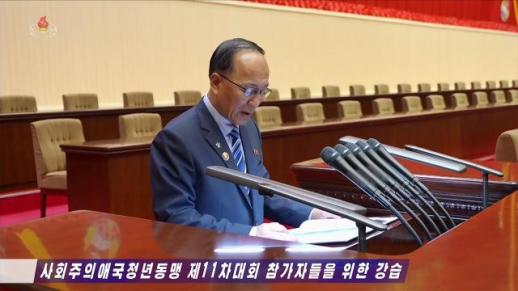 North Korea Calls Japan’s Planned Security Document Revisions a ‘Blatant Challenge’ North Korea on Monday criticized Japan’s push to revise its “three major security documents,” calling it a “blatant challenge to international peace and humanity,” Yonhap News Agency reported. The Workers’ Party newspaper Rodong Sinmun carried the remarks in an article titled, “Evolving into a war state and war merchant will only recreate the shameful fate of the old Japanese empire.” The paper said Japan was exploiting rising regional tensions to move quickly toward becoming a “war state” and “war merchant,” and described the effort as a “sinister scheme” by “Japanese reactionaries” to pursue what it called ambitions of renewed aggression. It said the planned revisions focus on increasing defense spending, lifting restrictions on arms exports and expanding what it called offensive military capabilities. The paper argued that Japan’s drive to export weapons is aimed not only at profit but also at reviving its arms industry and improving the war-fighting capability of the Self-Defense Forces. It warned that what it called the “reckless rampage” of a former aggressor state would face a “merciless counterattack” from an angered international community. Japan is seeking to revise by year’s end its National Security Strategy, National Defense Strategy and Defense Buildup Program, with China’s expanding Pacific presence in mind.* This article has been translated by AI. 2026-05-04 10:50:38
 -
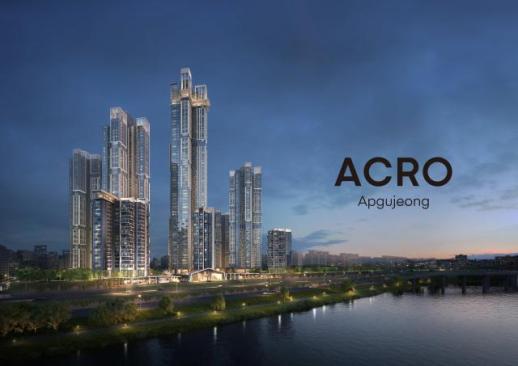 Hyundai E&C, DL E&C Face Off for Apgujeong District 5 Reconstruction Contract Competition is intensifying between Hyundai Engineering & Construction and DL E&C as the selection of a builder for Apgujeong District 5, one of Seoul’s biggest redevelopment battlegrounds, nears. Industry officials said Monday the contractor will be chosen at a homeowners association general meeting on May 30. The project will rebuild the Hanyang 1st and 2nd apartment complexes near 490 Apgujeong-dong in Seoul’s Gangnam district into eight buildings ranging from five basement levels to as high as 60 stories, with 1,397 households. Total project costs are estimated at about 1.5 trillion won. While some observers say Hyundai E&C has an edge on the strength of the “Apgujeong Hyundai” brand, DL E&C is countering with financing terms and changes to the project structure aimed at improving profitability. DL E&C said Monday its bid proposal is designed to reduce members’ financial burden by basing construction costs on project feasibility, cutting financing expenses and optimizing technology. The company proposed a construction cost of 11.39 million won per 3.3 square meters, more than 1 million won below the association’s planned estimate. DL E&C said it is focusing not only on price but also on structurally limiting the risk of cost increases. DL E&C also proposed differentiating the 29 units slated for general sale with high-end designs such as penthouses to maximize revenue. It said it would seek to raise the sale price of about 5,060 pyeong of commercial space through cooperation with a global specialist firm, and included a plan for the builder to bear construction costs. To reduce risk, DL E&C proposed directly purchasing unsold units on favorable terms if they occur. “In a situation where external factors are driving large swings in project costs, we designed a structure that considers both members’ burden and project feasibility,” a DL E&C official said. “It is a proposal that reflects revenue expansion, cost reduction and risk defense.” Earlier, DL E&C proposed setting the interest rate on required project financing at a “zero added spread” level, and shortening the construction period to 57 months to reduce interest costs. It also proposed relocation loans with a loan-to-value ratio of 150% to ease funding pressure. Hyundai E&C is emphasizing advanced technology and premium housing features. It proposed 100% Han River views for all households, a panoramic “zero-wall” design offering up to 240-degree views, and ceiling heights of up to 3 meters to enhance openness. It also plans to introduce robotics-based residential services, including a demand-responsive transport unmanned shuttle developed with Hyundai Motor Group, along with delivery, parking and charging robots. Hyundai E&C said it will build large community facilities and loop-style community spaces, and offer membership-based services linked to luxury retail.* This article has been translated by AI. 2026-05-04 10:49:33
 -
 Hyundai, Kia U.S. April Sales Dip on Tariff-Driven Early Buying; Hybrids Hit Record Hyundai Motor and Kia reported slightly lower U.S. sales in April, which the companies attributed to earlier buying tied to tariff concerns. Even as overall volume slipped, hybrid-electric vehicle (HEV) sales rose to a record on strong demand for fuel-efficient models amid high oil prices. Hyundai Motor and Kia said their combined U.S. sales in April totaled 159,216 vehicles, down 2.1% from a year earlier. Hyundai sold 86,513 vehicles, down 1.5%, while Kia sold 72,703, down 2.8%. Premium brand Genesis posted 6,356 sales, up 0.8%. HEV sales climbed to an all-time high of 41,239 vehicles despite the overall decline. A Hyundai Motor and Kia official said sales eased because purchases had been pulled forward after last year's debate over U.S. auto tariffs. The official said the companies still outperformed the broader U.S. market on the strength of HEVs, sedans and electric vehicles (EVs). At Hyundai, Sonata HEV sales jumped 170% to 4,520, and Elantra HEV sales rose 55.3% to 2,399. Kia continued to see strength in SUVs led by the redesigned Telluride and in HEV models. Telluride sales totaled 12,557, and Seltos sales rose 31.7% to 5,335. Sportage HEV sales increased 65.2% to 7,446, and EV9 sales surged 481.5% to 1,349. At Genesis, GV70 sales rose 7.7% to 2,837 and G70 sales increased 23.4% to 991, helping lift the brand's overall results. With uncertainty persisting, including the war in the Middle East, Hyundai Motor and Kia said demand for eco-friendly vehicles increased. Their combined eco-friendly vehicle sales in April rose 47.6% from a year earlier to 48,425, accounting for 30.3% of total sales. HEV sales rose 57.8% to 41,239, with Hyundai up 47.7% to 21,713 and Kia up 70% to 19,526. EV sales totaled 7,186, up 7.7%. Hyundai's EV sales fell 8.4% to 4,779, while Kia's rose 65% to 2,407. Global automakers also posted declines in April amid broader uncertainty. Toyota Group sales fell 4.6% to 222,378, while Subaru (-5.9%), Mazda (-17.3%) and Honda (-0.2%) also reported lower sales.* This article has been translated by AI. 2026-05-04 10:48:24
 -
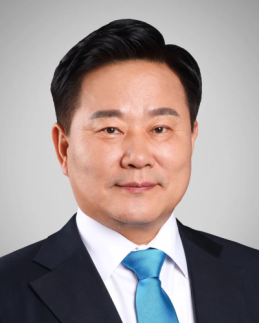 Kim Seong-jin Named New Chairman of Korea Power Exchange Kim Seong-jin, former head of the Gwangju Future Car Mobility Promotion Agency, officially took office on the 4th as the next leader of the Korea Power Exchange, which oversees South Korea’s power supply and demand. The Korea Power Exchange said Kim was appointed chairman with a three-year term. An inauguration ceremony is scheduled for the 6th at the agency’s headquarters in Naju, South Jeolla Province. Born in 1963 in Goheung, South Jeolla Province, Kim graduated from Gwangju Daedong High School and earned a degree in economics from Konkuk University. He later received a doctorate in East Asian studies and the Chinese economy from the University of Leeds in the United Kingdom. Kim entered public service in 1989 after passing the 33rd class of the state civil service exam. He has held a range of posts in industry and energy, including spokesperson at the Ministry of Trade, Industry and Energy, full-time vice chairman of the Korea Display Industry Association, and head of the Gwangju Future Car Mobility Promotion Agency. The appointment ends more than a year of acting leadership at the Korea Power Exchange following the voluntary resignation of former chairman Jeong Dong-hee in March last year. The Korea Power Exchange is a key institution that balances real-time electricity supply and demand on the national grid. Because supply and demand must match at all times for stable operations, it forecasts daily demand, sets generation plans and adjusts plant output and the transmission network in real time as conditions change. In the past, grid operations were relatively stable, centered on large power plants run by generation companies under Korea Electric Power Corp. But as the share of renewable generation has expanded rapidly, volatility has increased and grid management has become more difficult. Against that backdrop, Kim’s role is expected to grow. Industry officials say they expect him to play an important part in stabilizing the power market and responding to energy policy challenges.* This article has been translated by AI. 2026-05-04 10:34:09
 -
 Japan LDP power broker visits China but holds no talks with Chinese officials A senior official of Japan’s ruling Liberal Democratic Party has visited China for the first time since Prime Minister Sanae Takaichi took office, but no meetings were held with Chinese government officials, according to reports. Yasutoshi Nishimura, the LDP’s election strategy chief, visited Beijing on May 2, toured Chinese robotics and autonomous-driving technology companies including Unitree, and met with local businesspeople, Kyodo News and other outlets reported. The trip was made as a stopover on Nishimura’s return to Japan after visiting Kazakhstan. It was the first visit to China by a member of the LDP’s core power group known as the “big four” since Takaichi took office. The term refers to the party secretary-general, the head of the General Council, the election strategy chief and the chair of the Policy Research Council, who wield major influence over party operations. Nishimura, a member of the House of Representatives, previously served as economy, trade and industry minister as a cabinet member from the Abe faction. However, Nishimura did not meet with Chinese government officials during the visit. Takaichi, who took office in October last year, sharply chilled ties with China after remarks in November suggesting possible “military intervention” in a Taiwan contingency. Against that backdrop, Kyodo said Japan’s government and business circles have continued moves to explore ways to improve bilateral relations. Japan’s government is coordinating plans to send Economy, Trade and Industry Minister Ryosei Akazawa to an Asia-Pacific Economic Cooperation trade ministers’ meeting to be held next month in Jiangsu province. If Akazawa attends, it would be the first visit to China by a Takaichi cabinet minister since her Taiwan-related remarks tightened Japan-China relations. A delegation led by Yohei Kono, a prominent Japan-based China expert and a former House of Representatives speaker, also plans to visit China next month. The Japan Association of Corporate Executives is considering a trip as well, and the Japan-China Economic Association is pushing company visits in Shanghai and other areas, as attention focuses on whether expanded private-sector exchanges could mark a turning point in Japan-China ties. 2026-05-04 10:33:16
 -
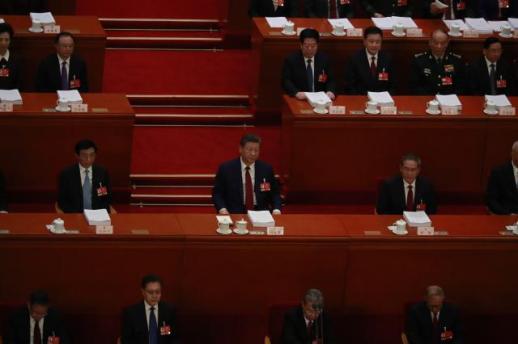 Report: Middle East war could boost China’s renewable energy edge despite oil shock Energy supply shocks triggered by the Middle East war are rattling the global economy, but China could emerge as a medium- to long-term beneficiary in renewables despite near-term pain, a report said. According to the International Finance Center’s report, titled “China’s windfall gains from the Middle East war,” the conflict has exposed vulnerabilities in global energy supply chains, prompting governments and businesses to accelerate adoption and conversion to renewable energy. With instability in the Strait of Hormuz — a route for 20% to 30% of global crude oil shipments — becoming a reality, international oil prices have jumped more than 50% from prewar levels, rapidly increasing the burden on countries heavily dependent on energy imports. China is also expected to face a short-term hit. As the world’s largest crude importer, accounting for 19.3% of global oil imports, higher oil prices could quickly raise manufacturing costs and add pressure for slower growth. The report also warned that rising raw material prices could lift production costs and weaken export competitiveness. Still, the crisis may speed up the shift in energy systems. The more supply-chain instability repeats, the more countries are likely to reduce reliance on fossil fuels and expand investment in renewables. The report said China’s advanced renewable energy industry is likely to benefit. In recent years, production of electric vehicles, solar power equipment and batteries has surged. As of last year, output was up from 2019 by 1,080% for EVs, 340% for solar and 240% for batteries. China’s global dominance in these markets is also strong. As of 2024, China’s share of global production of solar, wind and batteries was about 80%, reinforcing its role as a central hub in renewable energy supply chains, the report said. Renewables have already become a growth driver for China’s economy. One analysis cited in the report said that without the sector, China’s economic growth rate last year would have been about 3.5%, making it difficult to reach the 5% target. The report concluded that while China is bearing the burden of high oil prices in the short term, the war is creating an “asymmetric benefit structure” in which China can absorb rising demand for energy transition over the medium to long term. It also cautioned that if the United States and Europe intensify supply-chain restructuring and efforts to reduce dependence on China, China’s renewable energy lead could face trade restrictions. Kim Woo-jin, a senior researcher at the International Finance Center, said rising global demand for renewables is expected to help ease oversupply problems as well as boost China’s exports. But he added that policymakers in major countries including the U.S. and Europe are wary of growing reliance on China, citing concerns that Chinese-made solar panels and EVs with wireless connectivity could be remotely disabled.* This article has been translated by AI. 2026-05-04 10:28:13
 -
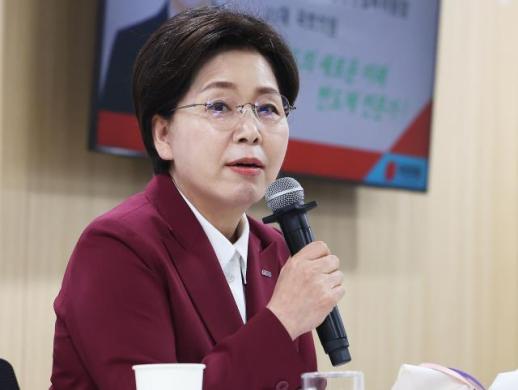 Yang Hyang-ja says Gyeonggi needs a tech expert, not a legal specialist, as governor Yang Hyang-ja, a People Power Party candidate for Gyeonggi governor, criticized Democratic Party candidate Chu Mi-ae on Monday, saying the province needs “a capable governor who can revive the economy, not a legal technician.” Speaking on KBS radio’s “Jeongyeok Sisa,” Yang said Chu is “South Korean politics’ representative brawler,” and claimed Chu was involved in the impeachments of three presidents, including President Roh Moo-hyun. Yang said Gyeonggi’s 14 million residents need “a worker, not a fighter,” and want “a new person” to build “a new Gyeonggi.” She added that for Gyeonggi to become “the heart of South Korea’s advanced industries,” she believes residents will see her as the right choice. Yang pledged to develop the province around semiconductors. “Gyeonggi’s per-capita gross regional domestic product needs to reach 100 million won,” she said. “To do that, we must bring in semiconductor-based advanced AI industries tailored to each of the province’s 31 cities and counties.” Calling herself the only expert in semiconductor management strategy, she said she would work energetically with civil servants and promised residents she would build “a happy Gyeonggi.” On development strategies for northern and southern Gyeonggi, Yang said semiconductors are centered in the south, but the north has an opportunity in logistics, defense industries, mobility and bio. She said she would make Goyang and Paju “a forward base for future industries,” not “a land of regulation and sacrifice.” Asked about the possibility of unifying candidacies with Cho Eung-cheon, the Reform Party’s candidate for Gyeonggi governor, Yang said she was not considering it. “If the People Power Party can’t beat the Democratic Party, any kind of unification won’t be easy,” she said. * This article has been translated by AI. 2026-05-04 10:27:16
 -
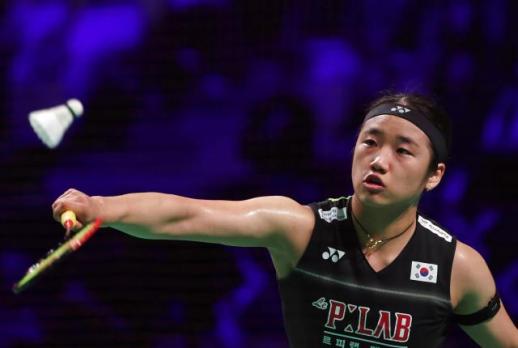 An Se-young’s 20 Wins Show Routine, Not Luck, Behind Her Dominance The scoreline was simple: 21-10, 21-13. But it reflected more than a routine win. Against the world No. 2, An Se-young did not allow a single tie, extending a run that has produced 20 victories. An holds a career record of 20 wins and five losses against China’s Wang Zhiyi. The margin is large enough to invite talk of a difficult matchup for Wang. Still, dominance over one opponent does not automatically mean control of an entire sport. Matchups and styles can shift outcomes. Even so, the record matters because it is repeated. Opponents prepare, study and adjust, yet the results have not swung much. That consistency is a key measure of a top player. An’s edge has looked less like a one-off advantage and more like stability that holds across situations. Her game is not built on raw power alone. She mixes half smashes, drops and tight net shots to disrupt rhythm. Rather than ending points with one big shot, she controls rallies through repeated choices. For opponents, attacks do not open space and defense offers no clear escape, and errors follow. That pattern helped explain why Wang looked unsettled early. Such control is often described as “designing” a match: reading patterns, breaking momentum and rebuilding it. The question is where it comes from. Many point to talent. At this level, talent is necessary, but it does not fully explain An’s most notable trait: small fluctuations. The gap between her best and worst days is not large, and that kind of steadiness is not built on talent alone. The explanation returns to basics: training, fitness management, match analysis and mental discipline. The difference is the intensity and persistence of repetition. Many athletes waver once they reach a certain level, but An continues to push the fundamentals. Over time, that repetition turns ability from a matter of “form” into something closer to a durable structure — the result of keeping a routine. In that sense, An’s wins are less about luck than accumulation. Her ability to shape matches is presented as the product of countless repeated decisions and experiences. Her results at this tournament underscored the point. From the group stage through the final, she did not drop a single game. In the team event, she repeatedly went out first, taking responsibility for the opening match. In team competition, the first point can set the tone and widen strategic options. That does not mean one player guarantees a team victory. Badminton team events are decided by multiple matches, and relying too heavily on one star can mask weaknesses elsewhere. Still, An’s presence clearly affects a team. Confidence in securing the first match can ease pressure on teammates and expand tactical choices. It does not change anyone’s skill, but it can tilt probabilities and momentum in a favorable direction. The next test is whether that stability holds as opponents evolve and new challengers emerge. The label of “best” is not secured by one proof, but maintained through repeated proof. For now, An is portrayed as the player closest to that standard, largely because she rarely looks shaken. That is why 20 wins stands out: not just as a number, but as evidence of repetition and accumulation — the ability to produce the same result again and again.* This article has been translated by AI. 2026-05-04 10:24:41
 -
 Krafton shares jump nearly 14% on plan to form autonomous driving venture with Socar Krafton shares rose more than 13% in early trading on news it will work with Socar to commercialize autonomous driving services. According to the Korea Exchange, Krafton was trading at 302,000 won as of 10:01 a.m. on the 4th, up 37,000 won, or 13.96%, from the previous session. Krafton said on April 30 that it will participate in Socar’s plan to establish a 150 billion won autonomous driving company, Apex Mobility. The new entity is expected to be set up this month. Krafton will first invest 65 billion won by joining Socar’s paid-in capital increase. Once the offering is completed, Krafton will become a major shareholder of Socar. Krafton also plans a separate investment in the new company. Socar is accumulating vehicle-related data through a fleet management system, or FMS, installed in its shared cars, and is described as holding the largest volume of driving data in South Korea. Separately, Krafton’s first-quarter results, previously announced by the company, were tallied as showing a sharp improvement. On the 4th, Korea Investment & Securities, NH Investment & Securities, Hanwha Investment & Securities and Eugene Investment & Securities raised their target price for Krafton to 400,000 won, while Hana Securities set its target at 460,000 won.* This article has been translated by AI. 2026-05-04 10:12:15
 -
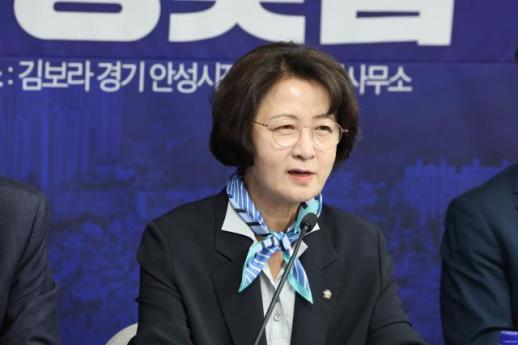 Choo Mi-ae Questions Jang Dong-hyuk’s Conduct as a Former Judge Choo Mi-ae, the Democratic Party candidate for Gyeonggi governor, criticized Jang Dong-hyuk, the leader of the People Power Party, on the 4th, saying it was “puzzling” that he is a former judge. Choo made the remarks during a morning appearance on the radio program “Kim Eo-jun’s Humility Is Hard, News Factory,” responding to a host’s question about how she views Jang. “Judges are used to hearing both sides. They don’t speak after making quick assumptions,” she said. Choo, who said she is also a former judge, recalled that when she first joined her party as a deputy spokesperson, she was told she was slow. “They told me, ‘Say our argument quickly,’ but shouldn’t you first listen to see whether our argument is right or not?” she said. She also accused Jang of “pouring out nonsense on his own,” adding that he “creates confusion both in the United States and here.” Asked about the possibility of a unified candidacy between her rivals — People Power Party candidate Yang Hyang-ja and Reform New Party candidate Cho Eung-cheon — Choo said it did not appear likely. She said that with a general election two years away, they would not “easily” unify if they are considering their political standing. Choo cited “a major transformation for Gyeonggi” as a key theme of the race. She said the Democratic Party should win in all 31 cities and counties in the province, calling it “a rare chance to change Gyeonggi dramatically.” * This article has been translated by AI. 2026-05-04 10:04:20