
Journalist

Lee Hugh
=
-
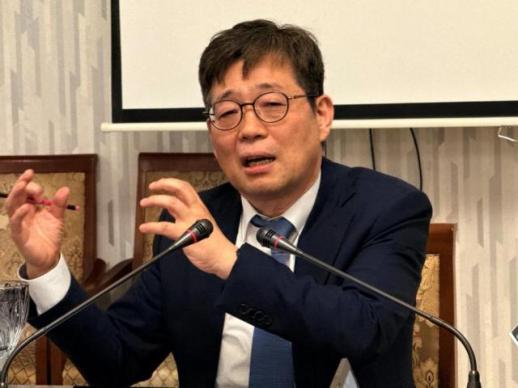 Bank of Korea Deputy Governor Says Rate-Cut Cycle Is Over, Hints at Possible Hikes Bank of Korea Deputy Governor Yoo Sang-dae said it may be time to consider shifting monetary policy toward an interest-rate hiking cycle. Yoo, in Samarkand, Uzbekistan, for the Asian Development Bank’s annual meeting, made the remarks during a May 3 (local time) briefing with a traveling press pool. He said the economy has been stronger than expected and inflation is likely to run higher than forecast. “Monetary policy moves in cycles,” Yoo said. He described the rate trend as having been in a downward cycle since October 2024, adding that through the end of last year many on the Monetary Policy Board believed one more cut could end the easing cycle, followed by a shift to hikes at an appropriate time. The central bank cut rates twice last year, in February and May, and has since kept them on hold. Yoo said the war in the Middle East this year changed the outlook. He said an oil shock from the conflict pushed up prices while hurting growth, creating a “stagflation-like” situation. But he said growth later improved as a semiconductor upcycle strengthened exports and government stimulus helped revive consumer sentiment. As a result, he said, growth appears resilient while upward pressure on inflation has intensified. “The economy doesn’t seem as weak as we initially thought, and in my personal view monetary policy may shift from cuts to a hiking cycle,” Yoo said. He added that data since April suggest growth will not fall below the forecast of 2.0%, while inflation is likely to exceed the 2.2% projection. “Now is the time to stop cutting and consider hikes,” he said. Yoo also signaled changes to the central bank’s dot plot, which shows the projected rate path. He said the war broke out between February and April and conditions have changed significantly, so there is no need to cling to the previous dot plot. If growth and inflation conditions are confirmed by the May policy meeting, he said, there is “plenty of room” for the dot plot to move higher than in February. He said views may differ on whether to focus on the highest point in the distribution or the most frequently marked points such as the average or median, but the overall probability distribution could rise. With uncertainty high and changing daily, he said, the bank needs to watch developments over the next two weeks, but the policy statement would show a different distribution. On the exchange rate, Yoo said the market’s decisions should be respected but the won’s level appears out of line with fundamentals. He said foreigners often ask why the exchange rate is high when South Korea has relatively strong growth, a current account surplus and solid exports. “It is clearly true that the exchange rate level is high compared with the past,” he said. Still, he said the market does not appear to see major problems with the won trading in the 1,470 to 1,480 per dollar range, and he understands there are no concerns about worsening foreign-currency liquidity or capital outflows. Yoo also maintained an optimistic view on concerns that export strength is overly concentrated in semiconductors. He said he worries less about the sector’s large share than about what happens when the semiconductor cycle turns down. With expectations growing that the current semiconductor cycle could last considerably longer than in the past, he said, those concerns have eased. Comparing growth with Taiwan, he said South Korea, unlike an economy concentrated in semiconductors, has a broader industrial base including autos, shipbuilding and steel, expressing confidence in the economy’s scale.* This article has been translated by AI. 2026-05-04 10:03:24
 -
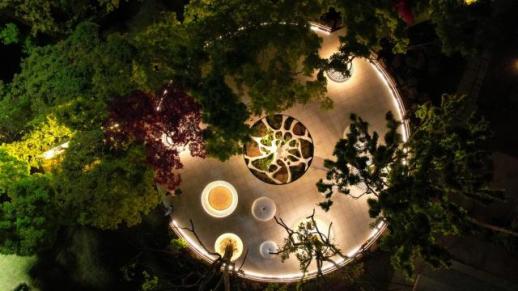 Daewoo E&C Unveils ‘SUMMIT Silo’ Garden at 2026 Seoul International Garden Show Daewoo Engineering & Construction has unveiled its corporate companion garden, “SUMMIT Silo,” at the 2026 Seoul International Garden Show at Seoul Forest, showcasing the philosophy of its high-end housing brand, SUMMIT. The company said May 4 that it joined the show, which opened May 1, and built the “SUMMIT Silo” garden at a point in Seoul Forest where major pedestrian routes intersect. The name combines “Silence,” meaning calm, and “Silo,” meaning a storage facility. This year’s fair is being held under the theme “Seoul, Green Culture: A garden city where nature and urban culture coexist,” linking Seoul Forest with the Seongsu-dong area. The event spans 710,000 square meters and aims to attract 15 million visitors from Korea and abroad. According to the show’s official introduction, “SUMMIT Silo” sits at the end of Seoul Forest’s main axis and is intended as a space that holds time, nature and experience. Designed around a circular structure inspired by the flow of paths in Seoul Forest, the garden reflects SUMMIT’s brand message of “a moment of achievement enjoyed at the peak of life.” It is arranged so visitors feel a calmer atmosphere as they move inward, away from outside noise. Global landscape architecture firm Grant Associates participated in the project. The firm is known for projects including the Supertree Grove at Gardens by the Bay in Singapore. Daewoo E&C said it used the firm’s design experience to create a space where structures blend with Seoul Forest’s natural scenery. The garden features lighting effects linked to SUMMIT brand audio, and a floating deck structure intended to improve accessibility. Inside the tree- and plant-lined space, a lounge area and shaded shelters were installed so visitors can linger as if in an urban lounge. Daewoo E&C also took part in the Seoul International Garden Show last year, when it presented a Prugio garden reflecting the brand philosophy of “the inherent nobility of what is natural.” A Daewoo E&C official said the garden was created as “a high-quality resting space where any citizen can stay comfortably,” while preserving Seoul Forest’s existing woodland landscape and ecological value. The official added, “We hope citizens will have time for relaxation and reflection in a space set one step apart from outside noise,” and said the company would continue to seek and introduce a range of brand promotion activities that can be shared with the public.* This article has been translated by AI. 2026-05-04 10:00:16
 -
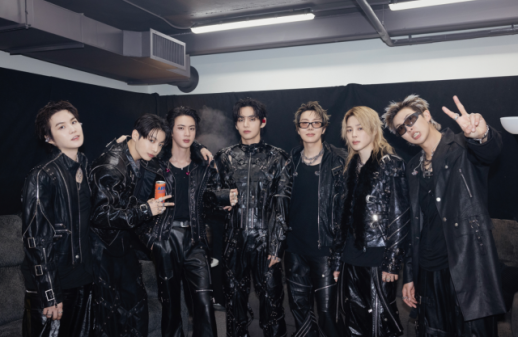 BTS album Arirang maintains top five presence on Billboard 200 for sixth week SEOUL, May 04 (AJP) - K-pop band BTS extended its run on the United States music charts as its fifth studio album, Arirang, remained in the top five of Billboard 200 for its sixth consecutive week. The release continues to draw engagement from physical sales and digital streaming. Most high-profile albums typically see sharp consumption declines after initial debut weeks. The album moved 56,000 equivalent album units for the week ending May 3, according to Billboard. Data represents a one-spot decline from the previous week, and places a record at number 5. Billboard 200 measures overall consumption by combining traditional retail sales with units generated from digital track downloads and audio streaming. Arirang has set several benchmarks for South Korean music since its March release. It became the first K-pop album to spend three consecutive weeks at number 1. Full chart rankings are scheduled for update on the official Billboard website on Tuesday. 2026-05-04 09:59:04
 -
 SK Hynix Hits Record High as Chip Stocks Rally; Samsung Electronics Gains SK Hynix shares hit a record high on the 4th, as buying interest grew on strong results from global big tech companies including Apple and expanded investment in AI production facilities. According to the Korea Exchange, SK Hynix was trading at 1,353,000 won as of 9:47 a.m., up 67,000 won (5.21%) from the previous session. The stock rose as high as 1,364,000 won during the session, setting an all-time high. Samsung Electronics was up 4,000 won (1.81%) at 224,500 won at the same time. The gains appeared to reflect, all at once, a tech-led rally in New York that continued while South Korea’s market was closed for the Labor Day holiday. The Philadelphia Semiconductor Index rose 2.26% on the 30th of last month and 0.87% on the 1st of this month. Apple posted net profit on the 30th (local time) that beat market expectations. Five of the so-called Magnificent Seven companies reported earnings, and all topped forecasts. Big tech companies also raised their annual AI production-facility investment plans. That helped lift expectations for a memory upcycle, spreading optimism across the sector.* This article has been translated by AI. 2026-05-04 09:58:59
 -
 Samsung Electronics Replaces TV Business Chief, Names Marketing Veteran Lee Won-jin Samsung Electronics has abruptly replaced the head of its TV business. Samsung said May 4 that Lee Won-jin, president and head of global marketing for the Device eXperience (DX) division, was appointed head of the DX division’s Visual Display (VD) Business and will also lead the Service Business Team. Yong Seok-woo, who had led the Visual Display Business, will move to a role as an adviser to the head of the DX division. Samsung described Lee as an expert in content, services and marketing, crediting him with helping build key foundations for Samsung’s TV and mobile services businesses and strengthening global competitiveness. “Based on the business experience and market understanding he has built up, we expect Lee to work to strengthen the competitiveness of the TV business,” Samsung said. Lee is also expected to help lead a turnaround in TV business performance and identify new future growth engines. As adviser to the DX division head, Yong will provide guidance on future technologies across the home appliance business. Samsung said he is expected to play a role in key technology areas such as AI and robotics, drawing on his research and development expertise and business experience. 2026-05-04 09:58:10
 -
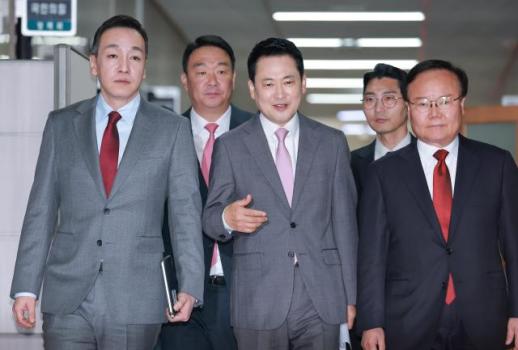 People Power Party calls DP’s ‘fabricated indictment’ special counsel bill unconstitutional The People Power Party on May 4 criticized a recently proposed “fabricated indictment” special counsel bill by the Democratic Party, calling it an unconstitutional attempt to erase Lee Jae-myung’s alleged crimes. Speaking at a party Supreme Council meeting at the National Assembly, PPP leader Jang Dong-hyeok said, “A law that exists for only one person is not law, but violence and a crime.” Jang said there is “exactly one person on the Korean Peninsula who does not go to prison no matter what crime is committed,” referring to North Korean leader Kim Jong Un. He added, “It looks like there will be one more. Does President Lee Jae-myung want to become ‘No. 2’ in supreme dignity?” Jang also said the bill would mobilize 350 people and spend “hundreds of billions of won” in taxpayer money to wipe out one person’s alleged wrongdoing. He said it would be more honest to create a “supreme dignity law” for Lee and, in an Orwellian way, declare Lee “more equal,” placing him above the Constitution. He said when “rule by man” overwhelms the rule of law, the values of freedom and equality collapse. Jang said voters’ choice on June 3 will determine whether they live as citizens of a liberal democratic South Korea or become “slaves” in what he called “Lee Jae-myung’s Animal Farm,” adding that the local elections are about protecting liberal democracy and the constitutional order. Floor leader Song Eon-seok said the Democratic Party pushed last November for legislation to suspend a president’s trial, but that it was abruptly halted after Lee urged restraint. Song said then-chief of staff Kang Hoon-sik publicly warned party leader Jung Cheong-rae not to drag the president into political conflict. Song claimed Lee’s intent became clear “after half a year,” arguing that Lee was not seeking a temporary suspension of his trial during his term but instead wanted a plan to eliminate the trial altogether. He said Lee’s decision to stop the trial-suspension bill while remaining silent on what Song called a “case-cancellation, trial-deletion” plan was evidence. Song said canceling an indictment in the president’s criminal trial by using a parliamentary investigation and a special counsel would be “null and void from the start.” Song said Lee might be able to use power to force his trial to disappear “once,” but that the public would eventually restart it and ensure he pays for his alleged wrongdoing. He added that even a president should go to prison if a crime is committed, and said politics that uses power to shield oneself “outside the law” will not be tolerated by the public or history. * This article has been translated by AI. 2026-05-04 09:57:15
 -
 SoftBank Partners With South Korea’s Cosmos Lab on Zinc-Halogen Batteries for Data Centers SoftBank of Japan is moving into next-generation batteries that do not rely on rare metals, partnering with South Korean deep-tech startup Cosmos Lab, founded in 2021. The Nikkei business daily reported on Monday that SoftBank and Cosmos Lab plan to jointly develop a “zinc-halogen battery” and begin mass production during fiscal 2027. The production base will be set up at the Sakai plant site in Osaka once owned by Sharp, which SoftBank acquired in 2025. Nikkei said SoftBank plans to include entry into next-generation battery manufacturing in a new medium-term management plan to be announced in May, with a long-term goal of building the business into a new pillar generating annual sales of 100 billion yen (about 9.2 trillion won). The new battery uses zinc for the anode and a halogen compound for the cathode, instead of rare metals such as lithium and cobalt. Nikkei said both materials are easy to procure in Japan, improving cost competitiveness. A key advantage is that the electrolyte uses water rather than an organic solvent, making the risk of ignition “almost nonexistent in principle,” the report said, a potential differentiator as safety concerns have grown after a series of energy storage system fires. Zinc-based batteries, however, typically have a shorter lifespan than lithium-ion batteries. During charging and discharging, dendrites can form on the electrode surface, accelerating degradation. Nikkei reported that Cosmos Lab improved this limitation with a proprietary technique that suppresses crystal formation by creating microscopic holes in the electrode. Further development to raise energy density is also planned. SoftBank plans to first apply the batteries to a large data center it is building in Sakai to verify performance, and then decide whether to proceed with full-scale mass production. It also aims to expand use to factory and home energy storage systems and renewable energy storage. Nikkei said SoftBank is considering investing several tens of billions of yen by 2030 to expand production capacity to more than 1 gigawatt-hour. That would be enough to produce more than 100,000 home energy storage units a year and would make it Japan’s largest plant, the report said. Cosmos Lab, based in Siheung, Gyeonggi Province, has been developing “water battery” technology using water-based electrolytes, which is seen as a way to improve safety while reducing dependence on rare metals. SoftBank has tested next-generation batteries through development of high-altitude platform stations, or HAPS, unmanned aircraft that provide communications links with the ground. In 2021, it also built a next-generation battery evaluation and verification facility in Tochigi Prefecture. Nikkei said the partnership with Cosmos Lab signals a push toward commercialization that also envisions supplying batteries outside the company. The report linked the move to Japan’s “sovereign AI” strategy. SoftBank has promoted domestic production of “technologies that support AI operations,” including AI semiconductors and next-generation communications base stations. Nikkei said the effort also reflects a push to secure data center energy storage systems through supply chains in Japan and allied countries, while reducing reliance on China, which holds a dominant share in rare-metal mining and refining. Zinc-based batteries are also being pursued in Japan by manufacturers such as FDK and by universities including Hokkaido University and Tohoku University. Nikkei said SoftBank’s decision to work with a new Korean startup highlights intensifying competition for technological leadership in the next-generation energy storage market.* This article has been translated by AI. 2026-05-04 09:54:00
 -
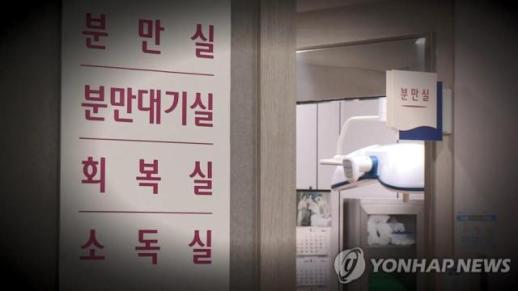 South Korea’s High-Risk Maternity Beds Vanish, Forcing Long-Distance Emergency Transfers A woman in Cheongju, North Chungcheong province, who was 29 weeks pregnant was transferred to Busan after failing to find a hospital able to perform an emergency delivery, and the fetus died. Several hospitals in the Chungcheong region could not accept her, citing a lack of specialists and insufficient beds. She ultimately had to travel more than 300 kilometers by helicopter. By the time surgery began, it was already too late. Another high-risk pregnant woman in Sejong was also reported to have been moved to Busan the same day. Long-distance “medical trips” for childbirth have become a reality. The case is not an isolated incident. In February, a woman in Daegu who showed signs of preterm labor at 28 weeks of pregnancy was turned away by seven major hospitals in the area before being transferred to a hospital in Seongnam, Gyeonggi province. One of her twins died and the other suffered brain damage. Last year in Eumseong, North Chungcheong province, a woman in labor gave birth in an ambulance after she could not find a hospital. The locations differ, but the pattern repeats: mothers cannot secure care in time, fetuses miss the critical window, and families are left with lasting trauma. Three factors are driving the breakdown. First is an absolute shortage of infrastructure. According to data from the National Medical Center, as of 2023, eight of the nation’s 17 provinces and major cities had utilization rates for high-risk maternity treatment rooms below the national average. Sejong was the lowest at 44.35%, and North Gyeongsang, South Jeolla, North Chungcheong and South Chungcheong were also near the bottom. That suggests many patients likely could not receive treatment where they live and had to seek care elsewhere. Utilization rates for neonatal intensive care units were also below average in many regions. Second is a collapse in medical staffing. The number of obstetricians and gynecologists per 100,000 people is below the national average in several areas, including North Gyeongsang at 7.6, Sejong at 8.7, and North Chungcheong, South Chungcheong and South Gyeongsang at 8.8. Beds mean little without doctors, and even where doctors are available, beds cannot function if overnight and emergency on-call coverage cannot be maintained. Critics say some regional university hospitals are holding on with only one obstetrics specialist. Third is a distorted compensation system and heavy legal risk. Deliveries require 24-hour emergency readiness and can turn unpredictable quickly, but fees are low and the burden of medical-dispute litigation is high. That is a key reason younger doctors avoid obstetrics, especially delivery work. The current gaps reflect what happens when essential care is left to market forces alone. The problem is that while large budgets are being spent to raise the birthrate, the country is failing to protect the hospitals needed to deliver babies. Even if the government increases birth incentives and rolls out support programs, policies ring hollow if emergency delivery systems are breaking down. Childbirth is often most dangerous at the moment of delivery; if the state is absent then, families will not feel safe choosing to have children. High-risk maternity intensive care units and neonatal intensive care units need major expansion by region. Public support and fee normalization are also urgent for staffing in obstetrics and gynecology, pediatrics, and anesthesiology. A nationwide real-time bed-sharing system should be built so emergency responders and hospitals can connect immediately. Legal protections for medical staff handling high-risk deliveries also need to be strengthened. Childbirth should be a blessing, not a survival test. If a country requires pregnant women to fly hundreds of kilometers by helicopter to give birth, the health care system has failed before any low-birthrate policy can succeed. One bed, one specialist, can decide whether a life is saved. The government and the National Assembly should act before the stigma of becoming a nation of long-distance childbirth becomes permanent.* This article has been translated by AI. 2026-05-04 09:52:22
 -
 Why Multigenerational Families Are Ditching Flag-Led Tours for Private Pool Villas With the May holiday period approaching, planning a family trip can feel like solving a high-level puzzle. Parents try to work around a second-year middle schooler’s packed after-school schedule while also mapping routes that won’t be too demanding for a grandmother who has difficulty walking. In the past, booking a single package tour could settle most of it. But the so-called “flag-led tour,” where large groups follow a fixed itinerary, is increasingly ill-suited to families spanning multiple generations with different needs. That everyday dilemma is showing up in travel industry data. Even as high prices and exchange-rate pressures raise concerns about weakening demand for overseas travel, family travelers are paying more for customized trips built around their own schedules and preferences. ◆ 1.48 million choose independent travel as the family formula shifts Independent travel, known as FIT (free independent travel), is growing fast. HanaTour said the number of FIT users in the first quarter hit 1.48 million, the highest since it began tracking the figure. That was up 29% from a year earlier, extending a steep rise for a third straight quarter since the second quarter of last year. A key shift is that FIT, once seen mainly as a choice for travelers in their 20s and 30s, is becoming a new standard for multigenerational family trips. Instead of a one-size-fits-all circuit of famous sites, families can build precise itineraries based on stamina and tastes, and use tools such as artificial intelligence agent services to plan routes and make reservations more easily. The smarter way people are buying travel is pushing structural change in a market long dominated by large package tours for families. ◆ Beyond value for money: “value for time” drives short-haul breaks Another clear trend is “select and focus”: improving the quality of rest while minimizing the burden of long-distance travel. Yellow Balloon Tour said its May booking data showed that, despite overall demand softening, families still accounted for 33% of travelers. Destinations shifted heavily toward nearby countries: Japan (27%), China (25%) and Vietnam (11%). With many office workers reluctant to take long stretches of leave, weekend trips departing Friday and returning Sunday have gained popularity, reflecting a growing focus on “value for time.” In that environment, resort lodging has become a decisive factor in choosing family destinations. According to Kyowon Tour’s Travel Easy data, Phu Quoc’s share of all Vietnam bookings for May rose from 14.7% in 2024 to 29.8% this year, continuing a sharp climb. The rise is tied to products built around strong lodging options, including five-star resorts and private pool villas. Without spending energy constantly moving around, travelers from infants to grandparents can stay on-site and enjoy offerings such as the Exotica Village theme park and the Aquatopia water park. The appeal has also been boosted by “no-option packages” that remove unwanted shopping stops, along with perks such as a 50,000-won discount, helping families focus on rest. “Ultimately, the trend for family travel this May can be summed up as a shift from ‘how many places you see’ to ‘how comfortably you spend time together,’” an industry official said.* This article has been translated by AI. 2026-05-04 09:51:25
 -
 Iran Warns US Against Hormuz Shipping Escort Plan, Calls It Ceasefire Violation The United States said it would move to help ships transit the Strait of Hormuz, drawing an immediate warning from Iran that any U.S. involvement in a new maritime order there would be treated as a ceasefire violation. According to AFP on 4, Ebrahim Azizi, head of Iran’s parliamentary National Security Committee, wrote on X that “any U.S. intervention in the new maritime order of the Strait of Hormuz will be considered a violation of the ceasefire.” AFP said the comment came shortly after President Donald Trump announced a plan to support passage through the strait. Trump said in a social media post the previous day that the United States would begin “safely guiding” ships stuck in the Strait of Hormuz starting the morning of 5. The U.S. Central Command told The Associated Press the concept could involve guided-missile destroyers, more than 100 aircraft and 15,000 troops. Trump called it a humanitarian measure but warned of a strong response if it is obstructed. Iran views the plan as destabilizing the ceasefire framework. AP reported that Iran pushed back by labeling U.S. involvement a ceasefire violation. The three-week ceasefire appeared to be holding, but tensions were rising again over control of the strait. The Strait of Hormuz is a key route for global seaborne oil and gas shipments. The United States says Iran’s control of the strait and disruptions to transit threaten international energy flows, while Iran has signaled it intends to keep that leverage as a bargaining chip.* This article has been translated by AI. 2026-05-04 09:43:14