
Journalist

Lee Hugh
=
-
 Iran Warns US Against Hormuz Shipping Escort Plan, Calls It Ceasefire Violation The United States said it would move to help ships transit the Strait of Hormuz, drawing an immediate warning from Iran that any U.S. involvement in a new maritime order there would be treated as a ceasefire violation. According to AFP on 4, Ebrahim Azizi, head of Iran’s parliamentary National Security Committee, wrote on X that “any U.S. intervention in the new maritime order of the Strait of Hormuz will be considered a violation of the ceasefire.” AFP said the comment came shortly after President Donald Trump announced a plan to support passage through the strait. Trump said in a social media post the previous day that the United States would begin “safely guiding” ships stuck in the Strait of Hormuz starting the morning of 5. The U.S. Central Command told The Associated Press the concept could involve guided-missile destroyers, more than 100 aircraft and 15,000 troops. Trump called it a humanitarian measure but warned of a strong response if it is obstructed. Iran views the plan as destabilizing the ceasefire framework. AP reported that Iran pushed back by labeling U.S. involvement a ceasefire violation. The three-week ceasefire appeared to be holding, but tensions were rising again over control of the strait. The Strait of Hormuz is a key route for global seaborne oil and gas shipments. The United States says Iran’s control of the strait and disruptions to transit threaten international energy flows, while Iran has signaled it intends to keep that leverage as a bargaining chip.* This article has been translated by AI. 2026-05-04 09:43:14
 -
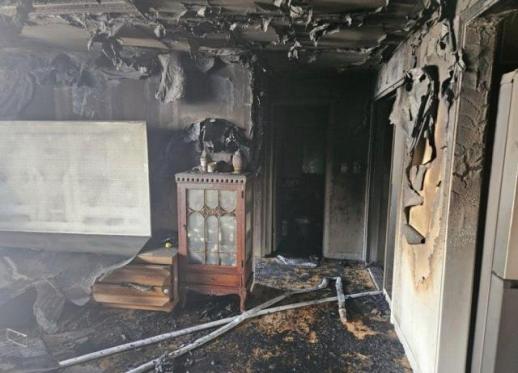 Resident Says Family Lost Home of 20 Years in Uiwang Apartment Fire A resident who lived for more than 20 years in an apartment in Uiwang, south of Seoul, said the family lost everything after a fire that started in the unit below. A post circulating on social media on May 4 identified the writer, surnamed A, as a member of the family living directly above the unit where the fire began. A said the apartment was the first home the parents ever bought. “They lived there for more than 20 years, and overnight they lost everything,” A wrote. “We can’t even cry.” A said the family had been told some belongings might be salvageable, but found nothing could be recovered. “I’m so angry, and it hurts even more that I can’t help them,” A wrote. Because the fire started directly below, A said the damage was worse than in other units. A also said the family did not have fire insurance and that compensation for household items was small. A wrote that the parents did not want to ask even their children for help, despite needing basics such as clothing. Photos posted with the message showed furniture, including a bed, burned beyond recognition and reduced to blackened debris. In a later post, A said an insurance company would provide some compensation for the building and household items. A added that the family was recognized as displaced and would receive support for temporary housing. A said other affected families were still not receiving temporary housing support. A wrote that city assistance is provided per household, making it difficult for families of three or more to use nearby lodging, and that many residents were struggling because immediate housing support was limited. The fire began around 10:30 a.m. on April 30 on the 14th floor of the apartment building. A man in his 60s, identified as B, fell to his death, and his wife, a woman in her 50s, was found dead in the bathroom. Six other residents suffered minor injuries, including smoke inhalation. A note was found in B’s clothing expressing despair over personal circumstances, including financial hardship, authorities said. The couple’s apartment had recently been sold after going to auction, according to reports. A joint team from Uiwang police, the Gyeonggi Nambu Provincial Police Agency’s forensic unit, the National Forensic Service and the Gyeonggi Fire and Disaster Headquarters conducted an on-site inspection on May 1 and confirmed a gas valve inside the unit had been left open. Investigators tentatively concluded that leaking gas led to an explosion.* This article has been translated by AI. 2026-05-04 09:42:22
 -
 Trump Says U.S. Will Help Free Ships Stuck in Strait of Hormuz, Details Unclear 도널드 트럼프 미국 대통령이 호르무즈 해협에 발이 묶인 선박을 빼내기 위한 미국의 조치를 시작하겠다고 직접 밝혔다. 트럼프 대통령은 이번 조치를 중립국을 위한 인도주의 대응이라고 설명했지만, 구체적인 실행 방식은 공개하지 않았다. 이번 조치는 미 해군이 선박을 직접 호위해 빼내는 방식보다 운항 재개 지원에 더 무게가 실린 것으로 보인다. 로이터에 따르면 트럼프 대통령은 3일(현지시간) 자신의 SNS 트루스소셜에 “미국이 월요일 아침부터 호르무즈에 갇힌 선박을 도와 자유롭게 하겠다”고 썼다. 다만 미 해군의 실제 투입 여부와 항로, 이동 방식, 참여국 등 세부 내용은 설명하지 않았다. 백악관과 미 국방부도 추가 설명을 내놓지 않았다. 이번 발표는 단독 조치라기보다 미국이 며칠 전부터 추진해온 다국적 해상 공조 구상의 연장선에 가깝다. 미국 정부는 지난달 28일자 국무부 전문에서 해상 자유 구상(MFC) 창설을 승인했다. 국무부와 국방부가 함께 추진하는 이 구상에서 국무부는 각국 정부와의 외교 조율을 맡고, 국방부는 중부사령부를 통해 해상 교통 조정과 선박 소통을 지원하는 방안을 상정했다. 초점은 군사 충돌보다 통항 질서 복원에 있다. AP는 이번 조치의 명칭을 ‘프로젝트 프리덤’이라고 소개했다. 보도 내용도 군함을 앞세운 직접 호송보다 선박 이동을 돕는 데 초점이 맞춰져 있었다. 국제해사기구(IMO)는 지난달 24일 “호르무즈 해협 어디에도 안전한 통항은 없다”고 밝혔다. IMO는 “약 2만명의 선원이 여전히 이 지역에 발이 묶여 있다”고 했다. IMO는 보험사와 선사, 선원이 모두 위험이 낮아졌다고 판단할 때 운항 재개로 이어질 수 있다는 취지의 메시지를 내놨다. 미국이 추진하는 MFC도 각국 정보 공유와 외교 조율, 해상 교통 관리, 업계 협력을 묶는 방향으로 설계됐다. 로이터는 트럼프 발표 뒤 브렌트유와 서부텍사스산원유(WTI) 가격이 하락했다고 전했다. 시장이 호르무즈 통항 차질 완화 가능성을 반영한 것으로 해석된다. 다만 위험은 여전하다. AP는 트럼프 발표와 같은 날 호르무즈 인근에서 화물선이 소형 선박들의 공격을 받았고, 최근 수주간 드론과 미사일, 소형 선박 공격이 이어졌다고 전했다. 이란은 여전히 해협 통제권을 자국 주권 사안으로 보고 있다. AP에 따르면 이란은 비미국·비이스라엘 선박의 제한 통과 입장을 유지하고 있다. 미국이 자유 항행을 말하는 순간, 이란은 자국 통제 아래 제한 통항 원칙으로 맞서는 구도다. 2026-05-04 09:33:23
 -
 Actor Kim Soo-hyun Reportedly Seen Looking Gaunt in Seoul’s Seongsu-dong Actor Kim Soo-hyun, who has faced controversy over allegations tied to the late Kim Sae-ron, was recently spotted around Seoul’s Seongsu-dong, with an account saying he appeared noticeably thinner. In a video posted May 3 on the YouTube channel “Entertainment President Lee Jin-ho,” former entertainment reporter Lee Jin-ho said an acquaintance saw Kim by chance while passing through Seongsu-dong a few days earlier. “He looked visibly gaunt and worn down,” Lee said, citing the acquaintance. Lee added that the situation was understandable, saying that with various lawsuits, “even just breathing costs tens of millions of won every month,” and that the matter needs to end so things can be sorted out. Kim’s agency, Gold Medalist, has also been reported to be facing management difficulties as key actors have left the company. Kim is in a dispute with Kim Sae-ron’s bereaved family over when the two dated. The group Garosero Research Institute has alleged that Kim dated Kim Sae-ron starting when she was 15 and filed a complaint accusing him of violating the Child Welfare Act, among other allegations. Kim has said the two did date but only after she became an adult. At a news conference, he denied the allegation that the relationship began when she was a minor and filed complaints against Garosero and the bereaved family for defamation over the alleged spread of false information. Amid the dispute, cosmetics brand A, which Kim endorsed, has filed a damages lawsuit of about 2.8 billion won, alleging he violated a duty to maintain the dignity expected of a model. The court is expected to make a final decision in the civil case with the advertiser after reviewing the results of the ongoing criminal defamation investigation.* This article has been translated by AI. 2026-05-04 09:22:14
 -
 7 Free, No-Reservation Children’s Day Events in Seoul and Incheon on May 5 With Children’s Day on May 5 approaching, families are looking for outings that do not require advance reservations. This year, free viewing and walk-in events are scheduled across major central Seoul sites, including Gwanghwamun Square, Han River parks, Dongdaemun Design Plaza (DDP), the National Museum of Korea and Seoul Children’s Grand Park. Not every program is fully open-access. Some hands-on activities have already closed reservations or will be run on a first-come, first-served basis. Food trucks, flea markets and some activities may charge fees, so visitors should check details before heading out. The Seoul Metropolitan Government is running “Seoul Kids Week” across the city from May 1 to 7. On Children’s Day, Seoul-style kids cafes will open citywide, with venue-specific programs such as magic shows and classical instrument experiences. More than 60 Seoul-style kids cafes that can be used for free can be found through the “Our Neighborhood Kiwoom Portal.” In the city center, Gwanghwamun Square will host the “2026 Gwanghwamun Family Companion Festival” from May 2 to 5 under the subtitle “Let’s Play! Gwanghwamun Square!” The program includes participation and event booths, photo zones, a children’s beverage food truck, a lounge, book talks, music performances, a magic show, animation screenings, a cosplay parade and a Lego-building contest. Events will be spread across the square, including play areas, Yukjo Yard and adjacent street space. Children’s Day programs will also continue along the Han River. At Seoulham Park in Mangwon Hangang Park, the “2026 Seoulham Festival” will run May 5 from 11 a.m. to 6 p.m. It will feature a children’s military-life experience, Navy culture activities, special performances and family participation programs. Outdoor performances are free, while some activities require participation after obtaining a Seoulham Park admission ticket. Near the J-Bug (Jabeolle) complex at Ttukseom Hangang Park, “Hangang Plpl Adventure” will run May 1 to 5. Hours are 10 a.m. to 8 p.m., except May 4, when it closes at 7 p.m. Indoors, it will offer a flea market and activity programs; outdoors, it will include a carousel, air bounce attractions, a magic show, a bubble show, street performances and food trucks. Admission is free, while the flea market and food and drinks are paid. Participation is walk-in. At DDP, the “2026 DDP Children’s Design Festival” will be held May 2 to 5 in outdoor areas including Eoullim Square, Palgeori and the lawn hill. Hours are 11 a.m. to 6 p.m., and admission is free. The city said some programs took online first-come reservations, but on-site registration will be available during the festival period for those who missed reservations. The National Museum of Korea has also planned events for families over the Children’s Day holiday. From May 2 to 5, it will host “Gukjungbak Outing” around the Open Plaza, Mirror Pond Plaza and the permanent exhibition halls. The program includes photo zones, performances, activity booths, a QR stamp tour, a book market and a food zone. On Children’s Day, events include balloon art, a bubble magic show, an ensemble performance and a K-pop dance performance. Some programs at the Children’s Museum and special guided sessions, however, require reservations or will be first-come, first-served. At Seoul Children’s Grand Park, the “2026 Seoul Children’s Garden Festival” will run from May 5 to 18. It will be held across about 12,000 square meters from the park’s back gate to the Palgakdang area. This year’s theme is “Gardens Are Art Museums, Children Are Artists,” featuring a garden gallery, children’s art-creation programs, hands-on activities and stage events. Outside Seoul, Incheon Art Platform is another option. It will run a Children’s Day event, “Iyap! A Playground Together,” on May 5 from 10 a.m. to 4 p.m. around the Incheon Art Platform area. Admission is free. Most free Children’s Day events are being held in accessible locations such as downtown squares, parks and museums. Even without reservations, families can cut costs and still enjoy an outing by choosing events that allow walk-in viewing or on-site participation, including those at Gwanghwamun Square, Han River parks, DDP and the National Museum of Korea. Organizers cautioned that Children’s Day can draw heavy crowds, making it important to use public transportation, confirm operating hours and check whether on-site registration is available. Hands-on programs may close early, so visitors may want to plan around performances and exhibitions, or focus on larger outdoor venues such as Han River parks and Seoul Children’s Grand Park when mapping out routes.* This article has been translated by AI. 2026-05-04 09:18:18
 -
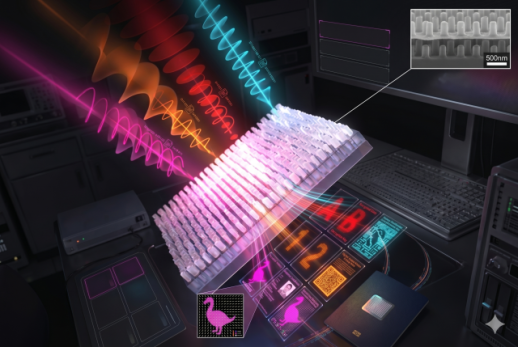 S. Korean researchers develop hologram technology using light properties as security keys SEOUL, May 04 (AJP) - Researchers at the Korea Advanced Institute of Science and Technology have developed a holographic technology that uses the physical properties of light as an encryption key to reveal hidden information, the university said Monday. The system manipulates how light vibrates and twists to ensure that images are only visible when viewed under specific conditions. The research team, led by ,Shin Jong-hwa, a professor at the Korea Advanced Institute of Science and Technology's (KAIST) Department of Materials Science and Engineering, succeeded in controlling two distinct characteristics of light simultaneously: its polarization and its orbital angular momentum. Polarization refers to the direction in which light vibrates, while orbital angular momentum describes how light twists in a spiral as it travels. While these properties have been used individually in the past, combining them to act as independent security keys within a single device has been a significant technical challenge. To overcome this, the researchers created a bi-layer metasurface using two levels of nanoscale structures thinner than a human hair. These structures are designed to react only when they encounter a specific "total angular momentum," which is the combination of light's vibration and twist. If the incoming light does not match the exact required key, the encoded holographic information remains hidden, providing a high level of security against counterfeiting. The technology also allows for the creation of vectorial holograms, which control both the intensity and the direction of light at every point in an image. Because the twisting of light can theoretically take an infinite number of values, this method could also be used to increase the amount of data transmitted through optical fibers for high-speed telecommunications. "This study demonstrates that the polarization and twisting of light can be combined as independent information keys," Professor Shin Jong-hwa said. "It will serve as a core platform for security systems that are difficult to replicate and for high-speed, high-capacity optical communication technologies." The study, which included Jung Jun-gyo as the first author, was published online in the journal Advanced Materials on March 12, 2026. (Reference Information) Journal/Source: Advanced Materials Title: Arbitrary Total Angular Momentum Vectorial Holography Using Bi-Layer Metasurfaces Link/DOI: 10.1002/adma.202519106 2026-05-04 09:18:02
 -
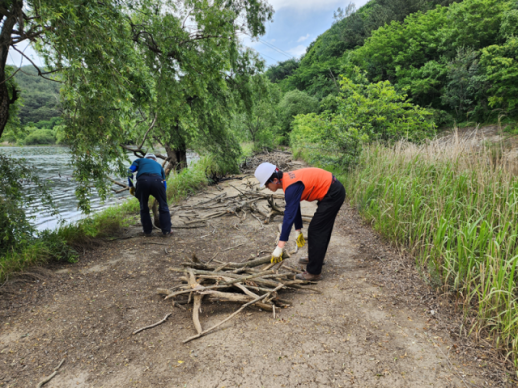 K-water to Step Up Pollution Checks Upstream of Dams, Weirs Ahead of Flood Season Ahead of the summer flood season and the peak period for algal blooms, Korea Water Resources Corp. said it will strengthen management of pollution sources in watersheds upstream of dams and weirs nationwide. The agency said it aims to block pollutants from flowing into waterways through advance inspections and follow-up measures. K-water said Monday it will conduct on-site checks, tailored to local conditions and risk levels, focusing on locations with a high likelihood of pollutant inflow. These include livestock farms, stockpiles of compost and manure, construction sites, illegally dumped waste along rivers and areas where muddy runoff is likely. The agency said the need for preventive management has grown as rainfall increasingly concentrates in specific periods and regions, raising the risk that pollution sources upstream will be washed into rivers. It cited repeated cases in which heavy downpours carried pollutants into waterways in a short time, underscoring the importance of field inspections. K-water said it will roll out step-by-step inspections and follow-up actions through November for watersheds upstream of 34 dams and 16 weirs. The plan includes advance checks, inspections before the flood season, and inspections during and after the flood season, followed by corrective measures. It said it will also conduct joint inspections with related agencies, including regional environment offices and local governments. For shortcomings found during inspections, K-water said it will provide on-site guidance and request corrective action so improvements can be made before the flood season. Follow-up steps will be tailored to each site, including installing covers over compost piles, reinforcing measures to reduce soil runoff from construction sites, and collecting trash and waste wood along riverbanks. During the flood season, the agency said it will recheck whether measures have been carried out and will continue managing weak points through the period after the flood season. It also said it will inspect key water-environment response equipment in advance to maintain readiness, including algae-blocking barriers, surface aerators and algae-removal facilities. K-water said it will systematically manage inspection results and continue pollution-reduction efforts through constant watershed monitoring and local cooperation, in addition to regular inspections. Park Dong-hak, head of K-water's Environment Division, said preventing algal blooms requires managing pollution sources upstream in advance rather than removing blooms after they occur. He said the agency will strengthen field-based inspections and follow-up measures to ensure the public can feel safe about water-environment management.* This article has been translated by AI. 2026-05-04 09:16:32
 -
 South Korea’s Kospi Jumps Past 6,700 at Open; Kosdaq Up More Than 2% South Korean stocks opened sharply higher on the 4th, with the Kospi breaking above 6,700 and the Kosdaq rising more than 2%. According to the Korea Exchange, the Kospi was at 6,765.11 as of 9:08 a.m., up 166.24 points, or 2.52%, from the previous session. The index opened at 6,782.93, up 184.06 points, or 2.79%. Han Ji-young, a researcher at Kiwoom Securities, said upside drivers remain, including the possibility of upward revisions to the Kospi earnings consensus and the chance of a deal in U.S.-Iran negotiations. “It is appropriate to set a base scenario in which the Kospi continues to push to higher highs this week as well,” Han said. In the main board market, retail investors were net sellers of 888.4 billion won, while foreign investors and institutions were net buyers of 549.2 billion won and 363.1 billion won, respectively. Among top market-cap stocks, Samsung Electronics rose 2.72%, SK hynix gained 4.28%, SK Square jumped 8.44%, Hyundai Motor added 1.22%, LG Energy Solution rose 0.98%, Hanwha Aerospace gained 3.32% and HD Hyundai Heavy Industries rose 0.88%. Doosan Enerbility fell 0.24% and Samsung Biologics slipped 0.14%. SK hynix hit a fresh record high, trading at 1,348,000 won as of 9:12 a.m., up 62,000 won, or 4.82%, from the previous session. At the same time, the Kosdaq was at 1,216.91, up 24.56 points, or 2.06%. It opened at 1,212.28, up 19.93 points, or 1.67%, and extended gains. In the Kosdaq market, retail investors and institutions were net sellers of 74.5 billion won and 33.0 billion won, while foreign investors were net buyers of 109.3 billion won. Among top Kosdaq stocks, EcoPro rose 2.81%, EcoPro BM gained 4.13%, Alteogen added 2.44%, Rainbow Robotics rose 2.86%, Samchundang Pharm gained 0.96%, Kolon TissueGene rose 1.76% and HLB added 1.81%. Lino Industrial fell 1.59%.* This article has been translated by AI. 2026-05-04 09:15:15
 -
 Intellivix to Unveil Autonomous Patrol Robot, AI Control Platform at AI Expo Korea 2026 Safety AI deep-tech firm Intellivix said it will showcase “physical AI” technology designed to move beyond video analytics and carry out tasks in real-world settings, as it targets the global safety market. The company said Monday it will take part in AI Expo Korea 2026, scheduled for May 6-8 at COEX in Seoul. The expo is billed as Asia’s largest AI-focused exhibition, featuring the latest technologies and industry trends in areas including generative AI, robotics, AI semiconductors, security and smart cities. Organizers said companies and institutions from South Korea and abroad will present industry use cases and next-generation technologies. Intellivix said its main exhibits will be the autonomous patrol robot “ARGOS” and its AI agent-based integrated control platform, “Gen AMS.” ARGOS, a four-legged walking robot to be demonstrated live, operates on vision-language-action, or VLA, technology. The company said it can patrol complex industrial sites on its own, detect hazards and automatically generate a text report of its findings. Intellivix said the system goes beyond monitoring by allowing AI to perform part of on-site safety management work. Gen AMS includes an action-oriented safety AI agent called “VIXA,” which the company said analyzes site conditions in real time and can issue response instructions. Intellivix said VIXA is intended to spot early signs of incidents and support rapid response systems across sectors including public safety, construction, manufacturing, transportation and defense. Intellivix also said it will unveil an edge AI solution using a neural processing unit, or NPU, from South Korean AI chipmaker Mobilint, along with an AI wildfire monitoring system. The company said it aims to reduce reliance on external cloud services and strengthen data security under a “sovereign AI” strategy, accelerating its push into public-sector and defense markets. “Through this exhibition, we will show how safety AI technology can solve problems in real-world sites,” Intellivix CEO Choi Eun-su said. “We will lead the global safety AI market with practical solutions that combine robots and generative AI.” 2026-05-04 09:13:08
 -
 Alleged drug supplier to Park Wang-yeol arrested after capture in Thailand Choi, 51, accused of supplying drugs worth about 10 billion won to Park Wang-yeol, who is known as a “drug kingpin,” has been arrested, Yonhap News Agency reported. On May 3, Suwon District Court Judge Park So-young, the duty judge for warrant matters, issued an arrest warrant for Choi after a pre-arrest hearing, citing concerns he could flee or destroy evidence. Choi did not answer reporters’ questions as he left the Gyeonggi Nambu Provincial Police Agency building to attend the hearing and got into a transport vehicle. Police said Choi admitted parts of separate drug allegations during questioning but denied any link to Park, saying he “doesn’t know him.” Police are focusing on analyzing evidence, including digital forensics on 13 mobile phones seized during Choi’s repatriation from Thailand. Choi is accused of smuggling or distributing drugs worth a total of 10 billion won, including 22 kilograms (49 pounds) of methamphetamine, since 2019. Investigators said he used Telegram under the handles “Cheongdam” and “Cheongdam Boss,” and lived lavishly, including holding real estate around Seoul’s Cheongdam-dong area with family members and using expensive vehicles. Police said they identified Choi as a supplier while investigating Park, who was forcibly repatriated from the Philippines in March. After confirming Choi was staying in Thailand, they worked with local police and arrested him on April 10. Police said they plan further questioning on the scale of Choi’s alleged dealings with Park, suspected criminal proceeds and whether he violated the passport law, among other allegations.* This article has been translated by AI. 2026-05-04 09:12:15