
Journalist

Lee Hugh
=
-
 BBQ Sales Jump 34% in Seoul Tourist Districts as Foreign Visitors Boost K-Chicken Demand As more foreign tourists visit South Korea, demand for Korean-style fried chicken is helping boost sales for major chains. Genesis BBQ Group, which operates the BBQ chicken franchise, said Tuesday that it posted sales growth in key Seoul commercial districts that draw large numbers of overseas visitors. The company said cumulative first-quarter sales this year in major areas such as Myeongdong and Hongdae rose 34.4% from a year earlier. By district, Hongdae sales climbed 61.8%, the fastest growth, while Myeongdong sales increased 25.8%. Sales also rose in other tourist-heavy areas including Seongsu, Gangnam and Jamsil. BBQ said the expansion of larger stores of 30 to 40 pyeong or more in major districts contributed to the increase, and it also cited a recent rise in tourist traffic to Seoul’s main shopping areas. The Ministry of Culture, Sports and Tourism said 4.76 million foreign visitors entered South Korea in the first quarter, up 23% from the same period last year. In a 2025 global survey on Korean food consumption released by the Ministry of Agriculture, Food and Rural Affairs and the Korean Food Promotion Institute, “Korean-style fried chicken” ranked as the most preferred Korean dish among overseas consumers. “We will continue to strengthen our space and menu competitiveness, focusing on core districts with strong access to global customers,” a BBQ official said. BBQ is also expanding overseas. The company operates about 700 stores in 57 countries, including the United States, Europe, China and Southeast Asia. In March, it opened a store in China’s Hunan province as part of a push into inland markets in central China. * This article has been translated by AI. 2026-05-06 15:22:44
 -
 Honda Freezes Canada EV Plant Plan Indefinitely as North America Outlook Shifts Honda has decided to freeze indefinitely its plan to build an electric vehicle and battery manufacturing complex in Canada, as uncertainty grows in North America amid slowing U.S. EV demand and a policy shift by President Donald Trump’s administration. Nikkei reported Tuesday that Honda has effectively halted the project in Ontario and has begun talks with the Canadian government. The company is also said to be considering scrapping the plan altogether depending on the policy environment in North America. The project, which includes an EV plant and a battery plant, was valued at 15 billion Canadian dollars (about 16 trillion won). It was planned to have annual capacity of about 240,000 vehicles, and land acquisition and discussions on government support were largely underway. Honda had aimed to start operations in 2028, but delayed the start by about two years in May last year as EV growth fell short of expectations. It has now opted for an open-ended freeze. The move signals a broader reset of Honda’s North American EV strategy. In March, Honda announced it would stop developing a flagship EV for the U.S. market and said it planned to book losses of up to 2.5 trillion yen (about 22 trillion won), while formally shifting emphasis away from EVs and toward hybrid vehicles. This time, the pullback extends to production-site investment. The shift is also affecting partnerships. Sony Group’s EV joint venture with Honda, Sony Honda Mobility, announced in March that it would halt development of its standalone EV, the Afeela. On April 21, it decided to reassign about 400 employees back to the two parent companies. Nikkei said the venture judged profitability would be difficult as Honda revised its EV strategy, describing the effort as a reorganization that is effectively “starting over.” Disappearing U.S. IRA benefits Nikkei pointed to U.S. policy changes as a key factor. The previous Joe Biden administration spurred North American EV investment competition after introducing EV purchase tax credits under the 2022 Inflation Reduction Act. But President Trump abolished the EV tax credit and, late last year, eased average fuel economy rules for automakers. With less pressure to expand EV output, automakers are adjusting strategies. U.S. sales data show the slowdown. Cox Automotive said U.S. EV sales last year fell 2% from a year earlier to 1.27 million vehicles, and fourth-quarter sales plunged 36% from the same period a year earlier. Hybrids have gained ground: Nikkei said hybrids accounted for a record 19% of U.S. new-vehicle sales in the fourth quarter. Honda has already formalized its pivot toward hybrids and plans to end production of its North America EV, the Prologue, in the second half of 2026. That would temporarily leave Honda without an EV in its U.S. lineup. The decision is expected to ripple into South Korea’s battery industry. Honda has been building an EV-only battery plant with LG Energy Solution, but is reported to be considering converting it for hybrid vehicles and energy storage systems. Honda is not alone. Nissan Motor has halted plans to produce two EV models in Mississippi, and Ford has announced it would stop producing a key pickup-truck EV while planning to reflect special losses of up to $19.5 billion. General Motors also decided last year to cut about 3,300 jobs at its U.S. EV and battery plants. Still, some analysts say the EV market overall has not turned down. MarkLines said global sales of EVs and plug-in hybrids last year rose 18% from a year earlier to 18.12 million vehicles. In China, more than half of new-car sales are EVs, reflecting continued growth. Nikkei said North America’s EV market has entered a stagnant phase, but the global market is still expanding, adding that how Honda rebuilds its EV competitiveness will be a key challenge.* This article has been translated by AI. 2026-05-06 15:21:17
 -
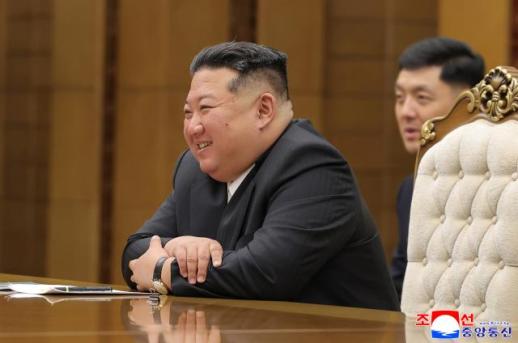 North Korea Revises Constitution to Define Territory, Drop Unification Clause North Korea has revised its constitution to reflect the “two states” line advanced by State Affairs Commission Chairman Kim Jong Un, adding a new territorial clause that defines only the North as its territory and deleting provisions on national reunification. The revision also defines the commission chairman as “head of state” and, for the first time, specifies authority over the use of nuclear weapons. According to the text of the revised constitution disclosed at a briefing for reporters covering the Unification Ministry on Tuesday, the territorial clause was added as Kim declared in late 2023 that inter-Korean relations had become those of “two hostile states,” and as he signaled in January 2024. Article 2, newly added alongside Article 1 on the country’s name, states that the territory includes land bordering China and the Russian Federation to the north and South Korea to the south, as well as territorial waters and airspace set on that basis. Terms and concepts tied to ethnic kinship and reunification, including “the northern half,” “national reunification” and “the complete victory of socialism,” were removed from the preamble and main text of the previous constitution revised in September 2023. While the “two states” approach is broadly reflected, the revised text does not declare South Korea a “hostile state,” contrary to Kim’s earlier remarks. At the Supreme People’s Assembly in January 2024, Kim said it would be right to write into the relevant article that education and indoctrination should be strengthened so South Korea is regarded “thoroughly as the No. 1 hostile state” and an “unchanging principal enemy.” The revision is also seen as strengthening the commission chairman’s authority and status. In the ordering of state institutions, the commission chairman appears first and is defined as “head of state.” It is the first time the chairman has been placed ahead of the Supreme People’s Assembly in the constitution. The constitution also, for the first time, spells out the chairman’s exclusive command authority over nuclear forces and adds a clause providing a basis for delegation. Yang Moo-jin, a professor at the University of North Korean Studies, said the changes make clear a separation line by stating that the southern half of the Korean Peninsula is South Korean territory and the northern half is the territory of the Democratic People’s Republic of Korea. He said there is no international legislative precedent for defining another country as a hostile state, and that North Korea appeared to have considered the possibility of international isolation if it codified South Korea as such. * This article has been translated by AI. 2026-05-06 15:19:19
 -
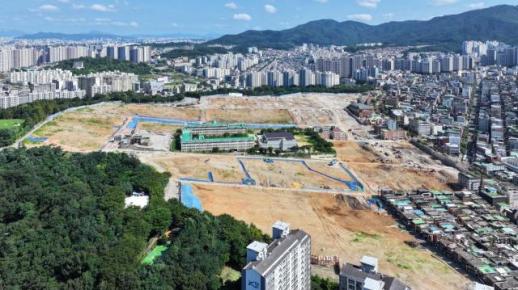 Seongnam’s Sangdaewon 2 Redevelopment Sets Member Forum as Builder Dispute Nears Turning Point A court fight over replacing the builder has deepened divisions in the Sangdaewon 2 redevelopment project in Seongnam, south of Seoul, prompting the union to switch from an ouster meeting to a members’ forum. The move comes as a court ruling has cast doubt on both the builder change and the validity of a key vote, forcing the parties to reassess next steps. Industry officials said Tuesday that the Sangdaewon 2 Housing Redevelopment Union notified members it will hold a “members’ forum to normalize the project” on May 9. May 9 had originally been set for an extraordinary general meeting to vote on removing the union head and executives. The change follows a court decision on April 29 granting DL E&C’s request for an injunction to suspend the effect of a union vote, effectively halting the impact of a general meeting held April 11 to pass an agenda item terminating DL E&C’s construction contract. The court said there was room to believe “a significant number” of written consent forms may have been forged. With the injunction granted, DL E&C’s builder rights remain in place for now. On the same day, the court dismissed the union side’s request to block a planned April 30 meeting to remove the union head. The emergency committee then decided to postpone the ouster meeting to May 9. But three days before that date, the union leadership and the emergency committee agreed to hold a forum instead. The shift comes after GS Engineering & Construction participated alone in the first bidding round and gained preferred bidder status, while the court’s ruling that the termination of DL E&C’s contract was invalid further complicated the process. Union leaders, including Chairman Jeong, had pushed through the contract-termination agenda to sign a construction contract with preferred bidder GS E&C. The emergency committee, however, has argued DL E&C should keep the job. Under the earlier plan, if the ouster agenda passed, DL E&C would begin construction as scheduled in June; if it failed, the union leadership would move to hold a general meeting on May 23 to select a builder. As the dispute over the builder change and union management drags on, delays, higher financing burdens and the risk of additional lawsuits appear unavoidable. Separate from the injunction, DL E&C’s main lawsuit seeking to invalidate the general meeting resolution is also underway, leaving legal uncertainty likely to persist. Some members have already faced cases of “self-paid interest,” in which they must pay interest in advance on relocation loans. That has occurred because a gap opened between interest due dates and loan disbursement dates as financing was delayed amid the builder uncertainty. DL E&C and GS E&C are closely watching the union’s internal discussions. “The court found the general meeting result invalid due to procedural flaws, so talks on selecting a builder have returned to square one,” an industry official said. “Only after the union leadership and the emergency committee reach an agreement will a result on the builder follow.” The Sangdaewon 2 redevelopment project calls for building a 5,090-home complex on a 242,000-square-meter site in Sangdaewon-dong, Jungwon-gu, Seongnam. Construction costs are projected at about 1 trillion won. After signing a contract with DL E&C in 2021, the sides clashed over whether to apply the company’s high-end “Acro” brand.* This article has been translated by AI. 2026-05-06 15:18:24
 -
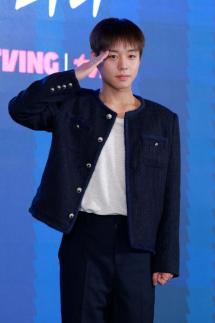 Park Ji-hoon to Star in TVING’s ‘The Legendary Cook Soldier,’ Premiering May 11 Actor Park Ji-hoon, who joined the ranks of so-called “10 million actors” after drawing 16.8 million moviegoers with the film ‘The Man Who Lives With the King,’ is taking on a new role — this time with a wok in hand. A production presentation for TVING’s original series ‘The Legendary Cook Soldier’ (written by Choi Ryong, directed by Jo Nam-hyung) was held Tuesday afternoon at the Pullman Ambassador Seoul East Pole in Jayang-dong, Gwangjin-gu, Seoul. Director Jo and cast members Park, Yoon Kyung-ho, Lee Hong-nae and Lee Sang-yi attended. Based on a popular web novel and webtoon of the same name, the drama follows private Kang Sung-jae (Park), who wears an apron instead of ammunition belts and pushes through the hardships of military life through cooking, eventually becoming a “legendary cook soldier.” Jo said the key difference from the original is how food will be portrayed on screen. “If there’s a big difference from the webtoon, it’s the vivid expression of taste,” he said, adding that the dishes will look “far more appetizing than in drawings” and stimulate viewers’ senses. The series has drawn attention as Park’s next project after ‘The Man Who Lives With the King.’ Park said he tries not to dwell on expectations. “I always think I can’t be loved all the time,” Park said. “My motto is to do my best in each moment. I think it’s my duty to do my best at what I’m given.” Asked about pressure from the “10 million actor” label, he said, “I’m not the type to feel burdened. I thought more about what I could express in the work and what kind of energy I could share with senior actors. I think I was nervous, but I didn’t feel pressure.” Jo said he saw Kang’s potential in Park while watching the actor’s previous work ‘Weak Hero,’ pointing to the strength in Park’s eyes. “Like many people, I got to know Ji-hoon after watching ‘Weak Hero,’” Jo said. “His eyes were really good. Sung-jae starts off unfamiliar and awkward, but inside he’s resolute and moves clearly toward his goals. I cast him because I thought he could express that well.” Park said the new series lets him step away from the heavier tone of his earlier work and try comedy. “I think my strength is an ambiguity that moves back and forth between Kang Sung-jae and Park Ji-hoon even within comedy,” he said. “It’s not just about being funny — I think the point is being cute while still making people laugh.” Co-star Yoon praised Park’s transformation, focusing again on his eyes. “When I first saw him at a meeting, I fell into his eyes,” Yoon said. “They’re incredible — to the point I thought there wasn’t another male actor with eyes like that. Watching ‘The Man Who Lives With the King’ and other works, I felt everything is contained in his eyes. In this series, the appealing part is the helpless, unsure look that’s unique to a new recruit. You can look forward to a mischievous charm that’s different from his previous work.” Another point of interest is that Park, who has not served in the military, plays a private. The production team said it wanted the fresh awkwardness of an actor without firsthand experience. “I think the director wanted new reactions that come through when someone who hasn’t served acts it,” Park said. “They seemed to like how everything feels awkward and how he wonders what to do and whether he should just stand still. I’m actually a military fan, so I knew some things, but while filming I newly felt, ‘So this is the atmosphere — this is how life would be.’” By contrast, Lee Hong-nae and Lee Sang-yi, both of whom have served, joked about how closely they match their roles. Lee Hong-nae, who said he likes the military enough to have taken the Air Force Academy exam, put his “sync rate” at 80% and said he tried to show a character closely tied to him “just because it’s a military drama.” Lee Sang-yi, who said he served in a police unit’s promotional team, said, “I didn’t serve as an Army soldier — I served as auxiliary police and spent two years dancing, singing and doing magic. My sync rate is 0%.” Lee Sang-yi said he began as a special appearance but ended up joining promotional events as his filming days increased. “I started because they said it would end quickly, but the number of shoots kept increasing,” he said. “I grew more attached to the character and ended up staying until the end. I came to today’s production presentation because I want to go on ‘Pinggyego’ and chat.” In closing remarks, Yoon said viewers will get to see “the ‘Dan-jong oppa’ from ‘The Man Who Lives With the King’ become a private,” and urged audiences to look forward to the series. Park said filming began in sweaty heat and wrapped as the weather turned cold. “We practiced closely and filmed happily during that time,” he said. “I hope our good energy is delivered well to viewers.” TVING’s original series ‘The Legendary Cook Soldier’ premieres at 8:40 p.m. on May 11 on TVING and tvN. It will air every Monday and Tuesday at 8:50 p.m. thereafter.* This article has been translated by AI. 2026-05-06 15:16:21
 -
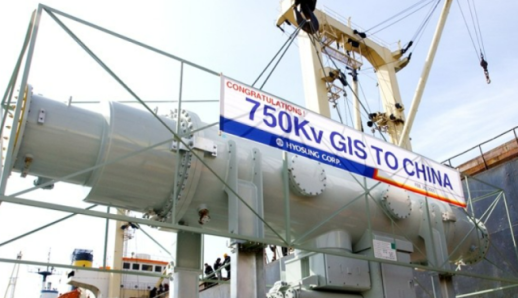 Prosecutors, firms clash in court over alleged $677.6 billion won KEPCO GIS bid-rigging Prosecutors and power-equipment makers clashed in court over whether a Korea Electric Power Corp. gas-insulated switchgear (GIS) case amounts to a long-running, structural cartel, as a trial over alleged bid rigging worth about 677.6 billion won moved forward. The Seoul Central District Court’s Criminal Division 32, led by Presiding Judge Ryu Kyung-jin, held the first hearing Tuesday for eight companies — including Hyosung Heavy Industries, HD Hyundai Electric, LS Electric and Iljin Electric — and current and former employees charged with violating the Fair Trade Act. The court discussed the trial schedule and evidence procedures and also held bail hearings for some defendants indicted in custody. Prosecutors allege the defendants coordinated expected winners and bid prices in advance in 145 KEPCO tenders from 2015 to 2022, forming a cartel involving about 677.6 billion won in contracts. Prosecutors estimate illegal gains at at least 160 billion won. GIS is a key device used at power plants and substations to cut excessive current and protect electrical facilities. Prosecutors say major suppliers, including the four companies, controlled about 90% of the market and divided up orders over an extended period. The companies deny collusion and argue the indictment does not specify the alleged agreements in sufficient detail. A lawyer for Hyosung Heavy Industries said prosecutors claim there was an overarching agreement but have not identified when or how it was reached. In a bid-rigging case, the lawyer said, prosecutors must specify who communicated in each tender and how winners were decided. The lawyer also said the indictment includes tenders Hyosung did not participate in, arguing it is hard to accept treating nonparticipation — due to production issues or sanctions — as part of collusion. Other companies likewise said they submitted bids normally based on their own standards and judgment and did not preselect winners or prices. Prosecutors countered that the case was brought to cover an overall collusive structure under the Fair Trade Act and involves dominant firms restricting competition for years. Prosecutors also said they found indications of defendants reversing statements after acknowledging collusion and argued there remains a risk of evidence destruction. At the bail hearings, defense lawyers for detained defendants said the case is expected to take a long time, the defendants have fixed residences, and most objective evidence has already been secured, asking that they be tried without detention. Prosecutors opposed bail, citing the scale and seriousness of the alleged conduct and arguing the risk of evidence destruction remains, including because defendants are responding jointly through the same lawyers. Some defendants also raised questions about the legality of the investigation. Iljin Electric said materials covered by attorney-client privilege were included in searches and seizures and said it would challenge their admissibility. The Fair Trade Commission last year ordered corrective measures and imposed a total of 39.1 billion won in fines on 10 companies, including Hyosung Heavy Industries, HD Hyundai Electric, LS Electric and Iljin Electric. Six of the companies were referred to prosecutors. An administrative lawsuit over the FTC’s measures is also pending at the Seoul High Court. How the criminal court defines the scope of collusion and each defendant’s involvement is expected to affect related civil and administrative cases. 2026-05-06 15:15:18
 -
 2 Killed, 3 Wounded in Shootings in Texas Koreatown; Police Cite Business Dispute Two people were killed and three others wounded in shootings in a Koreatown area near Dallas, Texas, authorities said. The Associated Press and Fox 4 reported that the shootings occurred May 5 (local time) at a shopping center in Koreatown in Carrollton, north of Dallas, and at a nearby apartment complex. Police said gunfire was reported about 10 a.m. near K-Town Plaza. When officers arrived, four adults had been shot. One man was pronounced dead, and two men and a woman were taken with injuries, the reports said. As investigators worked the scene, police received another shooting call at an apartment complex about 6 kilometers away. Officers found a man dead inside an apartment. Police identified the suspect as Han Seung-ho, 69, who operated a Japanese restaurant at K-Town Plaza. Police did not release his nationality or race, but he is believed to be Korean. Han fled after the shootings but was arrested near a grocery store, police said. During questioning, he admitted he was the shooter and said he was angry at the victims over a financial dispute tied to a business deal, according to police. Carrollton Police Chief Roberto Arredondo said investigators do not believe it was a random attack. "It was a known business relationship," he said. "We are still trying to determine what triggered his actions." The victims have not been identified. After the shooting, police and FBI agents responded to the K-Town Plaza area to collect evidence. Woo Sung-chul, president of the Dallas Korean Association, told Fox 4 he knew some of the victims. "They were all immigrants who came here and worked hard for their families," he said. Carrollton is a city of about 130,000 people about 32 kilometers north of Dallas. More than 4,000 residents are of Korean descent, according to the U.S. Census Bureau.* This article has been translated by AI. 2026-05-06 15:13:01
 -
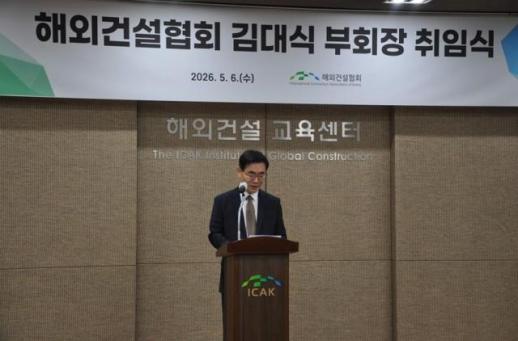 International Contractors Association Names Kim Dae-sik Executive Vice Chairman The International Contractors Association of Korea said Tuesday it appointed Kim Dae-sik, who has served as South Korea’s ambassador to Oman, as its new full-time executive vice chairman and held an inauguration ceremony. In his inaugural remarks, Kim said he would use his diplomatic experience and network to become a “field-oriented vice chairman” who supports Korean companies in expanding overseas orders. He also said he would focus all efforts on widening the construction industry’s reach in overseas markets. Kim entered public service in 1983 after passing the 17th foreign service exam. He has served as ambassador to Oman and ambassador to Kazakhstan, and as head of the Jeonbuk International Cooperation Promotion Agency. The association said he is regarded as an expert in external cooperation and international relations. Kim’s term is set for two years and will expire on April 30, 2029. The association is a specialized institution established under the Overseas Construction Promotion Act to support overseas construction. It assists the construction and engineering industries with overseas expansion, information collection and analysis, policy proposals, order support through consultations and consulting, and training of specialized personnel. An association official said Kim’s broad diplomatic expertise, built through ambassadorial posts in multiple countries, is expected to help external cooperation related to overseas construction and improve international relations. * This article has been translated by AI. 2026-05-06 15:08:55
 -
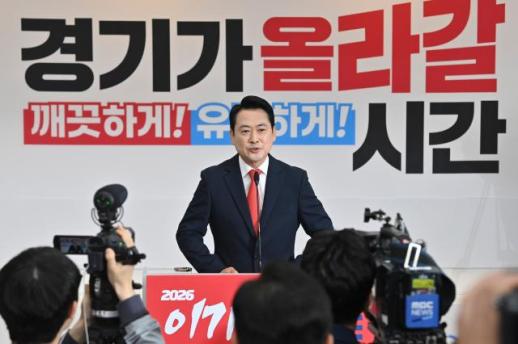 People Power Party rallies behind Yang Hyang-ja in Gyeonggi governor race South Korea’s People Power Party on May 6 pledged to unite behind its Gyeonggi Province governor candidate, Yang Hyang-ja, as it seeks victory in the June 3 local elections. Party leaders urged voters to use the election to hold the government and ruling party to account. Speaking at a “victory rally” at the party’s Gyeonggi headquarters in Suwon, party leader Jang Dong-hyuk criticized the Democratic Party for nominating Chu Mi-ae, saying the party had put forward what he called the “queen of destruction” who, he said, followed President Lee Jae-myung in dismantling the prosecution and undermining the judiciary. Jang said that if Chu wins, she would “ruin Gyeonggi Province” under pressure from Lee’s hard-line supporters, often referred to as “gae-ttal.” Jang also cited a special counsel bill introduced by the Democratic Party on April 30 — titled the “Special Counsel Act to uncover the truth behind allegations of manipulated investigations and indictments by the Yoon Suk Yeol administration.” He said that if an indictment is unfair, it should be addressed through a trial and an acquittal. He called the local elections a vote to judge what he described as the Democratic Party and its leader, Lee. Jang said Yang is the right person to lead what he called “the heart of Korea’s economy,” describing her as an “economy governor.” He said People Power Party candidates would build a Gyeonggi Province where advanced industries bring in money, keep it circulating and improve the lives of future generations. Floor leader Song Eon-seok also framed the vote as a choice between allowing “dictatorship” to stand or checking it. He said the party must stop the Lee administration in Gyeonggi Province, which he called the place where Lee’s “crimes” began. Song urged support for Yang, calling her a qualified candidate who understands the economy and can protect semiconductor plants. Gyeonggi Province is often seen as a key battleground, but the People Power Party finalized its governor nominee later than other races. Yang won the party primary on May 2, just 32 days before the local elections. Party leaders appeared to move quickly to Gyeonggi after the nomination was settled. Speakers at the rally repeatedly stressed the need for unity. Yang said voters do not care about political camps or factions, but want hope that tomorrow will be better than today. “We have no freedom to split, and no right to lose,” she said. After the event, senior spokesperson Park Sung-hoon told reporters the party’s basic duty in the local elections is to show it is not divided. He said internal conflict should not “taint” the party, and vowed to campaign as “one team” to win. The party said its central election committee lineup is expected to be finalized and announced within this week. Park said it would be organized to provide as much help as possible to candidates campaigning under difficult conditions.* This article has been translated by AI. 2026-05-06 15:07:57
 -
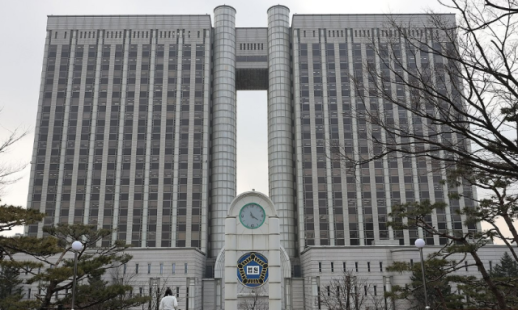 Judge in former first lady's corruption case found dead in Seoul SEOUL, May 6 (AJP) - The presiding judge of the Seoul High Court who oversaw the appeals trial on corruption charges involving former first lady Kim Keon Hee was found dead on Tuesday, according to legal officials. Police found judge Shin Jong-oh's body at around 1 a.m. near the court compound in southern Seoul, after receiving a report from his family that they had been unable to reach him about an hour earlier. The 55-year-old was taken to a hospital, where he was pronounced dead. Police, who are investigating the exact cause of his death, believe Shin jumped, as no foul play is suspected and a suicide note was also found at the scene. His handwritten message reportedly included an apology but made no mention of Kim's case or any trial-related matters. The Seoul High Court, presided over by Shin, sentenced Kim last week to four years in prison on multiple charges including accepting luxury handbags and jewelry in return for favors, as well as involvement in stock manipulation. The sentence was much harsher than the 20-month prison term handed down at the first trial. Shin, a graduate of Seoul National University, passed the bar exam in 1995 and served at courts nationwide including in Daegu, Uijeongbu and Ulsan. 2026-05-06 15:07:04