
Journalist

Lee Hugh
=
-
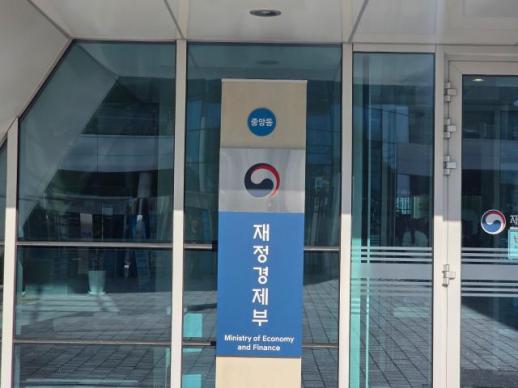 World Bank Names Min Jin-a as Director for Market and Counterparty Risk The World Bank Group has appointed Min Jin-a, head of credit risk for the state-owned enterprise and reinsurance division at the Multilateral Investment Guarantee Agency, as director for market and counterparty risk, South Korea’s Ministry of Economy and Finance said Sunday. The ministry said Min is scheduled to take up the post on June 1. With the appointment, the number of South Koreans in senior World Bank posts will expand to one vice president and one director. Min is a risk management specialist with about 20 years of experience. After working at private financial institutions including Goldman Sachs, she joined MIGA in 2017 as a senior credit risk officer. Since 2021, she has led credit risk for MIGA’s state-owned enterprise and reinsurance division. Director-level posts in the World Bank Group are key senior positions overseeing organizational operations. The ministry said South Koreans have held such posts only three times, and there has been no Korean director-level official at the World Bank since 2025. In July last year, Kim Sang-bu was appointed the World Bank’s first Korean vice president. The government has promoted policies to expand the hiring and advancement of South Koreans at international financial institutions, including operating junior professional officer and midcareer expert programs and holding recruitment briefings. A ministry official said the government will continue to strengthen cooperation with international financial institutions and create more hiring opportunities to support Korean talent seeking overseas careers.* This article has been translated by AI. 2026-05-03 12:03:14
 -
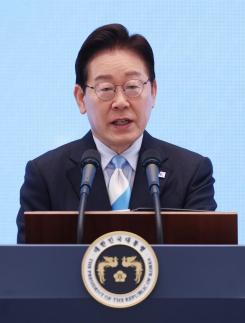 Lee Says Illegal Loans Exceeding Legal Rate Are Void, Borrowers Need Not Repay President Lee Jae-myung said loan contracts that exceed the legal interest-rate cap are invalid, signaling a tougher response to harm caused by illegal private lenders. The message was widely seen as encouraging victims to report abuses. Lee wrote on X, formerly known as Twitter, on Saturday after sharing a post by Financial Services Commission Chairman Lee Eok-won: “Illegal loans that exceed the legal limit do not have to be repaid.” In his post dated April 28, the FSC chairman said a revised enforcement decree to the Loan Business Act had passed a Cabinet meeting and stressed that any loan contract carrying an annual rate above 60% makes both principal and interest void. The revised decree focuses on lowering barriers for victims to file complaints. It spells out reporting forms in greater detail to make them easier to complete. It also allows the Credit Counseling and Recovery Service, which runs the Inclusive Support Center for 서민금융, to ask the Ministry of Science and ICT to suspend use of phone numbers used for illegal debt collection or loan advertising. The government previously revised the enforcement decree in July last year to establish grounds to void ultra-high-interest illegal loan contracts. Under that revision, contracts deemed clearly unfavorable to borrowers because they involved sexual exploitation, human trafficking, or violence and threats, as well as contracts with annual rates above 60%, can be voided in full for both principal and interest. Financial authorities said the latest revision should make it easier for victims to report illegal private lending and enable faster blocking of contact methods used for unlawful collection. The government says it will strengthen its response to illegal financial practices that harm the public, including ultra-high-interest loans and coercive debt collection. 2026-05-03 11:51:15
 -
 South Korea to Provide 3.1 Billion Won in Aid to Fish Farmers Hit by Cold-Water Losses The government has provided 3.1 billion won in support to fishing households that suffered losses from abnormal weather and other natural events. The Ministry of Oceans and Fisheries said Sunday that it provided disaster relief payments and loans to affected households on April 30 to help with recovery. Low water temperature refers to a sharp drop in sea-surface temperatures during winter cold snaps. Farmed species are vulnerable because their immunity weakens, while feed intake and digestion decline, raising the risk of die-offs. To limit damage from low temperatures this year, the ministry provided 1.5 billion won to aquaculture households that carried out emergency releases. It also paid 1.4 billion won in disaster relief to oyster farms that were damaged last year by abnormal water temperatures. In addition, 200 million won in support was applied retroactively to fishing households harmed by disasters that occurred before revisions to the Framework Act on the Management of Disasters and Safety took effect. The ministry said it will assess the scale of losses and extend repayment deadlines for existing fisheries policy loans accordingly. It will also reduce interest on policy loans for one year for damage rates of at least 30% but less than 50%, and for two years for damage rates of 50% or more. Fishers seeking support can apply through the National Federation of Fisheries Cooperatives and Suhyup Bank. Choi Hyeon-ho, director general for fisheries policy at the ministry, said the government will pay recovery funds as quickly as possible to help stabilize management at fishing operations. He said the ministry will continue working with local governments and other related agencies to minimize damage from natural disasters.* This article has been translated by AI. 2026-05-03 11:45:15
 -
 South Korea’s June 3 Local Elections: Parties Urged to Focus on Livelihood Issues South Korea’s June 3 local elections are a month away. Voters will choose leaders of 16 metropolitan and provincial governments, along with mayors, county chiefs and local council members. The vote carries added weight as the first nationwide election since the current administration took office a year ago. The ruling party is seeking to extend its power from the legislature and the executive branch into local governments, while the opposition is aiming for a late turnaround to regain momentum. But what voters want to hear is less about who wins and more about solutions that improve daily life. Many analysts say the ruling party currently has an edge, citing a steady run of high presidential approval ratings and the early-term preference for stability. The opposition is arguing for checks on what it calls one-sided control by the government and ruling party, but is seen as lacking a decisive catalyst. Still, the outcome could shift with undecided voters, turnout, economic conditions and the strength of candidates by region. A central concern is that both sides are treating the local elections as an extension of national politics. Local races are meant to choose officials who will run communities. Voters need clear plans to improve urban transportation, create jobs for young people, respond to the risk of regional decline, and strengthen caregiving and education services. Instead, campaign messages are dominated by calls to punish or support the administration and by attacks on rivals, pushing local issues to the margins. Regional pressures are mounting. The Seoul metropolitan area faces high housing prices and traffic congestion, while other regions are grappling with population decline, industrial hollowing-out and worsening local finances. Young people leave in search of work, and older residents struggle with gaps in medical care and caregiving. Local universities worry about survival, and small business owners say weak consumption makes it hard to hold on. If the election is reduced to a partisan showdown, the purpose of local elections will be undermined. The ruling party, the editorial said, should not take favorable forecasts for granted. Relying on approval ratings and central power while discounting local sentiment can quickly trigger a backlash. The opposition, it said, should not count on protest votes alone; simply repeating a message of restraint will not be enough without credible regional development strategies and capable candidates. Nominations also need to change, it said. Parachute candidates, faction-based allocations and picks driven by name recognition do little to strengthen local competitiveness. Parties should prioritize experience in local administration, policy expertise, integrity and the ability to communicate. Local autonomy is not a subcontract of national politics, it said, but a system in which regions build their own growth engines. The election should not be judged only by whether the ruling party sweeps the races or the opposition pulls off a late reversal, the editorial said. The standard should be which party diagnoses local problems more accurately and who offers more practical solutions. An election in which livelihoods lose, even if many candidates win, would be meaningless, it said, urging politicians to set aside calculations and focus on residents’ lives. 2026-05-03 11:40:19
 -
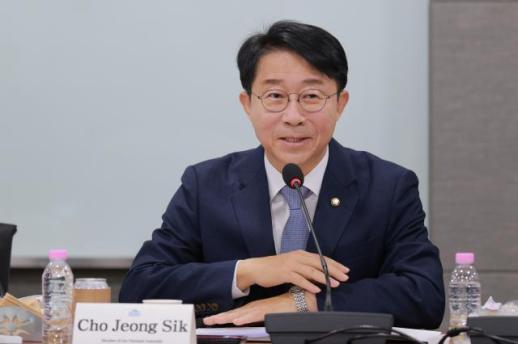 Democratic Party lawmaker Cho Jung-sik resigns as presidential aide to seek National Assembly speaker post Cho Jung-sik, a Democratic Party lawmaker running in the race for speaker of the National Assembly in the second half of the 22nd Assembly, said Saturday he will resign as presidential special adviser for political affairs. In a Facebook post, Cho said he was stepping down from the post under President Lee Jae-myung to pursue what he called a “bolder path,” pledging to move toward a “people’s sovereignty National Assembly” and a “livelihood-focused National Assembly.” Cho said that since being appointed in December, he worked to strengthen communication and serve as a bridge linking the party, government and presidential office. “Over the past four months since my appointment, I worked with a heavy sense of responsibility as a ‘bridge of communication’ connecting the party, government and presidential office as one,” Cho wrote. He said he coordinated key state affairs so the ruling party could move “in one breath” for the success of the Lee administration. Cho added that he would devote himself to his public duty with the “proven stability” of a six-term lawmaker. Lee responded in a comment, saying, “You worked very hard. You were always with us, and I sincerely thank you.” Cho, a six-term lawmaker, is expected to register Sunday as a candidate in the Democratic Party’s primary for National Assembly speaker. The party plans to pick its speaker nominee through a two-day vote of dues-paying party members starting May 11 and an in-person vote by lawmakers on May 13.* This article has been translated by AI. 2026-05-03 11:35:41
 -
 ‘Super Mario Galaxy’ Holds No. 1 at Korea Box Office for Second Straight Day The film 'Super Mario Galaxy' continued its holiday run at the top of the Korean box office, holding the No. 1 spot for a second consecutive day. According to the Korean Film Council's integrated ticketing network, the movie drew 157,843 admissions the previous day to remain No. 1. Total attendance reached 499,472. The film opened April 29 and has been gaining momentum over the May holiday period, attracting family audiences. 'Super Mario Galaxy' follows brothers Mario and Luigi, who rise from Brooklyn plumbers to heroes who save the world. In the new installment, they launch another adventure after rescuing Yoshi, who gets lost while on a mission in the Sand Kingdom. With the previous film, 'Super Mario Bros.,' having set a record for the highest single-day admissions for an animated film on Children's Day, attention is on how the new release will perform through the May holiday stretch. 'The Devil Wears Prada 2' ranked No. 2, selling 153,933 tickets the same day for a cumulative 590,985. The story centers on Miranda, editor-in-chief of the legendary fashion magazine 'Runway,' Andy, who returns as a planning editor after 20 years, and Emily, now a luxury brand executive, as they reunite and compete for influence in fashion amid a changed media landscape. Viewers have been drawn by the reunion of Meryl Streep and Anne Hathaway after two decades. The Korean film 'Salmokji' placed third, drawing 128,030 admissions the previous day for a total of 2,512,387. Released April 8, it has sustained a long run, boosted by word of mouth for its fresh premise and immersive horror. It has far surpassed its break-even point of 800,000 admissions. 'Salmokji' is a horror film about a production crew that heads to a reservoir for a reshoot after an unidentified figure appears on a road-view image, only to confront something in the dark, deep water. It was directed by Lee Sang-min and stars Kim Hye-yoon, Lee Jong-won, Kim Jun-han, Kim Young-sung, Oh Dong-min, Yoon Jae-chan and Jang Da-a.* This article has been translated by AI. 2026-05-03 11:34:53
 -
 Reform Party’s Cho Eung-cheon calls Seoul-area candidates meeting over special counsel bill Cho Eung-cheon, the Reform Party’s candidate for Gyeonggi governor, on May 3 criticized a Democratic Party-backed bill to appoint a special counsel to probe alleged “fabricated indictments,” calling it “a special counsel bill to cancel indictments” and “a bill to erase crimes” aimed at covering up “all of President Lee Jae-myung’s offenses.” He proposed an emergency joint meeting of Seoul-area candidates for metropolitan government posts. Speaking at a morning news conference at the National Assembly, Cho said candidates who agree the country is in an emergency should meet at 3 p.m. to coordinate a response. The Democratic Party on April 30 introduced a special counsel bill to investigate allegations that prosecutors under the Yoon Suk Yeol administration fabricated indictments in cases including the Ssangbangwool remittances to North Korea case and the Daejang-dong case. Cho singled out Choo Mi-ae, the Democratic Party’s candidate for Gyeonggi governor, as the starting point of the controversy. “At the beginning of all this is candidate Choo, who is excited about her dream of becoming Gyeonggi governor,” he said, adding that as the previous chair of the National Assembly’s Legislation and Judiciary Committee she pushed “all kinds of strange special counsel bills” and led what he called a “monstrous” bill. He also criticized Choo for, in his words, giving up her committee post to Rep. Seo Young-kyo after deciding to run for governor and then offering no explanation “as if she has nothing to do with it.” He urged her to “stop hiding” and state clearly, “as a lawyer,” whether the bill has problems. Cho encouraged participation by People Power Party Seoul mayoral candidate Oh Se-hoon and Gyeonggi gubernatorial candidate Yang Hyang-ja. “I’m waiting for a response from Seoul-area candidates for metropolitan government posts, including candidate Oh Se-hoon, who is a lawyer,” he said, adding that it would carry weight if they gathered across party lines to speak with one voice. Asked whether the meeting had been coordinated in advance and whether it might fall through, Cho said there had been no prior coordination. If the meeting cannot be held due to time constraints, he said, he could ask to have his name included if a joint statement is issued.* This article has been translated by AI. 2026-05-03 11:34:01
 -
 Trump Suggests Cuba Could Be Seized Quickly, Cites Carrier as Pressure U.S. President Donald Trump suggested the possibility of military action against Cuba and announced additional sanctions targeting the island nation. According to AFP, Trump said at an event in Florida on May 1 that “our military can occupy Cuba almost immediately.” He added that on the way back from Iran, he would send “one of our big assets,” possibly the USS Abraham Lincoln, which he described as among the world’s largest aircraft carriers. “If we deploy it and stop about 100 yards off the coast, they’ll say, ‘Thank you very much. We surrender,’” he said. Trump also announced new sanctions on May 2. The measures designate as targets individuals involved in key sectors including energy, defense and finance, and allow penalties for foreign financial institutions that do business with them. The administration also said it would bar entry to the United States for Cuban government officials deemed involved in human rights abuses or corruption. Since the ouster of Venezuelan President Nicolas Maduro in January, Trump has increased pressure on Cuba, which the report described as maintaining close ties with China and Russia, by raising the prospect of military operations. Cuba is already facing broader anxiety and a sense of crisis as the Trump administration’s energy-supply blockade takes effect, the report said. Cuba strongly rejected Trump’s remarks. President Miguel Diaz-Canel wrote on X, formerly Twitter, on May 2 that Trump’s threat amounted to a “serious criminal act” and urged an international response. “The president of the United States is raising the threat of a military attack against Cuba to a dangerous and unprecedented level,” Diaz-Canel said. “No matter how powerful the aggressor, it will not obtain surrender in Cuba.” Foreign Minister Bruno Rodriguez criticized the sanctions, calling the U.S. actions “collective punishment” of the Cuban people and a violation of the U.N. Charter. 2026-05-03 11:33:15
 -
 South Korea Man, 60s, Found Dead After Paddleboard Disappearance in Ho Chi Minh City A South Korean man in his 60s who went missing while paddleboarding on Da Den Lake in Ho Chi Minh City was found dead about a day later, Vietnamese media reported. The case has renewed attention on a string of water recreation deaths involving stand-up paddleboards, or SUPs, in Vietnam. Vietnamese outlets including Tuoi Tre reported that on May 2, Do Chi Koi, a member of the Kim Long area People’s Committee, confirmed the victim was found near the spot where he disappeared at 12:20 p.m. He said Ho Chi Minh City police and the South Korean consulate were continuing to investigate the circumstances. Reports said the man, identified only as A, drove to the lake on the morning of May 1 with a Vietnamese acquaintance, identified as B. After parking by the shore, they rode SUP boards to the opposite bank to look around and take photos. B said that while returning to the starting point, he moved ahead briefly and then turned back and could not see A. B reported the disappearance to authorities. Local authorities deployed about 100 people, including police, militia members and rescue teams, to search the area. The body was recovered around midday the next day. Da Den Lake spans several hundred hectares across Kim Long commune and the Ngai Giao and Tan Thanh districts. It is a popular spot for camping and leisure, drawing locals and tourists for fishing, swimming and water sports. Vietnamese reports said its large area and deep water have been linked to repeated drowning incidents in the past. Other SUP-related deaths have also been reported. In October 2024, six tourists in their 20s from Lam Dong province paddled about 200 meters off Long Hai waters near Phu Quy Island to take photos when strong winds and high waves hit under the influence of Typhoon Trami, reports said. A boat from their lodging rescued three people, and one returned by swimming. Another woman drifted for more than 12 hours while holding a life buoy before being rescued by a fishing boat. One person did not return. Authorities searched for nine days using dozens of boats and about 60 divers before finding the body wedged among rocks on a coastal breakwater more than 9 kilometers from where the person went missing. The area was off-limits to paddleboards, the reports said. In August last year, two female tourists visiting a beach with family off Hai Tac Island, in Tien Hai commune of An Giang province, were reported to have died after their SUP overturned in suddenly high waves. People nearby tried to rescue them but failed, and the two were later found dead that afternoon. The An Giang tourism department had issued an official notice before the incident barring access to dangerous waters during bad weather, the reports said. 2026-05-03 11:31:02
 -
 KB Financial Discusses Digital Asset Cooperation With Pantera Capital KB Financial Group said Saturday it discussed ways to cooperate in blockchain with Pantera Capital, a U.S. blockchain-focused venture capital firm and hedge fund. Founded in 2003, Pantera Capital launched the first U.S. bitcoin fund in 2013 and specializes in blockchain investments. It currently manages about $5.2 billion in assets. The two sides shared the latest trends in the global blockchain industry and looked for areas that align with KB Financial’s digital asset agenda, the company said. They also discussed benchmarking investment approaches and cooperation models that have been proven in global markets, and ways to strengthen collaboration going forward. A KB Financial official said the group will “secure future financial competitiveness based on blockchain and accelerate efforts to identify promising new global businesses” by building close ties with leading global funds. Separately, KB Financial has been moving to strengthen cooperation with Tether and Circle, the top two global stablecoin operators, as it seeks an edge in the digital asset market. It has also signed a business agreement for the second phase of “Project Hangang,” led by the Bank of Korea. * This article has been translated by AI. 2026-05-03 11:30:14