
Journalist

Lee Hugh
=
-
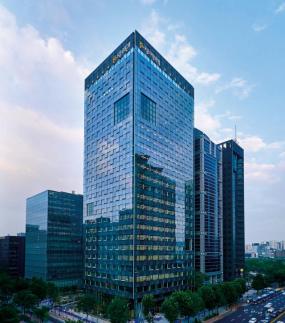 KB Financial Discusses Digital Asset Cooperation With Pantera Capital KB Financial Group said Saturday it discussed ways to cooperate in blockchain with Pantera Capital, a U.S. blockchain-focused venture capital firm and hedge fund. Founded in 2003, Pantera Capital launched the first U.S. bitcoin fund in 2013 and specializes in blockchain investments. It currently manages about $5.2 billion in assets. The two sides shared the latest trends in the global blockchain industry and looked for areas that align with KB Financial’s digital asset agenda, the company said. They also discussed benchmarking investment approaches and cooperation models that have been proven in global markets, and ways to strengthen collaboration going forward. A KB Financial official said the group will “secure future financial competitiveness based on blockchain and accelerate efforts to identify promising new global businesses” by building close ties with leading global funds. Separately, KB Financial has been moving to strengthen cooperation with Tether and Circle, the top two global stablecoin operators, as it seeks an edge in the digital asset market. It has also signed a business agreement for the second phase of “Project Hangang,” led by the Bank of Korea. * This article has been translated by AI. 2026-05-03 11:30:14
 -
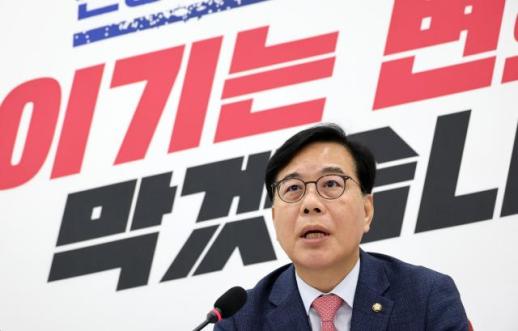 PPP Floor Leader Song Eon-seok Slams Ruling Party’s Special Counsel Bill to Drop Charges Song Eon-seok, floor leader of the People Power Party, on May 3 criticized a bill introduced by the Democratic Party to create a special counsel empowered to cancel prosecutions, calling it “like a thief appointing the police.” Speaking at a news conference at the National Assembly, Song said it would amount to “police appointed by a thief trying to make the thief’s crime disappear.” He said President Lee Jae-myung had insisted he was the target of a “fabricated indictment” and pushed a parliamentary investigation, and was now “openly” seeking a special counsel to erase alleged wrongdoing. Song called it a privilege “ordinary citizens could not even imagine.” Song said the Democratic Party, throughout the parliamentary investigation, relied on one-sided claims by convicted criminals including Lee Hwa-young and Nam Wook, but failed to prove an alleged fabricated indictment. Instead, he said, testimony emerged that “poured out” to support Lee’s guilt. He cited testimony by Bang Yong-cheol, a former vice chairman of Ssangbangwool, who said he met Ri Ho-nam in the Philippines in July 2019 and sent $700,000 as the price for then-Gyeonggi Gov. Lee Jae-myung’s visit to North Korea. Song also cited testimony by former Ssangbangwool Chairman Kim Seong-tae, who said there was no “salmon sashimi drinking party,” calling it a point-by-point rebuttal of what he described as false claims by Democratic Party lawmakers. Song said the parliamentary investigation brought the truth “one step closer” and exposed what he called the Democratic Party’s false agitation over a fabricated indictment. He questioned why the matter should move from the investigation to a special counsel, arguing it would pressure investigators into a “false probe” and an “unreasonable” cancellation of prosecutions. He also said it violates modern rule-of-law principles for a president to appoint a special counsel and for that special counsel to seek to eliminate the appointing authority’s trial. Song said the upcoming local elections are likely to become a vote on whether canceling the president’s prosecution is justified. He added that the election would ask whether the president’s trial can be erased entirely, whether a president should enjoy such privilege, and whether the country will be one of privilege and unfairness or one of rule of law and justice.* This article has been translated by AI. 2026-05-03 11:24:19
 -
 Second Korean tanker reroutes via Red Sea as Seoul presses Iran on Hormuz safety SEOUL, May 03 (AJP) - A second South Korean tanker carrying crude oil has safely passed through the Red Sea and is en route to South Korea, authorities said Sunday, underscoring Seoul’s growing reliance on alternative shipping routes as the blockade of the Strait of Hormuz continues to disrupt global energy logistics. The Ministry of Oceans and Fisheries said Sunday the vessel had safely transited the Red Sea as of 10 a.m. after loading crude at Saudi Arabia’s Yanbu port. It marks the second confirmed Korean tanker to use the Red Sea corridor since the Hormuz blockade intensified following the outbreak of war between the United States and Iran on Feb. 28. The ministry said it provided around-the-clock monitoring and operational support during the passage, including real-time communication channels with the shipping company and vessel, as well as navigation safety updates. “We supported the safety of the vessel and crew through 24-hour monitoring, provision of maritime safety information and real-time communication systems between the ministry, the shipping company and the vessel,” the ministry said in a statement. “We will continue to make every effort to stabilize domestic crude oil supplies.” The latest voyage highlights how South Korea, heavily dependent on Middle Eastern crude imports, is cautiously testing alternative routes while many vessels remain stranded or delayed around the Persian Gulf amid lingering security concerns. Seoul’s diplomatic efforts also intensified over the weekend. The Foreign Ministry said Foreign Minister Cho Hyun held a phone call Saturday with Iranian Foreign Minister Seyed Abbas Araghchi to discuss the regional situation and maritime security. It was the third ministerial-level communication between Seoul and Tehran since the U.S.-Iran conflict erupted earlier this year. According to the ministry, the call was requested by the Iranian side. During the talks, Araghchi explained Tehran’s position regarding ongoing negotiations with Washington, while Cho stressed the urgent need for regional stability given its impact on global security and the economy. Cho also raised concerns over multinational vessels, including Korean ships, that remain anchored near the Strait of Hormuz, emphasizing the necessity of restoring safe maritime transit for all commercial shipping. The two sides agreed to maintain close communication. The diplomatic exchanges came as uncertainty deepened over cease-fire negotiations between Washington and Tehran. U.S. President Donald Trump said Saturday he was reviewing Iran’s latest proposal but doubted it would be acceptable, signaling that prospects for a durable cease-fire remain fragile. “I can’t imagine that it would be acceptable,” Trump said on Truth Social, a day after saying he was “not satisfied” with Tehran’s latest offer. Trump later clarified that he had only been briefed on the “concept of the deal” and was awaiting the precise details. Iran’s latest proposal reportedly softens its previous demand that Washington lift the Hormuz blockade before direct negotiations resume. According to senior Iranian officials cited by U.S. media, Tehran is now willing to reopen the strategic waterway before formal talks proceed. The Strait of Hormuz previously handled roughly one-fifth of global oil shipments, making its disruption one of the most consequential supply shocks since the outbreak of the war. Trump has repeatedly insisted Iran must permanently halt uranium enrichment and abandon any path toward nuclear weapons capability, while Tehran continues to defend what it calls its sovereign right to nuclear enrichment. Iranian Deputy Foreign Minister Kazem Gharibabadi said Friday that “the ball is now in the United States’ court,” warning that Tehran remained prepared for renewed military conflict if diplomacy failed. 2026-05-03 11:07:05
 -
 Special Counsel Seeks 20 Years for Park Seong-jae, Raising Questions About Prosecutors’ Role The law is a blade. In the wrong hands, it can serve justice or become violence. Prosecutors are among those who wield it, and their core duty is not to serve power but to restrain it. When the blade turns on the public, the state weakens; when it points at power, the rule of law holds. A recent essay by prosecutor Jeong Jae-in and a special counsel’s request for a 20-year prison term for Park Seong-jae, a former justice minister, are not simply about the length of a sentence. They raise questions about why Korea’s prosecution exists and where the rule of law is headed. This does not prejudge the court’s decision. Still, the special counsel’s sentencing request, circumstances described in court and the prosecution’s past record invite a renewed look at what prosecutors are meant to do. The special counsel indicted Park on the grounds that, during a period involving discussion of martial law, he not only failed to carry out a constitutional check but also used the Justice Ministry organization to prepare related steps, and sought a 20-year sentence. When a state considers an extreme use of power such as martial law, what is demanded of lawyers is not technique but conscience. Those who know the law best are expected to guard its boundaries. If legal knowledge is used to make the exercise of power more precise, the law is left with form but loses its spirit. Martial law is not merely a military measure; it is a last-resort safeguard for the constitutional order. That is why every step must be subject to strict constitutional control. If, as the special counsel alleged, there were reviews of dispatching prosecutors to a joint investigation headquarters, preparations for travel bans and checks on correctional facilities’ capacity, those steps could be read not as routine administration but as advance preparation for exercising power. The concern is that the law may have functioned as a tool to execute power rather than to restrain it. In the era of military dictatorship, soldiers stood in front and lawyers often handled the cleanup behind them. Today, lawyers can be more than supporting players; at times they help design the structure of power. When illegality is rationalized in legal language, violence can be disguised as order and repression as administration. That is the role often described as a “legal technician” — someone who relies on technique over principle and designs outcomes rather than pursuing justice. Jeong’s essay drew attention because it targeted that problem. It called for self-reflection not only about individual misconduct but about the legal profession as a whole. He described abuse of authority as the use of public power for private benefit and framed aiding an insurrection not as passive fault but as an issue of active responsibility. His warning about “destroying the law in the name of the law” was presented as more than rhetoric — a caution to Korea’s legal community. The article also invoked the figures sometimes referred to as the “three stars” of Korea’s legal world — not the job categories of prosecutor, judge and lawyer, but three senior legal leaders after liberation: Gain Kim Byeong-ro, Hwagang Choe Dae-gyo and Paolo Kim Hong-seop. Kim is remembered for building judicial independence, Choe for holding to the principle that prosecutors must not become servants of power, and Kim for rulings that upheld human dignity. What they shared, the article said, was a refusal to treat law as mere technique. For them, law existed for people, not for power — a matter of conscience rather than a tool for advancement. The article argued that today’s reality is different. Prosecutors have gained formidable authority, and with it stronger temptations. It cited the pull of political power, ties to capital through the market for former officials, and a tendency to treat cases as career management — factors it said have eroded the profession’s purpose. It pointed to past cases as examples. The case of former senior prosecutor Kim Gwang-jun involved charges of taking money and valuables from a person linked to an investigation target, exposing ethical problems inside the prosecution. The case of former senior prosecutor Kim Hyeong-jun, described as a “sponsor prosecutor” scandal, also drew controversy and highlighted networks of connections and solicitations. The case of former prosecutor general Jin Gyeong-jun showed how the intersection of capital and power can cloud judgment among legal elites; while some charges were found not guilty, a prison sentence was finalized for other crimes, leaving a deep wound to public trust. The article said the core issue in such cases is not individual deviation but structural weakness. When prosecutors stand at the crossroads of power and capital and fail to hold the center, the law itself wavers. When the law wavers, people stop believing in justice, and a society that does not believe in justice is ultimately ruled by force. It also recalled attorney Han Seung-heon, describing him as someone who lived the full arc of a legal career — prosecutor, lawyer, law school professor and defendant. The article said he stood with people rather than power and tried to protect the spirit of the law rather than legal technique, arguing that lawyers are a last line of defense for human dignity. The article ended with questions: Who do prosecutors exist for — power or the public, money or conscience? It urged prosecutors to return to basics and to the spirit associated with Kim Byeong-ro, Choe Dae-gyo, Kim Hong-seop and Han Seung-heon. It concluded that law is not technique but conscience, and that prosecutors are public servants, not enforcers for those in power. 2026-05-03 11:03:20
 -
 Trump Signals Deeper Cuts to U.S. Troops Stationed in Germany Beyond 5,000 The U.S. military has announced plans to cut about 5,000 troops stationed in Germany, and President Donald Trump suggested the reduction could be even larger. CNN reported that Trump told reporters in Florida on Friday, before boarding Air Force One, that the United States would “reduce troops significantly” and cut “much more” than 5,000. His comments came less than a day after the Pentagon said it would withdraw about 5,000 troops from Germany over the next six to 12 months. Trump had also signaled possible cuts earlier this week, after German Chancellor Friedrich Merz said the United States was being “humiliated” in talks over a ceasefire with Iran. Tensions between European leaders and the Trump administration have also intensified after the United States entered a war with Iran without giving most NATO allies advance notice, according to the report. Germany’s government has appeared to take the decision in stride. Defense Minister Boris Pistorius called the U.S. troop reduction “expected” and said it underscored the need for Europe to take greater responsibility for its own security. More than about 36,000 U.S. troops are currently stationed in Germany. Ramstein Air Base is a key hub that hosts the headquarters of the U.S. Air Forces in Europe and units that carry out airlift, airdrop and aeromedical evacuation missions. Germany also hosts NATO-related facilities.* This article has been translated by AI. 2026-05-03 10:51:15
 -
 Korea's AI boom is outrunning its safeguards, exposing widening governance gap SEOUL, May 03 (AJP) - Artificial intelligence is no longer an emerging technology in South Korea. It is already embedded across offices, software engineering, media production, education and financial services at one of the fastest rates in the world. The problem, experts increasingly warn, is that the systems designed to govern that transformation are evolving far more slowly than the technology itself. “Many organizations claim to have ethical frameworks, but few can demonstrate them through concrete diagnostics or formalized processes,” Lyse Langlois, director of the International Observatory on the Societal Impacts of AI and Digital Technology at Laval University, said during a seminar on AI ethics and safety at Korea University last Thursday. Her warning came as data place South Korea rapidly emerging as one of the world’s most AI-intensive economies. According to Anthropic’s Economic Index released in January, South Korea accounted for 3.06 percent of global Claude AI usage, placing it among the top five AI-using countries alongside the United States, India, Japan and the United Kingdom. Based on approximately one million real-world AI conversations collected in late 2025, the dataset offers one of the clearest snapshots yet of how AI is being integrated into economic activity. What stood out is not merely the scale of Korean AI usage, but its concentration inside professional workflows. More than half, or 51.1 percent, of Korean AI interactions were work-related — the highest proportion among East Asian economies analyzed, exceeding Japan, Taiwan and Singapore. Korea is no longer experimenting with AI at the margins. It is integrating the technology directly into knowledge-intensive production. Software debugging and optimization emerged as one of the country’s largest AI use categories, followed by multimedia content creation, educational support and research assistance. Computer and mathematics-related professions accounted for the largest share of AI users at 25.6 percent, followed by arts, design and media at 14.9 percent, followed by arts, media and education and library-related roles at 13.4 percent. The findings align with broader structural shifts identified by the Korea Institute for International Economic Policy (KIEP), which analyzed Anthropic’s January data and concluded that AI in South Korea is evolving beyond simple automation toward collaborative augmentation. Between August and November 2025, Korea recorded the sharpest decline among East Asian peers in tasks fully delegated to AI, while collaborative human-AI interaction rose sharply. The shift suggests Korean workers are increasingly using AI not as a replacement tool, but as a partner embedded inside complex judgment work. That transition could generate major productivity gains. KIEP projected AI adoption could significantly lift long-term labor productivity growth, particularly in advanced knowledge sectors. But researchers also warned the effects may be uneven, producing simultaneous “deskilling” in routine work and “upskilling” in highly specialized professions. Yet Korea’s institutional safeguards are lagging far behind the scale of that transformation. “AI safety is becoming a matter of building measurable, enforceable and continuously evolving systems,” Lim Ji-hoon, professor at Korea University’s Graduate School of Information Security, said during the seminar. Lim warned that AI risks are changing rapidly as systems evolve beyond passive chatbots into increasingly autonomous “agent-based” models capable of independently planning actions, accessing tools and interacting with external systems. Such systems dramatically expand risks tied to cyberattacks, misinformation, fraud and data misuse, particularly in data-rich economies like South Korea. The frequencies of data breaches already flag the danger. Over the past year, South Korea has suffered a series of major data breaches exposing weaknesses in the country’s digital governance infrastructure. Lotte Card suffered a large-scale personal data leak that led regulators last week to slap a roughly 4.5-month business suspension and a fine of around 5 billion won ($3.6 million). Separate breaches at Coupang and matchmaking company Duo exposed large volumes of highly sensitive information, including names, workplace details, religion, physical characteristics and phone numbers. The Duo breach particularly alarmed regulators because the company failed to promptly notify users and retained hundreds of thousands of outdated records containing resident registration information. Experts at the seminar repeatedly stressed that such incidents carry fundamentally different implications in the AI era. In traditional digital systems, data leaks primarily created risks of identity theft or financial fraud. In AI-intensive environments, however, large-scale structured personal data can become training material, profiling infrastructure or targeting input for automated systems capable of operating at industrial scale. That convergence — mass data exposure meeting rapidly advancing AI capability — increasingly defines the urgency surrounding AI governance debates in South Korea. Yet despite its high adoption rate, Korea’s regulatory framework remains comparatively rudimentary relative to Europe’s tightening approach. A global comparative study evaluating 178 countries across 11 AI governance criteria ranked South Korea below countries operating under the EU AI Act. While Seoul’s 2024 “Act on the Development of AI and Establishment of Trust” established regulatory structures, adopted a risk-based framework and introduced deepfake labeling requirements, analysts said the law remains considerably more industry-friendly than Europe’s stricter regime. Fines remain relatively modest, transparency requirements around copyrighted training data are limited, and environmental impacts tied to large-scale AI infrastructure are largely absent from the legislation. The result, experts say, is a widening gap between AI deployment speed and accountability architecture. Langlois argued governments and corporations globally have spent years drafting ethical principles without building systems capable of real enforcement. “Ethics is not a checklist,” she said. “It is governance architecture.” At the seminar, she proposed a four-pillar framework for institutionalizing AI ethics: establishing enforceable standards, building organizational competency, implementing audit and monitoring systems, and ensuring continuous adaptation as AI systems evolve. Her broader point was that trust in AI cannot depend on voluntary declarations alone. That argument increasingly resonates in Korea because the country’s AI adoption profile is unusually concentrated in industries where data sensitivity and intellectual property risks are highest. Software engineers using AI for debugging and optimization interact directly with proprietary codebases and internal systems. Media professionals increasingly rely on AI-generated or AI-assisted content. Educators handle large amounts of student and institutional data. As AI becomes embedded deeper into those sectors, governance failures could propagate much faster across the economy. For now, much of the responsibility rests with private companies, while regulatory role is confined to post-crisis damage control. Naver AI Safety Center leader Won Seong-jae said the company is rebuilding its internal AI risk evaluation systems around practical service-level risks involving privacy, misinformation and legally sensitive content categories. He described the company’s objective as “unnoticeable safety” — systems robust enough that users can rely on AI-powered services without constantly questioning whether safeguards exist. The challenge facing South Korea is that the country may already be approaching the frontier where AI adoption itself begins exposing the limits of existing institutions. 2026-05-03 10:48:00
 -
 LG Electronics Wins 27 Red Dot Design Awards, Including Top Prize for OLED evo W6 LG Electronics said Saturday it won 27 prizes at the Red Dot Design Award 2026, including a top honor. The Red Dot Design Award is considered one of the world’s three major design prizes, along with the iF Design Award and IDEA. LG Electronics also won 26 prizes at the iF Design Award 2026 in February. The company said products recognized then included the LG CLOiD home robot, designed to fit into home environments and interact by responding to facial expressions, voice and gestures, and the LG OLED evo W6 wireless wallpaper TV, about 9 millimeters thick. At this year’s Red Dot awards, the LG OLED evo W6 won the Best of the Best honor. LG Electronics said the TV is about 9 mm thick—about the width of a pencil—and integrates the screen, power unit and speakers to sit flush against a wall in a wallpaper-style design. In home appliances and IT, LG Electronics said judges also praised designs that considered everyday convenience. The recognized products included: △the LG French-door refrigerator, which uses a zero-clearance hinge to minimize the gap between the refrigerator and the wall; △the LG Whisen Objet Collection Cool home air conditioner with a minimalist design; and △the LG Sound Suite home audio system designed to deliver optimized immersive sound. Jeong Uk-jun, head of LG Electronics’ Design Management Center and an executive vice president, said the company will continue developing customer-focused designs that blend naturally into living spaces while improving ease of use.* This article has been translated by AI. 2026-05-03 10:48:00
 -
 Samsung Electronics union sees surge in resignations amid dispute over bonus demands Resignations from a Samsung Electronics labor union are rising, led by members outside the company’s semiconductor division, as complaints grow that the union’s performance-bonus demands favor chip workers. The union has warned of an 18-day general strike starting on the 21st, and a decision to keep dues automatically deducted during the dispute has brought long-simmering grievances into the open. Industry officials said that posts seeking to withdraw from the Samsung Electronics branch of the cross-company union have surged on the union website’s message board. Daily withdrawal requests that had typically stayed below 100 climbed past 500 on April 28 and exceeded 1,000 on April 29, according to the officials. The trend has spread through internal company boards and workplace online communities, where members have posted proof of withdrawal. Departing members said the union has prioritized the interests of workers in the Device Solutions (DS) division, which runs Samsung’s semiconductor business, while ignoring demands from other divisions. About 80% of the union’s members are DS employees, and DS members are also leading the planned strike, the officials said. Ahead of the walkout, the union has demanded that only the DS division receive performance bonuses equal to 15% of operating profit with no cap. It has not presented any conditions for the Device eXperience (DX) division, which has weaker results, the officials said. DX, which handles finished products, saw first-quarter operating profit fall 36% from a year earlier, affected by higher semiconductor prices from DS, the officials said. In that context, critics said the union’s proposal would leave DS employees receiving performance bonuses close to 600 million won per person this year, while DX employees would face the prospect of high-intensity business restructuring without any bonus. Tensions have also risen after the union began recruiting staff for the strike, offering 3 million won in allowances to those who participate for at least 15 days. The union also decided to raise dues for May to 50,000 won from 10,000 won. In addition, the union announced late last month it would shift dues collection to a checkoff system, under which the company deducts dues from monthly pay and transfers them to the union, potentially exposing whether an employee is a member. After those moves became known, posts flooded internal online boards criticizing the dues increase. “It’s hard to accept raising dues when pay will also fall during a strike,” one post said. Another wrote, “DX isn’t even being looked after — why should we raise dues beyond covering leadership legal costs and even pay favors to strike staff?” Still, with DX members making up about 20% of the union, observers said the union is still likely to press ahead with the strike. A Samsung Electronics employee said, “We’re in the same union, but the atmosphere is becoming more divided depending on which division you belong to,” adding, “It’s painful to see the camaraderie and workplace culture built up over years breaking down as conflict within the union deepens.”* This article has been translated by AI. 2026-05-03 10:36:19
 -
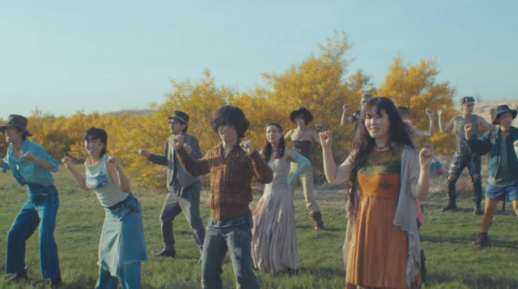 Why AKMU’s ‘Paradise of Rumors’ Is Striking a Nerve in an Exhausted Korea “Weary and sick traveler, lonely traveler, your incurable illness cannot exist there.” (omitted) “Walk slowly, for a long time, to Paradise of Rumors.” (lyrics excerpt from ‘Paradise of Rumors’) One of the quietest songs to move people lately is, unusually, very slow. There are few trendy electronic sounds and no punchy hook. Instead, there is an old guitar tone and a voice that feels like wind. It settles on the listener, very gradually, like late-afternoon light slipping through a window. That is the story of ‘Bloom,’ an album by sibling duo AKMU. It has 2.5 billion cumulative streams on Melon, and a single track has appeared on the daily chart for 1,046 consecutive days. Those striking numbers point, with unusual precision, to what people in South Korea are worn down by. “After joy comes sadness — it’s a beautiful heart. Don’t be afraid; sit and face it. It becomes a brilliant painting. Your laughter, and your tears in harmony.” (lyrics excerpt from ‘Joy, Sadness, a Beautiful Heart’) Listeners say the song makes them choke up. Some write that it comforted them during chemotherapy; others say thoughts of wanting to die have eased, even a little. In an era defined by artificial intelligence, an intensely analog song is being embraced. People now live in a time of abundance and convenience. With a swipe, they can watch almost anything. AI can draw, make music and even write. Algorithms analyze tastes and show what users are likely to want. Life keeps getting faster and easier. Yet faces look more tired. On the subway, people stare at screens. In cafes, at crosswalks and in bed just before sleep, they keep watching something. Bodies stop, but minds do not. Information overflows, while emotions feel increasingly dry. Somewhere along the way, people lost the ability to simply be still. Even rest is expected to be productive. Exercise must be logged, travel must become photos, reading must be posted as proof. Doing nothing is treated like laziness. Even a moment without activity can feel unsettling. That may be why Seoul has seen a curious new scene. Not long ago, Gwanghwamun Square hosted a “spacing-out contest.” Participants had to sit still for 90 minutes without looking at their phones. On weekends, the Han River has hosted a “sleeping contest,” judging who can fall into the deepest, calmest sleep. Staring into space and sleeping — once among the most natural human acts — have become competitions. People submit applications and beat out others just to earn the right to do nothing. It is funny, and also sad. Why would people choose to sit blankly in the middle of a city, or lie down by the Han River to sleep in front of strangers? Perhaps because they have gone too long without real rest. National statistics show South Koreans’ average sleep time continues to fall, while the number of people who cannot sleep is rising. Students cut sleep between cram schools and entrance exams. Office workers stay up late amid endless tasks and anxiety. Self-employed people cannot relax even after closing their shops. Parents find time for themselves only after putting children to bed. Everyone is tired, but few can rest at ease. Lee Chan-hyuk’s lyrics do not offer loud, easy hope. They acknowledge sadness. “After joy comes sadness — it’s a beautiful heart.” At first, the line can sound strange, because many people learned to treat sadness as failure. Depression is something to hide, anxiety something not to reveal, and being shaken something that means falling behind. But the song argues that sadness is proof the heart is still alive — and that joy and sadness were never truly separate. Memories that last are rarely made of joy alone. Love includes pain. Youth can be radiant and anxious at once. A parent’s back can feel steady yet lonely. Summer vacation in childhood can be happy, but the evening it ends is often sad. Life holds joy and sorrow together, yet people may have been pushed for too long to show only happiness. That is why listeners break down in front of the song: they do not have to pretend they are fine. What deepens the impact is that the music was made by passing through real wounds. Lee Su-hyun spent a period largely cut off from the world amid a long slump, depression, insomnia and panic. There were times when her weight rose sharply and she could not leave her room. Her brother, Lee Chan-hyuk, tried to bring her back to life by walking with her, traveling and getting her into sunlight. They walked the Camino de Santiago and also went to Uganda for volunteer work. ‘Bloom’ is not just an album; it reads like a record made to help someone live again. That may be why the music carries a sincerity that feels rare today. This is an age that tries to make everything efficient: fast answers, fast delivery, fast relationships, fast consumption. AI keeps reducing the time needed for tasks, yet people feel busier. In technologies built to save time, many end up losing themselves. What people need may not be more speed. It may be a brief, forced logoff: putting down the phone and watching the Han River breeze for a long time; eating dinner slowly with someone; listening to one song all the way through at night. Turning pages until drowsiness arrives. Walking for no reason and catching the smell of dusk. That kind of old-fashioned humanity. As the AI era advances, those moments may become even more valuable. The ability to rest well, to be quietly alone, and to look inward may become a distinctly human strength. That may be why people are looking for ‘Paradise of Rumors.’ “Walk slowly, for a long time, to Paradise of Rumors.” Perhaps people are not only listening to the song — they are briefly imagining the road that leads there. 2026-05-03 10:29:21
 -
 Hyundai Motor Group wins 7 US News awards for 2026 hybrids and EVs Hyundai Motor Group said it captured more than one-third of the awards in a major U.S. media outlet’s hybrid and electric vehicle rankings, underscoring its competitiveness in North America’s electrified-vehicle market. The group said it aims to build on that quality reputation as it posts record sales in the region. The automaker said Saturday that it won seven of 19 categories in U.S. News & World Report’s “2026 Best Hybrid and Electric Cars Awards.” U.S. News evaluated 138 vehicles across 19 categories, judging overall quality, fuel economy and driving range based on EPA figures, safety and reliability, the company said. Hyundai and Kia each won three categories, the most among global auto brands, the group said. Genesis won one category. Hyundai’s Ioniq 5 was named best compact electric SUV, and the Tucson Hybrid was named best compact hybrid SUV. Both models won for a third straight year in their categories, the company said. The Ioniq 9 was selected as best midsize electric SUV. Kia’s Niro was named best subcompact hybrid SUV, and the Sportage plug-in hybrid was selected as best compact plug-in hybrid SUV. The Telluride Hybrid won best midsize hybrid SUV, the group said. Genesis’ GV60 was named best compact luxury electric SUV, making the list for the first time, it said. A Hyundai-Kia official said the results show “clear evidence” that models based on the E-GMP dedicated EV platform and the group’s hybrid lineup are being recognized for top-tier value in North America. The official said the companies will continue introducing vehicles aimed at meeting a range of customer lifestyles and leading the global electrification market. Hyundai Motor Group said it is seeking to strengthen its lead in North America’s electrified market as U.S. sales of Hyundai and Kia hybrids and EVs continue to rise. Hyundai Motor America said Hyundai’s April hybrid sales rose 52% from a year earlier, the best monthly result on record. Kia said its April hybrid sales jumped 97%, while total sales of its EV models rose 71%, both the best April results on record. For Hyundai, April sales of the Sonata Hybrid surged 171%, and the Elantra Hybrid rose 55%, it said. The Santa Fe Hybrid also set a new April retail sales record, pointing to growing SUV-focused hybrid demand. Kia said April sales of the Sportage Hybrid and Sorento Hybrid increased 112% and 34%, respectively. Over the same period, sales of the large electric SUV EV9 jumped 481%, it said.* This article has been translated by AI. 2026-05-03 10:28:07