
Journalist

RYU SO HYUN
2s0@ajunews.com
-
 DB Insurance Reports 39.9% Drop in Q1 Net Profit Due to Rising Claims DB Insurance reported a nearly 40% decline in net profit for the first quarter of this year, attributed to an increase in claims from actual loss insurance and a rise in high-value incidents. Although revenue increased, profitability weakened significantly due to a sharp drop in insurance profits. On May 15, DB Insurance announced that its net profit for the first quarter was 268.5 billion won, a 39.9% decrease compared to the same period last year. During the same timeframe, revenue rose by 16.2% to 5.7782 trillion won, but operating profit fell by 28.5% to 462.7 billion won. The primary reason for the poor performance was a decrease in insurance profits. DB Insurance's insurance profit for the first quarter was 226.6 billion won, down 43.7% from the previous year. Long-term insurance profits also fell by 32.7% to 265.2 billion won, impacted by a temporary increase in high-value claims related to death and disability, as well as a continuing rise in the loss ratio for actual loss insurance. Automobile insurance profits were limited to 8.8 billion won, an 80.8% decrease compared to the same period last year, primarily due to an increased loss ratio. General insurance reported a loss of 47.5 billion won, reflecting the impact of major domestic incidents, including accidents related to Daejeon Safety Industries. General insurance, which has a high proportion of corporate policies, can experience significant profit volatility due to large incidents such as factory fires or industrial accidents. However, the foundation for future profits showed signs of improvement. By the end of the first quarter, the insurance contract margin (CSM) balance increased by 616.9 billion won to 12.8 trillion won compared to the end of the previous year. Capital soundness indicators also improved. DB Insurance's consolidated solvency ratio (K-ICS) rose to 232.1%, an increase of 13.9 percentage points from the previous quarter, reflecting proactive capital expansion measures such as the issuance of new capital securities. 2026-05-15 10:35:19
 -
 Insurance Payments Required for Driver's Liability Even Without Prosecution Financial authorities have determined that if a traffic accident victim suffers serious injuries, the driver's insurance must cover the criminal settlement amount, even if the perpetrator is not prosecuted. This decision aims to ensure that insurance companies provide coverage when settlements are made to reduce the likelihood of criminal charges. On May 14, the Financial Supervisory Service reported that its Financial Dispute Resolution Committee ruled in favor of three cases related to driver’s insurance claims, stating that insurance companies must pay out amounts equivalent to the criminal settlement. This insurance product covers criminal settlement amounts when the insured causes serious injuries classified as injury grades 1 to 3 under the Automobile Damage Compensation Act. The victims in these cases sustained significant injuries classified as grades 1 to 2 from a typical traffic accident. After reaching a criminal settlement with the perpetrator, they filed claims for traffic accident support payments with their insurance company. However, the insurer denied the claims, arguing that since the perpetrator was not prosecuted due to a lack of grounds for prosecution, “this was not a case requiring a criminal settlement.” The committee disagreed with this assessment, stating that the terms of the insurance policy clearly indicate that injury grades 1 to 3 are sufficient grounds for compensation. The ruling emphasized that the determination of whether the victim ultimately received a serious injury classification or whether the prosecution was initiated is irrelevant; what matters is the severity of the injuries. Furthermore, the committee concluded that a criminal settlement is not only necessary after a criminal conviction. The potential for criminal liability can change based on the victim's recovery status or the possibility of long-term injuries immediately following the accident. Therefore, if the perpetrator reached a settlement to mitigate the risk of criminal charges, the insurance company must recognize this as a valid criminal settlement. The Financial Supervisory Service explained that this decision holds significance for both drivers and victims of traffic accidents. It allows perpetrators to lessen their financial burden from settlements and return to their daily lives, while victims can receive timely and meaningful compensation. The agency plans to continue promoting reasonable insurance payouts in driver’s insurance and other essential insurance products.* This article has been translated by AI. 2026-05-14 19:59:19
 -
 Hong Kong ELS Penalty May Be Reduced as Financial Supervisory Chief Hints at Possibility The penalty for the improper sale of Hong Kong equity-linked securities (ELS) is entering a phase of reconsideration, with the Financial Commission rejecting the Financial Supervisory Service's (FSS) proposal. FSS Chief Lee Chan-jin has also hinted at the possibility of further reductions, making it unlikely that the original penalty will be finalized as is. On May 14, financial sources reported that Lee suggested the potential for a reduction in the penalty during a press briefing regarding the Hong Kong ELS. The FSS is expected to complete its supplementary review by the end of this month and resubmit its findings to the Financial Commission. Previously, during its ninth regular meeting, the Financial Commission discussed the results of inspections on banks and securities firms related to the Hong Kong ELS and requested the FSS to review its findings due to some factual inaccuracies and legal interpretations. This marks the first time in eight years that the Financial Commission has publicly rejected a proposal from the FSS, following the Samsung Biologics accounting scandal. However, the nature of the two cases differs significantly. In the Samsung Biologics case, the core issue was whether accounting fraud occurred and the judgment of accounting violations. After the review, the penalties actually increased. In contrast, the current focus regarding the Hong Kong ELS is on how to justify the large penalty based on applicable standards and legal principles rather than the facts of improper sales. The FSS had previously decided on a total penalty of approximately 1.4 trillion won against five banks, including KB Kookmin, Shinhan, Hana, NH Nonghyup, and SC First Bank. Initially, penalties were discussed at around 4 trillion won, but this was reduced to about 2 trillion won, reflecting the banks' voluntary compensation efforts, and further decreased through the sanction review process. The possibility of additional reductions arises from concerns that the existing calculation method could be contested in future litigation. Under the Financial Consumer Protection Act, penalties are determined based on various factors, including the scale of sales, the degree of violations, efforts for victim restitution, and the responsibility of each seller. The banking sector has already undertaken significant voluntary compensation and may argue that the current penalty is excessive, given the varying sales amounts and levels of improper sales among different sellers. Additionally, this case represents the first major penalty imposed on the banking sector for improper sales since the implementation of the Financial Consumer Protection Act. The financial sector anticipates that the FSS will reorganize the basis for penalties and the degree of violations by each seller during the supplementary review process before submitting an adjusted proposal. If a penalty in the hundreds of billions of won is confirmed, the likelihood of administrative lawsuits from the banking sector increases, prompting authorities to enhance their legal defenses before the final decision is made.* This article has been translated by AI. 2026-05-14 19:41:49
 -
 Youth Future Savings Accounts Offered by 15 Institutions with Interest Rates Up to 8% The 'Youth Future Savings Account,' designed to support asset formation for young people, will be available next month through 15 financial institutions. The maximum interest rate is expected to range from 7% to 8% depending on the institution. On May 14, the Financial Services Commission held an event titled 'The First Step to Filling the Future: Unboxing Talk Concert for Youth Future Savings' at the Small Business Market Promotion Corporation's dedicated training center in Seoul, where it announced the participating institutions and interest rates for the Youth Future Savings Account. This policy financial product combines government contributions with tax-exempt interest income to assist young people in building their initial assets. The participating institutions include major banks such as KB, Shinhan, Woori, Hana, and NH Bank, along with iM Bank and regional banks like Busan, Gyeongnam, Gwangju, and Jeonbuk. New entrants to the program include Suhyup Bank, KakaoBank, Toss Bank, and Korea Post, bringing the total to 15 institutions. The account features a fixed interest rate for three years, starting with a base rate of 5%, plus an additional preferential rate of 2% to 3% depending on the institution. Consequently, the maximum interest rate is projected to be between 7% and 8%. All participating institutions will offer a common preferential rate of 0.5 percentage points for young people with an annual income of 36 million won or less, and an additional 0.2 percentage points for those who complete the 'Financial Counseling for All Youth' program. Considering the government contributions and tax benefits, the effective yield is expected to be even higher. The Financial Services Commission explained that if a participant contributes 500,000 won monthly for three years, they could receive between 21.1 million and 21.38 million won for the standard account, and between 22.27 million and 22.55 million won for the preferential account. This is comparable to the effects of joining a standard savings account with an annual simple interest rate of 13.2% to 14.4%, or a preferential account with rates of 18.2% to 19.4%. The commission also announced improvements to the program. To ensure that young couples who are married are not excluded due to household income criteria, the income requirements will be relaxed for two-person households consisting of the account holder and their spouse. The threshold for the standard account will increase from 200% to 250% of the median income, while the preferential account will rise from 150% to 200%. Additionally, a credit score incentive will be implemented. Young people who maintain their Youth Future Savings Account for more than two years and contribute over 8 million won will receive a credit score boost of 5 to 10 points. If they switch from the Youth Leap Account, the duration and contributions from the previous account will also be considered.* This article has been translated by AI. 2026-05-14 19:18:58
 -
 Korean Scholarship Foundation and Labor Welfare Corporation Join New Leap Fund The Korean Scholarship Foundation and the Labor Welfare Corporation have expressed their intention to join the New Leap Fund, confirming their commitment to financial authorities. Following the controversy surrounding the private bad bank, Sangnoksoo SPC, the review of long-term delinquent loans has expanded, prompting discussions about including policy-related bonds held by public institutions into the New Leap Fund. The New Leap Fund is a program designed to purchase unsecured loans under 50 million won that have been delinquent for over seven years, supporting debt restructuring or loan cancellation. Its aim is to assist borrowers who are struggling to return to normal financial life due to long-term delinquencies. As of May 14, there are a total of 2,735 financial institutions holding long-term delinquent loans. Of these, 2,718 have joined the New Leap Fund, while 17 have not. Among the non-participating institutions, 15 are lending companies, and the remaining two are the Korean Scholarship Foundation and the Labor Welfare Corporation. Both agencies recently communicated their intent to join the New Leap Fund to the Financial Services Commission. The estimated total of long-term delinquent loans held by the two institutions is around 60 billion won. The Korean Scholarship Foundation's long-term delinquent loans exceed 25 billion won and include debts from young borrowers who have failed to repay their student loans on time. The Labor Welfare Corporation's long-term delinquent loans are estimated at about 37 billion won, primarily consisting of policy loans such as worker stabilization funds. These loans are significant as they differ from typical financial institution loans, being policy-related loans like student loans and worker stabilization funds. A high proportion of long-term delinquents in student loans are young individuals, while the Labor Welfare Corporation's loans are mainly used by low-wage workers in need of living expenses. Despite aligning with the New Leap Fund's goal of supporting vulnerable borrowers, these institutions had previously been excluded from the program. Notably, long-term delinquents on student loans can utilize the existing debt restructuring system of the Credit Recovery Commission, but the benefits are more limited compared to the New Leap Fund. The maximum principal reduction rate under the Credit Recovery Commission is around 70%, while the New Leap Fund allows for reductions of up to 80%. The delay in the Korean Scholarship Foundation's inclusion in the New Leap Fund has meant that long-term student loan delinquents have not been able to access relatively favorable debt restructuring benefits. The delay in joining the fund has been attributed to legal grounds and internal procedural issues rather than a lack of willingness to participate. Public institutions manage loan claims according to relevant laws, so selling claims to the Korea Asset Management Corporation requires separate legal grounds and decision-making processes. The Korean Scholarship Foundation lacks clear legal grounds under current law to sell student loan claims to KAMCO, necessitating legal adjustments. The Labor Welfare Corporation has also been reviewing the feasibility and procedures for selling policy loan claims. The atmosphere has changed following the Sangnoksoo SPC controversy. Concerns were raised that Sangnoksoo SPC had not transferred long-term delinquent loans incurred during the card crisis to the New Leap Fund, prompting the Financial Services Commission to strengthen its review of institutions holding long-term delinquent loans. KB Kookmin Bank's long-term personal credit delinquent loans, which were transferred to KB Star Asset Securitization Company, are also set to be sold to the New Leap Fund. A financial industry official stated, "The intention of the two institutions to join the fund is significant in reducing the blind spots of the New Leap Fund. However, for the actual sale of claims and debt restructuring to proceed after the agreement is signed, legal adjustments and institutional procedures must be expedited."* This article has been translated by AI. 2026-05-14 16:42:50
 -
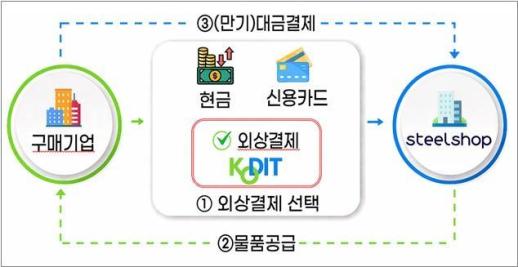 Korea Credit Guarantee Fund Expands Digital Supply Chain Guarantee Service with Dongkuk Steel The Korea Credit Guarantee Fund is expanding its business-to-business (B2B) platform guarantee services to include Dongkuk Steel. On May 14, the fund announced that it will extend its 'Pay-One Guarantee' service, which was previously available to Hyundai Steel, to Dongkuk Steel. The Pay-One Guarantee is an electronic commerce collateral guarantee that allows companies to conduct credit transactions when purchasing goods on B2B platforms. The entire process, from application to issuance and limit management, is carried out within the seller's platform. With this partnership, companies using the guarantee will be able to purchase goods on Dongkuk Steel's steel distribution platform, 'Steel Shop,' using the guarantee certificate as collateral for online credit transactions. This is expected to help purchasing companies reduce cash liquidity burdens while securing necessary raw materials reliably. The process has also been streamlined, eliminating the need for separate visits. By linking the systems of the Credit Guarantee Fund and the distribution platform, automatic assessments based on data will be conducted, allowing companies to receive guarantee certificates on the same day within their pre-assigned limits. The Credit Guarantee Fund believes that this service expansion will contribute to stabilizing raw material supply in the steel industry and enhancing transaction convenience for corporate clients. A fund official stated, “We hope this service expansion will assist steel companies in stabilizing their raw material supply, and we will continue to expand B2B guarantee services across various industries to contribute to building stable supply chains.”* This article has been translated by AI. 2026-05-14 12:09:53
 -
 BC Card's Paybook Grows to 15 Million Users as a Lifestyle Finance Platform BC Card's lifestyle finance platform, Paybook, is expanding its customer reach by focusing on convenient payment options and lifestyle-oriented app technology services. As of this month, BC Card reports that Paybook has accumulated approximately 15 million members. The monthly active user count for the first quarter of this year has also increased by over 16% compared to the same period last year. The user demographic is diverse, spanning not only those in their 20s and 30s but also individuals aged 40 and above, indicating its growth as an all-age platform. Paybook allows users to manage card products issued by over 40 BC Card partner companies within a single app. Users can make QR code payments at various offline and online merchants, including convenience stores, cafes, and supermarkets, without needing a physical card, simply by linking their bank accounts. The platform has also enhanced its convenience features. Users can register mobile vouchers within the app and connect their frequently used brand memberships for easy point accumulation by simply presenting a barcode. Recently, Paybook has expanded its app technology features aimed at helping users save on living expenses. The 'MyTag' service allows customers to select desired brand or industry benefits and receive discounts when paying with BC Card. The 'Shopping Rewards' feature provides additional points when shopping at major online retailers like Coupang and Ali. Additionally, the 'AI Hot Deal' service recommends special offers and discounts based on customer spending patterns. Paybook also offers a spare change investment service that collects change from card payments to invest in domestic and international stocks, along with an AI-based robo-advisor investment service.* This article has been translated by AI. 2026-05-13 17:10:14
 -
 KB Pay Expands Beyond Payments to Integrate Financial and Daily Services KB Kookmin Card's payment platform, KB Pay, is evolving from a payment app into a comprehensive platform that connects financial and daily services offered by KB Financial Group. Building on its payment capabilities, KB Kookmin Card is enhancing its asset management services. Through MyData, users can link accounts, cards, insurance, loans, and investment information scattered across various financial institutions, allowing them to manage their assets and spending. The service also provides personalized asset and spending analysis reports, free remittances, free currency exchanges, and credit score management. The platform features services linked to KB Financial Group affiliates. The automotive service, KB Autofit, supports vehicle price inquiries, used car transactions, and automotive product shopping. Users can also access car selling and home delivery services through KB Capital's KB Chachacha. KB Real Estate offers features such as property registration, sales information, housing recommendations based on conditions, and price inquiries. KB Pay is also expanding its non-financial services. The number of customers using KB Pay's shopping and travel services surpassed 10 million just two and a half years after its official launch. The shopping tab offers special deals, local community collaboration sections, gift options, and rewards from partner shopping malls, while the travel tab provides access to flights, accommodations, car rentals, and domestic and international travel packages. Thanks to this service expansion, the number of KB Pay subscribers exceeded 16 million in January of this year. Monthly active users increased from 7.36 million in 2023 to 9.33 million in 2025.* This article has been translated by AI. 2026-05-13 17:09:00
 -
 Five Major Banks Increase Self-Rescue Efforts by 3.5 Times Amid Debt Management Changes President Lee Jae-myung praised the Financial Services Commission's achievements in inclusive finance as "remarkable" during a Cabinet meeting, highlighting a shift in how banks manage delinquent loans. Instead of selling off delinquent accounts to external collection agencies, banks are now focusing on internal debt adjustments and loan forgiveness to help borrowers recover. Documents obtained from the Cabinet meeting on May 11 reveal that the five major commercial banks—KB Kookmin, Shinhan, Hana, Woori, and NH Nonghyup—saw their internal debt adjustments rise from 989 cases in the first quarter of 2025 to 3,456 cases by the fourth quarter of the same year, a 3.5-fold increase. In contrast, the sale of delinquent loans plummeted from 35,000 cases in 2025 to just 11 in the first quarter of 2026. The Financial Services Commission views this as a transition from a "maximizing recovery" approach to one focused on "recovery and coexistence." Traditionally, the financial sector has relied on selling long-term delinquent loans to external collection agencies. While this allowed financial institutions to remove bad debts from their books, it often left borrowers facing prolonged collection efforts. The management of delinquent loans by banks is evolving. The five major banks have increased their efforts to write off old debts that are difficult to collect. Their performance in terms of debt expiration and write-offs rose from an average of 2,229 cases and 59.8 billion won over the past three years to 7,676 cases and 288.2 billion won in the first quarter of this year. This represents more than a threefold increase in the number of cases and nearly a fivefold increase in the amount, indicating a stronger trend toward internal adjustments rather than transferring delinquent loans externally or leaving them in prolonged collection. During the Cabinet meeting on May 6, President Lee remarked on the report from Financial Services Commission Chairman Lee Ok-won, stating, "The Financial Services Commission is achieving remarkable results. They are doing very well." He emphasized the need for a structural shift in finance, noting that the previous mindset of squeezing every last penny from borrowers was not acceptable. The effects of removing delinquency records are also becoming evident. Approximately 2.928 million individuals who repaid their delinquencies have received credit relief, with 154,000 of them resuming normal financial transactions, such as obtaining new loans or credit cards. Efforts to address old debts are also underway. Financial authorities are working on plans to forgive or write off long-term delinquent loans, specifically targeting 1.13 million individuals with debts under 50 million won that have been overdue for more than seven years, totaling 16.4 trillion won. This initiative aims to reintegrate borrowers who have been excluded from the financial system due to prolonged delinquency. The Financial Services Commission plans to institutionalize these improvements in delinquent loan management to ensure they are not one-time measures. Starting in the second quarter, it will disclose delinquent loan management performance across all sectors and establish incentive systems, including differential fees. This aligns with President Lee's comments regarding the potential for incentives and penalties through evaluations and management guidelines for financial institutions.* This article has been translated by AI. 2026-05-12 03:51:21
 -
 Financial Commission Investigates EMR Firms' Refusal to Join Insurance Claim System The Financial Commission is investigating the collective refusal of certain electronic medical record (EMR) companies to participate in the digitalization of insurance claims, in collaboration with the Fair Trade Commission. This low participation from EMR firms, which play a crucial role in connecting hospitals and the Insured24 system, is seen as a delay in the system's expansion. At a meeting on May 11 in Jongno, Seoul, Kwon Dae-young, Vice Chairman of the Financial Commission, stated, "It is abnormal that, six months after the implementation of a system created after 14 years of discussion, the connection rate with hospitals remains at 29%, and some companies are collectively refusing to participate. The government will normalize this situation." The digitalization of insurance claims allows patients to submit invoices, receipts, detailed billing statements, and prescriptions to insurance companies through the Insured24 app without needing paper documents from hospitals. For this to work, the EMR systems used by medical institutions must be linked with Insured24. As of May 6, a total of 30,614 medical institutions were participating in the digital insurance claim system, including 827 hospitals, 3,573 public health centers, 12,875 clinics, and 13,339 pharmacies. The connection rate for Insured24, based on the total number of targeted medical institutions, stood at 29.0%. Approximately 3.77 million people are enrolled in the Insured24 service, with 2.41 million claims completed. The Financial Commission plans to monitor the progress of Insured24 monthly and aims to increase the connection rate to 80-90% in the second half of the year. Initially, they will examine whether the collective refusal of some EMR companies constitutes unfair practices in collaboration with the Fair Trade Commission. To encourage direct participation from medical institutions, the Financial Commission will introduce features such as displaying the number of claims per hospital on Insured24, allowing institutions to see the benefits of using the service. They will also launch a public campaign in collaboration with Naver and Toss, urging insurance policyholders to request connections with medical institutions. However, the Financial Commission anticipates that the connection rate will rise to 52% next month, following a recent decision by a major EMR company to join Insured24. Vice Chairman Kwon emphasized, "For the public to fully enjoy the benefits of digital insurance claims, the connection rate must approach 100%."* This article has been translated by AI. 2026-05-11 16:25:18