

Journalist

Ryu Yuna
Julia37@ajunews.com
-
 Asian markets rise on ceasefire talks, shrug off BOK pause SEOUL, April 10 (AJP) -Asian markets opened broadly higher Friday as investors bet on easing tensions as U.S. and Iranian delegates are set to hold face-to-face talks following a ceasefire in Pakistan on Saturday. In Seoul, the benchmark KOSPI rose 1.82 percent to 5,883.03, while the junior KOSDAQ gained 1.36 percent to 1,090.68 as of 11:05 a.m. The market largely brushed off the Bank of Korea’s rate freeze — extended for nearly a year — with policy inertia already priced in amid conflicting pressures from rising import costs and a slowing economy tied to the prolonged Gulf conflict. Among movers, Hanwha Solutions gained 1.25 percent to 40,550 won as investors welcomed the Financial Supervisory Service's refusal to greenlight its planned 2.4 trillion won rights offering, calling for revisions to the financing structure. Tech heavyweights led gains. Samsung Electronics rose 2.57 percent to 209,250 won, while SK hynix climbed 3.71 percent to 1,035,000 won as it is expected to deliver equally stellar first-quarter earnings following Samsung’s upbeat guidance earlier this week. Battery and energy stocks traded mixed, with LG Energy Solution falling 1.07 percent and Samsung SDI edging up 0.52 percent. Automakers showed a muted performance. Hyundai Motor added 0.66 percent, while Kia slipped 0.13 percent. Shipbuilders advanced, with HD Hyundai Heavy Industries rising 1.49 percent, while financials tracked higher as KB Financial Group and Shinhan Financial Group gained 1.95 percent and 1.86 percent, respectively. Japan’s Nikkei 225 rose 1.57 percent, China’s Shanghai Composite added 0.78 percent, and Hong Kong’s Hang Seng Index gained 1.18 percent. The Korean won strengthened modestly to 1,479.10 per dollar, from 1,482.5 won at the previous close. Oil prices moved higher despite the ceasefire optimism, with Brent crude rising 1.23 percent to $95.92 a barrel and West Texas Intermediate jumping 3.66 percent to $97.87, underscoring lingering supply concerns. 2026-04-10 11:35:33
 -
 Asian markets retreat after truce rally; Kospi slips by Samsung block sale SEOUL, April 09 (AJP) - Asian markets opened broadly lower on Thursday, giving back some of the previous session's sharp gains after the United States and Iran effectively agreed to a Pakistan-mediated two-week truce. As investors monitored the course of Washington-Tehran negotiations, South Korean stocks were weighed by profit-taking following Wednesday’s sharp jump and a large block sale of Samsung Electronics shares. The main index fell 0.99 percent to 5,814.40, and the tech-heavy KOSDAQ declined 0.96 percent to 1,079.36 as of 11:10 a.m. Samsung Electronics fell more than 3 percent in early trading on Thursday, following a large block sale by the late chairman Lee Kun-hee's widow Hong Ra-hee. Hong, mother of Samsung Group chief Lee Jae-yong sold 15 million shares worth about 3.08 trillion won ($2.3 billion) at a 2.5 percent discount to the previous close to complete the inheritance tax following the patriarch's death in 2020. Shares were down 3.33 percent at 203,500 won in the morning trade. Shares of SK Hynix also declined, falling 2.81 percent to 1,004,000 won, with the two heavyweights weighing on the broader KOSPI. Among other large caps, battery shares were mixed, with LG Energy Solution rising 2.59 percent to 416,500 won and Samsung SDI gaining 2.65 percent to 484,000 won. Defense and industrial names were weaker, with Hanwha Aerospace dropping 2.43 percent to 1,448,000 won and HD Hyundai Heavy Industries slipping 0.67 percent to 481,250 won. Automakers were mixed, as Hyundai Motor fell 1.38 percent to 501,000 won, while Kia edged up 0.75 percent to 160,400 won. Financial shares were mixed, with KB Financial Group rising 0.77 percent to 157,200 won and Shinhan Financial Group gaining 1.76 percent to 98,400 won, while Samsung Life Insurance slid 5.24 percent to 226,000 won. Elsewhere in Asia, Japan's Nikkei 225 fell 0.77 percent to 55,873.60 after recent gains, Hong Kong's Hang Seng Index declined 0.88 percent to 25,665.20. Chinese stocks also traded lower, with the Shanghai Composite Index falling 0.70 percent to 3,966.90. The dollar edged up to 1,481.90 won, compared with 1,470.6 won at the previous close. 2026-04-09 11:30:34
 -
 Battery makers expected to post Q1 losses, but optimism remains on ESS demand SEOUL, April 9 (AJP) - South Korea's three major battery makers are expected to post weak first-quarter results amid slowing demand for electric vehicles. According to data compiled by financial information provider FnGuide, Samsung SDI, SK On, and LG Energy Solution are projected to post operating losses for the first three months of this year. Samsung SDI is estimated to have posted an operating loss of 263.5 billion won ($196 million), while SK On is expected to report a loss of around 300 billion won. LG Energy Solution, in a preliminary report earlier this week, recorded an operating loss of 207.8 billion won. These losses reflect a triple whammy for the sector, driven by slowing global EV demand, automakers' inventory adjustments, and falling raw material prices. In particular, LG Energy Solution's operating loss would widen to around 400 billion won if the Advanced Manufacturing Production Credit (AMPC), a U.S. tax incentive under the Inflation Reduction Act, is excluded. Samsung SDI is also believed to have seen a sharp decline in profitability, while SK On is expected to continue its streak of quarterly losses. The slowdown is also reflected in global market data. According to SNE Research, an energy market research firm specializing in batteries, total battery usage in electric vehicles (EVs), plug-in hybrid vehicles (PHEVs), and hybrid vehicles (HEVs) reached 134.9 gigawatt-hours (GWh) during the peiod, rising just 4.4 percent from a year earlier. The combined global market share of the three battery makers fell to 15 percent, down 2.2 percentage points year-on-year. A sharp 29.8-percent drop in U.S. EV sales led to declining battery usage across all three companies. LG Energy Solution recorded 11.8 GWh (-2.7 percent), SK On 5.2 GWh (-12.9 percent), and Samsung SDI 3.3 GWh (-21.9 percent), marking the steepest decline among major players. But the losses are widely seen as reflecting ongoing investment rather than a structural downturn, as the three battery makers expand their production capacity in the U.S. to secure a foothold in the North American market. With such aggressive investment in North America, a gradual recovery is expected in the second half of the year as more affordable EVs and energy storage systems (ESS) would gain traction. LG Energy Solution is expanding its U.S. footprint including its joint venture Ultium Cells with General Motors, one of the largest U.S. automakers, and plans to begin mass production of ESS batteries in the second quarter. Samsung SDI is also preparing ESS battery production through its joint venture with Stellantis, formed through the merger of Fiat Chrysler Automobiles and PSA Group. Earlier this year, it secured a large battery deal in the U.S. and followed it up with a 1.5 trillion won ($1.1 billion) ESS contract last month, extending its order momentum. SK On operates a plant in Georgia and is building additional facilities through its equally held venture with Ford Motor Company to produce EV batteries in the U.S. It recently suspended operations at its first Georgia plant and shifted production to the second plant to improve efficiency. The company also signed a 2 trillion won ESS supply deal with Flatiron Energy Development, an ESS developer founded in 2021. Such front-loaded investments are expected to lay the groundwork for a recovery in earnings, as higher utilization rates would allow U.S. subsidies under the Advanced Manufacturing Production Credit (AMPC) to be more fully reflected in results. These front-loaded investments are expected to lay the groundwork for a recovery in earnings, as higher utilization rates would allow U.S. subsidies the AMPC. SK On is also boosting efficiency at its operations in Hungary, supported by steady growth in the European market. Its second plant in Komárom is operating at around 80-percent utilization rates and supplies nickel-cobalt-manganese (NCM) batteries, a high-performance EV battery chemistry, to Volkswagen Group and Ford Motor Company including for models such as the ID.4 and ID.7. Automakers are set to launch more affordable EVs in the US$20,000–$30,000 range, which could revive delayed demand and boost battery shipments. The expansion of the energy storage system (ESS) market could be another positive factor. Surging power demand from artificial intelligence (AI) data centers is driving growth in large-scale energy storage, as battery makers expand beyond EV-focused portfolios and position ESS as a key growth engine. Meanwhile, shares of LG Energy Solution and Samsung SDI were up 2.34 percent from the previous session as of Thursday morning. 2026-04-09 11:12:15
 -
 Lawyers in Korea clash over bar pass rates amid glut and AI threat SEOUL, April 08 (AJP) - Lawyers usually fight for others, but in South Korea these days, they are fighting for themselves. The Korean Law School Student Association on Wednesday issued a statement signed by 1,024 students from 25 law schools, calling on the government to ease entry barriers by raising the bar exam pass rate to 75 percent from the current median of around 50 percent. Just days earlier, on Monday, an unseasonably chilly spring drizzle did not deter about 200 lawyers from staging a sit-in outside the Gwacheon Government Complex — home to the Ministry of Justice — demanding the exact opposite: a reduction in new entrants. They cited intensifying competition, a growing glut in the legal market, and the rise of AI and digital tools threatening to replace paralegals and assistants. With roughly 1,700 new lawyers entering the market each year, tensions are rising ahead of the April 24 bar exam results, as debate intensifies over whether to curb new entrants or raise the pass rate. The conflict echoes a long-running dispute. In December 2010, students from 25 law schools staged a protest by piling up withdrawal letters, reflecting a deep divide over quotas. The Korean Bar Association called for the number of new lawyers to be capped at around 1,000, while law schools insisted on guaranteeing at least 2,000. According to the Korean Bar Association, the number of lawyers in South Korea is expected to more than triple from around 10,000 in 2009 to an estimated 38,000 this year. The increase has been driven by the steady addition of 1,500 to 1,700 new lawyers annually, including 1,744 newly licensed in 2025. At this pace, the total could approach 40,000 — roughly one lawyer for every 1,350 people. The ratio remains a far cry when compared to 1 per 249 in the United States and the OECD average of 1 per 555, but the expansion has intensified competition and eroded incomes in Korea where legal services are less common than developed economies. The Korean Bar Association said the average number of cases handled per lawyer has fallen from 6.97 in 2008 to fewer than one today. Median annual income has dropped to around 30 million won, below that of average wage workers. For many, the profession has lost its status as a high-income elite career. Timothy Kim, 35, who became a lawyer last year, said that even after completing mandatory training, employment is not guaranteed. “Offices in Seocho — Seoul’s legal district housing courts up to the Supreme Court — pay trainees with law school degrees less than 3 million won per month,” he said. “Graduates are required to complete a training program provided by the Korean Bar Association, but the cost alone exceeds 1 million won,” he added. Many in the field trace the oversupply to the adoption of a U.S.-style law school system. Introduced in 2009, the system replaced the state judicial exam — once known for its extreme selectivity — with a model designed to produce about 1,500 new lawyers annually. Under the current system, candidates who complete a three-year law school program are eligible to sit for the bar exam. The reform aimed to diversify the legal profession, expand access to legal services and reduce the social and economic costs of prolonged exam preparation. Less than two decades later, however, many graduates say the system has recreated intense competition — likening it to high school seniors competing for select top universities and in this case, top law firm positions and public-sector roles. Too many students, too few places Competition begins at entry. A total of 19,057 applicants sat for the Legal Education Eligibility Test (LEET) last year, more than double the 8,246 recorded in 2016. With law school admissions capped at around 2,100 annually, entry has become increasingly competitive. Amid shrinking job opportunities at major corporations, many university graduates are turning to law school to buy time and enhance credentials — contributing to persistently low pass rates, with roughly half of candidates failing each year. The number of bar exam candidates has nearly doubled from 1,663 in 2012 to 3,336 last year, with 3,757 applicants this year. Despite the surge, the Ministry of Justice has maintained an annual quota of around 1,500 to 1,700 successful candidates. Under current rules, graduates are allowed up to five attempts within five years to pass the exam. Those who fail lose eligibility permanently, even if they re-enroll in law school. As a result, the number of so-called “bar exam dropouts” reached 1,918 last year and is expected to exceed 2,000 this year. The debate over lawyer supply has sharpened, with starkly opposing views on whether the pass rate should remain near 50 percent or rise toward 80 percent. Supporters of an increase argue that maintaining a 50 percent pass rate undermines the original intent of the law school system — to provide broader and fairer access to the profession. They also point to potential growth in legal demand, particularly in corporate advisory work, cross-border transactions and AI-related services. “A system that excludes qualified candidates due to a fixed pass rate cannot be right,” said Lee Hwang, a professor at Korea University School of Law. He added that the current structure distorts legal education, as students focus solely on passing the bar exam rather than developing practical skills. He warned that this limits the competencies required of legal professionals and argued that raising the pass rate is essential. Lee also noted that low pass rates have intensified stratification among law schools. “Schools are effectively ranked by pass rates, and both students and faculty face significant pressure — particularly at institutions with lower rates,” he said. The Korean Bar Association disputes this view. Jung Hyuk-joo, a spokesperson for the association, said the probability of passing within five attempts already exceeds 80 percent. “A more fundamental solution is to reduce law school enrollment rather than raise the pass rate,” he said. Lee also argued that reinstating the old state-administered judicial exam would not resolve the issue and could instead distort the market. Maintaining both systems, as in Japan, would also risk oversupply, he added. Jung, however, pointed to Japan as a counterexample, noting that despite having a population roughly 2.5 times larger than South Korea, it produces about 1,500 new lawyers annually. He also cautioned against comparisons with the United States, where lawyers cover a broader scope of work due to the absence of parallel professions such as patent attorneys, tax accountants and administrative agents. “The scale of the legal market in the U.S. is fundamentally different,” he said, adding that any discussion on raising the pass rate must first clarify whether the benchmark is Japan or the United States. Discussions are nevertheless underway at the presidential office on a proposal to select an additional 50 to 150 legal professionals annually through a separate judicial exam track. 2026-04-08 15:21:37
 -
 KOSPI surges over 6%, USD-KRW falls under 1,500 on Hormuz reopening news SEOUL, April 8 (AJP) — South Korea’s benchmark KOSPI zoomed above 5,800 by flying 6 percent upon the opening bell Wednesday on expectations of the reopening of the Strait of Hormuz as a part of the ceasefire terms of the United States that Tehran reportedly accepted. The main index opened sharply higher, jumping 6.56 percent to 5,855.29, while the tech-heavy KOSDAQ rose 4.13 percent to 1,079.58. Japan’s Nikkei 225 also climbed more than 4 percent. A buy-side sidecar was triggered on the KOSPI 200 after the index surged past the 5 percent threshold. U.S. President Donald Trump said Tuesday (local time) he would suspend military operations against Iran for two weeks, writing on Truth Social: “I agree to suspend the bombing and attack of Iran for a period of two weeks. This will be a double-sided CEASEFIRE!” The decision, announced about 90 minutes before the deadline, is conditional on Iran ensuring the full and safe reopening of the Strait of Hormuz. The proposal — reportedly mediated by Pakistan — has been accepted by both sides, raising expectations for a broader agreement and easing concerns over oil supply disruptions. Improved risk sentiment lifted Asian markets, with Seoul leading gains on expectations of stabilizing energy prices and reduced geopolitical risk. Large-cap stocks rallied broadly. Samsung Electronics jumped 7.12 percent to 210,500 won, while SK hynix surged 8.95 percent to 998,000 won. Automakers and battery makers also advanced. Hyundai Motor rose 5.39 percent to 498,500 won, Kia gained 5.57 percent to 159,200 won, and LG Energy Solution added 2.57 percent to 419,000 won. Bio and industrial shares were higher, with Samsung Biologics up 4.35 percent to 1,655,000 won, Doosan Enerbility rising 5.06 percent to 99,700 won, and HD Hyundai Heavy Industries gaining 5.32 percent to 495,000 won. Financials led the rally. KB Financial Group jumped 7.91 percent to 158,300 won, Samsung Life Insurance rose 8.11 percent to 240,000 won, Shinhan Financial Group added 6.35 percent to 97,200 won, and Mirae Asset Securities climbed 8.13 percent to 66,500 won. Other major gainers included Samsung C&T, up 9.49 percent to 300,000 won; Celltrion, rising 5.32 percent to 204,000 won; Hanwha Ocean, advancing 6.20 percent to 128,400 won; Samsung SDI, up 3.07 percent to 470,500 won; and Hyundai Mobis, gaining 4.87 percent to 409,000 won. Hanwha Systems was the only major decliner, falling 2.34 percent to 1,501,000 won. The U.S dollar dropped nearly 20 won to 1,477.5, breaking below the 1,500 level. 2026-04-08 09:40:47
 -
 Samsung earnings surprise boosts KOSPI as markets remain cautious over Trump's ultimatum to Iran SEOUL, April 7 (AJP) - South Korea's benchmark KOSPI got off to a good start on Tuesday as a strong earnings surprise from Samsung Electronics supported sentiment, although gains were limited as Asian and other markets braced for U.S. President Donald Trump's final ultimatum to Iran. The KOSPI pared earlier gains, rising 0.64 percent to 5,485.43. Gains were supported by Samsung Electronics rising 1.81 percent to 196,600 won after posting record-breaking quarterly earnings. The electronic giant reported preliminary first-quarter revenue of 133 trillion won ($89 billion) and operating profit of 57.2 trillion won ($42.3 billion), both record highs that far exceeded market expectations. Over 90 percent of operating profit is estimated to have come from the memory chip segment, supported by rising prices for high-bandwidth memory (HBM), DRAM, and NAND products. Its detailed earnings report will come out later this month. Another major chipmaker, SK hynix rose 2.93 percent to 912,000 won. Among large-cap industrials, LG Energy Solution climbed 1.03 percent to 416,750 won, Hyundai Motor rose 0.53 percent to 471,500 won, and Hanwha Aerospace added 1.03 percent to 1,465,000 won. SK Square jumped 3.49 percent to 504,000 won, and Doosan Enerbility edged up 0.31 percent to 96,000 won. Financial shares were also higher, with KB Financial Group gaining 1.76 percent to 150,500 won and Shinhan Financial Group rising 0.75 percent to 93,600 won. Samsung C&T advanced 2.04 percent to 275,000 won. On the downside, Kia slipped 0.20 percent to 151,300 won, Celltrion edged down 0.05 percent to 195,700 won, Samsung Life Insurance fell 0.22 percent to 225,500 won, Mirae Asset Securities declined 0.16 percent to 63,100 won, and Hyundai Mobis dropped 0.64 percent to 386,000 won. The junior KOSDAQ, meanwhile, reversed course to trade 0.07 percent lower at 1,046.60 shortly after the day's trading began. Shares of Samchundang Pharm plunged 9.71 percent in the morning. The pharmaceutical company failed to ease investor concerns despite holding a press briefing to address controversies surrounding whether its oral semaglutide is a generic drug and the substance of its underlying technology. Elsewhere in Asia, Japan's Nikkei 225 extended gains, rising 0.22 percent to 53,530.05 in the morning trade. According to Kazuaki Shimada, chief strategist at IwaiCosmo Securities, the index has remained relatively resilient to rising oil prices as market focus shifts toward growth in artificial intelligence-related stocks. Chip-related shares led gains, with Advantest rising 1.41 percent to 22,130 yen and Tokyo Electron adding 0.86 percent to 38,700 yen. China's Shanghai Composite Index rose 0.10 percent to 3,884.15, while Hong Kong's stock market remained closed for the extended Easter holiday. In the currency market, the won remained relatively stable, with the dollar trading at 1,509.70 won, compared with 1,506.3 won at the previous day's close. Overnight on Wall Street, all three major indexes closed higher. The Dow Jones Industrial Average rose 165.21 points, or 0.36 percent, to 46,669.88, the S&P 500 gained 0.44 percent to 6,611.83, and the Nasdaq Composite advanced 0.54 percent to 21,996.34. Trump has warned Iran that it must reopen the Strait of Hormuz by Tuesday or face large‑scale strikes on its energy infrastructure and power plants, even as some diplomatic channels and cease‑fire proposals remain under discussion. With the deadline set for 8 p.m. Eastern Time, investors are turning cautious, as a potential strike on Iran's energy infrastructure could trigger broader disruptions in global energy markets. 2026-04-07 11:30:13
 -
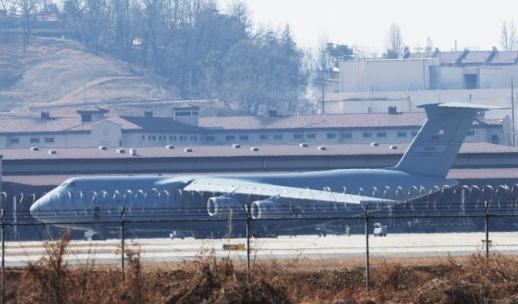 Chinese AI role in Iran war flags lessons for Seoul SEOUL, April 6 (AJP) — The war in the Gulf is underscoring a critical lesson for South Korea, which faces its own security risks on the Korean Peninsula: the growing role of Chinese AI and satellite technologies in tracking and exposing military movements. Chinese firms are increasingly using publicly available data — including commercial satellite imagery, Automatic Dependent Surveillance-Broadcast (ADS-B) and Automatic Identification System (AIS) signals — and applying AI to integrate and analyze them to track military activity. By combining multiple datasets, these systems can infer troop movements, carrier routes and force deployments without relying on classified intelligence. China-based geospatial analytics firm MizarVision has released analyses tracking U.S. carrier strike group movements and troop deployments in the Iran conflict, highlighting how AI is evolving beyond data processing into a tool capable of reconstructing military intelligence. China is also accelerating efforts to integrate domestically developed AI models into military systems, including autonomous drones, simulation platforms and battlefield automation. The U.S. House Select Committee on China has described such applications as an “imminent threat,” while U.S. Defense Secretary Pete Hegseth said Washington is aware of the developments and is taking steps to respond. While Seoul aims to rank among the world’s top three AI powers, analysts say it still trails the United States and China, with constraints in skilled labor and private investment limiting its ability to respond to AI-driven security risks. The implications extend beyond technology competition, pointing to structural shifts in the security environment. Lee Shin-wha, a professor of Political Science and Diplomacy at Korea University, said advances in AI and data are rapidly blurring the boundary between the economy and national security. “Security is no longer defined solely by military power,” she said. “It is evolving into a new domain that integrates data, AI and cyber capabilities, placing South Korea in a more exposed position between China and North Korea.” She warned that long-standing asymmetric capabilities developed by China and North Korea in cyber domains are now expanding through the use of commercial technologies and data. Lee also raised concerns over data security, saying potential data flows and leakages in key industries such as semiconductors and advanced manufacturing should be treated as national security issues, calling for stronger legal and institutional safeguards. As information approaches real-time availability, she said, warfare is likely to shift further into information and cognitive domains, warning that failure to secure information superiority could leave countries at a strategic disadvantage. Kang Jun-young, a professor at the Graduate School of International and Area Studies at Hankuk University of Foreign Studies, said the use of commercial resources for military purposes has already become unavoidable. He added that governments should strengthen legal frameworks and clearly define policy responses to address the issue at the national level. Lee also stressed the need for a broader security strategy that extends beyond traditional military power to include cyber and cognitive domains, requiring coordination across government and closer collaboration between technical experts and policymakers. She noted that key institutions such as the National Intelligence Service already treat cyber capabilities as a core pillar, but said further efforts are needed to strengthen expertise and institutional capacity. Lee also pointed to the growing role of asymmetric technologies such as drones, noting that lessons from the Russia–Ukraine war demonstrate how they can reshape the battlefield. She warned that advances in AI and data technologies have “opened a Pandora’s box,” calling for an integrated national strategy that aligns technological development with security policy. Concerns are also rising over how these trends could apply to the Korean Peninsula. Rep. Yu Yong-weon of the People Power Party said “China is helping Iran by analyzing commercial satellite data to disclose U.S. aircraft deployments and carrier movements,” warning that similar exposure could occur in Korea. He said key facilities — including Osan Air Base and Camp Humphreys in Pyeongtaek, as well as Gyeryongdae and Cheongju Air Base — could be vulnerable to detection through high-resolution satellite imagery and data analysis. Yu urged the government to treat the issue as an immediate security concern, calling for measures such as hardened aircraft shelters and stronger monitoring of Chinese commercial satellite activity. 2026-04-06 17:51:26
 -
 Korean and Japanese stocks higher on tech optimism SEOUL, April 06 (AJP) - Asian equities rose modestly Monday as investors weighed conflicting signals from the Middle East, with U.S. President Donald Trump setting an April 7 deadline ahead of potential strikes on Iranian power grids while OPEC+ pledged a limited output increase, as tech-heavy Korea and Japan outperformed ahead of strong semiconductor earnings. Japan’s Nikkei 225 gained 1.15 percent to 53,733.44, while Korea’s KOSPI advanced 1.4 percent to 5,452.80. Chinese markets were closed for the Qingming Festival holiday, and Hong Kong’s Hang Seng Index was shut for Easter. The secondary KOSDAQ initially rose 0.71 percent but later reversed course, slipping 0.29 percent to 1,060.71. Oil market concerns eased slightly after OPEC+ agreed to raise output by 206,000 barrels per day from May. The increase, however, represents less than 2 percent of the estimated disruption linked to the Strait of Hormuz, where more than 12 million barrels per day have been affected, according to the International Energy Agency. While the scale suggests limited immediate relief, the move signaled producers’ willingness to stabilize markets, lending modest support to risk sentiment. Semiconductor stocks led gains in Seoul. Samsung Electronics rose 3.49 percent to 192,700 won ahead of its preliminary first-quarter earnings release on Tuesday, with expectations that quarterly operating profit could approach or exceed last year’s full-year level of 43.6 trillion won amid the ongoing memory chip boom. Consensus estimates compiled by FnGuide put operating profit at around 38 trillion won. SK hynix also climbed 2.05 percent to 894,000 won, with Shinhan Securities forecasting first-quarter revenue at 50.4 trillion won, up 53.5 percent from the previous quarter, and operating profit at 35.5 trillion won, up 85.1 percent. Othe large-cap stocks were mixed. Hyundai Motor fell 0.32 percent, while Kia rose 1.00 percent and Hyundai Mobis edged down 0.26 percent. Defense and shipbuilding shares showed limited direction. Hanwha Aerospace slipped 0.55 percent, Hanwha Ocean fell 1.33 percent, and Hyundai Heavy Industries edged up 0.10 percent. Biopharmaceutical shares posted modest gains despite emerging trade risks. Samsung Biologics rose 0.39 percent and Celltrion gained 0.31 percent after the United States announced new tariff measures targeting patented pharmaceuticals under Section 232 of the Trade Expansion Act. The measures include tariffs of up to 100 percent on certain patented drugs and ingredients, with implementation scheduled from late July through September. However, products from countries with trade agreements — including Korea — will face a reduced tariff of around 15 percent. Generic drugs and biosimilars, along with related materials, are exempt from tariffs for one year, limiting the near-term impact. Financial stocks also edged higher. KB Financial Group rose 0.21 percent, Shinhan Financial Group gained 0.87 percent, and Samsung Life Insurance advanced 1.36 percent. On the KOSDAQ, Samchundang Pharm surged 5.40 percent after its largest shareholder withdrew a planned block deal, easing concerns over a potential large share sale and addressing doubts over the scale of its U.S. supply contract. The won remained relatively stable, with the dollar trading at 1,508.80 won, compared with 1,505.2 won at Friday’s close. 2026-04-06 11:04:26
 -
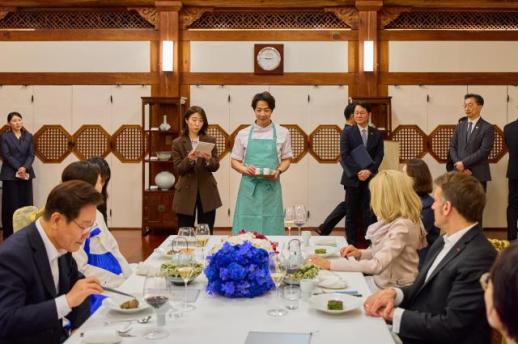 Korean-French fusion and K-pop flair greet Macron couple in Seoul SEOUL, April 03 (AJP) - Winning over a French palate is no small task — even more so when the guests are the president of France and his wife. South Korea answered with a carefully staged blend of Korean tradition and French culinary technique at a state dinner hosted by President Lee Jae Myung for President Emmanuel Macron and Brigitte Macron on Thursday. Chef Son Jong-won, known for “Culinary Class Wars 2,” was brought in for the occasion, crafting a menu that followed a classic French course structure while reinterpreting Korean ingredients and forms. The opening course reimagined Korea’s ssam (wrap) culture into refined, bite-sized dishes — including three-color wheat wraps, Jeju sweet shrimp wraps and East Sea scallops with truffle. The trio subtly echoed the French national motto of liberty, equality and fraternity. A grilled Jeju pomfret, made with premium deokja, was paired with kumquat-infused doenjang sauce, maitake mushrooms, clams and sansho pepper, offering a balance of depth and delicacy. Samgyetang followed, transformed into a French-style chicken roulade while retaining its identity as Korea’s signature ginseng chicken soup. The main course featured layered Korean beef sirloin in a mille-feuille style, served with abalone — a pairing that combined richness with restraint. Dessert came as a buckwheat crepe filled with sweet potato mousse, inspired by Korea’s roasted sweet potatoes, presented in a traditional mother-of-pearl lacquer box. It was accompanied by camellia mistletoe tea made from locally sourced ingredients. The meal was paired with two French wines and a Korean traditional liquor, underscoring the evening’s theme of balance between the two culinary traditions. Chef Son personally served the main course, explaining the concept behind the dishes. Attention to detail extended beyond the table. Guests were welcomed with Eiffel Tower-shaped bread displays, while macarons were prepared by Korea’s national team — winners of the Coupe du Monde de la Boulangerie. K-pop, naturally, had a part. Brigitte Macron received signed albums by BTS, Stray Kids and G-Dragon, along with traditional Korean ceramic tableware. The visit marks the 140th anniversary of diplomatic ties between South Korea and France. It is Macron’s first visit to Korea since taking office in 2017, and the first by a French president in 11 years. 2026-04-03 15:59:02
 -
 Asian stocks rebound as Hormuz passage hopes ease war fears SEOUL, April 3 (AJP) — Asian markets continued to seesaw with each development in the Iran war, but moved higher in early Friday trading on rising hopes for the reopening of the Strait of Hormuz. Japan’s Nikkei 225 rose 1.08 percent to 53,029.41, while China’s Shanghai Composite Index edged up 0.21 percent to 3,927.59. Hong Kong’s Hang Seng Index was closed from Friday through April 6 for the Easter holiday. In Seoul, the benchmark KOSPI rebounded at the open after a sharp sell-off in the previous session, when geopolitical fears triggered a sidecar trading curb. As of 10:51 a.m., the index rose 2.71 percent to 5,376.08, while the tech-heavy KOSDAQ gained 1.02 percent to 1,067.08. In currency markets, the Korean won strengthened slightly against the U.S. dollar, with the exchange rate falling to 1,509.40 won from 1,519.7 in the previous session. Sentiment was supported by reports that Tehran is drafting a post-war maritime protocol with Oman to guarantee safe navigation through the Strait of Hormuz, potentially including transit fees instead of a full blockade. Overnight on Wall Street, major indexes ended mixed after recovering from early losses tied to war concerns. The Dow Jones Industrial Average fell 0.13 percent, while the S&P 500 rose 0.11 percent and the Nasdaq Composite gained 0.18 percent. The Philadelphia Semiconductor Index and the Russell 2000 also posted modest gains. Oil prices remained volatile. U.S. West Texas Intermediate briefly surged toward $114 per barrel following remarks by U.S. President Donald Trump, before paring gains on Iran-Oman negotiation headlines, reflecting persistent uncertainty over supply risks. Brent crude futures for June delivery settled at $109.03 per barrel, up 7.8 percent from the previous session. All major stocks in Seoul traded higher in early deals, with gains seen across sectors. Tech and chipmakers led advances, with Samsung Electronics rising 3.64 percent to 184,900 won and SK Hynix jumping 5.60 percent to 876,500 won. Autos and mobility stocks also traded higher, with Hyundai Motor up 2.04 percent at 475,000 won and Kia gaining 1.93 percent to 153,500 won. Hyundai Mobis rose 0.64 percent to 392,000 won. Energy and industrials advanced, as LG Energy Solution added 0.62 percent to 407,000 won, Hanwha Aerospace rose 1.20 percent to 1,434,000 won, Doosan Enerbility gained 2.88 percent to 96,300 won, and HD Hyundai Heavy Industries climbed 4.21 percent to 457,500 won. HD Hyundai Electric rose 1.81 percent to 898,000 won, while Hanwha Ocean advanced 1.84 percent to 121,500 won. Among biopharmaceutical stocks, Samsung Biologics climbed 0.44 percent to 1,592,000 won and Celltrion gained 0.61 percent to 197,900 won. Financials edged higher, with KB Financial Group rising 0.96 percent to 147,900 won, Shinhan Financial gaining 1.96 percent to 93,500 won, Samsung Life climbing 3.69 percent to 225,000 won, and Mirae Asset Securities advancing 3.73 percent to 63,900 won. Other large caps also moved higher, with Samsung C&T rising 1.52 percent to 268,000 won and SK Square gaining 2.56 percent to 481,500 won. The combination of overnight gains in U.S. tech shares, a firmer won and stronger futures points to a short-term technical rebound in Korean equities, though lingering geopolitical risks ahead of the weekend are likely to cap further upside. 2026-04-03 11:18:26