
Journalist

Ryu Yuna
Julia37@ajupress.com
-
 Japan's snap election prospects lift Nikkei, boosting Asian markets SEOUL, January 13 (AJP) - Asian stock markets opened higher on Tuesday, led by a surge in Japan's Nikkei 225 amid speculations of a snap election in Tokyo. The vote is expected to strengthen Prime Minister Sanae Takaichi's expansionary fiscal policies, boosting investor sentiment across the region. The Japanese index jumped about 3.4 percent to around 53,720 in early morning trade, buoyed by gains in exporters and technology shares. The rally helped lift broader Asian markets, as investors continued to favor stocks related to robotics, artificial intelligence (AI), and other technologies even after this year's Consumer Electronics Show (CES) wrapped up last week. In Seoul, the KOSPI opened higher, hitting a fresh all-time high of 4,666 shortly after trading began, up about 0.9 percent from the previous session, while the tech-heavy KOSDAQ slipped roughly 0.1 percent to around 949.1. Among blue-chip stocks, Samsung Electronics rose about 0.5 percent to around 139,500 won, while LG Energy Solution gained roughly 0.8 percent to about 382,000 won. Shares of automakers were among the top performers, with Hyundai Motor surging approximately 7.6 percent to around 395,000 won, extending its rally for three consecutive days after unveiling its physical AI and autonomous driving at the CES. Defense-related shares also remained strong, with Hanwha Aerospace rising about 1.7 percent to around 1,233,000 won. Lotte Innovate also moved higher after unveiling plans to integrate its proprietary "i.MEMBER" AI platform into humanoid robots developed by China's Unitree, also showcased at the CES. But the South Korean won weakened against the greenback, trading at around 1,472 per dollar. Elsewhere in Asia, most markets remained higher, with some mixed results in early trading, while China's Shanghai Composite slipped about 0.6 percent to around 4,141 as investors took profits following the recent rally. 2026-01-13 11:21:58
 -
 Sweet, stretchy, but Dubai's chewy cookie craze leaves a sticky mark on prices SEOUL, January 12, 2026 (AJP) — South Korea has a new dessert obsession, and it doesn’t crumble quietly. The Dubai Chewy Cookie, locally nicknamed dujjonku, is selling quite literally like hot cake — except hotter, thicker and far more Instagrammable. What began as a café novelty has now spilled across menus nationwide, with sushi joints and sandwich shops alike slipping the chewy chocolate slab into delivery apps, as if dessert were now a compulsory add-on to every meal. Search interest reflects the sugar rush. Google Trends data show queries for “dujjonku” surging over the past 90 days, with some regions hitting a peak index of 100 in early January — a level usually reserved for election nights or celebrity scandals. For the uninitiated: yes, the dessert traces its name to Dubai. But what Korea is eating today is less a faithful import than a full-scale reinterpretation. The craze took off last September after IVE’s Jang Won-young posted about the dessert on social media. As often happens in Korea’s tightly wired influencer ecosystem, one post was enough. Others followed. Cafés rushed to recreate it. Within weeks, the chewy cookie was no longer exotic — it was everywhere. The dessert borrows from Middle Eastern sweets, combining crisp kadaif pastry, pistachio cream and cocoa powder. But the Korean version leans into exaggeration. Wrapped in a marshmallow-like chew, the cookie favors thickness over delicacy, volume over restraint. If the original “Dubai chocolate” was elegant, the chewy cookie is maximalist. Its appeal is as visual as it is edible. The dramatic cross-section, the audible crack, the slow stretch — all play perfectly to short-form video platforms, where desserts are judged less by taste than by how spectacularly they break apart on camera. “Dessert trends in Korea consistently favor abundance,” said food critic Lee Yong-jae. “Visual overwhelmingness often matters more than balance or subtlety of flavor.” Food columnist Jeong Dong-hyun points to Korea’s unusually flexible food culture. “Unlike Europe, Korea does not cling strongly to the ‘original form’ of food,” he said. “That allows dishes to be endlessly reinterpreted to suit local tastes — and entirely new foods to be created.” The sugar rush is translating into real money. At Paris Baguette’s Louvre flagship near Gwanghwamun, staff say the chewy cookie has climbed rapidly into top-seller territory. “We sell around 4,000 to 5,000 units a day,” said Sandy Lim, a café employee in her 50s, noting that foreign customers account for a larger share on weekends. But sweetness has a price. The Dubai Chewy Cookie relies heavily on imported ingredients, particularly pistachios and specialty pastry components, whose costs fluctuate with global supply conditions. As these ingredients spread across café menus, their price tags are quietly filtering into everyday food costs. According to the Ministry of Data and Statistics, food and dining-out prices have been rising faster than overall inflation in recent months — a reminder that even viral desserts can leave a macroeconomic aftertaste. In that sense, dujjonku offers a bite-sized lesson in demand-driven inflation: when trends go viral, costs don’t stay contained. At 7,000 to 8,000 won per piece, the chewy cookie now costs more than a burger set — or a modest weekday lunch. Sweet, stretchy, and a little expensive, Korea’s favorite new dessert may be indulgent — but it is also, quietly, inflationary. 2026-01-12 17:54:26
 -
 Asian stocks start week buoyant, led by Seoul and Tokyo SEOUL, January 12 (AJP) — Asian equity markets opened the week on a strong note Monday, with Seoul and Tokyo leading gains as optimism over robotics and artificial intelligence continued to lift technology and industrial value chains across the region following last week’s CES showcase. Japan’s Nikkei 225 jumped 1.6 percent to 51,939.9 in early trading, supported by gains in exporters and technology shares amid a weaker yen and renewed optimism over global demand. In Seoul, the benchmark KOSPI rose 1.3 percent to 4,646.7 as of 10:17 a.m., extending last week’s rally after the index broke above the 4,500 mark for the first time. The tech-heavy KOSDAQ added 0.8 percent to 955.3. Investor flows were mixed. Individual investors were net buyers of about 311.8 billion won ($231 million), while foreign investors sold roughly 439.4 billion won and institutions added around 74.0 billion won, according to exchange data. Among large caps, Samsung Electronics gained 0.9 percent to 140,900 won, while SK hynix climbed 1.9 percent to 758,000 won, extending gains on expectations of sustained demand for high-performance memory used in artificial-intelligence servers. Defense-related stocks also moved higher. Hanwha Aerospace rose 0.7 percent to 1,229,000 won amid expectations of increased global defense spending and persistent geopolitical tensions. Hanwha Ocean stood out among gainers, surging 9.2 percent to 146,800 won, as investors priced in stronger earnings prospects driven by rising LNG carrier prices and potential offshore plant orders. Doosan Enerbility advanced 5.1 percent to 88,700 won. “LNG carrier prices are expected to rise further this year, while several offshore projects are scheduled for order decisions in the first half,” said Kim Dae-sung, an analyst at DS Investment & Securities. “These factors could significantly improve profitability.” In currency markets, the Korean won weakened past 1,460 per U.S. dollar, giving back year-end gains amid authorities’ efforts to stabilize the market and renewed dollar strength entering the new year. Elsewhere in Asia, China’s Shanghai Composite rose 0.9 percent to 4,120.4, as selective buying returned to industrial and state-owned enterprises. Hong Kong’s Hang Seng Index was slightly lower in early trade, with financial shares under mild pressure. 2026-01-12 11:44:29
 -
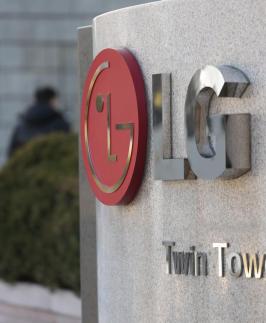 After a string of EV contract losses, LG Energy Solution reports Q4 loss SEOUL, January 9 (AJP) - LG Energy Solution, having endured multiple headwinds including a labor raid at its U.S. plant and the cancellation of major battery supply contracts, swung to an operating loss in the fourth quarter, even as full-year profit more than doubled on strong data-center-driven demand for energy storage systems. In preliminary earnings released Friday, the South Korean battery maker reported full-year operating profit of 1.35 trillion won ($1.0 billion) for 2025, more than doubling from 575.4 billion won in 2024. Full-year revenue came to 23.67 trillion won, down 7.6 percent from a year earlier. For the October–December quarter, the company posted an operating loss of 122.0 billion won, compared with a loss of 225.5 billion won a year earlier, while quarterly revenue slipped 4.8 percent year on year to 6.14 trillion won. Excluding tax credits under the Inflation Reduction Act, the fourth-quarter operating loss widened to 454.8 billion won, translating into a negative margin of 7.4 percent. The figures are preliminary and may change following audits of overseas subsidiaries and affiliates. LG Energy Solution said it will release final results, including net profit and a detailed breakdown by business division, later this month. The poor quarterly results follow a string of setbacks in the company’s electric-vehicle battery business. LG Energy Solution last month terminated a 3.9 trillion won ($2.7 billion) battery supply contract with Freudenberg Battery Power Systems, marking the second major cancellation after it ended a 9.6 trillion won battery supply contract with Ford Motor Co. The two cancellations bring the total value of terminated contracts in December to 13.5 trillion won—equivalent to more than half of the company’s annual revenue of 25.6 trillion won recorded in 2024. The company also suffered a disruption at its battery plant construction site in Georgia in September, when U.S. authorities conducted a large-scale labor raid that led to the arrest of 475 workers and a temporary halt to construction. Shares ended Friday 0.8 percent down at 363,000 won. 2026-01-09 15:54:56
 -
 Asian stocks mostly in the positive on chip and robotics expectations SEOUL, Jan. 9 (AJP) —Asian stocks kept to the positive despite profit-taking offensive Friday on halo effect from regional chip and robotics strengths. The KOSPI swung back and forth the positive and negative as foreigners took profits. As of11;30, the KOSPI was 0.4 percent higher at 4,571.36 and the KOSDAQ nearly flat at 944.75. Retail investors were net buyers of about 615.1 billion won ($458 million), while institutions bought roughly 277.5 billion won. Foreign investors, however, sold around 928.4 billion won, weighing on the broader market. Among major stocks, Samsung Electronics fell 1.1 percent to 137,200 won, while SK hynix slid 1.0 percent to 739,000 won, reflecting profit-taking after their recent rally. LG Electronics sank 4 percent after it reported its first quarterly operating loss in the fourth quarter of 2025. By contrast, defense shares extended gains. Hanwha Aerospace jumped 6.7 percent to 1,163,000 won ($870) on sustained buying tied to expectations of increased global defense outlays. Hyundai Motor rose 0.6 percent to 348,000 won, bucking the broader market weakness. Hanwha Ocean gained 0.7 percent to 130,900 won, while Doosan Enerbility climbed 0.4 percent to 84,300 won. In internet and industrial names, NAVER added 0.2 percent to 254,500 won, and Samsung Heavy Industries rose 0.4 percent to 27,900 won. Entertainment stocks moved lower as investors reassessed near-term expectations following recent volatility linked to China-related policy signals. HYBE fell 1.5 percent to 330,500 won, while JYP Entertainment slid 2.5 percent to 69,600 won. SM Entertainment dropped 1.7 percent to 115,900 won, and YG Entertainment declined 0.4 percent to 67,900 won. Elsewhere in Asia, Japan’s Nikkei 225 rose 0.7 percent in morning trade, rebounding from the previous session as buying interest returned to large-cap exporters. China’s Shanghai Composite was marginally higher, while Hong Kong shares also traded firmer in early dealings. 2026-01-09 11:45:57
 -
 South Korean street-food chain captivates Singaporean palates with tailored approach SEOUL, January 8 (AJP) - Snack-food chain Ssada Gimbap has achieved 4 billion won ($3 million) in annual sales in Singapore in just three years since making its entry into the Southeast Asian country. According to the affordable street-food chain, the key to its success lies in its deliberate strategy of gradually opening outlets in key locations. Starting with its first outlet in Bukit Timah, home to one of the largest South Korean communities there, in June 2023, the chain gradually opened additional outlets to lay the foundation for promoting the brand through word of mouth among South Korean expats. Its second outlet, opened just a year later, is located at Great World City, a large shopping mall near the posh River Valley area, home to many foreign expatriates and high-income locals. The chain then opened its third outlet in a newly built shopping mall in Lentor, a residential area with a large population, in a bid to attract more customers. QR code-based ordering also enhances convenience for customers while reflecting local dining trends in the tech-savvy country in Asia. Another key driver of sales growth also appears to be its carefully selected menu, which caters to local tastes. Stew made with soft tofu, in particular, has become especially popular among Chinese Singaporean customers, who make up the majority of the population. Its spicy yet rich flavor captivated many local diners, making it one of the brand's signature dishes. A couple of cold noodle dishes, with some variations, have also delighted many locals’ palates due to Singapore's hot and humid climate, as more and more customers want to try them. The popularity of its dishes has also prompted more Singaporeans to travel to Seoul to taste the authentic versions. "The success of Ssada Gimbap in Singapore demonstrates that Korean food has a competitive edge in one of the world's pickiest markets and other foreign countries, if it comes with strategies tailored to local tastes rather than simply serving food," said one market insider. Ssada Gimbap plans to further expand its market presence across Singapore while also exploring other countries like Malaysia. 2026-01-08 17:48:03
 -
 KOSPI opens higher, briefly surpasses 4,600 mark SEOUL, January 8 (AJP) – The South Korean stock market opened higher on Thursday, with the benchmark KOSPI surpassing the 4,600 mark for the first time, as major chipmakers extended gains and retail investors poured into large-cap shares. About an hour after the market opened, the KOSPI soared 1.4 percent from the previous session to 4,615.70, while the tech-heavy KOSDAQ slipped 0.1 percent to 946.46. Investors showed a clear divergence in early trade as retail investors bought a net 2.23 trillion won ($1.65 billion), while foreign and institutional investors sold roughly 0.15 trillion won and 2.71 trillion won. Among blue-chip stocks, Samsung Electronics slipped 0.7 percent to 140,000 won ($105) after hitting a fresh 52-week high of 144,400 won the previous day. However, it remains in a strong upward trend, rising roughly 176 percent from its previous low of 50,800 won in February last year and more than doubling over the past year. SK hynix rose 0.5 percent to 746,000 won ($561), recovering from early losses and hovering near its recent record high, as strong demand for high-bandwidth memory continued to support the stock. The outlook was further bolstered by comments from Nvidia CEO Jensen Huang, who said demand for advanced memory remains overwhelming and highlighted close cooperation with suppliers on next-generation HBM4. Hana Securities said semiconductors are expected to account for roughly 47 percent of KOSPI's net profit over the next 12 months, led by strong earnings growth at Samsung Electronics and SK hynix, while the sector’s forward valuation remains relatively low despite the recent rally. Hyundai Motor fell 1.6 percent to 345,000 won ($259), giving back part of the previous session’s sharp gains, which had been driven by optimism over its AI and robotics strategy unveiled at this year's CES currently underway in Las Vegas. The drop was widely seen as profit-taking following the recent surge, rather than a change in the underlying outlook. Meanwhile, Japan's Nikkei 225 fell 0.7 percent to 51,577.20, while China's Shanghai Composite edged up 0.1 percent to 4,085.77. In Hong Kong, the Hang Seng Index was largely flat in Hong Kong, with Hang Seng Bank steady at 153.80 HKD ($19.7), as investors took a cautious stance ahead of upcoming policy and earnings announcements. 2026-01-08 11:44:12
 -
 KOSPI remains regional winner, Hyundai Motor gains on CES momentum SEOUL, January 7 (AJP) — South Korean stocks remained the regional standout on Wednesday, extending their record-setting rally despite a broadly subdued mood across Asian markets. The benchmark KOSPI rose 0.6 percent to close at a fresh all-time high of 4,551.06. Foreign investors were the primary drivers, snapping up a net 1.25 trillion Korean won (US$930 million), while retail investors and institutions sold roughly 294 billion won ($219 million) and 940 billion won ($700 million), respectively. Among large-cap stocks, Hyundai Motor surged 13.8 percent to 350,500 won ($262), leading the market higher. The rally followed Chairman Chung Eui-sun's high-profile appearances at CES 2026, as well as reports of deeper cooperation with Nvidia and other global technology firms. Investors have increasingly focused on Hyundai’s push into robotics and its broader "physical AI" strategy. Samsung Electronics rose 1.5 percent to 141,000 won ($105), while SK hynix gained 2.2 percent to 742,000 won ($556), supported by sustained optimism over AI-driven memory demand and recent target-price upgrades from global investment banks. Analysts said momentum tied to CES-related headlines could cool in the near term, but added that Hyundai's longer-term robotics push and software-defined manufacturing strategy are likely to remain structural drivers for the stock. The tech-heavy KOSDAQ underperformed, falling 0.9 percent to 947.39. Elsewhere in Asia, Japan's Nikkei 225 slid 1.06 percent to 51,962.0, while China's Shanghai Composite was flat in late trade. Hong Kong's Hang Seng Index fell about 1.2 percent. 2026-01-07 16:48:36
 -
 KOSPI blasts through 4,500, stealing the spotlight in a solid Asian session SEOUL, Jan. 6 (AJP) — Asian markets were broadly in the green on Tuesday, but one market didn’t just rise — it showed off. South Korea’s benchmark KOSPI smashed through the long-watched 4,500 level, capping a blistering start to the year that has already rewritten the index’s record book. The rally has been fast, loud and unapologetic: more than 13 percent in under two weeks, with 4,300 and 4,400 barely registering as speed bumps. Retail investors, who sat out much of last year’s grind, are back with conviction. They snapped up a net 597.6 billion won worth of shares, emboldened by a growing chorus of forecasts calling for a run toward 5,000. Heavyweights did the heavy lifting. Samsung Electronics climbed to 138,900 won, while SK hynix surged to 726,000 won, extending the AI-driven chip rally. Hyundai Motor advanced to 308,000 won, and Celltrion rose to 213,000 won. Not everything joined the party. LG Energy Solution traded lower, while NAVER edged higher in subdued fashion. The tech-heavy KOSDAQ lagged behind the headline-grabbing rally, slipping 0.16 percent to 955.97, as institutions and foreign investors locked in profits after recent gains. The tone there was cautious rather than euphoric — a reminder that this rally has been selective. In currency markets, the dollar strengthened slightly, rising 1.7 won to 1,445.5, but the move failed to dent equity momentum. Across the region, markets were steady rather than spectacular. Japan’s Nikkei hovered near record territory above 52,500, while China’s Shanghai Composite and Hong Kong’s Hang Seng traded higher in afternoon sessions. For now, investors appear willing to look past valuation worries, betting that earnings momentum — especially tied to AI and large-cap exporters — can keep the rally alive. Attention is shifting toward upcoming U.S. economic data and policy signals, but until those turn hostile, Korea’s market looks intent on enjoying its moment above 4,500. 2026-01-06 17:31:12
 -
 HOT STOCK: Hyundai Motor jumps over 4% early Tuesday on robotics timeline SEOUL, January 6 (AJP) - Shares of Hyundai Motor surged in early trading Tuesday, as investors cheered the company's newly unveiled AI and robotics roadmap at CES 2026, fueling optimism that growth engines beyond its core automotive business are taking clearer shape. As of 9:14 a.m., Hyundai Motor was trading at 317,500 won(US$235), up 13,000 won, or 4.27 percent, from the previous close of 304,500 won. The stock briefly climbed as high as 330,000 won before paring gains amid broad profit-taking. By 10:24 a.m., shares eased to 307,500 won, tracking a broader market pause after recent gains. The KOSPI slipped 0.4 percent to 4,438.4 as investors locked in profits following the index's year-end rally. The stock opened strong following Hyundai Motor Group's overnight presentation at CES in Las Vegas, where the company laid out a detailed timeline for AI-driven robotics and so-called "physical AI" technologies, underscoring its push to integrate artificial intelligence into manufacturing, mobility and industrial automation. Chung Euisun, chairman of Hyundai Motor Group, has recently described artificial intelligence as a "winnable game" for the group, citing strengths in physical manufacturing, mobility platforms and real-world data. According to industry sources, Chung has emphasized that Hyundai's ability to integrate AI across vehicles, robots and production systems gives it a structural edge over peers. At CES, the group showcased its humanoid robot Atlas, outlining plans to begin mass production in 2028 and deploy the robots at scale on U.S. assembly lines by 2030 — a timeline that analysts said helped crystallize Hyundai's commercialization strategy. Momentum was further bolstered after Hyundai's autonomous mobility robot platform MobED won the Best of Innovation Award in the robotics category at CES 2026. The accolade marked Hyundai’s first top-tier innovation award at the exhibition and was widely viewed as external validation of its robotics technology and commercialization potential. Hyundai said it plans to leverage its software-defined factory (SDF) framework to test and validate robotics technologies in live manufacturing environments before scaling them into broader industrial, commercial and daily-life applications. Analysts said the approach signals a shift from concept-driven showcases toward practical deployment and ecosystem building — improving visibility on future monetization from AI and robotics initiatives. Hyundai Motor reported on Monday that it sold 4.14 million vehicles in 2025, down 0.1 percent from 2024, with domestic sales rising 1.1 percent while overseas sales fell 0.3 percent. 2026-01-06 11:27:50