
Journalist

Kim yoon seop
angks678@ajunews.com
-
 Hana Bank Rolls Out Generative AI for Corporate Credit Reviews, Cutting Draft Time to 10 Seconds Hana Bank said on March 18 it has developed an in-house generative AI-based “corporate credit review opinion generation system” and deployed it across all branches. The system analyzes a range of data — including financial statements, company information and industry trends — and automatically produces a draft review opinion needed in the credit rating process for audited and non-audited companies. Hana Bank said staff previously spent an average of more than 30 minutes analyzing indicators and writing narrative opinions, but the new system can generate a draft in about 10 seconds. The bank expects the rollout to save more than 27,000 working hours a year across roughly 70,000 annual credit rating cases for audited and non-audited companies. Hana Bank said the tool is an in-house model, with algorithms designed and implemented independently. Through collaboration among internal departments, it incorporated evaluation guidelines used by loan specialists to standardize review opinions more precisely and improve effectiveness. The bank described an in-house model as one planned, developed and operated directly using a company’s own staff and technology. Hana Bank said it plans to expand automation across household and corporate loan reviews to accelerate the AI transformation of its lending operations. A Hana Bank official said the project is intended to maximize efficiency through AI, raise productivity and help employees better understand customers and companies. The official said the bank will continue to reflect feedback from the field, apply AI to more work areas and develop the system in ways that provide practical help to branches and customers.* This article has been translated by AI. 2026-03-18 09:18:49
 -
 Korean Banks Tighten Dollar Liquidity Controls as Won Nears 1,500 per Dollar Geopolitical risks tied to the Middle East have pushed the won-dollar exchange rate to hover around 1,500 won per dollar, prompting South Korean banks to tighten management of foreign-currency funding. Foreign-currency liquidity indicators are not yet at dangerous levels, but banks are raising their guard because further moves in the exchange rate could quickly affect capital adequacy. According to the financial sector on Monday, the foreign-currency liquidity coverage ratio, or LCR, at the five major banks — KB Kookmin, Shinhan, Hana, Woori and NH NongHyup — stood at 142.73% to 203.55% as of the end of February. All five were well above the regulatory minimum of 80%. The foreign-currency LCR measures how much high-quality liquid foreign-currency assets a bank holds to meet expected net outflows over the next 30 days. A higher ratio indicates more stable foreign-currency liquidity. Even with ample room to manage foreign-currency assets, banks are reacting quickly as the won has seen unusually large swings, including a break above the psychologically important 1,500 level. In Seoul trading Monday, the won ended daytime trading at 1,493.6 per dollar, down 3.9 won from the previous session. The day before, it rose above 1,500 intraday for the first time in 17 years. Market participants broadly expect volatility to increase further depending on whether the war drags on and where international oil prices head. Sustained upward pressure on the exchange rate could weaken banks’ capital positions. A weaker won raises the won value of foreign-currency assets, increasing risk-weighted assets and putting downward pressure on the common equity Tier 1 ratio, or CET1. The industry generally estimates that a 10-won rise in the exchange rate lowers the CET1 ratio by about 0.02 percentage points. Financial groups are strengthening internal checks as volatility increases the burden on balance-sheet management. KB Financial Group said it is using hedges to minimize foreign-exchange translation gains and losses excluding investment profit and loss, and is managing exposure at the group level by considering each affiliate’s FX position. KB Kookmin Bank introduced a return on risk-weighted assets, or RoRWA, metric to help manage capital adequacy indicators such as CET1 and the BIS capital ratio. Shinhan Financial Group said it treats a rise of 2.5% from the previous day, or more than 5% within 10 days, as a crisis and has prepared response measures by threshold level. Hana Financial Group and Woori Financial Group are also operating emergency response systems to monitor foreign-currency liquidity and money-market conditions. “After the won-dollar rate moved above 1,500 and volatility increased, it will be hard to predict the market for some time,” a financial industry official said. “Groups will likely continue stepping up risk checks and preparing for the possibility of rising corporate funding demand.” 2026-03-17 16:06:00
 -
 KB Kookmin, Shinhan to Launch Online Refinancing for Sole Proprietor Credit Loans Online refinancing for sole proprietors’ credit loans is now allowed, and competition among banks is picking up. According to the financial industry on the 17th, KB Kookmin Bank and Shinhan Bank will begin offering refinancing services for sole proprietors’ credit loans starting on the 18th. At KB Kookmin Bank, the maximum loan amount eligible for refinancing is 300 million won through branches and 200 million won through non-face-to-face channels. All customers who refinance into KB Kookmin through non-face-to-face channels will receive a refinancing-only preferential rate discount of up to 0.3 percentage points. The service will be available at all KB Kookmin branches and via KB Star Banking, KB Business Star Banking and the mobile web. It will also be offered through major loan comparison platforms including Kakao Pay, Toss and Naver Pay. To mark the launch, KB Kookmin will run an event through May 15. Customers who move their loans to KB Kookmin via the non-face-to-face loan transfer service can receive cash support of up to 100,000 won from the interest paid in the first month. Shinhan Bank will also offer refinancing for sole proprietors’ credit loans starting on the 18th through its Shinhan SOL Bank app and loan comparison platforms. Eligible applicants are sole proprietors age 19 or older with a business registration certificate, and the program covers working-capital credit loans of up to 100 million won. Some products, including loans tied to real estate rental businesses, are excluded. Shinhan said it plans to allow “increased refinancing,” letting borrowers raise their loan limit when they need additional funds while paying off an existing loan. Banks expect the expanded service to intensify competition in the sole proprietor finance market. The Financial Services Commission, based on past data, expects more than 1 trillion won in loans to move to more favorable terms through this refinancing program. A financial industry official said, “As loan comparison services expand, rate competition is bound to become more intense,” adding that companies are likely to step up customer promotions, including related events. * This article has been translated by AI. 2026-03-17 15:21:00
 -
 Hana Bank to Provide $1.56 Billion in Liquidity to Foster Gwangju-Jeolla Hub Firms Hana Bank is launching financial support to help foster hub companies in the Gwangju-Jeolla region, in line with the government’s “5 hubs, 3 special zones” strategy. The bank said it signed a business agreement on March 16 with the city of Gwangju, the Gwangju Chamber of Commerce and Industry, the Korea Credit Guarantee Fund and the Korea Technology Finance Corp. to support the development of hub companies in the region. The agreement is aimed at strengthening the growth base for small and medium-sized companies pursuing future strategic industries in Gwangju and the wider Honam region, while supporting regional economic activity under the government’s balanced-growth policy. Hana Bank plans to contribute a total of 4 billion won — 3 billion won to the Korea Credit Guarantee Fund and 1 billion won to the Korea Technology Finance Corp. — to provide 155.6 billion won in liquidity. Eligible firms include those in six advanced strategic industries — AI, biotech, content, defense, energy and smart factories — as well as exporters and companies expanding overseas, job-creating firms and businesses rooted in the local economy. The bank also plans to cover 0.6% of guarantee fees for two years to ease financing burdens for smaller companies. The guarantee institutions will also expand support. The Korea Credit Guarantee Fund and the Korea Technology Finance Corp. will raise their guarantee coverage ratio to 100% from 85% and cut guarantee fees by 0.3 percentage points. Gwangju will provide 2.0% interest subsidies on 30 billion won in working-capital loans to reduce financing costs for local small businesses. The chamber said it will work to broaden participation by regional companies. “This agreement will improve access to financing for promising small and medium-sized companies in the Gwangju-Jeolla region and support stable business operations,” Hana Bank CEO Lee Ho-seong said. “We will continue to accelerate productive financial support for balanced national development and the growth of future strategic industries.”* This article has been translated by AI. 2026-03-17 10:12:00
 -
 COFIX for New Loans Rises to 2.82% in February, Lifting Variable-Rate Mortgages The COFIX, a key benchmark for banks’ variable-rate mortgage loans, turned higher again after a one-month decline. The Korea Federation of Banks said Sunday that the new-loan COFIX for February came to 2.82%, up 0.05 percentage points from the previous month. The index had climbed for four straight months, from 2.52% in September last year to 2.89% in December, then fell in January by 0.12 percentage points — its first drop in five months — before rising again. Over the same period, the COFIX based on outstanding balances held steady at 2.85%, while the new outstanding-balance COFIX slipped 0.01 percentage points to 2.47%. COFIX is the weighted average interest rate on funds raised by eight South Korean banks. It moves up or down as rates on major funding products such as deposits and bank bonds change. The federation said borrowers considering COFIX-linked loans should fully understand how market rates move and choose loan products carefully. Commercial banks are expected to begin reflecting the newly released COFIX in variable-rate mortgages for new loans as early as March 17. At KB Kookmin Bank, the six-month variable mortgage rate tied to the new-loan COFIX will rise 0.05 percentage points, to 4.15% to 5.55% from 4.1% to 5.5%. Under the same benchmark, the rate on jeonse loans backed by a Korea Housing Finance Corp. guarantee will also increase to 3.85% to 5.25% from 3.8% to 5.2%. Woori Bank’s six-month variable mortgage rate tied to the new-loan COFIX will rise to 4.37% to 5.57% from 4.32% to 5.52%.* This article has been translated by AI. 2026-03-16 15:45:00
 -
 Hana Financial to Launch 500 Billion Won Infrastructure Fund Focused on AI, Renewables Hana Financial Group will commit 500 billion won to support future-focused strategic sectors, including renewable energy and artificial intelligence infrastructure. Hana Financial said Monday it will form the Hana Modu Growth Infrastructure Fund to expand the flow of private capital into what it called “productive finance.” The fund will be financed entirely by Hana Financial Group affiliates. Hana Bank will contribute 400 billion won, joined by Hana Securities with 50 billion won, Hana Life Insurance with 20 billion won, Hana Capital with 17 billion won, Hana Insurance with 10 billion won, and Hana Alternative Investment Management with 3 billion won. Key targets are renewable energy projects and AI and digital infrastructure, which the group described as national priorities. In renewables, the fund will invest in the Wando Geumil offshore wind power project, described as the country’s largest. Electricity generated there is to be used for national AI data centers and power infrastructure for advanced industries in the Honam region. In AI and digital infrastructure, it will invest in large-scale data center development projects including the Bucheon Samjeong-dong AI Hub Center and the Incheon Guwol-dong AI Hub Center. Hana Financial said it plans to take an active role in early-stage development. It aims to secure high-quality assets early and later provide financial advisory and arranging services when large-scale funding is needed, to improve returns. In January, Hana Financial said through its “group productive finance council” that it would expand productive finance supply to 17.8 trillion won by 2026. A Hana Financial Group official said the fund is intended to be a core example of productive finance by supplying capital to the real economy, adding that the group will continue to expand investment in innovation-driven growth areas.* This article has been translated by AI. 2026-03-16 09:39:00
 -
 Hana Financial, Standard Chartered Sign Pact on Global Business and Digital Assets Hana Financial Group said March 15 it has signed a memorandum of understanding with Britain’s Standard Chartered Group to cooperate in global financial business and digital assets. The companies said the agreement is aimed at strengthening global competitiveness and pursuing new growth opportunities by combining their overseas networks and financial capabilities amid rapid changes in the global financial environment. The signing ceremony was held March 13 at Hana Bank’s headquarters in central Seoul, attended by Hana Financial Chairman Ham Young-joo, Standard Chartered Group Chairman Bill Winters and other executives. They discussed cooperation in global financial markets and digital assets, the company said. Under the pact, the two groups plan to broaden collaboration across international finance, including investment banking, money markets and foreign exchange. They also said they will explore ways to create synergies in future-oriented areas such as digital assets. “The partnership between Hana Financial and SC Group, built on broad global networks and diverse financial know-how, will be a strong competitive advantage in global finance,” Ham said. “We will create new growth opportunities by generating synergies in future financial areas, including digital assets.” Winters said, “Korea is a key hub in Asia’s financial markets, and cooperation with Hana Financial, which has strong global capabilities, will be an important milestone for our global network business.”* This article has been translated by AI. 2026-03-15 10:51:40
 -
 Shinhan Bank to Open Regional Finance Support Hubs in Busan and Gwangju Shinhan Bank said Sunday it will set up a regional finance-support platform, the Shinhan SOL Cluster, in Busan and Gwangju as it aligns with the government’s national balanced-growth strategy. The Shinhan SOL Cluster is the bank’s regional hub designed to provide both growth-oriented and inclusive finance tied to local specialized industries. It consolidates corporate screening, consulting and financing functions into a headquarters-level support unit and assigns staff with expertise tailored to each region’s industries. In the southwest, Shinhan will establish the “Gwangju AI Specialized Cluster” to support artificial intelligence and convergence-focused industries. The bank plans to place specialized staff for screening and business development and to provide customized lending to meet companies’ funding needs. In the southeast, it will set up the “Busan Naval Vessel MRO (maintenance, repair and overhaul) Cluster” to support the shipbuilding and defense value chain. Shinhan said it will strengthen financing linked to the naval vessel MRO industry and expand supply-chain finance for regional anchor companies and their partner small and midsize firms. Shinhan also said it will expand consumer protection and community support alongside the regional hubs, including a customer counseling center to help prevent voice-phishing scams and a hiring preference for local talent. It plans to broaden digital financial education by creating a new “Haki-jae” site in Gwangju and upgrading existing programs, and to expand support for local small businesses and regional universities through its delivery app “Ttaenggyeoyo” and the student platform “HeyYoung Campus.” A Shinhan Bank official said the bank will build on the group’s financial hub in Jeonbuk Innovation City and the new southwest and southeast hubs to gradually expand support to areas with relatively limited access to financial services, including Gangwon and Jeju, to promote industrial growth and revitalize local economies. 2026-03-15 10:06:00
 -
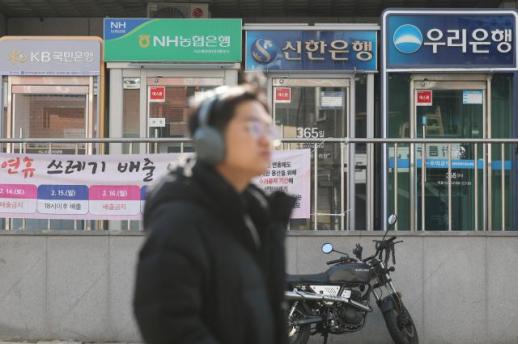 South Korea’s Top 5 Banks Boost SME Lending by 4 Trillion Won as Tech Finance Rebounds Small-business lending at South Korea’s five biggest banks is rising quickly, in line with the government’s push for so-called productive finance that steers funding toward promising companies. As of last month, the outstanding balance of small and medium-sized enterprise loans at KB Kookmin, Shinhan, Hana, Woori and NH NongHyup totaled 678.7439 trillion won, the financial sector said Thursday. That was up 2.8385 trillion won from the previous month’s 675.9054 trillion won. Compared with the end of last year, the balance rose 4.3177 trillion won from 674.4262 trillion won. The increase is attributed to expanded lending to advanced strategic industries and innovative companies, in step with government policy. In September, the Financial Services Commission held a “productive finance transformation meeting” and announced plans to expand productive finance. The core goal is to reduce policy guarantees tied to real estate and strengthen support for technology and innovation-driven firms. As banks broaden corporate lending under that policy direction, technology credit loans — often called technology finance — have also turned upward for the first time in three years. An analysis of Korea Federation of Banks data showed the technology finance balance stood at 319.1068 trillion won at the end of last year, up more than 16 trillion won from 302.7538 trillion won at the end of 2024. Technology finance had fallen for two straight years after reaching 325.9611 trillion won in 2022, slipping to 304.5353 trillion won in 2023 and 302.7538 trillion won in 2024. It shifted back to growth after topping 307 trillion won in the first half of last year. The five major banks’ technology finance balance was 161.6287 trillion won at the end of last year, up more than 2.4 trillion won from 159.2071 trillion won at the end of 2024 — the first increase since 2022. Technology credit loans provide funding based on technology assessments for small and venture firms that have strong technical potential but lack collateral or financial capacity. Banks and technology credit bureaus evaluate applicants’ technology and may offer benefits such as higher loan limits or lower interest rates. The industry expects the trend to continue this year as banks keep expanding lending to companies with technology and growth potential. KB Kookmin Bank, through an organizational overhaul this year, created a Growth Finance Promotion Division to expand corporate lending centered on productive finance and is operating a dedicated review team for advanced strategic industries. Shinhan Bank said it will supply 72 trillion to 75 trillion won in group-funded loans to general small and mid-sized companies excluding real estate, through the “Ultra-Innovative Economy Growth Support Task Force” it set up last year. Hana Bank also reorganized its investment banking group, reshaping its investment finance unit into a “productive investment” unit. Woori Bank said it created dedicated investment and financing teams in its IB and corporate groups late last year and will strengthen support for regional growth companies and innovative venture firms. Shin Yong-sang, a senior research fellow at the Korea Institute of Finance, said the lending expansion is likely to continue as the government keeps emphasizing productive finance. “To keep it as a sustainable policy, banks need supporting efforts such as improving systems for venture capital and business feasibility assessments, and expanding staffing,” he said. 2026-03-12 15:12:00
 -
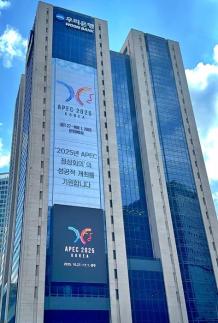 Woori Bank to Create Financial Consumer Protection Committee Under Board Woori Bank will create a Financial Consumer Protection Committee under its board of directors as it seeks to make consumer protection a core management value. According to the Financial Supervisory Service on Wednesday, the bank plans to establish the committee on March 20 as a specialized subcommittee under the board. The move is intended to proactively implement best practices for financial consumer protection governance announced by the watchdog in September last year. The committee will have at least three members, including a director specializing in consumer protection, and will meet regularly at least once every six months. It will review key matters such as management strategies and policies related to consumer protection, as well as the enactment and revision of internal rules. Woori Bank said the new committee will strengthen internal controls so that consumer protection is reflected throughout the process, from product planning to post-sale management. The bank will also introduce a system in which its chief consumer officer, or CCO, can exercise exclusive prior-agreement rights and the right to request improvements on the design of performance compensation systems, including key performance indicators, to ensure consumer protection functions in practice during product sales. In addition, Woori Bank will run a professional training program to bolster consumer protection capabilities, creating courses to respond to changes in relevant laws and policies and to develop in-house experts. A Woori Bank official said the steps are aimed at embedding consumer protection as a core management value, adding that the bank will establish a consumer-centered financial culture across the entire process from product planning through post-sale management. 2026-03-12 10:21:00