
Journalist

Ahn Seon-Young
asy728@ajunews.com
-
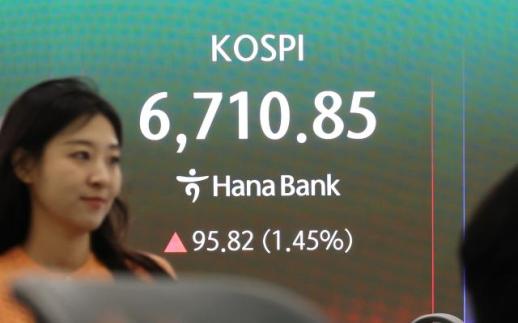 How to Use Korea’s RIA Account as the Kospi Hits Record Highs Korea’s Domestic Market Return Account, known as the RIA, has marked its first month on the market, introduced to steer money back into local stocks. With the Kospi repeatedly setting record highs, investor interest in the account has also grown. Experts say investors should weigh the benefit structure, restrictions and the direction of the local market, rather than signing up solely for tax breaks. The RIA is a special account the government introduced on a limited-time basis this year to help stabilize the exchange rate and invigorate Korea’s capital markets. It launched March 23. Investors can move overseas stocks into the account, sell them, convert proceeds into won and reinvest in domestic assets; if the money is kept invested for at least one year, they can receive a deduction on capital gains tax from overseas stock sales. If overseas stocks held before Dec. 23, 2025, are transferred into an RIA, sold, and the proceeds are reinvested for at least one year in domestically listed stocks, Korea-focused equity funds and ETFs, investors can receive a capital gains tax deduction of up to 100%. The benefit is capped at 50 million won per person, based on the overseas stock sale amount. The deduction rate is 100% for sales by the end of May, 80% by the end of July, and 50% by year’s end. As the Kospi has regained strength compared with the period around the product’s launch, interest in using the RIA has risen. Inquiries have increased, centered on large blue chips such as SK hynix, Samsung Electronics and Hyundai Motor, as well as ETFs like the KODEX 200, according to the report. Still, investors need to check key conditions to fully secure the tax benefit. The 50 million won threshold is based on sale proceeds, not capital gains. For investors holding multiple overseas stocks, using the account first for positions with lower purchase prices and higher returns can increase tax savings. After overseas stocks are transferred into the RIA and sold, the converted funds must be invested only in domestic assets such as locally listed stocks or Korea equity ETFs. Even if an ETF is listed in Korea, the benefit does not apply if it tracks an overseas index. There is also an early-termination risk. If funds are withdrawn or the account is closed before one year, all tax benefits received are canceled. Switching among domestic stock holdings within the account, however, is allowed. Experts said the RIA should be viewed less as a stand-alone tax product and more as a supplemental account for investors who already intend to invest in Korean equities. A financial industry official said, “If you want to keep holding overseas growth stocks right now or plan to use the money in the short term, the practical benefit may not be large.” The official added, “For investors considering taking profits on overseas stocks and looking for a timing to re-enter the domestic market, it can be an option to use the tax benefit.”* This article has been translated by AI. 2026-05-02 07:03:40
 -
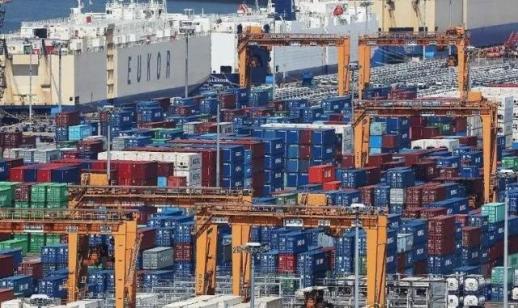 Korea’s SME Divide Widens as Exports Hold Up but Domestic Sectors Struggle Exports led by semiconductors, autos and shipbuilding have continued to recover, but domestic-facing industries such as real estate leasing, construction and wholesale and retail are seeing worsening cash conditions amid high interest rates and weak consumption. According to the financial sector on the 29th, the Industrial Bank of Korea said its delinquency rate for small and medium-sized enterprises in real estate and leasing stood at 1.28% at the end of the first quarter, based on principal and interest overdue by at least one month. That was up 0.74 percentage points from a year earlier and the highest level in 13 years since the first quarter of 2013 (1.36%). The rise is attributed to a combination of growing vacancies in commercial properties, stagnant rents and heavier interest burdens. Borrowers who once relied on rising collateral values are now facing shrinking rental income and mounting financing costs, eroding repayment capacity. Major commercial banks reported similar increases. Shinhan Bank’s delinquency rate in the sector was 0.35% at the end of the first quarter, the highest since it began compiling related data in 2021. Hana Bank’s was 0.57%, the highest in about 10 years since the second quarter of 2016, and Woori Bank’s was 0.41%, the highest since its data series began in 2019. The figures point to growing repayment pressure across domestic-demand sectors. An IBK official said, “The prolonged uncertainty in the domestic and global economy and worsening business conditions have weighed on overall domestic demand, which has also hurt the real estate leasing market.” Delinquency rates were also elevated in other sectors tied to domestic demand. IBK’s SME construction delinquency rate was 1.64% at the end of the first quarter, up 0.30 percentage points from 1.34% a year earlier. Wholesale and retail (1.07%) and food and lodging (1.40%) were also above 1%. Manufacturing, however, remained relatively stable. IBK’s delinquency rate for SME manufacturers fell to 0.86% in the first quarter from 0.92% a year earlier. The improvement in export-driven industries appears to have eased funding conditions for smaller suppliers, and some analysts said the weaker won has benefited certain exporters. A financial industry official said, “Even among small businesses, the on-the-ground economy feels completely different between manufacturing and domestic-demand sectors,” adding that polarization is deepening as the export rebound has not spread to local commercial districts, self-employed businesses and real estate leasing. 2026-04-29 14:29:21
 -
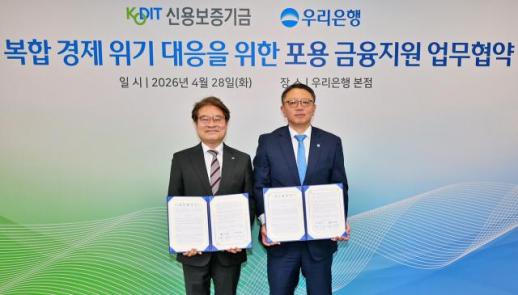 Woori Bank, Credit Guarantee Fund to Provide 240 Billion Won in Support for Small Firms Woori Bank said Tuesday it will work with the Korea Credit Guarantee Fund to provide 240 billion won ($2400억원) in financial support to help small and medium-sized businesses weather a crisis. The bank and the fund signed a business agreement Monday on inclusive financial support to respond to a complex economic downturn. The program is aimed at easing financing burdens for SMEs facing difficulties from a global slowdown and increased volatility in financial markets, while supporting a stable recovery in the real economy. Woori Bank will contribute a total of 6 billion won ($60억원) to the fund, enabling about 240 billion won in support. Eligible firms include small businesses and vulnerable industries tied to oil and price stabilization; companies involved in supply-chain management, including materials, parts and equipment; businesses directly or indirectly affected by changes in external conditions such as the war in the Middle East; and exporters, importers and companies expanding overseas. Participating firms will receive higher guarantee coverage, raised to 100% from 85%, and support equivalent to 0.7 percentage points of guarantee fees. Separately, Woori Bank said it signed another agreement with the fund on April 10 to provide 310 billion won ($3100억원) in stage-by-stage financing for innovative-growth sectors and export-leading small and mid-sized companies. The bank said it plans to expand cooperation with policy finance institutions to bolster resilience and growth for small and mid-sized firms. Woori Bank CEO Jeong Jin-wan said the latest agreement will help improve access to financing for SMEs struggling to raise funds. He said the bank will expand what it called productive finance, in close cooperation with the fund, to support normal operations and sustainable growth for small and mid-sized companies.* This article has been translated by AI. 2026-04-29 09:16:12
 -
 Hana Financial’s ‘Hana Universe’ Tops 23 Million YouTube Views With Star Cast Hana Financial Group said its brand content series “Hana Universe,” released to mark the group’s 20th anniversary, has surpassed 23 million cumulative views on YouTube. The big-budget project, which brings together top names from film, sports and music, is drawing attention as a new approach to brand marketing in the financial sector. According to the financial industry on Monday, the main “Hana Universe” video posted April 10 on Hana Financial’s official YouTube channel, HanaTV, had nearly 13 million views as of 2 p.m. that day (12.96 million). Combined with the teaser and trailer (7.62 million), brand film (2.40 million) and production presentation (620,000), related videos totaled 23.60 million views. Short-form clips are also drawing hundreds of thousands of views each. “Hana Universe” departs from a standard ad format, presenting a nine-minute short film set inside an airplane cabin and built around director Ha Jung-woo’s comedic style. It features the group’s advertising models, including singer G-Dragon and Lim Young-woong, along with soccer player Son Heung-min, TV personality Kang Ho-dong and Ahn Yu-jin of IVE. Through a series of episodes, the film highlights key products and services, including the Hana Nara Sarang Card, Hana Gold Trust, Hana Pension Doctor, Hana The Next and Travelog. With a cast rarely seen in financial advertising and a movie-style storyline, the video spread quickly across online communities and social media after its release. Re-edited versions, including YouTube Shorts, have helped sustain word-of-mouth interest. Industry watchers say Hana Financial is shifting away from TV-centered advertising and putting more emphasis on digital content to build brand familiarity. Last year, it tested the mix of entertainment-style content and star marketing through “Hanappunin Mureupak Baksa,” hosted by Kang and featuring G-Dragon and Son. “Financial advertising used to focus on conveying trust and stability, but it is evolving into a way for people to experience brands through entertainment and buzz,” a financial industry official said. “After this success, competition in financial-sector content marketing is likely to intensify.” 2026-04-28 15:11:29
 -
 NH NongHyup Bank Launches First Transition Loan to Back Low-Carbon Upgrades NH NongHyup Bank said Tuesday it has executed its first transition loan, financing environmental improvement investments for companies that need to shift to lower-carbon operations. The bank said the case shows how financial support can help fund equipment investments that improve environmental performance in the real economy. It plans to keep expanding green and transition lending in line with the group’s transition finance strategy. The loan supported funds to install a wastewater treatment facility at a livestock products distribution company in Goseong County, South Gyeongsang Province. The company will use the project to reduce pollution and move to more environmentally friendly facilities. NH NongHyup Bank said the loan was handled as transition lending after a suitability review under Korea’s green taxonomy, known as the K-Taxonomy, aimed at supporting a practical low-carbon shift. The bank has also moved to broaden climate finance, including signing a business agreement Monday with the Korea Technology Finance Corp. on an evaluation project based on the K-Taxonomy. It said it plans to expand support to transition finance and continue strengthening low-carbon transition and ESG-related financial support for companies.* This article has been translated by AI. 2026-04-28 10:09:16
 -
 Woori Bank Adds Mobile Transit Card Top-Ups to Samsung Wallet Money Woori Bank said on the 27th it has added a mobile transit card top-up feature to Samsung Wallet Money. Samsung Wallet Money is a simple payment service that lets users pay with a Samsung Galaxy smartphone without a physical card by linking a bank account or adding funds. With the update, Samsung Wallet Money users can top up the balance of a T-money mobile transit card in the Samsung Wallet app using Samsung Wallet Money. The related app update has been rolling out since the 23rd and is expected to be completed by the end of April. Woori Bank said it also plans to launch top-ups for the EZL (formerly Cashbee) mobile transit card in the third quarter of this year. To mark the launch, Woori Bank will run a special promotion through the end of June. Customers who link a Woori Bank account as the funding account and use Samsung Wallet Money to top up a T-money mobile transit card for the first time will receive 2,000 Samsung Wallet Money points immediately. “This service is meaningful not only as an expansion of payment options, but also because it further strengthens everyday financial convenience through Samsung Wallet Money,” said Heo Min-woo, a deputy manager in Woori Bank’s platform business division. “We will continue to introduce services that are convenient to use at a reasonable cost.”* This article has been translated by AI. 2026-04-27 15:16:11
 -
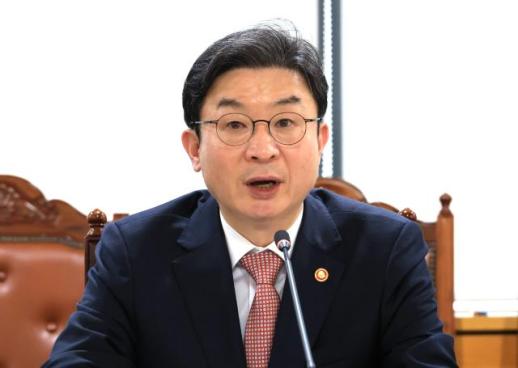 South Korea to Ease Loan Caps for Mid-Rate Lending; Card Issuers to Offer Saitdol Loans Financial authorities said they will ease household-loan volume caps to expand access to credit for mid-tier borrowers, excluding up to 80% of private-sector mid-rate loans from the overall lending limits. They also plan to allow credit card companies to offer Saitdol loans, aiming to increase mid-rate lending and encourage funding at lower interest rates. The Financial Services Commission announced the measures on 27 at a meeting titled the fourth Inclusive Finance Transformation Conference, held at the KB Hope Finance Center in Seoul's Dongjak district. The supply target for mid-rate loans this year is 31.9 trillion won, up 1.1 trillion won from last year. The plan calls for 3.6 trillion won in Saitdol loans and at least 28.3 trillion won in private mid-rate loans. Under the plan, when financial firms manage their overall lending volumes, private mid-rate loans will be excluded by sector by up to 80%. The FSC said the step is intended to prevent a sharp contraction in access to credit for mid-tier borrowers as lenders tighten volume controls to manage household debt. The government will also narrow eligibility for Saitdol loans to borrowers in the bottom 20% to 50% of credit scores, from the previous bottom 50%, to help mid-tier borrowers obtain sufficient funding at lower rates. Officials said the change addresses criticism that Saitdol loans, introduced as a stepping-stone for mid-tier borrowers, have in practice been supplied mainly to low-credit borrowers in the bottom 20% or below. With the overhaul, Seoul Guarantee Insurance premium rates are expected to fall by up to 5.2 percentage points, and the supply amount is projected to increase by up to 100 billion won. The FSC said it will expand Saitdol loan providers beyond banks, mutual finance institutions and savings banks to include specialized credit finance firms such as credit card companies and capital firms. It said participation by those firms, which hold customer data and credit-assessment capabilities for mid-tier borrowers, is expected to provide Saitdol loans at 8% to 12% interest and ease a so-called interest-rate cliff. That would be well below the existing 15.5% rate. Rules for private mid-rate loans will also be revised. When calculating the interest-rate criteria used to recognize mid-rate loans, the FSC will reflect actual loan costs such as funding costs and credit costs, lowering sector-specific benchmarks by up to 1.25 percentage points. Second-tier financial products will be split into mid-rate loan categories 1 and 2 depending on rate levels, and category 1 products will apply interest rates at least 3 percentage points lower than current levels. Financial Services Commission Chairman Lee Eok-won said inclusive finance must also serve as a reliable backstop so mid-tier borrowers can maintain stable financial lives. He said the government will work in balance with the private sector to support both low-credit and mid-tier borrowers and build what he called genuine inclusive finance. 2026-04-27 14:43:28
 -
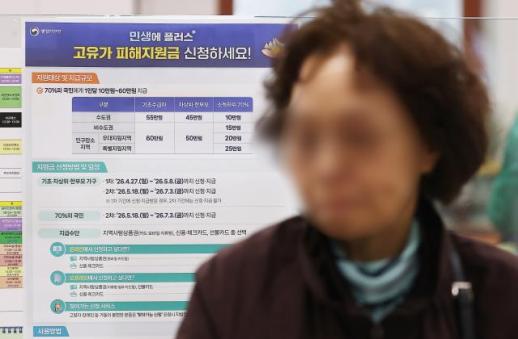 South Korea to Start High Fuel Price Relief Payments; Eligibility, Amounts and Use Rules Applications and payments for South Korea’s high fuel price relief payment begin April 27, drawing attention to who qualifies and how much they can receive. The government is rolling out the program to help stabilize household finances as international oil prices rise and inflation pressures grow. Payments vary by income and place of residence, ranging from 100,000 won per person to a maximum of 600,000 won. Basic livelihood security recipients will receive 550,000 won in the Seoul metropolitan area and up to 600,000 won outside the capital region. Near-poverty households and single-parent families will receive about 450,000 to 500,000 won. Among the general public, those in the bottom 70% by income can receive 100,000 won to as much as 250,000 won depending on region. The schedule is split by group. Vulnerable households — including basic livelihood security recipients, near-poverty households and single-parent families — will be paid first starting April 27. A second round of applications for the bottom 70% by income begins May 18. People who want advance notice can sign up for application-period alerts through the National Secretary service. Alerts can also be set through Naver, KakaoTalk and Toss. Applications and payments will be handled both online and in person. During the first week, a day-of-week system based on the last digit of a person’s birth year will be used to reduce crowding, as in past disaster relief programs. Those who want the payment on a credit or debit card can apply online through their card issuer or a mobile payment app, or apply in person at a bank branch linked to the card. Card-based payments are charged the day after application, and the relief funds are used before regular card balances. Remaining balances will be provided by text message or app notifications. Those who prefer a mobile or card-type local gift certificate can apply online through the local gift certificate app or website run by their local government. People seeking paper certificates or a prepaid card can visit their local eup, myeon or dong administrative welfare center. The funds can be used through Aug. 31 at eligible small businesses in the recipient’s local jurisdiction, including merchants with annual sales of 3 billion won or less. Use is restricted at certain businesses, including adult entertainment and gambling-related venues, online e-commerce and cash-convertible businesses. Any unused balance will expire automatically after the deadline.* This article has been translated by AI. 2026-04-25 07:03:38
 -
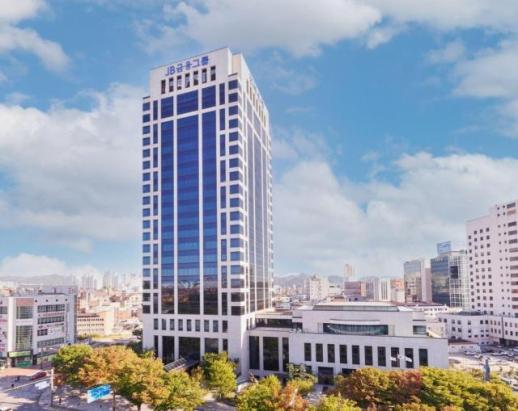 JB Financial Posts Q1 Net Profit of 166.1 Billion Won, Lifted by JB Woori Capital JB Financial Group said in a regulatory filing on the 23rd that it posted first-quarter net profit of 166.1 billion won, up 2.1% from a year earlier. The group reported a return on equity attributable to controlling shareholders of 11.2% and a return on assets of 0.94%. Its preliminary common equity Tier 1 ratio stood at 12.61%, up 0.03 percentage points from the end of last year. By affiliate, JB Woori Capital led results with net profit of 72.7 billion won, a 24.3% increase from a year earlier. Banking units Jeonbuk Bank and Gwangju Bank posted net profit of 39.9 billion won and 61.1 billion won, respectively, weighed down by higher selling, general and administrative expenses tied to special retirement programs and losses from securities valuation. JB Asset Management and JB Investment reported net profit of 1.1 billion won and 3.0 billion won, respectively. The group’s second-tier subsidiary Phnom Penh Commercial Bank in Cambodia posted net profit of 12.4 billion won, up 21%. JB Financial also said its board approved a quarterly cash dividend of 311 won per common share, about double the 160 won paid for the first quarter of last year.* This article has been translated by AI. 2026-04-23 17:36:06
 -
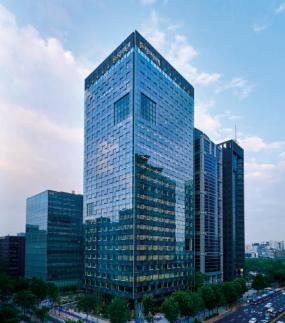 KB Financial Q1 Net Profit Rises 11.5% to 1.8924 Trillion Won; Nonbank Share Hits 43% KB Financial Group reported near-record quarterly earnings and said it will cancel all treasury shares it currently holds, signaling a push to pair strong results with bigger shareholder returns. In a regulatory filing on Thursday, KB Financial said its 2026 first-quarter net profit totaled 1.8924 trillion won, up 11.5% from a year earlier and the highest level on record. Results were supported by solid net interest income of 3.3348 trillion won and a sharp rise in net fee income, which grew 45.5% to 1.3593 trillion won. The nonbanking businesses accounted for 43% of group earnings, reflecting broad-based growth across affiliates. As of the end of March, the group’s nonperforming loan ratio stood at 0.73%. Its common equity Tier 1 ratio was 13.63%, and its BIS capital ratio was 15.75%, the company said. By unit, KB Kookmin Bank posted first-quarter net profit of 1.1010 trillion won, up 7.3% from a year earlier. KB Financial cited the fading impact of last year’s one-off, large provisioning, stable management of interest income and higher wealth-management fee income. The bank’s net interest margin rose 2 basis points to 1.77%. KB Securities reported net profit of 347.8 billion won, up 93.3%, helped by higher brokerage commissions and other wealth-management revenue as stock trading value increased amid a more active capital market. KB Insurance posted 200.7 billion won, KB Kookmin Card 107.5 billion won, and KB Life 79.8 billion won in net profit. KB Financial also announced it will cancel all 14.26 million treasury shares it holds, about 3.8% of shares outstanding, following a recent Commercial Act revision tied to mandatory treasury-share cancellations. The company said it is the industry’s largest single cancellation by value. Although the mandatory cancellation comes with a 1 1/2-year grace period, KB Financial said it decided to proceed immediately after the legal revision to maximize shareholder value and support government policy. The board also approved a quarterly cash dividend of 1,143 won per share and an additional 600 billion won share buyback and cancellation plan. * This article has been translated by AI. 2026-04-23 16:35:03