The Pentagon said Friday that Defense Secretary Pete Hegseth had ordered the withdrawal of about 5,000 U.S. troops from Germany, with the drawdown expected to be completed over the next six to 12 months.
Germany hosts around 35,000 U.S. troops, the second-largest overseas U.S. military presence after Japan. It is also home to the headquarters of U.S. European Command and U.S. Africa Command, making it a key pillar of European security since the end of World War II.
The Pentagon’s announcement came four days after Trump said on Truth Social that his administration was “studying and reviewing the possible reduction of troops in Germany," and would make a decision soon.
The move is widely seen as having been triggered by German Chancellor Friedrich Merz’s remarks on April 27 that the United States had been "humiliated" by Iran and that the war was unlikely to end easily.
Trump also said on Truth Social, “Based on the fact the European Union is not complying with our fully agreed to Trade Deal, next week I will be increasing tariffs charged to the European Union for Cars and Trucks coming into the United States.”
Under last year’s U.S.-EU trade agreement, Washington agreed to lower tariffs on EU-made passenger cars and trucks from 25 percent to 15 percent. Trump’s latest announcement would restore the rate to its previous level.
The sudden tariff move is being interpreted as another sign of Trump’s frustration with key NATO allies, many of which have effectively rejected Washington’s requests for military support in the Iran war. Trump has repeatedly complained that European allies are not doing enough, particularly in relation to efforts to secure the Strait of Hormuz.
Trump has also voiced frustration with Indo-Pacific partners, including South Korea, Japan and Australia, which have been reluctant to send forces to the Strait of Hormuz.
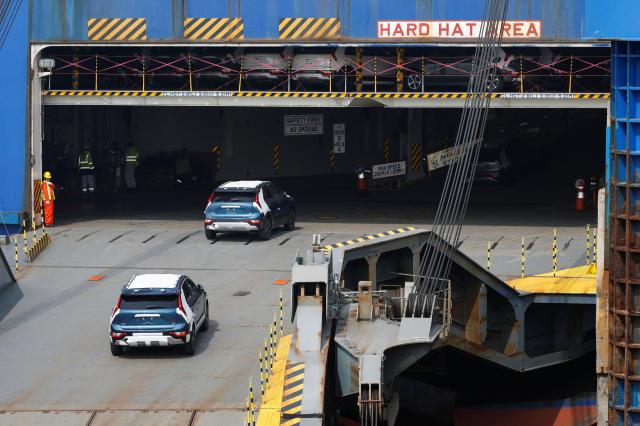
After Trump floated the possibility of reducing U.S. troops in Germany, South Korea’s defense ministry sought to draw a line, saying there had been “no discussions at all” between Seoul and Washington on a reduction of USFK.
Still, concerns remain as several major agreements reached at last year’s South Korea-U.S. summit have been slow to move forward.
At the center of the issue is Seoul’s $350 billion investment pledge in the U.S., which was linked to Washington’s agreement to lower tariffs on Korean goods and support key security-related initiatives, including South Korea’s pursuit of nuclear-powered submarines for peaceful purposes.
The Trump administration’s focus on the Iran war has limited Washington’s bandwidth for detailed consultations with Seoul. But diplomatic sources say the bigger reason behind delays in follow-up security talks appears to be Washington’s dissatisfaction with the pace of South Korea’s promised investment package.
The U.S. has repeatedly urged Seoul to move faster in selecting and implementing investment projects. Japan’s announcement of its first and second U.S. investment projects in February and March has added pressure on the South Korean government.
South Korea has moved to speed up preparations since Trump threatened in January to restore tariffs on Korean automobiles and other goods to 25 percent over delays in the investment agreement. The National Assembly passed a special law to support the package, and the government has continued talks with Washington over potential projects.
But Seoul has yet to announce its first investment plan, taking a cautious approach given the size of the commitment and the need to ensure commercial viability.
Trump’s latest moves against Germany and the EU have heightened concerns in Seoul that Washington may use trade and security leverage more aggressively in dealing with allies. Even if a reduction of U.S. troops in South Korea is not currently under discussion, Seoul may find it difficult to rule out renewed pressure if investment commitments continue to lag.

Copyright ⓒ Aju Press All rights reserved.