

Journalist

Jun sungmin
ball@ajunews.com
-
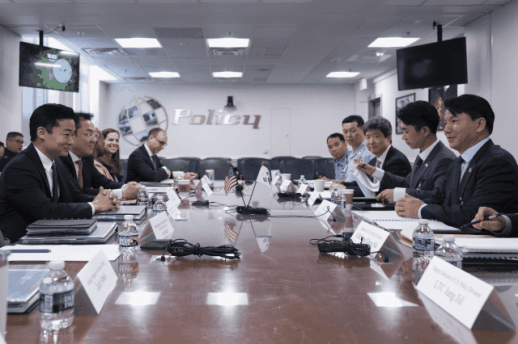 U.S. and South Korea Hold 28th Integrated Defense Consultative Meeting The South Korean Ministry of National Defense and the U.S. Department of Defense announced on May 14 that they held the 28th Integrated Defense Consultative Meeting (KIDD) in Washington, D.C., on May 12 and 13. The meeting was attended by Hong Chul, Director of Defense Policy, and John Nod, Deputy Assistant Secretary of Defense for Indo-Pacific Security Affairs, along with James Finch, Acting Deputy Assistant Secretary for East Asia, who served as the chief representatives from both sides. Key officials from the defense and diplomatic sectors of both countries were also present. During the meeting, the two sides evaluated the overall status of defense cooperation within the U.S.-South Korea alliance and exchanged views on policy directions to strengthen the alliance's combined defense posture. The Ministry stated, "Both sides agreed to actively promote cooperation for the implementation of the Joint Fact Sheet on defense matters and the Joint Communiqué from the 57th U.S.-South Korea Security Consultative Meeting (SCM) held last November." Additionally, the KIDD was assessed as providing a crucial foundation for advancing practical cooperation to further solidify the alliance, with plans to deepen collaboration to achieve common security goals in the Korean Peninsula and the Indo-Pacific region. A key agenda item for this meeting was the transfer of operational control. South Korean Defense Minister An Gyu-baek and U.S. Secretary of Defense Pete Hegseth held a bilateral meeting at the U.S. Department of Defense on May 11, prior to the KIDD. In a press briefing with reporters at the South Korean Embassy in Washington, D.C., the day after the meeting, Minister An stated, "The transfer of operational control based on conditions remains unchanged, with the goal of setting a target year for the transfer to be confirmed by the presidents after the two ministers agree on it during the SCM in November." He also noted, "There are some differing views from the U.S. side." The conditions agreed upon for the transfer of operational control include: 1) military capabilities necessary to lead combined defense; 2) the alliance's comprehensive ability to respond to North Korea's nuclear and missile threats; and 3) a security environment on the Korean Peninsula and in the region that is conducive to a stable transfer. The government is considering setting a target year for the transfer after completing verification related to Full Operational Capability (FOC) in the second phase, with plans to seek approval from the U.S.-South Korea defense ministers during the SCM in October.* This article has been translated by AI. 2026-05-14 07:00:50
 -
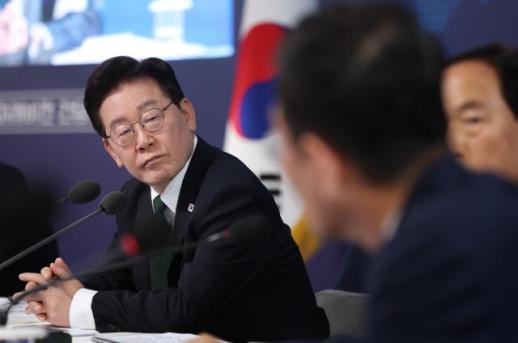 President Lee Calls for Stronger Ecosystem in South Korea's Shipbuilding Industry President Lee Jae-myung emphasized the importance of developing a robust ecosystem for South Korea's shipbuilding industry on May 13. He stated that it is crucial for the industry to thrive and for the benefits of growth to be shared equitably among stakeholders, including both employers and workers within companies. During his opening remarks at the K-Ship Future Vision meeting held at the Lahan Hotel in Ulsan, President Lee noted, "The shipbuilding industry has many possibilities and potential ahead." He encouraged attendees by saying that many countries are looking forward to collaborating with South Korea in shipbuilding. "In recent meetings with leaders from other nations, I found that most countries with coastlines are eager for cooperation with our shipbuilding sector," he said, acknowledging the industry's status as a key sector representing South Korea. He also highlighted the growing international interest in the shipbuilding industry, mentioning that it has been selected as a core item in the U.S.-led MASGA (Massive American Investment in South Korea) initiative. "The shipbuilding industry has become a significant part of investment cooperation between South Korea and the United States," he added. President Lee pointed out that the shipbuilding industry is highly susceptible to economic fluctuations, leading to persistent employment issues. "The industry experiences cycles of boom and bust, which often results in workforce instability," he explained. He noted that during downturns, companies struggle to maintain operations, while during upturns, they face labor shortages, causing a layered workforce structure and job insecurity. "This is not anyone's fault; it seems to be a characteristic of the industry," he remarked, stressing the need for government involvement to mitigate these risks. "Simply leaving it to the market will not resolve these issues. The government must take a keen interest in maintaining employment and developing the shipbuilding ecosystem," he asserted. Furthermore, he stated, "Today’s international competition is not just about individual products but about competing ecosystems. A strong internal ecosystem will enhance our international competitiveness, while lacking one will make it difficult to endure challenging situations." President Lee invited participants to share their concerns candidly, promising to consider what the government can do to address issues related to cooperation among small and large shipbuilders, as well as the roles expected from subcontractors and suppliers.* This article has been translated by AI. 2026-05-13 18:27:10
 -
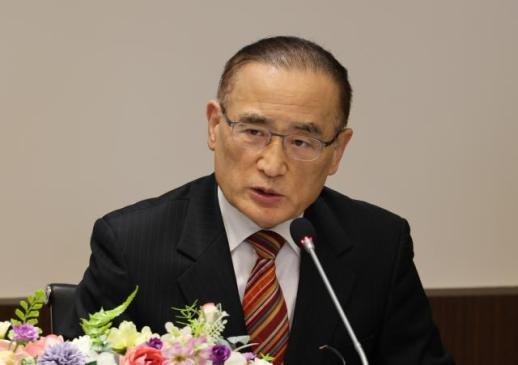 National Security Chief: No Evidence to Confirm Drone Attack on Namwoo Wiesungrak, head of the National Security Office, stated on May 13 that there is no evidence to confirm that the aircraft involved in the incident with the Namwoo in the Strait of Hormuz was a drone. Speaking at a meeting with the Korean Newspaper and Broadcasting Editors Association in Seoul, Wiesungrak emphasized the need for further investigation, saying, "We do not have grounds to conclude that this is a drone. We need to consider the results of the investigation so far and conduct additional inquiries to make a determination." He added, "If it is not a drone, it could be a missile, and various possibilities remain open." Wiesungrak also noted, "Even if it is a drone, it does not necessarily mean that it poses a problem for certain countries." Regarding comments made by U.S. President Donald Trump, who stated that a South Korean cargo ship was attacked by Iran while acting independently, Wiesungrak said, "I am not sure what basis President Trump had for saying it was Iran. Discussions are ongoing between the U.S. and South Korea, but I have not received a clear answer regarding Trump's basis from the U.S. side." He mentioned that military roles are being considered as part of efforts to ensure free and safe navigation in the Strait of Hormuz. "While I cannot provide specific details, there could be military roles at various levels, and we are currently reviewing how far we can go starting from lower levels," he added.* This article has been translated by AI. 2026-05-13 16:54:45
 -
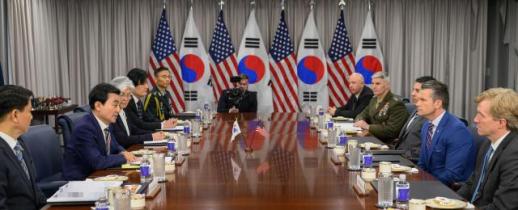 U.S. and South Korea Defense Ministers Discuss Key Security Issues South Korea's Defense Minister An Kyung-bak met with U.S. Secretary of Defense Pete Hegseth on May 11 at the Pentagon in Washington, D.C., to discuss key issues including the transition of wartime operational control. This meeting marked the first time the two defense ministers have convened since their discussions during the 57th U.S.-South Korea Security Consultative Meeting in Seoul on November 4, 2025. According to the Ministry of National Defense, the ministers discussed the security situation on the Korean Peninsula, including the transition of wartime operational control, and reaffirmed the significant role of the Korea-U.S. Integrated Defense Dialogue (KIDD) in enhancing alliance cooperation and national interests. The 28th KIDD meeting is scheduled for May 12-13, 2026. KIDD is a high-level regular meeting held twice a year since 2011, with the upcoming meeting featuring senior representatives, including Kim Hong-cheol, Director of Defense Policy, and John No, Assistant Secretary of Defense for Indo-Pacific Security Affairs. Key topics for discussion will include the transition of wartime operational control and the introduction of South Korea's nuclear-powered submarines. During the meeting, Minister An explained South Korea's recent efforts to lead defense on the Korean Peninsula through increased defense spending and securing core military capabilities, while discussing ways to strengthen future cooperation. Attendees from the U.S. side included Elbridge Colby, Deputy Assistant Secretary of Defense for Strategy and Force Development; John No; Ricky Buria, Chief of Staff; and Christopher Mahoney, Vice Chairman of the Joint Chiefs of Staff. South Korea's delegation included Ambassador to the U.S. Kang Kyung-wha, Brigadier General Yoon Hyung-jin, Defense Attaché to the U.S., Kim Hong-cheol, Spokesperson Jeong Bit-na, and International Policy Director Lee Kwang-seok. The transition of wartime operational control was a central agenda item for this meeting. The Yoon Suk-yeol administration is considering 2028 as a target for the transition before the current U.S. administration ends its term. U.S. Forces Korea Commander Javier Brunson recently mentioned a goal of transitioning in the first quarter of 2029 during a congressional hearing. Additionally, sensitive issues such as cooperation on the construction of nuclear-powered submarines and contributions to the resumption of navigation through the Strait of Hormuz were likely discussed. The agreement on nuclear-powered submarine construction cooperation, reached by the leaders of the two countries last year, has not progressed as expected. The recent fire on the South Korean cargo ship HMM Namwoo in the Strait of Hormuz has been confirmed as an external attack by an unidentified aerial vehicle, which likely prompted discussions on this matter as well. The South Korean government condemned the attack on the Namwoo on May 11, stating, "We will continue to participate in international efforts to ensure the safety and freedom of navigation for all vessels, including those from South Korea." President Donald Trump has continued to urge contributions from various countries, including South Korea, for the resumption of navigation through the Strait of Hormuz. In his opening remarks, Minister An praised Secretary Hegseth for strengthening the U.S. military under the banner of peace through strength since his appointment, stating, "I commend the efforts to restore the fighting spirit of the U.S. military, making it an even stronger force in the world." He added, "We are also making our best efforts to secure core defense capabilities through increased defense spending to realize a South Korean-led defense of the Korean Peninsula." Secretary Hegseth, in his opening remarks, referred to the U.S. military operations against Iran as 'Epic Fury' and emphasized the importance of the strength of the alliance, urging partners to stand shoulder to shoulder with the U.S. He noted that South Korea's commitment to increasing defense spending and taking a leading role in the defense of the Korean Peninsula is "very important" and highlighted the necessity of burden sharing among all U.S. partners to build a resilient alliance and effectively deter regional adversaries. Later that afternoon, Minister An visited Arlington National Cemetery to pay his respects to the noble sacrifices of veterans who dedicated their lives to freedom and peace. 2026-05-12 09:00:27
 -
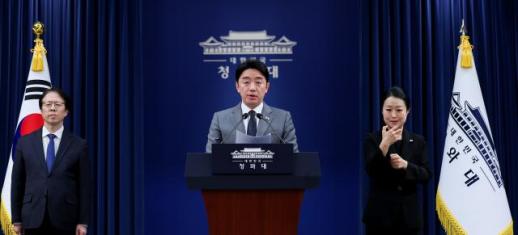 Kang Hoon-sik Calls for Urgent Safety Measures to Protect Youth from Crime Kang Hoon-sik, Chief of Staff to the President, has urged relevant authorities to implement urgent safety measures to protect youth from random acts of violence. This call follows the tragic incident on May 5, where a high school student was killed and another was seriously injured while attempting to intervene. During a meeting with senior advisors at the Blue House, Kang emphasized the need for thorough investigations and increased police patrols. He also requested safety inspections of school routes and enhancements to security facilities, as reported by Deputy Spokesperson Ahn Gyu-ryeong. Kang instructed Jeon Seong-hwan, Chief of the National Security Office, to personally meet with the families of the victims to convey the government's condolences and ensure that necessary support and measures are implemented swiftly. Ahn added that Kang expressed deep sorrow over the incident and extended his condolences to the bereaved families and local students who are grappling with shock and anxiety after losing a friend. The police have arrested a suspect, identified as Jang, in connection with the murder and attempted murder that occurred at 12:11 a.m. on May 5 in a pedestrian area of Gwangsan-gu, Gwangju, where a second-year high school student, referred to as A, was killed and her peer, B, was injured. Additionally, Kang noted that the government has swiftly implemented measures to stabilize prices following the outbreak of conflict in the Middle East, including the introduction of a maximum oil price system, reductions in fuel taxes, and securing additional crude oil and naphtha. As a result, the consumer price inflation rate was contained at 2.6% in April. He warned that the surge in international oil prices could lead to increased costs for raw materials and logistics, further raising the cost of living for ordinary citizens. Kang highlighted the rise in pork prices by over 8% compared to last year due to increases in international grain and feed prices, expressing concern that the burden on low-income households could worsen. He urged the Ministry of Agriculture, Food and Rural Affairs, the Ministry of Oceans and Fisheries, the Ministry of Trade, Industry and Energy, the Food and Drug Safety Ministry, and the Fair Trade Commission to adopt a mindset of "the war on prices has just begun" and to take all necessary measures to prevent excessive price hikes under the pretext of rising international oil prices, focusing on stabilizing costs for ordinary citizens.* This article has been translated by AI. 2026-05-12 04:44:20
 -
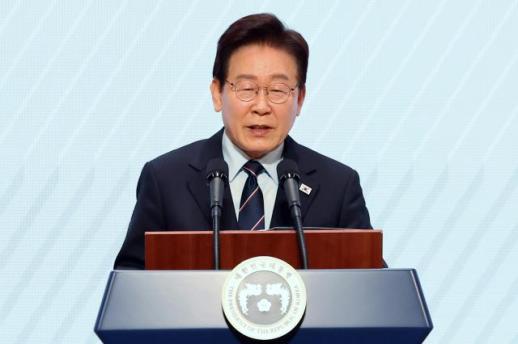 President Lee: Preference Voting System Aims to Save Time and Costs in Runoff Elections President Lee Jae-myung stated on May 11 that the preference voting system being implemented by the Democratic Party in the race for the 22nd National Assembly Speaker is designed to save time and costs associated with runoff elections. The preference voting system allows voters to rank their preferred candidates to determine the winner. In a post on X (formerly Twitter), President Lee explained, "The preference voting system was introduced alongside the runoff voting system when I was the leader of the Democratic Party." He further elaborated, "If the leading candidate does not achieve a majority in the first vote, there is no need for an additional runoff. Instead, we can conduct a preliminary runoff. For example, in a three-candidate race, if a voter who supported the third candidate has a second choice among the top two, adding their second-choice votes would yield the same effect as a runoff." However, he noted a limitation: "Voters who select the first and second candidates are assumed to maintain those choices in the runoff." The Democratic Party began voting among its party members on the same day to select candidates for the next National Assembly Speaker. The online voting by party members, which accounts for 20% of the total, will continue until the following day, while the in-person voting by lawmakers, making up 80%, will take place on May 13. Given the tradition that the leading party holds the Speaker position and the structure of the National Assembly, the winner of the Democratic Party's internal election is effectively confirmed as the next Speaker. The candidates for the Speaker election include lawmakers Kim Tae-nyeon, Park Ji-won, and Jo Jung-sik. President Lee urged voters to be mindful, saying, "If you do not select a second choice, and your preferred candidate is eliminated in the runoff, you will end up abstaining. Please do not misunderstand and make sure to select both your first and second choices." He added, "If our country were to adopt a runoff voting system for presidential elections, discussions on simultaneously introducing a preference voting system would likely follow." * This article has been translated by AI. 2026-05-12 04:29:39
 -
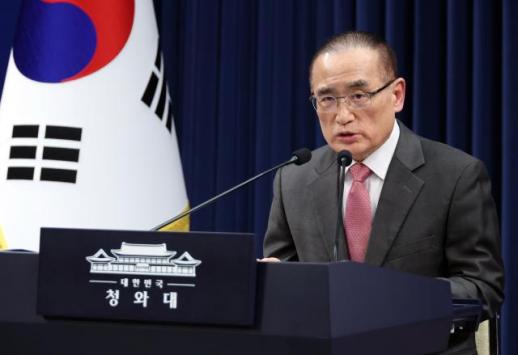 South Korea Condemns Attack on HMM Namoo in Hormuz Strait The Blue House stated on May 11 that the fire on the South Korean vessel HMM Namoo in the Hormuz Strait was confirmed to be caused by an external attack. The government emphasized that attacks on civilian vessels, including the Namoo, cannot be justified or tolerated. However, officials refrained from speculating on the identity of the attackers, maintaining a cautious stance. Wi Sung-lak, Chief of the National Security Office, expressed strong condemnation of the attack during a briefing with reporters, stating, "We strongly condemn this attack." A senior official from the Blue House noted, "While it is clear that attacks on commercial vessels are condemnable, the government is not currently identifying the attackers. We are in the process of determining the responsible party and will respond appropriately once we have clarity." On May 4, an explosion and fire occurred aboard the HMM Namoo, which was docked in the Hormuz Strait. Wi explained that two unidentified aircraft struck the stern of the Namoo approximately one minute apart, resulting in flames and smoke. He added that the damage occurred above the waterline, approximately 1 to 1.5 meters high, suggesting that the possibility of a mine or torpedo attack is low based on the damage pattern. He further stated, "Additional investigation is needed to gather information about the aircraft involved in the attack," indicating that a more specialized inquiry would be conducted to identify the attackers and the type of aircraft used. The government has towed the Namoo, which is currently unable to operate on its own, to the port of Dubai. An investigative team consisting of three officials from the Ministry of Oceans and Fisheries and four forensic experts from the National Fire Agency has been dispatched to investigate the cause of the fire. Military experts are also reported to be involved in the investigation. Wi mentioned that future response measures will be considered based on the results of this investigation. Wi also stated, "We will enhance communication with relevant countries to prevent such incidents from recurring and will intensify efforts to ensure the safety of our vessels and crew in nearby straits. We will continue to participate in international efforts to ensure the safety and freedom of navigation for all vessels, including those from South Korea." Yu Ji-hoon, a researcher at the Korea Institute for Defense Analysis (KIDA), advised that efforts should be made to secure evidence and pursue accountability through international cooperation. He emphasized the need for systematic improvements in sharing navigation information for high-risk areas, providing vessel escorts and evacuation support, and enhancing the navy's long-range maritime security response capabilities, as well as establishing a cooperative framework within the South Korea-U.S. alliance.* This article has been translated by AI. 2026-05-12 03:25:48
 -
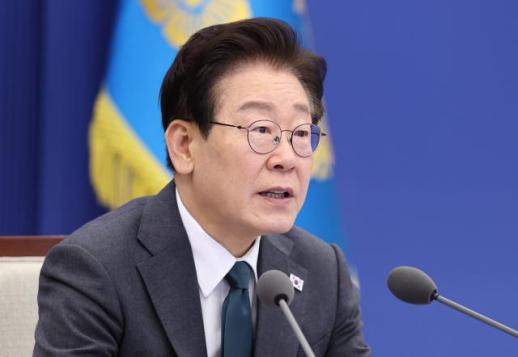 President Lee Calls Donghak Peasant Revolution the First Step for Democracy in Korea President Lee Jae-myung stated on May 11 that the Donghak Peasant Revolution, which awakened the people to their role as the foundation and masters of the nation, was a significant first step for democracy in South Korea. Speaking at the 132nd anniversary ceremony of the Donghak Peasant Revolution held at the National Museum of Korea in Yongsan, President Lee, through a speech read by Minister of Culture, Sports and Tourism Choi Hwi-young, remarked, "The spirit of the Donghak Peasant Revolution, which resisted unjust power while dreaming of a world where everyone lives well, has become an unquenchable light in our hearts." He reflected, "The spirit that has continued through the independence movement, the April 19 Revolution, the May 18 Democratization Movement, and the 'Candlelight Revolution' and 'Light Revolution' is the source that has blossomed South Korea into a model democratic nation that the world pays attention to today." President Lee emphasized that the value of a government based on popular sovereignty is closely aligned with the ideal of a community where citizens share the fruits of growth and enjoy their rightful rights, as envisioned by the farmers in 1894. He pledged, "The government will do its utmost to create a warm community where the people are the true masters of the nation and can enjoy their legitimate rights and share the fruits of growth together." He expressed deep respect for the courage, loud cries, and noble sacrifices of those who participated in the Donghak Peasant Revolution, which planted the seeds of precious democracy in this land. President Lee added, "Together with the people, I will work to build a nation where no neighbor is left behind, where everyone enjoys fair opportunities, and where we achieve a more developed and mature democracy in a country that belongs to its citizens." * This article has been translated by AI. 2026-05-11 11:42:21
 -
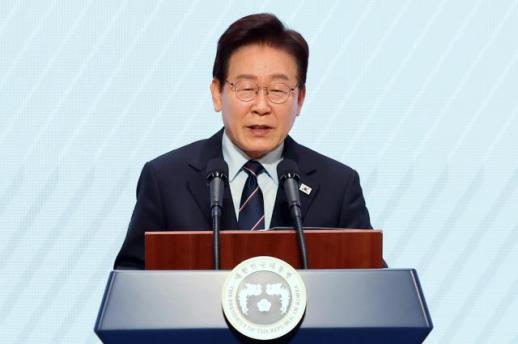 President Lee Considers Selling Opportunities for Non-Resident Homeowners On May 11, President Lee Jae-myung responded to concerns that the government's consideration of exceptions for land transaction permits for non-resident homeowners could effectively allow gap investment for homebuyers. He called such claims "close to unreasonable criticism." In a post on X (formerly Twitter), President Lee explained that the Ministry of Land, Infrastructure and Transport aims to provide equal selling opportunities for one-homeowners with tenants, similar to those for multiple homeowners. On May 10, Minister of Land, Infrastructure and Transport Kim Yoon-deok stated on his X account that the ministry plans to review exceptions for land transaction permits for non-resident homeowners from the perspective of fairness in selling opportunities. Currently, the government allows exemptions from the mandatory residence requirement for homebuyers only when purchasing properties from multiple homeowners in designated adjustment areas. In response to claims of reverse discrimination from non-resident homeowners, the government is considering extending this exemption to buyers of homes owned by non-resident one-homeowners. President Lee noted that for properties with tenants, buyers would be limited to those without homes and would be allowed to move in only after the existing lease period ends, with a maximum waiting period of two years. He added, "This means that we will provide selling opportunities for one-homeowners who cannot sell their properties due to tenant leases, allowing buyers to move in within two years after paying the deposit. To claim that this allows gap investment seems exaggerated." President Lee emphasized, "Escaping the real estate republic is an essential task for the normalization and sustainable development of our country. If real estate speculation resurfaces, who will benefit? I ask for your cooperation." * This article has been translated by AI. 2026-05-11 07:54:19
 -
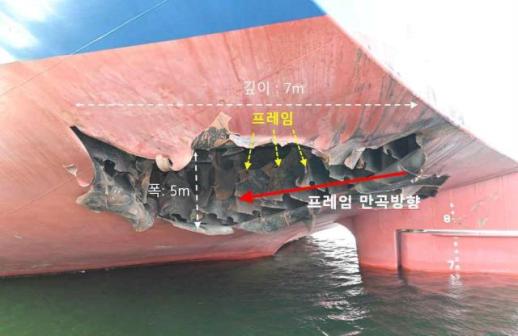 Government Confirms HMM Namoo Fire Caused by Unidentified Aerial Object The South Korean government officially announced on May 10 that the fire on the HMM Namoo, a Korean vessel, was caused by an unidentified aerial object that struck the ship on May 4 in the Strait of Hormuz. Park Il, spokesperson for the Ministry of Foreign Affairs, stated during a briefing that the joint investigation team confirmed that an unidentified object hit the stern of the HMM Namoo. He noted that while CCTV footage captured the object, there are limitations in identifying the launch entity, exact type, and physical size of the object. According to the government’s detailed investigation, which included CCTV review and interviews with the captain, two unidentified objects struck the port side of the HMM Namoo's ballast tank approximately one minute apart at around 3:30 PM on May 4. The impacts caused flames and smoke, with the fire igniting from the first strike and rapidly spreading due to the second strike. Park indicated that the cause of the fire is presumed to be unrelated to the ship's interior. The area of impact sustained damage measuring approximately 5 meters wide and 7 meters deep, with the hull bending inward. Park explained, "The damaged area is located 1 to 1.5 meters above sea level, and considering the damage pattern from explosive pressure and the hemispherical penetration shape, the likelihood of a mine or torpedo strike appears low." The Ministry of Foreign Affairs added that they plan to conduct further analysis on the recovered debris from the aerial object. Park emphasized, "We will not make assumptions about the entity behind this attack at this time." A multi-agency meeting was held later that afternoon to discuss the investigation results. He also stated, "The government is committed to thoroughly identifying the cause of this incident and will pursue all possible measures, including cooperation with the international community, to ensure the safety of our citizens," adding that they are closely reviewing participation in U.S. maritime freedom initiatives. Meanwhile, images captured showed Iranian Ambassador to South Korea, Saeed Koozechi, arriving at the Ministry of Foreign Affairs on the same day. Despite the lack of a specified entity behind the attack, Park commented on the ambassador's visit, stating, "We are communicating with relevant countries based on verified facts, and since Iran is one of those countries, the ambassador's visit was to explain our investigation results." Koozechi reportedly met with First Vice Minister Park Yoon-joo. * This article has been translated by AI. 2026-05-11 04:12:21