
Journalist

Kim Seong-seo
biblekim@ajunews.com
-
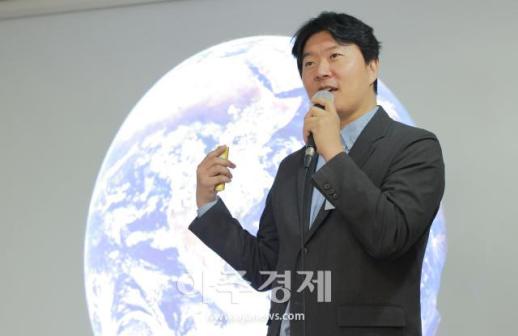 KAIST’s Kim Hyeongjun says energy sector is central driver of climate change “Because humanity has produced energy while developing society and the economy — and inevitably emitted greenhouse gases — the core cause of climate change lies in the energy sector. To solve it, we have to break one of the links in the chain somewhere along the way.” Kim Hyeongjun, a chair professor at KAIST’s Moon Soul Graduate School of Future Strategy and Department of AI Futures Studies, made the remarks Tuesday while delivering a lecture titled “The Climate Crisis, Energy Security and South Korea” at the 2026 Aju Economic Daily 2nd Energy Forum, held at the Korea Press Center in central Seoul. Kim divided climate response strategies into “mitigation” and “adaptation.” He described mitigation as cutting carbon dioxide and other greenhouse gas emissions through measures such as carbon neutrality, and adaptation as reducing damage as climate change progresses. In energy policy, he said, mitigation is the central pillar, including lowering emissions by improving energy efficiency. He said climate change is also expanding the ways it shocks the energy industry, pointing to the interdependence of energy and water. About 10% of the world’s water use, he said, goes to cooling during energy production. “When heat waves hit, cooling becomes less efficient and more water is needed. When droughts occur, it means not only hydropower but also nuclear and thermal plants that require cooling are affected,” Kim said, adding that Europe has already seen cases where droughts forced power plants to halt operations. “With climate risk now directly tied to the stability of energy supply, energy and water are a structure that cannot be viewed separately,” he said. Kim also highlighted the growing link between energy and carbon. Of the roughly 50 gigawatts of carbon humanity emits each year, he said, about 37 to 40 gigawatts come from the energy sector — one factor behind compound disasters driven by climate change. He said renewable energy also interacts with climate. As an example, he said solar power panels, because they are dark, absorb heat and can raise local temperatures; that can create updrafts that form clouds and bring rain, promoting plant growth. On the demand side, Kim said pressure is rising as electricity use increases, driven by higher cooling demand during heat waves. He said that trend is being compounded by data centers, shifts in industrial structure tied to artificial intelligence, and electrification policies, pushing power demand higher each year. At the same time, he said, climate change is increasing uncertainty on the supply side and threatening the stability of the overall energy system. In South Korea, he noted, thermal power plants are concentrated along the west coast, where rising seawater temperatures could reduce cooling efficiency — a case in which climate change driven by energy use feeds back into energy production. “Energy is no longer a problem of a single industry but a complex systems problem, and if we do not respond from an integrated perspective, the crisis will grow,” Kim said. “Climate action is not a cost but an investment. If we curb warming, we can reduce massive economic damage.” Citing the case of the ozone hole over Antarctica being closed, he added that “the energy transition is not a burden but a new opportunity,” and called for an active response strategy. 2026-04-29 17:24:18
 -
 South Korea names Coupang founder Bom Kim as controlling shareholder for antitrust rules South Korea’s antitrust regulator has designated Coupang Inc. Chairman Bom Kim as the company’s “same person,” a status used to identify the controlling figure of a large business group. The Fair Trade Commission said it concluded Kim’s brother, Coupang Vice President Youseok Kim, effectively participated in management and exercised influence, triggering disclosure and other obligations under the Fair Trade Act. The commission said Tuesday it will change Coupang’s designation from the “Coupang corporation” to Chairman Kim. Since Coupang was classified as a large business group in 2021, Kim had avoided being named the “same person,” citing his U.S. citizenship and the absence of relatives in management. However, after it became known last year that his brother was serving as a Coupang vice president, critics said Kim should be designated. Ahead of this year’s decision, the FTC conducted an on-site inspection of Coupang. The FTC said it determined Coupang did not meet the enforcement decree’s exception conditions for “same person” designation. It said the vice president’s position was at the top tier within Coupang, comparable to the level of chief executive officers at major affiliates. Choi Jang-gwan, director general of the FTC’s Corporate Group Supervision Bureau, said at a briefing that the vice president’s annual pay was in line with the average for registered executives at the same level and that he received treatment comparable to registered executives, including an assigned secretary. Choi said the vice president hosted “hundreds” of regular and ad hoc meetings on logistics and delivery policy and “in effect” influenced specific directions for executing work on major businesses. With Kim designated, Coupang must disclose overseas affiliates in which relatives and other related parties hold stakes above a certain level. The designation also brings a ban on unfairly providing benefits to related parties. If an overseas affiliate directly or indirectly holds shares in a domestic affiliate, Coupang must disclose the “same person’s” shareholding status in the overseas affiliate. Some have argued the FTC’s standards for making such designations have shifted from the past. Choi said large business group designations are based on materials submitted by companies, with after-the-fact accountability when problems such as false submissions are found. He said issues were raised during a Coupang hearing and a report was filed on the vice president’s management participation, leading the FTC to identify matters it had not previously found. The FTC also said the “same person” designation changed for Jungheung Construction, from Chairman Chang-sun Jung to his eldest son, Vice Chairman Won-ju Jung, following the chairman’s death. Dunamu remained designated as a “corporation” because it met exception conditions under the enforcement decree. The FTC said it designated 102 business groups with total assets of 5 trillion won or more — comprising 3,538 affiliated companies — as large business groups. It said the number of large business groups increased from last year’s 92. Newly designated groups include Line, the Korea Teachers’ Credit Union, Woongjin, Shieldus, Daemyung Chemical, Toss, Kolmar Korea, Heesung, Orion, QCP Group and Iljin Global, the FTC said. Youngone was excluded after its total assets fell. Among large business groups, 47 with total assets of 12 trillion won or more — equal to 0.5% of the latest confirmed nominal gross domestic product figure of 2,408.7 trillion won — were designated as cross-shareholding-restricted groups, up one from last year. Kyobo Life Insurance and Daou Kiwoom were upgraded to that category, while E-Land was downgraded to a large business group.* This article has been translated by AI. 2026-04-29 17:20:08
 -
Korea FTC Names Coupang Chair Kim Beom-seok as Controlling Person; Conglomerate List Rises to 102 South Korea’s antitrust regulator has designated Coupang Inc. Chairman Kim Beom-seok as the company’s “same person,” the individual deemed to ultimately control a business group. The Fair Trade Commission said it concluded Kim’s younger brother, Kim Yu-seok, a Coupang vice president, effectively took part in management and exercised influence. The FTC also said the number of disclosure-designated business groups — conglomerates with total assets of at least 5 trillion won — will rise by 10 to 102. Line among 11 newly designated conglomerates; Kyobo Life, Daou Kiwoom moved up The FTC said April 29 it will designate, effective May 1, 102 business groups with assets of at least 5 trillion won, covering 3,538 affiliated companies. That compares with 92 groups last year. Newly designated groups are Line, Korea Teachers’ Credit Union, Woongjin, Shieldus, Daemyung Chemical, Toss, Kolmar Korea, Heesung, Orion, QCP Group and Iljin Global. Youngone was removed after its total assets fell. Among the conglomerates, 47 groups with assets of at least 12 trillion won — equal to 0.5% of the latest finalized nominal gross domestic product figure of 2,408.7 trillion won — were designated as cross-shareholding-restricted groups. That is up by one from last year. Kyobo Life Insurance and Daou Kiwoom were moved up, while E-Land was moved down to the conglomerate category. The FTC said rapid growth in industries tied to K-beauty and K-food helped push Kolmar Korea and Orion into the conglomerate list. It also cited a strong stock market as a factor in Daou Kiwoom’s upgrade and Toss’ designation. With geopolitical tensions boosting demand for defense products, the rankings of groups with defense affiliates — including Hanwha, Korea Aerospace Industries and LIG — rose, the FTC said. It added that higher precious-metal prices and a weaker won helped bring in Heesung and Iljin Global. Starting May 1, affiliates of conglomerates will be subject to Fair Trade Act requirements including disclosure obligations and a ban on providing unfair benefits to related parties. Cross-shareholding-restricted groups face additional limits, including bans on cross-shareholding and circular shareholding, restrictions on debt guarantees, and limits on voting rights for financial and insurance companies. FTC cites Kim Yu-seok’s management role; Kim Beom-seok designated after five years The FTC designated Kim Beom-seok as Coupang’s controlling person. Since Coupang was first included as a conglomerate in 2021, Kim had avoided the designation because he is a U.S. citizen and, the FTC said, relatives were not participating in management. Questions grew last year after it became known that his brother was serving as a Coupang vice president. The FTC said it conducted an on-site inspection of Coupang ahead of this year’s designations and concluded the group did not meet the enforcement decree’s exception requirements. It said Kim Yu-seok holds a near-top internal rank comparable to the level of CEOs at major affiliates. Choi Jang-gwan, director general of the FTC’s Corporate Group Monitoring Bureau, said Kim Yu-seok’s annual pay is in line with the average for registered executives at the same level and that he received treatment comparable to a registered executive, including being assigned a secretary. Choi said Kim Yu-seok hosted “hundreds” of regular and ad hoc meetings on logistics and delivery policy and “effectively exercised influence” over specific directions for executing key business matters. With Kim Beom-seok designated, Coupang will be required to disclose the status of its overseas affiliates. If overseas affiliates directly or indirectly hold shares in domestic affiliates, the company must also disclose the controlling person’s shareholdings in those overseas affiliates. Responding to criticism that the FTC’s view differs from past decisions, Choi said conglomerate designations are based on company-submitted materials and that the agency has pursued accountability after the fact when false submissions or other problems are found. He said issues were raised during a Coupang hearing and a report was received alleging Kim Yu-seok’s management participation, leading the FTC to identify matters it had not previously found. Unlike Coupang, Dunamu met the enforcement decree’s exception requirements, so the corporate entity Dunamu remained the controlling person, the FTC said. For Jungheung Construction, the FTC said it will change the controlling person to Vice Chairman Jung Won-ju, the eldest son, following the death of former controlling person Chairman Jung Chang-sun. Choi said the designation aligns the person who effectively controls a business group with the individual ultimately responsible for compliance, reducing gaps between authority and responsibility. He said the FTC will sequentially release information based on more advanced analysis of the designated groups to provide useful information to market participants.* This article has been translated by AI. 2026-04-29 12:08:13
-
 South Korea’s Private Sector Meets Disability Hiring Quota for First Time Thirty-five years after South Korea introduced its mandatory disability employment system, private companies have met the legally required hiring rate for the first time. However, hiring remains relatively low among civil servants and companies with fewer than 100 employees, indicating continued need for improvement. The Ministry of Employment and Labor on Tuesday released its “2025 Status of Mandatory Disability Employment.” The system requires the state and local governments and 33,452 workplaces with 50 or more regular employees to hire people with disabilities. The current mandatory rates are 3.8% for the public sector and 3.1% for the private sector. Last year, the overall disability employment rate averaged 3.27%, up 0.06 percentage points from a year earlier. The number of employees with disabilities rose to 309,846, an increase of 11,192 from 2024. The disability employment rate was 3.94% in the public sector, including the government and public institutions, and 3.10% in private companies, up 0.04 and 0.07 percentage points, respectively. Most of the increase — 9,507 people — came from private companies. The ministry said the private sector met its mandatory hiring rate for the first time since the system took effect in 1991. Among companies with 1,000 or more employees, the disability employment rate rose 0.09 percentage points from the previous year. The ministry said disability hiring is increasingly becoming a key management consideration, especially at large firms. The makeup of the workforce is also changing. The shares of workers with severe disabilities and women with disabilities continued to rise, reaching 37.5% and 29.3%, respectively. The share of intellectual, autism and mental disabilities rose to 23.1%, topping 20% for the first time. Still, disability employment rates were low among civil servants and companies with fewer than 100 employees, at 2.85% and 2.13%, respectively. Civil service rates fell short of the legal requirement across central administrative agencies (3.53%), local governments (3.64%), constitutional institutions (2.86%) and education offices (1.91%). Among private companies with fewer than 100 employees, the rate rose 0.08 percentage points from a year earlier but remained low. The government said it will closely review disability employment in the civil service and actively seek ways to expand hiring, including integrated consulting and identifying suitable job roles. To encourage compliance in the private sector, it is providing employment improvement incentives to companies with 50 to 99 employees when they newly hire people with severe disabilities. It also said it will strengthen the effectiveness of levies on companies that repeatedly and deliberately evade their hiring obligations. Labor Minister Kim Young-hoon said, “Private companies meeting the mandatory hiring rate means disability employment is beginning to take hold as a universal standard in the labor market.” He added, “We will continue efforts to secure both quantitative and qualitative diversity in employment so that workers such as women with severe disabilities and those with mental disabilities can work in stable jobs.”* This article has been translated by AI. 2026-04-29 12:05:32
 -
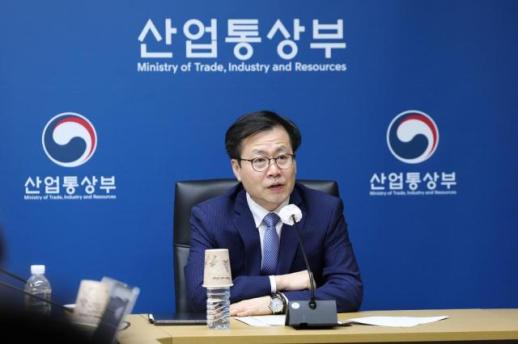 South Korea, Qatar discuss expanding investment cooperation in advanced industries Yeo Han-ku, South Korea’s minister for trade, met in Seoul on Tuesday with Ahmed bin Mohammed Al Sayed, Qatar’s minister of state for trade, to discuss ways to expand bilateral investment cooperation in advanced industries. The meeting followed up on talks held during a recent visit to Qatar by the president’s special envoy for strategic economic cooperation, aimed at turning discussions on advanced-industry investment into concrete outcomes. Yeo praised Qatar’s resilience as it moves quickly toward stability despite uncertainty in the Middle East. He also reaffirmed the close partnership built through cooperation on liquefied natural gas imports and energy infrastructure projects. The two sides agreed to broaden strategic investment cooperation by combining South Korea’s strengths in advanced industry and manufacturing with Qatar’s capital and push to diversify its economy. They discussed cooperation in future industries, including manufacturing AI transformation (M.AX) and robotics, as well as investment talks in biotech and semiconductors. Yeo said he hopes investment cooperation will grow in robotics that can be linked to AI solutions and infrastructure projects designed to help solve problems on factory floors. He also said he wants investment cooperation with promising South Korean biotech firms to expand, noting that more South Korean companies are entering Qatar in health checkups and pharmaceuticals. On semiconductors, Yeo cited the potential of South Korean AI semiconductor fabless companies with low-power, high-performance technology, and the two sides discussed ways to strengthen investment in the sector. Based on the talks, the two countries agreed to share information — including on interested companies — and to continue consultations so investment cooperation on promising projects can proceed smoothly. Yeo said the meeting would be an important milestone to reaffirm the strong trust built through the special envoy’s recent Qatar visit and to translate that trust into tangible results in advanced-industry investment. He said South Korea will keep widening the scope of economic cooperation with Qatar in future industries such as manufacturing AI and biotech, while strengthening energy security through the strategic partnership.* This article has been translated by AI. 2026-04-29 11:11:32
 -
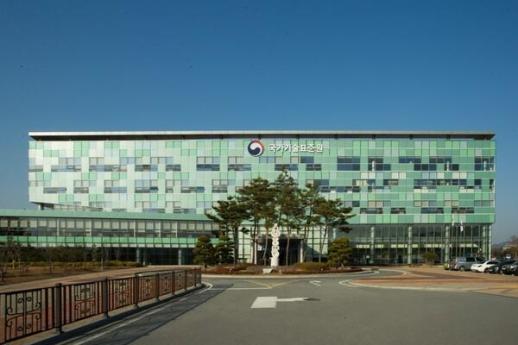 Korea to Put 30% of New Standards R&D Budget Into De Facto Standards, Agency Says The Ministry of Trade, Industry and Energy’s Korean Agency for Technology and Standards said on the 29th it held a “2026 De Facto Standardization Forum kickoff briefing and strategy meeting” to review the status of de facto standards work and discuss strategy. De facto standards are developed as companies voluntarily form groups such as forums and consortia and create standards in line with market demand and technological change. The agency said it has supported Korean companies’ responses to de facto standards through last year’s “measures to strengthen responses to de facto standards” and the “6th National Standards Master Plan” announced in March this year. It has also set up domestic response committees by sector to provide systematic support for Korean companies’ participation and activities in de facto standardization bodies in advanced industries. This year, it plans to invest more than 30% of the budget for new standards research and development projects in de facto standards to move to secure an early lead. Standardization experts attending the meeting shared sector-by-sector strategies and updates on their work. They also exchanged views on how Korean companies can strengthen global competitiveness by taking the lead in de facto standards in advanced industries. Kim Dae-ja, head of the agency, said, “De facto standards quickly reflect market needs in line with the pace of technological change,” adding, “We will continue to expand support for developing the de facto standards our companies need to lead advanced industries.”* This article has been translated by AI. 2026-04-29 11:10:46
 -
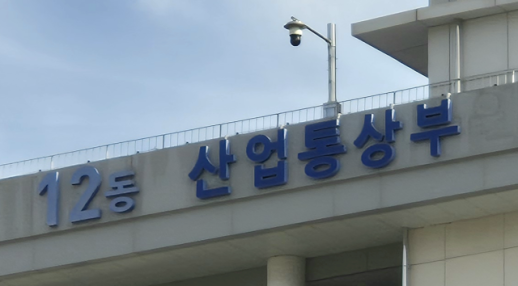 South Korea Industry Ministry Maps 2026 R&D Budget Focus on Regional Growth, Manufacturing AI and Supply Chains The Ministry of Trade, Industry and Energy on Tuesday held its second 2026 Strategic Planning and Investment Council meeting to discuss next year’s research and development budget, chaired by Vice Minister Moon Shin-hak. The ministry has been drafting its 2026 R&D budget plan with priorities that include fostering “5 poles and 3 special zones” growth engines, expanding the Manufacturing AI Transformation initiative (M.AX), and strengthening the industrial ecosystem. To concentrate R&D spending, it said it screened new projects after reviews that included input from private-sector experts by field and internal deliberations. It also carried out performance-based restructuring of ongoing projects while integrating fragmented small-scale programs. For the “5 poles and 3 special zones” initiative, the ministry said it will launch new projects next year to provide package support by region for technology development, infrastructure and workforce training. The plan includes the 5 poles and 3 special zones growth-engine project, technical support to help regional advanced industries respond to green-transition regulations, and development of manufacturing AI models that use tacit know-how. Other proposed projects include core technology development for full-stack AI factories that optimize entire manufacturing processes, AI-based manufacturing safety systems to protect workers, and industry-specific R&D to boost productivity using AI in sectors such as shipbuilding, bio and distribution. To strengthen the industrial ecosystem and competitiveness in advanced and key industries, the ministry listed projects such as next-generation battery technology for humanoids, localization of core materials and parts for advanced aircraft engines, and core technologies to shift the chemical industry toward high value-added specialty products. The ministry also said it will respond to supply-chain issues linked to the recent Middle East war. New projects include technology and process development for preprocessing medium-to-heavy crude to support feedstock diversification in refining and petrochemicals, alternative materials technology to stabilize supplies of inputs such as naphtha, and “Industry GX Plus” to support development and demonstration of carbon-reduction technologies for high-emitting industries. “Industrial technology competitiveness is emerging as the foundation of the national economy and security, while global competition for technological supremacy is intensifying,” Moon said. “For our industries to secure a competitive edge, the public and private sectors must strategically choose areas and invest boldly and quickly.”* This article has been translated by AI. 2026-04-29 11:09:49
 -
 South Korea Labor Ministry Honors Top Labor Inspectors, Holds Jeon Tae-il Tribute Event The Ministry of Employment and Labor said it awarded ministerial citations to outstanding labor inspectors and held a Jeon Tae-il biography “continuation writing” event on the 29th at the Jeon Tae-il Memorial Hall. The ministry selected 10 teams and nine individuals as outstanding labor inspectors. In workplace inspection, the honorees were the Jungbu Regional Office’s Metropolitan Labor Standards Inspection Division, the Changwon Branch Office’s Labor Standards Inspection Division, the Daegu Regional Office’s Metropolitan Labor Standards Inspection Division, and inspectors Kim Gi-dae (Busan Eastern), Kim Gwang-hyeon (Incheon Northern), Park Ye-seul (Uijeongbu) and Hyeon So-jin (Yeongju). The ministry said they were recognized for responding quickly to social issues with wide-ranging inspections or for contributing to enforcement of labor laws. In complaint cases and rights relief, the list included the Incheon Northern Branch Office’s Labor Standards Investigation Division 1, the Busan Regional Office’s Labor Standards Investigation Division 1, the Seoul Southern Branch Office’s Labor Standards Investigation Division 1, the Ulsan Branch Office’s Labor Standards Investigation Division 1, and inspectors Kim Min-yeong (Tongyeong), Kim Seok-jin (Yangsan) and Park Eun-jeong (Pohang). The ministry cited their work in proactively uncovering and resolving hidden wage arrears beyond reported cases. In active investigations, including forced investigations, the honorees were the Seongnam Branch Office’s Labor Standards Investigation Division 1, the Seoul Northern Branch Office’s Labor Standards Investigation Division 1, the Pohang Branch Office’s Labor Standards Investigation Division 1, and inspectors Kang A-yeong (Changwon) and Jang Yun-hui (Goyang). The ministry said they were credited with arresting and detaining suspects who went into hiding for years after group wage theft cases, or tracking suspects’ locations through communications warrants until they were arrested. After the awards, cited inspectors and newly appointed labor inspectors attended an event titled “Jeon Tae-il’s Dream, Continued Through Copying,” hosted by Jeon Tae-il Civic Action. The event aims to designate Nov. 13, the day Jeon died, as a national commemorative day. Labor Minister Kim Young-hoon said “new employment arrangements designed to evade labor laws, such as fake ‘3.3,’ are increasing, and intentional and habitual wage arrears still threaten workers’ rights at their workplaces.” He added, “This is a time when tighter, more reliable on-site oversight is needed.” Kim said seasoned inspectors and newly appointed inspectors should “communicate and collaborate actively” to carry on Jeon’s spirit and “build a country where all working people can be happy.”* This article has been translated by AI. 2026-04-29 10:34:06
 -
 South Korea, Singapore Launch Talks to Upgrade FTA, Focus on Supply Chains The Ministry of Trade, Industry and Energy said April 28 that South Korea and Singapore have launched negotiations to upgrade their free trade agreement, prompted by Trade Minister Yeo Han-ku’s visit to Singapore. The ministry said the two countries’ chief negotiators signed negotiating rules in the presence of Singapore Deputy Prime Minister and Minister for Trade and Industry Gan Kim Yong and Yeo. The signing followed a March summit agreement to begin talks on improving the FTA. After the signing, South Korea held the first round of negotiations with relevant ministries including the Ministry of Economy and Finance and the Ministry of Land, Infrastructure and Transport. Talks were conducted in four working groups: supply chains, the green economy, aircraft maintenance, repair and overhaul, and trade facilitation. Yeo also held a series of meetings with Gan; Tan See Leng, minister in charge of digital, supply chain and energy; and Grace Fu, minister in charge of World Trade Organization and multilateral trade issues. The ministry said they discussed ways to speed up upgrade talks on the Korea-ASEAN FTA and the Korea-Singapore FTA, strengthen the foundation for economic cooperation with New Southern Policy countries, and bolster minilateral cooperation. Separately, Yeo met in relay talks with energy trading firms and commodity information and analysis organizations alongside Rep. Lee Eon-ju, chair of the Korea-Singapore parliamentary friendship association and a lawmaker from the Democratic Party. The ministry said meetings with Vitol, Trafigura and S&P Global were used to share outlooks for global energy markets and explore response options. Yeo also held a meeting with South Korea’s four refiners operating locally to review crude oil and naphtha supply and demand conditions and hear difficulties faced by companies. The ministry said Yeo carried out outreach to expand Singapore investment in South Korea’s advanced industries and broaden exports of Korean consumer goods. He visited Singapore’s sovereign wealth fund Temasek and stressed the need for sustained investment cooperation. He also met with Shopee, Southeast Asia’s largest e-commerce company, to discuss a dedicated section for Korean products, as well as cooperation on certification and logistics to help South Korean small and medium-sized companies expand in Southeast Asia. Yeo visited the Hyundai Motor Group Singapore Global Innovation Center, described as Singapore’s advanced manufacturing innovation hub, and PSA, a global port operator, to review on-site artificial intelligence for next-generation manufacturing and the status of logistics automation technology. “Following up on the March summit, we launched FTA upgrade talks and discussed key economic cooperation issues including supply chain stabilization, investment attraction and boosting cross-border online shopping,” Yeo said. “We will work to ensure this visit leads to tangible outcomes that help our companies.”* This article has been translated by AI. 2026-04-28 15:03:21
 -
 Labor Minister Kim Young-hoon Pledges Stronger Laws to Involve Labor, Management in Preventing Industrial Accidents Kim Young-hoon, South Korea’s minister of employment and labor, said on the 28th that cutting industrial accidents begins with “basic respect for human life,” and pledged to focus on strengthening laws and systems so labor and management can take an active role in preventing workplace injuries and deaths. Kim made the remarks in a commemorative address after paying respects at the Industrial Accident Victims Memorial Tower in Boramae Park in Seoul’s Dongjak District. A ceremony was later held at the Korea Federation of SMEs in Seoul’s Yeongdeungpo District. Industrial Accident Workers’ Day was designated a statutory commemorative day in October 2024 to raise public understanding of industrial accidents and improve the rights of affected workers. Attendees included Kim; Kim Jeong-ho, chair of the National Assembly’s Climate, Energy, Environment and Labor Committee; other lawmakers; representatives of labor and management groups; and officials from government-affiliated agencies. Groups representing industrial accident victims and bereaved families, as well as award recipients, also took part. At the ceremony, the Dongtap Order of Industrial Service Merit was presented to Seok Chang-woo, head of the Korea Disabled Artists Association, who lost both arms in a high-voltage electrocution accident and later became an artist, staging performances at more than 200 events at home and abroad to help reduce social prejudice against injured workers. An Industrial Service Medal was awarded to Min Dong-sik, head of the Incheon Industrial Accident Association, who lost his left leg in a workplace explosion and has operated a rehabilitation support counseling center while running accident-prevention campaigns. Kim said that with nationwide efforts on industrial safety, combined with labor-management cooperation, fatal industrial accidents fell in the first quarter of this year. “If dedicated efforts have produced change in reducing serious accidents, we must now solidify that momentum,” he said. He added that the government will work to build a workplace culture that respects the life and safety of all people and help workers who have suffered industrial accidents return fully to their daily lives.* This article has been translated by AI. 2026-04-28 13:57:02