

Journalist

Kim SeongSeo
biblekim@ajunews.com
-
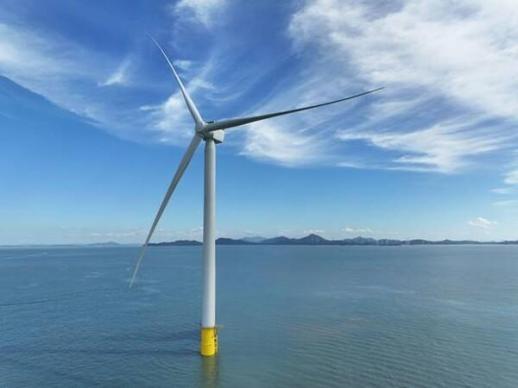 Government to Establish Joint Connection System to Expand Offshore Wind Power The South Korean government is set to address the grid connection issues that have hindered the expansion of offshore wind power by establishing a joint connection system. On May 15, the Ministry of Climate, Energy, and Environment held a signing ceremony and meeting for the promotion of joint offshore wind connections at the Korea Electric Power Corporation's Gyeongin Construction Headquarters. This initiative follows the announcement last December of plans to expand and promote offshore wind infrastructure. At that time, the government outlined a goal to increase the current offshore wind capacity of 0.35 gigawatts (GW) to 10.5 GW by 2030, raising it by 4 GW annually. The government decided to focus on enhancing key infrastructure for offshore wind construction, including ports, installation vessels, and financing. It also aimed to streamline the military operational consultations, which are crucial for project approvals, and to announce plans for long-term supply bidding more promptly. Additionally, a new offshore wind power promotion team at the director level was established, with plans to conduct site bidding starting in 2029, reducing the average project duration from about 10 years to 6.5 years. Previously, offshore wind projects were pursued through individual connections, with each developer building separate lines to land substations. However, as offshore wind farms have grown larger, this has led to increased costs from redundant transmission lines and grid shortages. In response, the government plans to proactively establish a joint connection facility, allowing multiple offshore wind developers to connect at public hubs on islands or coastal areas for rapid integration and expansion. This approach is expected to reduce connection costs, thereby lowering the cost of offshore wind power generation and decreasing Korea Electric Power Corporation's (KEPCO) electricity purchasing expenses. Furthermore, in areas where KEPCO's shared network and offshore wind connection lines are adjacent, integrated facilities are anticipated to lower KEPCO's investment costs in the grid. During the event, a memorandum of understanding (MOU) was signed between KEPCO and offshore wind developers in the Haenam region, which is one of nine candidate sites for joint connections. As a result, the total length of connection lines is projected to decrease from 703 km to 287 km, a reduction of 59%. The total investment is expected to drop by 3.6 trillion won compared to individual connections, with an anticipated average reduction of 20 won per kilowatt-hour in offshore wind generation costs. Following the signing ceremony, the Ministry of Climate and KEPCO introduced detailed plans for the joint connection initiative during a subsequent meeting. The government aims to expand joint connections in areas densely populated with offshore wind projects through consultations among developers by the third quarter of this year. To facilitate this, they will gather opinions on cost-sharing plans that harmonize institutional support with principles of public benefit and beneficiary burden. Minister of Climate, Energy, and Environment Kim Seong-hwan stated, "The expansion of renewable energy is a core issue of energy security that is vital for the nation's survival. The promotion of offshore wind power must be approached from the perspective of national infrastructure management. The government will be a strong ally in breaking down the uncertainties of grid connections and the barriers to permits faced by offshore wind developers."* This article has been translated by AI. 2026-05-15 22:20:37
 -
 Lee Jong-wook Appointed as New Commissioner of the Korea Customs Service Lee Jong-wook has been appointed as the new commissioner of the Korea Customs Service, recognized as a customs expert with extensive practical experience. Born in 1974 in Sangju, North Gyeongsang Province, Lee graduated from Yonsei University with a degree in economics and completed a master's degree in public administration at Rutgers University in the United States. He entered public service after passing the 43rd National Civil Service Examination. Throughout his career, he has held various positions, including director of the Export-Import Logistics Division, director of the Creative Planning and Finance Division, director of Human Resources Management, and director of Customs Planning. He also served as the head of the Incheon Customs Port Inspection Bureau, director of the Examination Bureau, director of the Customs Bureau, Planning and Coordination Officer, and director of the Investigation Bureau. While serving as the director of the Investigation Bureau, he led the newly established Special Investigation Team for Trade Security at the headquarters. He was appointed as the deputy commissioner of the Korea Customs Service in October of last year and has now been promoted internally to commissioner. Lee is the fifth internal appointment to the position of customs commissioner, following former commissioners Sung Yun-kap in 2005, Cheon Hong-wook in 2016, Noh Seok-hwan in 2020, and Lee Myung-gu in 2025. Lee Gyu-yeon, senior presidential secretary for public relations, praised Lee, stating, "He is a seasoned bureaucrat who has held key positions, successfully uncovering large-scale illegal circumvention of exports and jointly cracking down on significant amounts of narcotics with the Thai government. He is well-suited to support companies' trade and investment activities while preventing customs violations that threaten public safety." ◇ Profile △ Born in 1974 △ Graduated from Yonsei University with a degree in economics △ Master's degree in public administration from Rutgers University △ Passed the 43rd National Civil Service Examination △ Former director of the Creative Planning and Finance Division at the Korea Customs Service △ Former director of Human Resources Management at the Korea Customs Service △ Former director of Customs Planning at the Korea Customs Service △ Former head of the Incheon Customs Port Inspection Bureau △ Former director of the Examination Bureau at the Korea Customs Service △ Former director of the Customs Bureau at the Korea Customs Service △ Former Planning and Coordination Officer at the Korea Customs Service △ Former director of the Investigation Bureau at the Korea Customs Service △ Former deputy commissioner of the Korea Customs Service* This article has been translated by AI. 2026-05-15 15:06:00
 -
 Government to Announce Employment Stability Plan Amid Industrial Transition The South Korean government plans to unveil a basic employment stability plan during the first half of the year in response to growing concerns about job disruptions caused by industrial changes, including artificial intelligence (AI), digital transformation, and carbon neutrality. This initiative aims to proactively address the potential for large-scale job shifts resulting from these transitions. On May 15, the Ministry of Employment and Labor held a meeting at the Seoul Business Center to gather input from labor representatives, business leaders, and youth organizations. Since November of last year, the government has been working with expert forums to develop policies aimed at preventing job shocks and creating new employment opportunities stemming from industrial transitions. The urgency arises from the rapid spread of AI, digitalization in manufacturing, and the restructuring of green industries, which could destabilize existing sectors and labor markets. There is a growing awareness that while some jobs may quickly disappear during the transition, new roles may not be created in time to replace them. A notable example is the decline in jobs for workers at traditional power plants due to the shift toward renewable energy. Similarly, workers in the internal combustion engine vehicle sector face increasing pressure as the industry shifts to electric vehicles. As job restructuring pressures mount, concepts like 'just transition' are gaining traction in the United States and the European Union. These regions are strengthening policies to mitigate labor shocks resulting from industrial changes, and there are calls for South Korea to adopt a more systematic transition strategy. To this end, the government has been accumulating foundational data on the status of industrial transitions and their employment impacts through a first phase of forums held from November last year to March this year. The second phase, conducted in April and May, focused on five specialized areas: job outlook, employment safety nets, business support, vocational training, and social dialogue. During the recent meeting, reports prepared by the expert forum and review materials from the labor ministry were discussed. The government plans to announce the basic employment stability plan next month, following public discussions and feedback from an expert committee on employment stability during industrial transitions. Lim Young-mi, head of the Employment Policy Office, stated, "There is a gap between the speed of industrial transition and the readiness of the labor market. If we do not train the necessary talent in line with facility and equipment investments, successful transitions will be difficult." She added, "We will establish a robust support system in collaboration with relevant ministries to ensure that talented individuals can work in a timely manner throughout the entire cycle of industrial transition." She emphasized the need to strengthen measures to ensure that workers' jobs and livelihoods remain stable during the transition period while also seizing new opportunities.* This article has been translated by AI. 2026-05-15 14:03:00
 -
 Government Expands Use of Seawater Energy in Multi-Family Housing 정부가 상업건물을 중심으로 활용하던 수열에너지를 공동주택으로 확대하는 방안을 논의한다. 기후에너지환경부와 한국수자원공사는 15일 오전 서울비즈센터에서 '수열에너지 발전협의체' 출범식을 진행했다. 수열에너지는 대기온도보다 여름에는 낮고 겨울에는 높은 물의 특성을 활용해 건물의 냉난방에 활용하는 재생에너지다. 실제로 롯데월드타워는 수열에너지를 도입해 32.6%의 에너지를 절감하는 등 기존 냉난방 설비에 비해 에너지 절감 효과가 높다. 또 하천의 물을 정수장까지 보내는 도수관로를 활용해 도심지에 빠르게 공급할 수 있다. 다만 국내 수열에너지 산업은 현재 초기단계로 중대형 상업건물에서 주로 활용되고 있다. 해외에서는 이미 공동주택과 도시 단위의 수열에너지 활용이 활발하다. 특히 러시아·우크라이나 전쟁 이후 에너지 가격이 상승하면서 유럽에서는 히트펌프 기반의 수열에너지 활용이 증가하고 있다. 네덜란드는 호수·운하의 물을 이용한 수열에너지를 주거단지 지역 냉난방에 적용하고 있다. 노르웨이와 스웨덴, 핀란드 등 북유럽 국가들도 수열에너지를 활용하고 있다. 기후부는 이번 발전협의체를 통해 △수열원의 범위 확대 △제품 인증기준 마련 등 제도개선 사항 △핵심설비(열교환기·히트펌프 등) 국산화 △시스템 설계 등 수열산업 전반의 발전방향을 논의한다. 이를 위해 △정책제언 △기술개발 △사업확산 등 3개 분과로 나뉘어 활동한다. 발전협의체 출범에 앞서 '공동주택 수열에너지 보급확대를 위한 간담회'도 열린다. 금한승 기후부 1차관을 주재로 열리는 간담회는 공동주택 세대별 수열에너지 시스템의 최적설계 방안을 중심으로 실제 주거환경에 적용 가능한 설비 구성과 효율성 등을 검토한다. 금한승 기후부 차관은 "수열에너지는 에너지 효율 제고와 온실가스 감축을 동시에 달성할 수 있는 중요한 재생에너지원"이라며 "특히 공동주택 분야로 수열에너지 활용이 확대된다면 탄소중립과 에너지 전환의 성과를 체감할 수 있을 것으로 보인다"고 말했다.* This article has been translated by AI. 2026-05-15 10:08:49
 -
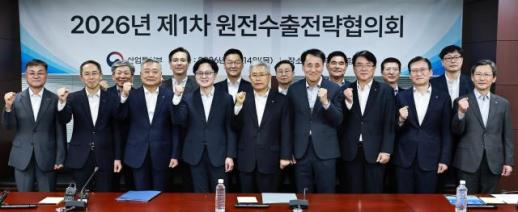 Korea Restructures Nuclear Power Export Strategy for Global Competitiveness The South Korean government is consolidating its nuclear power export system into a unified team. Korea Electric Power Corporation (KEPCO) and Korea Hydro & Nuclear Power (KHNP), which previously managed overseas contracts separately, will now collaborate under government leadership to enhance their competitiveness in securing international contracts. On May 14, the Ministry of Trade, Industry and Energy held the first nuclear power export strategy council meeting of 2026 at the Korea Trade Insurance Corporation, where it announced plans to streamline the nuclear power export system. The ministry aims to implement these measures immediately and as ongoing projects throughout the year. As an immediate action, a public-private joint "export planning committee" will be established under the nuclear power export strategy council. The head of the ministry's nuclear strategy planning division will chair the committee, overseeing export negotiations and enhancing economic viability and risk assessment functions. The countries targeted for export, which were previously managed separately by KEPCO and KHNP, will now be integrated into a cooperative management system. While both companies will jointly handle overseas nuclear project development and main contracts, KEPCO will lead external negotiations and equity investments due to its financial strength and recognition, while KHNP will focus on construction and operations. This restructuring aims to reduce overlapping roles and conflicts over leadership. KHNP will take the lead in ongoing projects in the Czech Republic and the Philippines. It will also oversee the export of innovative small modular reactors (i-SMR), which it is currently developing. The ministry also plans to push for the enactment of a proposed "Nuclear Power Export Promotion Act" within the year. This legislation will establish the ministry's supervisory authority over public institutions involved in overseas nuclear projects, provide a legal basis for a central export agency, and create a framework for financial and insurance support. The government's initiative to reorganize the export system is driven by the expanding global nuclear market. Analysts suggest that rising electricity demand and decarbonization policies are renewing the strategic value of nuclear power. The International Energy Agency (IEA) projects that global electricity demand will increase by approximately 40% by 2035 compared to 2024, driven by the growth of artificial intelligence, data centers, semiconductor industries, and the proliferation of electric vehicles. Consequently, the energy mix is also evolving. The IEA forecasts that the combined share of renewable energy and nuclear power in global electricity generation will exceed 50% for the first time by 2030. This indicates a renewed focus on nuclear power as a stable baseload energy source to complement intermittent renewable energy. Major U.S. tech companies like Google, Amazon, and Microsoft are also exploring investments in small modular reactors (SMRs) and power purchase agreements (PPAs) based on nuclear energy to secure carbon-free electricity. Amid these trends, the export competitiveness of South Korean nuclear technology is being reassessed. South Korea has gained recognition in the large nuclear power sector based on its experience in constructing and operating the Barakah Nuclear Power Plant in the United Arab Emirates and its APR1400 technology. Expectations for additional contracts following the recent bidding in the Czech Republic are rising in this context. Minister Kim Jeong-kwan stated, "To effectively respond to nuclear power export issues, we will refine the K-nuclear power team system and strengthen government support through legislation. We will enhance industrial competitiveness and risk management systems under the ministry's leadership to seize opportunities in the global nuclear renaissance." * This article has been translated by AI. 2026-05-14 19:09:59
 -
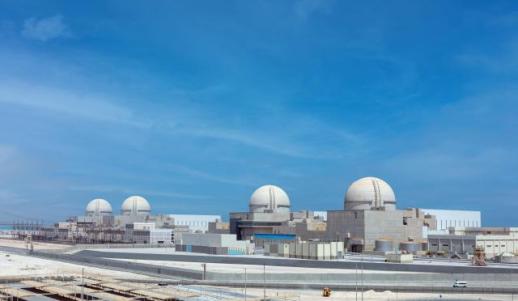 South Korea Streamlines Nuclear Power Export Strategy The South Korean government has decided to unify its nuclear power export efforts, which have been divided between Korea Electric Power Corporation (KEPCO) and Korea Hydro & Nuclear Power (KHNP). A government-affiliated committee will oversee the projects, while KEPCO and KHNP will collaborate on implementation. The formal integration of export agencies will be determined through legislative discussions. On May 14, the Ministry of Trade, Industry and Energy held the first nuclear export strategy council meeting at the Korea Trade Insurance Corporation, where it announced a plan for "efficiency in the nuclear export system." The ministry presented the export efficiency plan in two parts: immediate measures and plans to be pursued within the year. As part of the immediate measures, a public-private joint "Export Planning Committee" will be established under the nuclear export strategy council. The committee, chaired by the ministry's nuclear strategy planning director, will lead negotiations, planning, and coordination for nuclear exports while enhancing reviews and consultations on economic viability and risks. This move comes as most nuclear export contracts have been conducted through direct negotiations. A ministry official stated, "Since 2010, there have been over 20 nuclear exports globally, and with the exception of the Czech Republic, most have been conducted through direct negotiations between governments." The official emphasized the importance of government involvement, noting that these projects are not merely issues between public enterprises but involve government-to-government agreements and national projects. Countries where KEPCO and KHNP previously operated separately will now be managed collaboratively. While both companies will jointly undertake overseas nuclear project development and main contracts, KEPCO will handle external negotiations and equity investments due to its financial strength and recognition. KHNP will lead the construction and operation sectors. This restructuring aims to resolve conflicts between KEPCO and KHNP, which divided nuclear export functions in 2016. KEPCO was assigned to countries that did not require changes to the design of Korean nuclear reactors, while KHNP took on countries needing design modifications. For instance, KEPCO managed the Barakah Nuclear Power Plant in the UAE, while KHNP was responsible for the Dukovany Nuclear Power Plant in the Czech Republic. However, disputes arose between the two companies regarding additional construction costs for the Barakah plant. The Board of Audit and Inspection recently pointed out that inefficiencies in bidding and negotiations were caused by insufficient cooperation in sharing key information, negotiation experience, and support for personnel and technical information. It also noted that a lack of consistency in external negotiations and responses has undermined national credibility. Currently, KHNP will take the lead in ongoing or visible projects in the Czech Republic and the Philippines. KHNP is also responsible for the export of innovative small modular reactors (i-SMR), which it is currently developing. Additionally, the ministry plans to advance the "Nuclear Export Promotion Act" within the year. This proposed legislation will include provisions for the ministry's oversight of public institutions involved in overseas nuclear projects, the establishment of a comprehensive nuclear export agency, and legal grounds for export support measures. During the legislative discussions, the establishment of a comprehensive nuclear export agency will also be considered. The ministry intends to explore the possibility of a unified nuclear export agency, in addition to KEPCO and KHNP. Addressing concerns that the government may interfere in the management of public institutions, a ministry official clarified, "Rather than participating in management, we see it as managing specific projects or economic risks. It is a process where both the public and private sectors seek optimal negotiation and competitive strategies for projects involving counterparts." On the same day, KEPCO President Kim Dong-cheol and KHNP President Kim Hoe-cheon signed a "Strategic Partnership Agreement for Nuclear Exports," agreeing to strengthen cooperation at each stage of nuclear export projects and enhance information and personnel exchanges. They also agreed to modify contracts to change the arbitration of the ongoing UAE nuclear project from the London International Arbitration Court to the Korean Commercial Arbitration Board. Minister of Trade, Industry and Energy Kim Jeong-kwan stated, "To effectively respond to current nuclear export issues in the U.S., Czech Republic, and Vietnam, we will refine the K-nuclear export system as a unified team." He emphasized that ultimately, the government support will be strengthened through legislation. He added, "To seize opportunities in the global nuclear renaissance, we will bolster the competitiveness of the existing Korean nuclear industry, consolidate the capabilities of domestic institutions, and enhance our economic and risk management systems."* This article has been translated by AI. 2026-05-14 15:49:01
 -
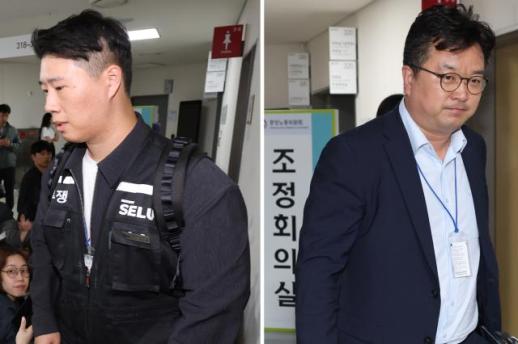 Labor Commission Requests Resumption of Samsung Negotiations Ahead of Strike Samsung Electronics' labor union is preparing for a general strike in seven days, as the Central Labor Commission has requested a resumption of mediation talks. On May 14, the commission stated, "We have requested that the labor and management of Samsung Electronics resume mediation talks on May 16, encouraging both sides to engage in sincere dialogue and substantial negotiations to resolve their differences autonomously." Previously, labor and management engaged in mediation procedures facilitated by the commission on May 11 and 12. The commission continued the mediation process until 2:50 a.m. on May 13, but the union declared the talks had failed, effectively halting dialogue between the two sides. Choi Seung-ho, chairman of the Samsung Electronics branch of the Korean Metal Workers' Union, stated on May 12, "We requested a mediation proposal due to the unresolved differences between labor and management. After waiting for nearly 12 hours, the proposal actually regressed." He emphasized that the union is demanding the elimination of the performance bonus cap and its institutionalization and transparency, which were not addressed. The union plans to initiate a general strike from May 21 to June 7 if negotiations fail. However, with the commission's request to resume mediation, there is hope for renewed dialogue. Mediation can begin if the commission recognizes its necessity and both parties agree. The union is demanding a distribution of performance bonuses equivalent to 15% of operating profit and the elimination of the performance bonus cap, which is currently set at 50% of annual salary, along with the institutionalization of these demands. Choi stated, "If institutionalization and transparency are not achieved, there is no reason to engage in dialogue." On the other hand, management views the institutionalization as potentially reducing future investment capacity, widening compensation disparities among business units, and causing adverse effects on other companies. With both sides holding differing views, discussions have effectively stalled. 2026-05-14 13:29:26
 -
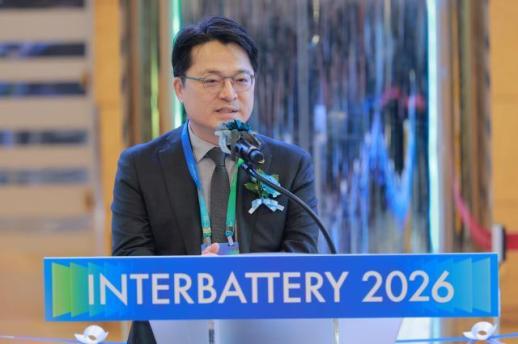 Deputy Minister Emphasizes Need for Future Vehicle Parts Ecosystem On May 14, Deputy Minister Moon Shin-hak of the Ministry of Trade, Industry and Energy stated, "To maintain the competitiveness of our automotive industry in the era of future vehicles, establishing a robust parts ecosystem is essential." He added that a comprehensive support plan for the transition to future vehicle ecosystems will be prepared within the first half of the year to actively support the parts industry. During a joint public-private meeting on future vehicle transition hosted by the Ministry of Industry and the Financial Services Commission, the launch ceremony for the Future Vehicle Parts Industry Council was held. This meeting aimed to establish a comprehensive support system to facilitate the transition of the domestic automotive industry to future vehicle ecosystems amid accelerating changes. According to the Korea Automotive Research Institute's 2025 survey on the automotive parts industry, there are approximately 21,000 businesses in the domestic automotive parts sector, employing 456,000 people, with sales reaching 207.6 trillion won and investments totaling 7.1 trillion won. Among these, 4,142 companies focus on internal combustion engine parts, while only 578 specialize in future vehicle parts. Only 6.1% of companies are currently pursuing or planning to diversify their operations. However, among those without diversification plans, 23.2% recognize the need for business transition and diversification. Parts manufacturers cited challenges such as funding, lack of technological competitiveness, and workforce acquisition as barriers to transitioning and diversifying their businesses. In response, the government plans to identify the challenges faced by the parts industry across all sectors, including business restructuring, finance, research and development (R&D), exports, and workforce issues, through the joint public-private Future Vehicle Parts Industry Council. Additionally, the government will focus on supporting the transition to future vehicle ecosystems. Furthermore, the Financial Services Commission announced plans to concentrate a total of 15 trillion won in funding for the mobility sector over the next five years through the National Growth Fund. This year, 9.7 trillion won will be allocated for improving the automotive parts industry, and 8.3 trillion won will be directed toward fostering the future vehicle and autonomous vehicle industries. Deputy Minister Moon noted, "Despite the recent surge in the domestic and global electric vehicle markets due to high oil prices, the proportion of companies specializing in future vehicle parts remains at just 2.7%. While the automotive industry is undergoing restructuring, unlike the steel and petrochemical sectors, proactive and specific structural transitions are necessary." He also urged local governments, regional institutions, and related support agencies to actively identify on-site challenges faced by the parts industry and propose effective policy measures, expressing hope for vibrant discussions on various ideas and policy initiatives for the transition to future vehicles. Financial Services Commission Vice Chairman Kwon Dae-young remarked, "The automotive industry is evolving into a complex advanced industry that integrates artificial intelligence (AI), semiconductors, software, and data into parts, representing a national effort. The Financial Services Commission will provide comprehensive support to ensure that R&D, infrastructure investment, and financial assistance are interconnected in collaboration with relevant ministries."* This article has been translated by AI. 2026-05-14 13:05:48
 -
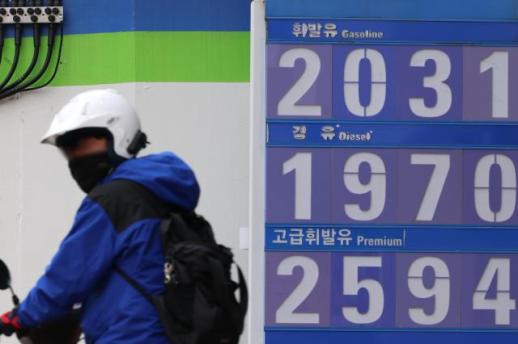 Gasoline and Diesel Consumption Drops 3% and 8% Following Price Cap Implementation 정부가 석유제품 최고가격제를 시행 중인 가운데 제도 시행 이후 휘발유와 경유 소비량이 각각 3%, 8% 감소한 것으로 나타났다. 양기욱 산업통상부 산업자원안보실장은 14일 중동전쟁 대응본부 일일브리핑을 통해 "석유제품 소비량은 3월 소폭 상승했지만 4월과 5월 1~2주 모두 하락세를 나타냈다"며 "최고가격 시행 이후 9주간 휘발유와 경유 소비량도 감소 추세를 나타내고 있다"고 말했다. 산업부에 따르면 3월 휘발유 소비는 4% 증가한 반면 경유 소비는 1% 감소하면서 전체 소비량은 1% 증가했다. 4월은 휘발유 7%·경유 11% 줄어들면서 총 10% 감소했고 5월 1~2주는 휘발유 2%·경유 6% 감소하며 총 4% 줄었다. 양 실장은 "5월 1주 석유제품 소비량은 크게 감소한 가운데 2주차에는 늘어난 것으로 집계됐다"며 "국제 가격을 반영했으면 소비량이 더 내려갔을 가능성도 있지만 어떤 방식이 바람직한지는 논쟁할만한 이슈일 것"이라고 설명했다. 국내 에너지 물가 상승률은 높은 수준이지만 국제 평균을 밑도는 상황이다. 경제협력개발기구(OECD)가 최근 발간한 보고서에 따르면 올해 3월 기준 회원국들의 에너지 물가 상승률은 8.1% 수준이다. 석유파동 이후 가장 높은 수준인 가운데 한국은 5.2% 수준으로 미국(12.5%), 독일(7.6%), 프랑스(7.1%) 등 주요국에 비해 상대적으로 낮다. 각국에서도 고유가에 대응한 정책에 나서고 있다. 일본과 헝가리, 폴란드 등은 정유사 보조금 지급과 가격상한제 등 고강도 유가안정 정책을 통해 유가 상승률을 낮게 유지하고 있다. 유류세 비중이 높은 유럽국가의 경우 유류세 인하와 동시에 시장관리에 나서고 있다. 양 실장은 "우리나라의 석유제품 최고가격제가 예외적이라는 주장도 있지만 다른 국가에서도 국민 물가 부담과 경기 위축 등을 우려해 다양한 정책을 도입하고 있다"며 "에너지발 인플레이션이 전체 경제에 미치는 영향이 큰 만큼 전세계가 정책적인 노력을 기울이고 있다"고 내다봤다. 이달 내에 정유사 손실보전 고시를 만들기로 한 것과 관련해 산업부 관계자는 "이미 정유사들과 소통하고 있는 상황에서 현재도 진행 중"이라며 "첫 고시에 '원가 등에 기반해 손실보전을 계산한다'고 돼 있는 만큼 원가를 계산해 손실보전을 하는 것이 원칙"이라고 말했다. 최고가격제 종료 시점과 관련해 양 실장은 "최고가격제가 급격하게 종료될 경우 가격이 오를 가능성도 있다"며 "전쟁 전으로 유가가 돌아가지는 않더라도 국제유가가 100달러 이하로 내려가는 상황을 살펴봐야 할 듯 하다"고 짚었다. 한편 산업부는 4~5월 국내 정유사의 비축유 스와프(SWAP) 신청 물량은 약 3100만 배럴로 집계됐다고 밝혔다. 기업의 요청에 따라 나프타 생산 비중이 높은 콘덴세이트에 대해서도 스와프를 완료했다.* This article has been translated by AI. 2026-05-14 12:57:09
 -
 Labor Ministry to Combat Unpaid Labor by Monitoring Wage Practices The South Korean government is launching on-site inspections in industrial complexes where comprehensive wage practices are prevalent to eradicate unpaid labor. The first inspections will focus on businesses in the Guro and Gasan Digital Complexes.According to the Ministry of Employment and Labor, the "Relay Inspections on the Abuse of Comprehensive Wage Practices" will take place from today until the end of the year. This initiative aims to implement the guidelines issued on April 9 to eliminate unpaid labor.Comprehensive wage systems involve setting salaries in advance, regardless of actual working hours. However, there are growing concerns about the misuse of fixed overtime pay, which includes additional payments for overtime and night shifts.The guidelines clarify that employers must distinguish between base salaries and various allowances in wage ledgers and pay stubs. It also stipulates that if the agreed fixed overtime amount is less than the actual hours worked, the employer must pay the difference, as failing to do so constitutes wage arrears.Furthermore, the guidelines prohibit the introduction of flat-rate pay systems that do not differentiate between base pay and allowances, as well as systems that lump together overtime, night, and holiday work payments. Employers are encouraged to utilize special provisions for calculating working hours, such as deemed working hours and discretionary working hours, when determining work time is challenging.Since the implementation of these guidelines, there have been 42 reports submitted to the anonymous reporting center for the abuse of comprehensive wage and fixed overtime practices by the end of last month, a significant increase from 13 reports during the same period last year. In response, the Ministry will activate a continuous monitoring system in areas suspected of comprehensive wage abuse.Inspections will be conducted monthly in one region at a time, targeting businesses reported to the anonymous reporting center and those suspected of legal violations within the same industrial complex. The first inspections will focus on businesses in the Guro and Gasan Digital Complexes, where reports of coercive overtime disguised as voluntary work, incidents of working mothers fainting after working over 70 hours a week, and false records of commuting times have been received.The Ministry will also promote the anonymous reporting center to facilitate easier reporting of comprehensive wage abuse cases. This includes operating mobile promotional buses in areas densely populated with companies using comprehensive wage systems and posting related banners on Blind, an anonymous community for workers.Minister of Employment and Labor Kim Young-hoon stated, "We will thoroughly investigate all businesses reported anonymously to eradicate unpaid labor that undermines the value of work for young people and vulnerable groups. I urge workers who have suffered from unpaid labor to report anonymously without fear."* This article has been translated by AI. 2026-05-14 09:13:34