
Journalist

Yang Bo-yeon
byeony@ajunews.com
-
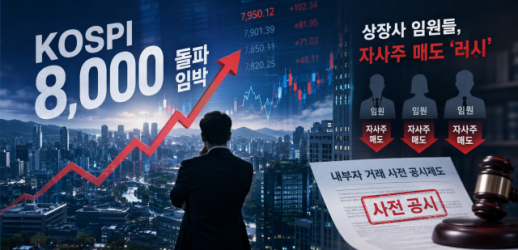 Executives Sell Shares as KOSPI Approaches 8,000 Mark As the KOSPI index approaches the 8,000 mark, executives at listed companies are increasingly selling their shares. This trend of insider profit-taking has resurfaced amid a recent surge in the stock market, raising concerns among general investors who view it as a potential signal of a market peak. According to the Financial Supervisory Service's electronic disclosure system, there have been 39 instances this month where insiders, including executives, sold shares worth over 100 million won. A review of monthly insider selling trends shows a concentration at the beginning of the year, with 80 cases in January and 83 in February, followed by a decline to 75 in March and 65 in April. However, as the stock market has sharply risen in May, previously quiet insiders are now re-entering the market to realize profits. Industry experts agree that insider stock sales cannot be dismissed as mere personal decisions. Executives, who are the first to receive information about a company's management and undisclosed data, may indicate potential declines in stock prices through their sales. Indeed, stocks of companies that have recently disclosed insider sales have consistently faced downward pressure. A notable example is LS Electric, which saw its stock price soar due to favorable conditions in the power equipment sector. On May 12, LS Electric disclosed that Vice President An Gil-young, Executive Director Lee Yoo-mi, and Executive Director Seo Jang-cheol sold their shares. The amounts they liquidated were 353.54 million won for Vice President An, 355.07 million won for Executive Director Lee, and 330.20 million won for Executive Director Seo. On the day of the disclosure, LS Electric's stock price fell by 7.07% compared to the previous trading day. The company stated that the executives sold a portion of the shares awarded as performance bonuses based on personal judgment. Other companies, such as Doosan Enerbility and Nuriplex, which have also recently disclosed insider sales, have continued to experience stock declines following their announcements. This has led to a perception that those with insider information are exiting at the peak of stock price increases. To mitigate market shocks from insider trading, the 'Pre-disclosure System for Insider Trading of Listed Companies' was introduced in July 2024. However, there are concerns about its effectiveness, as it primarily protects minority shareholders from significant stock price drops due to large-scale sales, while smaller transactions remain in a regulatory blind spot. Kim Min-ki, a researcher at the Capital Market Research Institute, noted that the current pre-disclosure system focuses on large transactions exceeding 1% of total issued shares or 5 billion won. He explained that the main purpose is to prevent sharp stock price declines that occurred with past block trades and to enhance market transparency. Kim assessed that the introduction of a cooling-off period of up to 30 days has reduced the frequency of sudden stock price crashes. He added that the increase in pre-disclosure of insider sales, even in a bullish market, has positive aspects for general investors by lessening sudden shocks and addressing information asymmetry. Additionally, it reduces suspicions of insider trading for the insiders themselves. However, Kim pointed out that if the sale amount does not meet the 5 billion won threshold, there is no obligation for pre-disclosure, resulting in only post-sale disclosures. He highlighted that the system does not prevent all insider sales, leaving small and non-targeted transactions subject to market reactions only after the fact. Experts emphasize that discussions are needed to eliminate these regulatory gaps while preserving the system's intent. There are calls to lower the pre-disclosure threshold from 5 billion won or to enhance monitoring based on cumulative trading volumes over a certain period. Additionally, there are suggestions to reform regulations to focus on actual owners to prevent 'split sales' or proxy trading using family members or associates. A financial industry official stated, "Even with pre-disclosure, the signal of insider sales remains, which can still impact stock prices. However, it allows investors to recognize this in advance, increasing predictability and making it harder for insiders to trade at favorable times, thus enhancing market transparency and fairness."* This article has been translated by AI. 2026-05-14 17:58:43
 -
 Cosmo Robotics Soars 778% in Four Days Following IPO; Polled Hits First-Day Surge Wearable robotics company Cosmo Robotics has recorded limit-up trading for four consecutive days since its listing on the KOSDAQ. According to the Korea Exchange, as of 2:31 PM on May 14, Cosmo Robotics shares were trading at 52,700 won, up 12,150 won (29.96%) from the previous day, reaching the maximum price limit. The stock has surged 778.33% from its initial public offering price of 6,000 won. On its debut day, May 11, Cosmo Robotics achieved a “double limit-up,” meaning its price quadrupled from the offering price before hitting the limit. It continued this trend with limit-up trading on both May 12 and May 13. Founded in 2016, Cosmo Robotics specializes in wearable robots suitable for all age groups, from preschool children to the elderly. The company manufactures wearable robots that assist in walking rehabilitation for patients with strokes, cerebral palsy, and spinal cord injuries, as well as supportive walking robots for daily independence and industrial wearable robots that reduce physical strain on workers. The company raised a total of 25.02 billion won through its IPO, which it plans to use for research and development. On May 11, Lee Geon-jae, head of the KOSDAQ research center at IBK Investment & Securities, noted in a report that exports accounted for a significant portion of sales, maintaining a consistent structure with approximately 80% of revenue from exports: 82.1% in 2022, 79.3% in 2023, 74.8% in 2024, and projected to rise to 85.9% in 2025. He stated, “This indicates that Cosmo Robotics is structurally an export-oriented company with established overseas sales.” He added, “Another noteworthy point is the geographical diversification of exports. In 2022, a single Russian subsidiary accounted for 84.5% of total sales, but last year, the European subsidiary emerged as the largest revenue source, contributing 32.5% of total sales, while subsidiaries in the U.S. and China are also on a growth trajectory.” On the same day, Polled, a company specializing in baby products and hygiene items, also successfully achieved a “double limit-up” on its first day of trading on KOSDAQ. Polled shares rose to 20,000 won, up 15,000 won (300%) from the offering price of 5,000 won. Polled began as an internal venture of Hyundai Motor Company and was spun off in 2019. The company has been rapidly growing, focusing on premium baby appliances and parenting products, including the AIRLUV ventilation and heating sheet, as well as brands like Pixel, Franklin, Yupang, and Baby Brezza.* This article has been translated by AI. 2026-05-14 16:07:57
 -
 Alteogen Shares Surge 8% After Patent Ruling, Reclaims Top Spot in KOSDAQ Market Alteogen's shares jumped over 8% in early trading after news broke that the U.S. Patent Trial and Appeal Board (PTAB) eased the company's litigation burden. This surge has propelled Alteogen to reclaim the top position in market capitalization on the KOSDAQ. As of 9:58 a.m. on May 14, the Korea Exchange reported that Alteogen's stock was trading at 383,500 won, up 29,500 won (8.33%) from the previous trading day. The company's market capitalization now stands at 20.53 trillion won, surpassing EcoPro BM's 19.66 trillion won to take the lead in the KOSDAQ rankings. This development follows the PTAB's ruling on May 12 (local time), which invalidated a U.S. patent held by Halozyme. Analysts believe this decision could favor both Alteogen and MSD in ongoing patent infringement lawsuits. Eom Min-yong, a researcher at Shinhan Investment Corp, predicted that the PTAB's ruling would lead to the dismissal of Halozyme's patent infringement lawsuit in U.S. civil court, as the patent in question has been invalidated. He added that with the invalidation of Halozyme's patent, the ALT-B4 patent is now secured until 2043, which is expected to enhance its value. Consequently, he raised his target price for Alteogen from 570,000 won to 620,000 won.* This article has been translated by AI. 2026-05-14 11:15:01
 -
 Hanwha Investment Upgrades Samyang Foods Target Price Amid Growth Expectations Hanwha Investment & Securities announced on May 14 that it has raised its target price for Samyang Foods from 1.9 million won to 2 million won, citing continued global demand for its spicy chicken brand and anticipated growth from expanded production capacity. The firm maintained its "buy" rating on the stock. Han Yu-jung, an analyst at Hanwha Investment & Securities, noted that the company’s consolidated operating profit for the first quarter rose 32.2% year-on-year to 177.1 billion won, exceeding market expectations. She stated that all of its subsidiaries in the U.S., China, and Europe recorded significant growth, contributing to the highest quarterly performance to date. She added that the U.S. subsidiary achieved record quarterly sales, while the Chinese operation demonstrated stronger-than-expected growth due to rapid inventory turnover. Europe also returned to a high-growth trajectory, benefiting from the establishment of its UK subsidiary and improved client management. Han emphasized that despite the challenges of maintaining high margins in the food and beverage sector, the company has sustained an operating profit margin exceeding 20%, indicating robust global demand for the spicy chicken brand. She further projected that with the expansion of operations at the Miryang Plant 2 and ongoing improvements in production efficiency, the company is likely to continue breaking sales records each quarter. The new factory in China, scheduled for completion in January 2027, is progressing smoothly, and there remains a strong potential for further expansion to alleviate supply bottlenecks.* This article has been translated by AI. 2026-05-14 08:39:58
 -
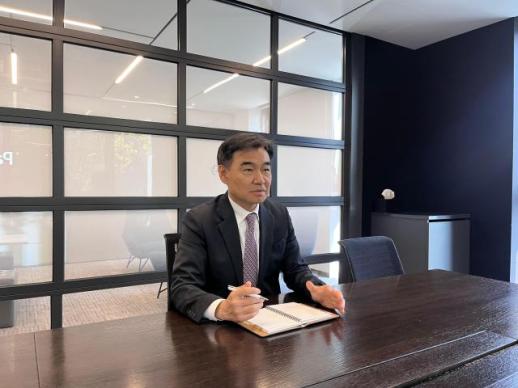 Trusstone Asset Management CEO Lee Sung-won: Capital Reallocation Key to Korea's Value Enhancement As South Korea's stock market approaches the KOSPI 8000 mark, the demand for improved corporate governance has intensified. Despite the government's value enhancement program gaining traction, some companies' closed management styles and low shareholder returns continue to hinder the Korean capital market. Lee Sung-won, CEO of Trusstone Asset Management, has been vocal about the need for corporate reform from the frontlines of the capital market. A former journalist turned CEO, Lee is recognized for setting new benchmarks in shareholder engagement in South Korea. In a recent interview, he emphasized the importance of 'authenticity' and 'capital efficiency.' He stated, "Activism is not just about boosting stock prices and exiting; it’s about guiding companies to allocate capital more productively, finding a path for both the company and its shareholders to thrive." - Your evaluations of Taekwang Industrial and KCC, two companies recently involved in shareholder activities, seem to differ significantly. What are the specific differences? "In a word, it boils down to the 'owner's perception.' Taekwang Industrial is a company that Trusstone has identified as having the most room for improvement, yet it continues to disappoint. Currently, the average price-to-book ratio (PBR) of Taekwang's listed affiliates is only 0.25. Taekwang itself has a PBR of 0.24, Daehan Synthetic Fiber is at 0.18, and Heungkuk Fire & Marine Insurance is at 0.33. This indicates that their stock prices are severely undervalued compared to their asset values. However, at this week’s shareholders' meeting, the company only passed a bylaw amendment regarding treasury shares, failing to present any concrete plans for share buybacks or value enhancement that shareholders had hoped for. The issue of board independence is particularly serious, as outside directors are being appointed in a circular manner among affiliates. Existing outside directors from Taekwang move to Daehan, and vice versa. Is this in line with the intent of the recent amendments to the Commercial Act, which stipulate the fiduciary duty of directors to shareholders? It is unacceptable for a major shareholder to provide generous dividends to unlisted companies while offering only 1-2% to listed companies." - On the other hand, you mentioned seeing 'hope' in KCC. Can you elaborate? "KCC has begun to actively embrace changes in the world. We have been demanding that KCC liquidate its stake in Samsung C&T, valued at approximately 6.888 trillion won, and conduct share buybacks. In response, KCC decided to split the buyback of 13.21% (1,174,300 shares) of its treasury shares, which account for 17.24% of its total shares, by September 2027. This is not just about the numbers; the communication has been positive. The company explained to us, 'We cannot sell now as Samsung C&T's stock price is low, but we will liquidate it for shareholder returns once the price recovers.' We understood their reasoning and made concessions. Ultimately, this case illustrates that the key to corporate change lies in how actively the board and owners accept changes in the world alongside institutional reforms." - You have consistently pointed out the low capital efficiency of Korean companies. Why is 'capital reallocation' urgent? "Currently, many Korean companies are accumulating cash or real estate instead of investing or returning profits to shareholders, despite generating substantial profits. This is toxic. When equity becomes too large, the return on equity (ROE) inevitably declines. A low ROE indicates that capital is not being used productively, leading to market discounts. Take Taekwang Industrial as an example. There are unofficial claims that its real estate value alone reaches 20 trillion won, yet its market capitalization is just over 1 trillion won. Not re-evaluating assets and merely sitting on land is akin to real estate speculation rather than corporate management. Therefore, we propose capital reallocation. Companies should sell unnecessary assets to invest in high-growth industries or optimize their capital size through share buybacks or dividends. This is the essence of productive finance that enhances corporate profitability and leads the entire capital market into a virtuous cycle. It’s not just a demand for 'give me money,' but a strategic dialogue about where to allocate capital for better corporate performance." - How do you respond to the perception of Trusstone Asset Management as 'hardline activism'? "I want to draw a clear line here. We are not speculative capital aiming for short-term profits and quick exits. How can we be considered hardline when we have invested in companies like Taekwang Industrial and BYC for over eight years, attempting sincere dialogue? Thus, I prefer the term 'shareholder engagement' over 'activism.' Public confrontations are merely a last resort when numerous private discussions are insincerely rejected. We aim to serve as long-term partners to improve governance. While shareholder activities have become more active recently, the actual size of funds executing activist strategies is only one-thirtieth of that in Japan. Without the financial power to secure voting rights, our influence diminishes. Ultimately, we must enhance our research capabilities to prove our returns and grow our fund size for true democratization." - What institutional improvements do you believe are necessary? "The most urgent need is to ensure the independence of the shareholders' meeting chair. Currently, most CEOs also serve as the chair, which is akin to a player also being the referee. We need to change the system so that the chair can be proposed by shareholders or appointed by an independent party approved by the court. Given the chair's significant authority over agenda setting and proceedings, they must be independent from major shareholders to ensure fair decision-making. Another point is the flexible application of the '5% rule.' It is excessive regulation to restrict voting rights by categorizing discussions about enhancing shareholder value, such as increasing dividends, as 'joint ownership.' We need to differentiate regulations between management issues like director appointments and general shareholder rights. Only when an environment is created where minority shareholders' voices can be genuinely reflected will the Korea discount be resolved, and value enhancement can be achieved."* This article has been translated by AI. 2026-05-13 18:58:25
 -
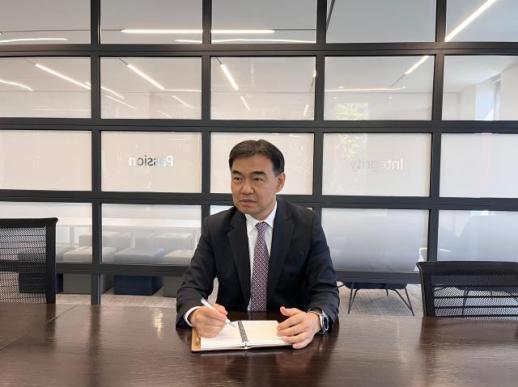 Trusstone Asset Management Aims to Evolve into Comprehensive Investment Firm Lee Sung-won, CEO of Trusstone Asset Management, is recognized as an expert in corporate governance and activism in the capital markets. However, his vision for Trusstone extends far beyond this reputation. He explains that the shareholder engagement activities known in the market represent only a fraction of the approximately 30 trillion won in assets managed by Trusstone. His broader vision is to transform Trusstone into a 'comprehensive asset management house.' Recently, Trusstone has experienced notable growth in its alternative investment sector. The firm has gained the trust of institutional investors by generating stable returns in specialized areas such as overseas social infrastructure investments and domestic renewable energy projects. "We are not just a company that engages in stockholder activities," Lee stated. "The reason large institutions, such as pension funds and insurance companies, choose us is ultimately due to our thorough research and risk management capabilities." The sharp corporate analysis demonstrated in shareholder engagement is also a foundation for accurately assessing asset values and maximizing returns in the alternative investment sector. He noted, "Our goal is to create a revenue structure that remains resilient against market fluctuations through a diverse business lineup." As a CEO with a background in journalism, Lee has chosen to maximize his strengths by collaborating with the latest technologies. He is an early adopter who regularly utilizes paid artificial intelligence (AI) models in his work. "Even in areas where one might feel like a non-expert, having AI allows for data-driven, precise decision-making," he said. "Such investments to enhance productivity are essential for management." Lee is embedding this smart management approach throughout the organization. He believes that Trusstone must lead by example in embracing change, especially when he is vocal about the shortcomings of companies resistant to transformation. "Trusstone Asset Management will become a leading asset management house in South Korea through a balanced portfolio that encompasses stocks, bonds, and alternative investments," he expressed. "By combining fundamental research with technological innovation, we aim to become the most trusted comprehensive asset management firm for investors."* This article has been translated by AI. 2026-05-13 18:55:46
 -
 KOSPI Approaches 8000 Mark Amid Strong Buying from Retail Investors On May 11, the KOSPI index surged close to the 8000 mark, buoyed by strong buying from both retail and institutional investors. The index rose more than 4%, surpassing the 7800 level. According to the Korea Exchange, the KOSPI closed at 7822.24, up 324.24 points (4.32%) from the previous trading day. It opened at 7775.31, gaining 277.31 points (3.70%) as retail buying momentum increased. Lee Kyung-min, a researcher at Daishin Securities, noted, "The KOSPI continues its upward trend, driven by a concentration in large-cap semiconductor stocks, marking five consecutive days of gains. On this day, 159 stocks rose, 6 remained unchanged, and 734 declined, indicating that a few large-cap stocks led the index's increase." In the securities market, retail and institutional investors made net purchases of 3.1711 trillion won and 753.1 billion won, respectively, driving the index higher. Foreign investors, however, sold a net 3.9432 trillion won. Among the top market capitalization stocks, Samsung Electronics (up 6.33%), SK Hynix (up 11.51%), SK Square (up 8.11%), Hyundai Motor (up 5.38%), Samsung C&T (up 6.98%), and HD Hyundai Heavy Industries (up 4.10%) all saw gains, while LG Energy Solution (down 1.78%) and Doosan Enerbility (down 1.23%) declined. On this day, SK Hynix traded at 1.45 million won, setting a new all-time high. Samsung Electronics, which had reached 230,000 won on the 30th, experienced a drop due to profit-taking but rebounded to 232,500 won within a day. The KOSDAQ index closed at 1213.74, up 21.39 points (1.79%). It started at 1212.28, an increase of 19.93 points (1.67%) from the previous day. In the KOSDAQ market, retail and foreign investors made net purchases of 147 billion won and 55.4 billion won, respectively, while institutions sold a net 172 billion won. Among the top KOSDAQ stocks, EcoPro BM (down 6.53%), EcoPro (down 5.55%), Alteogen (down 4.55%), HLB (down 2.92%), and ABL Bio (down 1.84%) closed lower, while Rainbow Robotics (up 10.33%), Kolon TissueGene (up 3.99%), Samchundang Pharm (up 1.36%), and Lino Industry (up 2.84%) finished higher.* This article has been translated by AI. 2026-05-12 03:37:23
 -
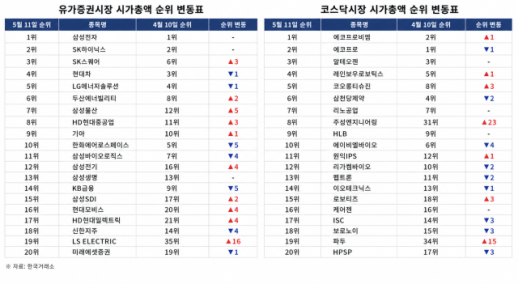 Major Shakeup in KOSPI Market as 17 of Top 20 Stocks Change There has been a significant shift in the rankings of the top stocks by market capitalization on the KOSPI. Despite geopolitical risks stemming from the Middle East, leading semiconductor companies have maintained their positions based on solid fundamentals, while stocks in the robotics and shipbuilding sectors have surged. In contrast, power equipment stocks, which saw a sharp rise last month, have faced profit-taking, causing them to drop in the rankings. According to the Korea Exchange on May 11, 17 of the top 20 stocks by market capitalization on the KOSPI have changed positions compared to a month ago (April 10). This means that the lineup of the 'Top 20' has been completely reshuffled, excluding Samsung Electronics, SK Hynix, and Samsung Life, which hold the 1st, 2nd, and 13th positions, respectively. The primary drivers of this upheaval are strong semiconductor exports and the rapid rise of the robotics, power equipment, and shipbuilding sectors. Preliminary semiconductor export figures for May have reached record highs, signaling a recovery in the industry, which has led to a broad rally in semiconductor-related stocks. The most notable gain in the KOSPI market was seen by Samsung C&T, which climbed five spots from 12th to 7th, driven by expectations of enhanced shareholder return policies and corporate governance reforms. SK Square, benefiting from a reevaluation of its stake in SK Hynix, rose three spots from 6th to 3rd, securing a place in the top three. Doosan Enerbility moved up two spots from 8th to 6th, capitalizing on momentum from nuclear power, while HD Hyundai Heavy Industries also climbed three spots from 11th to 8th. The shipbuilding sector, in particular, received a boost from the signing of a memorandum of understanding (MOU) related to the MASGA project by Minister of Trade, Industry and Energy Kim Jeong-kwan and U.S. Secretary of Commerce Gina Raimondo. The automotive sector also saw Kia rise one spot from 10th to 9th, driven by ongoing expectations surrounding physical artificial intelligence (AI). Several stocks outside the top 20 made notable gains. LS ELECTRIC surged 16 spots from 35th to 19th, entering the 'Top 20'. Conversely, Hanwha Aerospace, a leader in the defense sector, fell five spots from 5th to 10th after a significant drop. KB Financial also dropped five spots from 9th to 14th, while Samsung Biologics (7th to 11th) and Shinhan Financial Group (14th to 18th) each fell four spots. The KOSDAQ market also experienced significant changes, with 16 of the top 20 stocks changing positions. The standout performer was JUSUNG Engineering, which soared 23 spots from 31st to 8th, riding the momentum from the semiconductor equipment sector. Lee Kyung-min, a researcher at Daishin Securities, stated, "As long as the upward trend in forward earnings per share (EPS) continues, there is ample room for KOSPI to rise. A rotation strategy focusing on undervalued stocks in sectors such as healthcare, hotels and leisure, and software will be effective as the semiconductor surge stabilizes."* This article has been translated by AI. 2026-05-11 17:02:17
 -
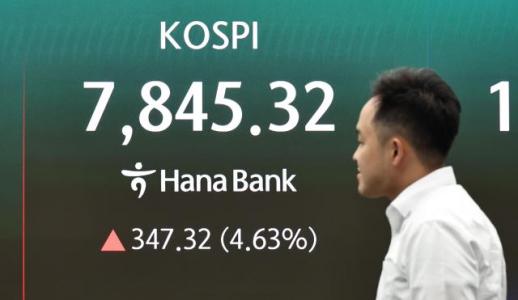 JPMorgan Predicts KOSPI Could Reach 10,000 Amid AI Momentum Global investment bank JPMorgan has expressed optimism about the South Korean stock market, citing the expansion of artificial intelligence (AI) investments and a strong memory chip market. The bank raised its KOSPI target, suggesting the possibility of a "10,000-point era" for the index. On May 11, JPMorgan released its "Korea Equity Strategy" report, adjusting its target scenarios for the KOSPI to 9,000, 10,000, and 6,000 points for basic, bullish, and bearish scenarios, respectively, all higher than previous forecasts. The report noted, "In the past two to three months, signals have emerged that alleviate concerns about AI monetization," adding that advancements in model performance, increased consumption of agentic tokens, a stabilization in token prices, and new funding have significantly boosted the growth trajectory of AI capital expenditures. JPMorgan also highlighted that prices for AI-related hardware continue to rise, stating, "The South Korean stock market is highly exposed to themes of AI, security, and resilience." The bank specifically pointed to the memory chip sector, suggesting a prolonged supercycle. It explained that memory stocks currently account for about 50% of the KOSPI's market capitalization and have driven approximately 70% of the index's gains since the beginning of the year. "AI demand continues to outstrip supply, and inventory levels remain tight," the report stated, noting that high-bandwidth memory (HBM) supply is tied to multi-quarter price and volume contracts, indicating a significant risk of supply shortages. It also mentioned that clients are preemptively advancing demand projections to 2027 due to concerns over supply shortages. JPMorgan anticipates that the memory market's upward cycle will likely continue into 2027-2028. The report emphasized that the rise in the domestic stock market is not limited to semiconductors. "The KOSPI's performance, excluding Samsung Electronics and SK Hynix, has significantly outperformed regional benchmarks," it stated, noting that earnings forecasts are also improving for sectors related to industrial materials. Regarding bank stocks, JPMorgan observed positive earnings momentum based on recovering net interest margins, increased fee income, and stable loan loss provisions. Corporate governance improvements were also identified as a key factor in the reevaluation of the South Korean stock market. JPMorgan stated, "The trend of improving corporate governance is an important foundation for attracting foreign and domestic investor capital, particularly as it will provide significant momentum for the reevaluation of holding companies." However, the bank raised concerns about potential short-term cooling due to overheating pressures. It noted, "The market breadth is narrowing, and technical pressures are increasing, as indicated by rising relative strength index (RSI) spreads and volatility indices (VKOSPI)." Nevertheless, it advised that any corrections should be viewed as buying opportunities. JPMorgan also expressed optimism about the potential for additional capital inflows from emerging market and Asian investors. The report stated, "In the second quarter, hedge funds have aggressively increased their exposure to South Korea," while noting that active long-only investors have slowed their selling after significant sell-offs in the first quarter, although large capital inflows into the spot market have yet to be confirmed. It added that emerging market and Asian investors are estimated to be in a state of overbuying Samsung Electronics and SK Hynix by about 70 basis points, but considering the expected earnings improvements, this remains a light position. The report estimates that the earnings per share (EPS) for Samsung Electronics and SK Hynix could be four to five times higher than last year. JPMorgan identified promising investment opportunities in AI-themed memory sectors, holding companies and insurance stocks benefiting from governance improvements, banks, automotive, and telecommunications stocks that could benefit from tax reforms, and securities firms expected to gain from increased trading volumes. Long-term industrial themes include defense, power equipment, robotics, nuclear power, space, and shipbuilding. Top KOSPI picks include Samsung Electronics, SK Hynix, Hyundai Motor, Samsung C&T, Samsung Electro-Mechanics, Hanwha Aerospace, Samsung Life Insurance, HD Hyundai Electric, Shinhan Financial Group, SK, HD Korea Shipbuilding & Offshore Engineering, LG Chem, APR, and Isu Petasys. Conversely, POSCO Future M, Hyundai Marine & Fire Insurance, and Kakao were mentioned as less favored stocks.* This article has been translated by AI. 2026-05-11 14:52:36
 -
 Samsung C&T Shares Surge Over 7% on Rising Value of Samsung Electronics Stake Samsung C&T shares experienced a significant increase of over 7% during trading on expectations of rising value from its stake in Samsung Electronics and potential contracts in the nuclear power sector. According to the Korea Exchange, as of 2:04 PM, Samsung C&T shares were trading at 454,500 won, up 32,000 won (7.57%) from the previous trading day. Earlier, analysts adjusted their target prices for Samsung C&T, citing the increased value of its Samsung Electronics stake, along with improved prospects in nuclear and solar energy projects and investments in affiliates. Hana Securities maintained a 'Buy' rating on Samsung C&T and raised its target price from 400,000 won to 600,000 won. Kim Seung-jun, a researcher at Hana Securities, stated, "Although the stock price has risen significantly over the past week, Samsung C&T's valuation remains attractive. Currently, the price-to-book ratio (PBR) is around 0.7 times when reflecting Samsung Electronics' stock price." He emphasized, "Considering the premiums for nuclear power, solar energy, and affiliate investments, we recommend buying Samsung C&T shares." Kim added, "A PBR of 0.7 is significantly lower compared to other holding companies (SK at 1.3, SK Square at 3.1, Doosan at 17.3, CJ at 1.4) and is also lower than construction firms with market capitalizations over 10 trillion won (Hyundai Engineering & Construction at 2.1, Samsung E&A at 2.4, Daewoo Engineering & Construction at 3.6)." He further noted, "There is a strong narrative supporting valuation premiums due to expected quarterly profit increases, accelerating semiconductor investments and related revenue growth, efforts to secure nuclear contracts, growth in Raemian orders, and initiatives in the U.S. solar operations (IPP business)."* This article has been translated by AI. 2026-05-11 14:50:39