
Journalist

김혜준(Candice Kim)
candicekim1121@ajupress.com
-
 Samsung strike risk rises as 60 percent of union members cast ballots SEOUL, March 11 (AJP) - The likelihood of a strike at Samsung Electronics, the world’s largest memory chipmaker supplying about a quarter of global DRAM, is rising as more than 60 percent of its unionized workers have cast ballots on collective action over disputes about employee bonuses. A joint strike committee representing three Samsung labor unions said Wednesday that over 60 percent of their roughly 90,000 members had participated in the vote since balloting began Monday. Under South Korean law, a strike requires approval from a majority of total union membership. The largest group, the Samsung Group Unified Union, reportedly surpassed the 50 percent participation threshold on the first day alone. The ballot, which runs through March 18, could pave the way for a joint protest next month and potentially a full-scale strike between May 21 and June 7 if the motion passes. The vote follows a breakdown in wage negotiations after the National Labor Relations Commission suspended mediation between Samsung and its three main unions — the Samsung Electronics Labor Union (SELU), the National Samsung Electronics Union and Samsung Electronics Co. Union. Together they represent more than 90,000 employees, roughly 70 percent of Samsung Electronics’ 129,000 workforce, making the potential walkout one of the most consequential labor actions in the company’s history. At the heart of the dispute is Samsung’s Economic Value Added (EVA) bonus system. Unlike local rival SK hynix, which distributes 10 percent of operating profit as bonuses and recently removed its payout cap, Samsung calculates performance rewards after deducting capital costs and taxes from operating profit. Union members argue the formula makes bonuses opaque and unpredictable. “We initially demanded 20 percent of operating profit, but management offered us a choice between maintaining the current 20 percent EVA or shifting to a 10 percent operating profit model, which actually results in a smaller bonus pool,” a union official told AJP. “What matters is that the bonus system must be transparent and predictable. The company needs to fundamentally reform the standard, starting with abolishing the annual salary cap,” the official added. A prolonged strike could disrupt global IT supply chains because about 70 percent of the unionized workforce consists of engineers in Samsung’s critical Device Solutions (DS) division, which oversees semiconductor manufacturing. The union strongly rejected the common industry assumption that highly automated semiconductor fabs could easily withstand a walkout. “Only the wafer transport system is automated,” the official said. “If equipment fails or a safety interlock is triggered and engineers are not there to fix it, the machines simply stop.” “For example, if 10,000 of the 14,000 workers at the Pyeongtaek campus join the strike, the plant would effectively be paralyzed. A two-week general strike would inevitably lead to production disruptions and declining chip quality.” The unions plan to announce the voting results on March 18, hold a mass rally on April 23 and potentially begin a general strike in May unless management presents a revised proposal. The dispute comes less than a year after Samsung experienced its first-ever strike in July 2024, led by the National Samsung Electronics Union. That walkout ended without major production losses, but the current movement poses a greater threat due to the larger number of engineers involved. Samsung Electronics declined to comment on the potential strike or the unions’ demands. Samsung, which enforced a strict “no-union” policy for decades, has seen organized labor expand rapidly since Chairman Jay Y. Lee publicly apologized in 2020 and pledged to end the practice. The growing mobilization of younger engineers demanding transparent compensation is increasingly challenging Samsung’s traditional corporate culture at a time when the company faces fierce competition from global rivals such as TSMC and SK hynix in the race for AI semiconductor dominance. “Some argue Samsung’s no-union culture helped fuel its past growth, but the company can no longer go against the flow of the times,” said Hwang Yong-sik, a business professor at Sejong University. “At a critical moment when Samsung must compete with global rivals, repeating confrontations over an opaque bonus structure is a severe waste of time and resources.” Hwang said management must address the root cause of distrust. “SK hynix is delivering record results while paying top bonuses without internal conflict. Samsung needs to face reality and find a tailored compromise rather than clinging to outdated methods,” he added. The labor dispute comes at a critical moment as Samsung Electronics races to catch up with SK hynix in high-bandwidth memory (HBM), the AI-era chip at the center of multibillion-dollar supply contracts with Nvidia and other big-tech names. 2026-03-11 17:53:34
 -
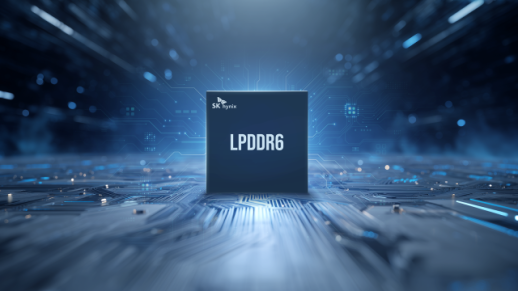 SK hynix expands AI memory portfolio beyond HBM with LPDDR6 breakthrough SEOUL, March 11 (AJP) - SK hynix said Tuesday it has developed the world’s first 16-gigabit LPDDR6 DRAM built on its sixth-generation 10-nanometer-class (1c) process, positioning the chipmaker to capture the next wave of artificial-intelligence demand spilling over from data centers to smartphones and mobile front. The new mobile memory, designed for devices running on-device AI, improves data processing speed by 33 percent and boosts power efficiency by more than 20 percent compared with the current LPDDR5X generation. With a base operating speed exceeding 10.7 gigabits per second, the chip surpasses the maximum performance of existing mobile DRAM products, the company said. The LPDDR6 chip incorporates Dynamic Voltage and Frequency Scaling (DVFS) and a sub-channel architecture that activates only necessary data paths, enabling devices to maximize bandwidth during heavy workloads while lowering voltage and power consumption during routine tasks. SK hynix plans to complete preparations for mass production in the first half of the year and begin supplying global smartphone and tablet makers in the second half. The development underscores how aggressively SK hynix is leaning into the AI memory boom that has reshaped the semiconductor industry over the past two years. The company has emerged as one of the biggest beneficiaries of the AI infrastructure build-out, particularly through its dominance in high-bandwidth memory (HBM) used in AI accelerators supplied to companies such as Nvidia. Demand for AI servers has tightened the supply of advanced memory, driving prices sharply higher across the industry. Server-grade DRAM prices are expected to rise as much as 60 to 70 percent this year compared with late 2025, according to industry estimates, as hyperscale cloud providers including Microsoft and Google rush to secure memory supplies for expanding AI data centers. The surge in AI-related demand has also spilled over into conventional DRAM markets. Even as chipmakers prioritize production of HBM for AI servers, tighter supply of standard DRAM is pushing up prices for memory used in PCs, smartphones and other consumer electronics. Against that backdrop, SK hynix is broadening its portfolio beyond data-center memory to include mobile chips optimized for AI workloads running directly on devices. Industry analysts say the shift toward on-device AI, where smartphones process AI tasks locally rather than through remote servers, is creating a new growth engine for mobile memory with higher bandwidth and better power efficiency. The LPDDR6 chip is designed to support faster response times and longer battery life in AI-enabled smartphones and tablets, enabling complex tasks such as real-time language processing and image recognition without relying heavily on cloud computing. By moving early into LPDDR6 while maintaining leadership in HBM, SK hynix is positioning itself at both ends of the AI memory spectrum — from hyperscale data centers to next-generation mobile devices — as the industry pivots toward AI-driven computing. 2026-03-11 14:59:43
 -
 Samsung shares head north on record R&D, buyback plan in AI chip push SEOUL, March 11 (AJP) - Shares of Samsung Electronics headed north as investors welcomed the South Korean tech behemoth’s record spending — amounting to nearly a third of last year’s revenue of over $200 billion — to advance chipmaking capabilities in the AI-driven era while sharing the memory boom with shareholders. According to its 2025 business report disclosed Tuesday, the company invested a record 37.7 trillion won ($28.3 billion) in research and development last year and set aside 16 trillion won to retire around 87 million treasury shares during the first half. As of 10:00 a.m. Wednesday, shares were up 2.55 percent at 192,500. The 2025 R&D spending marked a 7.8 percent increase from 2024, while capital expenditure on semiconductor and display facilities rose to 52.7 trillion won, about 5 trillion won more than initially planned. Samsung said the massive investment was aimed at preemptively addressing demand for next-generation semiconductors such as High Bandwidth Memory (HBM) and high-capacity DDR5, key components powering artificial intelligence data centers. The company recently began mass production of HBM4 base dies and plans to expand supply of HBM4 this year to meet surging demand from major global technology firms. Notably, Alphabet has joined Samsung’s top five customers amid the rapid expansion of AI infrastructure investments by big tech companies. Samsung also reported strong financial performance last year. Annual revenue reached 333.61 trillion won, up 10.9 percent from a year earlier, while operating profit jumped 33.2 percent to 43.6 trillion won. Revenue exceeded 330 trillion won for the first time, marking the company’s highest annual sales on record. Shareholder returns are also being strengthened. Samsung plans to cancel about 87 million treasury shares, valued at roughly 16 trillion won based on the March 10 closing price, as part of efforts to enhance shareholder value. The semiconductor recovery and improved earnings also lifted employee compensation. The average annual salary rose 21.5 percent to a record 158 million won last year, compared with 130 million won in 2024. To promote longer-term performance-based management, the company granted 35.29 million performance share units (PSUs) to around 128,000 employees. As of the end of last year, Samsung’s domestic workforce stood at 128,881, with the average tenure rising to 13.7 years. The company said it plans to continue creating jobs for young people through its traditional open recruitment program in the first half of the year. 2026-03-11 11:11:40
 -
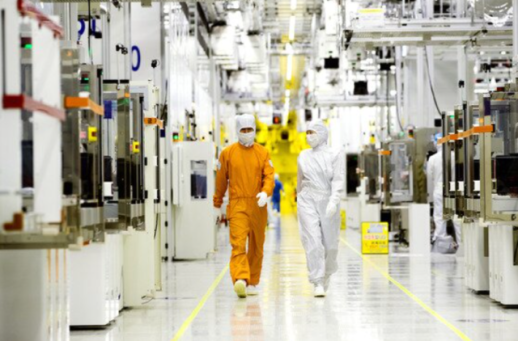 Middle East conflict squeezes Korean chip supply chain as helium shipments face disruption SEOUL, March 10 (AJP) - The widening Middle East conflict is beginning to bite into South Korea’s industrial supply chains, with the semiconductor sector facing growing concern over disruptions to helium shipments — a critical gas used in advanced chip manufacturing. The de facto disruption of shipping routes through the Persian Gulf has hit South Korea particularly hard given the country’s heavy reliance on Middle Eastern energy and industrial materials that feed its export-driven manufacturing base, including the strategically vital semiconductor industry. Industry attention has turned especially to Qatar, a major global supplier of helium, after Iranian retaliatory strikes spread across Gulf states following coordinated U.S. and Israeli attacks on Iran. Helium, a noble gas with an extremely low boiling point, is indispensable in semiconductor fabrication. It is widely used in lithography and plasma etching processes to maintain stable vacuum environments and cool high-temperature equipment during wafer processing, where microscopic circuit patterns are etched to form transistors and interconnects. Any interruption in supply therefore risks creating a bottleneck in the production of advanced chips. According to a Korea International Trade Association (KITA) report, Qatar accounts for roughly 64 percent of South Korea’s helium imports, highlighting the sector’s exposure to geopolitical shocks in the Gulf region. Other major suppliers include the United States and Russia, while the United Arab Emirates — another Gulf producer that has also come under attack — ranks fourth in Korea’s import mix, according to trade data compiled by Volza. Helium is typically transported in liquid form, which allows large volumes to be shipped efficiently before being vaporized upon arrival for industrial use. Shipping disruptions are already pushing up transport costs. The Shanghai Containerized Freight Index (SCFI) for Middle East routes jumped 72.3 percent week-on-week, according to the Shanghai Shipping Exchange, as vessels increasingly divert around the Cape of Good Hope to avoid the conflict zone. Such detours add two to three weeks to delivery times, raising the risk that chipmakers’ stockpiles could be drawn down faster than expected. “Temporary shortages are likely because alternative suppliers currently lack the capacity to immediately offset Qatar’s dominant share,” said Koo Gi-bo, a professor of global commerce at Soongsil University. “South Korea will need to rely on existing reserves while expanding imports from other regions.” Industry sources say Samsung Electronics and SK hynix typically maintain helium inventories sufficient for two to three months of operations. Both companies have already begun securing additional supplies from the United States and Australia, though rerouting shipments comes with sharply higher logistics costs. Yet analysts note that South Korea’s position at the center of the global semiconductor ecosystem could work to its advantage in securing alternative supplies. “The United States has a strategic interest in ensuring helium shipments to South Korea remain stable,” Koo said. “Without Korean high-bandwidth memory (HBM) chips, U.S. companies cannot manufacture advanced AI accelerators. Any disruption to Korean fabs would ripple across the global AI industry.” As fighting in the Middle East threatens vital shipping lanes, the episode is once again exposing a structural vulnerability in South Korea’s export economy — its dependence on imported energy and specialized industrial gases that underpin the world’s semiconductor supply chain. 2026-03-10 16:56:24
 -
 S.Korean fuel prices surge on Hormuz blockade, bypassing standard physical lag SEOUL, March 07 (AJP) - South Korean retail fuel prices have surged immediately following the blockade of the Strait of Hormuz, bypassing the standard two-to-three-week lag typically required for global crude fluctuations to reach domestic pumps. As of Saturday, the national average gasoline price reached 1,871.83 won ($1.39) per liter, up 178.94 won ($0.13) from Feb. 28, according to the Korea National Oil Corp (KNOC). Diesel prices outpaced gasoline, hitting 1,887.38 won per liter, raising concerns over an increase in broader logistics and transportation costs. The rapid hikes follow the escalating conflict involving the U.S., Israel, and Iran, which has disrupted transit through the Strait of Hormuz. South Korea relies on the Middle East for over 70 percent of its crude imports. Local refiners and gas stations attribute the immediate price increases to a preemptive rush to secure inventory amid supply uncertainties. Industry officials maintain that reflecting replacement costs immediately helps mitigate heavier market shocks, arguing that delaying the hikes could result in steeper, sudden price spikes later. The local surge mirrors global market anxieties. West Texas Intermediate (WTI) crude has topped $90 a barrel, with market forecasts warning it could reach $100. Global inflationary pressures are further compounded by U.S. stagflation fears, following a drop of 92,000 non-farm jobs in February and a rise in the unemployment rate to 4.4 percent. In response to domestic supply concerns, KNOC received 2 million barrels of joint-reserve crude from Kuwait at its Ulsan facility on Saturday, with another 2 million barrels from the UAE expected on March 22. South Korea currently holds 102 million barrels in strategic reserves. Meanwhile, the Ministry of Trade, Industry and Energy has launched special inspections into gas stations nationwide to crack down on illegal practices, including hoarding and price gouging. 2026-03-07 16:49:35
 -
 EV slump hits hard: SK On slashes 37 percent of Georgia plant staff SEOUL, March 07 (AJP) - SK Battery America, the U.S. unit of South Korean battery maker SK On, has laid off 37 percent of the workforce at its Georgia plant, citing slowing electric vehicle (EV) sales and a shifting market landscape. The company announced on Saturday that it cut 968 jobs out of its 2,566 employees at the manufacturing facility in Commerce, Georgia. The restructuring comes as the global EV transition loses momentum. The plant, which supplies batteries to automakers including Volkswagen and Hyundai Motor, was severely impacted by Ford Motor's recent decision to cancel production of its F-150 Lightning electric pickup truck. Ford's move follows the Trump administration's rollback of EV tax credits, prompting the U.S. automaker to pivot toward more profitable hybrid and internal combustion engine vehicles. In an emailed statement, SK Battery America called the job cuts a "difficult decision to adjust operations in line with market conditions." The company added that it remains committed to Georgia and to building a robust U.S. supply chain for advanced battery manufacturing. South Korean battery makers are facing broader headwinds as the transition from internal combustion engines to EVs decelerates in major markets like the United States. Despite the setback, parent company SK Innovation is proceeding with a second battery plant in Georgia dedicated to supplying Hyundai Motor, with production scheduled to begin in the first half of this year. Another facility in Tennessee, previously planned as a joint venture with Ford, is slated to open in 2028. A company official indicated that the Tennessee plant may supply both automotive and energy storage system (ESS) batteries. 2026-03-07 15:01:24
 -
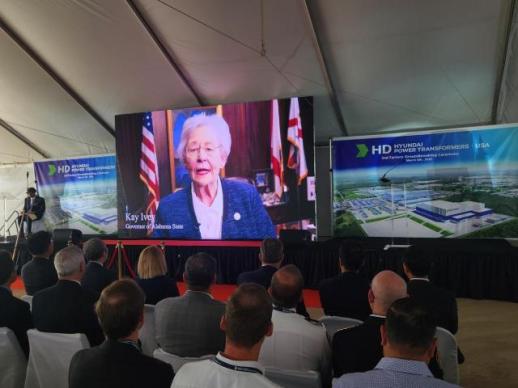 HD Hyundai Electric breaks ground on $200 mln transformer plant in US amid AI boom SEOUL, March 07 (AJP) - South Korea's HD Hyundai Electric has broken ground on a $200 million second transformer manufacturing plant in Alabama to meet surging power grid demand driven by artificial intelligence (AI) infrastructure and a resurgence in U.S. manufacturing. The power equipment maker held a groundbreaking ceremony on Saturday at its North American subsidiary in Montgomery. The new facility, spanning 48,215 square meters, is scheduled for completion in April next year. The expansion will boost the company's ultra-high-voltage transformer production capacity by 50 percent. To expedite delivery for clients such as AI data centers, which increasingly place bulk orders, the expanded facility utilizes an internal railway system that cuts transportation time by more than a week. "Through the establishment of the second plant, we will prepare for the future represented by AI by building and strengthening the U.S. transmission grid," HD Hyundai Vice Chairman Cho Seok said at the ceremony. Demand for power transformers has skyrocketed as tech companies build power-hungry data centers and the Trump administration pushes to bring manufacturing facilities back to the United States. Local politicians, including Alabama Senators Tommy Tuberville and Katie Britt, welcomed the investment via video messages, highlighting the critical role of transformers in energy policy and national security. Amid stricter U.S. immigration enforcement under the current administration, HD Hyundai Electric also emphasized its commitment to local hiring and strict visa compliance. The company plans to add about 140 local workers to its current workforce of roughly 460 once the second plant is completed. "We strictly verify immigration status during hiring and ensure all visiting staff enter with proper visas," said Kim Young-chul, Chief Operating Officer of the Montgomery plant. Since establishing its first Montgomery plant in 2011, the subsidiary's revenue has quadrupled from $100 million in 2017 to approximately $400 million in 2025. The company expects the second plant to generate an additional 200 billion won in annual sales. 2026-03-07 13:42:22
 -
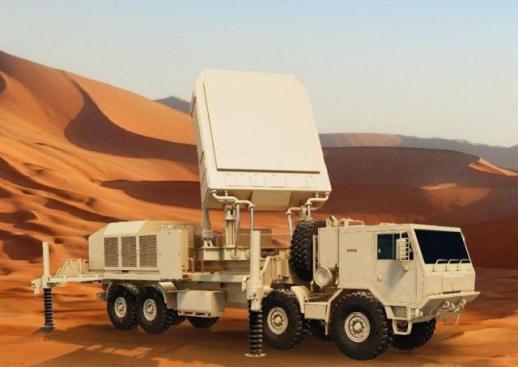 Hanwha Systems to sell 1.7 trillion won stake in Hanwha Ocean for defense, IT investments SEOUL, March 07 (AJP) - South Korea's Hanwha Systems said it will sell a 1.7 trillion won ($1.2 billion) stake in its shipbuilding affiliate Hanwha Ocean to secure funds for strategic investments in the defense and information technology sectors. The company's board on Friday approved the sale of 13.92 million shares, representing a 4.54 percent stake, at 122,100 won per share, based on Thursday's closing price. The transaction will reduce Hanwha Systems' holding in the shipbuilder to 7.03 percent from 11.57 percent. The sale amount accounts for 29.70 percent of the company's total assets and 70.35 percent of its equity capital as of the end of 2024. The shares will be sold via an off-hours block trade scheduled for April 6, with the settlement due on April 8, the company said in a regulatory filing. The deal is structured as a one-year price return swap (PRS) agreement with seven special purpose companies: The Sara First, Felix OS First, Felix OS Second, KIS ON Tenth, KIS Prime Fourth, N2 Glory First, and N2 Glory Second. Under the terms, Hanwha Systems will compensate the buyers if Hanwha Ocean's stock price falls below the benchmark price at the time of settlement. Hanwha Systems plans to use the proceeds to accelerate investments in key projects, including a South Korea-U.S. shipbuilding cooperation initiative known as MASGA (Make American Shipbuilding Great Again). 2026-03-07 10:27:14
 -
 Samsung's Galaxy S26 Ultra wins 'Best in Show' at MWC 2026 SEOUL, March 05 (AJP) - Samsung Electronics' Galaxy S26 Ultra was awarded the 'Best in Show' title at the Mobile World Congress (MWC) 2026 in Barcelona, Spain, on Thursday. The award is part of the annual Global Mobile Awards hosted by the GSMA. It is widely regarded as a top honor at the exhibition, as the winner is selected by a specialized judging panel consisting of global analysts, journalists, and influencers. The accolade is given to the most innovative product leading the industry among numerous exhibits. Launched on the 26th of last month, the Galaxy S26 Ultra was recognized for integrating advanced hardware with its One UI 8.5 software to deliver enhanced artificial intelligence (AI) and privacy features. The device is powered by a dedicated Galaxy chipset designed to accelerate mobile AI experiences. Additionally, the smartphone features the world's first 'Privacy Display,' an engineering technology that protects user data without compromising screen clarity. "It is an honor for the Galaxy S26 Ultra to win 'Best in Show,' the highest exhibition product award, at this year's Global Mobile Awards," said Choi Seung-eun, Executive Vice President and Head of Marketing for Samsung's Mobile eXperience (MX) Business. "The Galaxy S26 Ultra is an agentic AI phone that concentrates Samsung Electronics' capabilities, and we will continue to drive mobile innovation that pushes technological boundaries". 2026-03-05 16:38:22
 -
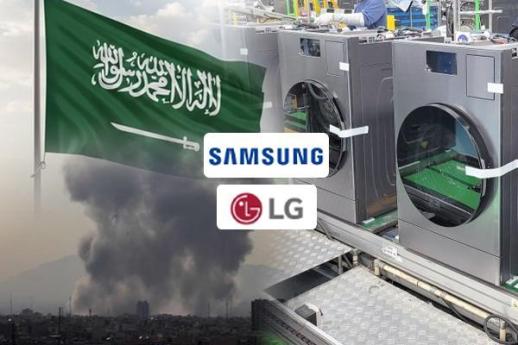 Korean appliance makers price in potential Middle East setback SEOUL, March 04 (AJP) - South Korean home appliance makers are bracing for potential disruption from the widening conflict in the Middle East and the choking-off of the critical shipping corridor, the Strait of Hormuz — just as the region had begun to emerge as a fresh growth market for Korean brands. The escalation has raised concerns among producers that renewed interest in Korean consumer brands across the region — fueled partly by the broader K-wave — could falter, adding another layer of uncertainty as sales momentum in other Asian markets slows. Samsung Electronics, LG Electronics and Coway say they are navigating the short-term shock through existing contingency plans, though they acknowledge that prolonged hostilities could trigger broader regional fallout. Samsung Electronics, which relies heavily on maritime shipping for bulky consumer appliances, said the immediate supply-chain impact appears less severe than initially feared. “We maintain local inventory in each region, which provides a buffer for several weeks to about a month, so we do not see immediate risks,” a Samsung Electronics official said. “Furthermore, the Strait of Hormuz is primarily an oil route. Commercial appliances often travel via the Suez Canal or the Cape of Good Hope, so the direct impact on appliance shipping does not appear massive.” The official added that while a prolonged crisis would pose global economic risks, no specific internal directives have yet been issued in response to the situation. LG Electronics, which recently established a regional headquarters in Riyadh, Saudi Arabia, to secure major B2B infrastructure contracts, said short-term project disruptions are likely to remain limited. “Currently, there appears to be no direct impact on our operations, and we do not conduct direct business in Iran,” an LG Electronics official said. “Our top priority is the safety of our employees. Personnel in the affected regions have already been evacuated to nearby areas or returned home, and no damage has been reported.” The company acknowledged that a prolonged maritime blockade could fuel broader macroeconomic pressures, particularly through surging oil prices. “However, this is a general risk affecting all companies rather than an isolated issue for our specific business,” the official added. Rental appliance maker Coway — which had recently identified the Middle East as a new growth engine — said its exposure remains limited due to its indirect market presence. “We only recently started exporting to the UAE and Saudi Arabia through local partner firms,” a Coway official said. “We do not have a direct operational footprint or our own service personnel stationed there, and our market share is currently minimal. We do not expect any significant damage from the current situation.” Still, the cautious optimism could fade if the conflict drags on beyond several weeks. Sung Il-kwang, a Middle East expert at the Euro-MENA Institute, said the escalation could mark a turning point in the region’s business climate. “In the Middle East, even conflicts occurring outside a country’s immediate vicinity can prompt businesses to delay projects because of perceived security risks,” Sung said. “But now that the conflict has reached their doorstep, many business activities have effectively come to a halt.” He warned that a prolonged war could significantly alter the operating environment for companies active in the region. “While it is unlikely that the war will persist throughout the year, the situation must be monitored closely,” Sung said. “Depending on whether the crisis becomes prolonged, the ultimate impact on business operations could be severe.” 2026-03-04 16:41:11