
Journalist

김혜준(Candice Kim)
candicekim1121@ajupress.com
-
 AJP Focus: Divided Samsung faces critical capex test in the AI era SEOUL, May 22 (AJP) - Samsung Electronics by March has reclaimed the top position in the global memory oligopoly after falling behind local rival SK hynix in the early race for artificial intelligence infrastructure chips, particularly high bandwidth memory (HBM). But whether the Korean tech giant can maintain that lead during the rest of AI supercycle is becoming increasingly uncertain as the company sinks deeper into internal wage conflict and spiraling compensation costs. At a moment when the global semiconductor war demands unprecedented unity and investment discipline, Samsung instead finds itself pulled apart by a widening internal divide between winners and losers of the AI boom. The contrast with its global rivals is becoming difficult to ignore. Taiwan Semiconductor Manufacturing Company and Micron Technology are aggressively channeling resources into massive capital expenditure plans aimed at dominating the next generation of AI chips, advanced packaging and memory production. Samsung, by comparison, is increasingly consumed by operational expenditure disputes, labor unrest and a rare collapse of solidarity inside one of Asia’s most tightly managed corporate empires. At the center of the tension lies an extraordinary compensation gap emerging inside the company itself. Industry estimates suggest employees in Samsung’s semiconductor Device Solutions (DS) division — now the company’s profit engine amid the AI boom — could receive as much as 600 million won ($438,000) this year in combined bonuses and incentives. Meanwhile, workers in the Device eXperience (DX) division, which oversees smartphones and home appliances, are expected to receive roughly 6 million won. A 100-fold disparity inside the same corporation has triggered deep resentment across the company. The fallout is already reshaping Samsung’s labor landscape. More than 4,000 employees from the DX division reportedly left the National Samsung Electronics Union over the past month, with many joining the rival Donghaeng union, whose membership has surged from around 2,600 to over 12,000 as non-memory workers seek more aggressive representation. “I don’t understand why there is such an extreme divide and discrimination within the same company,” a DX division official familiar with the matter told AJP on condition of anonymity. “We have to do whatever we can on our end to protect our interests.” What once functioned as a unified corporate system is beginning to fracture under the pressures of the AI economy. For decades, Samsung operated under a model where stronger divisions effectively subsidized weaker ones, allowing the conglomerate to incubate new businesses, preserve employment stability and maintain cohesion across sprawling operations. That model worked during the industrial manufacturing era when long investment cycles and centralized management rewarded internal discipline. But artificial intelligence is changing the economics of the semiconductor business. The AI boom disproportionately rewards a narrow set of high-margin technologies — especially HBM memory, advanced foundry processes and AI packaging — while leaving slower-growing consumer electronics divisions struggling to justify equal compensation structures. Silicon Valley-style winner-takes-all capitalism is colliding head-on with Samsung’s traditional top-down manufacturing culture. And the financial consequences could become severe. Foreign investors and analysts increasingly warn that Samsung’s internal fragmentation is becoming a strategic vulnerability rather than simply a labor-management dispute. According to a recent J.P. Morgan analysis, fully accommodating union demands could add as much as 39 trillion won in labor costs. Analysts estimate that such surging operational expenditures could reduce Samsung’s operating profit by up to 12 percent, potentially cannibalizing the capital expenditures needed to maintain technological leadership in extreme ultraviolet lithography, HBM production and advanced packaging. That tradeoff — between rewarding labor and funding future technology — may become one of the defining corporate dilemmas of the AI era. Unlike previous semiconductor cycles, the current AI arms race requires relentless investment speed. Delays in securing advanced equipment, expanding clean-room capacity or building next-generation packaging infrastructure can quickly translate into lost market share. Samsung’s rivals are moving aggressively precisely because they recognize the narrowness of the window. TSMC recently sold an 8.1 percent stake in Vanguard International Semiconductor to secure approximately 1.2 trillion won ($870 million) in additional funding for advanced AI packaging facilities. Micron Technology, meanwhile, is pushing ahead with a $20 billion capital expenditure plan this year largely free from labor friction or internal political constraints. The contrast is stark: although Samsung outpaced its rivals with massive first-quarter capital expenditures to reclaim its memory lead, the company increasingly finds itself debating wealth allocation while competitors remain focused on capital allocation. That distinction matters because investors ultimately reward technological dominance, not internal compromise. The danger for Samsung is not merely higher wage costs themselves. It is the possibility that internal distrust begins eroding the organizational cohesion required to compete in a capital-intensive industry where speed, secrecy and long-term strategic coordination are critical. Semiconductor leadership has historically depended not only on engineering excellence, but also on corporate unity during periods of enormous financial stress. Taiwan’s semiconductor ecosystem operates with near-national strategic alignment. U.S. chipmakers benefit from deep capital markets and shareholder tolerance for aggressive reinvestment. Samsung now risks becoming trapped between both systems — pressured simultaneously by shareholders demanding profitability and employees demanding redistribution of AI windfalls. Experts say the company may ultimately be forced to rethink its entire structure. “There appears to be significant internal dissatisfaction, but resolving it is difficult since the company cannot distribute bonuses to everyone,” said Kim Duk-ki, a professor at Sejong University. “This is a structural characteristic of Samsung. In the past, cross-subsidizing loss-making divisions helped the company continuously incubate new businesses, but looking ahead, they might have to consider spinning off divisions.” Such discussions would once have been almost unthinkable inside Samsung. But the AI era is beginning to challenge assumptions that defined the conglomerate for decades: centralized hierarchy, lifetime-style loyalty and broad internal redistribution. The more profits become concentrated in a handful of AI-related businesses, the harder it becomes to preserve cohesion across divisions moving at vastly different speeds. In many ways, Samsung’s internal conflict mirrors a broader transformation now unfolding across the global economy. Artificial intelligence is generating extraordinary wealth — but unevenly. Companies, sectors and workers directly tied to AI infrastructure are capturing disproportionate rewards, while others struggle to keep pace. That imbalance is beginning to reshape labor expectations, compensation systems and even corporate identity itself. For Samsung, the stakes are particularly high because the company sits at the center of South Korea’s economic model. Its ability to sustain investment leadership in semiconductors affects not only shareholders and employees, but also the country’s exports, currency stability and technological competitiveness. The question is no longer whether Samsung can generate profits from AI. It is whether the company can remain institutionally unified long enough to deploy those profits effectively in the global chip war. 2026-05-22 15:48:45
 -
 Samsung Electronics union start vote on strike-risk wage proposal SEOUL, May 22 (AJP) - Unionized members of Samsung Electronics on Friday begin vote on whether to accept a tentative wage settlement agreed last week that would create a profit-linked special bonus system and remove the risk of a disruptive strike. The six-day electronic voting window opened at 2 p.m. Friday and will run through 10 a.m. Wednesday. The electorate consists of the 70,850 union members registered as of 2 p.m. on Thursday — a figure that has decreased significantly from a peak of around 77,000 amid recent internal discord. The landmark agreement will be finalized and become legally binding if a majority of eligible members participate and more than half vote in favor. Otherwise, both sides must return to the negotiating table. The tentative 2026 wage agreement, reached Wednesday after marathon government-mediated negotiations, introduces a “Special Management Bonus” funded by 10.5 percent of the semiconductor division’s business performance. It also includes a new housing loan program offering up to 500 million won ($365,000) and an average wage increase of 6.2 percent, consisting of a 4.1 percent base-pay hike and a 2.1 percent performance-based increase. Local securities firms project Samsung Electronics to post operating profit of around 300 trillion won this year amid the AI-driven semiconductor boom. Based on those forecasts, approximately 31.5 trillion won would be allocated for the special management bonus pool. Employees in the memory division — the company’s main earnings engine — are estimated to receive up to 600 million won in combined bonuses this year, including the existing Overall Performance Incentive (OPI). Under the agreement, the special management bonus will be paid entirely in treasury shares after taxes, effectively turning the payout into a large-scale stock compensation scheme. Employees in non-memory businesses such as System LSI and Foundry, which are expected to remain loss-making this year, are also projected to receive at least 160 million won in special bonuses under a rule allocating 40 percent of the semiconductor division’s common performance pool across all DS units. “This tentative agreement is the result of the utmost efforts by the Enterprise Union and the joint struggle committee,” said Choi Seung-ho, head of the Samsung Electronics branch of the Enterprise Union, in a message to members Thursday. “We will consider the outcome of this vote as the report card our members give to the union.” 2026-05-22 10:09:17
 -
 AJP Focus: Samsung strike on hold, but shareholders see a new battle beginning SEOUL, May 21 (AJP) - The chip lines at Samsung Electronics ran uninterrupted Thursday morning. What had been dreaded as the opening day of an unprecedented 18-day walkout instead turned into relief rally on the market after labor and management reached a last-minute settlement shortly before midnight. Samsung shares surged as much as 7 percent during trading and closed at a fresh record high as markets priced out the immediate risk of production disruption at the world’s largest memory-chip maker. But not all existing shareholders were pleased. Two separate shareholder advocacy groups staged demonstrations in Seoul on Thursday, arguing that the tentative wage agreement could severely undermine future shareholder returns and destabilize Samsung’s long-term financial structure if institutionalized. At the center of the controversy is the newly agreed compensation framework for semiconductor employees. Under the tentative deal, the union secured a structure that effectively allocates bonuses equivalent to 12 percent of operating profit — consisting of a 1.5 percent Overall Performance Incentive (OPI) and a 10.5 percent special management bonus for chipmaking divisions. According to consensus estimates compiled by FnGuide, Samsung Electronics is projected to post operating profit of around 348 trillion won ($252 billion) in 2026 amid the continuing global AI semiconductor boom. If the company executes the agreed formula in full, more than 41 trillion won could be recognized as labor compensation in a single year. For shareholders, the issue is not simply the size of the payout but its collision with Samsung’s existing capital return framework. Samsung previously pledged to return 50 percent of free cash flow generated between 2024 and 2026 to shareholders through dividends and share buybacks. But if tens of trillions of won are absorbed into operating expenses before profits flow into free cash generation, shareholder distributions could shrink sharply. Activist groups estimate the reduction in shareholder return capacity could exceed 15 trillion won. Industry experts note that while such a payout structuralizes financial risks, management faced an unavoidable dilemma regarding human capital. "From a financial perspective, 41 trillion won is an astronomical sum, equivalent to the capital required to build a massive, state-of-the-art semiconductor fabrication line," said Lee Jong-hwan, a professor of system semiconductor engineering at Sangmyung University. "However, Samsung's biggest fear right now is a 'domino-effect' drain of its core talent to SK Hynix or foreign competitors. From management's perspective, securing talent retention was likely deemed a safer, more urgent path for long-term survival than immediate infrastructure expansion." A small delegation from the “Korea Shareholder Movement Headquarters” gathered near the residence of Lee Jae-yong on Thursday, condemning what they described as an excessive inward transfer of corporate profits. Min Kyung-kwon, head of the organization, argued that the structure may violate Article 462 of South Korea’s Commercial Act governing dividend calculations. The group contends that distributing large-scale bonuses directly tied to pre-tax operating profit without shareholder approval amounts to what it called a “disguised illegal dividend.” The activists also questioned the sustainability of the formula during the semiconductor industry’s notoriously volatile downcycles. “Semiconductors are not a permanently booming industry,” one protester said during the rally. “If operating profit collapses during the next downturn, how can the company survive while structurally locked into massive payouts?” The group further criticized what it described as a widening disconnect between management, labor and shareholders, arguing that top executives themselves could indirectly benefit from profit-linked compensation structures while ordinary shareholders absorb the dilution in corporate value. Using ACT, an online minority shareholder platform reportedly containing around 13,000 verified Samsung shareholders, the activists are now preparing a potential nationwide class-action campaign. If Samsung’s board formally approves the tentative agreement, they say they plan to pursue breach-of-trust complaints against consenting directors and seek legal action to invalidate the board resolution. Elsewhere in Seoul, another shareholder organization calling itself the “Samsung Electronics Shareholder Action Practice Headquarters” held a parallel rally near Hangangjin Station in Yongsan District. That group framed the dispute less as a legal issue than a broader social and economic imbalance. Its members argued that highly paid workers in the semiconductor sector were demanding disproportionate rewards while many ordinary workers across South Korea continue to earn annual salaries below 30 million to 40 million won. The organization also renewed calls for the government to invoke emergency adjustment powers — a rarely used legal mechanism allowing authorities to suspend strikes temporarily in industries deemed vital to the national economy. The group argued that semiconductors should effectively be treated as strategic national infrastructure similar to police, electricity or transportation systems because of their central role in exports, employment and supply chains. Some members called for permanent legal restrictions on strikes within the semiconductor industry altogether, warning that prolonged labor instability could damage South Korea’s global competitiveness during a critical phase of the AI race. Furthermore, observers warn that the settlement could set a precedent that fundamentally alters the labor landscape across South Korean industries. "This deal could open the floodgates," Professor Lee warned. "Not only will non-memory units and other Samsung affiliates demand identical transparent, profit-linked bonus structures, but major automotive giants and their supply chain networks will face immense pressure from unions to replicate this formula. It triggers a nationwide structural shift in corporate profit distribution." For now, the immediate crisis has passed. Production remains stable. Markets have calmed. The feared supply-chain disruption that had alarmed investors, policymakers and global technology customers alike has been avoided. Yet the settlement appears to have exposed a deeper structural fault line inside corporate South Korea. The conflict is no longer confined to labor versus management. It is increasingly evolving into a three-way confrontation between labor, capital and shareholders over who ultimately owns the gains generated by the AI-era semiconductor boom. 2026-05-21 17:33:10
 -
 Samsung Live: Samsung Union halts historic strike after eleventh-hour wage deal SEOUL, May 20 (AJP) - Samsung Electronics' largest labor union on Wednesday night suspended its planned full-scale strike, narrowly averting a historic walkout just an hour before it was scheduled to begin. The dramatic breakthrough came after management and union leadership reached a tentative agreement on the 2026 wage negotiations. "The general strike scheduled from May 21 to June 7 will be suspended until further notice," the union’s joint strike committee announced in an urgent directive to its members. The union instructed all members to participate in a mandatory vote to ratify the tentative agreement, which will run from May 22 to May 27. The late-night resolution caps off a chaotic day of negotiation, following the initial collapse of official government-mediated talks in Sejong earlier in the morning. 2026-05-20 22:48:16
 -
 Samsung Live: Union to launch 18-day strike as planned after marathon talks collapse SEJONG, May 20 (AJP) -Samsung Electronics faces an unprecedented 18-day strike from Thursday after the union walked out of government-mediated marathon talks over revisions to the employee reward system at the tech giant whose market valuation has swelled to nearly $1 trillion amid the AI boom. Management and the Korean tech giant’s largest union held three days of talks at a government complex in Sejong under the mediation of the National Labor Relations Commission (NLRC), seeking to avert a general strike involving some 50,000 workers, mostly from semiconductor production lines. The planned 18-day walkout is feared to inflict billions of dollars in losses not only on the chipmaker but also on the broader South Korean economy, which heavily depends on chip exports. Shares of the No. 1 stock fell 2.5 percent to 269,500 won ($178.7) following the news. The final round of talks collapsed late Wednesday morning after management held off on signing a compromise proposal put forward by government arbitrators, despite the union's official endorsement. In a statement to reporters, the union blamed management's indecisiveness for the breakdown. "The union agreed to the mediation proposal presented by the NLRC on Tuesday night," said Choi Seung-ho, chief of the Samsung labor union. "However, management repeatedly stated on Wednesday morning that a decision had not been made, delaying the process until the mediation was officially terminated." Choi confirmed the strike would proceed as planned on Thursday but noted the union remains open to dialogue during the walkout. Samsung Electronics immediately issued a fierce counter-statement, shifting the blame to the union’s "excessive demands" and defending its core business principles. "The failure to reach an agreement at the final moment was because accepting the union's excessive demands would shake the basic principles of corporate management," Samsung said in its official statement. "In particular, even though the company accepted most of the bonus scale and details, the union refused to back down on its demand for socially unacceptable levels of compensation for deficit-making business divisions." The world's largest memory chipmaker emphasized that giving in to such demands would directly violate its core principle of "rewarding where there is performance," warning of negative ripple effects across other industries. NLRC Chairman Park Soo-keun confirmed that the labor side had made significant concessions, but the two parties ultimately failed to narrow differences on a few critical clauses, leading management to "reserve" its signature. "The employer requested to hold off on signing, leaving the proposal unfulfilled," Park told reporters in Sejong. "However, because a resolution must eventually be reached, the commission stands ready to respond to any joint request for arbitration at any time, whether it be at night or over the weekend." 2026-05-20 11:48:18
 -
 Samsung Live: Samsung faces 'D-Day' as last-ditch labor talks spilled over into execution eve SEOUL, May 20 (AJP) - Samsung Electronics and its largest labor union will head back to the negotiating table on Wednesday morning after grueling, marathon talks failed to reach a breakthrough overnight, leaving the tech giant just hours away from a historic full-scale strike. The closed-door session is scheduled to reconvene at 10 a.m. at the National Labor Relations Commission (NLRC) in Sejong, marking the third round of post-mediation talks. The immediate eve-of-strike meeting comes after Tuesday's session stretched for over 14 hours, spilling past midnight before arbitrators called a recess at 12:30 a.m. on Wednesday. The fate of the dispute now hinges heavily on management's next move. NLRC Chairman Park Soo-keun revealed early Wednesday that while multiple bones of contention exist, the two sides failed to agree on the single most critical issue. Park noted that Samsung management is expected to present its finalized, comprehensive stance when the meeting resumes. The final scenario is clear-cut: if Samsung accepts the NLRC's ultimate compromise proposal, a tentative agreement will be reached, which the union will then put to a member vote. However, if management rejects the proposal, or if the union membership subsequently votes it down, the unprecedented 18-day walkout involving up to 50,000 workers will officially commence on Thursday, May 21. Due to the ticking clock and the need for subsequent voting procedures, Wednesday's session is expected to wrap up swiftly by late morning or early afternoon. The South Korean government remains on high alert, having previously hinted at the potential invocation of its rare "emergency adjustment powers" to legally freeze the strike should the final talks collapse and threaten the national economy. 2026-05-20 07:06:26
 -
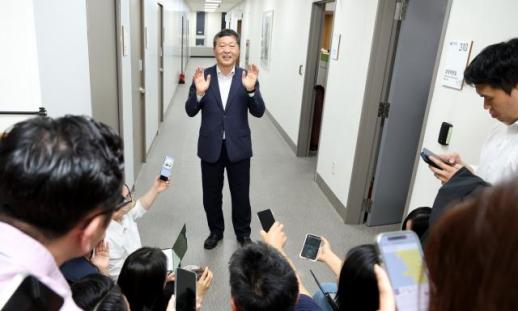 Samsung Live: Govt to mediate if talks fail in settlement by 10 p.m. SEOUL, May 19 (AJP) -The South Korean government is ready to put up its mediation version if Samsung Electronics Co. and its largest labor union fail to reach a wage agreement by 10 p.m. as it endeavors to stop a potentially disruptive strike at the world’s largest memory chipmaker planned for Thursday. "We will see if the management and union come to a settlement by around 10 p.m., and it will be decided whether an agreement is reached or whether a mediation is necessary,” Park Soo-keun, chairman of the National Labor Relations Commission (NLRC), told reporters during the second round of post-mediation talks. Park said that if management accepts a compromise proposal after internal review, the union must still put the deal to a membership vote. “If the proposal is rejected in the vote, the union would proceed with a strike,” he said. Park also signaled that the commission itself would step in with a formal mediation proposal should management refuse to accept a negotiated compromise. Under South Korea’s post-mediation process, the NLRC may present a compromise proposal combining elements from both sides if direct negotiations fail. But if either labor or management rejects the proposal, talks collapse — a scenario that could sharply raise the likelihood of a strike. Samsung Electronics Co. and its largest labor union resumed government-led wage mediation Tuesday, with the looming possibility of reaching a last-minute deal to avert an 18-day strike scheduled to begin Thursday. The renewed negotiations came days after the first round of mediation ended without an agreement, as the two sides remained divided over performance-based bonuses tied to booming artificial intelligence-related semiconductor earnings. “Both labor and management are making concessions,” Park said earlier in the day, adding that one or two key issues remained unresolved. Labor and management remain sharply split over how to structure bonuses during the ongoing global memory chip supercycle. Samsung has proposed maintaining the current excess profit incentive system while allowing the bonus pool to be calculated based on 10 percent of operating profit. The company also proposed introducing a separate special compensation framework to create a more flexible incentive structure. The union, meanwhile, is demanding fixed performance bonuses equivalent to 15 percent of the semiconductor division’s operating profit and the removal of payout caps. The two sides have reportedly narrowed differences on eliminating the current bonus ceiling set at 50 percent of annual salary, according to industry sources. However, disagreements remain over whether bonuses should also be distributed to loss-making business units and whether any revised framework should be formally institutionalized. The union has reportedly proposed allocating 70 percent of the semiconductor bonus pool across the entire division, while distributing the remaining 30 percent based on individual business unit performance. Management, however, argues that such a structure could reward loss-making divisions and weaken the company’s performance-based compensation principles. 2026-05-19 20:27:26
 -
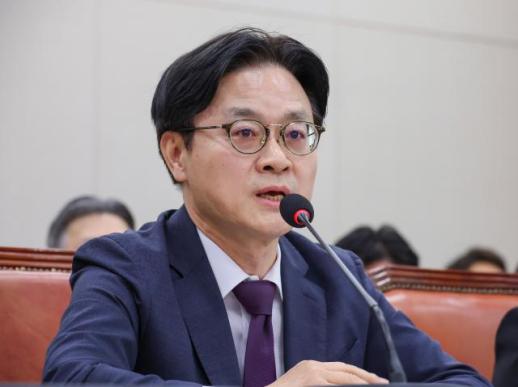 Samsung Live: Industry Minister urges 'dramatic settlement' on final day of Samsung talks SEOUL, May 19 (AJP) - As Samsung Electronics and its union entered the crucial final hours of government-mediated talks on Tuesday, South Korea's Industry Minister Kim Jung-kwan made an urgent public plea for a resolution to avert a massive strike. Speaking at a parliamentary committee meeting, Kim expressed a "desperate need" to prevent the 18-day walkout scheduled to begin Thursday. "If we cannot resolve this when everyone knows the negative impacts of a strike, what can our society achieve going forward?" Kim stated, urging both sides to reach a dramatic last-minute settlement. The minister attributed the current deadlock partly to Samsung's relatively short history of labor-management dialogue compared to other legacy manufacturers. However, he carefully refrained from commenting on specific negotiation terms to avoid interfering with the ongoing, closed-door National Labor Relations Commission (NLRC) mediation in Sejong. The remarks come as the high-stakes arbitration enters its final stretch. The National Labor Relations Commission is expected to announce the outcome of the mediation later this evening, which will determine whether the historic walkout proceeds as planned. 2026-05-19 16:12:54
 -
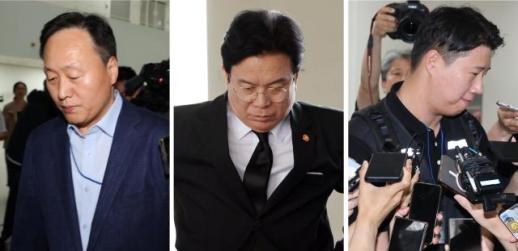 Samsung Live: Another last-ditch round of talks underway as strike deadline looms SEOUL, May 19 (AJP) - Samsung Electronics and its largest labor union returned to the negotiating table on Tuesday for a second day of government-mediated talks, with a planned full-scale strike just two days away. Negotiators from both sides are working to reach a deal over disputes involving wages and performance bonuses following massive profits fueled by an unprecedented artificial intelligence (AI)-driven semiconductor supercycle. According to Samsung insiders, the closed-door session is underway at the National Labor Relations Commission (NLRC) in the administrative city of Sejong, in a last-ditch effort to avert the union's planned 18-day walkout scheduled to begin Thursday unless a deal is reached in time. The main focus of Tuesday's talks is whether the NLRC can put forward a final proposal acceptable to both sides. If accepted by management and union leaders, the mediated proposal will carry the same legal binding force as a collective bargaining agreement. Both sides reportedly tried to narrow their differences over profit-sharing for employees as well as caps on salary increases in their talks the previous day. Park Jung-bum, an NLRC official, was cautiously optimistic, saying both sides engaged constructively and are "finding common ground." Although talks are scheduled to end by 7 p.m., industry watchers expect the tug-of-war bargaining to continue late into the night or even into the next day, given the urgency of averting a strike that could have widespread economic repercussions across the country. Government authorities are also on high alert, having previously warned they could step in to halt the walkout if it poses a serious threat to the national economy. 2026-05-19 10:25:15
 -
 Samsung takes aim at OLED dominance with ultra-bright micro RGB TV SEOUL, May 18 (AJP) - Samsung Electronics is intensifying its assault on the ultra-premium television market, leveraging next-generation display technology and generative artificial intelligence to challenge the dominance of OLED panels. The South Korean tech giant's 2026 Micro RGB TV (Model: R95H) is garnering strong endorsements from major tech reviewers in the U.S. and U.K., signaling a potential shift in the high-end display landscape. The strategy heavily targets the traditional weakness of OLED TVs—peak brightness. According to U.S.-based tech outlet Tech Aeris, the new Micro RGB lineup presents a compelling alternative for consumers demanding "OLED-level colors with higher brightness," naming it a 2026 Editor's Choice. At the core of Samsung's push is the "Micro RGB AI Pro" processor , which not only handles real-time scene analysis and color tuning but also marks a significant step in transforming the TV into a comprehensive AI hub. Moving beyond mere picture optimization, Samsung has integrated broad AI services, including Copilot and Perplexity, directly into the viewing experience. The technical specifications also underscore Samsung's aggressive market positioning. The new model has secured the 'Micro RGB Precision Color 100' certification from the German testing institute VDE, achieving 100 percent of the BT.2020 color gamut standard established by the International Telecommunication Union (ITU). By combining uncompromising brightness with deep AI integration, Samsung aims to set a new standard for home theaters, actively courting tech-savvy consumers who prioritize both color accuracy and high-performance gaming capabilities. 2026-05-18 17:40:12