
Journalist

choi ju ho
cjh@ajunews.com
-
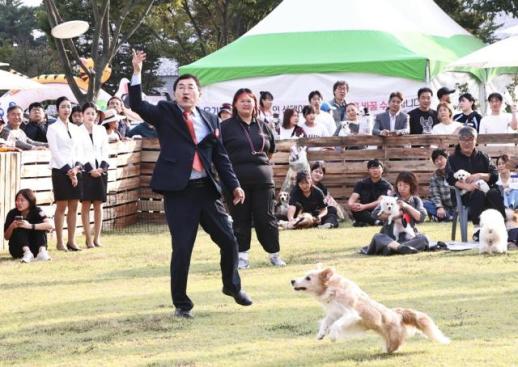 Gyeongju to Allow Pets in Restaurants and Bakeries Starting in March GYEONGJU, South Korea — Starting in March, restaurants and other food-service businesses in Gyeongju, North Gyeongsang province, will be allowed to admit pets if they meet specified hygiene and safety standards. Gyeongju City said Tuesday the system allowing customers to bring pets into food-service establishments will take effect March 1. The city said the move is intended to improve convenience for pet owners while also protecting the choice of customers who do not have pets. The policy applies to restaurants, snack bars and bakeries, and it limits eligible pets to dogs and cats. Ahead of the rollout, the city set new facility requirements, operating rules and administrative penalty standards for businesses that allow pets. Participating businesses must post a sign at the exterior entrance indicating pets are allowed. They also must install partitions or fencing to prevent animals from entering food-handling areas such as kitchens and ingredient storage rooms. Businesses must keep pets from roaming freely and provide dedicated seating, a cage, a restraint device or a separate designated area. They must also verify pets’ vaccination status and notify customers that unvaccinated animals will be barred from entry. To strengthen hygiene, the city said businesses must maintain spacing between tables and use covers to prevent contaminants such as animal hair from getting into food. Violations of facility standards or operating rules may result in corrective orders or administrative penalties, including suspension of business operations, the city said. To reduce confusion early in the rollout, the city said it will provide training and publicity for business owners and conduct intensive inspections of compliance. Mayor Joo Nak-young said, “As life with pets has become part of everyday living, this system is a step in which the administration responds ahead of changes in residents’ lives.” He added, “Through thorough hygiene and safety standards, we will create a dining environment that both pet owners and non-pet owners can use with confidence.”* This article has been translated by AI. 2026-01-29 02:00:00
 -
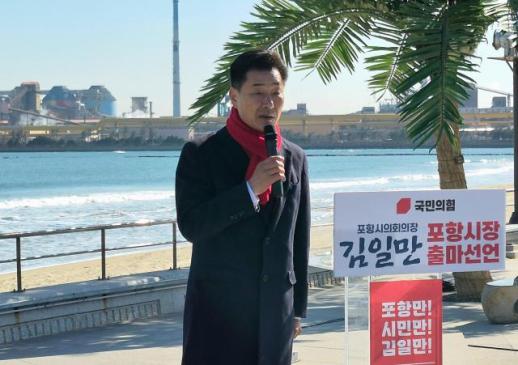 Pohang City Council Speaker Kim Il-man Announces Run for Mayor Kim Il-man, speaker of the Pohang City Council, officially announced his candidacy for Pohang mayor on the 28th in front of the “Goddess Statue” in Songdo, saying the city’s next decade should be guided by “one blueprint,” not fragmented projects. He adopted the campaign slogan “Only Pohang, only citizens, therefore Kim Il-man,” and set “a self-sufficient city where citizens are happy, a Pohang that feels good to live in” as his municipal administration slogan. “Politics is ultimately about making citizens’ daily lives less inconvenient and giving them a sense a month later that ‘things have changed,’” Kim said. Rather than listing lengthy, sweeping pledges, he said he would clearly set the city’s direction and move the entire administration consistently under it. Kim said Pohang’s growth agenda should move “together,” not “separately.” He argued that when industry, the port, tourism and urban renewal operate on their own, results weaken and residents feel less impact. “Now we need a ‘city administration blueprint’ that ties scattered projects into one direction,” he said. “Achievements that citizens can’t feel ultimately don’t last,” he added, saying he would judge city policy by changes in daily life rather than by numbers. Kim named Yeongil Bay Port as the first key pillar of Pohang’s development, saying port revitalization must be linked to regional and national strategies. He said he would establish ongoing cooperation channels with the central government, North Gyeongsang Province and industry to secure cargo volume and routes and make Pohang a gateway to the East Sea economic region. He also presented a single track that includes redefining Homigot’s status, restoring the old downtown and strengthening Pohang’s city brand. “Cities are not completed by industry alone. There must be a structure where people stay and return,” Kim said. He said a city is complete when alleys are lit after work, children can walk safely, older residents have shade to rest, and young people have places to stay. He pledged to link development and renewal to bring people back to the city center. Kim said politics is “not words but action,” and that leaders must follow through to the end. He pledged an administration that citizens feel they can trust with responsibility. “Explanations will be sufficient, decisions will be made openly, and results will be verified through indicators,” he said, adding that he would focus on Pohang and its citizens to open the city’s next 10 years.* This article has been translated by AI. 2026-01-29 01:51:00
 -
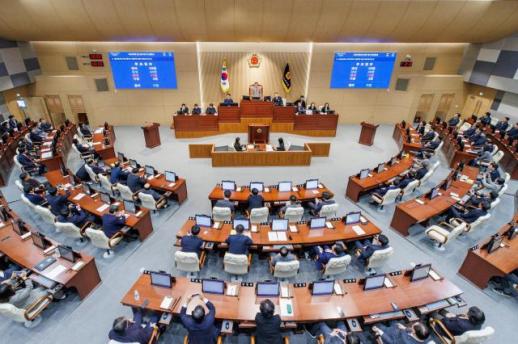 North Gyeongsang Provincial Council Approves Support for Daegu Integration North Gyeongsang Province’s council approved a measure backing administrative integration with the city of Daegu, even as opposition sentiment has been rising in the province’s northern region. The North Gyeongsang Provincial Council said it passed a motion titled “Submission of the council’s opinion on the integration of North Gyeongsang Province and Daegu Metropolitan City” at the first plenary meeting of its 360th extraordinary session on Jan. 28. The vote was 46 in favor, 11 against and two abstentions. The resolution, submitted under Article 5, Paragraph 3 of the Local Autonomy Act, formally states the council’s position on the proposed integration. The council said it took up the matter directly in the plenary session, citing urgency and the need to manage its schedule efficiently, and approved it through a recorded electronic vote. The council described the move as a strategic choice aimed at supporting follow-up steps at the national level, including legislation for a special law related to the integration. Ahead of the plenary vote, the council held the third meeting of its special committee on the Daegu-North Gyeongsang integration and a lawmakers’ general meeting on Jan. 27. Council members reviewed key issues and held extensive discussions, it said. During deliberations, members discussed responses to National Assembly action on a special integration law, measures to address regional imbalances such as concerns about the northern area being left behind, and strategies to attract a second round of public institutions after integration. In the plenary debate, opponents raised concerns that the talks were moving too quickly and said the push should proceed cautiously without sufficient public input. Supporters argued that integration between North Gyeongsang and Daegu is a choice that can no longer be delayed to counter the risk of regional decline, and said the current period is the right time because the central government is actively supporting the effort. Council Chair Park Seong-man called the decision “a historic determination” to create a new breakthrough for local autonomy in South Korea as regions face the risk of decline. He said the council presented its opinion in line with residents’ wishes and would closely monitor the entire legislative process so residents’ voices are properly reflected. Park added that the integration is not simply a merger of two areas, but a long-term plan to build a broader economic zone with global competitiveness and a new model for balanced development. He said the council would play an active role so the decision can lead to regional development, improved public welfare and a stronger local economy.* This article has been translated by AI. 2026-01-29 01:30:00