
Journalist

Park Yeonjin
cosmos1800@ajunews.com
-
 Gijang Anchovy Festival Marks 30th Anniversary at Daebyeon Port April 24-26 Busan’s Gijang County said it will hold the 30th Gijang Anchovy Festival from April 24 to 26 at and around Daebyeon Port in Gijang-eup. County officials said this year’s event, marking the festival’s 30th anniversary, will feature expanded programs for visitors. Gijang’s spring anchovies are known locally for their high calcium content and, during peak season, their higher fat content and tender texture. A free raw-anchovy tasting will run throughout the three-day festival, and visitors will also be able to buy fresh anchovies at relatively low prices during the abundant catch period. Performances and hands-on events are scheduled across the venue. On April 24, Jeong Seo-ju and Cheon Rok-dam will open the festival with congratulatory performances. On April 25, Son Bin-a, Chae Yun and Choi Ji-ye will take the stage. On April 26, Mister Pang, Kim Su-hee and Jang Ha-on will close out the event. After the Gijang Anchovy Song Festival finals on April 26, a “Taegun Singing Contest,” hosted by MC Park-gun and Na Tae-ju, is planned. Family-oriented programs include a fishing-boat ride experience, catching live fish by hand, a “Silver Joy” anchovy-themed performance, and an offshore fireworks show. To ease congestion, the county said it will run a free shuttle bus on April 25 and 26 from 9 a.m. to 5 p.m. between the second parking lot at Gijang Station on the Donghae Line and the Mu-yang Village roundabout. Choi Il-cheon, chairman of the Gijang Anchovy Festival Promotion Committee, said organizers have prepared food and attractions “with more substance than ever,” and invited visitors to share in the festival and make special memories in Gijang during the spring season.* This article has been translated by AI. 2026-04-21 16:27:04
 -
 Changwon to Host Concert, Bullfighting Tournament and Museum Exhibition Starting Late April Changwon Special City will roll out a series of cultural events for residents starting in late April, including a community concert, a traditional folk competition and a museum exhibition. Changwon will hold the “Uichang-dong Community Harmony Concert” at 7 p.m. on April 24 in the parking lot of the Changwon City Livestock Cooperative. The concert was planned to mark the 100th anniversary of the children’s song “Hometown Spring” and to share with residents the historical significance of Uichang-dong, where the song was created. The program begins at 6:40 p.m. with a pre-show by the Uichang-dong resident program team “Gogo Janggu.” The main concert will feature the Changwon Municipal Choir performing “Hometown Spring,” followed by singer Kim Eun-ju, fusion band A-PLUS, local singer Bae Jin-a and popular singer Na Sang-do.24th Changwon National Folk Bullfighting Tournament Opens April 29 The “24th Changwon National Folk Bullfighting Tournament” will be held April 29 through May 3 at a temporary arena in the Magumsan hot-spring district in Buk-myeon, Uichang-gu. A total of 200 bulls from nine cities and counties nationwide will compete, including 20 from Changwon. The tournament will be run in a bracket format across three weight classes — Baekdu, Hangang and Taebaek — with total prize money of 55.2 million won. Organizers said stricter animal-welfare rules will apply this year, including tougher horn-management standards and a match time limit of up to 40 minutes. An opening ceremony is scheduled for 2 p.m. on May 2, with congratulatory performances, a prize drawing and a mobile livestock-products sales vehicle among side events. An indoor exhibition is also planned. The Changwon Municipal Masan Museum will present its first-half 2026 special exhibition, “We Are Blossoming Flowers of Joseon,” from April 28 to Aug. 30 in the first-floor special exhibition gallery. The exhibition highlights the history of “Daejayu Kindergarten,” which opened in 1927 and worked to preserve the Korean language and culture. Organized in three sections, it traces the period from the opening of Masanpo Port in 1899 through the Japanese colonial era, focusing on efforts to find hope through education despite harsh repression. Key items include a seal stamp used by Monk Guha, a 1924 map titled “Joseon Map, Southern Section,” and the 15th Daejayu Kindergarten graduation album published in 1942. The museum will also run a participatory program in which visitors write messages to help complete a large Taegeukgi, the national flag of South Korea.* This article has been translated by AI. 2026-04-21 13:48:19
 -
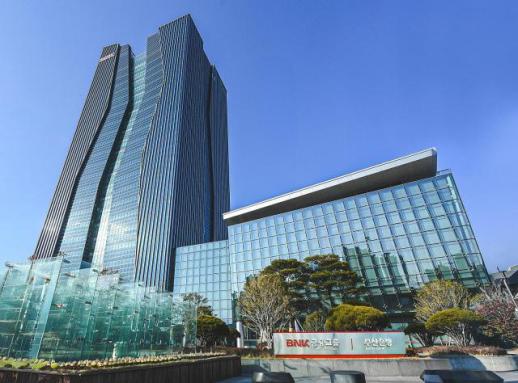 Busan’s City Treasury Deposit Rate Lags at 2.46%, Near Bottom Among Major South Korean Cities Busan, South Korea’s second-largest city, is posting one of the lower treasury deposit rates among the nation’s metropolitan governments, newly released data show. The Ministry of the Interior and Safety, publishing a nationwide comparison for the first time, disclosed figures that allow side-by-side analysis of local governments’ treasury interest rates. According to the “local government treasury rate integrated status” posted Tuesday on the Local Finance Integrated Disclosure System (Local Finance 365), Busan City Hall’s contracted rate for long-term deposits of 12 months or more stood at 2.46% as of the 13th. That is below the average of 2.61% for South Korea’s 17 metropolitan-level governments, placing Busan in the mid-to-lower tier at about ninth to 10th. The release marks the first time the ministry has consolidated treasury rates that local governments previously disclosed individually. The gap with other major governments was clear in the data. Incheon secured 4.57%, the only metropolitan government in the 4% range and the highest nationwide. Seoul posted 3.45%, about 1 percentage point higher than Busan, and neighboring South Gyeongsang province recorded 2.60%, also above Busan. North Gyeongsang province was lowest at 2.15%. At the basic local government level, Busan also trailed. While Incheon’s Seo District recorded the highest rate nationwide at 4.82%, the average long-term deposit rate across Busan’s 16 districts and counties was about 2.55%. Within Busan, Gangseo District was the only one above 3%, at 3.00%. Most others remained in the 2% range, including Yeongdo District at 2.36% and Busanjin District at 2.51%. Treasury rates are a key fiscal indicator because they directly affect local governments’ interest income. With metropolitan governments managing funds ranging from hundreds of billions to trillions of won, even a 0.5 percentage-point difference can translate into tens of billions of won in annual interest income. The figures have fueled criticism that Busan failed to secure better terms, unlike Incheon, which drew intense bidding competition among commercial banks to obtain a higher rate. Busan has long faced criticism that, in selecting its treasury banks, it prioritizes stability and customary consideration for local financial institutions over rate competitiveness. Fiscal experts said the integrated disclosure should strengthen transparency by enabling comparisons across local governments. They said it will be difficult to break a pattern of low rates unless evaluation criteria place greater weight on contracted treasury rates and on measurable contributions to interest income. Busan’s 2026 budget totals 17.933 trillion won. BNK Busan Bank manages about 70% of the city’s funds, including the general account, as the primary treasury bank, while KB Kookmin Bank manages the remaining 30%, including special accounts, as the secondary treasury bank. * This article has been translated by AI. 2026-01-29 00:45:00