
Journalist

Jo Seung-jun
critic@ajunews.com
-
 Applied Materials Partners with TSMC to Accelerate AI Semiconductor Development Applied Materials is teaming up with TSMC to accelerate the development of next-generation artificial intelligence (AI) semiconductor technologies. The two companies plan to conduct joint research and development at the EPIC Center, currently being established in Silicon Valley, with a strategy to innovate advanced processes and expedite the transition to mass production. On May 12, Applied Materials announced the expansion of its strategic partnership with TSMC to hasten the commercialization of semiconductor technologies for the AI era. Building on over 30 years of collaboration, the companies aim to jointly develop materials engineering, equipment, and process integration technologies. This collaboration will center around the EPIC (Equipment and Process Innovation and Commercialization) Center in Silicon Valley, where key technologies will be developed to create high-performance, low-power semiconductors required for data centers and edge environments. The focus will be on accelerating the speed of technology transfer from research to mass production. In response to the growing demand for AI and high-performance computing (HPC), the companies plan to develop technologies that improve the power, performance, and area of advanced logic processes, as well as introduce new materials and next-generation equipment to implement 3D transistors and interconnect structures. They will also collaborate to enhance process integration technologies to improve yield and reliability. As semiconductor miniaturization approaches its limits, this partnership is seen as a model for collaborative innovation across the industry, highlighting that maintaining competitiveness cannot rely solely on the technological advancements of individual companies. Gary Dickerson, President and CEO of Applied Materials, stated, "The two companies have collaborated at the forefront of semiconductor technology for a long time. Through the EPIC Center, we will accelerate technology development and address manufacturing complexities." Meanwhile, Miwije TSMC Senior Vice President remarked, "Next-generation semiconductor technology hinges on materials engineering and process integration capabilities, and our collaboration at the EPIC Center will expedite technology commercialization." The EPIC Center is a large semiconductor equipment research and development facility being established with an investment of approximately $5 billion, providing a collaborative environment that spans the entire process from initial research to mass production. This is expected to shorten the time for semiconductor companies to validate technologies and transition to mass production.* This article has been translated by AI. 2026-05-12 08:47:07
 -
 Samsung Electronics Strike Looms as Negotiations Continue Samsung Electronics is set to engage in last-minute negotiations ahead of a planned strike in ten days. Experts warn that a breakdown in talks could disrupt semiconductor production and damage trust with global clients. According to industry sources, Samsung Electronics and its labor union will conduct post-adjustment procedures at the Central Labor Relations Commission in Sejong City over two days, from May 11 to May 12. The super labor union has announced a strike starting on May 21. The core issue at stake is not whether to provide performance bonuses, but how to determine the funding criteria and the cap on those bonuses. The union remains steadfast in its demands to eliminate the cap and to link bonuses to operating profits. Choi Seung-ho, head of the Samsung Electronics branch of the super labor union, stated before attending the post-adjustment meeting, "We continue to advocate for a 15% performance bonus and the elimination of the cap, as well as institutionalizing these changes. If there is no stance on institutionalization, adjustments will not be possible." While the company has left the door open for additional compensation, it has drawn the line at institutionalizing the elimination of the cap. Legal experts caution against overestimating the significance of the post-adjustment process. Jo Yong-hyun, head of the law firm Class Han-gyeol, noted, "Post-adjustment is a procedure for the labor and management to ultimately come together. The commission can offer opinions and recommendations, but it cannot impose legal obligations." He added, "Ultimately, both parties must agree for it to take effect." The legitimacy of the demand for performance bonuses as a valid purpose for industrial action is also a contentious issue. Jo suggested that it is likely to be interpreted as part of working conditions, but it could also be seen as an issue of management rights, leading to potential disputes. A failure in post-adjustment talks is likely to lead to a strike. An executive at Samsung Electronics remarked, "If negotiations break down this time, it will be realistically difficult to resume talks before the strike." The semiconductor industry is particularly concerned that a strike could have a greater impact than in other manufacturing sectors. Semiconductor production involves a series of continuous processes, and halting the lines can make it difficult to maintain yield and delivery schedules. Kim Yang-pyung, a researcher at the Korea Institute for Industrial Economics and Trade, explained, "The semiconductor production line is like a furnace; once it stops, products in production must be discarded, and the repercussions can last for three to four months." He added, "Calculating the exact damage is virtually impossible, but it will likely exceed the figures currently being discussed." Experts are more concerned about the long-term damage to trust rather than short-term production losses. Samsung Electronics is at a critical juncture in restoring trust with global clients in high-bandwidth memory (HBM), server DRAM, and advanced foundry processes. Repeated strike risks could raise questions about supply stability, contributing to heightened internal tensions at Samsung Electronics. Kim warned, "In the long run, the company will inevitably suffer significant damage to its credibility."* This article has been translated by AI. 2026-05-12 04:53:36
 -
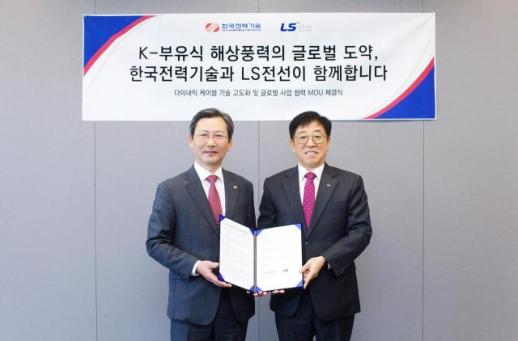 LS Cable & System and Korea Electric Power Technology Collaborate on Floating Offshore Wind Power LS Cable & System is partnering with Korea Electric Power Technology to secure a foothold in the floating offshore wind power market. The collaboration aims to enhance competitiveness from the initial design phase by integrating submarine cable technology with power system design capabilities. On May 11, LS Cable & System announced it has signed a memorandum of understanding (MOU) with Korea Electric Power Technology for cooperation in floating offshore wind power. The agreement focuses on establishing a "design-linked cooperation model" that combines LS Cable & System's submarine cable technology with Korea Electric Power Technology's engineering, procurement, and construction (EPC) capabilities. The two companies plan to jointly participate in the early engineering stages to optimize the power system and cable specifications. Floating offshore wind power involves wind turbines and their supporting structures floating on the sea. This method allows for installation in deeper waters and farther offshore than fixed offshore wind farms, reducing site constraints. However, it also presents challenges as wind turbines and cables must operate in an environment subject to waves and currents, necessitating a complex design that considers both electrical performance and mechanical loads. LS Cable & System has developed the country's first "dynamic submarine cable" to address these challenges. Dynamic cables are essential components that connect floating offshore wind facilities to the underwater transmission network. They must withstand repeated bending and changes in tension, creating a high technical barrier to entry. Currently, only a few companies, including LS Cable & System and select firms in Europe, possess technology for high-voltage dynamic cables. Korea Electric Power Technology has accumulated expertise in power system design and marine environmental analysis through its EPC projects for land-based power plants. The two companies aim to leverage this expertise to enhance their competitive edge in the integrated mechanical and electrical design required for dynamic cables. An LS Cable & System official stated, "Participation in the design phase of floating offshore wind power is crucial for securing contracts. Together with our subsidiary LS Marine Solutions, we will strengthen our global competitiveness by integrating design, manufacturing, construction, and operation and maintenance capabilities into a turnkey solution."* This article has been translated by AI. 2026-05-11 09:32:21
 -
 Samsung Electronics Union Accepts Government Mediation Ahead of Strike The labor dispute between Samsung Electronics and its union has shifted from a potential clash to a phase of renegotiation. However, the threat of a general strike remains, and tensions could rise again depending on the outcome of upcoming negotiations. On May 8, the union announced it would participate in post-adjustment procedures on May 11-12 at the request of the government. Previously, the union had warned of a general strike on May 21 due to unresolved disagreements over wages and performance bonuses. Industry analysts interpret this decision as more than just a postponement. The government's direct involvement in mediation suggests that the labor conflict at Samsung Electronics could have significant repercussions across the industry. Particularly as Samsung accelerates its efforts to regain semiconductor competitiveness and transition to a company-wide artificial intelligence (AI) strategy, any production disruptions or organizational instability could increase management burdens. Internally, Samsung is simultaneously addressing high-bandwidth memory (HBM) competition, investing in next-generation packaging, and implementing AI-driven organizational innovations. The union appears to be strategically using government mediation to secure a stronger negotiating position and public support rather than immediately launching a general strike. However, the union has reiterated that it will proceed with a strike if satisfactory results are not achieved, indicating that tensions could escalate if the post-adjustment talks do not lead to a substantive agreement. Business circles anticipate that future discussions will focus not just on wage increases but also on the criteria for performance bonuses and the predictability of the compensation system. Given the significant performance disparities among different divisions within Samsung, conflicts over the compensation structure may recur structurally. One industry insider remarked, "The government's direct intervention indicates that this is viewed as a matter beyond a simple labor dispute. In a competitive environment for HBM and AI, a prolonged strike would pose significant burdens for Samsung Electronics."* This article has been translated by AI. 2026-05-08 17:43:30
 -
 Samsung Electronics Launches Development of Humanoid Robots Samsung Electronics is re-establishing its focus on robotics. The company is bolstering its Future Robotics Team and has created a new execution organization within its Device Experience (DX) division to oversee AI-based future projects, accelerating preparations for the commercialization of manufacturing robots and humanoids. According to industry sources on May 8, Samsung's DX division has recently conducted internal recruitment for the Future Robotics Team, with applications accepted until today. Prior to the recruitment, Samsung held a briefing for employees to share the team's roles and responsibilities. The Future Robotics Team was established after Samsung secured a major stake in the robotics platform company Rainbow Robotics, and it is responsible for overseeing the development of next-generation robotic technologies, including humanoids. This workforce expansion is seen as a strategic move to transition the robotics business roadmap into the execution phase rather than merely expanding the organization. During a recent earnings call, Samsung outlined its plan to first develop manufacturing robots before expanding into home and retail sectors. The company also indicated it would consider internalizing key robotic components and collaborating with domestic firms, as well as being open to investments and acquisitions if necessary. Samsung's renewed focus on robotics is not a recent development. In 2021, the company formed a task force for robotics commercialization, which evolved into a formal robotics team the following year. In January 2023, Samsung invested approximately 59 billion won in Rainbow Robotics, securing its position as the largest shareholder. Rainbow Robotics, known for its bipedal and collaborative robot technologies, has been viewed as a crucial external technology partner for accelerating Samsung's humanoid development. Within the DX division, there is also a visible effort to integrate robotics as a core aspect of AI transformation. Last August, Samsung established the InnoX Lab, a dedicated organization for key strategic projects within the DX division. This execution-focused team is responsible for the expansion of digital twin solutions, logistics operation innovations, manufacturing automation, and the development of core technologies for humanoid robots. Industry experts interpret the establishment of InnoX Lab as a signal that Samsung aims to approach robotics not merely as a standalone product but as part of an AI-based platform business connecting factories, logistics, homes, and retail. As the smartphone, TV, and home appliance markets mature, robotics is emerging as a new growth axis that can integrate hardware, AI, sensors, semiconductors, and appliances. Samsung's initial focus on manufacturing robots is seen as a strategic choice that considers both quality verification and potential for profitability. However, significant challenges remain before commercialization can be achieved. The humanoid market is rapidly advancing, with global companies like Tesla and Figure AI leading the way. To mitigate the burden of being a latecomer, the speed at which Samsung can combine technologies with Rainbow Robotics, internalize its own components, and integrate with the DX division's product ecosystem will be crucial. An industry insider noted, "The alignment of organization, personnel, external investment, and AI transformation systems has become clearer. The strategy of first achieving results with manufacturing robots and then expanding into humanoids and home robots is likely to be a realistic roadmap." 2026-05-08 13:03:39
 -
 Coway Reports 1st Quarter Operating Profit of 250.9 Billion Won Driven by Water Purifiers and BEREX Growth Coway reported strong growth in the first quarter of 2026, driven by increased sales of its core products, including water purifiers and BEREX beds. The company attributed its performance to a rise in domestic rental accounts and stable sales growth from overseas subsidiaries.On May 8, Coway announced that its consolidated revenue for the first quarter reached 1.33 trillion won, with an operating profit of 250.9 billion won. This marks a year-on-year increase of 13.2% in revenue and 18.8% in operating profit.Domestic sales amounted to 742.8 billion won, up 9.5% from the previous year. The launch of new products like the Icon Water Purifier 3 and the BEREX Pebble Chair 2, along with the introduction of the home healthcare brand Terasol, contributed to this growth.The 'Coway Festa' promotion, which began in late February, boosted new rental sales across all product lines. Notably, new sales of BEREX beds surged by over 30% compared to the same period last year. The net increase in domestic rental accounts reached 188,000, an 81.8% rise year-on-year.Industry analysts note that Coway is expanding its business focus from water purifiers to include mattresses and massage chairs, enhancing the contribution of BEREX to its overall performance.Overseas, Coway's subsidiaries also experienced growth, with first-quarter revenue reaching 537 billion won, a 20.2% increase from the previous year. The Malaysian subsidiary reported 406.2 billion won, up 23.5%, while the Thai subsidiary saw a 29.3% increase to 55.4 billion won. The Indonesian subsidiary recorded 12.6 billion won, growing by 14.7%. However, the U.S. subsidiary's revenue fell by 4.1% to 57.5 billion won.Kim Soon-tae, Coway's CFO, stated, "We have solidified our market dominance in the first quarter with upgraded new products that continue the legacy of our bestsellers. With balanced sales performance both domestically and internationally, we aim to maintain growth in the second quarter through innovative product launches and enhanced online and offline marketing strategies that support profitability." 2026-05-08 11:55:10
 -
 SK hynix Launches Initiative to Restore Salmon Migration Path in South Korea SK hynix is partnering with government and local agencies to restore the aquatic ecosystem of the Namdaecheon River in Yangyang, Gangwon Province. The initiative aims to enhance its water-positive activities by returning more water to nature than the company uses in semiconductor production. On May 8, SK hynix announced its collaboration with the Ministry of Climate, Energy and Environment, Gangwon Special Self-Governing Province, Yangyang County, Korea Water Resources Corporation, and Korea Environment Corporation to improve aging weirs along the Namdaecheon. Water-positive refers to the concept where a company returns more water to the environment than it withdraws, contributing to sustainable water management. This initiative will be driven by government policies, public agency projects, and corporate participation. The Namdaecheon is known as a key salmon migration river in South Korea. However, outdated weirs and altered waterways have hindered salmon from reaching their spawning grounds. SK hynix plans to enhance the weirs from 2026 to 2037 to ensure adequate water flow and facilitate fish movement. The company believes this project will help restore the disrupted salmon migration path and improve the continuity of the aquatic ecosystem. It also aims to enhance the living environment for local residents and increase the ecological and tourism value of the Namdaecheon. Previously, SK hynix engaged in environmental improvement activities near its facilities, including a partnership with Cheongju City for the 'One Company, One Stream Love Movement,' focusing on cleaning a 2-kilometer stretch of the Gagyeong Stream. To reduce water usage in semiconductor processes, SK hynix has implemented a wastewater recycling system and set a goal to recycle an average of 138,000 tons of water daily by 2030. Lee Byeong-gi, Chief Production Officer at SK hynix, stated, "This project will demonstrate how corporate water-positive activities can serve as a tool for mutual growth with local communities and the natural environment. SK hynix will continue its sincere efforts to protect water resources."* This article has been translated by AI. 2026-05-08 09:02:54
 -
 Samsung Faces Internal Strife Amid HBM Competitiveness Concerns Concerns are growing that internal conflicts at Samsung Electronics could undermine its competitiveness in high-bandwidth memory (HBM). The Device Solutions (DS) division is threatening a total strike over demands for increased bonuses, while the Device Experience (DX) division expresses feelings of deprivation amid declining profitability and the withdrawal from the Chinese TV and home appliance market.According to industry sources, the Samsung Electronics union's joint action committee plans to initiate a total strike starting May 21 if wage negotiations with management fail. A key issue is the demand for performance-based bonuses linked to operating profits, spurred by improved results in the DS division due to rising AI semiconductor demand.The mood within the DX division is tense. Samsung recently confirmed its withdrawal from the Chinese TV and home appliance market, a decision attributed to aggressive pricing from local competitors and weak demand. Many in the DX division perceive this as a retreat from a core business.Given that TVs and home appliances have long been vital to Samsung's global brand value, the anxiety among DX employees is palpable. While attention focuses on the DS division's impressive performance and the expanding AI semiconductor market, DX employees feel their contributions, especially amid risks like U.S. tariffs, are being overlooked.The recent departure of the Donghaeng Union, which has many members in the DX division, from the joint action committee highlights dissatisfaction over the prioritization of DS bonus discussions at the expense of DX issues. The Donghaeng Union has called for fair representation and compliance with obligations regarding information sharing and non-discrimination.A DX representative noted, "With nearly half of the company's workforce in the DX division, it will be difficult for management to fully accept the demands centered on the DS division. I believe the DS employees should make concessions before more extreme conflicts arise."Industry analysts warn that Samsung's internal strife could negatively impact its competitiveness in HBM and other memory semiconductors. The DS division struggled in HBM competition until late last year but has since begun to regain its footing, though it has yet to establish fundamental competitiveness.Experts emphasize that major tech clients like NVIDIA prioritize quality, yield, and delivery stability when selecting suppliers. If a strike occurs, the damage to customer trust could be more severe than short-term production disruptions.Concerns are mounting that repeated halts in production due to strikes could lead to lower yields and compromised quality. HBM, which involves stacking multiple DRAM chips and advanced packaging, requires stringent process stability and quality control. Inconsistent yields could result in losing key clients.An anonymous Samsung executive stated, "The union argues that a strike could result in losses of tens of trillions of won, while external estimates suggest that halting semiconductor production could cost 1 trillion won daily. HBM ultimately hinges on yield, and if production lines are repeatedly halted, we risk losing our status as a reliable supplier to key clients like NVIDIA, which is the most serious risk." 2026-05-07 23:03:39
 -
 Samsung Faces Internal Strife Amid Semiconductor Boom Once a source of self-deprecating humor, the term "Samsung after" referred to non-electronics subsidiaries, highlighting the allure of Samsung Electronics' performance and treatment. Recently, however, a new hierarchy has emerged within Samsung Electronics, deepening divisions among its business units.Concerns are growing that the discontent among employees in other divisions toward the Device Solutions (DS) sector's demands for average bonuses in the millions of won could harm organizational cohesion.According to industry sources, labor disputes over excessive compensation demands from the DS sector's union are escalating, raising the possibility of a general strike. Meanwhile, employees in the Device Experience (DX) sector, feeling sidelined, are increasingly fatigued. While the DS sector thrives on rising demand for AI semiconductors, the DX sector, responsible for mobile, TV, home appliances, and telecommunications, struggles amid global consumer slowdowns and cost pressures.In the first quarter, Samsung Electronics reported an operating profit of 57.2 trillion won, with the DS sector contributing 53.7 trillion won. The DX sector, excluding mobile, has seen stagnant or declining performance, with the home appliance division recording losses.This performance gap is shaking organizational morale, as the semiconductor division has a stronger justification for demanding bonuses, while the DX sector is focused on cost-cutting and defending profitability. An industry insider noted, "The economic conditions for DS and DX within Samsung Electronics are completely different," warning that the bonus dispute could lead to feelings of relative deprivation between the divisions.The rift is also manifesting as labor conflicts. The super-large union, dominated by DS members, is leading joint protests, while the DX-based union has withdrawn from the joint action committee. While this appears to be a difference in strategy, many in the industry interpret it as a buildup of dissatisfaction among DX members who feel excluded from DS-centric bonus negotiations.Management has expressed concern as well. With fierce competition from rivals like SK Hynix and Micron, there is a growing fear that a strike could disrupt production and damage customer trust, especially as the company seeks to regain its competitive edge in high-bandwidth memory (HBM). On the same day, Vice Chairman Jeon Young-hyun and CEO Roh Tae-moon emphasized the need to ensure future competitiveness during wage negotiations.Analysts suggest that Samsung Electronics faces a dual challenge: leveraging the semiconductor boom to strengthen overall competitiveness while also resolving internal conflicts.A Samsung employee, who requested anonymity, remarked, "The push for a general strike is primarily driven by DS, leading to increased dissatisfaction among DX employees. Nowadays, it feels like DS and DX are different organizations with conflicting interests rather than parts of the same company." 2026-05-07 23:02:40
 -
 LG Electronics Launches All-in-One Heat Pump Boiler to Expand Electric Heating in South Korea LG Electronics is launching an all-in-one heat pump system boiler in South Korea, aiming to capitalize on the shift toward electrification in the heating market. The company plans to expand adoption of residential heat pumps by offering a high-efficiency electric alternative in a market still dominated by gas boilers. The company said Thursday the new product combines the outdoor unit and key system components into a single package. That design eliminates the need for separate refrigerant piping work and can use a home’s existing hot-water pipes, making it easier to meet demand for boiler replacements. LG Electronics has operated a domestic system boiler business since 2011 and has supplied residential all-in-one heat pump system boilers since 2018. The new model uses an air-source heat pump that draws heat from the air to provide space heating and hot water. LG Electronics said it can deliver about four to five times as much heat energy as the electricity it consumes, cutting energy costs by about 40% to 60% compared with fossil-fuel boilers. LG Electronics said the product meets standards tied to a government program to deploy 3.5 million heat pumps by 2035 as part of a plan to cut greenhouse gas emissions by 5.18 million metric tons. While upfront costs are higher than for conventional boilers, the company said government subsidies and energy savings could allow payback within five to six years, depending on usage conditions. The company also highlighted environmental features. It uses R32 refrigerant, which it said has a global warming potential 68% lower than R410A, a refrigerant commonly used in heating and cooling equipment. LG Electronics said the system can supply high-temperature hot water even in low winter temperatures and supports remote control through the LG ThinQ app. Industry observers say South Korea’s heating market remains centered on city-gas boilers, but demand for heat pumps could rise first in new housing and public buildings as carbon-cutting rules and electrification policies take hold. LG Electronics said its heat pump business has already been tested in Europe. At MCE 2026, a global HVAC exhibition held recently in Milan, Italy, both its residential heat pump outdoor and indoor units received awards. The company also cited supply deals for a new housing complex in the Netherlands and projects serving more than 100,000 households across five countries in southern Europe. LG Electronics is also expanding its heat pump lineup beyond residential use to commercial and industrial markets. It supplies its Multi V i system air conditioners to large commercial facilities and is promoting large chillers for industrial sites such as data centers, factories and power plants. The company operates cold-climate research centers in South Korea, Alaska in the United States, Oslo in Norway and Harbin in China to develop next-generation technologies. Lee Jae-sung, president and head of LG Electronics’ ES Business Division, said the company will work to develop the domestic market based on technology and business experience built in Europe and other global markets.* This article has been translated by AI. 2026-05-07 10:05:54