
Journalist

Jo Seung-jun
critic@ajunews.com
-
 Korea Mine Agency Sells Mexico Boleo Stake for $2 After Trillions of Won Invested Korea Mine Rehabilitation and Mineral Resources Corp. said it has effectively ended an overseas resource development project after investing more than 3 trillion won, selling its Mexico mining interests for a total of $2. The exit amounts to a withdrawal without recovering its investment after years of accumulated losses. The agency said Thursday it sold all of its equity stake and bonds in the Boleo copper mine in Mexico on Nov. 27 last year for $1 each, or $2 in total. While structured as a sale, the transaction was closer to a transfer of liabilities, with the buyer taking on the remaining debt, it said. The Boleo mine, a large project involving key minerals such as copper and cobalt, initially drew high expectations. But weak geological conditions, local political and social risks, and high production costs led to annual losses of hundreds of billions of won, the agency said. In 2022, it decided that confirming losses through a sale was more reasonable than making additional investments. The deal was completed after three failed auctions. The sale reduced debt by about 849 billion won and slightly improved capital, the agency said, but the investment is viewed as an almost total loss in terms of recovery. Critics say the case highlights structural limits, noting that only a limited number of the agency’s overseas resource development projects have generated profits. Only some projects are known to have increased in asset value among the overall investments. Some in the industry said the outcome points to the need to reassess public-led overseas resource development strategies. A resource development industry official called it “a typical case where risk assessment at the exploration stage and withdrawal standards were insufficient.” The government is reviewing an expanded role for the agency to secure critical minerals such as rare earths, but concerns persist that similar problems could recur without stronger expertise and independence.* This article has been translated by AI. 2026-04-30 20:42:15
 -
 Iran’s Supreme Leader Calls U.S. Attack a ‘Defeat,’ Vows New Control System for Strait of Hormuz Iran’s Supreme Leader Mojtaba Khamenei called U.S. military involvement a “defeat” and declared plans to build a new order around the Strait of Hormuz, a key global energy shipping route. The remarks come as tensions in the Middle East rise again and competition intensifies over control of major transport corridors. According to Yonhap on the 30th, Khamenei said in a message marking “Persian Gulf Day” that “the U.S. attack ended in a humiliating failure” and that it was time to “completely remove foreign influence” from the region. He singled out the Strait of Hormuz, saying Iran would “build a new management system” to block its use by “hostile forces.” Iran views the strait as a strategic point directly tied to its security. Khamenei said the Persian Gulf is tied to the identity of Iran and the Muslim world, and he sharply criticized the U.S. military presence. He also claimed U.S. bases are vulnerable and do not guarantee regional stability. On future operations of the strait, he signaled an intent to tighten legal and military control. He said Iran would mobilize scientific and technological resources and military capabilities to defend its territory and maritime sovereignty, while building an order that shares economic benefits with countries in the region. The statement was seen as his first hard-line message since U.S. and Israeli airstrikes in February. After becoming supreme leader following his father’s death, Khamenei had largely avoided public remarks, but issued this message directly. Foreign media have focused less on feasibility than on potential impact. The Strait of Hormuz is widely regarded as a vital passageway, with about 20% of global oil shipments passing through it. Analysts warn that any rise in tensions could quickly affect international oil prices and maritime logistics. Experts also say that if Iran moves to strengthen control over the strait, it could trigger responses from the United States and Gulf countries, raising the risk of broader military tensions.* This article has been translated by AI. 2026-04-30 20:36:18
 -
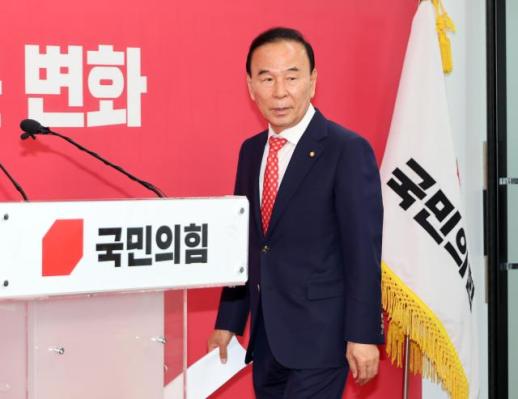 People Power Party By-Election Nominations Draw 25 Applicants Across Nine Districts Competition for the People Power Party’s nominations in upcoming by-elections is intensifying, with applications heavily concentrated in a handful of districts. Yonhap News Agency reported Thursday that the party’s nomination committee received 25 applications across nine districts by the close of registration that day. The largest field was in South Chungcheong’s Gongju-Buyeo-Cheongyang, with seven applicants. Gyeonggi’s Hanam Gap drew six, emerging as a key battleground in the Seoul metropolitan area. Ulsan Nam Gap had four applicants. Other districts drew little interest. Jeju’s Seogwipo and Gwangju’s Gwangsan Eul each had a single applicant, and Incheon’s Gyeyang Eul saw no additional candidates enter the race. Several prominent figures also applied. In Gongju-Buyeo-Cheongyang, Chung Jin-suk, a former National Assembly deputy speaker, filed for the nomination. In Busan Buk Gap, Park Min-sik, a former minister, applied. In Daegu’s Dalseong County, Lee Jin-sook, a former Korea Communications Commission chair, also entered the contest. Within the party, some have called for strategic nominations to strengthen competitiveness in the capital region. Hanam Gap has been at the center of speculation about recruiting Yoo Seung-min, a former lawmaker, though it remains unclear whether the party is seriously considering it. Some party members have warned that crowded fields could fuel internal disputes over nominations, while others say single-candidate districts may signal weakened local organization. The committee is set to begin interviews May 1, hold primaries May 3-4 and confirm final nominees May 5.* This article has been translated by AI. 2026-04-30 20:15:17
 -
 Taiwan’s Q1 GDP Growth Hits 13.69%, Highest Since 1987 on AI Chip Boom Taiwan’s economy posted 13% growth in the first quarter, fueled by a surge in demand for artificial intelligence semiconductors, marking its strongest pace in decades. According to Yonhap on Wednesday, Taiwan’s statistics agency, the Directorate-General of Budget, Accounting and Statistics, said first-quarter gross domestic product rose 13.69% from a year earlier. The figure topped the previous quarter and was the highest since 1987, far above market expectations in the 11% range. Semiconductors were the main driver. As demand jumped for AI, high-performance computing and cloud infrastructure, related exports and investment expanded at the same time. Exports in the first quarter rose 51% from a year earlier, leading the overall gain. Results at Taiwan Semiconductor Manufacturing Co., the world’s largest contract chipmaker, also weighed heavily on the broader economy. TSMC posted a record performance in the period, with net profit up 58%. Taiwan also logged growth in the 8% range last year, extending its strong run. Further gains this year will depend on whether AI demand holds, and some institutions have raised their full-year growth forecasts to around 9%. Over the same period, growth in South Korea and China was lower, at the 3% level and around 5%, respectively. 2026-04-30 20:03:16
 -
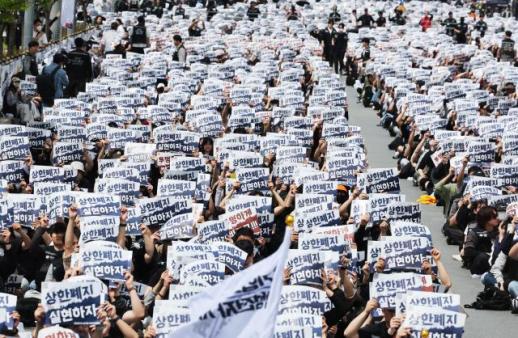 South Korea’s presidential office monitors Samsung Electronics as union strike nears As a Samsung Electronics union’s planned general strike draws closer, Cheong Wa Dae is closely tracking developments. Yonhap reported on Wednesday that the presidential office’s policy team recently prepared a report analyzing the potential impact on the South Korean economy if a strike at Samsung Electronics materializes. The report was prepared amid concerns that a walkout could ripple across multiple areas, given Samsung Electronics’ role in driving economic growth and a strong stock market after regaining competitiveness during the semiconductor “supercycle,” or boom period, the report said. A Cheong Wa Dae official described it as “a routine reporting process related to social issues,” adding that the presidential office typically prepares reports on major social matters. The report also reportedly said Samsung Electronics’ recent performance was influenced by a range of factors, including government support policies and the domestic industrial ecosystem. Earlier Wednesday, President Lee Jae-myung said at a meeting with senior aides that if “some organized workers” make excessive or unfair demands “just to save themselves” and draw public criticism, it would harm not only that union but other workers as well. Some interpreted the remarks as referring to the Samsung Electronics union’s planned strike. However, senior presidential spokesperson Kang Yu-jeong said it was not a discussion about any specific company, calling it a general statement that coexistence and cooperation among workers, employers and the public are important.* This article has been translated by AI. 2026-04-30 19:51:18
 -
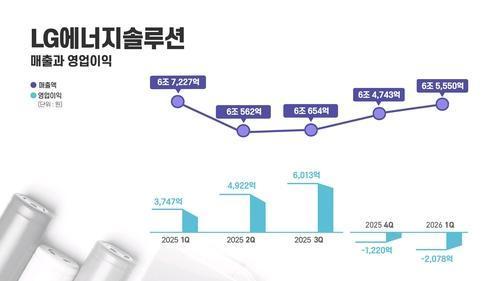 LG Energy Solution Seen Supplying BMW With More Than 10 Trillion Won in EV Batteries LG Energy Solution posted a first-quarter loss despite expectations for large orders, but analysts say it is laying groundwork for a rebound by expanding its electric-vehicle battery and energy storage system businesses. Yonhap reported on Wednesday that LG Energy Solution is expected to supply BMW with more than 10 trillion won worth of cylindrical batteries for electric vehicles. The batteries are expected to be used in BMW’s next-generation EVs, and the contract term is projected to run as long as 10 years. The industry is also watching the deal as a potential first entry for LG Energy Solution into BMW’s supply chain for battery-electric vehicles. On a conference call, the company said it had won more than 100 gigawatt-hours in new orders for its 46-series cylindrical batteries and that its total order backlog exceeds 440 gigawatt-hours, signaling a broader shift toward a cylindrical-battery-centered portfolio. Near-term performance, however, remained weak. On a consolidated basis, LG Energy Solution reported an operating loss of 207.8 billion won for the first quarter, swinging to a loss from a year earlier. Revenue fell 2.5% to 6.555 trillion won, and net loss totaled 944.0 billion won. The company cited reduced U.S. battery subsidies and softer EV demand. It also pointed to upfront costs tied to expanding ESS production in North America, including ramp-up expenses as it scales facilities in Tennessee and Ohio. LG Energy Solution said it aims to drive a turnaround led by ESS. The share of ESS in revenue has risen from under 10% to the mid-20% range, and the company plans to lift it to the mid-30% range by year’s end, citing growing demand from AI data centers and power infrastructure. The company said it will work to stabilize its North American production base early while pursuing new orders in both EV batteries and ESS to improve profitability.* This article has been translated by AI. 2026-04-30 19:27:17
 -
 Special Prosecutor, Supreme Prosecutors’ Office Clash Over Records Request Kwon Chang-young’s second comprehensive special prosecutor team and the Supreme Prosecutors’ Office have clashed head-on over the submission of records. Yonhap reported Thursday that the special prosecutor team said the acting prosecutor general refused its request for records and labeled the move an “obstruction of investigation,” asking the Justice Ministry to begin disciplinary procedures. The team said it sent two official requests in March and April seeking inspection-related materials, but the Supreme Prosecutors’ Office ultimately declined to provide them. The special prosecutor team said the refusal violates the comprehensive special prosecutor law and warned, “If noncooperation continues, we will take legal action.” The Supreme Prosecutors’ Office immediately rejected the claim. It said the inspection materials are classified as internal confidential documents and cannot be handed over voluntarily, requiring a search-and-seizure warrant. “The special prosecutor’s request could run counter to existing law and the warrant principle,” it said, adding that it “informed them to submit the materials through a warrant, in line with relevant rules.” It also said the special prosecutor law’s provision on submitting materials is intended as a basis for transferring cases, not a clause that compels the submission of all records, underscoring a difference in legal interpretation. With the two sides remaining at odds over how to interpret the law, the dispute is increasingly likely to disrupt the pace of the investigation.* This article has been translated by AI. 2026-04-30 19:18:16
 -
 Labor Day Holiday Starts With Sunshine and Warmth; Ozone, Dry Winds a Concern Labor Day on May 1, the start of a long holiday stretch, is expected to be mostly sunny and mild. Skies are forecast to clear gradually from western areas in the morning, making conditions generally suitable for outdoor activities. According to Yonhap on April 30, temperatures are expected to be near seasonal norms, with morning lows of 8-12 C (46-54 F) and daytime highs of 18-26 C (64-79 F). Seoul is expected to reach 26 C, with Daejeon at 23 C and Daegu at 24 C. Inland areas are expected to see large day-to-night swings of around 15 C, calling for caution with health management. Ozone levels also warrant attention. The National Institute of Environmental Research forecast “bad” ozone levels in most regions, including Gyeonggi, Chungcheong, Honam, Yeongnam and Jeju. Air quality could worsen from late afternoon as ozone flows in from outside the country. Dry conditions and strong winds are expected to persist. Dry weather advisories are in effect for Seoul, Chungcheong and inland North Gyeongsang Province. Strong gusts of about 55 kph (34 mph) are forecast across inland areas, the East Sea coast and Jeju, raising the risk of fires. The strong winds are expected to continue through May 2. Holiday weather is expected to shift. May 2 is forecast to be similar to May 1, but rain is likely nationwide on May 3 under the influence of a low-pressure system. At sea, fog is expected over the central West Sea on May 1-2, sharply reducing visibility in some waters. From May 2, sea levels are also expected to rise, and low-lying coastal areas should prepare. 2026-04-30 19:06:17
 -
 Samsung Posts Record Q1 Results, but Profits Rely Heavily on Semiconductors Samsung Electronics posted record first-quarter results, but the company’s growing reliance on semiconductors underscored weakness in its device businesses, including mobile, TVs and home appliances. In its finalized earnings release on Wednesday, Samsung said first-quarter revenue rose to 133.9 trillion won and operating profit to 57.2 trillion won, the highest quarterly performance ever recorded by a South Korean company. Most of the operating profit, however, came from the semiconductor (DS) division, widening the gap in contributions across businesses. The DS division reported revenue of 81.7 trillion won and operating profit of 53.7 trillion won, supported by expanding investment in artificial intelligence infrastructure and rising memory prices. Demand for high-value products such as high-bandwidth memory, or HBM, led results, and continued mass production of next-generation products strengthened its technology edge. Outside chips, performance was weaker. The mobile (MX) business did not see as much profitability improvement as expected despite higher flagship sales, as rising component prices, a weak won and tariff burdens limited gains. Intensifying competition in midrange and low-end models and softer replacement demand also weighed on results. The TV business (VD) faced similar conditions. Premium sales held up, but a global consumption slowdown and tougher price competition limited its earnings contribution. Home appliances also saw only modest margin improvement due to higher costs and tariff effects. Samsung said its network business struggled as telecom carriers cut investment, while its display business weakened on softer demand for small and mid-sized panels. Harman’s profit declined due to seasonal factors and cost pressures. The company’s results reflected diverging cycles: semiconductors benefited from structural demand tied to AI servers and data centers, while device businesses faced pressure from slower global consumption, interest-rate burdens, higher costs and tariff uncertainty. Samsung is also pursuing changes to its business mix, including expanding business-to-business operations. It aims to strengthen corporate-focused areas such as network equipment, displays and heating, ventilation and air conditioning, or HVAC, to build earnings that are less sensitive to economic swings. For new growth, Samsung is diversifying around Harman, which handles automotive and audio. The company cited in-vehicle infotainment, premium audio and automotive solutions as potential long-term profit sources, while also developing AI-based data center cooling solutions and smart home-linked businesses as mid- to long-term growth engines. Samsung said it plans to broaden its profit base through a premium-product strategy, cost efficiency and a larger B2B footprint. Industry observers said the pace of restructuring outside semiconductors will be a key factor for longer-term earnings stability. 2026-04-30 14:23:12
 -
 Samsung Electronics Posts Record Q1 Operating Profit as Chip Boom Outpaces Devices Samsung Electronics said it posted its best-ever quarterly results in the first quarter of 2026, driven overwhelmingly by semiconductors, underscoring a widening gap between its chip business and its device operations. The company said Thursday that on a consolidated basis it recorded revenue of 133.9 trillion won and operating profit of 57.2 trillion won. Revenue rose 43% from the previous quarter and operating profit jumped 185%, setting a record for a single quarter. The Device Solutions (DS) semiconductor division led the surge, posting revenue of 81.7 trillion won and operating profit of 53.7 trillion won, accounting for most of the company’s earnings. Samsung cited expanding AI adoption, which boosted demand for high-value memory and lifted prices. It said it strengthened technology leadership through mass production of HBM4 and next-generation low-power memory modules, and development of PCIe Gen6 SSDs. Within chips, System LSI improved somewhat on higher flagship chip sales, while foundry results declined due to seasonal weakness. Samsung said it maintained its longer-term footing with orders centered on high-performance computing and progress in securing silicon photonics-based capabilities. The Device eXperience (DX) set business saw higher sales but limited profit improvement. DX posted revenue of 52.7 trillion won and operating profit of 3.0 trillion won. The Mobile eXperience (MX) unit grew on stronger flagship sales, including the Galaxy S26 Ultra, but gains were constrained by rising costs and tariff burdens, the company said. The network business weakened as telecom operators cut investment, and home appliances saw only limited improvement despite new product launches because of cost pressures. TV (VD) profitability improved somewhat on premium products, but not enough to drive overall results. Other businesses were mixed. Harman posted revenue of 3.8 trillion won and operating profit of 200 billion won, with results falling on memory supply constraints and an off-season in the audio market. Display recorded revenue of 6.7 trillion won and operating profit of 400 billion won; small and mid-sized panels were weak on softer demand, while large OLED remained relatively steady. Samsung said a weaker won helped results, estimating about 1.8 trillion won in profit improvement from the stronger dollar. Looking to the second quarter, Samsung said the chip-led improvement is expected to continue. “With expanded investment in AI infrastructure, the upward trend in memory prices is expected to continue,” the company said, adding it expects profitability to improve. It said the set business is likely to remain volatile as the impact of new model launches fades and cost burdens persist. For the second half, Samsung forecast a “conflicting environment” in which tariff and geopolitical risks and rising costs persist even as semiconductor demand increases and IT demand slows. The company said it will focus on higher value-added products and cost efficiency to protect profitability. 2026-04-30 09:19:28