
Journalist

Jo Seung-jun
critic@ajunews.com
-
 Samsung Electronics posts record first-quarter operating profit of 57.2 trillion won Samsung Electronics posted its biggest quarterly results on record in the first quarter of 2026. The company said April 29 that, on a consolidated basis, it recorded revenue of 133.9 trillion won and operating profit of 57.2 trillion won. From the previous quarter, revenue rose 43% and operating profit jumped 185%. The semiconductor (DS) division led the gains, as stronger AI-related demand lifted sales of higher-value memory chips and prices rose. DS posted revenue of 81.7 trillion won and operating profit of 53.7 trillion won. The mobile and home appliances (DX) division reported higher revenue on stronger flagship smartphone sales, but profitability improved only modestly due to higher costs and the impact of tariffs. DX posted revenue of 52.7 trillion won and operating profit of 3.0 trillion won. A weaker won also supported results. Samsung said the stronger U.S. dollar produced an earnings improvement effect of about 1.8 trillion won. Samsung forecast that the semiconductor-led improvement will continue in the second quarter. The company said, "As AI infrastructure investment expands, strong memory demand will persist," adding it will "push to maximize profitability centered on high value-added products." * This article has been translated by AI. 2026-04-30 08:58:08
 -
 LG Electronics Says AI Data Center Cooling Business Nearing Visible Results LG Electronics said on Tuesday that it has made progress in its AI data center cooling solutions business and expects to share tangible results soon. In a conference call on its first-quarter earnings, the company said certification procedures for key products are moving smoothly with major customers, including global big tech firms. LG Electronics said it is moving quickly to secure next-generation cooling technologies and develop products, while expanding cooperation to deliver total solutions that include cooling software and power management systems. The company also said it expects to reach its 2027 target of 1 trillion won ($1 trillion) in chiller sales earlier than planned, citing steady growth. It added that although its data center business remains in an early stage, sales last year rose about threefold from a year earlier.* This article has been translated by AI. 2026-04-29 16:47:17
 -
 LG Electronics Cites Uncertainty, Plans B2B, Subscription and Online Push LG Electronics said on April 29 that external uncertainty, including the war in the Middle East and concerns about U.S. inflation, has delayed a recovery in consumer sentiment and weighed on revenue. The company said operating profit faced pressure from some higher raw material prices and the impact of tariffs that intensified in the second half of last year, but it is maintaining solid profitability by expanding higher-margin businesses. LG Electronics said uncertainty will remain high in the second quarter, citing volatility in U.S. tariff policy and the possibility that interest-rate cuts could be delayed. It added that the war in the Middle East and rising prices make it difficult to expect a demand rebound. As a response, the company said it will strengthen its product lineup and expand its B2B, subscription and online businesses. LG Electronics said it will continue revenue growth by stepping up its push into Global South markets, focusing on the fast-growing B2B, subscription and online segments. On its vehicle components business, LG Electronics said a clear recovery in global automaker demand is likely to remain limited for the time being. It said it will respond to market volatility by expanding mass production for new projects and reshaping its portfolio toward higher value-added products. The company added that it plans to sustain profit-based growth by focusing on strategic customer collaboration and cost efficiency.* This article has been translated by AI. 2026-04-29 16:33:15
 -
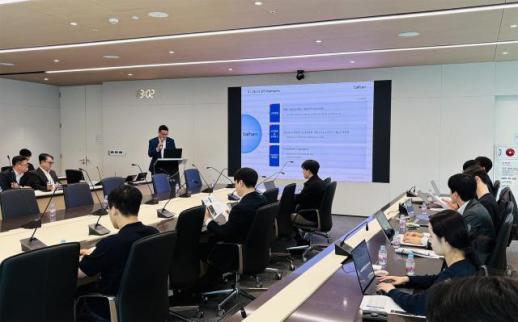 Daehan Cable Posts Record Q1 Results on Strong High-Voltage Cable Demand Daehan Cable said it posted its best-ever quarterly results, citing expanding global investment in power grids and rising demand for extra-high-voltage cables. In a preliminary earnings filing on Tuesday, the company said consolidated first-quarter revenue totaled 1.0834 trillion won ($1.0834 trillion won), with operating profit of 60.4 billion won. Revenue rose 26.6% from a year earlier and operating profit jumped 122.9%. The company said the figures were the highest since it began compiling consolidated quarterly results under Korean International Financial Reporting Standards in 2010. It also marked a second straight quarter with revenue above 1 trillion won, following 1.0090 trillion won in the fourth quarter of last year. Daehan Cable said higher revenue from extra-high-voltage projects in key overseas markets, including the United States and Singapore, led the improvement. It cited rapidly growing global demand for power infrastructure as AI use expands and data centers increase. Profitability also improved. The first-quarter operating margin was 5.6%, up 2.84 percentage points from the five-year average of 2.76%. Orders continued to rise. New orders in the first quarter totaled 734.0 billion won, and the order backlog stood at 3.8273 trillion won at the end of the quarter. The company said the backlog was a record and more than 3.5 times larger than at the end of 2021, shortly after it joined Hoban Group. Daehan Cable also held an investor relations briefing for institutional investors and analysts, highlighting its order win for an extra-high-voltage submarine cable project for a solar power development on Bigeumdo Island in Sinan, and its response status for the "West Coast Energy Expressway" project. The company said it plans to step up efforts in related markets based on its competitiveness in submarine cables and HVDC cables. Its financial structure improved as well. The debt-to-equity ratio fell to 117.2% in the first quarter from 266% in 2021, and the current ratio was 143.7%. A company official said the results reflected recognition in global markets for its technology and quality competitiveness, adding that Daehan Cable will continue strengthening competitiveness in strategic products such as extra-high-voltage grids, submarine cables and HVDC cables.* This article has been translated by AI. 2026-04-29 15:35:12
 -
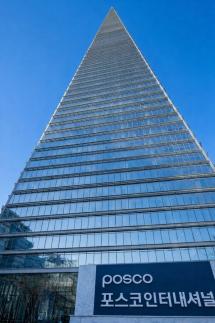 POSCO International to Work With Hana Financial, Dunamu on Blockchain Remittances POSCO International said it will work with Hana Financial Group and blockchain firm Dunamu on a blockchain-based global remittance business. The company said the three parties signed a memorandum of understanding in Seoul on the 29th at Hana Financial Group’s headquarters to cooperate on blockchain-based overseas remittances and intercompany fund transfers. Attendees included POSCO International President Lee Kye-in, Hana Financial Group Vice Chairman Lee Eun-hyung and Dunamu CEO Oh Kyung-seok, the company said. Under the agreement, the companies will cooperate on blockchain-based remittances, build financial infrastructure to improve global cash-management efficiency, and explore digital finance business opportunities. The companies said traditional remittances routed through the SWIFT network typically process payment instructions and settlement separately, which can lead to delays and higher costs. The partnership aims to link instructions and settlement in real time using blockchain technology to improve speed, transaction transparency and cost efficiency. POSCO International said it carries out about 40,000 overseas remittances a year through its network in 51 countries. It plans to apply blockchain to real cash flows generated in global trade transactions, verify effectiveness and expand use in stages. Hana Financial Group and Dunamu previously conducted a proof of concept for blockchain-based remittance technology and confirmed that sensitive information, including transaction details, could be transmitted securely on Dunamu’s in-house blockchain platform, the GIWA chain. The new cooperation moves that work into an environment involving actual fund transfers. The three companies said they will also push to build a blockchain-based real-time remittance cooperation model within the year. POSCO International will lead application to real global trade transactions; Hana Financial Group will handle foreign-exchange operations and functions such as remittance, settlement and payments; and Dunamu will provide technical infrastructure based on the GIWA chain and support operation of blockchain transaction records. Lee of POSCO International said the company had built “a foundation for a mid- to long-term partnership” with leading domestic firms in digital finance and digital assets, adding that it would expand its role in the digital finance ecosystem through the three-way cooperation. Lee Eun-hyung of Hana Financial Group called the partnership “an important turning point” in linking digital assets, industry and finance, and said commercialization would deliver new value to participants across the industrial ecosystem. Oh of Dunamu said he hopes the GIWA chain’s technology will help build a more efficient and transparent on-chain financial environment, adding that the company will provide technical support for future changes in finance driven by blockchain. POSCO International also noted it recently issued about 140 billion won in blockchain-based foreign-currency digital bonds with HSBC, describing it as the first such issuance by a nonfinancial company in South Korea. It said it has been expanding digital transformation in funding and payments, including by introducing a blockchain-based global payment system in cooperation with JPMorgan Chase last year.* This article has been translated by AI. 2026-04-29 14:06:18
 -
 Samsung’s SSAFY Program Highlights Career Shifts, Faster Workflows and a Tokyo Startup Samsung Electronics’ youth software training program, SSAFY (Samsung Youth SW·AI Academy), is being cited as more than a job-prep course, with graduates describing it as a turning point that led to career changes, overseas entrepreneurship and jobs at Samsung affiliates. Samsung said April 29 it published its first collection of essays from SSAFY graduates, titled ‘In the Era of the AI Great Transformation, the Start of Junior Talent: SSAFY.’ The company held an essay contest for about 6,000 people, including graduates from the program’s first through eighth cohorts and their families, and compiled selected entries into a book. The collection includes accounts of participants who became software and AI talent despite barriers such as nontechnical backgrounds, age and personal circumstances. Heo Ye-ji, a cohort 8 graduate who previously worked as a marketer at a large company, said she applied on her last eligible chance at age 29, switched to software development and is now preparing to expand overseas. “SSAFY is not just a place that teaches skills; it proved the potential inside me,” she said. Kim Jeong-hwan, a cohort 1 graduate, said he used algorithms learned at SSAFY to cut a customer information processing task at work from 20 minutes to about 20 seconds, and later founded an IT company in Tokyo. Kim Beom-seok, a cohort 8 graduate, joined Samsung SDS after completing SSAFY and earned 16 certifications, including an advanced cloud credential that is rare in South Korea. Samsung said SSAFY has helped young people find new direction beyond employment support. Since launching in 2018, the program has produced 10,125 graduates, and 8,566 have found jobs, for an employment rate of about 85%. A Samsung official said the challenges and growth described in the essays show the program’s “true value,” adding the company will continue support so more young people can develop into software and AI talent.* This article has been translated by AI. 2026-04-29 12:10:19
 -
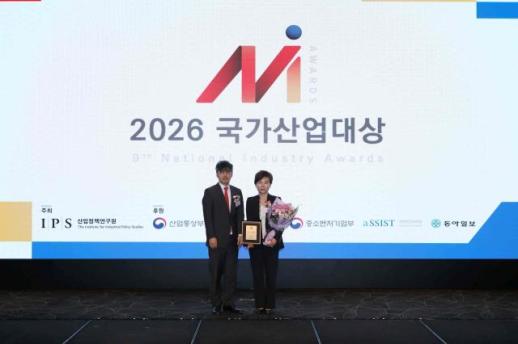 KOTRA Tops Korea’s Shared Growth Ratings for Fifth Straight Year The Korea Trade-Investment Promotion Agency, or KOTRA, said it earned the top grade for the fifth consecutive year in the government’s 2025 public-agency shared-growth evaluation, citing its cooperation with small businesses and regional economic players. KOTRA said the results, announced on the 27th, gave it an “excellent” rating every year since 2021. It said it posted its highest score to date and ranked No. 1 among entrusted-execution quasi-government agencies. The evaluation, aligned with the government’s “growth for all” policy direction, assessed public agencies’ cooperation with small and midsize enterprises and their contributions to regional economies. KOTRA said it received strong marks across areas including market development, technology and ESG support, and building cooperation networks between large companies and smaller firms. It highlighted expanded use of a shared-payment system and a delivery-price linkage system, wider adoption of performance-sharing programs, and export-channel support for companies in areas facing population decline. KOTRA said the evaluation recognized these efforts as a structural cooperation model that helps small businesses, regional firms and social-economy enterprises grow together. KOTRA said it also won the shared-growth category at the “2026 National Industry Awards” and received a “SME Policy Innovation Award” this month. KOTRA President Kang Kyung-sung said the five straight top ratings and related awards reflect the agency’s work with social-economy enterprises and regional companies. He said KOTRA will continue to support balanced regional development and build a sustainable economic ecosystem as a global export-support platform.* This article has been translated by AI. 2026-04-29 10:10:21
 -
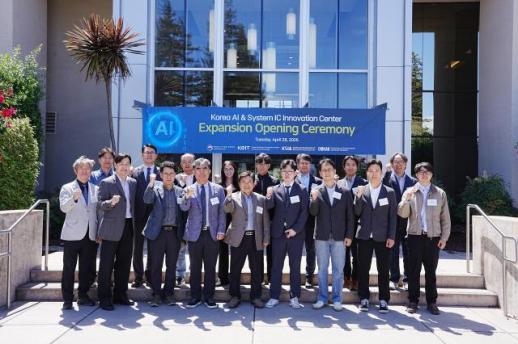 Korea Expands Silicon Valley AI Chip Innovation Center to Support Fabless Firms The Korea Semiconductor Industry Association has doubled the size of its Korea-U.S. AI Semiconductor Innovation Center in Silicon Valley, stepping up support for South Korean fabless chipmakers seeking to expand in the U.S. market. The group said the center will further serve as a local hub, offering on-the-ground testing and verification and helping connect companies with customers as the AI chip market grows and global supply chains are reshaped. The association said it held an opening ceremony for the expanded center on April 28 local time in Silicon Valley. The center is operated with support from South Korea’s Ministry of Trade, Industry and Energy and the Korea Institute for Advancement of Technology. Founded in September 2024, the center has served as a base for South Korean system semiconductor companies entering the U.S., in a region packed with global big tech and fabless firms. It launched with five resident companies and 20 member companies; after the expansion, those totals rose to 10 and 40, respectively. Resident and member companies posted more than $36 million in U.S. sales last year, according to the association. Industry officials have said the results show the center is playing a practical role in helping South Korean AI and system semiconductor firms enter the U.S. market. Among the resident companies, Sapien Semiconductor signed a supply contract for display driver chips for smart glasses, and SemiFive won a project to develop a fully homomorphic encryption, or FHE, accelerator, the association said. The expansion also strengthens on-site support facilities, including a test lab, meeting rooms and networking space. QRT, a company specializing in reliability testing, will participate in operating the center’s test lab, creating a one-stop setup that runs from reliability verification to links with local customer networks. The center is also working to connect global AI companies with South Korean fabless firms. The day after the ceremony, it plans to invite U.S. AI cloud company TensorWave for one-on-one business consultations with South Korean system semiconductor companies including Mobilint and HyperAccel. The association said it plans to further expand programs that match companies with local demand, strengthen testing and verification support, and provide tailored assistance. Kim Jeong-hoe, vice chairman of the Korea Semiconductor Industry Association, said, “We expect the expansion of the center will further accelerate South Korean system semiconductor companies’ entry into the U.S. market.” He added, “To respond to a rapidly changing market environment centered on AI, continued policy support from the government is important.” 2026-04-29 09:36:51
 -
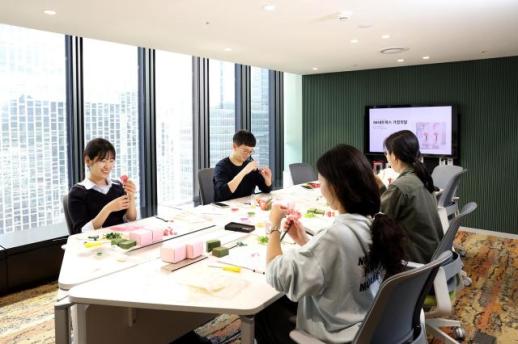 SK Networks Expands Hands-On Programs, Executive Forums to Strengthen Workplace Culture SK Networks is expanding hands-on employee programs and executive communication events as it pushes to build what it calls a company that grows together. The company said the effort goes beyond benefits, aiming to strengthen interaction and collaboration among employees through workplace culture. The company said it recently held a “carnation candle-making” event ahead of Family Month and Parents’ Day, allowing employees to create gifts for their parents. Earlier, during the Lunar New Year holiday period, it ran an “icing cookie class” where employees decorated cookies as a creative break from work. SK Networks said it continues to offer experience-based programs that support work-life balance, including a spring “Cheonggyecheon running class” and a “personal tea blending class.” The company said the activities are intended to do more than provide hobbies, helping employees communicate more naturally and build a collaborative culture. One employee who joined the icing cookie class said it was “a time to put down work stress for a while and recharge creative energy,” adding, “I hope there will be more programs like this where we can communicate comfortably with colleagues.” The company is also strengthening forums that bring management and employees together. SK Networks said it runs “SKMS Day” on the third Friday of every month, including a “Connect Time” session in which the CEO and other executives share the company’s status and direction. Connect Time includes team introductions, presentations on best practices in AI and digital transformation, an SKMS quiz and lectures by outside speakers, the company said. It is held both online and offline so all employees can participate, and it also serves as a platform where employee feedback can be reflected in management, SK Networks said. The company said interest and participation have risen this year as it has expanded content on strong AX (AI transformation) cases and practical experience sharing. SK Networks said it plans to further broaden field-focused communication to strengthen execution and organizational cohesion. “Communication between management and employees is key to strengthening execution,” a SK Networks official said. “As an AI-centered business holding company, we will continue to expand sincere communication programs to build a foundation for growth.”* This article has been translated by AI. 2026-04-29 09:28:45
 -
 Epson Korea Expands Total Labeling Solutions From Home Use to Industrial Safety Epson Korea’s dedicated label-printer brand, “Namer,” launched late last year, is gaining rapid traction about four months after its debut, reshaping the home labeler market, industry officials said. The product is being used not only for organizing but also for personalizing diaries and other lifestyle uses. According to the industry on April 28, Namer is built around the concept, “Build my world with my own name,” and is positioned as a platform for expressing personal taste rather than a basic label-printing tool. The company said the approach reflects a consumer trend that treats organizing as a hobby tied to improving one’s personal space. Epson Korea has worked with popular character intellectual property, including Disney and Sanrio, drawing interest from younger consumers and homemakers. Through its brand webzine, “Namer Magazine,” it also shares labeling trends and practical ideas, building an archive so users can enjoy labels in a wider range of styles. The company is also expanding into business-to-business demand, citing growing needs for identification and safety in construction and manufacturing sites. It recently partnered with global power-tool brand Milwaukee to introduce a professional package called “Precise Power,” combining power tools with a durable labeling solution to help workers manage materials and equipment systematically. Growth is also evident in distribution and logistics, where on-demand printing is used for product information labels, price tags, shipping invoices and receipts. Epson Korea said printing as needed can reduce the burden of holding preprinted inventory and allow faster responses to changing work requirements. A company official said label printers have become tools for self-expression in daily life and “a core solution” for protecting efficiency and safety in industrial settings. The official said Epson Korea will continue brand collaborations so labeling technology can create new value connecting personal life and business workplaces. 2026-04-29 05:03:17