
Journalist

Jo Seung-jun
critic@ajunews.com
-
 Korean Artist Park Yu-ra Wins Germany’s Ars Viva Prize Korean artist Park Yu-ra, 35, has won Germany’s young artist award, the ars viva Prize. The Kulturkreis der deutschen Wirtschaft, a cultural association backed by German business, said on the 8th that it selected Park, along with Herman Singh Luchiman, 31, and Luciano Pecovitz, 27, as winners of the 2027 ars viva Prize. Judges said Park shows “a keen sensitivity to how sound exists in the world and shapes environments,” adding that her work explores how acoustic structures affect the relationship between space and people. Park studied at the Kunstakademie Düsseldorf and the Academy of Media Arts Cologne. She now works between Düsseldorf and Seoul, presenting site-based pieces that combine audio with sculpture, video and installation. Established in 1953, the ars viva Prize is awarded to visual artists age 35 or younger who live in Germany. Past recipients include Rosemarie Trockel, Candida Höfer and Wolfgang Tillmans.* This article has been translated by AI. 2026-03-08 21:30:15
 -
 Kim Yun-ji Wins First Winter Paralympic Gold by a South Korean Woman South Korean Paralympic prospect Kim Yun-ji, 19, made history by winning the first Winter Paralympic gold medal by a South Korean woman. Kim won the women’s sitting biathlon sprint 12.5-kilometer race at the 2026 Milan-Cortina d’Ampezzo Winter Paralympics on Saturday (Korea time) at the Tesero Cross-Country Stadium in Italy. She finished in 38 minutes, 00.1 seconds, beating Germany’s Anja Wicker to the line. The gold was the first by a South Korean woman in an individual event in Winter Paralympic history. It was also South Korea’s first Winter Paralympic gold in eight years, since Shin Eui-hyun won in cross-country skiing at the 2018 Pyeongchang Games. The medal was South Korea’s first gold at an overseas Winter Paralympics.* This article has been translated by AI. 2026-03-08 19:12:00
 -
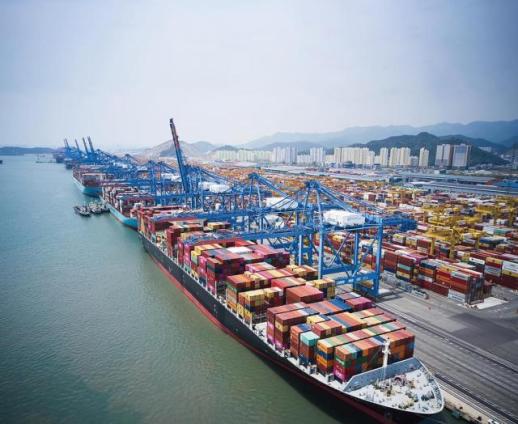 Middle East crisis deepens divide between South Korean industries SEOUL, March 6 (AJP) - A triple whammy of high oil prices, a weakening Korean won and rising raw-material costs is casting darkening clouds across South Korean industries following U.S.‑led airstrikes on Iran, as markets and companies grapple with the fallout from the escalating Middle East conflict. Energy-intensive sectors are seeing production costs soar due to rising oil and petroleum prices, with traditional manufacturing sectors including petrochemicals and steel facing the heaviest pressure as costs climb and demand weakens, according to industry insiders. As of early this week, international oil prices briefly surged to over US$80 a barrel. For a heavily export-driven country like South Korea, which depends on imports for more than 90 percent of its energy, higher oil prices translate directly into increased manufacturing costs. The South Korean currency has also been fluctuating, trading near 1,500 won against the greenback, further increasing the cost of importing raw materials. But not every sector is feeling the pinch. AI-driven industries including semiconductors, defense, and shipbuilding, are benefiting from strong global demand, creating a growing divide between sectors. The rising adoption of AI is giving the semiconductor industry fresh growth momentum. According to a forecast by market research Gartner, the global semiconductor market is expected to grow by about 16 percent this year from a year earlier, fueled by increasing investment in data centers and AI infrastructure, boosting demand for memory chips. Defense and shipbuilding sectors are also benefiting from a shifting global security environment. South Korea's defense exports have held at more than $10 billion in recent years, and shipbuilders have secured roughly three years' worth of orders as demand rises for LNG carriers and eco-friendly vessels. Experts warn that divides between sectors could widen further if the ongoing conflict in the Middle East drags on. "Some South Korean industries have been steadily losing ground to China, and crises like the Iran conflict would further expose their vulnerabilities," said Lee Bu-hyung of the Hyundai Research Institute. He emphasized the need for a long-term strategy to overhaul the country's industrial structure. 2026-03-06 17:54:10
 -
 Samsung showcases AI-powered devices at Mobile World Congress in Barcelona SEOUL, March 3 (AJP) - Samsung Electronics has been showcasing artificial intelligence (AI)-based network services and other technologies at this year's Mobile World Congress (MWC) in Barcelona, Spain, which kicked off on Monday. The electronics giant set up a large booth at the Fira Gran Via, the venue of the annual tech expo, featuring its flagship Galaxy phone series and highlighting its aim to offer customers services beyond mobile devices while expanding into a broader ecosystem. Featuring its latest Galaxy S26 series, Samsung created hands-on zones where visitors could experience its various devices and gadgets designed to enhance customers' everyday tasks and convenience. Samsung also highlighted expanded connectivity across its lineup including the Galaxy Buds4 series for immersive audio and the Galaxy Book6 series, designed for high performance and optimized productivity. It also showcased personalized health experiences powered by AI and highlighted future mobile directions with next-generation devices including the Galaxy XR and Galaxy Z Tri-Fold. The annual MWC runs from March 2 to 5. 2026-03-03 11:41:46
 -
 TrendForce: Nvidia to expand HBM4 supply chain to Samsung, SK hynix, and Micron by Q2 SEOUL, February 13 (AJP) - Nvidia Corp. is expected to diversify its High Bandwidth Memory (HBM) supply chain to include all three major memory chipmakers, as validation for the fourth-generation HBM4 chips enters the final stages ahead of the mass production of its next-generation "Rubin" GPU platform. According to a report by market researcher TrendForce on Friday, Samsung Electronics, SK hynix, and Micron Technology are all projected to complete HBM4 certification within the second quarter of this year. This milestone is likely to reshape Nvidia’s supply structure into a three-company ecosystem. TrendForce assessed that Samsung Electronics is likely to be the first to secure certification, citing the company's product stability. The firm expects Samsung to begin phased mass production following the Q2 certification. SK hynix is projected to follow, maintaining its competitive edge in overall bit supply volume based on its established partnership with Nvidia. Micron is also forecast to complete verification within the quarter, albeit at a slightly slower pace than its competitors. "Demand for GPUs continues to rise as AI infrastructure expands, and HBM4 adoption is likely to accelerate once Rubin enters full-scale mass production," the report noted. The report highlighted that investment has accelerated since late 2025, led by North American cloud service providers (CSPs) competing for leadership in the AI agent market. This has driven a surge in demand for inference-focused AI, supporting a positive outlook for the commercial adoption of the Rubin platform. However, supply-side dynamics are shifting. TrendForce noted that commodity DRAM prices have jumped since the fourth quarter of 2025, narrowing the profitability gap between HBM and standard memory. Consequently, memory manufacturers are recalibrating their capacity allocation to balance revenue with customer requirements. The research firm warned that relying on a single supplier could constrain the initial production ramp-up of the Rubin platform. Given the complexity of HBM4 design and sustained growth in GPU demand, TrendForce concluded that Nvidia will likely require all three chipmakers to ensure supply stability. 2026-02-13 14:41:12
 -
 LG Display accelerates shift to OLED with sale of LCD business in Nanjing, China SEOUL, February 10 (AJP) - LG Display said on Monday it will sell its automotive liquid crystal display (LCD) module business in Nanjing, China, as the company accelerates its transition toward higher-margin organic light-emitting diode (OLED) segment. In a regulatory filing, the company said it signed a contract to sell the business to the Nanjing unit of Toprun Total Solution for 491.5 million yuan ($68 million), with the transaction scheduled to close on July 30. LG Display’s Nanjing subsidiary currently operates both IT and automotive LCD module operations, but only the automotive LCD business will be carved out and transferred under the agreement. Following the sale, automotive LCD module production will shift from in-house manufacturing to outsourced operations to improve efficiency and reduce fixed costs. The move forms part of LG Display’s broader restructuring aimed at strengthening a business portfolio centered on OLED displays, which command higher margins and are increasingly used in premium televisions, mobile devices and automotive applications. The company said streamlining LCD operations would allow more flexible production aligned with customer demand and market conditions while easing cost pressures and improving competitiveness. LG Display has been steadily exiting or downsizing LCD operations as it pivots to OLED. Last April, the company completed the sale of its Guangzhou LCD plant in China. An LG Display official described the latest transfer as a strategic move to concentrate resources on high value-added technologies. * This article, published by Aju Business Daily, was translated by AI and edited by AJP. 2026-02-10 09:42:25
 -
 Memory price surge spreads from DRAM to NAND, analysts say SEOUL, February 03 (AJP) - Memory chip prices are expected to continue rising in the first quarter, with momentum that began in DRAM now spreading to the NAND flash market as supply struggles to keep pace with demand, according to industry analyses. Counterpoint Research forecasts NAND flash prices will rise more than 40 percent quarter-on-quarter in the January–March period, following sharp gains already seen in DRAM during the fourth quarter amid tight supply conditions. NAND flash, widely used in data storage devices, is benefiting from rapid growth in demand for high-capacity, high-performance enterprise solid-state drives (SSDs) as investment in artificial intelligence data centers accelerates. Production, however, has not kept up, putting upward pressure on prices, the research firm said. Counterpoint cited concentrated demand from server customers as a key driver. As suppliers prioritize SSD shipments for AI servers, availability of NAND products for consumer devices has tightened, leading to price premiums. Average NAND prices per gigabyte are expected to climb about 40 percent, while lower-capacity 128GB products used in PCs have recently traded at premiums of roughly 50 percent, the report said. Supply constraints have also been exacerbated by chipmakers focusing on high-bandwidth memory (HBM) and other higher-margin DRAM products to meet AI-related demand. Samsung Electronics, SK hynix and Micron Technology are allocating more resources to DRAM production, leaving limited capacity expansion for NAND. TrendForce said NAND orders in the first quarter significantly exceed suppliers’ production capacity, while manufacturers continue to redirect some production lines toward DRAM to capitalize on stronger profitability. “The tight NAND supply situation will not be easy to resolve,” the research firm said, adding that supply shortages could persist for the next two to three years. Demand from North American cloud service providers is also pushing prices higher, with enterprise SSD contract prices projected to rise 53 percent to 58 percent in the first quarter from the previous quarter. Strength in DRAM pricing is likewise expected to continue. TrendForce recently raised its forecast for quarter-on-quarter increases in commodity DRAM contract prices to 90 percent to 95 percent, up from its earlier estimate of 55 percent to 60 percent, reflecting ongoing supply tightness and strong AI-related demand. * This article, published by Aju Business Daily, was translated by AI and edited by AJP. 2026-02-03 15:39:11
 -
 POSCO International posts record operating profit in 2025 SEOUL, January 29 (AJP) - POSCO International said on Thursday that its consolidated operating profit rose 4.3 percent in 2025 from a year earlier to a record 1.17 trillion won, supported by stronger results from its energy and food businesses. Revenue edged up to 32.37 trillion won, while net profit climbed 26.5 percent to 636.8 billion won, the company said in a regulatory filing. The company has reported operating profit of more than 1 trillion won for three consecutive years since its 2023 merger with POSCO Energy. Operating profit from the energy segment totaled 623 billion won, accounting for about 54 percent of the group’s total. The increase reflected higher sales from the Myanmar gas field and expanded production at Australia’s Senex gas field, the company said. In the food segment, revenue surged 58 percent to 357 billion won, driven by the acquisition of a palm oil company and firm palm oil prices. Operating profit in the segment rose 23 percent to 101 billion won. In the materials business, the drive motor core unit returned to profit, posting operating profit of 19.0 billion won after improving its product mix and cutting costs. Operating profit from power generation, however, fell 33 percent to 114 billion won, weighed down by lower wholesale electricity prices and reduced utilization rates. POSCO International said its net debt ratio stood at 62.8 percent at the end of 2025, down 3 percentage points from a year earlier. Total assets rose by about 1.4 trillion won to 18.75 trillion won. * This article, published by Aju Business Daily, was translated by AI and edited by AJP. 2026-01-29 09:57:36
 -
 LS Electric Deploys Smart Outage Management System for Distributed Power Grids LS Electric said it has commercialized a smart distribution solution designed to help manage distributed power grids more reliably, stepping up its push into the fast-growing market. The company said on Jan. 29 that it recently completed installation of its self-developed Outage Management System (OMS) at a district electricity business office in the Hakha district of Yuseong-gu, Daejeon, operated by CNCITY Energy. The OMS digitizes the status and condition of power equipment to support distribution operations. LS Electric said it is the first case in which a privately developed distribution-operations solution has been commercialized at a district electricity business site. The company described OMS as an intelligent system that helps operators quickly identify affected areas and equipment during outages. Beyond outage response, LS Electric said it is expected to enable integrated, digital management of equipment status and history across the distribution network, supporting equipment life prediction and maintenance optimization. LS Electric said it plans to work with CNCITY Energy to accelerate technology development for next-generation distributed distribution networks, citing the reliability demonstrated through the OMS project. An LS Electric official said OMS is drawing attention as an essential solution not only for district electricity business offices but also for large factories and industrial infrastructure. The official said the system has already received positive reviews at multiple industrial sites and will serve as a core solution for AI-driven transformation of power systems while helping improve distributed-grid stability.* This article has been translated by AI. 2026-01-29 08:48:19
 -
 Samsung Electronics posts record Q4 revenue of 93.8 trillion won, operating profit 20.1 trillion Samsung Electronics said a boom in its memory business drove record quarterly results in the fourth quarter of 2025, with consolidated revenue of 93.8 trillion won and operating profit of 20.1 trillion won. It said the quarter marked the first time a South Korean company has posted more than 20 trillion won in operating profit in a single quarter. In an earnings filing on Wednesday, Samsung reported fourth-quarter consolidated revenue of 93.8374 trillion won and operating profit of 20.0737 trillion won. Revenue rose 23.82% from a year earlier, while operating profit jumped 209.17%. The core DS (Device Solutions) division posted quarterly revenue of 44 trillion won and operating profit of 16.4 trillion won, up 46.2% and 465%, respectively, from a year earlier. Samsung cited expanded sales of high-value memory such as high-bandwidth memory, or HBM, and rising memory prices, which it said delivered record quarterly revenue and operating profit for the division. Samsung said it responded to stronger demand for commodity DRAM and ramped up HBM supply, boosting profitability. Sales volumes also rose for higher-value products including server DDR5 and enterprise SSDs. System LSI results fell from the previous quarter due to seasonal demand shifts, but image sensor sales increased for new 200-megapixel and “big pixel” 50-megapixel products. Foundry revenue rose as Samsung moved to full-scale mass production of first-generation 2-nanometer products and saw strong demand from customers in the United States and China, though profitability gains were limited by provisions-related costs. The DX (Device eXperience) division reported revenue of 44.3 trillion won and operating profit of 1.3 trillion won. Revenue fell 8% from the previous quarter as the impact of new smartphone launches faded and competition intensified, but companywide results improved as DS revenue rose 33% from the prior quarter. Harman, the automotive electronics unit, posted revenue of 4.6 trillion won and operating profit of 300 billion won. Samsung Display reported revenue of 9.5 trillion won and operating profit of 2 trillion won, maintaining solid performance. Samsung said it continued heavy investment to strengthen future competitiveness. Research and development spending totaled 10.9 trillion won in the fourth quarter, and reached a record 37.7 trillion won for full-year 2025. Facility investment was 20.4 trillion won in the quarter, including 19 trillion won for DS and 700 billion won for displays. Full-year 2025 facility investment totaled 52.7 trillion won, including 47.5 trillion won for DS and 2.8 trillion won for displays. Samsung said DS will focus spending on shifting to advanced processes and upgrading existing lines to meet demand for high-value products, while the display business will invest in upgrades and performance improvements to existing lines. Looking ahead, Samsung said it expects heightened geopolitical uncertainty, including global tariffs, even as demand remains strong for next-generation semiconductors. Despite ongoing trade risks, it said the DS division will seek leadership in the AI semiconductor market by leveraging its “one-stop solution” capabilities spanning logic, memory, foundry and packaging. In DS, Samsung said it will expand supply of high-performance products as the HBM4 market ramps up and server DRAM moves toward higher capacities. In NAND, it plans to increase sales of high-performance TLC-based SSDs to meet rising demand for AI-focused KV SSDs. The foundry business aims for double-digit revenue growth and improved profit and loss centered on advanced processes, and plans in the second half to strengthen technology competitiveness through mass production of second-generation 2-nanometer products and optimization of its 4-nanometer process. The DX division said it will strengthen core competitiveness by diversifying its supply chain and optimizing operations, while expanding its AI-enabled flagship lineup and offering more integrated AI experiences. Harman said it will work to improve profitability by expanding automotive order wins and increasing sales of premium audio products. The display business said it will maintain leadership in small and mid-sized panels for smartphones and expand sales of large panels focused on premium TVs and monitors. 2026-01-29 08:18:00