
Journalist

Arthur I. Cyr
davekim0807@ajupress.com
-
 Hyundai Motor vows aggressive capex, share reward program; stock up 7% SEOUL, January 29 (AJP) - Hyundai Motor Company said Thursday it will spend 17.8 trillion won ($12.47 billion) throughout 2026—more than it earned last year—on new-growth areas including robotics, autonomous driving and hydrogen technology, front-loading nearly a quarter of its five-year investment plan into a single year. The South Korean automaker announced a 77.3 trillion won investment plan for 2026–2030 at its CEO Investor Day in New York last September. The 2026 outlay alone accounts for about 23 percent of the total, signaling an aggressive push to gain ground in emerging mobility sectors. "We plan to concentrate investment in 2026 and 2027," said Lee Seung-jo, Hyundai's chief financial officer, during a conference call following the release of its fourth-quarter and full-year 2025 earnings. "Spending will peak during this period, though the overall investment envelope remains unchanged." The 2026 investment will comprise 9 trillion won in capital expenditure, 7.4 trillion won in research and development, and 1.4 trillion won in strategic investments—up 20.4 percent from 14.5 trillion won spent in 2025. Hyundai has been pivoting toward future-mobility businesses as it grapples with slowing electric-vehicle demand and intensifying global competition. The company is leaning on hybrid vehicles as a bridge, with hybrids accounting for 16.3 percent of its global sales mix. Hybrid and SUV models powered Hyundai's first-ever breach of the 1-million-vehicle mark in North America last year. To bolster its artificial intelligence capabilities, Hyundai struck a deal with Nvidia to deploy 50,000 graphics processing units, with installations set to begin in the second half of this year. Lee said the company is "currently finalizing plans" for the GPUs, adding that "once specifics are set, we will communicate them to the market." On robotics, Lee said proof-of-concept testing of Boston Dynamics' Atlas humanoid robot at Hyundai's Metaplant facilities in Georgia would conclude in the second half of this year. The company unveiled a production-ready version of Atlas at CES 2026 earlier this month and plans to deploy robot fleets at the Georgia plant by 2028 for tasks such as parts sequencing and assembly. Hyundai also said its software-defined vehicle could roll out as early as the second half of 2026. The platform features a high-performance vehicle computer architecture designed to enable faster autonomous-driving functions and over-the-air software updates. On shareholder returns, Hyundai said it will begin buying back 400.7 billion won worth of its own shares starting Friday over the next three months, with plans to cancel them within the year—a shareholder-friendly move after the stock nearly tripled from its April low. The company reiterated its commitment to a total shareholder return of more than 35 percent through 2027, including a minimum dividend of 10,000 won per share and a quarterly dividend of 2,500 won. Hyundai projected wholesale sales of 4.158 million vehicles in 2026, up 0.5 percent from the previous year, with revenue growth of 1 to 2 percent. It guided for an operating profit margin of 6.3 to 7.3 percent, citing an improved vehicle mix and cost efficiencies as offsets to persistent macroeconomic uncertainty. "We will continue to pursue future investments," Lee said. "We believe these efforts are now being reflected in our share price." Shares of Hyundai Motor closed 7.21 percent higher at 528,000 won on Thursday, as investors welcomed the company's front-loaded spending on AI-driven growth initiatives. *AJP Kim Yeon-jae contributed to this story. 2026-01-29 16:17:01
 -
 Hyundai Motor bears nearly 40% hit in Q4 income and 20% for 2025 on US tariffs SEOUL, January 29 (AJP) -South Korea's largest automaker Hyundai Motor suffered nearly a 40 percent drop in operating profit in the quarter ended December and about 20 percent for full-year 2025 due to higher tariffs under Donald Trump presidency in its largest export market despite record sales. According to its earnings release on Thursday, consolidated operating profit reached 1.7 trillion won ($1.2 billion), down 33.2 percent from the previous quarter and 40 percent from a year earlier. Revenue came to 46.84 trillion won, up 0.3 percent on quarter and 0.5 percent on year. For full-year 2025, operating profit plunged 19.5 percent on year to 11.47 trillion won, while sales climbed 6.3 percent to a record 186.25 trillion won, placing the operating margin at 6.2 percent. Hyundai’s results followed a similar pattern to those of its sister company Kia, which reported roughly a 30 percent drop in operating profit for both the fourth quarter and the full year. The declines came as Korean automakers absorbed higher 25 percent U.S. tariffs, compared with 15 percent imposed on European and Japanese competitors, until a trade deal lowered the rate to the same level retroactively in November. Hyundai Motor estimated tariff-related losses of around 4.1 trillion won from U.S. measures alone, with combined losses for Hyundai and Kia totaling about 7.2 trillion won. Shares of Hyundai Motor rose 4.7 percent to 515,500 won as of 2:40 p.m., as investors appeared more focused on the automaker’s longer-term robotics roadmap than its near-term earnings performance. Global sales totaled 4.14 million vehicles for the year. Hyundai said it plans to bolster profitability in 2026 through cost efficiencies, an expanded lineup of high-margin trims, and increased local production aimed at reducing tariff exposure. 2026-01-29 14:11:56
 -
 Korean batteries built for cars are finding new lives — in orbit and inside humanoid robots SEOUL, January 28 (AJP) - Korean battery makers are broadening their footprint beyond electric vehicles, expanding into space and humanoid robotics as global EV demand cools and major supply contracts unravel. The industry has slowed sharply in line with stalled EV sales. SK Innovation said Wednesday its battery unit SK On recorded fourth-quarter revenue of 1.46 trillion won ($1.03 billion) with an operating loss of 441.4 billion won. For 2025, SK On posted revenue of 6.98 trillion won and an operating loss of 931.9 billion won. LG Energy Solution on the previous day reported fourth-quarter revenue of 6.14 trillion won, up 7.7 percent from the previous quarter, but swung to an operating loss of 122 billion won. For the full year, the company posted operating profit of 1.35 trillion won, up 134 percent, though revenue fell 7.6 percent to 23.67 trillion won. The downturn has been exacerbated by a string of canceled EV battery deals. By the end of last year, scrapped contracts totaled more than 17 trillion won ($11.86 billion). Ford Motor in December abandoned a 9.6 trillion won battery supply agreement with LG Energy Solution, while cathode materials maker L&F saw its Tesla contract shrink from 3.8 trillion won to just 9.73 million won — effectively a cancellation. With the EV pipeline thinning, Korean battery makers are increasingly looking beyond automobiles — and upward. The global space battery market is projected to grow from $3.99 billion in 2025 to $5.61 billion by 2030, a compound annual growth rate of about 7 percent, according to The Business Research Company. Growth is being driven by a surge in satellite launches: more than 4,500 spacecraft reached orbit last year, roughly 60 percent more than the approximately 2,800 launches recorded in 2024, as private operators such as SpaceX and Blue Origin race to build satellite constellations. Space-grade batteries must endure some of the harshest operating conditions imaginable. Cells face temperature swings from minus 180 to 150 degrees Celsius, violent launch vibrations, vacuum pressure, intense solar radiation and decades of uninterrupted operation — with no possibility of replacement once deployed. LG Energy Solution has supplied lithium-ion cells for NASA spacesuits since 2016 and began work in 2024 on batteries for SpaceX spacecraft. Last November, it partnered with U.S. startup South 8 Technologies to develop batteries capable of operating in cryogenic conditions for lunar rovers and unmanned exploration vehicles. "The liquefied gas electrolyte technology fundamentally addresses long-standing issues of battery performance degradation in extreme cold environments," said Kim Je-young, chief technology officer of LG Energy Solution. "We anticipate this technology will unlock new possibilities for products and applications, including space." Samsung SDI has established a technical cooperation framework with CAMX Power, which holds a satellite battery supply contract with the U.S. Space Force. SK On is preparing for space-grade applications through its solid-state battery pilot plant and collaboration with U.S. developer Solid Power. Humanoid opportunity Humanoid robotics represents an even larger potential market. Morgan Stanley estimates the sector could exceed $5 trillion by 2040. Although batteries typically account for only about 0.5 percent of a humanoid robot's total cost, that still translates into a roughly $25 billion opportunity, excluding replacement batteries, maintenance and energy services. "Elon Musk has projected that humanoid robots could eventually reach annual sales of 1 billion units," said Kang Dong-jin, an analyst at Hyundai Motor Securities. "Assuming around 10 kilowatt-hours of battery usage per unit including spares, that implies a 10 terawatt-hour market. Battery makers can also pursue leasing, recycling and other service-based business models." With CES 2026 highlighting humanoids as key embodiments of physical AI, Korean battery firms have stepped up efforts to secure early positions. LG Energy Solution has reportedly received battery supply requests from multiple Chinese humanoid robot developers and plans to begin mass production this year. Tesla, which is developing its Optimus humanoid series, is expected to receive tens of thousands of ultra-high-nickel battery cells — with nickel content exceeding 95 percent — from LG. Samsung SDI is in supply discussions with Boston Dynamics and has partnered with cathode producer Ecopro BM, electrolyte supplier Soulbrain and separator maker W-Scope for humanoid-focused battery development. Technical requirements favor Korean manufacturers. Unlike EVs, which can accommodate large battery packs across vehicle floors, humanoids have only about 5 percent of that space — typically confined to the chest and back — making energy density paramount. Chinese battery giants CATL and BYD dominate the global EV market with a combined share of roughly 55 percent, built largely on cost-efficient lithium iron phosphate (LFP) technology. But LFP cells lack the energy density required for sustained humanoid operation; industry sources say robots powered by LFP often struggle to run for even one hour. As a result, even Chinese humanoid developers are opting for higher-density alternatives. Shenzhen-based Engine AI uses solid-state batteries in some versions of its T800 robot, while Unitree Robotics deploys lithium-ion polymer batteries instead of LFP to reduce weight and improve safety. "Humanoids operate in close proximity to humans, and any malfunction could cause serious accidents, particularly in factories," Kang said. "Safety is the top priority. Since batteries account for a relatively small share of total robot costs, using high-spec batteries is actually more economical and reduces concerns over degradation." Korean battery makers have spent years refining high-nickel ternary chemistries. L&F became the first company to mass-produce ultra-high-nickel cathode materials in the second half of 2025, with Ecopro BM preparing to follow. CATL and BYD, by contrast, remain focused on LFP and mid-nickel chemistries with nickel content of about 50 to 70 percent. Ultra-high-nickel batteries paired with 46-series cylindrical cells are increasingly seen as optimal for humanoid applications, offering energy density more than 30 percent higher than standard ternary cells. U.S. robotics firms such as Figure AI, Agility Robotics and 1X Technologies are also expected to turn to Korean suppliers. Chinese manufacturers are accelerating efforts to close the gap. CATL invested last year in Beijing-based humanoid developer Galbot and has begun deploying its Xiaomo robot — developed by affiliated startup Spirit AI — on battery production lines in Henan province. In space, CATL and China Aviation Lithium Battery Technology are reportedly developing batteries for domestic satellite programs under the China National Space Administration, according to Coherent Market Insights. Their penetration into Western aerospace supply chains, however, remains limited. 2026-01-28 14:44:44
 -
 Hyundai Mobis posts record annual revenue, profit in 2025 SEOUL, January 28 (AJP) - Hyundai Mobis, South Korea's largest automotive parts maker, reported record annual revenue and operating profit on Wednesday, though quarterly net income declined sharply amid tariff pressures and rising costs. The company posted consolidated revenue of 61.12 trillion won ($42.67 billion) and operating profit of 3.36 trillion won for 2025, up 6.8 percent and 9.2 percent year-on-year respectively, according to a regulatory filing. For the fourth quarter, revenue rose 4.7 percent to 15.4 trillion won, while operating profit slipped 5.6 percent to 930.5 billion won. Pre-tax profit and net profit tumbled 21.6 percent and 39.9 percent respectively compared with the same period a year earlier. The manufacturing division, encompassing module assembly and parts production, posted revenue of 47.8 trillion won for the full year, a 5.9 percent increase. The company attributed the gains to expanded operations at its North American electrification plant and robust demand for electronic components, while pursuing cost efficiency measures to offset tariff burdens. The after-sales parts business generated 13.32 trillion won in revenue, up 10.2 percent, fueled by global demand and favorable exchange rates. On shareholder returns, Hyundai Mobis raised its annual dividend to 6,500 won per share and retired 2.26 million treasury shares, achieving a total shareholder return of 32.8 percent for the year. The company said it would continue expanding global production bases and investing in future mobility, with research and development spending projected to exceed 2 trillion won for the first time this year. 2026-01-28 10:20:41
 -
 The birth of humanoid robots (2): The Tin Man goes to work Editor's Note: This is the second installment in AJP's series on humanoid robotics, examining the anatomy, technologies and economic logic behind one of the most hyped industries of the decade. SEOUL, January 27 (AJP) - A sudden jolt. A shudder. A mechanical doll's waist folds backward halfway, clanking onto the ground. Another teeters from side to side on a soft-soil running track before crashing headfirst, its legs flailing in a motion reminiscent of rigor mortis. Steel Pinocchios were not born overnight. The Defense Advanced Research Projects Agency (DARPA) Robotics Challenge, held from 2012 to 2015, often looked like child's play — engineers cheering on metal constructs of all shapes and sizes as they struggled through tasks that even toddlers might find trivial. Yet none of it was wasted. Every misstep mattered, each failure inching the field closer to semi-autonomous ground robots capable of operating in hazardous environments. "Many participants in the DARPA challenge went on to join Figure AI or help develop Tesla's Optimus humanoid series," said Park Il-woo, project director at the Department of Machinery, Robotics & Equipment at the Korea Planning & Evaluation Institute of Industrial Technology (KEIT). "Even those who failed continued their research, making the challenge a critical milestone in the advancement of bipedal robots." Early models struggled to open doors or walk in a straight line. Today's humanoids are ready to clock in. The Tokyo pioneer The first humanoid to step into the world emerged from Waseda University in Tokyo: WABOT-1. The project began in 1970, when four laboratories within Waseda's School of Science and Engineering joined forces to build an anthropomorphic intelligent robot. In 1973, they unveiled the world's first full-scale humanoid robot capable of quasi-dynamic walking, speaking Japanese, and grasping objects. "The movements of early humanoids were, of course, awkward and crude compared with today's cutting-edge technology, but there is no doubt that this was an unprecedented and innovative challenge," said Atsuo Takanishi, director of Waseda University's Humanoid Robotics Institute, in a university news release. Honda Motor entered the race in 1986, spending a decade developing its E-series experimental models before unveiling P2 in December 1996 — the first self-regulating, two-legged robot capable of autonomous walking. That work culminated in ASIMO, introduced in November 2000. From MIT to the battlefield While Japan led the early race, a different approach was taking shape across the Pacific. In 1992, roboticist Marc Raibert spun off Boston Dynamics from the Massachusetts Institute of Technology. The company first made its name with quadrupeds. BigDog, developed in 2005, was designed as a robotic pack mule for soldiers. The military application proved short-lived — the U.S. Marines deemed it too loud for combat — but the company's mastery of dynamic balance would prove invaluable. Fukushima's wake-up call The March 2011 Tohoku earthquake and tsunami exposed a painful truth. The disaster crippled the Fukushima Daiichi nuclear power plant, triggering meltdowns and radioactive leaks. Robots should have been the solution — radiation made human intervention deadly — but Japan's machines proved inadequate. DARPA responded by launching its most ambitious robotics program to date. The agency selected Boston Dynamics to build the humanoid platform: Atlas. The DARPA Robotics Challenge Finals, held in June 2015 in Pomona, California, became a spectacle of mechanical ambition and frequent failure. Twenty-three teams competed, their humanoids tasked with driving vehicles, opening doors, and climbing stairs. South Korea's Team KAIST emerged victorious with DRC-HUBO, completing all eight tasks in 44 minutes and 28 seconds. Its secret lay in pragmatism: wheels mounted at the knees, allowing the robot to roll rather than walk when speed mattered most. China's rapid ascent While the United States, South Korea, and Japan traded blows in the humanoid arena, China quietly built its own robotics ecosystem. Only one Chinese team participated in the DARPA challenge. Ubtech Robotics, founded in Shenzhen in March 2012, became China's first humanoid robot company to go public when it listed on the Hong Kong Stock Exchange in December 2023. Its Walker series became China's first commercialized life-sized bipedal humanoid robots. By January 2026, Ubtech had produced its 1,000th Walker S2 unit at its Liuzhou factory. Unitree Robotics, established in Hangzhou in 2016, entered the humanoid race in 2023 with the H1 — China's first full-size general-purpose humanoid robot capable of running. In August 2024, Unitree unveiled the G1 humanoid at a starting price of $16,000, sharply undercutting competitors. China now boasts more than 200 humanoid robot manufacturers, according to the China Machinery and Robotics Association. Cross-industry giants such as Xiaomi, XPeng Motors, and BYD have joined specialized startups in a three-pronged development push. From hydraulics to electrons Boston Dynamics continued refining Atlas after the DARPA challenge. The company changed hands several times — acquired by Google in 2013, sold to SoftBank in 2017, and purchased by Hyundai Motor Group for about $880 million in 2021. In April 2024, Boston Dynamics retired its hydraulic Atlas and unveiled a fully electric successor aimed at commercial use. At CES 2026, the company revealed the production version: 1.9 meters tall with a 2.3-meter reach, capable of lifting up to 90 kilograms, featuring 56 degrees of freedom and a four-hour battery life. Hyundai announced plans to produce 30,000 humanoid robots annually by 2028. The race ahead The humanoid industry now stands at an inflection point. What began as academic curiosity in Tokyo laboratories and military experiments in American deserts has evolved into a three-way race among the United States, China, and South Korea — each betting billions that bipedal machines will reshape manufacturing, logistics, and eventually daily life. Hyundai's Atlas, Tesla's Optimus, and XPeng's Iron lead the automakers' push into robotics. Chinese startups such as Unitree and Ubtech are driving costs down at breakneck speed, while legacy players focus on precision and reliability. "In the early days, companies like Toyota and Honda aimed to deploy humanoids in industrial settings, but the programming burden was so immense that practical application remained out of reach," Park said. "Now, with generative AI making it far easier to train robots and teach them new motions, the United States and China — which led those methodological breakthroughs — are pulling ahead." The robots that stumbled and crashed at the DARPA challenge a decade ago are now walking factory floors. The question is no longer whether humanoids will work alongside humans, but how soon — and who will build them. 2026-01-27 14:47:58
 -
 LG CNS' annual profit rises on AI and cloud demand SEOUL, January 27 (AJP) - South Korean IT services firm LG CNS reported an 8.4 percent rise in operating profit for 2025, powered by robust demand for artificial intelligence and cloud computing solutions. The company posted an operating profit of 555.8 billion won ($382.8 million) for the year, up from 512.7 billion won in 2024, according to a regulatory filing on Tuesday. Annual revenue edged up 2.5 percent to 6.13 trillion won, while net profit jumped 21.2 percent to 442.2 billion won. Revenue from AI and cloud services, the company's core growth engines, climbed 7.0 percent year-on-year to 3.59 trillion won. LG CNS said it has secured what it described as an industry-leading number of external clients across finance, manufacturing and public sectors for its AI transformation business. Fourth-quarter operating profit rose 7.9 percent to 216 billion won from a year earlier. Revenue for the October-December period reached 1.94 trillion won, with net profit at 180.6 billion won. The IT services provider has been expanding into agentic AI through its AgenticWorks platform and participating in a consortium led by LG AI Research Institute to develop a homegrown AI foundation model. In the cloud segment, LG CNS is accelerating its push into the global AI data center market, having won its first overseas contract in Indonesia. LG CNS said it plans to strengthen its position in AI and robotics transformation this year, developing specialized AI agents for various industries while pursuing partnerships with global technology firms. The company is also conducting proof-of-concept trials for industrial humanoid robots at about 10 client sites, including logistics centers and factories. 2026-01-27 10:16:09
 -
 S-Oil's annual operating profit tumbles 31.7% on weak petrochemical margins SEOUL, January 26 (AJP) - South Korean refiner S-Oil reported a 31.7 percent plunge in operating profit for 2025, dragged down by mounting losses in its petrochemical division amid a prolonged industry downturn. The company posted an operating profit of 288.2 billion won ($198.8 million) for the year, down from 422.1 billion won in 2024, according to a regulatory filing on Monday. Annual revenue slipped 6.5 percent to 34.25 trillion won as global oil prices softened throughout the year. S-Oil swung to a net profit of 216.9 billion won, reversing the previous year's loss, buoyed by a robust fourth quarter that defied the broader annual decline. The October-December period delivered an operating profit of 424.5 billion won, surging 90.9 percent from a year earlier. The refiner's lubricant business emerged as the sole bright spot, generating 582.1 billion won in operating profit. However, both the refining and petrochemical segments sank into the red, posting operating losses of 157.1 billion won and 136.8 billion won, respectively. Looking ahead, S-Oil projected favorable market conditions for 2026, citing expectations that global demand growth would outpace capacity additions from new refineries and paraxylene plants. The company also anticipates continued support from low crude prices and subdued official selling prices. The refiner's massive Shaheen Project, a crude-to-chemicals complex, has reached 93.1 percent completion as of Jan. 14. S-Oil said it aims to achieve mechanical completion by June and commence commercial operations by December. S-Oil shares traded at 95,600 won on Monday morning, down 3.92 percent from the previous market closure. 2026-01-26 10:04:06
 -
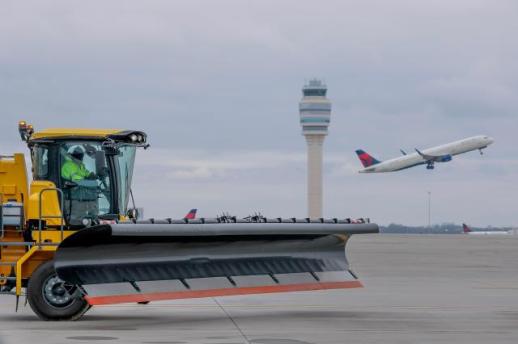 Korean airlines cancel 18 U.S. flights as powerful winter storm batters America SEOUL, January 24 (AJP) - Korean airlines have grounded 18 flights to the United States as a powerful winter storm sweeps across the central and eastern regions of the country, disrupting travel plans for thousands of passengers ahead of the weekend. Korean Air, Asiana Airlines and Air Premia announced the cancellations as of 2:30 p.m. Saturday, with disruptions expected to continue through Jan. 27 as the storm system intensifies. Korean Air bore the brunt of the disruptions, scrapping 14 flights through Monday. The carrier canceled Saturday's round-trip service between Incheon and Dallas, followed by 11 flights on Sunday serving Atlanta, Washington, New York, Boston and Dallas. A New York-to-Incheon flight scheduled for Jan. 26 was also axed. Asiana Airlines suspended two flights on the New York route, while budget carrier Air Premia canceled its round-trip Newark service, bringing the combined toll to 18 grounded flights. The airlines said they are contacting affected passengers and offering schedule changes or full refunds without penalties. However, carriers noted that no additional compensation would be provided as the cancellations stem from a natural disaster with advance notification. The storm's impact extends far beyond Korean carriers. Flight-tracking service FlightAware reported about 3,148 U.S. domestic and international flights were canceled on Saturday, with another 5,068 cancellations already confirmed for Sunday. 2026-01-24 18:24:30
 -
 Washington wants South Korea to take primary responsibility in defense vs North Korea -NDS SEOUL, January 24 (AJP) -The Trump administration has formally signaled a shift in security responsibilities on the Korean Peninsula, stating that South Korea is capable of taking “primary responsibility” for deterring North Korea with more limited U.S. military support. The assessment appears in the unclassified version of the U.S. National Defense Strategy (NDS) released Saturday by the Pentagon, a foundational policy document outlining Washington’s global defense priorities. “With its powerful military, supported by high defense spending, a robust defense industry, and mandatory conscription, South Korea is capable of taking primary responsibility for deterring North Korea with critical but more limited U.S. support,” the document said. “South Korea also has the will to do so, given that it faces a direct and clear threat from North Korea.” The strategy marks one of the clearest official acknowledgments to date that Washington expects Seoul to shoulder a larger share of deterrence on the peninsula, aligning with President Donald Trump’s long-standing call for greater burden-sharing among U.S. allies. The Pentagon said the shift is “consistent with America’s interest in updating U.S. force posture on the Korean Peninsula,” language that analysts say may foreshadow a reassessment of the scale and role of U.S. Forces Korea, though the document stops short of specifying troop reductions. At the same time, the NDS underscores the continued severity of the North Korean threat. The Pentagon assessed that Pyongyang retains the ability to strike targets in South Korea and Japan with nuclear weapons and other weapons of mass destruction, while also posing “a clear and present danger of nuclear attack on the American homeland.” Although much of North Korea’s conventional military equipment is described as aging or poorly maintained, the report warns Seoul must remain vigilant against the risk of invasion, particularly as Pyongyang’s nuclear forces grow in size and sophistication. The Korean Peninsula is explicitly cited as a case where Washington expects an ally to assume “primary responsibility” for regional defense, enabling the United States to reallocate military resources elsewhere. Similar language appears regarding Europe, where the Pentagon argues NATO allies are well positioned to take the lead in conventional defense with reduced U.S. involvement. The new strategy places homeland defense as the Pentagon’s top priority, followed by deterring China in the Indo-Pacific, increasing burden-sharing with allies, and strengthening the U.S. defense industrial base. While the document denies any move toward isolationism, it reflects a sharper focus on U.S. domestic security and the Western Hemisphere than in previous editions. Notably, the NDS provides few operational details — typical for an unclassified version — but sends clear signals to allies about Washington’s expectations under the Trump administration. Compared with the 2022 strategy issued under President Joe Biden, the new document places heavier political emphasis on allied responsibility and explicitly references President Trump throughout. The strategy follows the White House’s release of a new National Security Strategy in December, which also emphasized homeland defense and reduced reliance on forward-deployed forces. 2026-01-24 13:26:01
 -
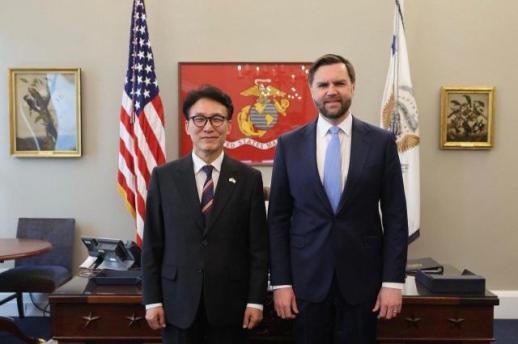 South Korea PM tells US there was no discrimination against Coupang SEOUL, January 24 (AJP) - South Korean Prime Minister Kim Min-seok assured U.S. Vice President J.D. Vance on Friday (local time) that Seoul has not discriminated against e-commerce giant Coupang, pushing back against allegations from American investors that the company faced unfair treatment. The two officials met at the White House for about 50 minutes, exceeding the originally scheduled 40 minutes, as the Coupang dispute emerged as a thorny issue in bilateral relations. Kim's solo visit to Washington marked the first such trip by a South Korean prime minister in 41 years. Kim said Vance expressed understanding of the legal issues involved but requested that both governments manage the situation carefully to prevent misunderstandings. The prime minister agreed to share developments with Washington promptly. The meeting came a day after two U.S. investment firms holding Coupang shares urged the U.S. Trade Representative to take action against South Korea's handling of the company. The investors accused Seoul of discriminatory enforcement following a data breach that affected a significant number of Korean customers. Kim dismissed allegations that he had singled out Coupang for harsh treatment, providing Vance with an English translation of his original remarks to demonstrate they had been quoted out of context. The investors had claimed Kim urged regulators to pursue the company with the same resolve used to "take down the mafia." "No discriminatory treatment was given to any American company," Kim said during a press briefing at the South Korean Embassy in Washington after the meeting. The prime minister also rejected characterizations by Coupang investors that President Lee Jae Myung holds anti-American and pro-China sentiments, expressing confidence that the Trump administration would not accept such claims. Kim said the strength of the alliance has grown beyond being susceptible to lobbying by any single company seeking to distort facts about discrimination that does not exist. The two officials also discussed of North Korea, with Vance asking for Seoul's perspective on how Washington might improve relations with Pyongyang. Kim suggested sending a special envoy to North Korea as one possible approach. Other topics included bilateral shipbuilding cooperation, South Korea's interest in nuclear-powered submarines, and uranium enrichment. Vance acknowledged bureaucratic delays on both sides and agreed to set concrete timelines for implementing summit agreements. Kim said he extended an invitation for Vance to visit South Korea, and the two exchanged direct phone numbers to establish a hotline. President Donald Trump, who had just returned from Davos, was unable to join the meeting but sent his regards to President Lee through Vance. 2026-01-24 11:17:23