
Journalist
Arthur I. Cyr
davekim0807@ajupress.com
-
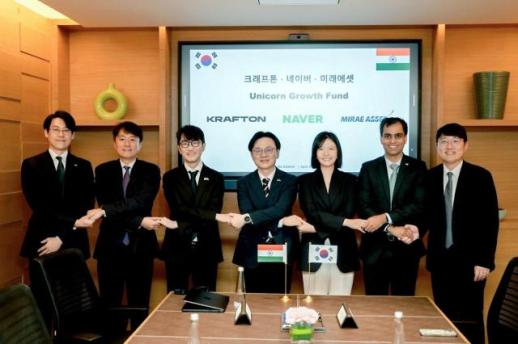 Naver, Krafton, Mirae Asset unveil India-focused tech fund during presidential visit SEOUL, April 21 (AJP) - South Korean internet giant Naver joined forces with gaming company Krafton and financial services firm Mirae Asset to hold a briefing in New Delhi on Tuesday to promote the Unicorn Growth Fund, a jointly established investment vehicle targeting up to 1 trillion won ($681 million) in high-growth technology companies across Asia with India at its core. The briefing was held on the sidelines of President Lee Jae Myung's three-day state visit to India, the first by a South Korean leader in eight years. South Korean Minister of Trade, Industry and Resources Kim Jung-kwan, who attended the briefing, said the initiative could serve as a bridgehead for Korean companies seeking to enter emerging markets. The fund, which began operations earlier this year with an initial pool exceeding 500 billion won, builds on the success of the Asia Growth Fund that Naver and Mirae Asset co-launched in 2018. That predecessor fund backed prominent unicorns including Indian food delivery platform Zomato and Southeast Asian ride-hailing giant Grab. Krafton CEO Kim Chang-han said the company would leverage its track record in India's gaming ecosystem to support promising firms through the fund. Separately, Naver has forged a strategic partnership with Tata Consultancy Services (TCS), the information technology arm of India's largest conglomerate, as it accelerates its foray into one of the world's fastest-growing digital economies. Naver said it signed a memorandum of understanding with TCS on Monday during the Korea-India Business Forum in New Delhi, hosted by the Federation of Korean Industries. Under the deal, the two companies will combine their capabilities in artificial intelligence, cloud computing and business-to-consumer services to pursue opportunities in AI transformation and digital transformation for Indian enterprises. The IT firm said it expects the partnership to unlock new revenue streams by pairing its platform technology with TCS's global service network and data assets. "As India is actively expanding its AI ecosystem with the goal of becoming an AI powerhouse, we expect to create new business opportunities through this partnership with TCS, leveraging collaboration in AI, cloud and B2C services," Naver CEO Choi Soo-yeon said. 2026-04-21 15:51:26
 -
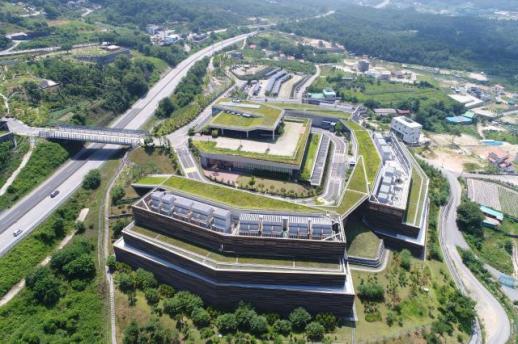 Naver takes stake in GS wind farm to power data centers SEOUL, April 21 (AJP) - South Korean tech giant Naver announced it will acquire a 30 percent stake in a GS-built wind power plant and sign a power purchase agreement (PPA) to secure renewable electricity for its data centers, marking the first time a RE100 member in the country has directly invested in a renewable energy generation entity. The wind farm, currently under construction in Yeongyang county in North Gyeongsang Province, is expected to produce about 180 gigawatt-hours of electricity per year. Commercial operations are set to begin in the first half of 2028, after which the facility will supply power to Naver's data centers in Sejong and Chuncheon. Naver said the deal would raise the share of renewable energy in its total power consumption to about 46 percent by 2029. The company declared a "2040 Carbon Negative" goal in 2020 and has since signed three separate PPAs covering solar and small-scale hydropower, the wind farm investment new to the portfolio. By taking an equity position in the generation entity rather than simply purchasing power, Naver said it has secured a long-term, stable supply of clean electricity in a domestic market where renewable energy output still falls short of demand. The arrangement also removes a key constraint on future investment that had been imposed by reliance on fossil fuel-based power procurement. "As power demand from data centers grows rapidly alongside the expansion of AI and cloud services, securing renewable energy is an essential task," said Lim Dong-ah, Naver PR and ESG policy leader. "Through this new model of direct investment in a power generation entity, we will strengthen energy supply stability and continue our efforts to achieve the 2040 Carbon Negative goal." The deal reflects a global trend in which technology companies are moving aggressively to lock in renewable power for their energy-hungry data centers. Meta was the largest corporate clean energy buyer in 2025, signing more than 10 gigawatts of PPAs, while Microsoft secured an agreement with Brookfield for over 10.5 gigawatts of new renewable capacity through 2030. Google, meanwhile, signed a 15-year PPA with TotalEnergies for 1 gigawatt of solar capacity in Texas earlier this year. In South Korea, LG Uplus signed a 20-year solar PPA with GS E&C to supply renewable power to its data centers and office buildings, while Kakao has incorporated renewable energy infrastructure into its purpose-built data center in Ansan. 2026-04-21 10:12:05
 -
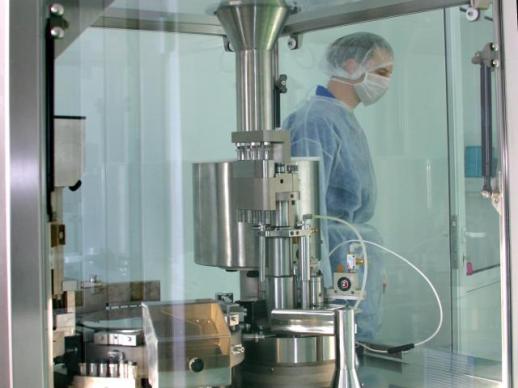 S.Korea bio clinical trials surge in Q1, half near commercialization SEOUL, April 21 (AJP) - South Korea approved more than 50 biopharmaceutical clinical trials in the first quarter of 2026, with late-stage candidates accounting for the majority of the pipeline, according to the Korea Biomedicine Industry Association. The association revealed Tuesday that 53 trials received approval between January and March, averaging about 17.7 approvals per month. Multinational trials dominated the period, comprising about 87 percent of the total, or 46 cases. Late-stage trials — including phase 3, phase 3b and phase 2/3 — numbered 28, accounting for about 53 percent of all approvals, pointing to a pipeline clustered around near-term commercialization. Antibody-based therapies led by modality, with monoclonal antibodies, bispecific and trispecific antibodies, polyclonal antibodies and antibody-drug conjugates (ADCs) making up more than 80 percent of approvals at 43 cases. Monoclonal antibodies and bispecific antibodies anchored the field, with 19 and 14 cases respectively, both concentrated in late-stage development. ADCs, with seven cases across seven products, spanned early- and late-stage trials, reflecting their emergence as a next-generation antibody-based therapeutic class. Oncology was the dominant indication, accounting for about 49 percent of approvals. However, domestic developers accounted for only about 19 percent of approvals, with foreign-led trials making up the remainder. BioNTech's bispecific antibody pumitamig led individual investigational drugs with five approvals, spanning indications including non-small cell lung cancer, triple-negative breast cancer, and gastroesophageal cancer. 2026-04-21 09:34:07
 -
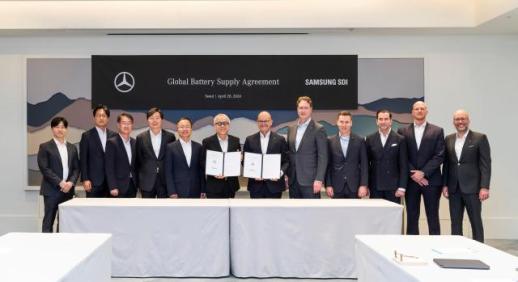 Samsung SDI strikes first battery supply deal with Mercedes-Benz SEOUL, April 20 (AJP) - Samsung SDI announced it has signed a multi-year contract to supply electric vehicle batteries to Mercedes-Benz, marking the Korean battery maker's first supply agreement with the German premium automaker. The deal, signed at the Andaz Seoul Gangnam hotel on Monday, will see Samsung SDI provide high-performance cells built with high-nickel NCM (nickel, cobalt, and manganese) cathode chemistry for Mercedes-Benz's next-generation electric vehicles. Samsung SDI CEO Choi Joo-sun and Mercedes-Benz Chairman Ola Kallenius were among senior executives from both companies who attended the signing ceremony. Under the agreement, the batteries will be fitted in upcoming compact and mid-size electric SUVs and coupe models as Mercedes-Benz seeks to sharpen its electrification lineup. The cells are designed to maximize driving range through high energy density while delivering long cycle life, high power output and Samsung SDI's proprietary safety solutions. "This partnership represents the union of the innovative DNA that both companies possess," a Samsung SDI spokesperson said said, adding that the contract was significant in securing battery orders aimed at leading the global EV market. The Mercedes-Benz deal marks Samsung SDI's return to the EV contract table after a string of energy storage deals, including a 1.5 trillion won ($1 billion) agreement in March to supply prismatic ESS batteries to a U.S. energy firm. The company has been pivoting aggressively toward the fast-growing North American storage market amid sluggish global EV demand, but the latest contract signals it is pursuing both fronts simultaneously. Samsung and Mercedes-Benz said they also plan to deepen strategic cooperation in next-generation battery development and future mobility technologies. Shares of Samsung SDI was trading at 540,000 won on 3:21 p.m., 5.26 percent higher than the day before. 2026-04-20 15:00:07
 -
 Korea's antitrust watchdog weighs naming Coupang's Kim as group head SEOUL, April 20 (AJP) - South Korea's antitrust regulator is poised to decide as early as next week whether to name Coupang founder Bom Kim as the e-commerce group's controlling shareholder, a shift that would bring the U.S. citizen under the country's toughest corporate disclosure and anti-self-dealing rules for the first time. The Korea Fair Trade Commission (KFTC) is in the final stages of reviewing whether to replace the Coupang corporate entity with Kim, chairman of Nasdaq-listed parent Coupang, as the group's designated "same person," industry and regulatory sources said Sunday. A ruling must be issued by the May 1 statutory deadline. Investigators are zeroing in on whether Kim's younger brother, Vice President Yoo Kim, and other relatives hold stakes in or take part in the management of Coupang's Korean affiliates — one of the conditions that would disqualify the group from keeping a corporate designation. Coupang has pushed back, arguing that no grounds exist for a change. The company has reportedly told regulators that Yoo Kim is an unregistered executive at Coupang, not at any Korean affiliate, and therefore does not take part in local management. However, sources say the vice president received about 14 billion won ($9.48 million) in compensation and incentives from Coupang over the four years through 2025, including $430,000 in pay and 74,401 restricted stock units last year alone. Whether the KFTC accepts that argument again this year is far from certain. Tensions between the two sides have flared over document submissions, with the watchdog examining whether Coupang's partial refusal to hand over requested materials may constitute a violation of the Fair Trade Act, which carries penalties of up to two years in prison or fines of 150 million won. Chairman Kim was issued an official warning in 2021 after omitting 15 relatives from a disclosure filing, though regulators declined to refer the case for prosecution. Coupang's designation has long been an outlier. It is one of only eight of the 46 conglomerates subject to cross-shareholding restrictions last year whose designated head is not a natural person — a group that otherwise consists largely of state-linked or ownerless firms such as POSCO, KT and Nonghyup. The watchdog first designated Coupang as a large business group in 2021, citing enforcement difficulties in applying the rules to a foreign national, and has maintained the corporate designation ever since. A shift to an individual designation would subject Kim to disclosure obligations covering his personal dealings and expose any companies owned by him or his relatives to regulations barring preferential intra-group transactions — closing a loophole that critics argue lets the founder control the group without the accountability borne by Korean chaebol chiefs. 2026-04-20 09:51:21
 -
 Hanwha Solutions trims capital raise to 1.8 trillion won after regulator pushback SEOUL, April 17 (AJP) - Hanwha Solutions announced it will scale back its planned rights offering to 1.8 trillion won ($1.21 billion) from an initial 2.4 trillion won, retreating from a contentious fundraising plan that drew a rare regulatory rebuke and sharp criticism from shareholders. The revised offering, approved by the company's board on Friday, comes just eight days after the Financial Supervisory Service ordered Hanwha Solutions to refile its securities registration, citing missing or unclear disclosures that could impair investor judgment. Under the amended plan disclosed through regulatory filing, funds earmarked for debt repayment will shrink to 907 billion won from 1.49 trillion won, while the roughly 908 billion won set aside for capital investment remains untouched. The issue size has been cut to 56 million new shares from 72 million, with the subscription price lowered to 32,400 won per share from 33,300 won. The allotment ratio for existing shareholders correspondingly drops to 0.2604 new shares per held share from 0.3348. The record date is May 14. The company has previously defended the move as a necessary measure against a credit-rating downgrade amid a prolonged downturn in the global solar and petrochemical sectors. "We sincerely reflect on and apologize for failing to adequately communicate the scale and rationale of the rights offering with shareholders and the market in its early stages," said Nam Jung-woon, head of the chemical division. The company said it will raise the remaining 600 billion won shortfall through asset monetization and capital-like financing, and pledged to refrain from additional equity offerings through 2030 while maintaining its shareholder return policy. 2026-04-17 17:01:59
 -
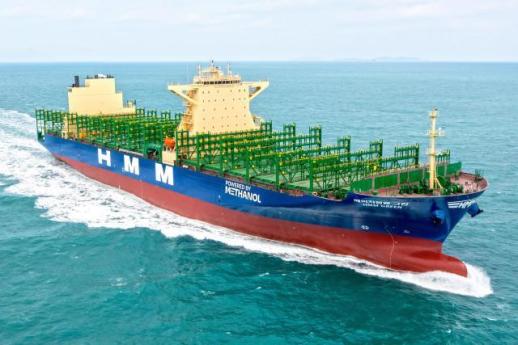 Hormuz crisis fuels air and sea charges, adding to input pressure in Korea SEOUL, April 17 (AJP) - South Korean shipping lines are introducing emergency bunker surcharges as the prolonged conflict between Iran and the U.S.-Israeli coalition drives up fuel costs, adding to input pressures and, ultimately, consumer prices. Sinokor Merchant Marine, one of Korea's largest container operators, said it will impose an emergency bunker surcharge of $100 per 20-foot equivalent unit (TEU) on export cargo bound for Southeast Asia, effective this month. Industry officials said other major container carriers are preparing similar measures, with surcharges ranging from $150 to $200 per TEU. The moves come as global shipping lines including Maersk and OOCL roll out their own emergency surcharges in response to the Middle East crisis. The latest fees mark another layer of cost escalation stemming from the 2026 Strait of Hormuz crisis, which began on Feb. 28 when the United States and Israel launched coordinated airstrikes on Iran under Operation Epic Fury. Iran retaliated by restricting passage through the strait, through which about 20 percent of global oil and a similar share of liquefied natural gas shipments normally pass. The disruption has hit marine fuel markets with particular force. Bunker C fuel oil, the heavy fuel that powers most commercial vessels, is typically produced from the residue of heavier crude grades. Middle Eastern crudes, generally heavier and higher in sulfur content than most benchmark grades, have long been a key feedstock for such fuels. With Hormuz shipments curtailed, bunker prices have climbed sharply, eroding the margin cushion carriers had relied on through the first quarter. Vessels stranded inside the strait are compounding the strain on ocean freight. A total of 26 Korean-flagged ships remain stuck in the Strait of Hormuz, 10 of them belonging to eight small and mid-sized carriers, according to data from the Korea Shipowners' Association. Those carriers are estimated to be losing about 580 million won ($392,086) a day from halted operations, higher fuel costs, war-risk insurance premiums and crew hazard pay. The pressure is spreading into air logistics, where jet fuel costs are tracking the same Middle East supply disruption through the Singapore benchmark widely used across Asia. Singapore Mean of Platts jet fuel averaged 511.21 cents per gallon for May, placing it in the top tier of Korea's 33-step fuel surcharge system, according to the aviation industry. It is the highest reading since the surcharge framework was introduced. Korean Air set its May international fuel surcharge at up to 150,000 won ($101.40) per round trip, depending on distance. The top-end charge is roughly five times the January level. With both sea and air freight costs rising in tandem, Korean exporters face the prospect of higher logistics bills feeding into consumer prices if the Hormuz disruption stretches further into the second quarter, industry officials said. According to preliminary export and import price data for March released by the Bank of Korea on Wednesday, import prices in won terms jumped 16.1 percent from the previous month, the steepest increase since a 17.8 percent surge in January 1998. From a year earlier, they rose 18.4 percent. Jet fuel import prices soared 67.1 percent quarter on quarter and 81.8 percent year on year. Import prices for raw materials jumped 40.2 percent from the previous month and 40.0 percent from a year earlier. Coal and petroleum product import prices rose 37.4 percent month on month and 31.3 percent year on year. Consumer prices rose 2.2 percent in March from a year earlier, still within the target range, but the Bank of Korea has warned that annual inflation could approach 3 percent if the war drags on. 2026-04-17 12:08:07
 -
 Samyang Foods' Buldak spice brand ventures into reality TV with dating show SEOUL, April 17 (AJP) - Samyang Foods has launched a reality dating show built around its Buldak spicy noodle brand, marking the company's latest push to embed the product into global youth culture beyond conventional food marketing. The South Korean food company announced Friday that it has partnered with U.S. media platform Nectar to produce "Heat Match," a dating show filmed against the backdrop of a major California music festival. The first episode aired April 11 on Nectar's official YouTube channel, with the finale set for release Saturday. The show features 10 single contestants board a Buldak-branded bus and travel to a desert party venue. A central conceit of the format is using Buldak's heat level as a compatibility test, with contestants gauging mutual tolerance for spice as a proxy for emotional chemistry. "This campaign is an elevation of the Buldak brand spirit into cultural entertainment," a Samyang Foods spokesperson said, adding that the company aims to offer young audiences worldwide a shared experience through the Buldak brand. Samyang said the initiative is part of a broader effort to position Buldak as a cultural icon woven into the lifestyles of young consumers globally. 2026-04-17 10:11:21
 -
 AI unsettles game workforce in Korea as industry peaks out SEOUL, April 16 (AJP) - The artificial intelligence scare has caught up with the game industry, once a top career choice for software programmers in South Korea, with as many as three in four feeling threatened by the new technology in a sector now past its heyday. A survey of 1,078 unionized employees at major publishers including Nexon, NC and Netmarble found that 77.3 percent were anxious about their jobs, according to results presented Wednesday at a National Assembly policy forum hosted by the ruling Democratic Party's game industry task force. The poll, conducted from March 27 to April 10 by the IT branch of the Korean Chemical Textile Food Workers' Union, underscores a growing disconnect between rapid AI adoption and limited institutional response. While 65.6 percent of respondents said they already use AI tools regularly at work and 80.3 percent acknowledged tangible efficiency gains, only 26.7 percent reported that formal discussions between management and labor had taken place. A majority — 82.3 percent — called for clear guidelines on how AI-driven productivity gains should be shared. Their anxiety stands in contrast to the industry's strong financial performance. Meritz Securities projected that the combined operating profit of the country's seven largest game publishers would reach about 937.2 billion won ($635.7 million) in the first quarter, exceeding market consensus by 20 percent and surging 64.1 percent from a year earlier. Combined revenue was estimated at 3.57 trillion won, up 33.7 percent. Still, publishers are aggressively trimming payroll. NC cut its workforce by 35.1 percent — from about 4,886 to 3,170 — between 2024 and late 2025 through voluntary retirement programs and spinoffs. Krafton accepted about 200 voluntary resignations since last November, while Nexon froze new hiring and reassigned developers in what industry observers describe as indirect restructuring. Research and development spending has also declined. NC's R&D outlays fell 22.9 percent to 325.1 billion won last year, with Netmarble, Pearl Abyss and Kakao Games also scaling back investment. Rising labor costs have accelerated the shift toward automation. Average annual pay at Krafton rose to 129 million won last year from 109 million won in 2024. Pearl Abyss saw its per-capita figure jump to 134.1 million won from 98.5 million won. Similar increases were recorded at NC, Netmarble and Kakao Games. At the same time, the domestic market is nearing saturation. Total industry revenue grew 3.9 percent to 23.85 trillion won in 2024, only a marginal improvement from 3.4 percent growth in 2023 and a sharp slowdown from the 21.3 percent surge recorded in 2020. Analysts say the AI-driven shift reflects a broader structural change across the IT sector. "Front-end interfaces once required large numbers of lower-skilled workers, while back-end systems relied on highly skilled engineers. Now, a client module can be handled by one or two senior engineers supported by AI," said Im Chung-jae, a professor of game software at Keimyung University. "From a company's standpoint, there is little reason to turn down a tool that delivers faster and more flexible results." President Lee Jae Myung echoed that view, urging labor leaders on April 10 to focus on adapting to technological change rather than resisting it. Even so, human creativity remains a critical variable as the industry evolves. "Games and animation have always been creative domains, so AI's impact is different from live-action production," Im said. "If AI produces flawed results, the issue is no longer the tool itself but the capability of the person designing the system and giving the commands." As development shifts beyond coding toward planning and creative direction, demand is likely to grow for talent that blends technical expertise with design and humanities-based thinking. 2026-04-16 15:20:43
 -
 South Korea's AI startups post strong growth under science ministry program SEOUL, April 16 (AJP) - South Korea's Ministry of Science and ICT announced that AI and digital companies backed by its K-Global Project program posted broad gains in revenue, investment and employment last year, as the initiative celebrated a decade of nurturing the country's startup ecosystem. According to its press release on Thursday, the ministry surveyed 397 firms that participated in the program, drawing responses from 290 companies. Combined headcount at the end of 2025 reached 10,221 employees, up 450 from the prior year, with about 65 percent of respondents reporting increase in hiring. Total revenue of the firms rose about 8.1 percent year on year to 1.86 trillion won($1.26 billion), outpacing the 6.7 percent average growth rate recorded by KOSDAQ-listed companies over the same period. Investment raised by participating firms surged 53.9 percent to 875.1 billion won, while patent applications climbed 12.8 percent to 4,106 filings. The K-Global Project, launched as an umbrella brand for the ministry's AI and digital support programs, has produced several high-profile success stories. Chipmakers Rebellions and Furiosa AI, both alumni of the program, have since reached unicorn status, while AI medical-imaging firm Vuno and AI compression specialist Nota AI have completed KOSDAQ listings. "AI and digital startups are emerging as the central drivers of industrial innovation, and the companies introduced today are prime examples of that," said Park Tae-wan, Director General of the ICT Industry Policy at the ministry. Park added that the government would refine the program based on industry feedback and work to ensure Korean firms can compete in global markets. 2026-04-16 14:39:28