
Journalist
Arthur I. Cyr
davekim0807@ajupress.com
-
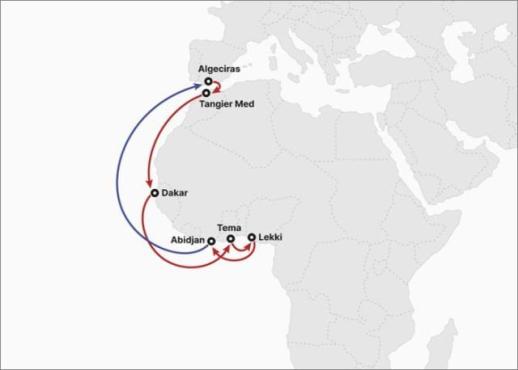 HMM to launch West Africa container service, expanding global network SEOUL, April 16 (AJP) - HMM will launch a new shipping route connecting Spain and West Africa in July, marking its first foray into the African continent as part of a broader push to extend its global reach. The new service announced Thursday, designated MA2 (Mediterranean West Africa), will operate out of Algeciras, Spain — a key Mediterranean hub — and call at ports in Morocco, Senegal, Ghana, Nigeria, and Cote d'Ivoire. The round voyage takes about 35 days and will deploy five container vessels of about 2,800 twenty-foot equivalent units (TEU) each. HMM will co-operate the service with Japan's Ocean Network Express, a fellow member of the Premier Alliance. Sailings are scheduled to begin in the second week of July from Algeciras. The MA2 route is the first tangible step under HMM's hub-and-spoke strategy, a central pillar of the carrier's 2030 long-term plan, in which large vessels handle major deep-sea trunk routes while smaller feeder ships branch out to secondary ports. The company said linking Africa — a market it had not previously served — would meaningfully broaden the services it can offer cargo shippers. "This MA2 service will serve as a starting gun for strengthening HMM's global network through the hub-and-spoke strategy," said an HMM spokesperson, adding the company plans to keep raising customer satisfaction through differentiated service offerings. To support the strategy, HMM has been steadily building up its feeder fleet. The company placed an order for 10 vessels of 2,800 TEU with HD Hyundai Heavy Industries in March, acquired two 1,900 TEU ships earlier this year, and in October 2025 ordered a combined 24 feeder vessels — securing about 24 feeders within a six-month span. 2026-04-16 09:56:47
 -
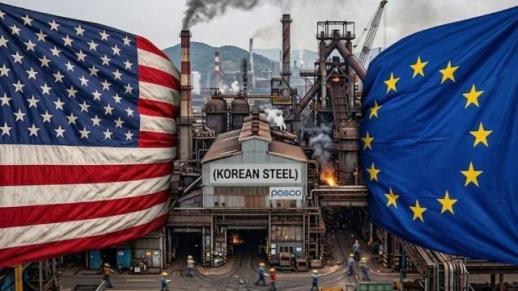 Double tariff whammy hits Korean steel as EU barriers pile on top of U.S. tariffs SEOUL, April 15 (AJP) - When it rains, it pours for South Korean steelmakers as they face collateral damage from higher trade tariffs in Europe on top of U.S. duties aimed at curbing cheap Chinese imports. The European Parliament and the Council of the EU hammered out a deal on Monday (local time) after late-night negotiations, setting tariff-free quotas at 18.3 million tons per year — nearly halved from about 35 million tons permitted under the current safeguard regime. Imports exceeding the cap will face a 50 percent duty, up from 25 percent. The measures, pending formal endorsement and a plenary vote expected in May, are set to take effect on July 1. The agreement also introduces a "melt and pour" traceability rule requiring importers to prove where raw steel was first smelted and cast — a provision targeting steel from overcapacity countries, chiefly China, routed through third-party processing. "We cannot afford to turn a blind eye to global overcapacity reaching critical levels," said EU Trade Commissioner Maros Sefcovic. Global steel overcapacity is projected to reach 721 million tons by 2027, more than five times the EU's annual consumption. Whether the target is primarily China, the blow nevertheless falls hard on South Korea. The EU bought $3.71 billion worth of South Korean steel in 2025, making it the country's largest export market — down from $4.48 billion in 2024, according to the Korea International Trade Association. South Korea shipped about 3.31 million tons to the bloc last year, of which about 2.58 million tons entered duty-free under country-specific quotas. EU posed as relief to the U.S. that has been imposing 50 percent levies on steel and aluminum imports from June last year. The new EU framework resets baseline quotas to 2013 import levels — well before the global oversupply cycle intensified — meaning Seoul's allocation is expected to shrink significantly. Korean steelmakers are still reeling from the U.S. blow. POSCO and Hyundai Steel, the country's two dominant producers, are estimated to have paid a combined $281 million in U.S. tariffs between March and December 2025. Korean steel exports to the United States have since plummeted after tariffs were doubled to 50 percent in June, with demand described by industry sources as "nearly depleted." The pressure compounds a longer-running squeeze from cheap Chinese steel flooding global markets. At home, Hyundai Steel ran two rounds of early retirement programs in 2025 and permanently closed half of its rebar capacity at its Incheon plant in January, shuttering a 90-ton electric furnace as the domestic construction slump deepened. In November 2025, the National Assembly passed the K-Steel Act, a 570 billion won support package to fund industry restructuring and bolster exports. But with the EU now confirming the tariff overhaul that had been under discussion since last October, pressure on Seoul to secure favorable quota terms has intensified. "Korean steel exports to the EU were already constrained within existing quotas, with limited room to expand," said Lee Jae-yoon, senior research associate at the Korea Institute for Industrial Economics and Trade. "With the U.S. market effectively shut and domestic demand still weak, the EU should have been a growth outlet — but these new protective measures, combined with the EU Carbon Border Adjustment Mechanism, are closing that window." The double tariff squeeze has nonetheless forced a strategic pivot toward the United States. POSCO acquired a 20 percent stake worth $582 million in Hyundai Steel's planned $5.8 billion electric arc furnace mill in Louisiana, with commercial production expected in 2029. POSCO has also signed a strategic partnership memorandum with Cleveland-Cliffs, the second-largest U.S. crude steel producer, though the company said in a March regulatory filing that no final decision on equity participation or investment size has been reached. The EU's move is driven by a broader structural strain. European steel capacity has shrunk by 65 million tons since 2007, with about half of that loss since 2018. The sector operates at around 67 percent capacity — well below the 80 percent considered healthy — while import penetration hit a record 29 percent in the third quarter of 2025. Lee said Korean steelmakers will ultimately need to pivot toward green steel to navigate the tightening trade environment. Building production facilities in Europe — unlike in the United States — holds little commercial appeal, given the continent's own supply glut. "The U.S. offers higher prices, high energy costs that keep out cheap imports, and insufficient domestic capacity — making it attractive for investment," Lee said. "Europe is the opposite. It already has overcapacity, so there is little merit in setting up local production just to avoid tariffs." The Korean government is also moving to cushion the blow. Seoul has been in continuous contact with Brussels since the European Commission first unveiled the proposal in October, and has maintained those channels since Monday's agreement. "We have been in constant dialogue with the EU since the initial proposal, and remain in close contact regarding the steel tariff and quota framework. No tangible agreement on Korea's specific allocation has been reached yet," a spokesperson for the Ministry of Trade, Industry and Energy said. 2026-04-15 14:36:45
 -
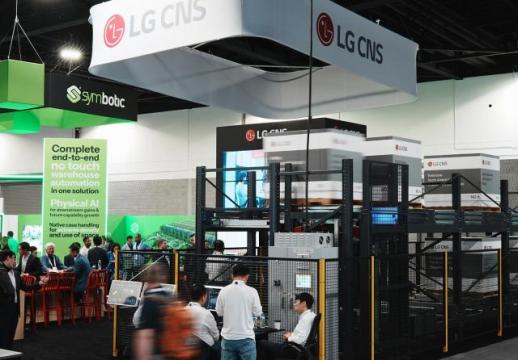 LG CNS unveils cold-chain logistics robot at U.S. trade show, eyes North American market SEOUL, April 15 (AJP) - LG CNS showcased a new warehouse automation robot capable of operating in sub-zero freezer environments at a major North American logistics trade show, as the South Korean IT services firm pushes to expand its footprint in the United States. The company unveiled its "Mobile Shuttle" system at Modex 2026 on Monday (local time) in Atlanta, where the robot was highlighted for its ability to function continuously at temperatures as low as minus 26 degrees Celsius — a threshold that covers most industrial cold-chain and frozen food storage facilities. The robot has received UL certification, a mandatory safety standard for electrical and mechanical equipment in the United States. Each shuttle unit can carry loads of up to 1,500 kilograms and travels at 1.5 meters per second along warehouse racks. The system uses a four-way directional structure — moving forward, backward, sideways, and vertically — to minimize routing constraints and boost storage density by more than 30 percent compared with conventional two-directional warehouse setups. LG CNS has equipped the system with an AI agent that allows warehouse workers to issue commands in natural language through a chatbot interface, including for emergency dispatch situations. The AI component also diagnoses malfunctions and proposes corrective actions in real time, the company said. "We have expanded the scope of logistics automation to cover refrigerated and frozen environments," said Lee Jun-ho, executive vice president of LG CNS' smart logistics and city business division. "We will continue to grow our global business on the strength of our differentiated capabilities in high-density, high-efficiency logistics operations." 2026-04-15 10:50:14
 -
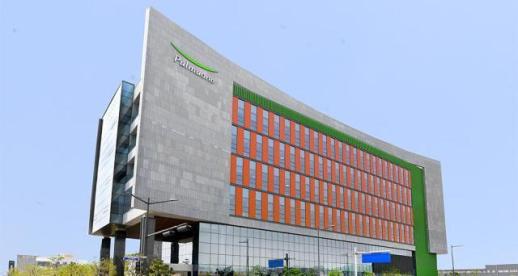 Pulmuone climbs to 3rd among global food firms in S&P sustainability ranking SEOUL, April 15 (AJP) - South Korean food maker Pulmuone announced it achieved its highest-ever ranking in S&P Global's Corporate Sustainability Assessment, climbing to third place among global food companies from fourth a year earlier. The result, based on the 2025 CSA and reflected in S&P Global's Sustainability Yearbook 2026 published in February, marks the third consecutive year Pulmuone has placed in the top five of the food products category. The assessment evaluated about 9,200 companies across 59 industries worldwide, with only 848 earning a place in the yearbook. In the food products segment, 241 companies underwent review. Pulmuone said it was the top-ranked South Korean food company among them, few points ahead of its domestic competitor CJ Cheiljedang, earning recognition for strengthened board independence, tighter environmental management and upgraded food safety systems. The company attributed the improvement to gains across all three ESG pillars. In governance, it bolstered independent oversight by raising the mandatory ratio of outside directors to one-third from one-quarter and linking board evaluations to executive compensation. On the environmental front, Pulmuone built a carbon footprint tracking system under the ISO 14067 standard and completed third-party verification for key products including tofu and udon noodles. Pulmuone has also pushed into food technology, entering the commercial verification stage for land-based seaweed aquaculture and developing a CRISPR-Cas-based diagnostic platform for pathogen detection, for which it has secured patents. "This result is an objective, global-level recognition of the sustainability efforts Pulmuone has pursued since its founding, rooted in our philosophy of love for neighbors and respect for life," said Lee Jung-eon, the company's head of sustainability management. "We will continue to advance Pulmuone's unique values into ESG management that meets global standards, under our mission of 'Creating a Healthy Tomorrow for People and the Earth through Wholesome Food,' and build an ever-stronger foundation for sustainable growth." 2026-04-15 08:37:09
 -
 Early adopters but slow system: Korea's AI gap widens SEOUL, April 14 (AJP) - South Koreans are among the world's fastest adopters of artificial intelligence and among the most prolific in patenting the technology, yet government and corporate support remains strikingly behind, a global comparative study found. The 2026 AI Index Report, released Tuesday by Stanford University's Institute for Human-Centered Artificial Intelligence, is a 423-page annual assessment widely regarded as one of the most authoritative gauges of global AI progress. South Korea registered 14.31 AI patents per 100,000 people in 2024 — far ahead of Luxembourg at 12.25, China at 6.95 and the United States at 4.68. Adoption is accelerating just as quickly. Generative AI usage rose from 25.9 percent in the first half of 2025 to 30.7 percent in the second half, the fastest increase among 30 regions surveyed. The gain pushed South Korea up seven places to 18th globally, though still well behind leaders such as the United Arab Emirates at 64 percent and Singapore at 60.9 percent. On paper, policy momentum is strong. South Korea enacted 17 AI-related laws between 2016 and 2025 — the second-highest among G20 nations after the United States. The report highlighted the AI Basic Act, which took effect this year, as a cornerstone framework aimed at fostering innovation while building public trust. The country also remains a significant player in model development, ranking third globally with five notable AI models launched in 2025, trailing only the United States and China. But beneath these headline gains, the gaps widen. Private AI investment totaled just $1.78 billion, placing South Korea 12th globally — a fraction of the $285.9 billion poured into the sector in the United States and $12.4 billion in China. Even with 59 newly funded AI firms, the ecosystem lacks the scale to match its innovation output. Structural weaknesses extend to the workforce. About 81.4 percent of South Korea's AI talent pool is male, one of the widest gender imbalances among surveyed countries, alongside Japan and Brazil. More critically, institutional support is lagging. South Korean employees gave their organizations some of the lowest marks globally for AI readiness. Workers in Japan, South Korea and Portugal reported the weakest support for AI literacy training and governance frameworks, with fewer than half saying their employers provide meaningful backing. In India, by contrast, roughly 85 to 90 percent reported strong institutional support. The disconnect between individual adoption and organizational readiness is not unique to Korea, but it is particularly pronounced. A McKinsey survey found 88 percent of organizations use AI in at least one business function, yet 60 percent say adoption remains stuck at the pilot stage — a gap increasingly described as "shadow AI," where employees deploy tools informally outside official systems. "South Korea is known to have a particularly high rate of shadow AI usage. Even though formal adoption through corporate channels remains limited, employees are quietly using these tools on their own," said Park Hyun-kyu, professor of management of technology at Sogang University. Globally, the expansion is rapid and uneven. Generative AI reached 53 percent population adoption within three years — faster than personal computers or the internet. Corporate investment surged 130 percent to $581.7 billion in 2025, with the United States dominating the field. For South Korea, the picture is clear: a country moving faster than most at the edge of adoption and innovation, but held back by hesitant institutions and underpowered capital. Until that gap closes, its AI momentum risks remaining diffuse — energetic, but not yet fully mobilized. 2026-04-14 13:48:26
 -
 Yuhan wins FDA orphan drug tag for Gaucher disease candidate SEOUL, April 13 (AJP) - South Korean drugmaker Yuhan said its experimental Gaucher disease therapy YH35995 has received orphan drug designation from the U.S. Food and Drug Administration (FDA), unlocking a suite of regulatory and commercial incentives as the company pushes into rare disease treatment. The FDA's orphan drug program is designed to spur development of therapies targeting conditions affecting small patient populations with limited treatment options. Designated drugs are eligible for clinical trial tax credits, waived FDA review fees and up to seven years of market exclusivity upon approval. Gaucher disease is a hereditary lysosomal storage disorder caused by a specific enzyme deficiency, triggering abnormal metabolic buildup that can cause enlarged liver and spleen, anaemia, low platelet counts and skeletal complications. Type 3 Gaucher disease, the form Yuhan is targeting, also carries neurological symptoms for which treatment options remain scarce. YH35995 is an oral small-molecule glucosylceramide synthase inhibitor — a substrate reduction therapy that works by lowering the production of glucosylceramide, or GL1. In preclinical studies, the compound showed a tendency to cross the blood-brain barrier and sustain GL1 suppression in the brain, raising hopes it could address the neurological dimension of the disease. Substrate reduction therapy works by limiting the amount of a fatty substance that accumulates in cells when the body lacks the enzyme needed to break it down — an approach that sidesteps the need to replace the defective enzyme directly. Yuhan said the compound has already received approval for a Phase 1 clinical trial in South Korea. 2026-04-13 14:52:53
 -
 Two firefighters killed in cold storage warehouse blaze in southern South Korea SEOUL, April 12 (AJP) - Two firefighters were killed after becoming trapped inside a burning cold storage warehouse in South Korea's southwestern county of Wando, authorities said, in a blaze that triggered a vapor explosion and prompted a national outpouring of grief. The fire broke out at about 8:25 a.m. Sunday at a seafood processing plant in Wando County, South Jeolla Province, according to fire authorities. A seven-member crew arrived within six minutes and entered the 3,693-square-meter facility to rescue a plant worker who had inhaled smoke. After pulling the worker to safety, the crew briefly withdrew. When fresh plumes of smoke appeared from another section of the warehouse, the team re-entered at about 8:45 a.m. to finish suppression, believing the fire was nearly contained. Minutes later, flammable vapors from epoxy and urethane materials that had accumulated near the sealed ceiling ignited, producing a flashover that sent flames erupting through the entrance. Commanders radioed evacuation orders three to four times, but two firefighters could not escape. A rapid intervention team located the body of a 44-year-old fire lieutenant from Wando Fire Station at about 10:02 a.m., roughly five meters from the entrance. A 31-year-old firefighter from Haenam Fire Station was found dead at 11:23 a.m. The blaze was fully extinguished three minutes later. Authorities believe the fire started when a worker used a blowtorch to strip paint from walls lined with urethane foam insulation and finished with sandwich panels. The sealed structure, designed to maintain freezing temperatures, trapped smoke and hindered rescue efforts. Police and fire investigators are probing the exact cause. President Lee Jae Myung paid tribute to the pair, saying they "rushed to the most dangerous scene to protect lives and fulfilled their duty to the very last moment," in a X post. He vowed the government would ensure all frontline personnel can operate in safer conditions. 2026-04-12 17:28:51
 -
 Search for escaped wolf at South Korean zoo drags into fifth day SEOUL, April 12 (AJP) - A wolf that tunneled its way out of a government-run zoo in the central city of Daejeon remained at large as search teams armed with thermal-imaging drones combed nearby hillsides for a fifth straight day without success. The two-year-old male wolf, nicknamed Neukgu, was last detected by a thermal camera mounted on a drone at about 1:30 a.m. on April 9, the day after its escape. Trackers lost the animal's trail when the drone was pulled back for a battery swap, and it has not been spotted since. Authorities deployed 12 drones on Sunday to sweep a radius of about 6 km around O World, the municipal theme park from which Neukgu escaped on April 8 by digging beneath an electrified wire fence surrounding its safari enclosure. Ground crews have been kept to a minimum over fears that a large human presence could spook the animal deeper into the forested terrain. Neukgu's last meal before the breakout was two chickens, fed the evening of April 7. Baited traps have been placed along likely travel routes, and experts estimate the wolf could survive about 10 days in the wild provided it finds water. But because Neukgu was born and hand-reared in captivity, it lacks hunting skills, and specialists warn it could perish if the search drags on much longer. The escape has drawn nationwide attention and a wave of public sympathy. President Lee Jae Myung weighed in, expressing hope for the wolf's safe return and urging that no one be harmed in the process. Citizens and animal-rights groups have demanded that Neukgu be captured alive, recalling a 2018 incident at the same zoo in which a puma was shot dead just four and a half hours after escaping its enclosure. The search has also been hampered by a flood of AI-generated fake photographs purporting to show the wolf at various locations around the city, with authorities saying the fabricated images caused confusion in the early stages of the operation and disrupted some media coverage. Reports say the search would continue through Monday before officials decide whether to launch a full-scale joint operation involving multiple agencies if no progress is made. 2026-04-12 15:40:52
 -
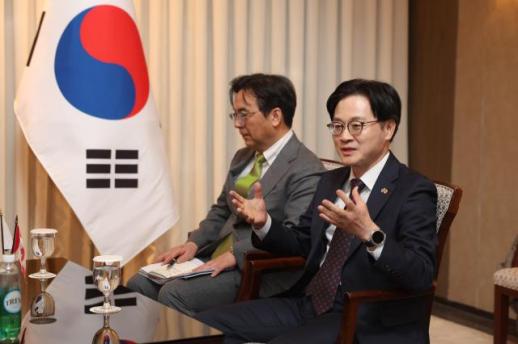 S. Korea secures 80 pct of May crude needs without tapping reserves, minister says SEOUL, April 12 (AJP) - South Korea has secured about 80 percent of its crude oil import needs for May and expects to weather the ongoing supply disruptions triggered by the Middle East conflict, Minister of Trade, Industry and Resources Kim Jung-kwan said. Kim said the volume of crude oil locked in for May had risen by 10 percentage points from the previous week, bolstered by private-sector stockpiles held by domestic refiners. "We believe we can get through April and May without releasing government reserves, unlike during the Russia-Ukraine war when such a release was necessary," Kim said. The minister, who returned Friday from a four-nation envoy trip, struck a guarded tone on the fate of seven South Korean-linked oil tankers stranded near the Strait of Hormuz. He said Seoul was working to secure their passage but cautioned that the outcome remained unpredictable. As an alternative to the choked strait, Kim said the government was preparing to route South Korean vessels through the Red Sea via Saudi Arabia's Yanbu port, with escort support from a destroyer. He added that Riyadh had pledged to give South Korean shipments top priority in allocating Yanbu port capacity. To diversify away from its heavy reliance on Middle Eastern crude, Seoul is pursuing imports from the United States and Kazakhstan. Kim said negotiations with Astana had made considerable headway and that specifics on volumes and terms could be announced early next week. Naphtha supply, a critical petrochemical feedstock often called the lifeblood of South Korea's manufacturing sector, is also stabilizing. Kim said procurement is projected to recover to about 80 percent of normal levels in April and May, with daily monitoring in place alongside industry partners to prevent further disruption. The government has earmarked 869.1 billion won (about $585.4 million) in a recently enacted supplementary budget for supply chain stabilization, including subsidies covering half the cost increase on naphtha imports for domestic petrochemical producers. Kim said the intervention was urgent because soaring feedstock prices had made it more economical for some firms to idle their plants entirely. On helium — a gas essential to semiconductor fabrication — Kim said supplies from U.S. sources had been secured through the end of June, ensuring that no chip production facility would face a shutdown over the interim. 2026-04-12 14:11:48
 -
 EcoPro secures C$6 mln from Canada to develop all-solid-state battery materials SEOUL, April 12 (AJP) - South Korean battery materials maker EcoPro said it has secured 6 million Canadian dollars (about $4.3 million) in research funding from Canada's federal government to develop lithium metal anode technology for next-generation all-solid-state batteries. The grant, awarded to EcoPro Lithium — a unit of subsidiary EcoPro Innovation — falls under Ottawa's Energy Innovation Program, which aims to bolster domestic battery supply chains. EcoPro Innovation signed a joint development agreement with Quebec state utility Hydro-Quebec in March last year to co-develop lithium metal anodes. The funding will bankroll efforts to build and demonstrate a full lithium metal anode value chain on Canadian soil by March 2027, spanning lithium metal production, high-purity refining, ultra-thin foil fabrication and performance validation. The company also plans to accelerate construction of a semi-mass-production pilot line for the material. Lithium metal anodes offer about 10 times the energy density of conventional graphite-based anodes, a leap that could dramatically extend electric vehicle driving range and position the technology as a linchpin of the all-solid-state battery era. Beyond anodes, the EcoPro group is developing solid electrolytes, solid-state cathode materials and lithium sulfide. Its solid electrolyte program, targeting commercialization next year, has a pilot facility at the company's Ochang headquarters in North Chungcheong Province producing samples at a rate of 40 tons per year. "We are advancing lithium metal anode technology in collaboration with the Canadian government and local partners to lead the all-solid-state battery market," an EcoPro Innovation spokesperson said. "This government funding is expected to significantly accelerate the pace of development." 2026-04-12 10:27:15