
Journalist
Kim Dong Young
davekim0807@ajupress.com
-
 EastSoft's AI dubbing platform surpasses 460,000 users, with 90% from overseas SEOUL, February 23 (AJP) - South Korean software firm EastSoft said that its artificial intelligence dubbing and AI human video generation platform, Perso AI, has surpassed 460,000 registered users, with about 90 percent of sign-ups originating from markets in North America and Europe. The milestone announced Monday underscores Perso AI's rapid pivot toward a global user base. While Korean-to-English dubbing dominated early adoption, the platform has since seen a surge in multilingual demand, particularly for English-to-French and English-to-Spanish conversions. EastSoft said it has identified untapped potential in the Japanese and Spanish-speaking markets and plans to sharpen its international strategy accordingly. The company pointed to a series of technical upgrades as key drivers of its competitive edge, including prompt optimization tailored to Google's latest large language model Gemini, performance benchmarking against leading global audio engines, and the adoption of a content delivery network to bolster service stability. The company said it plans to continue refining the platform based on usage patterns from paying subscribers while lowering the entry barrier for new users through hands-on trial content. An EastSoft spokesperson said the platform's strength lies in its accessibility, noting that users can generate AI human video content as simply as building a presentation by entering prompts and making minor adjustments, while also creating digital characters with distinct identities as standalone intellectual properties. "With language demand expanding well beyond French and Spanish into a growing number of countries, we will strengthen our foothold in the global AI dubbing market through continued technological advancement and user experience optimization," the spokesperson said. 2026-02-23 12:05:11
 -
 Korean shipbuilders mull local and robotic options instead of foreign hires SEOUL, February 23 (AJP) - Two out of every 10 workers at shipyards across South Korea are foreigners, but major builders are increasingly looking to scale back overseas hiring by expanding domestic recruitment and accelerating automation, industry officials said. Leading the shift is HD Hyundai, the world's largest shipbuilder by order backlog, which plans to prioritize replacing departing foreign workers with Korean nationals as labor contracts expire. As of the end of 2025, HD Hyundai's shipbuilding units employed about 11,300 foreign workers, including subcontractors, accounting for roughly 19.8 percent of its 47,000-strong workforce. The industry's reliance on foreign labor has grown steadily in recent years. The number of overseas workers at Korean shipyards surged from 4,640 in 2021 to about 20,200 by the end of 2024, quadrupling in three years, as yards struggled to attract domestic workers to physically demanding jobs with relatively modest pay. However, a prolonged shipbuilding supercycle has strengthened the sector's finances, enabling companies to absorb the higher costs of local hiring and invest aggressively in artificial intelligence and robotics. The combined order backlog of Korea's three major builders stood at about $124 billion in late 2025, near record highs. Vessel exports reached $31.2 billion last year, up 22 percent, driven by demand for LNG carriers and large container ships, according to the Korea Chamber of Commerce and Industry. The boom has also been supported by geopolitical tailwinds. Seoul and Washington's "Make American Shipbuilding Great Again" initiative has opened new opportunities, with Korea pledging about $150 billion in shipbuilding-related investments to upgrade U.S. facilities. Domestic political pressure has added momentum. President Lee Jae Myung publicly questioned in January whether foreign workers were displacing Korean job seekers. Yet domestic hiring is only one pillar of a broader transformation. Korean builders are simultaneously pouring resources into AI, digital twins and robotics to offset rising labor costs and chronic shortages of skilled technicians. Earlier this month, HD Hyundai selected Siemens Xcelerator as the backbone of an integrated digital platform spanning its global shipyards under its "Future of Shipyard" program, targeting completion by 2030. "The selection of Siemens Xcelerator represents an important milestone in advancing HD Korea Shipbuilding & Offshore Engineering's digital shipbuilding strategy," said Lee Tae-jin, executive vice president at HD Hyundai. The group has also expanded its partnership with Palantir Technologies to deploy AI-driven analytics across its operations. Hanwha Ocean is investing about 160 billion won to turn its Geoje yard into a smart facility, targeting automation of up to 70 percent of production processes. The company is deploying drones and internet-of-things sensors to collect real-time data, while expanding the use of welding and fabrication robots. Hanwha is also applying its proprietary smart-yard technology to its Philadelphia shipyard in the United States as it seeks to expand in the North American maintenance, repair and overhaul market. Meanwhile, Samsung Heavy Industries has tested a wall-climbing quadruped robot developed by KAIST spinoff Diden Robotics for welding and inspection, with commercial deployment planned for the second half of 2026. The company has also partnered with Rainbow Robotics to co-develop AI-equipped welding robots and mobile dual-arm systems. Industry officials say the parallel push for domestic hiring and automation reflects a calculated strategy to maintain Korea's competitiveness against Chinese rivals, which now control about 63 percent of global new vessel orders. By pairing a more stable workforce with advanced digital tools, Korean shipbuilders are betting they can preserve their technological edge and long-term leadership in the global market. 2026-02-23 11:59:36
 -
 South Korea's AI Basic Act sparks demand for industry-specific compliance guidelines SEOUL, February 20 (AJP) - South Korea's Basic Act for AI has taken effect, but businesses are struggling to translate the sweeping legislation into concrete operational practice, prompting growing calls for tailored, industry-specific compliance guidelines. The law imposes transparency obligations and governance requirements on companies deploying generative AI and other artificial intelligence technologies, with administrative penalties including fines for non-compliance. Analysts say firms that demonstrate accountability under the new framework stand to gain a competitive edge in the long run. Despite the government's efforts to ease the transition — including the early release of subordinate regulations — uncertainty on the ground remains unresolved. The AI Basic Act Support Desk, jointly operated by the Ministry of Science and ICT and the Korea AI·Software Industry Association (KOSA), received 172 inquiries within just ten days of opening. The surge in interest is visible in the data. Big data analytics platform Quettai recorded about 16,175 mentions of the "AI Basic Act" keyword in January, a 233 percent jump from the same period a year earlier. Notably, related terms such as "difficult," "complicated," and "ambiguous" ranked among the top associated keywords, signaling widespread confusion over compliance requirements. Industry practitioners argue that a one-size-fits-all approach falls short given the wide variance in how AI is deployed across sectors. The same legal provision can carry different implications depending on the industry, making generic guidance insufficient for frontline decision-making. DeepBrain AI, a domestic generative AI firm, recently published a practical compliance guide tailored to the financial, education, and portal sectors — one example of how industry players are moving to fill the guidance gap left by broad regulatory language. With enforcement now underway, businesses and regulators alike face pressure to move beyond interpretation and toward actionable standards before compliance gaps begin to widen. 2026-02-20 10:51:33
 -
 Pulmuone's U.S. tofu sales hit record high on protein demand, market expansion SEOUL, February 19 (AJP) - South Korean food company Pulmuone posted record tofu sales in the United States last year, driven by surging demand for plant-based protein and a broadening retail footprint. Pulmuone's U.S. tofu revenue rose 12.2 percent year-on-year to about 224.2 billion won ($154.4 million) in 2025, the company said Thursday. Tofu accounts for roughly half of the U.S. unit's total revenue, and the company has held the top market share position in the American tofu segment for 11 consecutive years. The fastest-growing product was its High Protein Tofu line, which nearly tripled in sales from 15.6 billion won in 2021 to 41.5 billion won in 2024. Delivering 14 grams of protein per 85-gram serving, the product has found resonance among consumers looking to replace meat with cleaner protein sources. "The demand for tofu in the U.S. is steadily increasing as the flexitarian population grows and the trend of consuming high-protein, plant-based foods instead of meat spreads," said KS Cho, CEO of Pulmuone Foods USA. "By expanding our supply and actively targeting new channels alongside existing retail growth, we plan to further solidify our leadership in the U.S. tofu market." Pulmuone entered the U.S. tofu market in earnest after acquiring the country's leading tofu brand Nasoya in 2016. The company now operates three tofu manufacturing plants — two in Ayer, Massachusetts, and one in Fullerton, California — and sells its products across about 15,000 retail locations, including Walmart, Target, Publix, and Kroger. The company said it secured major new retail accounts in the third quarter of last year and plans to complete a production line expansion at its Ayer facility during the first quarter of this year. It is also pursuing additional capacity at the Fullerton plant and eyeing foodservice, school cafeterias, and B2B food ingredient channels as avenues for further growth. 2026-02-19 13:45:30
 -
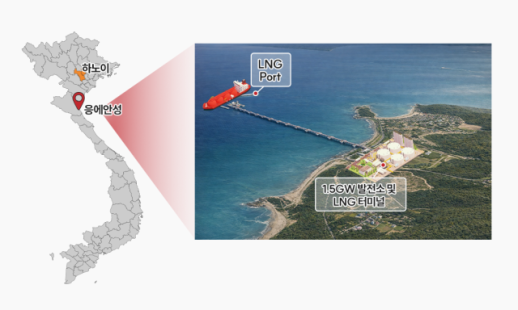 SK Innovation selected to develop $2.3 bln LNG power project in Vietnam SEOUL, February 19 (AJP) - SK Innovation has been selected as the developer of a $2.3 billion liquefied natural gas power project in northern Vietnam, marking a significant step in the South Korean energy company's push to expand its global LNG footprint. The project, located in the Quynh Lap area of Nghe An province, about 220 kilometers south of Hanoi, calls for the construction of a 1,500-megawatt combined-cycle gas power plant, a 250,000-cubic-meter LNG terminal, and a dedicated seaport. SK Innovation is developing the project through a consortium with Vietnamese state-owned power producer PV Power and local firm NASU. Construction is slated to begin in 2027, with the terminal and power plant targeted for completion by 2030. The Quynh Lap project drew competitive interest from the outset — companies from South Korea, Japan, and Qatar cleared preliminary screening when the project was first tendered in 2024, with the formal developer selection process launched in January this year. "This selection proves that SK's unrivaled LNG value chain competitiveness resonates in the global market," an SK Innovation official said, adding that the company aims to address Vietnam's chronic power shortages while spurring regional economic growth in Nghe An province. Vietnam has long grappled with electricity deficits driven by rapid industrialization and population growth, with its grid heavily reliant on coal and hydropower. SK Innovation said it plans to use LNG as a bridging fuel before transitioning to carbon-free power sources over the long term. The company aims to leverage the Quynh Lap project as a springboard to replicate its model across Vietnam, building what it calls an "energy-industry cluster" network. SK Innovation is targeting a global LNG portfolio of 10 million tons per year by 2030, up from its current annual volume of about 6 million tons. The deal comes amid sluggish last year results. SK Innovation disclosed last month that its consolidated revenue rose 8.2 percent year-on-year to 80.29 trillion won ($55.32 billion) in 2025, while operating profit climbed 25.8 percent to 448.1 billion won. However, the company swung to a net loss of 5.41 trillion won, a 127.9 percent deterioration from the prior year, prompting the company to forgo dividend payments. The company attributed the bottom-line weakness to sluggish off-season performance at its E&S unit and softening profitability in its battery business, which offset the benefits of firm refining margins and solid results from its lubricants segment. Stocks of SK Innovation traded at 116,900 won ($80.55) on 11:30 a.m., 2.72 percent higher from the previous session. 2026-02-19 11:38:15
 -
 S.Korea's top policy aide says AI race hinges on electricity, not code SEOUL, February 18 (AJP) - South Korea's presidential policy chief Kim Yong-beom urged the nation to elevate its power grid to the status of strategic national infrastructure, warning that the global artificial intelligence contest is no longer a battle of algorithms but of physical resources. In a Facebook post on Tuesday, Kim wrote that AI had evolved into a capital-intensive hardware industry, making scarce commodities such as graphics processing units (GPUs), memory chips, transmission lines and electricity far more decisive than software code. "Intelligence spreads and is replicated quickly. Models are caught up to. Code proliferates. But power plants, transmission networks and semiconductor fabs cannot be copied overnight," Kim said. Kim singled out what he described as a looming paradox for Asia's fourth-largest economy: SK hynix and Samsung Electronics produce the world's most advanced high-bandwidth memory (HBM) destined for Nvidia GPUs in overseas data centers, yet South Korea itself lacks sufficient large-scale AI computing clusters to harness the technology at home. The policy chief stressed that while South Korea does not face an outright electricity shortage, the deeper challenge lies in delivering power at the scale and speed that AI demands. Kim also championed the principle of local production and consumption of electricity, insisting that power-generating regions should share in the industrial benefits. The remarks come as South Korea prepares to draft its 12th basic plan for electricity supply and demand, a 15-year blueprint covering 2026 through 2040 that will shape the country's energy mix amid surging demand from AI data centers. The government earlier committed to constructing two large-scale nuclear reactors under the 11th electricity supply plan finalized in February 2025, signaling its intent to align energy policy with the power-hungry demands of next-generation industries. 2026-02-18 17:24:55
 -
 South Korea, Czech Republic forge ministerial framework to fast-track Dukovany nuclear project SEOUL, February 18 (AJP) - South Korea and the Czech Republic agreed to establish a ministerial-level consultative body to oversee the construction of two nuclear reactors at the Dukovany site, as both nations deepen an energy partnership worth about 26 trillion won ($18 billion). South Korean Trade, Industry and Energy Minister Kim Jung-kwan met newly inaugurated Czech Prime Minister Andrej Babis and his counterpart Karel Havlicek in Prague on Monday (local time) at the Czech government's invitation, Seoul's industry ministry said Wednesday. The two ministers agreed to set up a joint committee that will convene three to four times a year, either virtually or in person, to monitor progress and coordinate support for the project. Executives from Czech project company Elektrarna Dukovany II and Korea Hydro & Nuclear Power (KHNP) will also take part, with the first session held the same day. Kim delivered a personal letter from South Korean President Lee Jae Myung congratulating Babis on his December inauguration, the ministry said. On the sidelines of the talks, Doosan Enerbility signed a deal worth about 320 billion won with its Czech subsidiary Doosan Skoda Power to supply steam turbines and turbine control systems for Dukovany units 5 and 6. The contract marks the first large-scale collaboration between a "Team Korea" member and a local Czech firm, reflecting Prague's emphasis on localization from the project's early stages. Under the main contract signed in June last year, KHNP will build two 1,000-megawatt APR1000 reactors — South Korea's homegrown pressurised water reactor design — at the Dukovany site. The previous Czech government also agreed to give KHNP priority negotiating rights for two additional units planned at the Temelin plant. "The Dukovany project transcends a mere infrastructure undertaking — it will stand as a symbol of robust solidarity and cooperation between our two nations for decades to come, and a chance to reaffirm Korean nuclear competitiveness on the world stage, following the Barakah plant in the UAE," Kim said on his return to Seoul. 2026-02-18 14:57:26
 -
 Big tech giants ramp up hiring of Korean semiconductor engineers as AI chip race intensifies SEOUL, February 18 (AJP) - Major U.S. technology firms including Nvidia, Google, and Tesla are aggressively recruiting South Korean semiconductor engineers, zeroing in on the country's deep pool of expertise in high-bandwidth memory as the global race for artificial intelligence hardware accelerates. The hiring push marks a significant escalation from earlier years, when recruitment of Korean chip talent was largely confined to memory makers such as Micron Technology and mobile chip designer Qualcomm. Now, the world's most valuable tech companies are dangling Silicon Valley salaries and equity packages to lure specialists in a technology that has become the linchpin of the AI revolution. Nvidia, the dominant force in AI accelerators and the largest buyer of HBM chips, is currently advertising positions for senior memory system engineers at its Santa Clara headquarters, offering a base salary of up to $356,500. The role calls for at least 10 years of proven track record in DRAM design and deep understanding of HBM — a profile that effectively targets engineers at Samsung Electronics and SK hynix, the two companies that control the vast majority of the global HBM market. Google and Broadcom, which jointly develop Tensor Processing Units for Google's AI infrastructure, are also hiring HBM engineers in Silicon Valley. Google has posted openings for silicon validation engineers tasked with characterizing HBM operation in test chips and production silicon, while Broadcom is seeks specialists in design-for-test verification across HBM, DDR and high-speed interface technologies. Tesla has taken the most direct approach. Tesla Korea posted a job listing for AI Chip Design Engineers on Feb. 15, describing the role as part of a project to develop AI chip architecture aimed at achieving the world's highest production volume. CEO Elon Musk amplified the recruitment drive the on Tuesday, reposting the job opening on his X (formerly Twitter) account. The company's interest in Korean talent deepens a semiconductor partnership that has been building for months. Tesla has been expanding its in-house chip operations in Hwaseong, Gyeonggi Province — the same city that houses Samsung's wafer fabrication hub — as it prepares for production of next-generation AI chips at Samsung's foundry. The talent war reflects a structural shift in the AI industry. As tech giants pour hundreds of billions of dollars into data center infrastructure, HBM has emerged as the critical bottleneck. The memory, which stacks multiple DRAM layers using through-silicon vias to deliver vastly higher bandwidth than conventional chips, is essential for training and running the large language models that underpin generative AI. The Bank of America estimates the global HBM market will reach about $34.6 billion in 2025 and grow to $54.6 billion in 2026, with demand for custom-ordered, ASIC-based AI chips to skyrocket by 82 percent, accounting for around one-third of the market. Currently, SK hynix holds a dominant market share of over 50 percent in HBM, with Samsung and Micron competing for the remainder. The competitive landscape is poised to intensify further with the advent of custom HBM, or cHBM, in which big tech clients design proprietary logic dies tailored to their specific AI chip architectures. SK hynix showcased cHBM technology at CES 2026 in January, and Samsung has reportedly added new engineers to custom HBM projects targeting Google, Meta and NVIDIA. Volume production of custom HBM is widely expected to begin in 2027. For Samsung and SK hynix, the escalating brain drain has triggered aggressive retention measures. SK hynix paid a record performance bonus equivalent to 2,964 percent of monthly base salary in early 2026, after allocating 10 percent of its annual operating profit of 47.2 trillion won ($32.67 billion) to an employee bonus pool under a revised labor agreement struck in September 2025. Samsung's semiconductor division, meanwhile, awarded bonuses of up to 47 percent of annual salary for 2025, its highest payout since the AI-driven memory boom began. Industry observers say the defensive measures may not be enough to stem the tide. The combination of Silicon Valley compensation — which for senior engineers can exceed $300,000 in base salary alone, before stock grants — and the prestige of working on cutting-edge AI systems presents a formidable draw. 2026-02-18 12:17:45
 -
 U.S. surges in 5G standalone adoption as South Korea holds second in download speeds, report finds SEOUL, February 18 (AJP) - The United States is rapidly consolidating its lead in 5G standalone (SA) deployment, while South Korea continues to rank among the world's fastest networks by download speed, according to a report released Wednesday by global network intelligence firm Ookla. The report, which assessed the state of 5G SA and 5G Advanced worldwide, said U.S. standalone adoption surged 8.2 percentage points over the past year to reach 31.6 percent, driven by the sequential rollout of SA networks across all three of its Tier-1 carriers. The pace of expansion outstripped every other major market tracked in the study. South Korea, meanwhile, posted a median 5G SA download speed of 767 megabits per second (Mbps) in the fourth quarter of 2025, placing second globally behind the Gulf Cooperation Council (GCC) region. The country's standing is largely attributed to its wide 3.5 GHz channel bandwidth, though overall deployment progress has remained broadly stagnant. The GCC delivered the world's fastest 5G SA median download speeds at 1.13 gigabits per second (Gbps) — about five times that of Europe — with the UAE alone recording 1.24 Gbps. The United States, despite its rapid adoption gains, registered a median download speed of 404 Mbps. Europe trailed sharply, posting just 205 Mbps, though that figure still represented a 45 percent improvement over non-standalone networks. The region's overall 5G SA sample share stood at 2.8 percent in the fourth quarter, trailing North America by 27 percentage points, with Austria, Spain, the United Kingdom, and France leading the bloc's gradual acceleration. Globally, 5G SA connections delivered a median download speed of 269.51 Mbps, about 52 percent faster than legacy non-standalone networks, as overall SA sample share reached 17.6 percent — meaning roughly one in six 5G speed tests worldwide now occurs on a standalone network. "5G SA is being recognized not merely as a connectivity evolution, but as national-level infrastructure for AI supremacy," Ookla said, adding that considerations of digital sovereignty and AI readiness are reshaping telecom investment priorities across major markets. 2026-02-18 11:06:47
 -
 S.Korea's curling team slip to fourth after Switzerland defeat, bobsled pairs finish outside top 10 SEOUL, February 18 (AJP) - South Korea's women's curling team dropped to fourth place in the round-robin standings after falling to world No. 1 Switzerland 5-7 on Wednesday, putting their semifinal push under increased pressure at the 2026 Milan-Cortina Winter Olympics. Skip Kim Eun-ji, third Kim Min-ji, second Kim Su-ji, lead Seol Ye-eun and fifth Seol Ye-ji — the squad known as "Team 5G" — were edged out at the Cortina Curling Olympic Stadium in Cortina d'Ampezzo, sliding from a joint second-place position just one day earlier. The match remained tight through the opening ends. South Korea drew first blood in the first end, and the two teams held level through the third, but Switzerland broke the game open by scoring three in the second end to wrest control of the momentum. The sides traded single points through the middle stages. The decisive blow came late. Switzerland posted two more in the ninth end off a double takeout, stretching their lead beyond reach. South Korea chased hard in the final end but could not close the gap. With the loss, South Korea now stand at 4-3, tied with Canada for fourth. Sweden leads the table at 6-1, with Switzerland and the United States both at 5-2. The team's campaign is at a critical crossroads. South Korea face Sweden — the tournament's frontrunner — next, before a pivotal showdown against Canada on Thursday that will largely determine whether they advance to the knockouts. The top four teams of the ten-nation field proceed to the semifinals, with medal rounds scheduled for Feb. 20 to 22. "Team 5G," which went unbeaten at the 2025 Harbin Asian Winter Games, has been one of the more closely watched sides in Cortina. The team is aiming to improve on the silver medal won by "Team Kim" at the 2018 PyeongChang Games — South Korea's only Olympic curling medal to date. South Korea's broader Olympic campaign has yielded six medals through Day 12 — one gold, two silver and three bronze — though the country remains without a gold in short track, a discipline that has driven the medal count at every Winter Games since 1992. Curling now stands as one of the remaining paths to the podium. Bobsled pairs finish well off the pace South Korea's two men's bobsled entries wrapped up their two-man campaigns outside the top 10 at the Cortina Sliding Center on Wednesday. The pairing of pilot Kim Jin-su and brakeman Kim Hyung-geun posted a combined four-run time of 3 minutes 43.60 seconds to finish 13th among 26 teams. The sled had shown early promise — clocking 55.53 seconds in the opening run for fifth overall — but gradual slippage through subsequent runs cost them positions. They sat 12th after two runs before fading to 13th by the end. Pilot Suk Young-jin and brakeman Chae Byung-do finished 19th with a combined time of 3:44.61. Germany swept all three medals for the second consecutive Games, having done the same at Beijing 2022. Johannes Lochner and Georg Fleischhauer claimed gold in 3:39.70, ahead of Francesco Friedrich and Alexander Schuller in silver and Adam Ammour and Alexander Schaller in bronze. Meanwhile, both South Korean sleds are entered in the four-man event, scheduled for Feb. 21 to 22. 2026-02-18 09:49:37