
Journalist
Kim Dong Young
davekim0807@ajupress.com
-
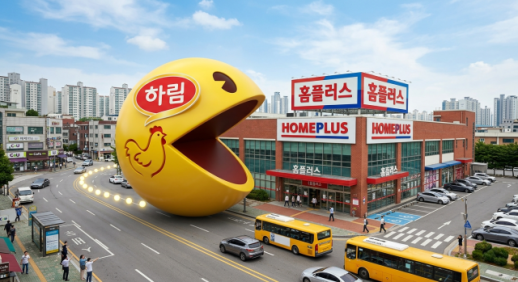 Harim to rescue Homeplus Express, completing farm-to-fork empire SEOUL, April 23 (AJP) - South Korea's poultry giant Harim Group has been named preferred bidder for Homeplus Express, the supermarket arm of the country's No. 2 retailer Homeplus, in a deal that could throw a lifeline to the creditor-protected hypermarket chain and complete Harim's long-pursued vertical integration from chicken farm to checkout counter. Homeplus said on Tuesday that Harim Group affiliate NS Shopping was selected as the preferred bidder for its smaller-format supermarket division, following a public tender conducted as part of the retailer's court-led rehabilitation. Industry watchers peg the likely acquisition price at around 300 billion won ($202 million), well below the 1 trillion won once floated when the unit first went up for sale. NS Shopping, which has pledged to link Homeplus Express' nationwide brick-and-mortar network with its TV home shopping, T-commerce and online mall businesses, described the acquisition as a strategic move to strengthen its omnichannel competitiveness. The move marks Harim's return to the super supermarket (SSM) segment after a 14-year absence. Homeplus Express, with about 295 stores at the end of last year, ranks third by store count behind GS Retail's GS The Fresh (585) and Lotte Shopping's Lotte Super (338). The acquisition would effectively complete a food value chain Harim has pieced together over the past decade. Starting out as a chicken processor in the late 1970s, the group expanded into feed, pork and processed foods before buying bulk shipper Pan Ocean for 1 trillion won in 2015 to secure grain imports. Harim has also spent years developing an urban high-tech logistics complex in Seoul's Yangjae district, after acquiring the site in 2016 for 452.5 billion won. Industry observers say Homeplus Express' store network, roughly 80 percent concentrated in the Greater Seoul area, dovetails with that logistics hub and could serve as last-mile delivery nodes. Still, experts caution that the strategic logic alone may not be enough to carry the deal through. "Securing a retail channel has long been Harim's unfulfilled ambition, but given the structural downturn in offline retail and Harim Industries' current financial condition, the risks are significant if the deal is justified by vertical integration alone," said Kim Dae-jong, a professor of business administration at Sejong University. "The outcome will depend on whether the group can genuinely turn its stores into quick-commerce logistics hubs and extract real cost savings through manufacturing-to-retail integration." For Homeplus, the deal offers a rare piece of good news after a brutal year. The chain, wholly owned by private equity firm MBK Partners since 2015, filed for court-led rehabilitation in March 2025 after credit rating downgrades triggered a liquidity squeeze. MBK had acquired the retailer from British owner Tesco for 7.2 trillion won in what was then Asia's largest leveraged buyout. Homeplus has since shuttered dozens of stores, fallen behind on supplier payments and drawn regulatory scrutiny. The National Pension Service, which invested 612.1 billion won in the original deal, has estimated potential losses of about 900 billion won. The deal has also unsettled labor, though not in the direction often assumed. The Korea Mart Labor Union (KMLU)'s Homeplus branch, affiliated with the militant Korean Confederation of Trade Unions, had long opposed selling Express as a stand-alone asset, viewing it as a prized division whose disposal could hollow out the rest of the chain. Rather than opposing a change in management, it has called for a professional restructuring specialist such as UAMCO to replace MBK at the helm — a distinction widely misread as hostility to the sale itself. "We believe a professional restructuring firm like UAMCO would manage the company far better than a non-specialist private equity group such as MBK," said Choi Cheol-han, general secretary of the KMLU's Homeplus branch. "This sale is not just about a supermarket chain. It is the golden hour for Homeplus as a whole to stabilize, and for the wage arrears and supply disruptions to finally be addressed." The Seoul Bankruptcy Court set a May 4 deadline for creditors to approve Homeplus' rehabilitation plan, after granting a two-month extension in March. The plan hinges on selling Homeplus Express to raise operating funds and persuading creditors led by Meritz Financial Group, which holds senior beneficiary rights over a trust backed by 62 store properties securing 1.22 trillion won in loans. Risks loom on both sides. Harim's food manufacturing arm Harim Industries posted a 146.7 billion won operating loss last year and has accumulated more than 500 billion won in cumulative losses over the past five years. On the Homeplus side, approval of the revised rehabilitation plan is far from certain, with major creditors earlier balking at a 300 billion won debtor-in-possession financing proposal. 2026-04-23 15:26:58
 -
 Naver to auto-disable comments on articles with high toxic content rates SEOUL, April 23 (AJP) - South Korea's dominant internet portal Naver announced it will automatically disable comment sections on news articles where its artificial intelligence moderation system detects an unusually high volume of malicious posts, in the latest effort by the company to clean up its online commentary environment. Starting Thursday, Naver's AI-based detection system will scan articles across all news sections — including politics and elections — and shut down commenting when abuse levels breach a set threshold. The AI detection system Naver introduced in 2019 was the first in the domestic internet industry, continuously upgraded to flag negative expressions such as profanity, sexual, and violent language. The company said a further upgrade to the AI model is planned for later in April. "Naver has been working to make the comments section a space for healthy communication, and we will continue to listen to diverse opinions to respond to rapidly evolving forms of malicious commentary," said Kim Su-hyang, a leader at Naver. The move builds on a restriction Naver imposed last month, suspending comments beneath articles in its politics and election sections ahead of the June local elections. The company has also separately rolled out a "memorial comment" feature since February, allowing users to post condolences with a single click on articles covering disasters, accidents and deaths. About 23 media organizations have adopted the memorial comment function to date, and articles featuring it have drawn about six times more comments relative to page views compared with other articles from the same outlets, Naver said. 2026-04-23 09:03:23
 -
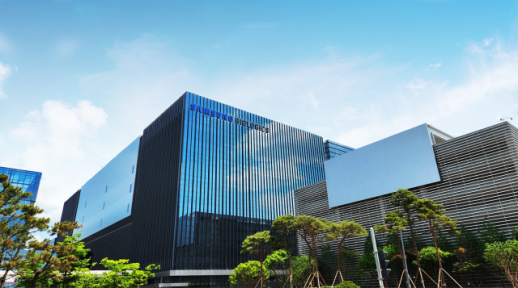 Samsung Biologics posts record Q1 but faces first-ever strike threat SEOUL, April 22 (AJP) - Samsung Biologics, the world's largest biopharmaceutical contract manufacturer, delivered its strongest-ever quarterly results on Tuesday but faces a looming walkout by its union, casting a shadow over an otherwise buoyant earnings report. Regulatory filings released Wednesday reported that operating profit surged 35 percent year-on-year to 580.8 billion won ($392.7 million), while revenue climbed 26 percent to 1.26 trillion won from the year-earlier quarter, the results marking the strongest opening quarter in the company's history. The Incheon-based contract development and manufacturing organization said it would maintain its full-year revenue growth guidance of 15 to 20 percent, first issued in January. The forecast does not yet incorporate contributions from a newly acquired production facility in Rockville, Maryland, which the company said it would factor into updated projections at a later date. Samsung Biologics completed the Rockville acquisition at the end of March, securing two current good manufacturing practice plants with a combined 60,000-liter drug substance capacity. The deal gives the company its first U.S. manufacturing footprint and positions it to serve North American pharmaceutical clients with shorter supply chains and faster turnaround times. The company's cumulative order book now stands at $21.4 billion across 112 contract manufacturing and 169 contract development agreements. Samsung Biologics has also begun ramping up its fifth plant in Incheon, which is expected to drive additional revenue growth through the remainder of the year. In a separate development, Samsung Biologics said it had agreed with Eli Lilly to establish Lilly Gateway Labs in Songdo, Incheon — the first instance of a global pharmaceutical firm's open innovation program partnering with a Korean company to set up a domestic hub. The facility is intended to foster academic and industry partnerships around next-generation biologic therapies. The record earnings come as the company faces its first-ever labor dispute. Samsung Biologics' union, which represents about 75 percent of the workforce, voted overwhelmingly in late March to authorize a strike and held a rally outside the Songdo campus on Wednesday, threatening a walkout from May 1 to 5. The two sides remain at odds over wage increases and personnel policy reforms after 13 rounds of bargaining failed to produce a deal. Shares of Samsung Biologics closed at 1,567,000 won per stock, 1.32 percent lower than the day before. 2026-04-22 16:39:55
 -
 South Korea opens World IT Show 2026 with spotlight on physical AI and robotics SEOUL, April 22 (AJP) - South Korea's Ministry of Science and ICT on Wednesday opened the World IT Show 2026, a three-day exhibition at COEX showcasing the latest advances in artificial intelligence, robotics and information and communications technology. The event, running through Friday, drew 460 companies and institutions from 17 countries to a 24,800-square-meter exhibition hall under the slogan "Beyond Idea, Into Action: AI moves Reality." Organizers said the show was designed to offer hands-on experience with what they called the "physical AI transformation." Major Korean firms including Samsung Electronics, LG Electronics, and SK Telecom joined the exhibition alongside robotics specialists such as Maum.AI. The floor was divided into four themed pavilions covering award-winning technologies, global exhibitors, entertainment tech and the country's AI semiconductor ecosystem. At an opening-day ceremony, AI audio platform developer Gaudio Lab received the Presidential Award for a tool that automates music separation, dubbing and subtitling in K-content exports. Law-focused AI firm Law & Company took the Prime Minister's Award, while Samsung Electronics was among six companies honored with the minister's prize. A separate export consultation fair paired with about 190 Korean firms with 50 overseas buyers from 14 countries for business matchmaking sessions aimed at supporting startups and mid-tier ICT companies seeking global partnerships. "The World IT Show is an important venue to experience the convergence of physical AI and cutting-edge technologies," Second Vice Minister Ryu Je-myung said at the opening. "We hope it becomes a meaningful occasion for our AI and ICT companies to share the fruits of innovation and forge new partnerships." 2026-04-22 14:32:27
 -
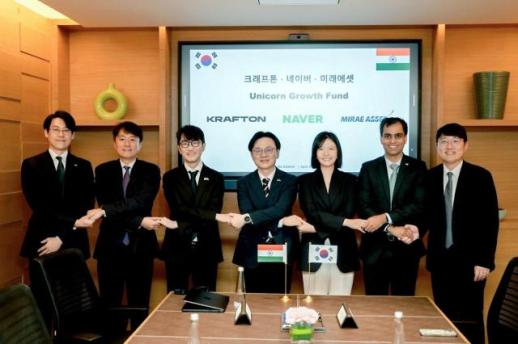 Naver, Krafton, Mirae Asset unveil India-focused tech fund during presidential visit SEOUL, April 21 (AJP) - South Korean internet giant Naver joined forces with gaming company Krafton and financial services firm Mirae Asset to hold a briefing in New Delhi on Tuesday to promote the Unicorn Growth Fund, a jointly established investment vehicle targeting up to 1 trillion won ($681 million) in high-growth technology companies across Asia with India at its core. The briefing was held on the sidelines of President Lee Jae Myung's three-day state visit to India, the first by a South Korean leader in eight years. South Korean Minister of Trade, Industry and Resources Kim Jung-kwan, who attended the briefing, said the initiative could serve as a bridgehead for Korean companies seeking to enter emerging markets. The fund, which began operations earlier this year with an initial pool exceeding 500 billion won, builds on the success of the Asia Growth Fund that Naver and Mirae Asset co-launched in 2018. That predecessor fund backed prominent unicorns including Indian food delivery platform Zomato and Southeast Asian ride-hailing giant Grab. Krafton CEO Kim Chang-han said the company would leverage its track record in India's gaming ecosystem to support promising firms through the fund. Separately, Naver has forged a strategic partnership with Tata Consultancy Services (TCS), the information technology arm of India's largest conglomerate, as it accelerates its foray into one of the world's fastest-growing digital economies. Naver said it signed a memorandum of understanding with TCS on Monday during the Korea-India Business Forum in New Delhi, hosted by the Federation of Korean Industries. Under the deal, the two companies will combine their capabilities in artificial intelligence, cloud computing and business-to-consumer services to pursue opportunities in AI transformation and digital transformation for Indian enterprises. The IT firm said it expects the partnership to unlock new revenue streams by pairing its platform technology with TCS's global service network and data assets. "As India is actively expanding its AI ecosystem with the goal of becoming an AI powerhouse, we expect to create new business opportunities through this partnership with TCS, leveraging collaboration in AI, cloud and B2C services," Naver CEO Choi Soo-yeon said. 2026-04-21 15:51:26
 -
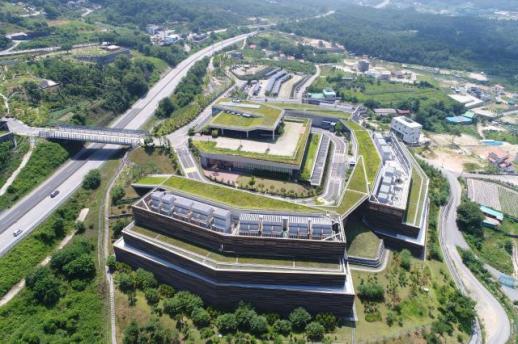 Naver takes stake in GS wind farm to power data centers SEOUL, April 21 (AJP) - South Korean tech giant Naver announced it will acquire a 30 percent stake in a GS-built wind power plant and sign a power purchase agreement (PPA) to secure renewable electricity for its data centers, marking the first time a RE100 member in the country has directly invested in a renewable energy generation entity. The wind farm, currently under construction in Yeongyang county in North Gyeongsang Province, is expected to produce about 180 gigawatt-hours of electricity per year. Commercial operations are set to begin in the first half of 2028, after which the facility will supply power to Naver's data centers in Sejong and Chuncheon. Naver said the deal would raise the share of renewable energy in its total power consumption to about 46 percent by 2029. The company declared a "2040 Carbon Negative" goal in 2020 and has since signed three separate PPAs covering solar and small-scale hydropower, the wind farm investment new to the portfolio. By taking an equity position in the generation entity rather than simply purchasing power, Naver said it has secured a long-term, stable supply of clean electricity in a domestic market where renewable energy output still falls short of demand. The arrangement also removes a key constraint on future investment that had been imposed by reliance on fossil fuel-based power procurement. "As power demand from data centers grows rapidly alongside the expansion of AI and cloud services, securing renewable energy is an essential task," said Lim Dong-ah, Naver PR and ESG policy leader. "Through this new model of direct investment in a power generation entity, we will strengthen energy supply stability and continue our efforts to achieve the 2040 Carbon Negative goal." The deal reflects a global trend in which technology companies are moving aggressively to lock in renewable power for their energy-hungry data centers. Meta was the largest corporate clean energy buyer in 2025, signing more than 10 gigawatts of PPAs, while Microsoft secured an agreement with Brookfield for over 10.5 gigawatts of new renewable capacity through 2030. Google, meanwhile, signed a 15-year PPA with TotalEnergies for 1 gigawatt of solar capacity in Texas earlier this year. In South Korea, LG Uplus signed a 20-year solar PPA with GS E&C to supply renewable power to its data centers and office buildings, while Kakao has incorporated renewable energy infrastructure into its purpose-built data center in Ansan. 2026-04-21 10:12:05
 -
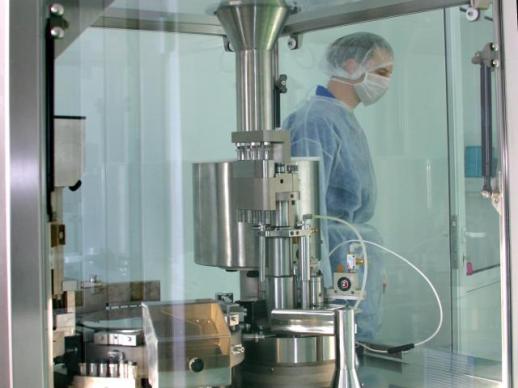 S.Korea bio clinical trials surge in Q1, half near commercialization SEOUL, April 21 (AJP) - South Korea approved more than 50 biopharmaceutical clinical trials in the first quarter of 2026, with late-stage candidates accounting for the majority of the pipeline, according to the Korea Biomedicine Industry Association. The association revealed Tuesday that 53 trials received approval between January and March, averaging about 17.7 approvals per month. Multinational trials dominated the period, comprising about 87 percent of the total, or 46 cases. Late-stage trials — including phase 3, phase 3b and phase 2/3 — numbered 28, accounting for about 53 percent of all approvals, pointing to a pipeline clustered around near-term commercialization. Antibody-based therapies led by modality, with monoclonal antibodies, bispecific and trispecific antibodies, polyclonal antibodies and antibody-drug conjugates (ADCs) making up more than 80 percent of approvals at 43 cases. Monoclonal antibodies and bispecific antibodies anchored the field, with 19 and 14 cases respectively, both concentrated in late-stage development. ADCs, with seven cases across seven products, spanned early- and late-stage trials, reflecting their emergence as a next-generation antibody-based therapeutic class. Oncology was the dominant indication, accounting for about 49 percent of approvals. However, domestic developers accounted for only about 19 percent of approvals, with foreign-led trials making up the remainder. BioNTech's bispecific antibody pumitamig led individual investigational drugs with five approvals, spanning indications including non-small cell lung cancer, triple-negative breast cancer, and gastroesophageal cancer. 2026-04-21 09:34:07
 -
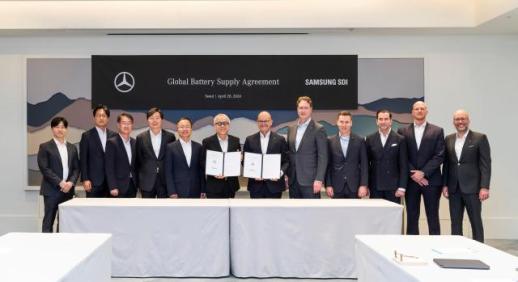 Samsung SDI strikes first battery supply deal with Mercedes-Benz SEOUL, April 20 (AJP) - Samsung SDI announced it has signed a multi-year contract to supply electric vehicle batteries to Mercedes-Benz, marking the Korean battery maker's first supply agreement with the German premium automaker. The deal, signed at the Andaz Seoul Gangnam hotel on Monday, will see Samsung SDI provide high-performance cells built with high-nickel NCM (nickel, cobalt, and manganese) cathode chemistry for Mercedes-Benz's next-generation electric vehicles. Samsung SDI CEO Choi Joo-sun and Mercedes-Benz Chairman Ola Kallenius were among senior executives from both companies who attended the signing ceremony. Under the agreement, the batteries will be fitted in upcoming compact and mid-size electric SUVs and coupe models as Mercedes-Benz seeks to sharpen its electrification lineup. The cells are designed to maximize driving range through high energy density while delivering long cycle life, high power output and Samsung SDI's proprietary safety solutions. "This partnership represents the union of the innovative DNA that both companies possess," a Samsung SDI spokesperson said said, adding that the contract was significant in securing battery orders aimed at leading the global EV market. The Mercedes-Benz deal marks Samsung SDI's return to the EV contract table after a string of energy storage deals, including a 1.5 trillion won ($1 billion) agreement in March to supply prismatic ESS batteries to a U.S. energy firm. The company has been pivoting aggressively toward the fast-growing North American storage market amid sluggish global EV demand, but the latest contract signals it is pursuing both fronts simultaneously. Samsung and Mercedes-Benz said they also plan to deepen strategic cooperation in next-generation battery development and future mobility technologies. Shares of Samsung SDI was trading at 540,000 won on 3:21 p.m., 5.26 percent higher than the day before. 2026-04-20 15:00:07
 -
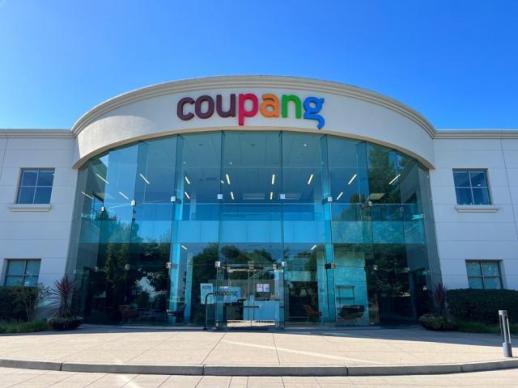 Korea's antitrust watchdog weighs naming Coupang's Kim as group head SEOUL, April 20 (AJP) - South Korea's antitrust regulator is poised to decide as early as next week whether to name Coupang founder Bom Kim as the e-commerce group's controlling shareholder, a shift that would bring the U.S. citizen under the country's toughest corporate disclosure and anti-self-dealing rules for the first time. The Korea Fair Trade Commission (KFTC) is in the final stages of reviewing whether to replace the Coupang corporate entity with Kim, chairman of Nasdaq-listed parent Coupang, as the group's designated "same person," industry and regulatory sources said Sunday. A ruling must be issued by the May 1 statutory deadline. Investigators are zeroing in on whether Kim's younger brother, Vice President Yoo Kim, and other relatives hold stakes in or take part in the management of Coupang's Korean affiliates — one of the conditions that would disqualify the group from keeping a corporate designation. Coupang has pushed back, arguing that no grounds exist for a change. The company has reportedly told regulators that Yoo Kim is an unregistered executive at Coupang, not at any Korean affiliate, and therefore does not take part in local management. However, sources say the vice president received about 14 billion won ($9.48 million) in compensation and incentives from Coupang over the four years through 2025, including $430,000 in pay and 74,401 restricted stock units last year alone. Whether the KFTC accepts that argument again this year is far from certain. Tensions between the two sides have flared over document submissions, with the watchdog examining whether Coupang's partial refusal to hand over requested materials may constitute a violation of the Fair Trade Act, which carries penalties of up to two years in prison or fines of 150 million won. Chairman Kim was issued an official warning in 2021 after omitting 15 relatives from a disclosure filing, though regulators declined to refer the case for prosecution. Coupang's designation has long been an outlier. It is one of only eight of the 46 conglomerates subject to cross-shareholding restrictions last year whose designated head is not a natural person — a group that otherwise consists largely of state-linked or ownerless firms such as POSCO, KT and Nonghyup. The watchdog first designated Coupang as a large business group in 2021, citing enforcement difficulties in applying the rules to a foreign national, and has maintained the corporate designation ever since. A shift to an individual designation would subject Kim to disclosure obligations covering his personal dealings and expose any companies owned by him or his relatives to regulations barring preferential intra-group transactions — closing a loophole that critics argue lets the founder control the group without the accountability borne by Korean chaebol chiefs. 2026-04-20 09:51:21
 -
 Hanwha Solutions trims capital raise to 1.8 trillion won after regulator pushback SEOUL, April 17 (AJP) - Hanwha Solutions announced it will scale back its planned rights offering to 1.8 trillion won ($1.21 billion) from an initial 2.4 trillion won, retreating from a contentious fundraising plan that drew a rare regulatory rebuke and sharp criticism from shareholders. The revised offering, approved by the company's board on Friday, comes just eight days after the Financial Supervisory Service ordered Hanwha Solutions to refile its securities registration, citing missing or unclear disclosures that could impair investor judgment. Under the amended plan disclosed through regulatory filing, funds earmarked for debt repayment will shrink to 907 billion won from 1.49 trillion won, while the roughly 908 billion won set aside for capital investment remains untouched. The issue size has been cut to 56 million new shares from 72 million, with the subscription price lowered to 32,400 won per share from 33,300 won. The allotment ratio for existing shareholders correspondingly drops to 0.2604 new shares per held share from 0.3348. The record date is May 14. The company has previously defended the move as a necessary measure against a credit-rating downgrade amid a prolonged downturn in the global solar and petrochemical sectors. "We sincerely reflect on and apologize for failing to adequately communicate the scale and rationale of the rights offering with shareholders and the market in its early stages," said Nam Jung-woon, head of the chemical division. The company said it will raise the remaining 600 billion won shortfall through asset monetization and capital-like financing, and pledged to refrain from additional equity offerings through 2030 while maintaining its shareholder return policy. 2026-04-17 17:01:59