
Journalist

Kim Dong Young
davekim0807@ajupress.com
-
 Pentagon prepares for weeks of ground operations inside Iran, reports say SEOUL, March 29 (AJP) - The Pentagon is preparing for weeks of ground operations inside Iran that could thrust the month-old war into a perilous new phase, the Washington Post reported on Sunday, citing U.S. officials familiar with the planning. The operations would fall well short of a full-scale invasion but could involve a mix of special operations forces and conventional infantry carrying out raids on Iranian soil, the officials said on condition of anonymity. Discussions within the administration over the past month have included plans to seize Kharg Island, Iran's vital oil-export hub, and to strike coastal sites near the Strait of Hormuz where Iranian forces can target commercial and military vessels, according to the Post. One official said the operations would take "weeks, not months" to accomplish their objectives, though another told the newspaper the timeline could stretch to several months. White House press secretary Karoline Leavitt said the Defense Department's mission is to provide the commander-in-chief with the widest range of options, adding that the planning does not mean the president has made a decision. The United States has been massing ground-capable forces in the region as Operation Epic Fury enters its fifth week. About 5,000 Marines and 2,000 paratroopers from the 82nd Airborne Division are being repositioned to the Middle East, and U.S. Central Command said about 2,200 Marines of the 31st Marine Expeditionary Unit aboard the assault ship USS Tripoli completed their deployment to the theater on March 27. U.S. media have also reported that the Pentagon is considering sending up to 10,000 additional troops, including infantry and armored units, to the region — a buildup that would represent the largest American ground presence in the Middle East since the Iraq War. Whether President Donald Trump will authorize a ground campaign remains uncertain, but the scale of the preparations signals that military planners are assembling executable options rather than theoretical contingencies, defense analysts said. 2026-03-29 11:03:13
 -
 North Korea unveils upgraded solid-fuel ICBM engine, signaling push toward multiple-warhead capability SEOUL, March 29 (AJP) - North Korea disclosed a ground test of a new carbon-fiber solid-fuel engine designed for an intercontinental ballistic missile, showcasing a 26 percent leap in thrust as Pyongyang seeks to sharpen its nuclear deterrent amid widening U.S. military operations in the Middle East. The engine revealed Sunday generated a maximum thrust of 2,500 kilonewtons (kN), up from 1,971 kN recorded in a September 2024 test, the Korean Central News Agency reported. The upgraded powerplant is widely believed to be destined for the Hwasong-20, a new solid-fuel ICBM Pyongyang has been developing. Analysts say the thrust increase points less toward extending range — the North is already assessed to field ICBMs capable of reaching the U.S. mainland — and more toward enabling a multiple independently targetable reentry vehicle (MIRV) warhead configuration. A MIRVed ICBM can strike several targets simultaneously, making interception far more difficult. The test came about a month into the U.S.-Israeli war against Iran, whose own multi-warhead ballistic missiles have penetrated allied missile defense shields to hit targets. With Washington also having moved against Venezuelan President Nicolás Maduro earlier this year, Pyongyang appears intent on reminding the United States that it possesses strategic weapons capable of striking the American homeland. North Korea has not launched an ICBM since the Hwasong-19 flight on Oct. 31, 2024, and has refrained from direct criticism of U.S. President Donald Trump, leaving a narrow diplomatic channel open. South Korea's Joint Chiefs of Staff said U.S. and South Korean intelligence agencies are "closely monitoring" the North's weapons development activities. 2026-03-29 09:56:05
 -
 Gulf Crisis, One Month On: Asia turns to coal to keep factories and crackers running Editor's Note: One month into the Iran war, a conflict that began in the Middle East is rapidly evolving into a broader economic and strategic shock for Asia, and in this special series, AJP examines those spillovers in full — from a comprehensive overview of Asia-wide shocks to industrial realignments, the mounting risk of a third oil shock, and rising security tensions — as the central question shifts from how the war unfolds in the Middle East to how deeply its consequences will be embedded across Asia. SEOUL, March 27 (AJP) - As the energy crisis triggered by the blockade of the Strait of Hormuz drags on, the collateral damage has spilled well beyond oil and gas. From South Korea — where hoarding has driven up prices of plastics, paint, cement and even garbage bags — to Southeast Asia, governments are declaring energy emergencies and reverting to stopgap measures such as restarting coal-fired power plants, risking lasting carbon footprints in a region that already accounts for more than half of global emissions. At the core of the disruption lies naphtha, the petrochemical feedstock underpinning a wide range of industrial production. Prices have surged about 73 percent since early January, while ethylene — the basic building block of plastics — has doubled, reflecting both supply disruptions and panic buying. With supplies tightening, Seoul has moved into what it calls "wartime" management. The government imposed a temporary ban on naphtha exports, mandated daily reporting of inventories and shipments, and warned against hoarding, with the power to intervene directly in corporate stockpiling if necessary. "Supply itself has been cut off, halting production entirely," said Jung Jun-hwan, a senior researcher at the Korea Energy Economics Institute, warning that shutdowns could spread across industries where raw material costs account for a large share of total expenses. The strain is already cascading. Paint makers have raised prices by up to 55 percent, cement producers are grappling with a tripling in urea costs, and freight surcharges have climbed as much as 50 percent. Across manufacturing supply chains — from autos to shipbuilding — firms are scrambling to secure dwindling petrochemical inputs. Industry groups warn of a potential "April shutdown cascade," as smaller firms are priced out by larger competitors stockpiling limited supplies. Even garbage bags have emerged as a symbol of the disruption, prompting government reassurances over inventory levels. In a sign of how far policy boundaries are shifting, the United States has allowed South Korea to pay for Russian oil products, including naphtha, in non-dollar currencies without triggering secondary sanctions — reopening supply routes once closed after the Ukraine war. The shock, however, is regional. Across Asia, governments are rolling back energy transition policies to secure immediate supply. South Korea is lifting caps on coal generation and accelerating nuclear restarts, while Japan is releasing record emergency oil reserves. The Philippines has declared a national energy emergency, and countries including Thailand, Indonesia and India are turning back to coal to meet surging demand. Some economies have gone further, introducing four-day workweeks to curb fuel consumption. The result is an energy policy reversal that could push regional carbon emissions up by an estimated 5 to 8 percent in the short term, even as longer-term dynamics point in the opposite direction. Analysts say the crisis is reinforcing the strategic vulnerability of fossil fuel dependence. "The most viable escape from a world where geopolitical instability dictates energy prices is clean energy," said Kim Do-hyun, a senior analyst at Samsung Securities, noting that while fossil fuel use may rise in the near term, the relative appeal of renewables and nuclear power will strengthen over time. For now, however, the immediate pressure is mounting. With petrochemical plants running at minimum rates and inventories measured in days rather than weeks, the window to prevent broader industrial disruption — and a deeper economic shock across Asia — is narrowing fast. 2026-03-27 15:07:35
 -
 Samsung SDI to acquire stake in precursor maker Fino to secure battery supply chain SEOUL, March 27 (AJP) - Samsung SDI is set to invest about 30 billion won ($19.8 million) in Fino, a South Korea-listed subsidiary of China's CNGR Advanced Material, as part of efforts to strengthen its battery materials supply chain. Fino released regulatory filing Thursday it had approved a rights issue of about 14.29 million new shares through a board resolution. Samsung SDI will subscribe to about 6.13 million shares, or about 40 percent of the offering, at an issue price of 4,897 won per share to secure an estimated 7.5 percent stake in the company. The investment is aimed at securing supply chain stability from the precursor stage of battery production, a critical upstream material used in manufacturing cathodes. Precursors account for 70 to 80 percent of cathode production costs. Fino is building domestic production facilities through CNP New Material Technology, a joint venture with POSCO Future M, with production lines for both nickel-cobalt-manganese and lithium iron phosphate cathode materials. Samsung SDI is ramping up its energy storage system business in the United States through StarPlus Energy, a joint venture with Stellantis in Indiana. The company has secured more than 3.5 trillion won in ESS battery supply contracts with U.S. energy firms since late last year. The move comes as Washington tightens restrictions on Chinese-origin materials in ESS batteries, pushing Korean battery makers to reduce their reliance on Chinese suppliers to meet subsidy requirements under U.S. energy legislation. 2026-03-27 08:48:03
 -
 Korean game publishers play it safe as AI reshapes industry fault lines SEOUL, March 26 (AJP) - South Korea's major game publishers are sticking to safer bets — stable leadership and proven revenue drivers — as they navigate the uncharted waters of artificial intelligence. A wave of executive reappointments during this year's shareholder season reflects that caution. Krafton renewed the terms of Chairman Chang Byung-gyu and CEO Kim Chang-han for a third consecutive term, while Nexon retained CEO Lee Jung-hun after posting a record 4.5 trillion won in annual revenue. Netmarble and NHN are also set to extend leadership tenures on the back of strong earnings. The continuity underscores a structural shift in the industry, where blockbuster titles now take five years or more to develop, making leadership changes mid-cycle a costly risk. At the same time, publishers are accelerating a pivot beyond their traditional mobile-gaming base toward console and PC platforms, targeting global markets. Netmarble has launched its first cross-platform open-world title, The Seven Deadly Sins: Origin, spanning PlayStation 5, Steam and mobile, while NC — rebranded from NCSoft — is preparing console-focused titles such as Defect and Limit Zero Breakers. Pearl Abyss' Crimson Desert, a domestically developed triple-A open-world title, has already sold more than three million copies since its March debut, highlighting the industry's growing ambition to compete globally. Yet the rollout also exposed a new tension point: artificial intelligence. Players discovered AI-generated artwork embedded in Crimson Desert, including distorted visual elements, prompting an apology from Pearl Abyss. The company said the assets were created during early development using experimental tools and were unintentionally left in the final version. The backlash contrasted sharply with Nexon's Arc Raiders, which has been widely praised for using procedural AI to enhance gameplay environments. The title has sold over 14 million copies since its October 2025 launch, underscoring how AI can add value when deployed transparently. The divergence highlights a widening fault line across the industry: AI that enhances user experience tends to be rewarded, while undisclosed use — particularly in visible creative assets — risks consumer backlash. "AI output still reaches only about 90 percent of human quality," said Jung Nae-hun, a professor at the Tech University of Korea. "Studios tend to avoid using it for visible elements like characters or interfaces. When it slips through, it invites backlash." Korea's regulatory framework is also evolving. The Framework Act on Artificial Intelligence, which took effect in January, requires disclosure of AI-generated content, though the industry has raised concerns that additional rules could create overlap and confusion during iterative development processes. Beyond AI, publishers are facing broader structural challenges. Game production remains excluded from Korea's content production tax credit system, even as film and television receive incentives of up to 30 percent. Officials have acknowledged the gap, noting that flagship game titles now routinely cost more than 1 trillion won to develop. Meanwhile, legal risks are also emerging alongside technological shifts. A U.S. court recently ruled that Krafton breached its acquisition contract with Unknown Worlds Entertainment, after executives consulted ChatGPT in shaping a takeover strategy — a case that underscores the growing intersection between AI use and corporate governance. Despite these headwinds, the industry continues to grow modestly. Domestic game revenue reached 23.85 trillion won in 2024, up 3.9 percent on-year, while exports rose to $8.5 billion. Console games recorded the fastest growth, reinforcing the strategic pivot. North America's share of exports climbed to 19.5 percent, signaling early traction in Western markets, while industry employment expanded to around 87,600. Still, publishers say the numbers mask deeper constraints. "The biggest thing the government can do is curb excessive regulation," Jung said. "That remains a heavier drag on the industry than any tax gap." 2026-03-26 15:43:07
 -
 Naver's counterfeit crackdown lifts seller revenues by 34%, study finds SEOUL, March 26 (AJP) - Naver's anti-counterfeit measures have driven a 34 percent rise in seller revenues and a 20 percent increase in sales volume on its e-commerce platform, according to research released by the company's user protection and self-regulation committee. The findings, led by Kim Ji-young, a professor at Sungkyunkwan University, drew on transaction data from sellers who cooperated with Naver's counterfeit prevention program. Brands participating in the initiative also saw likes and visitor counts on their Smart Store pages climb 11 percent and 9 percent, respectively. Consumer sentiment tracked alongside the sales data. More than 80 percent of shoppers surveyed said the program was effective at protecting them from fake goods, while over 73 percent expressed satisfaction with Naver's overall enforcement efforts. Brands were even more bullish — more than 92 percent said cooperation with Naver had a meaningful impact on their image, and every respondent indicated plans to deepen the partnership. Naver deploys an AI-powered monitoring system to flag suspicious listings and behavior at an early stage. The platform also runs a mystery shopping program, in which staff purchase goods as ordinary consumers before sending items for expert authentication, and a buyer-participation appraisal service that lets customers submit products for free verification. Sellers found to be distributing counterfeits face immediate account termination under a one-strike-out policy, a measure Naver says has sharply curtailed fake goods on the platform. "This is a leading case in which platform self-regulation has simultaneously achieved consumer protection and merchant growth," committee chairman Kwon Hun-yeong said, adding that the body would continue research to help spread similar practices across other platforms. 2026-03-26 15:07:08
 -
 GM commits $600 mln to South Korea plants, doubling down on small SUV hub SEOUL, March 25 (AJP) - General Motors announced it will invest $600 million in its South Korean operations to upgrade production facilities and sharpen its global competitiveness, cementing the country's role as a key manufacturing hub for small SUVs. The Detroit automaker said Wednesday the latest commitment of $300 million — earmarked for press machinery upgrades and plant modernization — builds on an equal investment announced in December 2025 for product enhancement and technology improvements across its Korea-built SUV lineup, bringing the combined total to $600 million. GM Korea President and CEO Hector Villarreal said the investment reflects the company's confidence in its local workforce and operations. "Competition continues to grow across the global industry, with many new OEMs entering export markets around the world. While our work is not done, we have a strong foundation, and this investment is a sign of confidence in our operations," he said. Korea Development Bank Chairman Park Sang-jin, whose institution holds a stake in GM Korea as a secondary shareholder, said the bank would continue working with GM to ensure the unit sustains its competitiveness in global markets over the long term. 2026-03-25 15:40:29
 -
 Korea turns to coal, nuclear and diversification to improvise vs Gulf shock SEOUL, March 25 (AJP) - As the Middle East war grinds deeper and energy lifelines fray one by one, South Korea finds itself staring down a crisis it long feared but never quite prepared for — the real prospect of running short on the gas that powers homes and electricity grids, keeping Asia's fourth-largest economy running. QatarEnergy, the Gulf state's national energy company, announced Tuesday it would suspend LNG deliveries to South Korea, China, Italy and Belgium, citing severe damage to production facilities at the Ras Laffan industrial complex from Iranian missile strikes on March 18 and 19. The company's CEO Saad al-Kaabi said about 17 percent of Qatar's LNG export capacity had been knocked out, with repairs expected to take three to five years. The force majeure strikes at a critical artery of the South Korean economy, while rippling across Asia's tightly linked gas market. Natural gas accounted for about 20 percent of the country's primary energy consumption in 2024, roughly 56 million to 61 million metric tons of oil equivalent. Gas-fired plants generated about 26 percent of the nation's electricity last year, burning an average of 69,000 tons of LNG per day for power generation alone. Matching its needs, South Korea is the world's third-largest LNG importer behind China and Japan, bringing in about 46.7 million tons in 2025. Qatar supplied about 14.9 percent of that total, ranking as the third-largest source after Australia at 31.4 percent and Malaysia at 16.1 percent, according to the Korea International Trade Association. While the Qatari share is far from dominant, the knock-on effects of its withdrawal threaten to reshape the entire global supply landscape. Ras Laffan handles about 20 percent of the world's total LNG supply, and spot prices in Northeast Asia have already surged roughly 88 percent in under a month, climbing from $10.73 per million British thermal units in late February to $20.18 by mid-March. "This is no longer a matter of spot price spikes. The structural premise that long-term Middle Eastern contracts offer the cheapest and most reliable gas has been shaken at its foundation," said Lee Dong-wook, an analyst at IBK Securities. "What we are witnessing is a signal that Asia's entire gas procurement framework may need to be redrawn." With markets rattled and winter stockpiling season approaching, Seoul has moved swiftly. President Lee Jae Myung ordered a government-wide emergency response at a cabinet meeting on Tuesday. "The escalation and prolongation of the Middle East war are intensifying supply instability in crude oil and natural gas," Lee said, adding that "a preemptive emergency response system must be activated at the government level." The Ministry of Climate, Energy and Environment rolled out a sweeping energy conservation plan the same day. Starting at midnight Tuesday, about 1.5 million vehicles belonging to public institutions and their employees face mandatory weekday driving restrictions in a rotational system — the first such measure in 15 years, since the Middle East oil supply scare of 2011. The government's most aggressive move targets the power mix itself. Five nuclear reactors currently undergoing maintenance will be brought back online by May to lift the national utilization rate from 73 percent to above 80 percent. Coal-fired power plants will also be given greater latitude, with seasonal fine dust restrictions that cap output at 80 percent set to be eased on days when air quality permits. The government is further considering extending the lifespan of three coal plants slated for decommissioning this year. The Gulf-triggered LNG crunch is expected to leave a deeper carbon footprint across Asia, as countries are forced to fall back on fossil fuels to replace natural gas. In South Asia, Bangladesh is increasing coal-fired generation and imports, while Pakistan is leaning more heavily on domestic energy sources to avoid a repeat of LNG-driven power shortages seen during past supply shocks. Across Southeast Asia, the Philippines and Thailand are boosting coal-fired output, while Vietnam is negotiating additional coal supply to offset reduced LNG usage. Like Korea, Japan's major utilities are maintaining high coal utilization rates and ramping up nuclear output. Korea's ministry projects the recalibrated energy mix would cut daily LNG consumption in the power sector by up to 20 percent. The Gulf crisis has also accelerated Korea's push to wean itself off Middle Eastern fuel. It is expected to lend fresh momentum to the $44 billion Alaska LNG project, which Washington has been pitching to Seoul and Tokyo as a geopolitically secure alternative to Gulf supplies. POSCO International has already taken a stake in Glenfarne Alaska Partners, the project's lead developer, and U.S. Energy Secretary Chris Wright has said he is in discussions with Korean and Japanese firms over participation. Broader U.S. LNG imports are also gaining appeal. South Korea has steadily raised its American share to about 9.4 percent of total purchases, and a deal struck last year commits Korea Gas Corp. to an additional 3.3 million tons per year from U.S. terminals. But since new supply projects will take years to bear fruit, Seoul must navigate the immediate shortfall with the tools at hand. "Even if the Alaska LNG project is a full go, it will be at least 2040 before any results materialize. The Qatar cut will likely push Korea to seek extra supply from other contractors, including Canada and the United States," said Kim Seon-yong, a gas policy researcher at the Korea Energy Economics Institute. Kim noted that unlike crude oil, LNG is difficult to store for extended periods — but added that the timing offers a narrow window of relief, as peak winter demand is still months away. "The government can diversify its energy portfolio to cope with certain shortages from the Middle East conflict, but every energy source has an irreplaceable purpose," Kim said. "If geopolitical difficulties prevent Korea from stacking a full load by October, we may have to resort to expensive spot LNG options." 2026-03-25 15:36:36
 -
 S.Korea says U.S. cleared sanctions risk on Russian naphtha imports amid Middle East supply crunch SEOUL, March 25 (AJP) - South Korea said it had secured confirmation from the U.S. Treasury Department that domestic companies face no secondary sanctions risk when purchasing Russian crude oil and petroleum products using non-dollar currencies, clearing a major hurdle to alternative supplies as the Strait of Hormuz blockade tightens its grip on energy flows. Yang Ki-wook, the Ministry of Trade, Industry and Resources director-general of industrial resource security, said at a government briefing that Washington had confirmed payments in Chinese yuan, Russian rubles and UAE dirhams would not trigger secondary sanctions on South Korean buyers. The ministry said it had relayed the confirmation to domestic firms and would continue to coordinate with companies on any further difficulties. "Naphtha appears to have a relatively higher likelihood of being imported compared to crude oil," Yang said, noting that crude purchases face additional hurdles including quality verification and the need to complete transactions within tight deadlines. The announcement comes as Asia's fourth-largest economy scrambles to shore up energy supplies after Iran's blockade of the Strait of Hormuz — through which about 99 percent of South Korea's Middle Eastern crude imports pass — severely disrupted global oil flows. Yang also addressed QatarEnergy's force majeure declaration on long-term liquefied natural gas supply contracts with South Korea, China, Italy and Belgium, triggered by Iranian missile strikes that damaged two of Qatar's 14 LNG production trains at the Ras Laffan industrial complex. He said Seoul had not yet received formal notification from QatarEnergy but noted the government had already excluded Qatari volumes from this year's supply calculations in anticipation of such a move. Yang said further consultations between Korea Gas Corporation and QatarEnergy would be needed to assess the long-term contractual impact, but emphasized that supplies through year-end had already been secured through alternative sources. The ripple effects of the prolonged conflict are now reaching everyday consumer goods, with paint prices surging more than 40 percent and supply chain disruptions hitting items ranging from engine oil to garbage bags. Yang said the government was monitoring the situation down to what he described as the "capillary level," prioritizing items by urgency and prepared to impose export curbs or supply adjustment orders if necessary to stabilize the domestic market. Gas prices, meanwhile, are expected to face upward pressure in the second half of the year as the market shifts from a buyer-driven to a seller-driven environment, the ministry said, adding it was consulting with the Ministry of Climate, Energy and Environment and related agencies to minimize the burden on households. 2026-03-25 14:31:15
 -
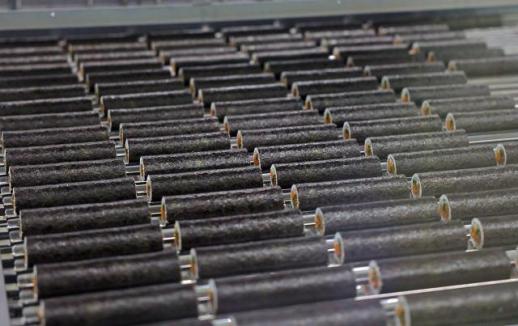 CJ CheilJedang builds food industry's first automated frozen kimbap line to chase global demand SEOUL, March 25 (AJP) - CJ CheilJedang has constructed the food industry's first automated frozen gimbap production facility at its CJ Blossom Campus in Jincheon, North Chungcheong Province, as the South Korean food giant moves to scale up its global kimbap business. The fully automated line handles every stage of production — from filling and rolling to cutting and tray packaging — and took about 18 months to develop, according to CJ on Wednesday. The company said the system reduces weight variation between products, raises output speed, and meets stringent international hygiene standards through a redesigned process layout. Quality improvements were also built into the line. CJ CheilJedang applied its frozen-rice cooking expertise to optimize the texture and sheen of each product's rice, while ingredient-specific heat treatment settings were calibrated to preserve the color and bite of individual fillings. Flash-freezing technology ensures quality holds through distribution and storage. The investment backs the company's Bibigo frozen gimbap line, which launched in 2023 as part of its broader K-food export push. The products have logged cumulative global sales of over 8 million units, with annual revenue growing at about 130 percent on average. CJ CheilJedang said it plans to use the Jincheon facility as a springboard for further export growth, with a focus on the U.S., Europe, and Australia. The company also intends to expand its U.S. grocery store presence in the second half of this year. "This goes beyond simply securing capacity — it is a strategic investment to accelerate the expansion of K-food's global footprint," a spokesperson said, adding that the firm aims to build Bibigo gimbap into a defining brand of Korean cuisine worldwide. 2026-03-25 09:15:48