
Journalist

Kim Dong-young and Han Jun-gu
davekim0807@ajupress.com
-
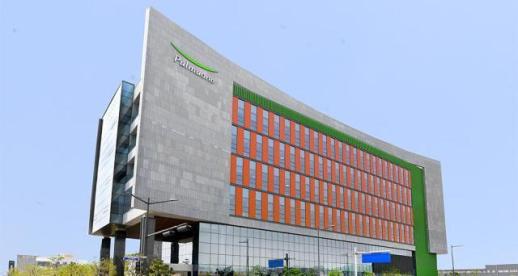 Pulmuone climbs to 3rd among global food firms in S&P sustainability ranking SEOUL, April 15 (AJP) - South Korean food maker Pulmuone announced it achieved its highest-ever ranking in S&P Global's Corporate Sustainability Assessment, climbing to third place among global food companies from fourth a year earlier. The result, based on the 2025 CSA and reflected in S&P Global's Sustainability Yearbook 2026 published in February, marks the third consecutive year Pulmuone has placed in the top five of the food products category. The assessment evaluated about 9,200 companies across 59 industries worldwide, with only 848 earning a place in the yearbook. In the food products segment, 241 companies underwent review. Pulmuone said it was the top-ranked South Korean food company among them, few points ahead of its domestic competitor CJ Cheiljedang, earning recognition for strengthened board independence, tighter environmental management and upgraded food safety systems. The company attributed the improvement to gains across all three ESG pillars. In governance, it bolstered independent oversight by raising the mandatory ratio of outside directors to one-third from one-quarter and linking board evaluations to executive compensation. On the environmental front, Pulmuone built a carbon footprint tracking system under the ISO 14067 standard and completed third-party verification for key products including tofu and udon noodles. Pulmuone has also pushed into food technology, entering the commercial verification stage for land-based seaweed aquaculture and developing a CRISPR-Cas-based diagnostic platform for pathogen detection, for which it has secured patents. "This result is an objective, global-level recognition of the sustainability efforts Pulmuone has pursued since its founding, rooted in our philosophy of love for neighbors and respect for life," said Lee Jung-eon, the company's head of sustainability management. "We will continue to advance Pulmuone's unique values into ESG management that meets global standards, under our mission of 'Creating a Healthy Tomorrow for People and the Earth through Wholesome Food,' and build an ever-stronger foundation for sustainable growth." 2026-04-15 08:37:09
 -
 Early adopters but slow system: Korea's AI gap widens SEOUL, April 14 (AJP) - South Koreans are among the world's fastest adopters of artificial intelligence and among the most prolific in patenting the technology, yet government and corporate support remains strikingly behind, a global comparative study found. The 2026 AI Index Report, released Tuesday by Stanford University's Institute for Human-Centered Artificial Intelligence, is a 423-page annual assessment widely regarded as one of the most authoritative gauges of global AI progress. South Korea registered 14.31 AI patents per 100,000 people in 2024 — far ahead of Luxembourg at 12.25, China at 6.95 and the United States at 4.68. Adoption is accelerating just as quickly. Generative AI usage rose from 25.9 percent in the first half of 2025 to 30.7 percent in the second half, the fastest increase among 30 regions surveyed. The gain pushed South Korea up seven places to 18th globally, though still well behind leaders such as the United Arab Emirates at 64 percent and Singapore at 60.9 percent. On paper, policy momentum is strong. South Korea enacted 17 AI-related laws between 2016 and 2025 — the second-highest among G20 nations after the United States. The report highlighted the AI Basic Act, which took effect this year, as a cornerstone framework aimed at fostering innovation while building public trust. The country also remains a significant player in model development, ranking third globally with five notable AI models launched in 2025, trailing only the United States and China. But beneath these headline gains, the gaps widen. Private AI investment totaled just $1.78 billion, placing South Korea 12th globally — a fraction of the $285.9 billion poured into the sector in the United States and $12.4 billion in China. Even with 59 newly funded AI firms, the ecosystem lacks the scale to match its innovation output. Structural weaknesses extend to the workforce. About 81.4 percent of South Korea's AI talent pool is male, one of the widest gender imbalances among surveyed countries, alongside Japan and Brazil. More critically, institutional support is lagging. South Korean employees gave their organizations some of the lowest marks globally for AI readiness. Workers in Japan, South Korea and Portugal reported the weakest support for AI literacy training and governance frameworks, with fewer than half saying their employers provide meaningful backing. In India, by contrast, roughly 85 to 90 percent reported strong institutional support. The disconnect between individual adoption and organizational readiness is not unique to Korea, but it is particularly pronounced. A McKinsey survey found 88 percent of organizations use AI in at least one business function, yet 60 percent say adoption remains stuck at the pilot stage — a gap increasingly described as "shadow AI," where employees deploy tools informally outside official systems. "South Korea is known to have a particularly high rate of shadow AI usage. Even though formal adoption through corporate channels remains limited, employees are quietly using these tools on their own," said Park Hyun-kyu, professor of management of technology at Sogang University. Globally, the expansion is rapid and uneven. Generative AI reached 53 percent population adoption within three years — faster than personal computers or the internet. Corporate investment surged 130 percent to $581.7 billion in 2025, with the United States dominating the field. For South Korea, the picture is clear: a country moving faster than most at the edge of adoption and innovation, but held back by hesitant institutions and underpowered capital. Until that gap closes, its AI momentum risks remaining diffuse — energetic, but not yet fully mobilized. 2026-04-14 13:48:26
 -
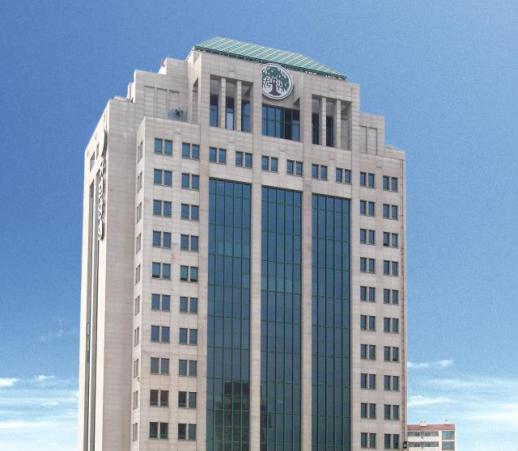 Yuhan wins FDA orphan drug tag for Gaucher disease candidate SEOUL, April 13 (AJP) - South Korean drugmaker Yuhan said its experimental Gaucher disease therapy YH35995 has received orphan drug designation from the U.S. Food and Drug Administration (FDA), unlocking a suite of regulatory and commercial incentives as the company pushes into rare disease treatment. The FDA's orphan drug program is designed to spur development of therapies targeting conditions affecting small patient populations with limited treatment options. Designated drugs are eligible for clinical trial tax credits, waived FDA review fees and up to seven years of market exclusivity upon approval. Gaucher disease is a hereditary lysosomal storage disorder caused by a specific enzyme deficiency, triggering abnormal metabolic buildup that can cause enlarged liver and spleen, anaemia, low platelet counts and skeletal complications. Type 3 Gaucher disease, the form Yuhan is targeting, also carries neurological symptoms for which treatment options remain scarce. YH35995 is an oral small-molecule glucosylceramide synthase inhibitor — a substrate reduction therapy that works by lowering the production of glucosylceramide, or GL1. In preclinical studies, the compound showed a tendency to cross the blood-brain barrier and sustain GL1 suppression in the brain, raising hopes it could address the neurological dimension of the disease. Substrate reduction therapy works by limiting the amount of a fatty substance that accumulates in cells when the body lacks the enzyme needed to break it down — an approach that sidesteps the need to replace the defective enzyme directly. Yuhan said the compound has already received approval for a Phase 1 clinical trial in South Korea. 2026-04-13 14:52:53
 -
 Two firefighters killed in cold storage warehouse blaze in southern South Korea SEOUL, April 12 (AJP) - Two firefighters were killed after becoming trapped inside a burning cold storage warehouse in South Korea's southwestern county of Wando, authorities said, in a blaze that triggered a vapor explosion and prompted a national outpouring of grief. The fire broke out at about 8:25 a.m. Sunday at a seafood processing plant in Wando County, South Jeolla Province, according to fire authorities. A seven-member crew arrived within six minutes and entered the 3,693-square-meter facility to rescue a plant worker who had inhaled smoke. After pulling the worker to safety, the crew briefly withdrew. When fresh plumes of smoke appeared from another section of the warehouse, the team re-entered at about 8:45 a.m. to finish suppression, believing the fire was nearly contained. Minutes later, flammable vapors from epoxy and urethane materials that had accumulated near the sealed ceiling ignited, producing a flashover that sent flames erupting through the entrance. Commanders radioed evacuation orders three to four times, but two firefighters could not escape. A rapid intervention team located the body of a 44-year-old fire lieutenant from Wando Fire Station at about 10:02 a.m., roughly five meters from the entrance. A 31-year-old firefighter from Haenam Fire Station was found dead at 11:23 a.m. The blaze was fully extinguished three minutes later. Authorities believe the fire started when a worker used a blowtorch to strip paint from walls lined with urethane foam insulation and finished with sandwich panels. The sealed structure, designed to maintain freezing temperatures, trapped smoke and hindered rescue efforts. Police and fire investigators are probing the exact cause. President Lee Jae Myung paid tribute to the pair, saying they "rushed to the most dangerous scene to protect lives and fulfilled their duty to the very last moment," in a X post. He vowed the government would ensure all frontline personnel can operate in safer conditions. 2026-04-12 17:28:51
 -
 Search for escaped wolf at South Korean zoo drags into fifth day SEOUL, April 12 (AJP) - A wolf that tunneled its way out of a government-run zoo in the central city of Daejeon remained at large as search teams armed with thermal-imaging drones combed nearby hillsides for a fifth straight day without success. The two-year-old male wolf, nicknamed Neukgu, was last detected by a thermal camera mounted on a drone at about 1:30 a.m. on April 9, the day after its escape. Trackers lost the animal's trail when the drone was pulled back for a battery swap, and it has not been spotted since. Authorities deployed 12 drones on Sunday to sweep a radius of about 6 km around O World, the municipal theme park from which Neukgu escaped on April 8 by digging beneath an electrified wire fence surrounding its safari enclosure. Ground crews have been kept to a minimum over fears that a large human presence could spook the animal deeper into the forested terrain. Neukgu's last meal before the breakout was two chickens, fed the evening of April 7. Baited traps have been placed along likely travel routes, and experts estimate the wolf could survive about 10 days in the wild provided it finds water. But because Neukgu was born and hand-reared in captivity, it lacks hunting skills, and specialists warn it could perish if the search drags on much longer. The escape has drawn nationwide attention and a wave of public sympathy. President Lee Jae Myung weighed in, expressing hope for the wolf's safe return and urging that no one be harmed in the process. Citizens and animal-rights groups have demanded that Neukgu be captured alive, recalling a 2018 incident at the same zoo in which a puma was shot dead just four and a half hours after escaping its enclosure. The search has also been hampered by a flood of AI-generated fake photographs purporting to show the wolf at various locations around the city, with authorities saying the fabricated images caused confusion in the early stages of the operation and disrupted some media coverage. Reports say the search would continue through Monday before officials decide whether to launch a full-scale joint operation involving multiple agencies if no progress is made. 2026-04-12 15:40:52
 -
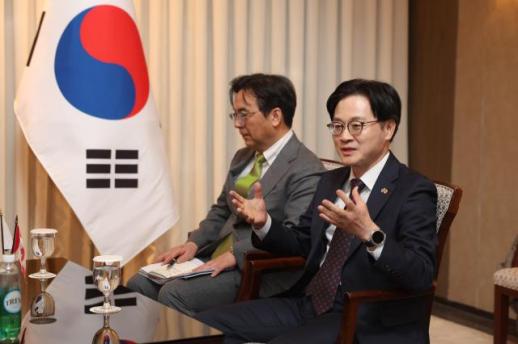 S. Korea secures 80 pct of May crude needs without tapping reserves, minister says SEOUL, April 12 (AJP) - South Korea has secured about 80 percent of its crude oil import needs for May and expects to weather the ongoing supply disruptions triggered by the Middle East conflict, Minister of Trade, Industry and Resources Kim Jung-kwan said. Kim said the volume of crude oil locked in for May had risen by 10 percentage points from the previous week, bolstered by private-sector stockpiles held by domestic refiners. "We believe we can get through April and May without releasing government reserves, unlike during the Russia-Ukraine war when such a release was necessary," Kim said. The minister, who returned Friday from a four-nation envoy trip, struck a guarded tone on the fate of seven South Korean-linked oil tankers stranded near the Strait of Hormuz. He said Seoul was working to secure their passage but cautioned that the outcome remained unpredictable. As an alternative to the choked strait, Kim said the government was preparing to route South Korean vessels through the Red Sea via Saudi Arabia's Yanbu port, with escort support from a destroyer. He added that Riyadh had pledged to give South Korean shipments top priority in allocating Yanbu port capacity. To diversify away from its heavy reliance on Middle Eastern crude, Seoul is pursuing imports from the United States and Kazakhstan. Kim said negotiations with Astana had made considerable headway and that specifics on volumes and terms could be announced early next week. Naphtha supply, a critical petrochemical feedstock often called the lifeblood of South Korea's manufacturing sector, is also stabilizing. Kim said procurement is projected to recover to about 80 percent of normal levels in April and May, with daily monitoring in place alongside industry partners to prevent further disruption. The government has earmarked 869.1 billion won (about $585.4 million) in a recently enacted supplementary budget for supply chain stabilization, including subsidies covering half the cost increase on naphtha imports for domestic petrochemical producers. Kim said the intervention was urgent because soaring feedstock prices had made it more economical for some firms to idle their plants entirely. On helium — a gas essential to semiconductor fabrication — Kim said supplies from U.S. sources had been secured through the end of June, ensuring that no chip production facility would face a shutdown over the interim. 2026-04-12 14:11:48
 -
 EcoPro secures C$6 mln from Canada to develop all-solid-state battery materials SEOUL, April 12 (AJP) - South Korean battery materials maker EcoPro said it has secured 6 million Canadian dollars (about $4.3 million) in research funding from Canada's federal government to develop lithium metal anode technology for next-generation all-solid-state batteries. The grant, awarded to EcoPro Lithium — a unit of subsidiary EcoPro Innovation — falls under Ottawa's Energy Innovation Program, which aims to bolster domestic battery supply chains. EcoPro Innovation signed a joint development agreement with Quebec state utility Hydro-Quebec in March last year to co-develop lithium metal anodes. The funding will bankroll efforts to build and demonstrate a full lithium metal anode value chain on Canadian soil by March 2027, spanning lithium metal production, high-purity refining, ultra-thin foil fabrication and performance validation. The company also plans to accelerate construction of a semi-mass-production pilot line for the material. Lithium metal anodes offer about 10 times the energy density of conventional graphite-based anodes, a leap that could dramatically extend electric vehicle driving range and position the technology as a linchpin of the all-solid-state battery era. Beyond anodes, the EcoPro group is developing solid electrolytes, solid-state cathode materials and lithium sulfide. Its solid electrolyte program, targeting commercialization next year, has a pilot facility at the company's Ochang headquarters in North Chungcheong Province producing samples at a rate of 40 tons per year. "We are advancing lithium metal anode technology in collaboration with the Canadian government and local partners to lead the all-solid-state battery market," an EcoPro Innovation spokesperson said. "This government funding is expected to significantly accelerate the pace of development." 2026-04-12 10:27:15
 -
 UPDATE: U.S.-Iran talks collapse in Islamabad over nuclear, Hormuz disputes SEOUL, April 12 (AJP) - The United States and Iran failed to reach an agreement after 21 hours of grueling negotiations in the Pakistani capital, plunging the fragile two-week ceasefire into uncertainty with its April 21 expiration now looming. The marathon session, mediated by Pakistan, stretched across multiple rounds from Saturday evening through Sunday morning but ultimately foundered over deep divisions on Iran's nuclear program and the reopening of the Strait of Hormuz. U.S. Vice President JD Vance, who led the American delegation, told reporters after the talks that Washington had yet to see a fundamental commitment from Tehran. "We leave here with a very simple proposal: a method of understanding that is our final and best offer," Vance said. "We'll see if the Iranians accept it." Iran's semi-official Tasnim news agency struck a defiant tone, reporting that the Iranian delegation had rebuffed what it characterized as Washington's attempt to extract through negotiation concessions it could not win on the battlefield, including the dismantling of Iran's uranium enrichment program and the immediate opening of the strait. The United States sought not only the surrender of Iran's existing stockpile of highly enriched uranium but also curbs on its enrichment capabilities — an effort to eliminate both Tehran's present nuclear capacity and its future weapons potential. Iran, for its part, refused to relinquish what it called its right to peaceful nuclear energy. The Strait of Hormuz emerged as an equally intractable flashpoint. Washington demanded the immediate reopening of the vital waterway, whose blockade has driven up global oil prices and rattled international markets. Tehran, however, views the strait as its most powerful bargaining chip and insisted it would lift the blockade only after a comprehensive deal is sealed, senior Iranian officials cited. Tensions along the waterway underscored the stakes. U.S. Central Command said it had begun preparations for mine clearance in the strait, with two Navy guided-missile destroyers transiting the passage. Iran's Islamic Revolutionary Guard Corps warned that any warships attempting to pass would face a forceful response. The breakdown of the first face-to-face encounter between the two adversaries casts a shadow over the ceasefire brokered on April 8. With the truce set to expire in nine days, concerns are mounting that Israel could intensify its military operations against Hezbollah in Lebanon, further complicating any return to the negotiating table. Experts note that Iran appears to believe time is on its side, calculating that the economic pain inflicted by the Hormuz blockade gives Washington greater incentive to make concessions. The United States and Israel, meanwhile, have signaled they reserve the right to strike Iran's nuclear facilities at any time. 2026-04-12 09:33:28
 -
 PlayStation's March pick Crimson Desert storms past 4 million sales SEOUL, April 10 (AJP) - Action-adventure game Crimson Desert has surpassed 4 million copies sold in just 12 days, turning its turbulent launch by Pearl Abyss into one of the most dramatic comeback stories in recent gaming history and cementing the South Korean studio's first single-player title as a global commercial juggernaut. The open-world game, built on Pearl Abyss' proprietary BlackSpace Engine, logged 2 million sales on its first day on March 20 across PlayStation 5, Xbox Series X,S and PC. It crossed 3 million within four days and breached the 4-million mark by March 31, generating an estimated $200 million in revenue, according to Alinea Analytics. PlayStation Blog on April 1 named the new game the "Players' Choice Winner" for March 2026, with the title outpolling major releases including Marathon, MLB The Show 26 and Scott Pilgrim EX in a monthly user vote. From 'mixed' to 'very positive' The recognition adds to a growing list of accolades for a game that initially stumbled out of the gate. Crimson Desert's launch was anything but smooth. Critics flagged clunky controls and a convoluted narrative, dragging the game's Steam rating down to "mixed" within hours of release. But the studio moved fast. Pearl Abyss rolled out a series of rapid patches, overhauling the control scheme, expanding storage systems, adding fast travel points, and tuning boss difficulty, all of which steadily reversed the tide. The Steam rating climbed to "very positive," with about 82 percent of more than 121,000 user reviews now positive. Industry watchers estimate the game's break-even point at about 2.5 million copies. With sales already well past that threshold, the revenue flowing in from here feeds directly into Pearl Abyss' bottom line. When Pearl Abyss disclosed that Crimson Desert had crossed 3 million copies sold in just four days, the stock surged 23.34 percent on March 25 and extended its rally over three consecutive trading sessions, closing at 58,800 won on March 27. Shares later touched 72,000 won, their highest level since April 2022, before settling at 55,600 won as of Friday. Seven years and $133 million in the making Crimson Desert's journey to release was as sprawling as its open world. First announced in November 2019 as a prequel to the studio's flagship MMORPG Black Desert Online, the project underwent a fundamental identity shift during development as Pearl Abyss pivoted from an MMO format to a standalone single-player action-adventure — a bold gamble for a studio that had built its reputation on persistent online worlds. The seven-year development cycle, carried out by a team of fewer than 200 developers, carried an estimated price tag of about 200 billion won ($135 million). The result is a sprawling fantasy continent called Pywel, rendered seamlessly with no loading screens, where players control three characters through faction warfare, dragon riding, mech combat and an ecosystem of side activities that have kept players exploring well past the main storyline. Players find their own fun The game's community has wasted no time making Crimson Desert their own playground. One popular meme on Reddit's r/CrimsonDesert forum captures the prevailing mood: a "distracted boyfriend" template showing a helmeted Kliff turning away from the main story to ogle side activities — tackling goats, assembling a cat army, dyeing clothes, fighting stone worms, and chasing waterfalls. Others have shared clips of players accidentally blowing themselves up with their own explosive arrows or ragdolling the first boss off a cliff. Kwon Min-gu, a 28-year-old AI instructor who has logged more than 50 hours in the game, said Crimson Desert was his first experience with a single-player open-world RPG. While the early story left him reaching for explanations — "the protagonist's resurrection goes completely unexplained," he noted — the combat system won him over once he began experimenting with the skill tree. "Every time you unlock a new branch, the combat style changes completely," Kwon said. "I ditched the shield for dual blades, slotted in an attack-speed rune, and started clearing camps like a blender. But you have to be careful. If you accidentally slash an explosive barrel, it kills you too." Kwon said he learned to shoot explosive barrels with arrows from a distance before engaging enemies, and later picked up an electric element ability to fill out his area-of-effect toolkit. "You go from fist fighting to fanning out electric arcs with a combat fan," he said. "The variety is real." He added that he has largely ignored the main storyline in favor of challenge objectives and side quests, a playstyle that appears increasingly common among the game's most devoted users. DLC, co-op and the road ahead Pearl Abyss has signaled that Crimson Desert's story is far from over. "We will upgrade the game based on user feedback and strive to make Crimson Desert a title that is loved for a long time," Pearl Abyss CEO Heo Jin-young said at a shareholders meeting. On the question of future downloadable content, Heo struck a strategic tone. "We believe we should focus DLC on the areas where we excel most," Heo said. "Our priority is to continuously provide satisfaction to users. While an expansion pack sales model is also a good approach, we intend to make the strategic choice that drives more sales of the original Crimson Desert." Speculation about cooperative multiplayer content has swirled since before launch, fueled by early-stage development materials that once referenced large-scale battles and co-op mechanics. Pearl Abyss has not confirmed a multiplayer expansion but has not ruled one out either, with Heo's emphasis on "user feedback" leaving the door open. A roller coaster on the KOSDAQ Pearl Abyss shares have traced a trajectory almost as dramatic as Crimson Desert's storyline. The stock rallied from about 49,450 won in late February to an intraday high of 71,500 won on March 16 as pre-launch hype peaked, only to crater 29.88 percent in a single session on March 19 — the day review embargoes lifted and Metacritic scores landed below investor expectations — hitting the daily limit down at 46,000 won. The freefall proved short-lived. When Pearl Abyss disclosed that Crimson Desert had crossed 3 million copies sold in just four days, the stock surged 23.34 percent on March 25 and extended its rally over three consecutive trading sessions, closing at 58,800 won on March 27. Shares later touched 72,000 won, their highest level since April 2022, before settling at 55,600 won as of Friday. A record year within reach Pearl Abyss, founded in 2010 by Kim Dae-il and Youn Jae-min, has long been synonymous with Black Desert Online, the technically ambitious MMORPG that put the studio on the global map. Crimson Desert now represents a second pillar, and analysts say the title could propel the company to record revenues this year. With a Nintendo Switch 2 port reportedly in the research-and-development phase and the potential for DLC and cooperative content on the horizon, the story of Crimson Desert, much like its open world, appears to have plenty of territory left to explore. 2026-04-10 16:33:59
 -
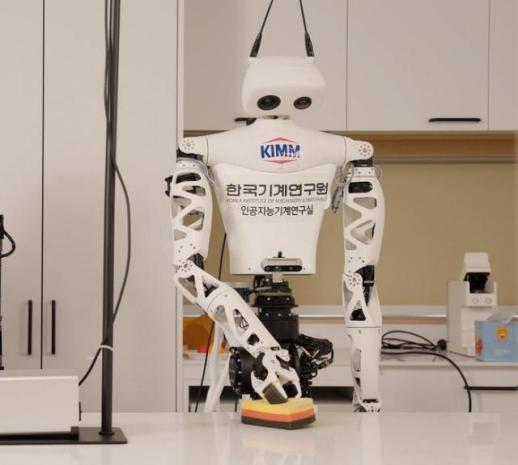 S. Korea's KIMM urges rapid pivot as humanoid era dawns SEOUL, April 08 (AJP) - South Korea's Korea Institute of Machinery & Materials (KIMM) said that 2026 marks the year humanoid robots cross into commercial viability, urging the nation to exploit its manufacturing prowess within a five-year window before the global pecking order hardens. In its 122nd policy report uploaded Wednesday, KIMM said the industry has entered a "commercial tipping point" — the moment where humanoids shed their laboratory origins and begin generating revenue on factory floors and in service settings. The pivot is underpinned by a sharp decline in manufacturing costs. Per-unit expenses currently hover at about $35,000 but are expected to fall to between $13,000 and $17,000 within five years as mass production scales up and component designs mature. China's Unitree Robotics has led the price collapse, driving its flagship model from $90,000 for the H1 in 2024 down to $5,900 for the R1 in 2025 — a trajectory KIMM attributes to Wright's Law, under which unit costs drop 15 to 20 percent each time cumulative output doubles. Shipment volumes are poised to follow a similar exponential curve. Bank of America projects global humanoid deliveries will surge from a cumulative 18,000 units in 2025 to about one million annually by 2030 to 2035. Goldman Sachs forecasts sales climbing from roughly 8,000 units in 2025 to 136,000 in 2030 and 2.1 million in 2035, entering what the bank calls a J-shaped acceleration phase. The United States leads the race with big-tech-driven AI foundation models and semiconductor design advantages spearheaded by Tesla, Nvidia and Figure AI. China, meanwhile, has mobilized more than 140 companies into mass-production competition, with Chinese firms accounting for about 70 percent of newly unveiled humanoid models in 2025 and rapidly consolidating market share through vertically integrated supply chains and state subsidies. South Korea possesses world-class semiconductor, battery and telecommunications infrastructure but remains hobbled by a shortage of indigenous AI foundation models and a fragile supply chain for humanoid-specific components such as actuators and reducers, the report said. To close the gap, KIMM prescribed a "two-track" strategy: the first track calls for localizing core hardware — precision actuators, control systems and dedicated batteries — by leveraging the country's existing manufacturing base. The second track urges swift partnerships with global AI leaders such as OpenAI and Google to bridge the foundation-model deficit rather than attempting to build one from scratch. KIMM itself is spearheading a 220.8 billion won ($149.8 million) national project to develop a mass-production-ready humanoid platform, a self-learning AI brain and an open data factory where industry and academia can jointly train robot models. The institute plans to unveil the first version of its own humanoid, KAIROS, by April 2027. "The era of flashy tech demos is over — what matters now is how quickly a robot can earn its keep on a real factory floor," said Kim Hee-tae, a senior researcher at KIMM's center of R&D policy. "The window through 2030 is the golden time that will determine who commands this market, and Korea must convert its manufacturing edge into robotics leadership before that door closes." 2026-04-08 15:02:09