

Journalist

Seo Hye-seung
davekim0807@ajupress.com
-
 CJ CheilJedang Q1 profit falls 26% on bio slump SEOUL, May 12 (AJP) - CJ CheilJedang, South Korea's largest food maker, reported a 26.0 percent drop in first-quarter operating profit, as a sharp downturn in its bio business overshadowed steady gains overseas from its frozen dumpling franchise. According to regulatory filings released Tuesday, operating profit fell to 148.5 billion won ($100 million) for the three months ended March, while revenue edged up 4.3 percent to 4.03 trillion won, the company said. The figures exclude its logistics affiliate CJ Logistics. On a consolidated basis, revenue rose 6.0 percent to 7.11 trillion won, with operating profit down 17.2 percent at 238.1 billion won. The firm said that the food division carried the quarter, posting a 3.9 percent rise in revenue to 3.04 trillion won and an 11.2 percent jump in operating profit to 143.0 billion won. Overseas food sales climbed 4.5 percent to 1.56 trillion won, driven by its lineup of global strategic products led by the Bibigo dumpling brand. In the Americas, dumpling sales grew 15 percent and shelf-stable rice 7 percent, while frozen pizza continued to gain market share. In Japan, dumpling revenue surged 17 percent on the back of the company's new Chiba plant, pushing its market share into double digits at 11.0 percent for the first time. European and Asia-Pacific sales each expanded 17 percent, with Vietnam up 32 percent and Oceania up 31 percent. The bio division, however, dragged on group earnings. Revenue rose 5.7 percent to 988.7 billion won, but operating profit collapsed 92.4 percent to 5.5 billion won as competition intensified in tryptophan and lysine prices weakened on base effects. Specialty amino acids such as arginine notched record sales volumes, partly cushioning the blow. CJ CheilJedang said it plans to accelerate the rollout of its Bibigo brand in mainstream European retail channels and expand digital marketing in the United States, while pushing higher-margin specialty products in bio. "We will press ahead with the global expansion of K-food through strategic products such as dumplings, while stepping up efforts to improve profitability through bio sales growth and management efficiency," said a company spokesperson. Shares of CJ CheilJedang traded at 212,500 won per stock at 10:37 a.m., 5.76 percent lower than the day before. 2026-05-12 10:43:32
 -
 Kurly posts record Q1 as Coupang stumbles SEOUL, May 11 (AJP) - South Korean online grocer Kurly logged its strongest-ever quarterly earnings in the first three months of 2026, riding a wave of consumer migration away from market leader Coupang as the country's e-commerce hierarchy shows fresh signs of strain. According to regulatory filings released Monday, operating profit jumped to 24.2 billion won ($16.4 million) in the first quarter, a 1,277 percent skyrocketing surge from a year earlier and 1.9 times the company's full-year 2025 operating income. Revenue climbed 28.4 percent on-year to 745.7 billion won, while net income swung to a 20.3 billion won profit. Kurly credited gains in its core fresh-food and beauty categories, alongside its midnight Saetbyeol delivery service launched in February and refined operations at its Gimpo, Pyeongtaek and Changwon logistics centers. The fresh-food segment grew 27.8 percent on-year by transaction value, while beauty expanded 20.2 percent. Kurly N Mart, a grocery storefront the company operates within Naver Plus Store, saw March transactions multiply roughly ninefold from September last year. "Steady efforts in merchandising, logistics and technology have differentiated the customer experience, and our diversification push for new growth engines is bearing fruit from the first quarter," said Kim Jong-hoon, chief financial officer at Kurly. " Having demonstrated both growth and profitability, we plan to firm up and accelerate our IPO roadmap." Kurly's breakout quarter coincides with a sharp reversal for archrival Coupang. The Nasdaq-listed market leader posted a $266 million net loss in the first quarter, swinging from a $107 million profit a year earlier, with adjusted EBITDA collapsing to $29 million from $382 million. Coupang attributed the slump to vouchers issued and network inefficiencies tied to a late-2025 customer-data breach that triggered elevated churn. That fallout has reshuffled the competitive map. Naver Plus Store, the search giant's shopping platform, drew 8.39 million monthly active users in April, overtaking AliExpress to become the country's third-largest general shopping app, according to WiseApp Retail. Naver delivered record first-quarter operating profit of 541.8 billion won as commission revenue absorbed so-called "Coupang defectors," while other players such as Gmarket and 11Street continued to shed users. 2026-05-11 15:46:08
 -
 S-Oil swings to $837 million Q1 operating profit on crude price surge SEOUL, May 11 (AJP) - S-Oil returned to profit in the first quarter as a jump in crude prices triggered by the Middle East conflict delivered hefty inventory gains, more than offsetting headwinds from scheduled maintenance and a domestic petroleum price cap. According to regulatory filings released Monday, the Aramco-controlled refiner posted a consolidated operating profit of 1.23 trillion won ($835.7 million) for the January to March period, swinging from an operating loss of 21.5 billion won a year earlier. Net profit came in at 721 billion won, also reversing a year-ago loss. Revenue edged down 0.5 percent from a year earlier to 8.94 trillion won, as the hit from lower utilization during turnaround maintenance was largely cushioned by surging oil prices. More than half of the quarterly operating profit stemmed from inventory-related gains tied to the crude rally, the company said, with the so-called lagging effect — the timing gap between crude purchases and product sales — widening refining margins despite the drag from maintenance and Seoul's petroleum price ceiling. The refining division led the gains with an operating profit of 1.04 trillion won on revenue of 7.10 trillion won, as the blockade of the Strait of Hormuz disrupted global crude flows, trimmed regional refinery runs and lifted Asian crack spreads for gasoline and diesel. Petrochemicals eked out a 25.5 billion-won operating profit on revenue of 1.10 trillion won, while the lubricants unit booked 166.6 billion won in operating profit on revenue of 737 billion won, down sequentially as feedstock costs outran product prices. Despite the tighter regional supply backdrop, S-Oil said it has preserved stable crude procurement through long-term contracts with parent Saudi Aramco and shipping affiliate Bahri. "Although supply-demand conditions remain tight due to the Middle East war, we are maintaining stable crude supply through long-term purchase agreements with our parent company Aramco," said a company spokesperson. Looking ahead, S-Oil expects firm refining margins in the second quarter as supply disruptions outweigh demand concerns from high prices, while flagging widening uncertainty over petrochemical feedstocks and a recovery in lubricant spreads. The Shaheen Project, the company's flagship petrochemical complex, stood at 96.9 percent EPC progress as of end-April and remains on track for mechanical completion by the end of June, with commercial operations to be readied after trial runs through the end of the year. Shares of S-Oil traded at 111,600 won per stock at 11:43 a.m., 4.45 percent lower than the previous session. 2026-05-11 11:47:51
 -
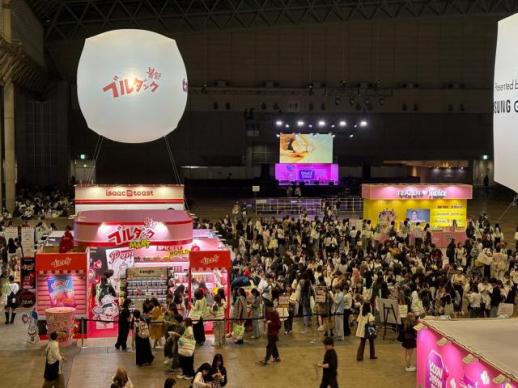 Korean food giants pitch K-cuisine to Japanese fans at KCON 2026 SEOUL, May 11 (AJP) - South Korea's two largest packaged-food exporters turned a K-pop convention in Japan's Chiba into a showcase for Korean cuisine over the weekend, as CJ CheilJedang and Samyang Foods drew long lines at branded experience booths during KCON Japan 2026. The three-day festival, held at Makuhari Messe from May 8 to 10, gave both companies a stage to court Japanese consumers, a market they have flagged as central to their global expansion plans, the companies said on Monday. CJ CheilJedang operated a Bibigo booth themed around K-pop boy group ZeroBaseOne under the slogan "Happy Bibigo day," anchored by an oversized cake display at the entrance. The company served about 20,000 servings of dumplings and its Micho vinegar drink from a food truck that drew queues throughout the festival. Samyang Foods, maker of the Buldak spicy noodle brand, recreated a Han River convenience store inside its "Buldak Mart" booth. The company pre-released "Sweecy Buldak," a milder sweet-and-spicy variant set to launch in Japan this summer, and sampled its four-cheese Buldak potato chips. The push comes as both firms double down on Japan. CJ CheilJedang completed a dumpling factory in Kisarazu, Chiba last September after investing about 100 billion won ($68 million), and its new Bibigo Mandu Gyoza product booked first-month sales of about 700 million won after a March launch. Bibigo dumplings crossed 10 percent market share in Japan in March for the first time, and CJ products are now sold at roughly 40,000 retail outlets including AEON, Costco, Amazon, Rakuten and Don Quijote, the company said. "KCON Japan is a flagship event where Japanese consumers can experience K-food alongside K-culture," said a Samyang Foods official, adding that the company would keep expanding consumer touchpoints through differentiated content and experiential marketing. 2026-05-11 11:33:27
 -
 Lotte Wellfood Q1 operating profit more than doubles on overseas growth SEOUL, May 08 (AJP) - South Korean confectionery maker Lotte Wellfood announced that its first-quarter operating profit more than doubled from a year earlier, lifted by brisk sales in India and Kazakhstan that helped offset sluggish domestic demand. According to regulatory filings released Friday, operating profit jumped 118.4 percent to 35.8 billion won ($24.3 million) on a consolidated basis. Revenue rose 5.4 percent to 1.03 trillion won, while net profit slipped 26.6 percent to 16.7 billion won. Overseas subsidiaries logged 270.5 billion won in sales, up 18 percent year-on-year. The Indian unit benefited from broader distribution channels following a corporate merger and stronger sales of flagship products, while the Kazakh business rode a wave of resilient domestic consumption and exports. Exports climbed 8 percent to 66 billion won as the company expanded its customer base in the United States and China. Combined overseas revenue accounted for about 32 percent of total sales, deepening the maker of Pepero and World Cone's pivot beyond a saturated home market. Lotte Wellfood said it had also tightened cost discipline by streamlining low-margin products and sales channels and improving logistics and procurement efficiency. "We will accelerate the global expansion of our core brands and strengthen peak-season marketing to sustain the momentum in profitability," a company official said, flagging headwinds from raw material price swings and currency volatility tied to the Middle East war. Share of Lotte Wellfood closed at 127,300 won, 6.53 percent higher than the day before. 2026-05-08 16:00:12
 -
 Chinese robot cleaners sweep Korean homes as data worries linger SEOUL, May 08 (AJP) - "Life is so different that I classify things before and after Roborock came into our lives," said 50-year-old Korean housewife Lee Young-joo. She is far from alone. Chinese robot vacuum maker Roborock has crossed the symbolic 50 percent threshold in South Korea's robot vacuum market, overturning a long-held assumption in one of the world's most brand-conscious appliance markets: that Chinese electronics brands would remain bargain-bin alternatives to Samsung Electronics and LG Electronics. For a growing number of younger Korean consumers, that assumption has already disappeared. "I used Roborock even when I lived with my parents. It was already the best robot cleaner back then," said Heo Je-young, a 29-year-old semiconductor engineer preparing to move into a new home with his wife. "Even friends working at Samsung or LG recommended the Chinese version." Roborock ended 2025 with a market share above 50 percent in South Korea, reaching the majority mark for the first time since entering the country in 2019, according to figures disclosed earlier this year. The milestone marks one of the clearest signs yet of China's rapid ascent in premium consumer electronics — not through low-cost manufacturing, but through technological refinement, software integration and speed in categories where Korean firms once led. Premium robot vacuums have rapidly become staple purchases among newlyweds in apartment-dense South Korea, where long working hours and growing demand for automated home care have fueled explosive market growth. Roborock's Korean revenue has roughly doubled every year since 2020, climbing from 29.1 billion won ($19.8 million) that year to more than 300 billion won by 2024, while the overall Korean robot vacuum market has expanded into a roughly 1 trillion won segment. Globally, the Beijing-based company shipped 5.8 million robot cleaners in 2025 for a 17.7 percent market share, according to IDC, retaining its position as the world's top-selling robot vacuum brand for a third consecutive year. IDC also ranked Roborock first in the United States, Germany and South Korea. "Thanks to active investment in research and development and the expansion of our product portfolio, we have maintained the No. 1 position in the global robot vacuum market," a Roborock spokesperson said. The irony for Korean manufacturers is that robot vacuums were once their category to dominate. LG Electronics led the domestic market between 2017 and 2018, while Samsung maintained a smaller but steady presence. That advantage began to erode between 2022 and 2024 as Chinese manufacturers aggressively rolled out all-in-one docking systems capable of vacuuming, mopping, self-cleaning and self-emptying simultaneously. Korean companies hesitated over integrated mopping systems amid concerns about odor and maintenance problems. The delay proved costly. Roborock seized the premium segment with flagship models such as the S8 MaxV Ultra and this year's Saros 20, featuring upgraded obstacle-recognition software and powerful suction systems. Its share of Korea's premium robot vacuum segment briefly exceeded 60 percent in 2024 before stabilizing in the mid-50 percent range this year. Still, the rapid rise of Chinese appliances inside Korean homes has also triggered unease. "Despite the convenience, I still can't completely shake the feeling of a Chinese big brother looking into our living room," Lee said. Security concerns intensified after a joint probe by the Korea Consumer Agency and the Korea Internet and Security Agency in late 2025 uncovered serious vulnerabilities in several Chinese-made robot vacuums. The investigation found flaws allowing unauthorized access to cameras and stored household images in products from brands including Dreame, Narwal and Ecovacs. Samsung and LG products ranked highest overall in the review. Roborock drew fewer direct warnings in the study but was separately called before a National Assembly committee over concerns that its user data policies could permit transfers of Korean consumer information to China. The company later launched an online "Trust Center" and updated parts of its security policy. Questions have also surfaced over performance marketing by some Chinese appliance makers. A separate Korea Consumer Agency review found that cordless vacuum cleaners advertised with suction power figures ranging from 18,000 to 48,000 pascals delivered significantly lower real-world performance than implied in advertisements. After-sales service remains another weak point. Consumers have complained about lengthy repair delays and limited local service infrastructure relative to Roborock's rapidly growing market share. For some consumers, skepticism toward Chinese products still persists despite their technological edge. Kim Jong-chul, 54, said he purchased a cheaper Ecovacs model rather than a premium Roborock unit because of lingering distrust toward Chinese brands. "The mapping had issues, and it constantly bumped into furniture," Kim said. "Eventually it became more troublesome than simply vacuuming myself." Others were frustrated after smaller Chinese brands withdrew from the Korean market entirely. "We eventually threw ours away," said Lee Jae-hyung, who purchased a non-Roborock Chinese vacuum cleaner. "The product itself worked fine, but once the company pulled out of Korea, the app disappeared from the market too. It didn't last long." Samsung and LG are now scrambling to reclaim lost ground. Samsung Electronics unveiled its 2026 Bespoke AI Steam robot vacuum earlier this year, emphasizing on-device encryption and upgraded obstacle-recognition technology. LG Electronics is also preparing a successor to its RoboKing AI All-in-One lineup. For Heo, however, the next purchase decision remains straightforward. His interest in Roborock's newest model depends on whether its upgraded robotic arm can finally solve the one household obstacle earlier versions failed to overcome: pet waste. "It used to smear everything across the floor," he recalled. "But the new version now has robotic arms attached, so I'm willing to give it another try." 2026-05-08 15:10:04
 -
 Kakao posts record first-quarter earnings as AI fuels Korea's platform giants SEOUL, May 07 (AJP) - South Korea's platform giants are converting an artificial intelligence investment cycle into top-line momentum, with Kakao joining rival Naver in delivering AI-revved first-quarter earnings. According to regulatory filings on Thursday, Kakao's consolidated operating profit jumped around 65.9 percent from a year earlier to 211.4 billion won ($145.7 million) on an adjusted basis, while revenue climbed 11.1 percent to 1.94 trillion won — both first-quarter records. The figures reclassify Kakao Games as a discontinued operation following its planned divestiture. Platform revenue, the company's core engine, rose 16 percent to 1.18 trillion won. Talk Biz advertising sales advanced 16 percent to 338.4 billion won, helped by a 27 percent surge in business-messaging revenue as financial-sector advertisers ramped up spending and Kakao diversified its message products. Mobility and payments, grouped under "platform others," climbed 30 percent to 506.5 billion won. Kakao Mobility logged a third consecutive quarter of double-digit growth across taxi, parking and last-mile logistics, while Kakao Pay topped 300 billion won in quarterly revenue for the first time. "The first quarter was encouraging in that we achieved qualitative growth by reinforcing our fundamental competitiveness," Kakao CEO Chung Shin-a said, adding that Kakao would now pivot from a messenger used by 50 million Koreans into "an agentic AI platform." Shares of Kakao edged down 0.70 percent to 45,959 won as of 10:30 Thursday amid broad KOSPI profit-taking. The company, running a chat platform that most Koreans use, has been racing to embed generative AI across its services, including a high-profile tie-up with OpenAI to integrate ChatGPT-based features into KakaoTalk, alongside infrastructure and model partnerships aimed at accelerating its agentic AI roadmap. The tailwind echoes that of larger rival Naver, which reported earlier a 16.3 percent jump in first-quarter revenue to 3.24 trillion won and a 7.2 percent rise in operating profit to 541.8 billion won, as AI-integrated advertising and consumer-to-consumer commerce drove growth. Naver said AI now accounts for more than half of its advertising revenue growth through sharper targeting, while its global ventures arm — anchored by Spain's Wallapop, Poshmark and Kream — saw sales climb 18.4 percent. The company has also signed memorandums with AMD and Tata Consultancy Services to build out AI infrastructure and cloud services 2026-05-07 10:33:58
 -
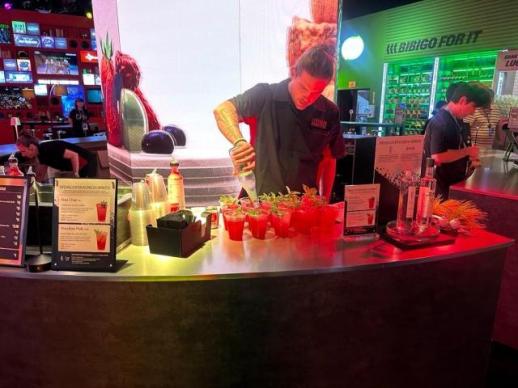 CJ CheilJedang to promote Korean liquor at PGA Tour event SEOUL, May 07 (AJP) - CJ CheilJedang announced it will use this year's "The CJ Cup Byron Nelson," a PGA Tour event, as a platform to introduce Korean traditional liquor to global consumers, part of a broader push to position Korean distilled spirits alongside Japanese sake and Chinese baijiu. The South Korean food giant said cocktails made with Munbae-ju and Gamuchi soju will be served to players and spectators at the tournament, which the company has sponsored through its Bibigo brand. Last year's edition featured four "K-Liquor cocktails" based on Munbae-ju, marking the spirit's debut in Texas. Munbaeju is a grain-based distilled liquor made from millet and sorghum without additives, known for its distinctive wild pear aroma. The drink has gained a following across generations in South Korea. "Thanks to the partnership with CJ CheilJedang, we have been able to introduce Munbaeju to consumers in the United States and beyond for a second consecutive year," said Lee Seung-yong, CEO of Munbae Distillery. "The strong response on the ground confirms the competitiveness of our spirits and bodes well for future sales." The company has signed supply agreements with liquor makers Munbae Distillery and Danong Bio, and is aging the spirits at a facility in Nonsan, South Chungcheong Province. The first products, aimed at the U.S. market, are scheduled for launch in the second half of this year. CJ CheilJedang has also been selected for the government's "Global Next K-Food Project," which supports overseas expansion of traditional Korean liquor producers through programs such as a "K-restaurant week" tied to local dining venues. 2026-05-07 09:36:50
 -
 Hyundai Motor Group revamps labor command at Mobis SEOUL, May 06 (AJP) - Hyundai Motor Group has reportedly created a vice president-level post dedicated to labor affairs at parts affiliate Hyundai Mobis and tapped Jeong Sang-bin, head of Hyundai Motor's policy development office, to fill it, as the country's largest automaker tightens its grip on union risk across the supply chain. The group also elevated oversight of labor relations to the president level, naming Kia President Choi Jun-young as the new chief of the policy development office, the group's top labor post, according to industry sources on Wednesday. The reshuffle follows the March enactment of the so-called Yellow Envelope Law, a revision to articles 2 and 3 of the Trade Union Act that broadens the scope of lawful industrial action and has heightened the threat of walkouts at Hyundai's affiliates. The Korea Metal Workers' Union has since demanded direct bargaining with Hyundai Motor, Mobis and three other affiliates over the wages and conditions of subcontractor staff, a push that analysts warn could feed into parts costs and chip away at the group's global cost competitiveness. Sending Jeong, a policy development veteran, to Mobis may reflect the group's drive to contain labor flare-ups at parts units before they ripple into assembly-line stoppages at the carmaker, sources said. "The personnel order has not been formally issued, so we are not in a position to confirm the matter at this time," said a Hyundai Mobis spokesperson when asked for confirmation. 2026-05-06 14:08:01
 -
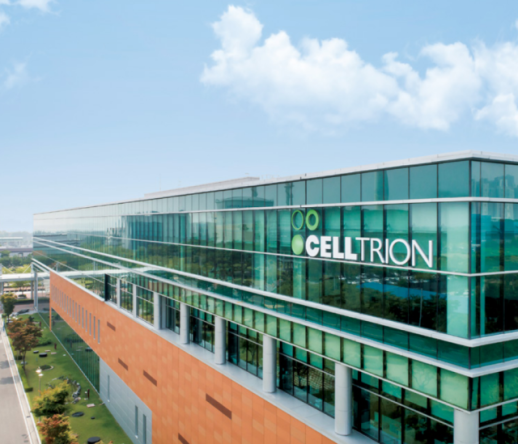 Celltrion posts record Q1 as new biosimilars drive earnings surge SEOUL, May 06 (AJP) - South Korean biopharmaceutical firm Celltrion reported its strongest first-quarter results on record, as a wave of newly launched biosimilars accelerated overseas sales and pushed operating profit more than twofold higher. According to regulatory filings released Wednesday, the company logged consolidated revenue of 1.14 trillion won ($779.43 million) and operating profit of 321.9 billion won for the three months ended March 31, up 36 percent and 115.5 percent, respectively, from a year earlier. The operating margin widened to about 28.1 percent. Sales of five high-margin biosimilars launched last year jumped 67 percent on year to 581.2 billion won, accounting for 60 percent of total product revenue for the first time. Omlyclo, rolled out across Europe in September, has captured market shares of 98 percent in Denmark, 80 percent in Spain and 70 percent in the Netherlands within roughly four months of launch. Momentum has carried into the United States, where Zymfentra, the world's only subcutaneous infliximab, is logging its highest-ever monthly prescription volumes, more than triple year-earlier levels. SteQeyma held an IQVIA-tracked share above 10 percent as of March, supported by reimbursement coverage secured through major pharmacy benefit managers. "Achieving sharp growth in the seasonally weak first quarter reflects the full-fledged market entry of our high-margin product lineup," said a Celltrion spokesperson, adding that the results mark a successful start toward exceeding annual targets of 5.3 trillion won in revenue and 1.8 trillion won in operating profit. Celltrion's board on Wednesday also approved cancelling about 100 billion won of recently bought treasury shares, following last month's retirement of 9.11 million shares worth roughly 1.8 trillion won. The company plans to expand its biosimilar portfolio to 18 products by 2030 and 41 by 2038, while broadening its novel drug pipeline to 20 candidates by 2027. Shares of Celltrion traded at 197,000 won per stock on 9:30 a.m., 0.4 percent lower than the previous session. 2026-05-06 09:35:41