

Journalist

Kim Doo Il
dikim@ajunews.com
-
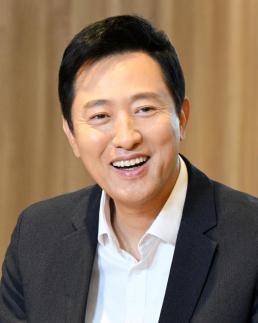 Seoul Mayor Oh Se-hoon Criticizes President Yoon's Real Estate Policies Seoul Mayor Oh Se-hoon has openly criticized President Yoon Suk-yeol's perception of the "normalization of the jeonse market," asserting that the recent jeonse crisis in Seoul is not a natural market change but a result of government policy failures that have led to the collapse of the housing ladder. On June 8, Mayor Oh expressed his views on Facebook, stating, "The disappearance of jeonse is not normalization but a policy disaster that has destroyed the housing ladder for ordinary citizens," and he pointed out the significant disconnect between the government's perspective and the realities faced by the public. During a press conference marking his first anniversary in office, President Yoon described the recent decline in jeonse listings and the rise in rental prices as part of a "normalization process," suggesting that the decrease in listings is due to homebuyers entering the market, thus reducing demand. However, Mayor Oh countered, saying, "The current issue in Seoul's jeonse market is not a decrease in demand but a decrease in supply," criticizing the president's understanding as being out of touch with reality. He argued that policies such as the expansion of land transaction permission zones across Seoul, stricter residency requirements, stringent loan regulations, and pressure on multiple homeowners are drastically reducing the supply of jeonse. This has resulted in landlords exiting the market, leaving remaining tenants to compete for a dwindling number of available units. The scarcity of jeonse is becoming increasingly severe in the real estate market. According to the Seoul real estate industry, there have been numerous reports of individuals unable to find jeonse listings for several months. In the Gwanak District, there is significant demand for jeonse in the 25-pyeong range at around 500 million won, yet many have been unable to find listings for over a month, according to real estate agents. Mayor Oh also expressed concern about the ongoing trend of converting jeonse into monthly rent. He stated, "While deposits have increased, tenants are now facing the additional burden of monthly rent, which is eroding the disposable income of ordinary citizens and pushing them to the brink of financial hardship." Jeonse is a unique housing system in South Korea that has historically served as a "housing ladder" for ordinary citizens and young people, allowing them to save money for homeownership. However, recent changes in interest rates, increased regulations, and a decrease in supply have led to a sharp decline in jeonse availability and a rapid rise in the proportion of monthly rent. Mayor Oh criticized the government's approach, noting that the average price of apartments in Seoul has surpassed 1.3 billion won, while the maximum housing loan limit remains at around 600 million won. He stated, "This means that one needs over 700 million won in cash to purchase a home." He emphasized the need for urgent dialogue with the president to restore the collapsed housing ladder and improve the quality of life for citizens, stating, "I will ensure that the voices from the field are accurately conveyed to the president." Oh's remarks are seen as a significant public critique of the current government's overall real estate policies, extending beyond mere administrative concerns. Given that the instability in Seoul's jeonse market directly affects the pain felt by young people and low-income households, attention is now focused on whether the government will adjust its loan regulations and supply policies in response.* This article has been translated by AI. 2026-06-08 14:45:00
 -
 Seoul Seeks Citizen Nominations for 30-Year-Old Restaurants Seoul is revamping its 'Taste of Seoul' map by identifying neighborhood restaurants that have been in business for over 30 years. The initiative aims to promote the rich flavors and stories of these establishments as tourism content. On June 8, the city announced that it will accept nominations for the '2026 Long-Standing Restaurants Candidate Event' until June 28. The focus is on eateries in Gwangjin, Dongdaemun, Seongdong, and Jungnang districts that have been operating for over three decades. The 'Long-Standing Restaurants' initiative seeks to discover and nurture establishments that have preserved local culture and ambiance over time as unique assets of Seoul. Since 2017, the city has been selecting long-standing businesses in the fields of lifestyle culture, traditional crafts, and food, with a total of 140 establishments currently designated and operating. Nominations are open for restaurants that residents believe should be highlighted, including those that are 'must-visit spots for anyone coming to Seoul,' 'long-standing establishments with deep culinary expertise,' and 'places with a special charm that keeps patrons returning over the years.' This initiative aligns with the recent tourism trend shifting from 'Instagrammable' locations to experiences that capture the unique atmosphere and stories of local areas. There is growing interest among foreign tourists in local restaurants and long-standing establishments that have maintained their charm over franchises. The essence of Seoul's cuisine lies more in its comforting familiarity than in extravagant gastronomy. Whether it's a bowl of cold noodle broth perfected over decades, a hearty meal from a diner that has fed early morning market vendors, or a classic Chinese restaurant known for its consistent flavor, Seoul's food is often celebrated for the craftsmanship and memories shaped over time. Long-standing restaurants are valued not just for their food but as spaces where local residents' memories and lives have accumulated, making them significant tourism assets. Following citizen nominations, the city plans to conduct on-site verifications and expert evaluations to finalize this year's long-standing restaurants. Selected establishments will be integrated into Seoul's tourism content. The city will also expand programs and promotions for the 'Long-Standing Restaurants Week,' which received a positive response last year, allowing citizens and domestic and international tourists to experience the charm of Seoul's long-standing establishments firsthand. Kim Myung-joo, Director of the Seoul Tourism and Sports Bureau, stated, "Recent travel trends are shifting towards experiencing local stories and atmospheres rather than visiting famous tourist spots. We hope that long-standing restaurants, which have preserved the taste and ambiance of Seoul for many years, can establish themselves as attractive tourism content with the support and participation of citizens." 2026-06-08 12:39:00
 -
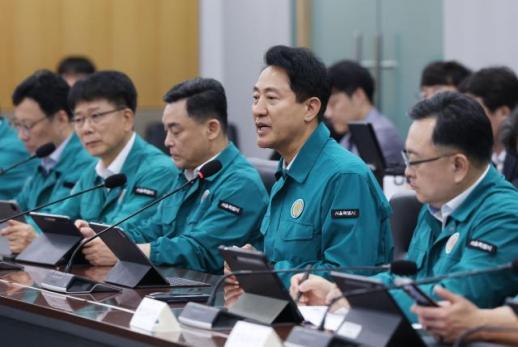 Oh Se-hoon Faces Challenges as Seoul Mayor Amid Divided Council In the June 3 local elections, Oh Se-hoon of the People Power Party secured his fifth term as Seoul mayor, demonstrating his political strength. However, the next four years are expected to be challenging as the Seoul City Council has shifted power back to the Democratic Party, placing Oh's administration under significant scrutiny from the outset. According to the National Election Commission, the Democratic Party has won 81 of the 118 seats in the Seoul City Council, while the People Power Party holds only 37 seats. This majority allows the Democratic Party to potentially override the mayor's veto power, as they have surpassed the two-thirds majority required to do so under local government law. Political analysts suggest that this shift indicates that "half of Seoul's power has returned to the Democratic Party." Even if Mayor Oh attempts to lead the city, he will likely struggle to enact ordinances, budget allocations, and major policies without cooperation from the Democratic-controlled council. The city has a history of conflict under a divided government. Oh previously clashed with a Democratic majority in the city council after the 2010 local elections, notably over the issue of free school meals. The council pushed for universal free meals, while Oh advocated for selective welfare. This standoff culminated in a referendum, which resulted in low voter turnout and led to Oh's resignation as mayor. This incident is often cited as a prime example of how political disputes can engulf city governance. After returning to the mayor's office in the April 2021 by-election, Oh faced a similar situation. At that time, the Democratic Party held 99 of 110 seats in the council. Oh sought to restructure various projects initiated during the tenure of former Mayor Park Won-soon, but encountered significant resistance from the council. A notable point of contention was TBS (Traffic Broadcasting System). Disputes over financial support and allegations of bias led to prolonged conflicts between the city and the council, which were only resolved after the People Power Party gained a majority in the 2022 local elections and moved to halt funding. Given the Democratic Party's acquisition of 81 seats, significant challenges are anticipated for Oh's administration. The TBS issue is likely to resurface, with speculation that the Democratic-controlled council may revisit funding discussions under the pretext of restoring public broadcasting functions. TBS has become a politically charged topic between Oh's administration and the Democratic Party. Budgetary conflicts also seem inevitable. Oh's key initiatives, including the Great Han River Project, Han River Bus, Seoul Run, Guaranteed Income, and Automatic Transportation policies, may face budget cuts or adjustments during the council's review process. If the Democratic Party prioritizes "people's livelihood" and demands a reassessment of these projects, the pace of implementation could be adversely affected. However, some analysts believe that there are factors that differentiate the current situation from those in 2010 and 2021. Oh's political stature has changed significantly. As a five-term mayor and a potential candidate for the next presidential election, he carries more political weight than before. His extensive administrative experience may lead him to pursue a more pragmatic approach, balancing direct confrontations with negotiations and compromises on specific policies. The Democratic Party also faces its own challenges. If they are perceived as obstructing city governance, they could face backlash from voters. Seoul residents tend to prioritize practical solutions to issues like transportation, housing, and livelihoods over ideological conflicts. Unconditional opposition or political strife could ultimately lead to voter fatigue. Historically, the politics of Seoul have demonstrated the costs of failed cooperation. When the city and council clash, the consequences are often borne by the citizens, resulting in project delays, budget disputes, and administrative gaps that lead to everyday inconveniences. A political insider remarked, "If the Democratic council focuses solely on securing political dominance rather than serving as a check, Seoul's governance could descend into extreme conflict. Conversely, Mayor Oh must also demonstrate leadership through collaboration and persuasion rather than unilateral actions." The success or failure of Seoul's governance over the next four years will depend not on numbers but on political acumen. Whether the Democratic Party's 81 seats will serve as a balance of power or become a source of contention will be determined in the evolving relationship between the city and the council. 2026-06-07 09:03:00
 -
 Pope Leo XIV Receives Honorary 10th Dan in Taekwondo Pope Leo XIV has been awarded an honorary 10th Dan in Taekwondo in recognition of his contributions to global peace and humanitarian efforts. The World Taekwondo (WT) announced on June 7 that Cho Jung-won, the organization's president, presented the honorary certificate and a taekwondo uniform to the Pope during the Wednesday General Audience at the Vatican on June 3. According to WT, the honorary 10th Dan is the highest honor in the taekwondo community, awarded to the Pope for his dedication to promoting world peace and humanitarian activities. Cho had previously presented the same honor to former Pope Francis in 2017. The audience included seven young athletes from the Azraq and Zaatari refugee camps in Jordan, who were warmly greeted by the Pope and participated in a commemorative photo session. The Pope expressed deep appreciation for the efforts of WT and the Taekwondo Humanitarian Foundation in supporting refugees, stating, "I am grateful for the commitment of WT and the Taekwondo Humanitarian Foundation to refugees. Meeting the children from the camps was a true joy." This visit to the Vatican was seen as more than just an honorary award ceremony; it served as a reminder of the significance of peace and solidarity through sports. The Vatican Taekwondo Association was approved as a WT member in 2021 and continues to engage with the global taekwondo community. Meanwhile, that afternoon, a taekwondo demonstration by the WT demonstration team took place at the Spanish Steps in Rome, receiving enthusiastic applause from tourists and locals as they showcased high-flying kicks and precise forms. 2026-06-07 09:03:00
 -
 Oh Se-hoon's Message Reflects the Dignity of Great Politics On June 2, the final stretch of the election is underway. As the election nears its end, the rhetoric of politicians often becomes more aggressive. Those who feel they are winning tend to press their opponents, while those who are anxious seek to rally their supporters. Voices grow louder, and emotions run high, which is why politics often loses its dignity as the election concludes. However, just hours before voting, Oh Se-hoon’s message stood out. It was surprisingly humble and remarkably calm, brimming with confidence. He began by addressing the struggles of Seoul's citizens and the frustrations of the youth. He expressed, "Before assigning blame, I apologize," and even acknowledged the shortcomings of the opposition. This prompted a reflection: When can a person truly be humble? Is it when they are losing everything? No, it is often when they feel they have the upper hand. When one is unshaken, there is no need to raise their voice or push their opponent; that is when a person's true character emerges. The resonance of Oh Se-hoon’s message, written just hours before the election, lies in this. He did not use the language of a politician gripped by fear. He did not incite hatred or hurl insults at his opponents. Instead, he spoke of "the balance of South Korea," "the rule of law," and "the future of Seoul." His words felt less like those of a politician and more like those of a seasoned administrator sharing his heart with the citizens one last time. Oh Se-hoon has consistently chosen to confront crises head-on. He was once politically declared dead after a referendum on free school meals. Yet he made a comeback and returned to the center of Seoul's governance. Throughout this journey, he has continually pushed for grand urban visions, such as the Han River Renaissance, transportation, urban design, tourism, and urban competitiveness. Recent controversial policies have followed a similar pattern. The Han River Bus, despite criticism, eventually made its debut before the citizens, and the Gwanghwamun Square has begun to establish itself as a new symbolic space for Seoul, enduring mockery and opposition. He has always responded to criticism with results. Perhaps this is why his final message conveyed a sense of 'calm confidence' rather than desperation. It felt as if someone who had reached the summit after a long battle was looking down and saying, "The choice is now in the hands of the citizens. I am ready to work again." This made his message even more striking. The moment a politician feels certain of victory is often the most dangerous. They can become arrogant, underestimate their opponents, and mistakenly believe they stand above the citizens. However, Oh Se-hoon’s message was different. He expressed even greater humility, stating that Seoul is "everything in my life," and we acknowledge that he has always lived this way. He also mentioned that the tears and sweat of each citizen are etched in his heart. In this part, we see not the words of a campaign strategist but the heartfelt sentiments of someone who has long loved the city of Seoul. This is likely why his message does not come across as a mere election appeal. It reflects the composure and responsibility that only someone who has fought many significant battles can possess. Perhaps this is the highest realm politics can achieve: the more one wins, the more humble they become, and in the final moments, they speak of the citizens first, not themselves. Just hours before voting, Oh Se-hoon’s message exemplified such 'dignity of great politicians.' 2026-06-02 13:15:00
 -
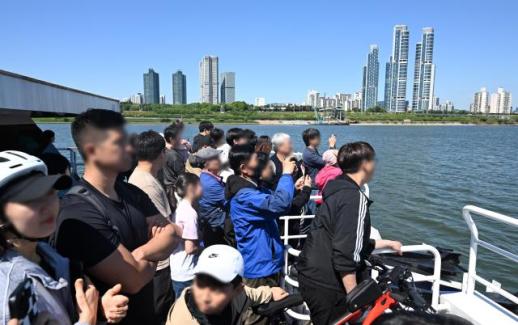 Han River Bus Sees Record 91,126 Riders in May Since its official launch in September 2022, the Han River Bus service in Seoul has rapidly established itself as a popular mode of water transportation and tourism, showing a steady increase in ridership. Initial concerns about it being merely an experiential service have been alleviated by rising user numbers and high satisfaction ratings, indicating its potential as a unique tourism product for the city. According to the Seoul city government, the total number of passengers on the Han River Bus in May reached 91,126, marking the highest monthly ridership since the service's inception. Following the resumption of full operations, ridership increased from 62,491 in March to 76,488 in April, and then to 91,126 in May, averaging an increase of about 15,000 passengers each month. The growth trend is evident, with a 22% increase in ridership from March to April, and a nearly 19% increase from April to May. Daily average ridership also surged from 2,016 in March to 2,940 in May, nearly a 1.5-fold increase. The service has proven particularly popular on weekends and holidays, with record ridership on May 1, when 5,584 passengers boarded, followed by 5,423 on Children's Day, May 5, and 5,494 on May 24. The experience of viewing the city skyline from the water has resonated well with both residents and tourists. Even on weekdays, demand remains steady, with ridership consistently between 1,000 and 2,000, suggesting that the Han River Bus is evolving from a purely recreational service into a viable transportation option. It connects key areas such as Yeouido, Jamsil, and Magok, contributing to commuting and urban mobility. User satisfaction is notably high. A survey conducted by the city in April among 3,115 Han River Bus passengers revealed that 96% expressed satisfaction with the service. Additionally, 94% indicated they would recommend it, and 89% stated they would use it again, indicating a strong likelihood of repeat ridership. Cumulative ridership has also grown rapidly. From its launch in September 2022 until February 2023, the total number of passengers was 104,498. However, in the three months following the resumption of full operations from March to May 2023, an additional 230,105 passengers boarded, bringing the total to over 334,603. Despite the increase in ridership, political debates surrounding the Han River Bus continue. Jung Won-oh, the Democratic Party's candidate for Seoul mayor, stated in a radio interview last month that he would halt the service if elected, citing safety concerns that he believes have not been adequately addressed. He suggested limiting operations to tourism if alternative solutions are available. Conversely, voices within and outside the city argue that the rising ridership, high satisfaction rates, and willingness to return should prompt a reevaluation of the Han River Bus not merely as a political issue, but as a significant asset for Seoul's tourism competitiveness and future transportation framework. As major cities worldwide expand their tourism and transportation models utilizing rivers and waterfronts, advocates argue that Seoul should actively leverage the Han River as a global asset. Starting in June, the city plans to launch operations at the Seoul Forest dock in conjunction with the Seoul International Garden Expo. This initiative aims to expand the waterway network connecting Seoul Forest, the Han River, and urban tourism, positioning the Han River Bus as a key infrastructure for transportation and leisure in the city. Park Jin-young, head of the Future Han River Headquarters, stated, "The Han River Bus is quickly establishing itself as a new mode of water transportation, thanks to the high interest and support from citizens. We aim to enhance safety and convenience while expanding routes to make it a preferred means of travel along the Han River." 2026-06-01 14:06:00
 -
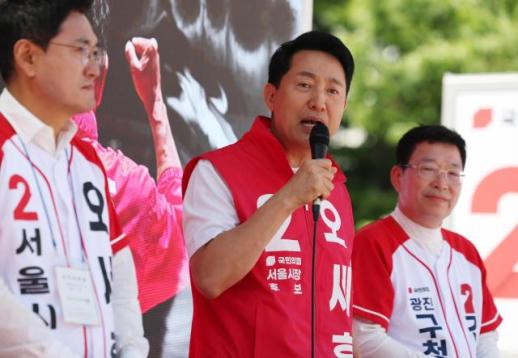
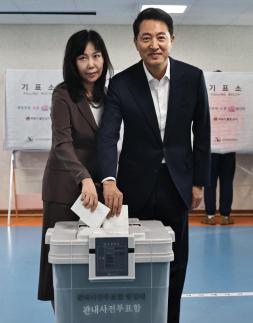 Oh Se-hoon Resumes Campaign, Calls Police Search a Government Election Interference Oh Se-hoon, the candidate for Seoul mayor from the People Power Party, resumed his campaign on May 29, three days after the Seosomun overpass collapse halted his activities. He strongly criticized the police's search of Seoul City Hall, calling it "blatant election interference," while focusing his efforts on winning over voters in the northern districts and among young people. On the first day of early voting for the June 3 local elections, Oh completed his own early vote in Yongsan and then visited Dobong, Gangbuk, Seodaemun, and Dongdaemun districts to intensify his campaign. Analysts suggest that this campaign resumption carries more significance than a mere return to electioneering. Despite the cautious atmosphere following the accident, Oh is positioning himself to consolidate his support base and attract moderate voters by emphasizing the need for government oversight and stability in the final stretch of the election. During a rally near Chang-dong Station in Dobong, Oh directly targeted his opponent, Jeong Won-oh of the Democratic Party, stating, "He has no genuine interest in the development of northern Seoul." He added, "Does Jeong think of northern Seoul as his voting ground while he actively campaigns in southern Seoul? In yesterday's TV debate, when asked about northern Seoul's development, he gave irrelevant answers." Oh reminded voters, "Do you remember when I lifted the height restrictions on the slopes of Bukhansan while serving as mayor? Development in northern Seoul should be demonstrated through action, not just words." He also expanded his outreach to young voters by visiting university areas near Yonsei University and Kyung Hee University. This strategy aims to mobilize the relatively conservative yet low-turnout 2030 demographic to the polls. At Yonsei University, where a festival was underway, Oh engaged with students, taking photos and fostering a friendly atmosphere. In his rally near Sinchon Station, he addressed economic issues, stating, "Even if stock prices hit 7,000 or 8,000 points, it doesn't improve the financial situation for ordinary citizens. For those living paycheck to paycheck, it's a different story altogether." A major issue in the election is the police's search of Seoul City Hall related to the Seosomun incident. The police conducted searches of city hall and its affiliated agencies, prompting immediate backlash from Oh. He questioned, "Is it reasonable to conduct a search just five days before the election? Would this have happened if I were the Democratic candidate?" Oh urged Jeong not to rely on support from the president and investigative agencies but to compete fairly based on policies and vision. The People Power Party also raised allegations of "government election interference" and intensified its criticism. Members of the party's National Assembly Administrative Safety Committee announced plans to visit the Seoul Metropolitan Police Agency on May 30 to protest. Oh continued to pressure Jeong for additional debates, stating, "It is regrettable that only one TV debate has occurred due to Jeong's avoidance. Avoiding debates suggests that there is something he wants to hide, whether it's the truth or his abilities." The People Power Party has officially proposed a live TV debate between Oh and Jeong on June 1 or 2. Political analysts believe this Seoul mayoral election will serve as a crucial test of public sentiment following the new administration's launch, extending beyond a mere local election. Voter turnout, particularly among northern Seoul residents and young voters, is expected to be a key factor in determining the outcome.* This article has been translated by AI. 2026-05-29 19:03:00
 -
 Seoul Mayoral Debate Highlights Clash Between Accountability and Stability The only televised debate for the Seoul mayoral election ultimately showcased a direct confrontation between the themes of accountability and stability. However, what lingered in voters' minds after the debate was less about the accountability of Oh Se-hoon, the candidate from the People Power Party, and more about the scrutiny surrounding Jung Won-o from the Democratic Party. The debate, organized by the National Election Commission, took place from 11 p.m. on May 28 to 1 a.m. on May 29, serving as a crucial moment just before early voting. In a rare occurrence of only one debate, the four candidates—Oh Se-hoon, Jung Won-o, Kim Jeong-cheol from the Reform Party, and Kwon Yeong-guk from the Justice Party—engaged in a heated discussion on pressing issues in Seoul, including real estate, the economy, the missing rebar in the GTX project, the Suseo high-rise demolition disaster, and redevelopment challenges. At the start of the debate, Jung Won-o introduced the anticipated theme of the '10-year judgment on the administration.' He urged voters to hold Oh Se-hoon accountable for what he described as a decade of incompetence, criticizing his administration for showy governance, safety issues, and failures in housing supply. He also pointed to the Suseo demolition incident, asserting that Oh's absence from the site indicated a lack of safety awareness. In contrast, Oh Se-hoon defended his record, stating, "I have done everything possible to normalize Seoul over the past five years," and countered with themes of stability and experience. He cited initiatives like the Rapid Integration Plan, revitalization of redevelopment and reconstruction, Seoul Run, and the Han River Renaissance, expressing his ambition to make Seoul a top-three global city. Regarding safety incidents, he extended condolences to the victims' families and pledged to establish stricter safety standards and management systems. However, the debate's dynamics shifted unexpectedly, with more focus on scrutiny directed at Jung Won-o rather than his attacks on Oh. The most pointed criticism came from Kim Jeong-cheol, who revisited Jung's past controversy regarding alcohol-related incidents, directly asking, "Did you ever force anyone to stay out overnight during a drinking session?" Jung responded by saying, "Bringing up unrelated topics only muddles the election." However, the interpretation of whether a candidate's past actions and moral integrity are relevant to the debate is subjective, as voters assess not only policy capabilities but also the qualities and responsibilities of public officials, including crisis management skills. Notably, Jung Won-o appeared to focus on defensive rhetoric, labeling questions about his past as "black propaganda," "negative campaigning," and "unrelated to the topic." This defensive stance seemed inadequate, and at times, he displayed visibly agitated reactions. As a challenger who should have been on the offensive, spending more time on defense was a missed opportunity. The controversy over Jung's avoidance of debates clearly weighed on him. On this occasion, Kim Jeong-cheol even brought a panel labeled 'Jung Won-o's Debate Avoidance Calendar,' claiming to have documented every date Jung had evaded debate proposals. The Seoul mayoral election is the largest local election in the country, with the choices of 8 million voters at stake. Compared to previous elections, which featured multiple televised debates for policy and character scrutiny, the fact that this election has only one official debate leaves voters wanting more. Oh Se-hoon was not immune to criticism either. Kwon Yeong-guk pressed him hard on the missing rebar issue at the GTX Samsung Station, asking, "Did you really not receive any reports about this?" Jung Won-o also targeted Oh over the Suseo disaster and the shortfall in housing supply. In response, Oh stated, "I was not informed. I learned about it through the news," emphasizing that he was campaigning while under a suspension of duties. He countered the housing supply criticisms by noting, "We are in the process of restoring 389 redevelopment and reconstruction zones that were released during the Park Won-soon administration." Overall, while Oh Se-hoon faced attacks, he maintained a relatively calm demeanor, emphasizing his experience and administrative continuity. In contrast, Jung Won-o, despite leading with the theme of accountability, found himself on the defensive due to overlapping scrutiny issues, including the alcohol controversy and the debate avoidance allegations. Of course, one debate will not determine the election outcome. Seoul's public sentiment often remains concealed until the last moment. However, it is clear that this debate centered more on the scrutiny surrounding Jung Won-o than on the accountability of Oh Se-hoon. 2026-05-29 06:22:00
 -
 Oh Se-hoon Vows to Win Against Unreason and Unconscionable Acts to Protect Seoul "My opponent is not just someone with different views. It is unreason that can quickly dismantle the order we have worked hard to maintain and unconscionable behavior that denies the responsibilities of candidates seeking the people's choice." Oh Se-hoon, the candidate for Seoul mayor, expressed his determination to fight fiercely as the election nears. He framed the election as a critical battle to protect Seoul, emphasizing the urgency of his message. On May 27, Oh posted a lengthy message on his Facebook page titled "I will definitely win against unreason and unconscionable acts." He stated, "As election day approaches, my sense of urgency deepens. This is not just about my personal victory; we must win to protect the citizens of Seoul and ensure South Korea follows the right path." He described the Seoul mayoral election as "the second most important and significant election after the presidential election," expressing strong concerns about the current electoral atmosphere. "I have participated in many elections, but I have never seen one as dire as this," Oh said, claiming that powerful forces are deceiving voters and that the ruling party candidate's attitude is degrading the dignity of the Seoul mayoral race. Targeting his opponent, he questioned, "What qualifications does a candidate hiding behind immense power and avoiding competition and scrutiny have to lead Seoul? Can a candidate who evades questions and uses easily exposed falsehoods to escape immediate crises be responsible for Seoul's future?" Oh also voiced his dissatisfaction with the economic situation. "Is it right to call the current state of high interest rates, high prices, and high exchange rates 'the cost of success' while the lives of citizens are faltering?" he asked, adding that the real estate market is devastated and the rental crisis is reaching catastrophic levels. He continued, "The cries and screams that cannot reach the inner sanctums are enveloping the streets and neighborhoods. The citizens left behind after the noisy election are holding back tears, feeling they have nowhere to turn." Oh characterized this election not merely as a political contest but as a battle for the values of 'order and reason.' "I am not just facing opponents with different philosophies and directions; I am fighting against unreason that threatens the order we have painstakingly maintained and unconscionable behavior that disregards the minimal responsibilities of candidates," he emphasized. He concluded, "Despite the ongoing grueling campaign, my resolve is growing stronger. I will not yield to unreason and unconscionable acts, and I will continue to rally support." Political analysts interpret Oh's message as a clear indication of his strategy to frame the final days of the campaign around the themes of 'stability versus scrutiny' and 'reason versus unreason.' There are also analyses suggesting he aims to elevate the Seoul mayoral election from a mere local power struggle to a symbolic contest over the future direction of national governance and political order.* This article has been translated by AI. 2026-05-28 15:04:00
 -
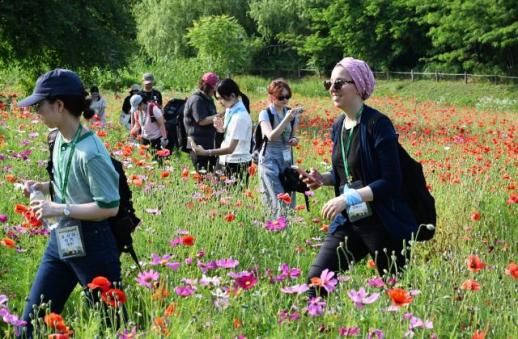 156.5 km Trail Transforms Seoul into a Walking City Young parents pushing strollers up gentle inclines, foreign tourists capturing photos against the backdrop of Seoul's urban landscape, and elderly couples resting on benches to enjoy the midday calm are all part of the changing scenery at Namsan in the heart of Seoul. Once a destination for strenuous hikes, the mountain is now transforming into a space for leisurely walks and relaxation. Recently, visitors to the Namsan Sky Forest Trail found a wooden deck winding through the trees, where parents with children and citizens with strollers walked comfortably together. Instead of steep hiking paths, gentle slopes and resting areas were available, with some sections accessible for wheelchairs. At the viewpoint with the best view of Namsan Tower, foreign tourists frequently took out their smartphones to capture the moment. Such a space where one can enjoy both forest and city views in the middle of a bustling metropolis is rare worldwide. The Seoul city government views this trail not merely as a walking path but as a key infrastructure in its 'walking city' strategy. The Seoul Trail spans a total of 156.5 kilometers, connecting 85 kilometers of forest paths, 40 kilometers of village roads, and 32 kilometers of riverside trails, creating a circular walking network that links the outer mountain ranges of Bukhansan, Dobongsan, Suraksan, Bulamsan, Yongmasan, Gwanaksan, and Umyeonsan. It essentially forms a city forest path that allows one to walk around Seoul. Seoul's shift from a car-centric urban development model to a people-centered city began in the late 2000s during the first term of Mayor Oh Se-hoon. The idea for the trail emerged from the recognition that urban nature should transition from a 'viewing space' to a 'participatory space.' At that time, the city government determined that the existing hiking culture, which focused on mountain trails, limited accessibility for citizens. The need for accessible green paths that families with young children, the elderly, and people with disabilities could enjoy together became apparent. This led to the concept of 'lifestyle trekking,' where one can walk slowly along the mountain's foothills and enjoy nature without needing to reach the summit. An interesting backstory surrounds the inception of the Seoul Trail. Last October, Mayor Oh Se-hoon explained the background of the trail's concept during a visit to the Namsan Sky Forest Trail, stating, "Around 2007, I walked the Jeju Olle Trail with my family as it gained popularity, and I thought it would be great to create a path in Seoul where anyone could walk comfortably along the foothills of the mountains." He added, "At that time, I was inspired by the culture in the United States, where people preferred to walk comfortably along the mountain base rather than hike to the summit. There was also a pressing need to protect forests that were being damaged due to the increasing number of hikers," emphasizing the necessity of connecting existing mountain paths with deck paths and barrier-free forest trails. Indeed, Seoul's mountains once faced issues of overcrowding among hikers. Following the abolition of entrance fees to national parks, visitor numbers surged, leading to exposed tree roots and severe soil erosion. To reduce damage and enhance accessibility, the city began developing circular forest paths using wooden decks. The wooden structures installed throughout the Namsan Sky Forest Trail were designed to minimize environmental impact. The Seoul Trail was established as a representative walking infrastructure for the city when all eight courses were completed in 2014. However, the existing courses, averaging around 20 kilometers in length, were often seen as burdensome for the general public. In response, the city is set to launch 'Seoul Trail 2.0' in 2024, significantly revamping the courses. The average length will be reduced to about 8 kilometers, and the trail will be divided into 21 sections. The average completion time will also be shortened from eight hours to around three hours, making it more accessible for evening strolls after work or half-day weekend hikes. Safety and accessibility have also been enhanced. Signage in Korean, English, Chinese, and Japanese has been installed at the starting and ending points, along with improved information on subway stations and bus stops connected to the trail. Key sections will feature intelligent CCTV and a QR code-based emergency reporting system. The trail has now expanded beyond a simple walking space to become a 'walking welfare' experiment. Recently, the city has begun operating the 'Seoul Trail Garden Prescription' program, which allows participants to walk the forest paths with forest healing guides while experiencing breathing, meditation, and aroma therapy programs. As the benefits for alleviating depression and stress and restoring emotional well-being have been proven, participation has been increasing among isolated and reclusive youth as well as the general public. In pilot programs, participants reported a reduction in depression by up to 36% and loneliness by up to 13% after engaging in the program. Surveys conducted during the International Garden Expo also indicated that cortisol levels, a stress hormone, decreased by an average of 14% after walking in the forest and gardens. Above all, the Seoul Trail's competitive edge lies in its 'urban nature.' While major cities worldwide have large parks and green spaces, few have successfully connected outer forest areas into a circular walking network like Seoul. While New York features a hub-based green space centered around Central Park and London has a walking axis along the Thames River and a green belt structure, Seoul offers a more intricate walking city model that interweaves mountains, rivers, and village paths. The city is now also focusing on developing the trail as a tourism asset beyond just a space for relaxation. The views of Namsan Tower, the ridges of Bukhansan, and the riverside paths along Ui-cheon and the Han River have already gained a reputation among foreign tourists as 'hidden gems in Seoul.' The era when urban competitiveness was solely determined by the number of skyscrapers is fading. The new standard is how walkable a city is and how well it cares for its citizens' well-being. The 156.5 km Seoul Trail is now answering that question. 2026-05-28 14:00:00