

Journalist

Kim Yeon-jae, Lee Jung-woo
duswogmlwo77@ajupress.com
-
 Financial watchdogs step up warnings as won slides despite verbal interventions SEOUL, June 7 (AJP) - Financial authorities on Sunday issued their strongest warning yet over speculative trading and other suspicious activity, as the South Korean won's sharp decline pushed the won-dollar rate above 1,560. They vowed to step up inspections and scrutiny of illegal foreign exchange transactions by importers and exporters at an emergency meeting convened by Finance and Economy Minister Koo Yun-cheol, which was attended by key financial chiefs including Bank of Korea governor Shin Hyun-song, Financial Services Commission chairman Lee Eog-won, and Financial Supervisory Service governor Lee Chan-jin. The warning came after two earlier verbal interventions failed to prevent further weakening of the currency. Participants assessed that the won's exchange rate against the dollar rose sharply over the weekend, amid expectations that the Fed may raise interest rates. According to the ministry, the exchange rate climbed from around 1,539.1 won on Friday afternoon to 1,560.2 later in the day as the U.S. market opened. Sunday's meeting followed a series of warnings from monetary and financial authorities. BOK governor Shin said during a press briefing late last month that the central bank would "not tolerate herd behavior in the exchange rate." During a meeting earlier last week, Koo also issued a similar warning, vowing to "immediately take necessary measures" against any irregularities. Despite these warnings, the rate crossed 1,560 won, while retail won-selling rates quoted by some currency exchange booths approached the 1,600 level. Officials said the won's recent volatility was partly attributed to foreign investors cashing out and reshuffling their portfolios after a chip-driven rally in the domestic stock market. The latest warning was stronger than previous ones, as the one in late May focused on countering market perceptions that the BOK governor would tolerate a weaker won, while last week's meeting delivered broader measures across agencies to stabilize the market. By contrast, Sunday's meeting directly singles out speculative trading, offshore NDF activity, and possible market disruption. The BOK and FSS agreed to improve the transparency of offshore non-deliverable forward transactions and to prepare measures to bring more of such trading into the domestic foreign exchange market. Officials also said they would take stern action if violations are found. Potentially illegal "lead and lag" transactions by trade companies will also be subject to scrutiny. Such transactions involve importers accelerating payments or exporters excessively delaying the receipt of export proceeds to benefit from a rising exchange rate. Koo said authorities will monitor market conditions under a 24-hour, high-level alert posture. He warned that market volatility could intensify again depending on the course of the prolonged conflict in the Middle East and upcoming U.S. inflation data. But it remains to be seen whether the stronger warning will lead to inspections, tighter monitoring of offshore transactions, or additional stabilization measures. 2026-06-07 17:18:00
 -
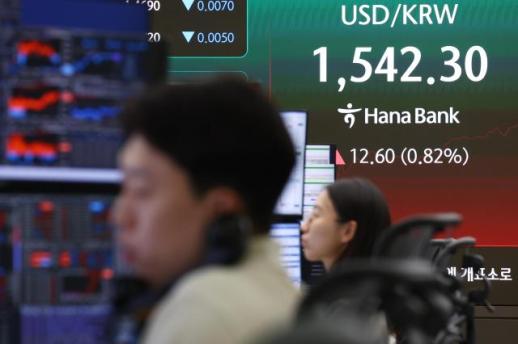 Won plummets past 1,540 as bonds extend losses SEOUL, June 5 (AJP) - South Korea's financial markets remained unsettled on Friday as the won-dollar exchange rate closed at about 1,540 won, for the first time in nearly 17 years and bond yields extended their rise. Heavy foreign selling in local equities continued to weigh on the won and debt markets, while traders saw no clear signs of actual intervention by foreign exchange authorities. In the Seoul foreign exchange market, the exchange rate closed at 1,539.1, down 9.4 from the previous session's overnight close. It was the first time the exchange rate ended regular trading above the 1,540 threshold in 17 years - since the aftermath of the global financial crisis in March 2009. During intraday trading, the rate rose as high as 1,547, marking a sharp increase from Thursday's daytime close of 1,529.7. The won's weakness came alongside a sharp sell-off in the domestic stock market, with the benchmark KOSPI falling more than 6 percent intraday, briefly dipping below 8,100 and triggering a selling "sidecar" that temporarily halted program trading sell orders. Overnight on Wall Street, Broadcom's post-earnings plunge weighed on sentiment toward artificial intelligence and semiconductor stocks, adding pressure to tech and AI heavyweights that had led the recent rally in Seoul. Foreign investors net sold more than 3.5 trillion won ($2.27 billion) worth of KOSPI shares on Friday, after unloading a net 16.5 trillion won over three trading sessions from Monday to Thursday despite a one-day market closure for local elections. The foreign selling streak, which began last month, extended to a 20th consecutive session, the longest stretch of net selling since March-April 2020. Despite limited moves in the U.S. Dollar Index and the dollar-yen exchange rate, the won fell more sharply than major emerging market currencies, underscoring Korea-specific pressure tied to foreign selling in local stocks. The won's underperformance was also clear against regional peers on June 5, with the Singapore dollar, Hong Kong dollar and Vietnamese dong largely flat against the dollar and the Indonesian rupiah down about 0.2 percent, while the won fell nearly 1 percent from the previous session's regular market close. Equity outflows also offset strong exports and a solid current account surplus, adding upward pressure on the exchange rate. The Bank of Korea said Friday that the April current account surplus reached $28.29 billion, the second-largest on record after the previous month's all-time high, but the large goods surplus was overshadowed by currency conversion and hedging demand linked to foreign stock selling. The debt market also extended its losses, with the benchmark three-year government bond yield closing up 2.4 basis points at 3.882 percent - highest level in 31 months - and the 10-year yield rising 2.5 basis points to 4.254 percent. This followed a sharp sell-off on Thursday, when the three-year yield jumped 8.5 basis points to 3.858 percent and the 10-year yield climbed 9.4 basis points to 4.229 percent. The continued bond weakness reflects concerns that the weaker won, rising international crude prices, Middle East tensions and additional U.S. tariff pressure could add to import-price inflation and prompt further tightening by the BOK. Policymakers have stepped up verbal intervention for two consecutive days. Koo Yun-cheol, Deputy Prime Minister and Minister of Economy and Finance, said on Friday that authorities are "responding with extraordinary vigilance to the widening volatility in financial and foreign exchange markets, as well as the challenges facing consumer prices." The remark followed his warning Thursday that "immediate necessary measures" would be taken against excessive one-way herd behavior, but traders said there were no clear signs that authorities had supplied dollars to stabilize the market. "No clear indications of smoothing operations to cap the upper limit of the exchange rate have been observed so far," an FX trader said on the condition of anonymity. With the exchange rate nearing the 1,550 won threshold, market participants are watching the tone of further official messages and whether authorities will take concrete market-stabilization steps. 2026-06-05 18:03:38
 -
 BOK taps new deputy governors SEOUL, June 5 (AJP) - Bank of Korea governor Shin Hyun-song appointed two new deputy governors on Friday, filling vacancies in the central bank's research and statistics division and its management division. The appointments mark one of Shin's first major personnel moves since taking up the post of monetary chief in mid-April, placing emphasis on economic forecasting, policy communication and internal management as the central bank navigates heightened market volatility. The BOK said Lee Ji-ho, director general of the research department, was named deputy governor in charge of research and statistics, while Kim Je-hyun, director general of the human resources and administration department, was appointed deputy governor in charge of management. Lee succeeds former Deputy Governor Kim Woong, whose term ended in March, while Kim fills the post previously held by Chae Byung-deuk, who left the BOK earlier this year and was later named president of the Korea Financial Telecommunications & Clearings Institute. Lee joined the BOK in 1997 and has worked in the financial markets, monetary policy and research departments. He also served at the finance ministry before returning to the central bank, where he has led the research department since 2024. The central bank said Lee helped improve its economic outlook process by providing more detailed quarterly projections for growth and inflation, contributing to greater transparency and effectiveness in monetary policy. Kim joined the BOK in 1996 and has held posts across policy, communications and personnel management, including policy adviser, secretary general, communications chief and human resources director. The BOK said Kim helped manage personnel reforms and workforce operations during recent organizational changes and new business projects, citing his understanding of the institution, communication skills and experience assisting the governor. The appointments suggest Shin is seeking to strengthen the BOK's economic analysis and policy messaging at a time when inflation, growth, exchange-rate volatility and financial stability risks are all shaping the policy outlook. Lee's promotion puts a senior research official with both central bank and finance ministry experience in charge of the analytical backbone of monetary policy. Kim's appointment, meanwhile, points to an emphasis on organizational stability and internal execution as the BOK adjusts to new communication tools and changing market conditions. Their three-year terms began immediately and run until June 2029. 2026-06-05 16:15:49
 -
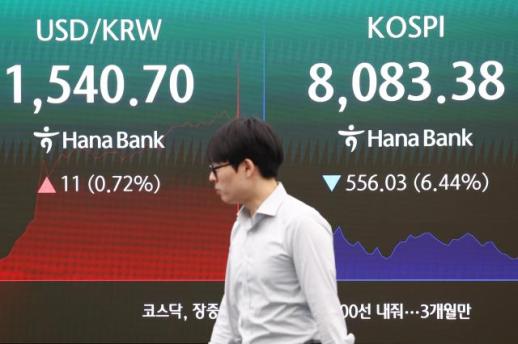 Won weakens further as KOSPI drops over 6% SEOUL, June 5 (AJP) - The South Korean won continued weakening on Friday, with the exchange rate climbing to 1,542 per dollar around noon, from the previous session's close of 1,529.70. The decline came less than a day after the exchange rate weakened past 1,540 won during extended trading, marking its highest intraday level since the global financial crisis. It appears to be largely due to a sharp sell-off in South Korean stocks. The country's benchmark KOSPI tumbled more than 6 percent at one point, briefly falling below 8,100, while a sell-side program trading curb, known as a sidecar, was triggered to slow the pace of the decline. The selloff followed overnight weakness in U.S. technology shares, with Broadcom falling sharply after its earnings release. The decline weighed on investor sentiment toward artificial intelligence (AI) and semiconductor-related stocks, which have been among the key drivers of the recent rally in Seoul. Foreign investors were net sellers of more than 2 trillion won worth of KOSPI shares during the morning session. The selling followed a wave of foreign outflows earlier this week. Foreign investors sold a net 16.5 trillion won worth of KOSPI shares from Monday to Thursday - over just three trading sessions in June. The dollar index and the dollar-yen exchange rate showed relatively limited movements during the same period, while the won's decline deepened alongside foreign selling in the local stock market. Bond yields also extended their rise, though the pace of increase was more limited than the previous session. During morning trading, the three-year government bond yield was up 2.1 basis points at 3.879 percent, while the 10-year yield rose 2.6 basis points to 4.255 percent. The move followed a sharp selloff in the bond market, when the three-year yield jumped 8.5 basis points to close at 3.858 percent and the 10-year yield climbed 9.4 basis points to 4.229 percent. 2026-06-05 13:38:07
 -
 South Korea extends current account surplus streak to 36 months SEOUL, June 5 (AJP) - South Korea extended its current account surplus in April, boosted by strong semiconductor exports, according to preliminary data released by the Bank of Korea on Friday. The country's current account surplus reached US$28.29 billion in April, the second-largest on record, after hitting an all-time high of US$37.93 billion in the previous month. South Korea has now recorded monthly current account surpluses for 36 consecutive months, the second-longest such streak since 2000. The central bank attributed the surplus to a surge in exports driven by strong demand for information technology products, led by semiconductors and computer peripherals. Non-IT exports also rose, as higher global oil prices boosted shipments of petroleum products. "IT products led export growth, while pharmaceuticals, petroleum products and ships also showed high growth rates," Yoo Sung-wook, director general of the BOK's financial statistics department, said during a press briefing. Exports climbed 54.5 percent from a year earlier to $90.59 billion, while imports rose 16.1 percent to $56.70 billion. Exports to Southeast Asia rose 74.2 percent from a year earlier, while shipments to China and the U.S. increased 62.6 percent and 54.0 percent, respectively. Imports also continued to increase, driven by higher crude oil prices amid the prolonged conflict in the Middle East and robust demand for semiconductors and chipmaking equipment. The goods account remained the main driver of the surplus, posting a $33.88 billion surplus, also the second-highest on record. The primary income account, however, swung back into deficit in April, turning into a $2.53 billion shortfall from a US$3.59 billion surplus in March as dividend payments to foreign investors increased. The services account also posted a deficit of $2.42 billion, driven largely by shortfalls in other business services and manufacturing services. Investment income remained in deficit at $2.38 billion, while equity income posted a larger deficit of $3.02 billion. The BOK attributed the deterioration largely to the seasonal concentration of dividend payments in April, with higher payouts among major Korean firms widening the deficit further by increasing outflows to foreign shareholders. Yoo said the April deficit in the primary income account was not unusual, as dividend payments are typically concentrated in April. He added that the shortfall was the largest for any April since 2022, when the deficit reached $3.62 billion. The financial account posted a net asset increase of $25.46 billion during the month. Portfolio investment liabilities rose by $3.51 billion after a sharp decline in March, as foreign investment in Korean debt securities rebounded following South Korea's inclusion in the FTSE World Government Bond Index (WGBI), according to the BOK. 2026-06-05 09:24:21
 -
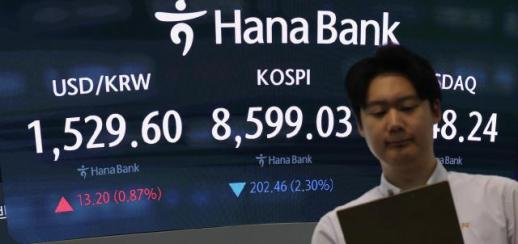 Hawkish signals fail to curb won's slide SEOUL, June 4 (AJP) - Although the Bank of Korea (BOK) has effectively pivoted back toward monetary tightening, the won-dollar exchange rate is instead plunging to its weakest level since the global financial crisis. Downward pressure on the Korean won is intensifying as investors question how much domestic monetary policy can do on its own. A stronger greenback, surging oil prices and synchronized tightening fears among major central banks are adding to the strain. In the Seoul foreign exchange market on Thursday, the exchange rate opened at 1,530.0 per dollar, down 13.6 won from the previous session's daytime closing price, marking the first time the rate opened in the 1,530 won range in 17 years and three months since March 2009, during the height of the global financial crisis. On a closing basis, the won-dollar exchange rate has already remained in the 1,500 won range for 12 consecutive sessions. Generally, an increase in the benchmark interest rate supports the won's value by boosting yields on won-denominated assets and narrowing the interest rate gap with the United States. This time, however, market dynamics are being driven more by global monetary tightening and commodity price shocks than by the BOK's rate-hiking potential. The won's recent weakness reflects heightened sensitivity to shifts in the global liquidity environment rather than South Korea's own rate path. Consequently, even a 25-basis-point rate hike by the BOK could have its stabilizing effect offset if a stronger dollar, high oil prices and foreign equity liquidation persist. Oil prices above $100 per barrel remain a persistent burden on the South Korean economy, even if the shock has been partially priced in. Given South Korea's heavy reliance on the Strait of Hormuz for most of its crude oil imports, soaring oil prices increase demand for greenbacks to settle energy import bills and raise concerns over a deteriorating trade balance. Adding to the pressure, the growing likelihood of a Bank of Japan rate hike has triggered a broader repricing of monetary policy across major Asian economies. BOJ Governor Kazuo Ueda said the previous day that there is a "clear need" to discuss the appropriateness of a rate hike, warning that delaying normalization could place a growing burden on the economy and the financial system. With the Federal Reserve, the BOK and the Bank of Japan (BOJ) all maintaining a tightening bias, a single 25-basis-point move by the local central bank may not be enough to defend the currency. Amid renewed strength in the greenback, concerns have grown that the U.S. Federal Reserve could pivot back toward a hawkish stance, while international crude prices have surged as cease-fire negotiations in the Middle East war fell back into deadlock. Shrinking foreign exchange reserves are also fueling market anxiety. South Korea's FX reserves stood at $430.66 billion at the end of last November, before the BOK was presumed to have stepped up market-stabilization measures, but fell to $426.99 billion at the end of last month, representing a decline of US$3.67 billion over six months. The latest available global ranking also points to a deterioration, with South Korea falling to 12th as of the end of April from ninth at the end of last November. Aggressive selling of domestic equities by foreign investors is further exacerbating the won's depreciation. Foreign investors offloaded a net 6.6 trillion won worth of KOSPI shares in May alone, adding to dollar demand in the local foreign exchange market. A peculiar anomaly has emerged in the market: even though the exchange rate has failed to pivot stronger, the bond market is weakening as it pre-emptively prices in an interest rate hike. The benchmark three-year government bond yield rose 8.5 basis points to 3.858 percent, its highest level since November 2023, while the 10-year yield climbed 9.4 basis points to 4.229 percent. The broader strain was already visible in May, when the average won-dollar exchange rate weakened to 1,491.39 won from 1,486.72 won in April and the average 10-year yield rose 34.7 basis points to 4.080 percent. The government and financial authorities are also heightening their vigilance. Koo Yun-cheol, Deputy Prime Minister and Minister of Economy and Finance, noted widening volatility in domestic financial and FX markets during a market monitoring meeting on Thursday, signaling that relevant agencies would respond immediately if excessive one-sided moves emerge. While the remarks were closer to a cautionary statement than a heavy-handed verbal intervention, they were interpreted as a sign that authorities could strengthen their response now that the exchange rate has entered the 1,530 won range. Experts stress that active intervention by the central bank and foreign exchange authorities is essential as the high-exchange-rate environment drags on. "There is no entity capable of blocking the exchange rate ceiling other than the foreign exchange authorities," said Lee Nak-won, an FX derivatives specialist at NH Nonghyup Bank, back in March, when the won-dollar rate skyrocketed to the 1,530 won level.l. Ultimately, the crux of the issue lies not in the BOK's rate-hike declaration itself, but in whether global dollar strength, high oil prices and foreign outflow pressure begin to subside. Unless Fed tightening fears cool and crude prices stabilize, reversing the won's downward trajectory through the BOK's baby steps alone will remain an uphill task. 2026-06-04 17:29:01
 -
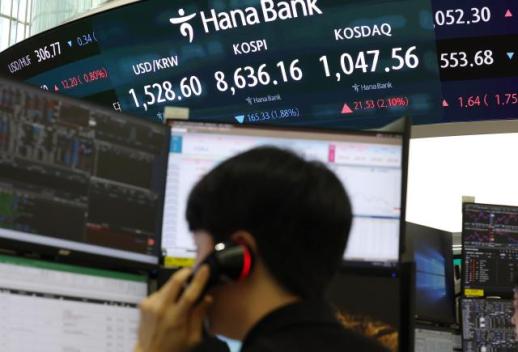 Won weakens to lowest level since global financial crisis SEOUL, June 4 (AJP) - South Korea's financial markets suffered a sharp sell-off on Thursday as the won fell to a 17-year low past 1,530 per dollar and sovereign bond yields spiked, driven by heavy foreign capital outflows and a trio of external shocks: escalating Middle East tensions, a hawkish Federal Reserve and a surprise monetary tightening signal from Japan. In Seoul's currency market, the won opened at 1,530 per dollar, down 13.6 won from the previous session's close. This marks the first time in 17 years and three months that the exchange rate has kicked off below the 1,530 won threshold since March 10, 2009, during the height of the global financial crisis. Immediately after the opening bell, the rate tumbled to 1,530.8 won before paring some gains to trade in the mid-1,520 won range. However, the high-flying trend persists, with the currency hovering in the 1,500 won range for 12 consecutive sessions on a closing basis. Market analysts attribute the unyielding weakness of the won, despite growing possibilities of a rate hike by the Bank of Korea (BOK), to a compounding stack of external headwinds, chiefly triggered by a hawkish surprise from neighboring Japan that amplified fears of a broader liquidity squeeze across Asia. Bank of Japan (BOJ) governor Kazuo Ueda hinted on Wednesday at a potential interest rate hike at the upcoming June 15–16 policy meeting, citing secondary inflation risks driven by soaring energy costs. "Even amid uncertainty in the Middle East, there is a clear need to discuss the appropriateness of raising interest rates," Ueda said during a lecture in Tokyo, warning that delaying necessary monetary normalization could "inflict a heavy burden on the economy, markets, and the financial system." This regional monetary tightening pressure closely aligns with stubborn inflationary pressures in the U.S., where growing concerns that the Fed might lurch back into a hawkish stance are providing solid, ongoing support for both the U.S. dollar and Treasury yields. Adding to the compounding pressure, renewed military tensions between the United States and Iran have stoked global inflation worries and driven up international crude prices, further exacerbating depreciation pressures on the local currency. South Korea relies on the Strait of Hormuz for nearly 70 percent of its total crude oil imports. Consequently, soaring oil prices trigger an increased demand for the greenback to settle import bills while stoking anxieties over a deteriorating trade balance. Continued profit-taking and portfolio rebalancing by foreign investors in the domestic stock market have further strained won supply and demand. According to the Korea Exchange (KRX), foreign investors net sold 4.8 trillion won worth of shares on the main KOSPI bourse as of noon. The bond market also exhibited a turbulent trend. In the morning session of the Seoul debt market, the benchmark three-year government bond yield closed up 6.6 basis points at 3.839 percent - reaching its highest level since November 2023, when fears of prolonged high interest rates in the U.S. hammered global debt markets. The 10-year government bond yield also rose 7.1 basis points to 4.209 percent - bouncing back to the 4.2 percent range for the first time since mid-May, highlighting renewed weakness in long-term debt. This slump effectively erased the bullish sentiment from Tuesday, when net purchases of 10-year bonds by foreign investors hit the second-highest volume in history. The prospect of a BOJ rate hike raised immediate concerns over a regional liquidity squeeze, triggering heavy offloading of local fixed-income assets. Adding to this was the anxiety of market participants already bracing for the possibility that the Gulf crisis could drive oil prices higher, rekindle domestic consumer inflation, and strengthen the BOK's justification for rate hikes. 2026-06-04 14:13:55
 -
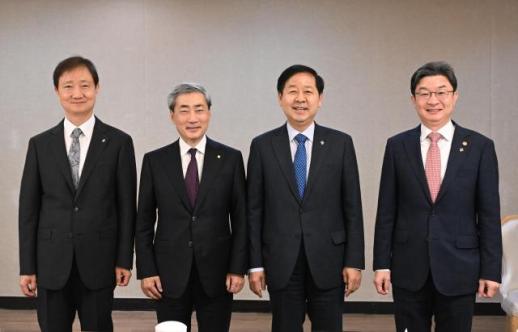 Financial chiefs vow to tighten scrutiny on stock leverage amid overheated rally SEOUL, June 4 (AJP) - South Korea's top economic and financial policymakers on Thursday pledged to strengthen preemptive risk checks on borrowing-backed stock trading, as a rapid market rally fuels concerns that excessive leverage could amplify losses for retail investors and destabilize broader financial markets. Deputy Prime Minister and Finance Minister Koo Yun-cheol chaired a joint market monitoring meeting at the government complex in Seoul, attended by Bank of Korea governor Shin Hyun-song, Financial Services Commission chairman Lee Eok-won and Financial Supervisory Service governor Lee Chan-jin. Participants expressed concern over the rapid increase in borrowing-backed stock purchases, particularly margin loans, and agreed to strengthen regular monitoring through market review meetings while enhancing preemptive risk management and investor protection measures. The warning comes as margin lending has climbed to record levels. Outstanding margin loans rose from 27.3 trillion won at the end of last year to 38.0 trillion won as of June 1, an increase of more than 10 trillion won in five months. Signs of mounting stress have also emerged in forced liquidations of leveraged positions. Data from the Korea Financial Investment Association showed that forced sales totaled 707.7 billion won during May, while the ratio of forced liquidations to unpaid trading balances averaged 2.63 percent during the month and surged to 7.6 percent on May 20. On June 1 alone, forced liquidations reached 33.2 billion won, more than double the previous trading day's 15.4 billion won, with the ratio jumping to 2.5 percent from 1.2 percent. The concerns echoed Shin's warning last week that excessive leverage could turn market corrections into self-reinforcing selloffs through forced liquidations, distorting the normal relationship between prices and demand. Participants said favorable economic conditions, including a 53.2 percent year-on-year jump in May exports, have helped sustain the stock market rally. They also noted that Korea's stock market capitalization has overtaken India to become the world's sixth largest. According to Bloomberg data, the U.S. ranked first with a market capitalization of US$79.5 trillion, followed by China with $15.1 trillion, Japan with $8.6 trillion, Hong Kong with $7.2 trillion, Taiwan with $5.2 trillion and Korea with $5.0 trillion. India ranked seventh with $4.8 trillion. Officials also discussed recent volatility in the foreign-exchange market. Despite a record current-account surplus, they said the won has remained vulnerable to the Middle East conflict and continued foreign selling of domestic equities. They noted that the sharp rise in local share prices has prompted foreign investors to rebalance portfolios and lock in profits, adding to exchange-rate volatility. Foreign investors' holdings of Korean stocks have risen to 2,991 trillion won, accounting for 38.3 percent of total market capitalization, up from 1,312 trillion won and 32.9 percent at the end of last year. Net foreign selling of local equities has reached 127 trillion won so far this year, including 66 trillion won over the past 18 consecutive trading sessions. Koo said authorities are closely watching markets with a high level of vigilance to prevent anxiety from spreading amid elevated external uncertainty. He also stressed that the government would take immediate action if excessive one-sided movements emerge. Officials also agreed to closely monitor the bond market, where government bond yields have become more volatile amid global rate movements, inflation concerns and stronger expectations for domestic rate hikes. They said authorities would coordinate responses in a timely manner if excessive volatility emerges. 2026-06-04 12:48:40
 -
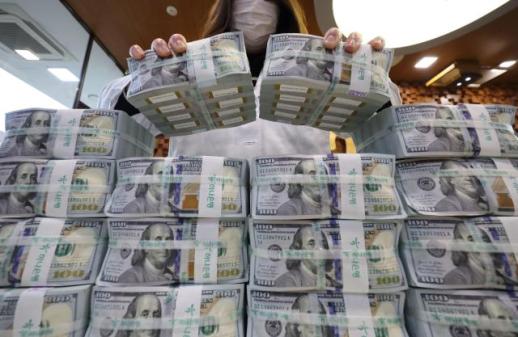 South Korea's FX reserves decline in May after brief rebound SEOUL, June 4 (AJP) - South Korea's foreign exchange reserves declined in May, reversing a brief one-month rebound. According to the Bank of Korea on Thursday, South Korea's foreign exchange reserves stood at $426.99 billion at the end of May, down $880 million from the previous month. The drop came after authorities implemented market stabilization measures including a foreign exchange swap with the National Pension Service (NPS), which reduced the country's dollar holdings amid a weaker won and rising long-term interest rates. In April, foreign exchange reserves rebounded by $4.22 billion as gains in the dollar value of non-dollar assets and stronger investment returns more than offset the impact of market stabilization measures. But in May, those measures became the main factor behind the decline, reversing the previous month's recovery. The latest decline came after reserves increased by $1.72 billion in February, dropped by $3.97 billion in March and then rebounded in April. Market volatility intensified in May. After briefly stabilizing in the 1,400 won range against the dollar in early May, the won weakened beyond 1,500 per dollar later in the month, prompting continued policy intervention. The average won-dollar exchange rate rose to 1,491.39 won in May from 1,486.72 won in April, while the average yield on South Korea's benchmark 10-year government bond climbed 34.7 basis points to 4.080 percent from 3.733 percent over the same period. While the stock market extended its gains, foreign capital outflows persisted. Foreign investors net sold 44.71 trillion won worth of KOSPI-listed shares between May 1 and 29, weighing on the won even as the broader equity market rallied. Despite the stock market rally, foreign equity outflows, a weaker won and rising long-term bond yields added to pressure in the foreign exchange market. Foreign securities fell by $3.39 billion to $380.68 billion, accounting for 89.2 percent of total reserves, while deposits rose by $2.59 billion to $21.35 billion or 5 percent of the total. Special Drawing Rights (SDRs) allocated by the International Monetary Fund (IMF) edged down by $30 million to $15.78 billion, while South Korea's reserve holdings at the IMF fell by $60 million to $4.4 billion. Gold holdings remained unchanged at $4.79 billion, accounting for 1.1 percent of total reserves. Monthly fluctuations in FX reserves are typically driven by changes in the dollar value of non-dollar assets, investment returns and market stabilization measures. The swings seen in recent months reflect a combination of exchange rate movements and policy intervention. Meanwhile, South Korea maintained its position as the world's 12th-largest holder of foreign exchange reserves as of the end of April with 427.9 billion. China topped the list with $3.41 trillion, followed by Japan with $1.38 trillion. 2026-06-04 09:02:22
 -
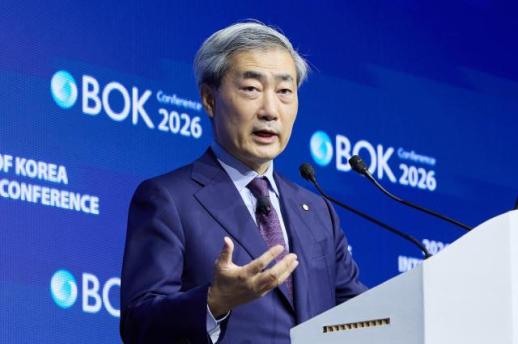 Shin's BOK signals active central bank intervention, putting monetary tightening and CBDC in spotlight SEOUL, June 02 (AJP) - The Bank of Korea (BOK) International Conference themed "Central Banks and the Future of Money," which ran from Monday to Tuesday, served as less of a purely academic event and more of a debut public stage highlighting the long-term vision of BOK Governor Shin Hyun-song. The central bank positioned staunch advocates of price and financial stability at the forefront while pitching a future monetary order centered around central bank digital currencies (CBDCs) as its core agenda. Since Governor Shin took office, the BOK’s strategic policy color has crystallized into three pillars: a hawkish monetary policy stance that dampens expectations for premature interest rate cuts; a macrofinancial stability framework that elevates financial vulnerability into a core variable for monetary policy decisions; and institutional restructuring aimed at redesigning the central bank’s payment and settlement infrastructure through CBDCs and tokenized deposits to fit the evolving digital economy. The lineup of participants at this year's conference directly mirrored these institutional priorities. Keynote speaker Isabel Schnabel, an Executive Board member of the European Central Bank (ECB), is recognized as a prominent inflation hawk in Europe. Neel Kashkari, president of the Federal Reserve Bank of Minneapolis, is also a figure who has consistently championed price stability and a highly cautious approach to rate cuts. Tobias Adrian, financial counsellor of the International Monetary Fund (IMF), addressed the critical linkages between financial vulnerability and monetary policy, while Princeton University Professor Markus Brunnermeier presented the policy dilemmas that digital currency creates among payments, credit, and privacy. Ultimately, the event merged a hawkish central banking philosophy emphasizing price and financial stability with a public payment infrastructure theory centered on CBDCs. This aligns closely with Governor Shin’s core philosophy, developed during his tenure at the Bank for International Settlements (BIS). Shin has long maintained a macrofinancial perspective, arguing that monetary policy should not be viewed merely as adjustments to the benchmark interest rate, but rather as an interplay where institutional leverage, asset prices, exchange rates, payment infrastructures, and global liquidity flows can collectively disrupt economic stability. It is hardly a coincidence that Adrian's paper on financial vulnerability—which posits that while easing financial conditions may support the economy in the short term, it exacerbates leverage and risk-taking over time, fueling deeper recession risks—was placed in the very first general session. This reflects Shin’s recent warnings against a simultaneous buildup in household debt, real estate, equity leverage, and lopsided foreign exchange movements. The message is clear: the era when monetary policy focused solely on inflation and growth is over; financial vulnerability must now be factored in. The CBDC discussions follow a similar logic. Participants, including Governor Shin, stressed that as stablecoins and big tech payment networks proliferate, central banks can no longer remain institutions that merely manage physical cash and bank reserves. If private digital currencies capture payment grids, the transmission channels of monetary policy, the commercial bank deposit base, and the broader financial stability architecture could all be destabilized. This concern was echoed by Executive Board Member Schnabel, who drew parallels between stablecoins and Money Market Funds (MMFs) to warn against financial stability risks. "Central banks cannot remain passive observers of these developments," Schnabel said. "The appropriate response is therefore not to resist innovation but to ensure that it develops within a framework that preserves stability, monetary control and trust in the currency." Professor Robert Townsend’s evaluation of this approach as a benchmark case study for central bank digital currency innovation underscores that the BOK under Shin aims to act as an architect, rather than a passive observer, of global payment debates. There were voices of caution, such as Professor Brunnermeier, who emphasized that CBDC is not simply a "nice-to-have technology." He highlighted a "triple dilemma" where boosting payment efficiency could weaken credit supply; strengthening credit supply could erode privacy; and enhancing privacy could hinder transaction tracking and loan enforcement, thereby impairing financial intermediation. Environmental shifts notwithstanding, the BOK continues its aggressive experiments with CBDCs, tokenized deposits, and cross-border payment infrastructures through Project Hangang and Project Agora. Initiated under former Governor Rhee Chang-yong, Phase 1 of the Bank of Korea’s flagship digital currency pilot, Project Hangang, ran from October 2023 to August 2025 to test the real-world viability of wholesale CBDCs and commercial bank deposit tokens. Phase 2, launched in March 2026, expands this scope to peer-to-peer transfers and programmable features, aiming to establish a next-generation public settlement infrastructure that integrates deposit tokens, government treasury execution, and private digital asset transactions. Such blueprints, however, will inevitably clash head-on with ongoing legislative debates over stablecoins. Once private stablecoins enter institutional frameworks, the central bank will need to re-demarcate the roles assigned to commercial bank deposit tokens and its own central-bank-led digital currency infrastructure. Ultimately, the trajectory of the BOK under the Shin administration points toward a "central-bank-led monetary order." It sends a dual signal: the central bank will design public infrastructure and regulatory frameworks ahead of the private sector, while refusing to ease its tight monetary stance until both inflation and financial vulnerabilities are firmly brought under control. Market participants who previously focused solely on interest rate decisions must now navigate a new landscape, tracking how the BOK scales its CBDC pilots, which public and private settlement networks it connects to deposit tokens, and what regulatory principles it establishes for private digital currencies. 2026-06-02 16:37:43