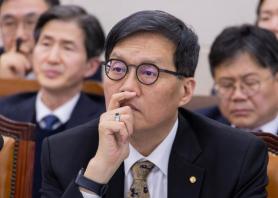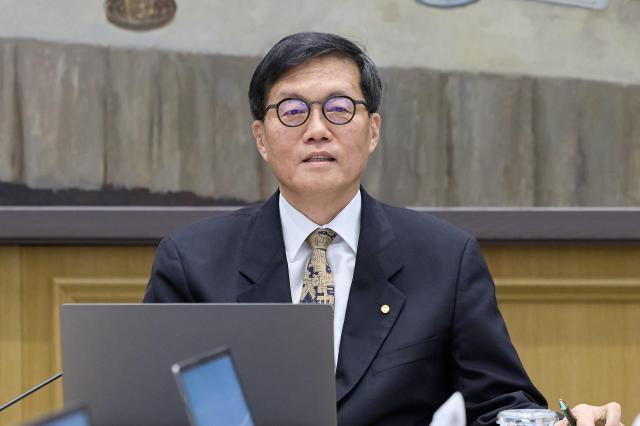
SEOUL, April 20 (AJP) — Bank of Korea Governor (BOK) Rhee Chang-yong emphasized the central bank’s dual role as a think tank in his swan-song remarks before retiring Monday, even as critics argued the Bank of Korea strayed into non-monetary areas such as housing and education under his watch.
In his final speech before stepping down, Rhee reflected on the limits of traditional policy tools after navigating multiple crises over the past four years.
“Managing various crises over the past four years, I have realized once again that it is becoming increasingly difficult to achieve stability and growth through monetary and fiscal policies alone,” he said, stressing that deeper socioeconomic reforms are essential for policy effectiveness.
He pointed in particular to changes in the foreign exchange market, warning that its structure has shifted in ways that constrain conventional responses.
Rhee said the market, once dominated by foreign capital flows, is now increasingly driven by domestic actors such as corporations, individuals and the National Pension Service.
“We have entered an era where domestic overseas investment fluctuates based on various factors, including the labor market, tax policies, pension systems and geopolitical risks, rather than just interest rate differentials,” he said.
Under such conditions, relying solely on market intervention or interest rate adjustments to manage exchange rates could produce unintended side effects, he warned.
Rhee also addressed structural challenges including low birth rates and sluggish growth, making clear that short-term policy measures would be insufficient. Labor and education reforms, he said, remain the only viable medium- to long-term solutions.
He reiterated his long-held view that the central bank should expand its role beyond traditional monetary policy.
“My belief that we should look beyond the boundaries of monetary and financial policy to become the nation’s top think tank remains the same,” Rhee said, urging continued research into structural issues such as housing, youth employment and elderly poverty.
Reflecting on his tenure, Rhee described it as a period of “constantly having to exceed expected boundaries,” shaped by successive global and domestic shocks.
Following the inflation surge triggered by the Russia-Ukraine War shortly after he took office, the central bank raised its benchmark rate to 3.5 percent, including two “big step” hikes.
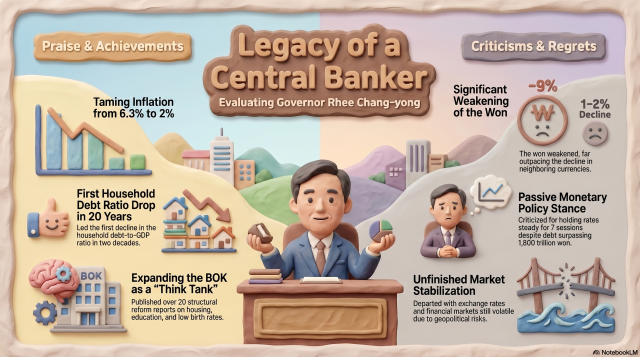
Rhee cited inflation control as a key achievement. Consumer prices, which peaked at 6.3 percent in July 2022, eased to the high-2 percent range in late 2023 and have remained in the low-to-mid 2 percent range since 2024.
He also pointed to the first decline in the household debt-to-GDP ratio in two decades as a meaningful milestone. The ratio, which peaked at 99.2 percent in the third quarter of 2021, has since fallen to the high-80 percent range.
Additional achievements included the introduction of Korean-style forward guidance and the publication of more than 20 structural reform reports aimed at improving policy communication.
Since 2022, the central bank has regularly issued “BOK Issue Notes” addressing non-monetary topics such as demographic shifts and changes in the global trade order. Internationally, Rhee was appointed as the first head of a non-reserve currency central bank to chair the Committee on the Global Financial System at the Bank for International Settlements.
Despite these gains, Rhee acknowledged that financial and foreign exchange markets remain unsettled. The Korean won weakened about 9 percent from 1,367 per dollar in June 2025 to around 1,490 in April 2026, a sharper decline than other major Asian currencies such as the Japanese yen and Chinese yuan, which fell by only 1 to 2 percent over the same period.
“It weighs heavily on my heart to leave while the foreign exchange and financial markets have not sufficiently stabilized due to the ongoing conflict in the Middle East,” Rhee said, expressing hope that stability would eventually return based on South Korea’s experience in managing past crises.
Since taking office on April 21, 2022, Rhee has been credited with managing crises through timely interest rate adjustments in the early stage of his tenure, and expanding the central bank’s scope through the publication of issue notes.
However, he also faces criticism for failing to take bolder monetary action against household debt, - holding benchmark rate still at 2.5 percent for 7 consecutive sessions - which surpassed 1,800 trillion won ($1.21 trillion), and the weakening won toward the end of his term.
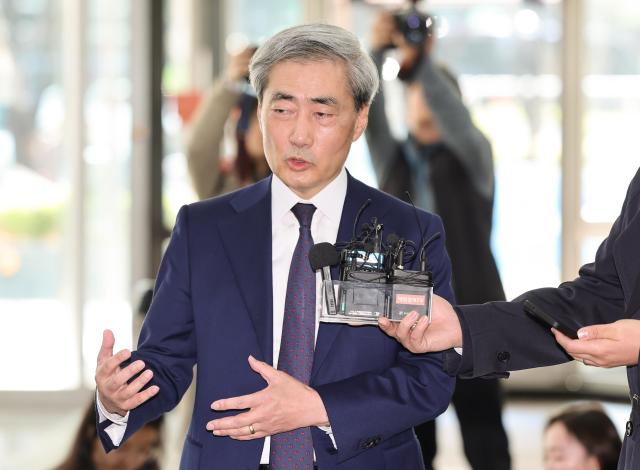
Shin Hyun-song, former head of the monetary and economic department at the BIS, is expected to succeed Rhee from Tuesday. Shin is clearly distinguished from Rhee by his track record of hawkish stances including preemptive interest rate hikes and balance sheet reductions during past crises such as the U.S. financial crisis and the Russia-Ukraine war, as well as his consistent emphasis on the intrinsic role of central banks.
The National Assembly has yet to adopt a confirmation report due to ongoing controversies surrounding Shin’s foreign assets and alleged "paper residence." Whether President Lee Jae Myung will move forward with the appointment later today remains a key focus of attention.
The won opened at 1,479.5 per dollar in the Seoul foreign exchange market, up 4 won from the previous session.

Copyright ⓒ Aju Press All rights reserved.