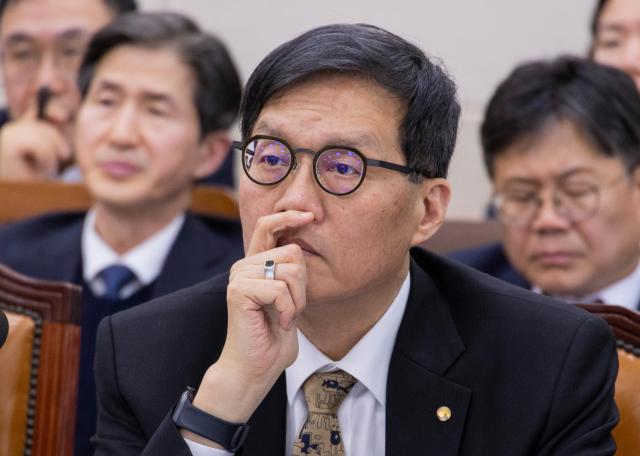
SEOUL, Feb. 26 (AJP) — That the Bank of Korea will keep the policy rate steady at 2.5 percent on Thursday is hardly in doubt. Whether Governor Rhee Chang-yong will still be holding the gavel beyond the April meeting is.
Rhee’s four-year term ends on April 20, shortly after the next rate-setting meeting on April 10. Whether he remains in office will be decided next month.
Under the Bank of Korea Act, the governor’s term may be extended once with presidential endorsement. Whether through reappointment or a new nomination, the post must be confirmed at least one month before the term expires to allow for a confirmation hearing.
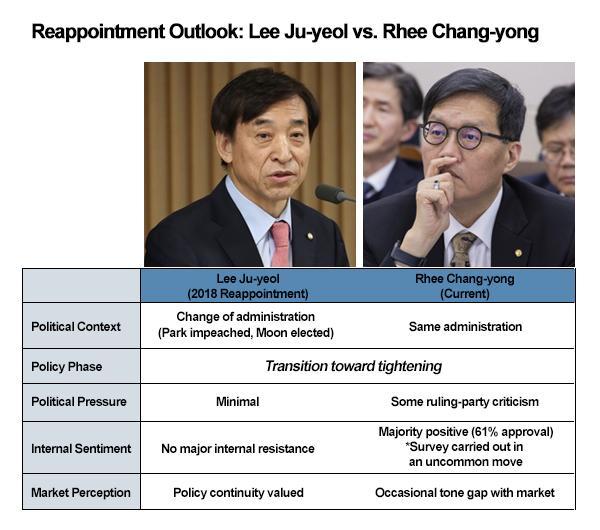
A BOK chief is rarely rejected, given the central bank’s legal independence. Second terms are also uncommon. Only Rhee’s predecessor, Lee Ju-yeol, and Kim Sung-hwan, who served in the 1970s, have been reappointed.
Whether Rhee becomes the third remains uncertain.
Supporters cite crisis management
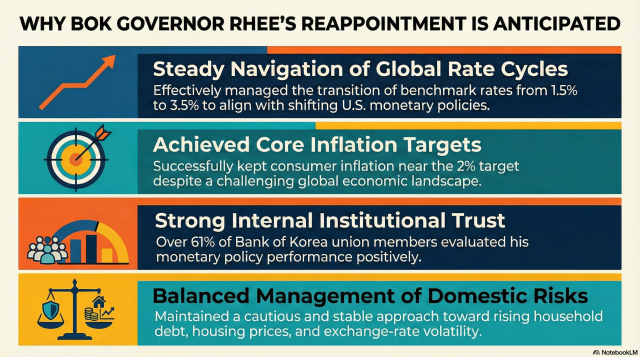
Those backing Rhee credit his steady navigation through the dramatic monetary tightening and easing cycle in the United States following the post-pandemic inflation surge.
Rhee took office in April 2022, at the start of the U.S. Federal Reserve’s withdrawal of excess liquidity injected during the pandemic.
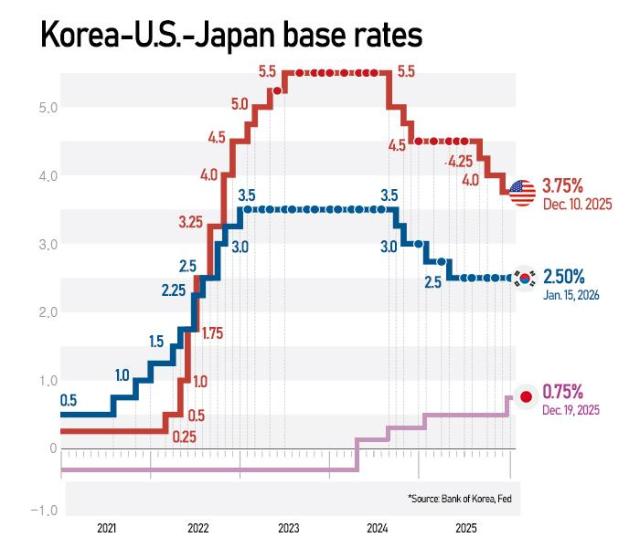
Under his watch, the benchmark interest rate rose from 1.5 percent to 3.5 percent by January 2023.
As inflation softened and economic growth slowed in the United States, the policy direction shifted in October 2024. Rates came down to 2.5 percent by May 2025.
Since then, Rhee’s policy board has opted for caution amid conflicting variables — rising housing prices and household debt at home, shifting rate paths in the U.S. and Japan, and exchange-rate volatility.
Inside the central bank, officials largely supported the approach.
According to a survey conducted by the BOK labor union in December, more than 61 percent of over 1,100 respondents evaluated Rhee’s monetary policy performance positively.
Many economists agreed.
“Rhee delivered timely monetary policy and maintained a strong presence during moments of crisis,” said Lee Seung-hoon, an economist at Meritz Securities.
Another economist, speaking on condition of anonymity, added, “He managed to keep consumer inflation near the 2 percent target despite a challenging landscape.”
Expanding the central bank’s scope
Rhee has also been praised for broadening the BOK’s policy outlook beyond monetary frontier.
Under his tenure, the bank expanded its “Issue Notes” series, applying statistical methods to challenges ranging from housing to the impact of artificial intelligence on employment.
Many of the publications are now released in English, reflecting efforts to deepen international engagement.
At a meeting of the Bank for International Settlements in January 2025, Rhee said Korea’s economic challenges “cannot be addressed by monetary policy alone.”
Political friction
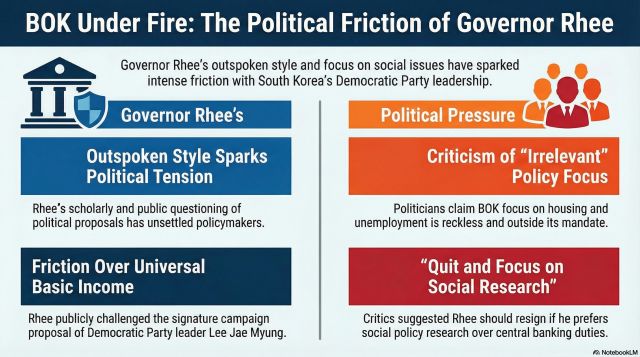
Rhee’s scholarly and outspoken style, however, has unsettled some policymakers.
He was appointed in 2022 by outgoing Moon Jae-in, and his term has overlapped with the impeached president Yoon Seok Yeol. Moon and President Lee Jae Myung are of the same progressive Democratic Party.
Rhee publicly questioned Lee Jae Myung's campaign proposal to institutionalize universal basic income.
Last November, Lee Un-ju, a member of the Democratic Party’s supreme council and a close ally of President Lee, expressed discomfort with the BOK’s focus on social issues such as housing and unemployment.
“Why does he keep focusing on irrelevant issues while being so reckless with his own duties?” she wrote on social media. “If that’s the case, he should quit as BOK governor and focus on social policy research.”
Such remarks highlighted lingering political unease over Rhee’s broader policy engagement.
Successor names surface
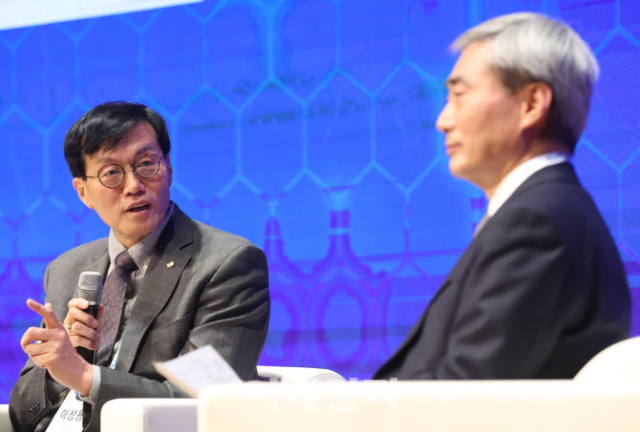
According to a ruling party official who requested anonymity, Shin Hyun-song, head of research at the BIS, is being discussed as a leading candidate. Known for his nonpartisan profile and academic credentials, Shin was also a top contender when Rhee was first nominated.
Other names circulating in political circles include Ha Joon-kyung, senior presidential secretary for economic growth, and Lee Seung-heon, a former senior deputy governor of the BOK.
“There is a possibility of reappointment, considering that Governor Rhee has recently rolled out measures aligned with the administration’s stance,” the source said.
Since last year, Rhee has introduced several initiatives seen as supportive of the government’s broader economic agenda.
These include promoting the development of a won-based stablecoin and arranging a foreign exchange swap between the BOK and the National Pension Service.
He has championed easing capital-region concentration as a way to address youth unemployment and promote balanced national growth — goals that closely mirror the administration’s policy priorities.
Copyright ⓒ Aju Press All rights reserved.