

Journalist

Kang, Dae Woong
dwkang@ajunews.com
-
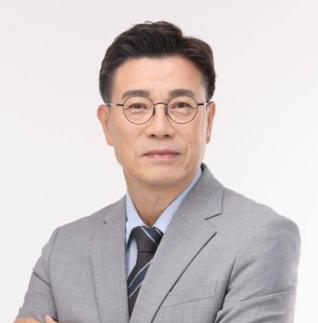 Choi Won-yong Wins Democratic Nomination for Pyeongtaek Mayor, Eyes June 3 Race The local political scene is closely watching whether Choi Won-yong can win his first bid for Pyeongtaek mayor, with attention rising after he secured the Democratic Party of Korea nomination for the June 3 local elections by winning a runoff on April 20. The campaign is also moving to form a “one team” with participation from candidates he faced in the primary. Choi formally declared his run for Pyeongtaek’s ninth popularly elected mayor on Feb. 24 at the National Assembly’s press briefing room. He advanced through the primary and clinched the nomination after an all-out final push. (Aju Economy report dated April 20, 2026) With the People Power Party’s candidate not yet decided, observers cautioned against early predictions, but many said Choi has at least laid groundwork for a competitive race. Choi, born in 1967, is from Poseung in Pyeongtaek and is known to have deep local ties. He earned a degree in public administration from Chung-Ang University and a master’s degree from Seoul National University’s Graduate School of Public Administration, then began his government career after passing the first local senior civil service exam in Gyeonggi Province. He later served as a council secretariat chief, head of the provincial planning and coordination office, and in 2022 as Pyeongtaek’s deputy mayor. He has been described as a pragmatic, field-oriented official with strong planning and execution skills. The article cites his work during the COVID-19 pandemic, when he oversaw disaster relief income tasks and helped design a system to deliver payments in 15 days, easing concerns that distribution by the promised date would be impossible. An anecdote about then-Gyeonggi Gov. Lee Jae-myung — described in the article as President Lee Jae-myung — praising him as a “great civil servant” is still widely repeated. Choi later was promoted to head the Gyeonggi Free Economic Zone Authority and ended a 30-year public service career. During the 21st presidential election, he joined the Democratic Party and became vice chair of Lee’s local decentralization innovation committee and co-chair of campaign committees for Pyeongtaek’s Eul and Byeong districts, working to support Lee’s election. Though some speculation circulated that he could join the Cabinet, he instead entered the Pyeongtaek mayoral race. In his February announcement, Choi said, “For more than 30 years, I have directly taken responsibility for planning, budgeting and policy implementation at the center of administration in Gyeonggi Province and Pyeongtaek.” He added that as head of Gyeonggi’s “Pyeongtaek Development Support Group,” he handled practical work to lay the groundwork for the Godeok International New Town and Samsung Electronics’ Pyeongtaek campus, and emphasized that as Pyeongtaek deputy mayor he practiced on-the-ground administration while communicating with residents. He presented three visions: an economy centered on K-semiconductors, an AI future city, and transportation built around a “Pyeongtaek 30-minute living zone” linking the city, along with an education system “completed within Pyeongtaek.” His campaign has continued releasing detailed pledges, saying its core philosophy is that change begins by solving small inconveniences in residents’ daily lives. Choi is also described as someone who steadily honed his administrative skills over more than three decades in public service. Voters are watching whether he can translate that experience into what he calls a Pyeongtaek renaissance in the ninth popularly elected administration.* This article has been translated by AI. 2026-04-21 14:27:05
 -
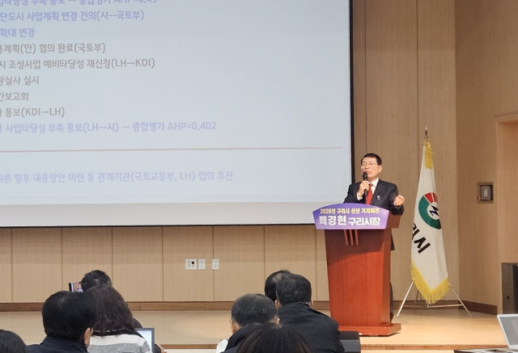 Guri Mayor Baek Kyung Hyun Lays Out Six Policy Priorities for 2026 Guri Mayor Baek Kyung Hyun used a New Year news conference on Tuesday to present what he called six operating directions for 2026: welfare, the economy, urban infrastructure, transportation, culture and the environment. Baek framed the agenda as a question of direction rather than speed, arguing that city policy should focus on where Guri is headed. On welfare, he emphasized what he described as a tighter safety net, treating support as a system rather than a one-time benefit. He pointed to transportation assistance for older residents and integrated medical and long-term care as administrative responsibilities in a rapidly aging city. On low birthrates, he said the city would approach the issue through housing, caregiving, education and work-life balance rather than relying on cash incentives alone. On the economy, Baek highlighted traditional markets and neighborhood commercial districts ahead of large-scale development or outside capital, signaling a focus on helping existing merchants endure rather than pursuing short-term stimulus. On future growth, he cited the Topyeong Hangang Smart Green City plan and a Sano-dong e-commerce advanced city concept, describing them as efforts to change Guri’s role in the greater Seoul area. On transportation, he pointed to the issue of whether GTX-B trains will stop at Galmae Station, calling it a matter of “citizens’ right to transportation.” On culture and daily-life infrastructure, he referenced festivals, sports and a new administrative welfare center building, saying city competitiveness should be measured in quality of life. On the environment, he cited the restoration of the Inchangcheon ecological stream, expansion of Imunan Lake Park and the creation of more walkable streets as steps toward a city focused on management rather than development. Baek said his guiding phrase for the year is “Nojeokseonghae,” a proverb meaning small accumulations become a sea, underscoring incremental change through repeated execution. He said the six directions are largely already underway, and whether they translate into improvements residents can feel will be determined over time.* This article has been translated by AI. 2026-01-29 05:03:48
 -
 Yangpyeong County head cites 88.3% pledge completion, outlines 2026 priorities Yangpyeong County Gov. Jeon Jin-seon told reporters on Jan. 28 that his administration has carried out 88.3% of its campaign pledges and will steer county policy in 2026 around four priorities: safety, the environment, tourism and health. About 100 news outlets attended the New Year briefing at the county hall. Jeon reviewed major projects and outlined plans, while stressing that the county’s focus is on building policies that last beyond a single term. Jeon cited the 88.3% pledge-implementation rate as a measure of progress, while noting the need to follow through on policy quality. He pointed to projects including the Namhan River Terrace, the Yangpyeong Sports Complex, a lighting street project at the Mulmang Market, and the completion of the Sinwon Water Purification Plant. He also highlighted Yangsuri’s selection as a UN Tourism Best Village, describing it as recognition of tourism planning tied to daily life, the environment and residents rather than short-term events. Jeon said a tourism city should be a place where people have reasons to stay, not simply a place that draws crowds. For 2026, Jeon said the county will run a task force aimed at international safe city certification and strengthen its integrated control center by expanding CCTV coverage. In tourism, he outlined plans to build infrastructure by dividing the county into western, central and eastern zones, and he cited proposals to elevate Dumulmeori and Semiwon as part of a national garden initiative. During a question-and-answer session, reporters raised long-running issues including a possible relocation of the county office, operation of a local emergency medical institution, construction of Yanggeun Bridge, and a proposed Yongmun-Hongcheon metropolitan railway. Jeon addressed some questions at length and declined to answer others immediately. Jeon said “2026 is an important period linking the eighth and ninth elected local administrations,” framing it as both a push to complete his term’s work and to build structures that can be carried forward. He also thanked the media and called for accurate, in-depth coverage, emphasizing communication as the basis for the relationship between local government and the press.* This article has been translated by AI. 2026-01-29 05:03:23
 -
 Anseong Mayor Kim Bo-ra Questions Eligibility Limits in Proposed Regional Doctor Program South Korea’s government is pushing to introduce a “regional doctor program” to address uneven distribution of medical workers. The plan aims to fill gaps in essential care in rural areas, smaller cities, and island and mountainous regions where staffing is scarce. Support for the idea is broad, but the debate has focused on how the program is designed. On Tuesday, Anseong Mayor Kim Bo-ra raised questions in a social media post. Kim said she supports the program in principle but asked whether the proposed approach can actually strengthen local health care. She publicly challenged discussions about limiting eligibility to applicants who graduated from middle and high schools within the relevant medical service area. The government is seen as considering that standard to prevent students from Seoul and other large cities from using the program as an alternative admissions route. It also reflects an expectation that students who grew up and studied locally are more likely to stay after completing mandatory service. Kim pointed to existing behavior around special admissions for rural and fishing communities. Some students, she wrote, move their registered address to rural areas near the capital region starting in middle school, attend local schools during the semester and travel to private academies in Seoul during breaks. The more a system is built around “where you’re from,” she argued, the more it can be exploited in ways that diverge from its purpose. Kim said restricting eligibility by middle and high school region does not guarantee a doctor will remain after mandatory service. She also questioned excluding applicants who grew up in Seoul but make a firm choice to provide essential care in underserved areas. Her criticism went beyond fairness in access. Kim said the program’s success depends less on applicants’ origins than on training that builds a sense of mission as a regional doctor. She called for education after selection that helps doctors understand local conditions, build relationships with residents and internalize the public nature of medical care — producing doctors who embrace local practice rather than simply fulfilling a service requirement. Kim acknowledged that motivations for becoming a doctor are complex and that many high-achieving students choose medical school for economic reasons, a reality she said will not change overnight. But she drew a line, arguing that the regional doctor program should not be distorted as a way to address that broader issue. Kim said the program should not be framed as compensation for people from certain areas, but as a system to develop doctors committed to taking responsibility for local health care. That makes the initial design crucial, she said — focusing not on whom to exclude, but on whom to cultivate and how. Kim said success should be measured not only in head counts but in whether more doctors ultimately stay, know their patients and remain part of the community. The answer, she argued, lies in choice, education and the program’s guiding philosophy, not birthplace.* This article has been translated by AI. 2026-01-29 05:03:00