
Journalist

Abraham Kwak
ellenshs@ajunews.com
-
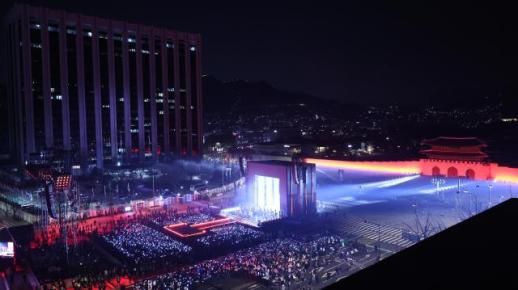 OPINION: A century show, carried with care SEOUL, March 22 (AJP) -It was billed as a comeback. It became something larger: a test of scale, identity and control — and, ultimately, a quiet assertion of how far K-pop, and Korea, have come. BTS returned to Gwanghwamun Plaza not just as artists resuming a career, but as men who had completed a national duty and reassembled a global phenomenon. Thirteen years into their journey, the performance was less about proving relevance than about defining legacy. The numbers alone strained belief. Roughly 40,000 filled the tightly managed square, while tens of thousands more watched from surrounding streets and screens. Beyond Seoul, audiences in 190 countries tuned in via Netflix, turning a historic civic space into a synchronized global venue. Yet scale was not the defining feature. Control was. Nearly 15,000 personnel — an extraordinary deployment — managed the crowd with strict routing, metal detectors and enforced movement through narrow corridors. The experience, at times, felt excessive, even rigid. Fans waited, shuffled, and surrendered spontaneity to structure. And still, not a single major incident. In an era where mass gatherings often carry an undertone of risk, the absence of chaos became its own statement. Order was not incidental; it was engineered — and, notably, accepted. Fans from across continents complied with patience, even humor, some carrying trash bags and leaving the site as clean as they had found it. That discipline, as much as the music, defined the night. On stage, the narrative was deliberately balanced. New tracks from the fifth album ARIRANG — including “Body to Body” and “SWIM” — were interwoven with global hits like “Dynamite” and “Butter.” The message was continuity, not reinvention. RM, seated with an injured ankle, declared simply: “We’re back.” Jimin, voice wavering, offered the album’s thesis in a single line: “Keep swimming.” It was less spectacle than reassurance — a reaffirmation of presence after absence, of identity after uncertainty. The setting amplified that message. Framed by Gyeongbokgung Palace, and watched over by statues of King Sejong the Great and Admiral Yi Sun-sin, the performance fused heritage with hyper-modern production. This was not accidental staging. It was narrative architecture: a global act returning to a national axis. Even the broadcast carried symbolic weight. The live stream held steady under immense global traffic, marking a technical milestone for Netflix’s expansion into large-scale live music. The platform proved it could handle not just content, but simultaneity — a crucial distinction in the evolving competition for live audiences. There were imperfections. Safety protocols thinned out visible crowd density on screen, muting some of the visceral energy that defines concerts. Subtitles lagged, and the user interface occasionally fell short of the production’s visual ambition. But these were, in essence, second-order problems — the kind that emerge only after first-order challenges have been solved. And that is the point. What unfolded at Gwanghwamun was not merely a concert. It was a demonstration: that a dense urban core can host a massive live event without disorder; that a global fandom can self-regulate; that a cultural product can integrate tradition, technology and scale without losing coherence. K-pop has long excelled at spectacle. What it showed here was something subtler — governance. The century-defining aspect of the show was not its size, nor even its global reach. It was the way it was carried out: with restraint, coordination and a collective awareness that the moment was bigger than any individual. In the end, the loudest message was delivered quietly. Not just that BTS is back. But that the system around them has matured. 2026-03-22 09:25:15
 -
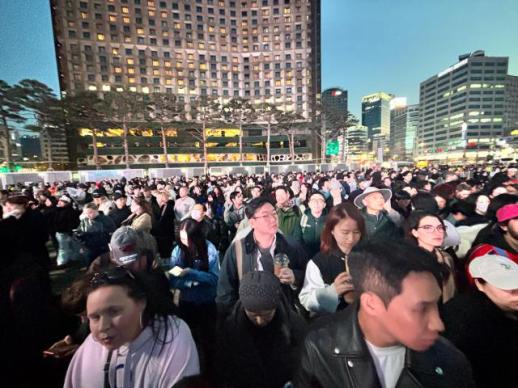 BTS Live: Packed, pushed, imperfect, yet orderly for BTS moment SEOUL, March 21 (AJP) -Two hours before BTS’s comeback concert, hundreds of fans without tickets for the free reserved seats had already formed tightly packed lines, hoping they would lead as close to the stage as possible beyond the police fence. The official seating at Gwanghwamun Plaza totaled 22,000, divided into Zone A for standing, Zone B for reserved seating and Zone C for additional seats. The rest were left to watch from around the plaza. Of those, 15,000 seats vanished almost instantly when online booking opened on Feb. 23, followed a week later by another 7,000 standing tickets. Police estimated that as many as 260,000 people could gather from the stage area to Sungnyemun, making it the largest crowd in central Seoul since the 2002 World Cup street cheering, when 200,000 to 250,000 people filled the area. Officers repeatedly urged pedestrians to keep moving whenever foot traffic slowed. “You cannot stand here. Please move,” they said in Korean, while foreign visitors were met with a constant refrain of “Move, move!” Access to Gwanghwamun Plaza was restricted to 31 gates equipped with metal detectors to block hazardous items, with police special forces also deployed inside. As crowds swelled, some gates were temporarily closed. When frustrated citizens protested, officers redirected them, warning that certain entry points were already overcrowded. Fans who failed to secure tickets adopted their own strategies to claim the best possible viewing spots. Some brought newspapers to sit on, others folding fishing stools. Even benches became contested territory. One concertgoer let out a sigh after losing a hard-won seat during a brief trip to the restroom. In front of the Kyobo Life building, some spectators sat on the pavement and stretched out their legs, prompting police to ask them to move for safety reasons. Near the KT building, there was not even room to sit, leaving fans standing for hours. The lines stretched endlessly, and many were not even sure where they were heading. After nearly an hour, the flow of people spilled into City Hall Plaza — a walk that would normally take 15 minutes. Hundreds, who thought they were heading toward Gwanghwamun, settled instead in front of giant outdoor screens. Those inside the perimeter faced their own constraints. Entry required arrival by 5 p.m., three hours before the concert, and all food except a bottle of water was confiscated. Those in standing zones hesitated to leave even for the restroom, fearing they would lose their hard-earned spots. An AJP reporter inside also reported intermittent internet outages as networks became overloaded. Still, for many, the experience was worth it. Paula, 27, from Chile, who had attended BTS’s last concert before the members began their military service, said the decision was simple. “I could watch it on Netflix, but I wanted to hear their voices in person.” Nearby cafés were already filled with fans waiting with BTS content playing on their screens. She and a Spanish friend she had met just 15 minutes earlier were simply hoping to catch even a partial view. “I just want to be part of this historic moment in a historic place,” she said. Drifting farther away from the venue with each police-guided step, Lil Reinhart, 21, from Germany, found herself pushed toward the outer edges of the crowd. Yet she had come anyway. “At least you can hear their real voice,” she said, her breath visible in the cold after six hours of waiting on the street. It was her first time traveling abroad alone. She booked her flight two months earlier, paying around 800 euros — well above the usual 500 — for what she called a “once-in-a-lifetime event.” “This kind of comeback won’t happen again,” she said. “Not with this many people, live in front of you.” Her determination was shaped by disappointment. She had failed to secure tickets for BTS’s Germany tour, an experience she described as “strong disappointment.” This time, she was not willing to miss it entirely. “I really wanted to see them at least once in my life.” Even as access to the venue became effectively impossible and the crowd was steadily pushed farther away, she stayed. The plan, if there was one, was simple: wait and hope. “Somewhere,” she said, “where I can at least hear their voices.” “I think as soon as I see them,” she said, “I’ll just be like — oh my gosh.” 2026-03-21 19:32:06
 -
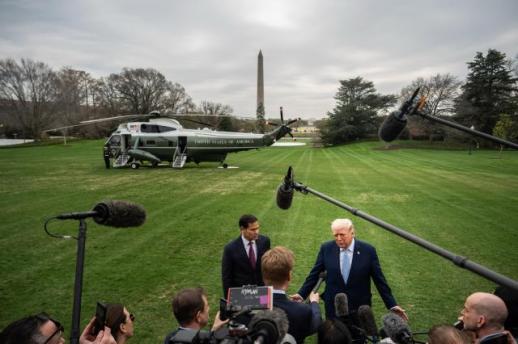 GULF CRISIS: Trump signals "winding-down" , Seoul joins statement on Iran SEOUL, March 21 (AJP) - U.S. President Donald Trump signaled a potential shift toward winding down military operations against Iran while he continuing to press key Asian allies, including South Korea, to take a more active role in securing the Strait of Hormuz, a critical global energy artery. South Korea belatedly joined a statement by Japan and other non-Gulf countries condemning Iran for weaponizing the Strait of Hormuz. In a post on Truth Social on Friday, Trump said Washington was “considering a gradual wind down” of its large-scale military campaign in the Middle East, adding that U.S. forces were “very close” to achieving their objectives. He outlined five core goals of the operation: neutralizing Iran’s missile capabilities, dismantling its defense industry, incapacitating its naval and air forces including air defense systems, permanently blocking its nuclear capabilities, and ensuring maximum protection for U.S. allies in the region. The remarks suggested that Washington may be exploring an exit strategy after nearly three weeks of escalating conflict. However, Trump’s messaging remained contradictory. Hours earlier, he dismissed the idea of a cease-fire, saying, “You don’t do a cease-fire when you’re literally obliterating the other side.” The ambiguity has left markets and allies uncertain whether the U.S. is genuinely preparing to de-escalate or simply attempting to stabilize oil prices and financial volatility without a concrete disengagement plan. But developments on the battleground pointed to continued escalation rather than de-escalation. The Pentagon is deploying additional Marines and three more warships to the region, marking the second reinforcement in a week and fueling speculation over a potential ground operation. Iran remains defiant. Its newly installed supreme leader warned that “safety must be taken away” from its enemies, while the Islamic Revolutionary Guard Corps rejected claims that its missile capabilities had been crippled. Israel said it had eliminated key leadership figures within the Basij militia, including its intelligence chief, in targeted strikes. The conflict has already begun spilling across the region. Gulf states reported intercepting drones and missiles, while NATO withdrew all personnel from Iraq to Europe, underscoring rising security risks. Oil markets remain on edge. Brent crude settled at $112.19 per barrel — the highest close since 2022 — after briefly spiking to $119 intraday, reflecting fears of prolonged disruption to global energy supply. Even as he hinted at a drawdown, Trump renewed calls for U.S. allies to shoulder more responsibility for securing the Strait of Hormuz, which Iran has effectively choked off. “We don’t use the strait. We don’t need it,” Trump told reporters at the White House. “Europe needs it. Korea, Japan, China — a lot of other people — so they’ll have to get involved.” He added that countries dependent on the route should “guard and police” it themselves, with the U.S. offering support only if requested. The remarks reflect Washington’s growing push to shift the burden of maritime security to energy-importing economies, particularly in Asia, even as it continues military operations against Iran. Seoul has responded cautiously, seeking to balance alliance coordination with domestic and regional constraints. South Korea’s Foreign Ministry late Friday said it would join a joint statement issued by seven countries — including the United Kingdom, France, Germany and Japan — condemning Iran’s effective blockade of the Strait of Hormuz and calling for the protection of freedom of navigation. “The decision reflects our fundamental position on ensuring safe maritime routes and the direct impact of disruptions on our energy security and economy,” the ministry said. The move signals diplomatic alignment with the U.S. and European partners while stopping short of committing to direct military participation such as dispatching naval forces. The joint statement itself was widely interpreted as a symbolic show of support rather than a binding operational commitment. Public sentiment in South Korea remains a key constraint. A Gallup Korea poll released Friday showed that 55 percent of respondents oppose sending naval forces to the Strait of Hormuz, compared with 30 percent in favor. Opposition was particularly strong among centrists and progressives, while conservative voters were more evenly split. The data highlights the political risk for Seoul in responding to Washington’s request for military involvement, particularly amid heightened uncertainty over the trajectory of the conflict. Still, some ruling party lawmakers have suggested leveraging potential participation as a bargaining chip in negotiations with the U.S., including securing greater autonomy over nuclear-powered submarine development. 2026-03-21 07:57:25
 -
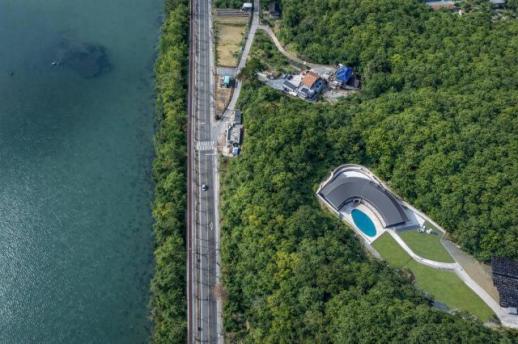 From ashes to rebirth: Yoon Kyeong-sik wins World Architecture Awards SEOUL, March 18 (AJP) - In March 2026, the announcement came from the United Kingdom: the World Architecture Community Awards, 53rd cycle. It was not simply a prize. It was recognition that something quiet, something deeply human, had spoken across borders. Among works from 53 countries and judged by 243 jurors, the Inwolsa Dharma Center was chosen — not for spectacle, but for the depth of its question. This was not architecture of reconstruction. It was architecture of renewal. “The fire burned the buildings, but it could not burn our practice. What we rebuilt was not a temple, but the mind.” With these words, Venerable Jaebeom condensed the entire narrative of Inwolsa. What stands today is not only designed — it is gathered. From quiet donations, from unseen solidarity, from a shared refusal to let meaning disappear. As the Buddhist teaching goes: All things arise from the mind. Inwolsa is that mind made visible. Faced with the ruins, architect Yoon Kyeong-sik did not choose restoration. He chose not to repeat the past. He chose to reinterpret it. “Inwol” — the moon reflected on water. One moon, infinitely mirrored. From this idea, he translated philosophy into space. The curve of the crescent moon, the arc of the Buddha’s brow. No rigid lines, but flowing continuity. No division, but relationship. Architecture here becomes thought. Inside, the central space opens — empty, yet full. This emptiness is not absence. It is potential. The meditation hall and prayer spaces unfold as separate functions within a single continuous flow. To be empty is to hold everything. The Indra Wall forms the heart of the building. A field of color, light, and deliberate voids.Each opening receives light, and reflects it onward. Yoon Kyeong-sik does not build religion. He builds questions. “Architecture is not where people stay. It is where people change.” At Inwolsa, this is not an idea. It is an experience. His work resists spectacle. It returns to essence. Inwolsa gathers all of this into one place. It is not merely a temple. It is a record of loss, a form shaped by community, a vessel of spirit. Fire destroys. But it cannot touch the mind. And the mind, in time, builds again. Yoon’s architecture stands as proof. About the author: Architect Yoon Kyeong-sik is widely regarded as one of the defining voices in contemporary spiritual architecture, known for his philosophy of harmonizing tradition and modernity through nature-responsive design and humanistic inquiry. Over a career spanning more than 35 years, Yoon has earned over 24 international architecture awards. His work extends beyond the physical realm, positioning architecture as an intellectual and philosophical practice—one that engages with the humanities, aesthetics and the inner life of space. Among his most celebrated works, the Haselina Ninebridge Clubhouse has drawn international attention. The project was featured by the BBC for its striking ceiling design, noted for its sculptural interplay of light and structure. It was also highlighted by The New York Times as a distinctive architectural destination, underscoring its global cultural resonance. Yoon’s portfolio has been recognized with major honors including the International Architecture Awards (IAA), the iF Design Award and the Architecture MasterPrize (AMP). Notably, he became the first non-European architect to receive top recognition at an Italian sustainable architecture award, marking a significant milestone in the field. 2026-03-18 20:01:19
 -
 Seoul readies "wartime" contingency plans including export curb option and extra budget SEOUL, March 17 (AJP) - South Korean President Lee Jae Myung on Tuesday ordered the government to prepare for worst-case scenarios, including "wartime" extra budget, export curbs, and nationwide energy-saving measures, as the Middle East conflict threatens to disrupt global oil supplies. “The Middle East situation is expanding beyond expectations,” Lee said in a cabinet meeting. “At this rate, gasoline prices — which have stabilized under price control measures — could turn volatile again and send shockwaves through people’s daily lives.” Lee warned that prolonged instability following U.S. strikes on Iran could reignite energy price volatility, calling for contingency planning on the assumption that the crisis may drag on. Seoul has imposed a temporary price cap on wholesale and retail fuel prices for the first time in nearly 30 years when prices at gas stations surged last week. The president urged ministries to prepare a broad range of emergency responses, including demand control and supply-side measures. “If necessary, we must consider curbing exports and increasing the operating rates of nuclear power plants,” Lee said.He also called for a nationwide energy-saving campaign, suggesting the revival of vehicle restriction schemes such as leaving cars at home once a week or adopting odd-even driving systems. His remarks mark one of the strongest signals yet that Seoul is preparing for deeper disruptions in energy markets as the Strait of Hormuz — a key global oil transit route — remains under threat. South Korea is among key users of the Strait of Hormuz under pressure by the Trump administration to join a maritime coalition to restore the waterway crippled by Iranian attacks. Lee emphasized the need to mobilize diplomatic resources to secure alternative crude supplies, citing recent efforts to procure additional oil from the United Arab Emirates. “We must make all-out efforts to discover additional supply lines by leveraging our diplomatic capabilities and assets,” he said. South Korea imports virtually all of its crude oil, with more than 70 percent sourced from the Middle East, leaving the economy highly exposed to geopolitical shocks in the region. The president also instructed the government to accelerate the preparation of a supplementary budget, describing it as a “war-time” fiscal response aimed at cushioning the economic impact. 2026-03-17 13:27:28
 -
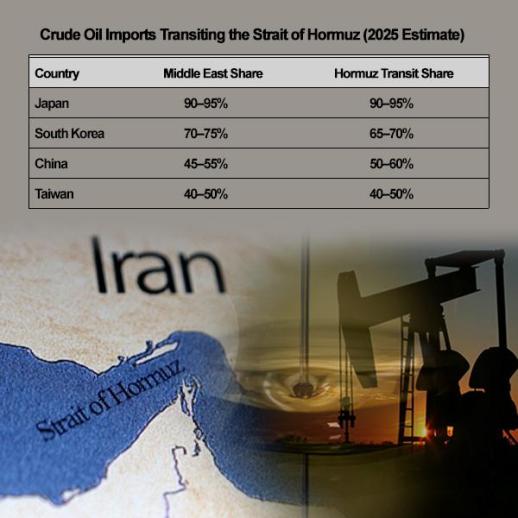 US mounts more pressure on allies for maritime coalition in Strait of Hormuz SEOUL, March 17 (AJP) -South Korea and Japan — both heavily dependent on Middle Eastern energy supplies passing through the Strait of Hormuz — have been repeatedly singled out by U.S. President Donald Trump as Washington seeks international support for reopening the vital shipping lane amid the ongoing U.S.–Israeli war with Iran. Speaking at the White House on Monday during a meeting with trustees of the John F. Kennedy Center for the Performing Arts, Trump renewed his call for allies to join a coalition to secure the strait — though responses from partner countries have so far ranged from cautious non-commitment to outright reluctance. “We strongly encourage other nations whose economies depend on this strait far more than ours,” Trump said. “We get less than 1 percent of our oil from the strait and some countries get much more.” “Japan gets 95 percent. China gets 90 percent. Many of the Europeans get quite a bit. South Korea gets 35 percent. So we want them to come and help us with the strait,” he added, without providing the basis for the numbers. According to petroleum association postings of each countries, Japan depends 90 to 95 percent on Hormuz transit and South Korea around 65 to 70 percent. The share for China is lower at 50 to 60 percent. Trump expressed frustration at what he described as a lack of enthusiasm from countries that benefit from U.S. military protection. “We’ve protected them from horrible outside sources, and they weren’t that enthusiastic — and the level of enthusiasm matters to me,” he said. "We have some countries where we have 45,000 soldiers, great soldiers, protecting them from harm's way, and we have done a great job," he added, declining to name them. The United States maintains roughly 50,000 troops in Japan and about 28,500 troops in South Korea, two of Washington’s closest security partners in Asia. Seoul has signaled that it is weighing the request carefully. The South Korean government said it remains in consultations with Washington and will address the issue only after “careful deliberation.” Japan has issued a similar response, emphasizing the complexity of any military involvement in the conflict. Pressure on Seoul has already intensified at the diplomatic level. South Korean Foreign Minister Cho Hyun held a phone call Monday with U.S. Secretary of State Marco Rubio, according to the foreign ministry. Rubio briefed Cho on the situation in the Middle East and called for cooperation to restore stability in the region. He also emphasized the importance of global coordination to secure maritime traffic through the Strait of Hormuz and stabilize oil prices. Cho thanked Washington for assisting with the evacuation of Korean nationals from the region and requested continued support. The two officials agreed to meet soon for further discussions on bilateral and global security cooperation. The diplomatic push underscores Washington’s growing concern that the war — now entering its third week — could turn into a prolonged disruption to global energy markets. The Strait of Hormuz normally carries about one-fifth of the world’s oil shipments, making it one of the most strategically sensitive maritime chokepoints in global trade. The suspension has spiked oil prices to $100 a barrel and other commodities, causing disruptions across the board. The standoff is also becoming politically sensitive in the United States. Although the U.S. military’s superiority over Iran has never been seriously questioned, the conflict has proven more resilient than some policymakers initially expected. Iran’s most effective retaliation has been targeting regional oil infrastructure and effectively blocking commercial shipping through the strait. Rising crude prices have already pushed up gasoline costs in the United States — a development that could complicate domestic politics as congressional midterm elections approach. Trump has responded with a mix of defiance and reassurance. He said some countries have privately expressed willingness to support the U.S. effort but declined to identify them. “We don’t need anybody,” Trump said. “We’re the strongest nation in the world.” At the same time, he warned that any Iranian attempt to mine the strait would be “a form of suicide.” Across the Atlantic, the response from European capitals has been markedly cautious. European Union foreign ministers meeting in Brussels stressed that they had little appetite for becoming directly involved in a conflict that many leaders view as a U.S.-initiated war. “This is not our war. We have not started it,” said Boris Pistorius. EU foreign policy chief Kaja Kallas said there was no consensus among member states to extend the EU’s existing Red Sea naval mission — known as Aspides — to the Strait of Hormuz. “There was a clear wish to strengthen our operation, but for the time being there was no appetite to change the mandate,” she told reporters after talks with EU foreign ministers. Germany and Italy both opposed expanding the mission’s scope, arguing that shifting naval assets into the strait could risk escalating the conflict. British Prime Minister Keir Starmer also declined to commit to a full naval escort operation. “We will not be drawn into the wider war,” Starmer said at a press conference in London, though he noted that Britain would continue exploring options with allies to restore freedom of navigation. Several European leaders also emphasized that the Strait of Hormuz crisis does not fall under the mandate of NATO’s collective defense framework, which is triggered only when member states themselves are attacked. Luxembourg Foreign Minister Xavier Bettel put the point bluntly: “Blackmail is not what I wish for.” Regardless of the broad reluctance among allies, the pressure on energy-dependent economies in Asia and Europe is likely to grow if the blockade continues. The surge in oil prices has already raised fears of renewed inflation and disruptions across global manufacturing and food supply chains and capital flight in Asian markets. 2026-03-17 08:13:14
 -
 Analysis: Iran war puts Korea and US allies to test as Trump asks for warship support SEOUL, March 15 (AJP) -As the war with Iran enters its third week, the conflict is no longer a distant geopolitical crisis for South Korea as it is rapidly becoming a test of alliance politics, energy security and the limits of Seoul’s willingness to project military power far beyond the Korean Peninsula. The shift came after Donald Trump on Saturday openly urged energy-dependent countries — including South Korea — to send naval forces to the Strait of Hormuz to secure global shipping lanes threatened by Iran. The remark signals a potential change in Washington’s wartime strategy. While the United States escalates air and missile strikes against Iranian military infrastructure, the responsibility for safeguarding maritime energy routes may increasingly fall on U.S. allies whose economies depend on those supply lines. In a social-media post Saturday, Trump named several countries he believes should contribute naval assets. “Many countries, especially those affected by Iran’s attempted closure of the Hormuz Strait, will be sending warships,” he wrote, citing China, France, Japan, South Korea and Britain. “The countries of the world that receive oil through the Hormuz Strait must take care of that passage, and we will help — a lot.” For Seoul, the message underscores how quickly a Middle East war could spill into the strategic calculations of U.S. allies in East Asia. Little sign of the war ending soon The conflict began when U.S. and Israeli forces launched coordinated strikes on Iranian nuclear and military facilities on Feb. 28. Since then, the confrontation has steadily escalated. U.S. forces have reportedly struck more than 90 Iranian military targets, including infrastructure on Kharg Island, the terminal responsible for roughly 90 percent of Iran’s crude exports. Iran has responded by tightening its grip on the Strait of Hormuz — the narrow waterway through which about one-fifth of global oil shipments normally pass. Shipping traffic has plunged to a fraction of normal levels as tankers avoid the area amid drone, missile and mine threats. Oil prices have already approached $100 per barrel, reviving fears of a new inflation shock across energy-importing economies. Washington appears reluctant to commit large ground forces. Instead, the emerging strategy emphasizes airpower and coalition maritime security. That framework inevitably places pressure on countries like South Korea. South Korea imports roughly 70 percent of its crude oil from the Middle East, much of it transported through the Strait of Hormuz. From Washington’s perspective, this creates a straightforward argument: the economies most dependent on Gulf energy should help secure the shipping routes that sustain them. But for Seoul, the question is far more complicated. Sending South Korean naval vessels into the Persian Gulf would represent not only a military decision but also a diplomatic and domestic political calculation — one shaped by history, law and geography. South Korea, having received international support during its own war, is no stranger to overseas military missions. The country’s largest foreign deployment occurred during the Vietnam War, when more than 300,000 South Korean troops served alongside U.S. forces between 1964 and 1973. Since democratization in the late 1980s, however, Seoul has adopted a more cautious approach. Overseas missions have generally been framed as peacekeeping, reconstruction or maritime security operations. South Korean forces have participated in operations in Iraq, Afghanistan and Lebanon, while the navy has maintained a permanent presence in the Gulf of Aden through the Cheonghae Unit since 2009. The Cheonghae Unit was originally deployed to combat piracy near Somalia, escorting commercial vessels through one of the world’s most dangerous shipping corridors. In 2020, during an earlier confrontation between Washington and Tehran, Seoul quietly expanded the unit’s operational zone to include waters near the Strait of Hormuz. Rather than joining the U.S.-led International Maritime Security Construct coalition directly, South Korea opted for an independent mission focused on protecting its own shipping. The arrangement allowed Seoul to support maritime security while avoiding the appearance of participating in a military coalition targeting Iran. Any new deployment would face domestic legal hurdles. Under South Korean law, overseas troop deployments typically require approval from the National Assembly unless they fall under narrowly defined missions such as peacekeeping or anti-piracy operations. Even when legally feasible, foreign deployments remain politically sensitive. Public opinion in South Korea has historically been cautious about involvement in distant conflicts — particularly wars perceived as being driven by the strategic priorities of larger powers. Sending naval escorts to protect shipping could potentially be framed as a defensive maritime security mission. Direct participation in combat operations against Iran, however, would almost certainly trigger a much deeper domestic debate. Perhaps the most significant strategic constraint lies much closer to home. South Korea remains technically at war with Kim Jong Un’s regime following the armistice that ended the Korean War in 1953. Maintaining deterrence against North Korea remains the central priority of the South Korean military. If U.S. forces are drawn deeper into a prolonged Middle East war, questions could emerge about the availability of American assets traditionally deployed on the Korean Peninsula — including missile defense systems and airpower. For that reason, analysts say Washington is unlikely to encourage large-scale participation by Northeast Asian allies in the Middle East theater. “The United States does not want to create vulnerabilities in East Asia while concentrating on Iran,” said Yasuyuki Matsunaga of Tokyo University of Foreign Studies. Still, even limited maritime missions could create political and strategic ripple effects. The situation highlights a classic challenge in alliance politics: the risk of entrapment as the country relies heavily on the U.S. security umbrella to deter North Korea. Yet policymakers have long worried that alliance obligations could eventually draw the country into conflicts far from the Korean Peninsula. The Hormuz crisis may represent precisely such a scenario. While the war itself is unfolding thousands of kilometers away, the globalized nature of energy markets and alliance networks means its consequences are already reaching East Asia. And for Seoul, the decision may ultimately hinge less on military necessity than on economic survival. If the Strait of Hormuz remains disrupted and energy markets tighten further, protecting oil supply routes could become a national security issue in its own right. 2026-03-15 07:28:15
 -
 Washington slaps another Section 301 probe on South Korea SEOUL, March 13 (AJP) -South Korea has been drawn into another U.S. trade investigation as Washington launched a new probe under Section 301 of the Trade Act of 1974 targeting forced-labor imports, only a day after opening a sweeping investigation into global manufacturing overcapacity. The back-to-back actions suggest the United States is assembling multiple Section 301 cases in an effort to rebuild the legal basis for tariffs after the U.S. Supreme Court recently struck down a key foundation used to justify earlier duties imposed under the International Emergency Economic Powers Act (IEEPA). The Office of the United States Trade Representative (USTR) said Wednesday it had initiated investigations into 60 economies, including South Korea, China, the European Union, Japan, India, Mexico, Taiwan and Vietnam. The probe will examine whether governments have failed to impose or effectively enforce bans on the importation of goods produced with forced labor — a gap Washington argues allows products made under coercive labor conditions to circulate through global supply chains and gain an artificial cost advantage. “Despite the international consensus against forced labor, governments have failed to impose and effectively enforce measures banning goods produced with forced labor from entering their markets,” U.S. Trade Representative Jamieson Greer said in a statement. “For too long, American workers and firms have been forced to compete against foreign producers who may have an artificial cost advantage gained from the scourge of forced labor.” The latest investigation shifts attention away from domestic labor practices within the targeted economies and instead focuses on whether governments are adequately preventing forced-labor goods from entering their own markets. U.S. officials argue that if countries allow such products to be imported and re-exported through their supply chains, they effectively undermine international efforts to eliminate forced labor and distort global trade. The investigation will examine government policies, customs enforcement practices and regulatory frameworks governing import bans on forced-labor goods. The move builds on a broader trend in U.S. trade policy that increasingly links supply-chain transparency, labor standards and national economic security. In recent years Washington has tightened restrictions on imports tied to forced labor, most notably through the Uyghur Forced Labor Prevention Act, which blocks products linked to alleged forced labor in China’s Xinjiang region unless companies can prove otherwise. Section 301 of the Trade Act of 1974 authorizes the U.S. government to investigate foreign government practices deemed “unreasonable or discriminatory” and to impose retaliatory trade measures, including tariffs. Trade analysts say the forced-labor probe — coming only a day after a separate Section 301 investigation into structural excess capacity in global manufacturing — indicates Washington is increasingly relying on the statute to underpin its tariff policy. The strategy follows a recent Supreme Court ruling that invalidated tariffs imposed under the International Emergency Economic Powers Act, forcing the administration to explore alternative legal authorities to sustain its trade enforcement agenda. By launching multiple Section 301 investigations addressing different types of trade distortions, Washington could potentially establish new legal grounds for tariffs if the probes conclude that foreign practices are harming U.S. commerce. Under the Section 301 procedure, USTR must seek consultations with the governments under investigation before determining whether trade actions are warranted. The agency has scheduled a public hearing for April 28, while written comments and requests to testify must be submitted by April 15, according to a Federal Register notice. After reviewing submissions and consultations, the interagency Section 301 Committee will assess whether the targeted policies burden or restrict U.S. commerce and recommend potential remedies. Those remedies could include tariffs, import restrictions or negotiated commitments by the affected economies to tighten enforcement against forced-labor goods. Seoul was included a day earlier in the separate Section 301 probe examining global industrial overcapacity in manufacturing — a case widely seen as targeting government subsidies and production surpluses in major export economies. While the forced-labor probe does not specifically accuse South Korea of using forced labor, the investigation could examine whether Korean customs authorities adequately prevent imports of goods linked to forced labor from entering domestic supply chains. 2026-03-13 15:03:07
 -
 Seoul places rare price cap on gasoline prices on outlook on lengthier crisis SEOUL, March 13 (AJP) -South Korea will impose a rarely-used fuel price cap starting midnight Friday in an emergency attempt to contain surging domestic fuel costs driven by escalating tensions in the Middle East and renewed volatility in global oil markets. The Ministry of Trade, Industry and Energy said Thursday the measure will set a ceiling on the wholesale prices oil refiners charge gas stations and distributors for key petroleum products, though retail prices at individual gas stations will not be directly regulated. The initial ceiling, effective from March 13 to March 26, is set at 1,724 won ($1.16) per liter for gasoline, 1,713 won for diesel and 1,320 won for kerosene. The levels are 109 won, 218 won and 408 won lower, respectively, than the average supply prices refiners reported on March 11. Authorities said the caps will be reviewed every two weeks depending on global oil price movements. The ceiling will be calculated based on refiners’ weekly average supply prices before the Middle East crisis, adjusted by fluctuations in the Mean of Platts Singapore (MOPS) benchmark and then adding taxes. The government invoked a rarely visited clause in the Petroleum Business Act that allows authorities to designate maximum prices when oil market volatility threatens economic stability. It marks the first enforcement of the system since South Korea liberalized petroleum pricing in 1997. Industry Minister Kim Jung-kwan said the move aims to stabilize fuel costs while preventing excessive price hikes that could distort the market. “The government decided to introduce the petroleum price cap system to stabilize oil prices, respond to unreasonable price increases and ensure that the burden of rising fuel costs is shared among the government, businesses and the public,” Kim said during a ministerial task force meeting on consumer prices. Officials also warned they will closely monitor market behavior, including possible hoarding or excessive price hikes at gas stations not directly covered by the cap. Under the program, exports of petroleum products subject to the ceiling may also be restricted to prevent domestic supply shortages caused by price gaps with overseas markets. The government said any financial losses incurred by refiners will be reviewed and compensated after the program ends, subject to strict verification. The emergency measure comes as domestic fuel prices have surged sharply since the outbreak of the latest Middle East conflict on Feb. 28, when the United States and Israel launched airstrikes on Iran. According to the Korea National Oil Corp., the nationwide average retail gasoline price climbed to 1,904.3 won per liter, up from 1,692.6 won before the conflict. Diesel prices rose even faster, reaching 1,927.5 won per liter from 1,597.2 won over the same period. Global oil markets have also swung sharply higher as the war threatens shipping through the Strait of Hormuz, a chokepoint for about 20 percent of global seaborne crude flows. Brent crude surged 9.2 percent to $100.46 per barrel Thursday — its largest one-day jump since 2020 — while U.S. benchmark West Texas Intermediate (WTI) rose 9.7 percent to $95.73. The spike followed warnings from Iran’s newly appointed supreme leader Ayatollah Seyed Mojtaba Khamenei, who said Tehran would consider expanding the conflict and continue using the possibility of blocking the Strait of Hormuz as leverage against the United States and Israel. The threat of prolonged disruption to global oil shipments has heightened concerns of a sustained energy price shock, prompting governments across Asia to prepare emergency stabilization measures. Seoul said it will lift the price cap once domestic fuel markets stabilize, while continuing efforts to secure additional crude supplies outside the Middle East and prepare potential releases from strategic petroleum reserves. 2026-03-13 07:48:50
 -
 Analysis: U.S. turns to Section 301 to sustain tariff strategy, what it means for Korea SEOUL, March 12 (AJP) -The Trump administration’s decision to launch a sweeping Section 301 investigation into South Korea and 15 other economies signals that Washington’s tariff-centered trade policy remains firmly intact despite a recent Supreme Court ruling that struck down a key legal foundation for earlier duties. The Office of the United States Trade Representative (USTR) announced Wednesday that it is opening investigations into “structural excess capacity and production in manufacturing sectors” across a range of major trading partners. The list includes China, the European Union, Japan, South Korea, India, Mexico, Taiwan and Vietnam, among others. While the probe is formally framed as an inquiry into industrial overcapacity and trade distortions, it serves a broader purpose: rebuilding the Trump administration’s tariff framework after the Supreme Court invalidated the reciprocal tariffs imposed under the International Emergency Economic Powers Act (IEEPA). USTR Jamieson Greer made clear that the administration’s policy direction remains unchanged. “The policy remains the same — the tools may change depending on courts and other circumstances,” Greer said during a briefing with reporters. In practice, the move shifts the legal foundation for tariffs from emergency powers to Section 301 of the Trade Act of 1974, a longstanding trade enforcement provision that authorizes the U.S. government to investigate and retaliate against foreign practices deemed “unreasonable or discriminatory” toward U.S. commerce. How Section 301 has been used Section 301 has historically been one of Washington’s most powerful unilateral trade tools. The provision allows the USTR to investigate foreign policies or practices that harm U.S. commerce and, if necessary, impose retaliatory measures such as tariffs or the suspension of trade concessions. The tool was widely used before the establishment of the World Trade Organization (WTO) in 1995, after which the United States relied more heavily on the WTO’s dispute settlement system to resolve trade conflicts. In 2017 the administration launched a major investigation into China’s intellectual property and technology transfer policies. That probe ultimately led to tariffs ranging from 7.5 percent to 25 percent on about $370 billion worth of Chinese imports, marking one of the largest trade enforcement actions in modern history. The new investigation suggests the administration is now prepared to expand the use of Section 301 beyond China to a broader group of major trading partners. Unlike the earlier probe, which focused on intellectual property issues, the current investigation centers on what Washington describes as “structural excess capacity” in manufacturing. U.S. officials argue that some economies are producing far more industrial goods than global markets can absorb, often supported by subsidies, state-backed financing or other policy measures. Washington contends that such excess capacity can distort global markets, displace U.S. production and discourage investment in American manufacturing. The move comes after the U.S. Supreme Court struck down the administration’s reciprocal tariffs imposed under the International Emergency Economic Powers Act, ruling that the emergency powers law did not provide the authority to impose broad trade tariffs. The Section 301 investigation therefore represents a new legal pathway to maintain tariff leverage using a statute specifically designed for trade enforcement. The investigation is proceeding on an accelerated timeline. Written comments from stakeholders will be accepted beginning March 17 and must be submitted by April 15. Public hearings are scheduled to begin May 5. The schedule aligns with another temporary measure currently in place. The United States has imposed a 10 percent global tariff under Section 122 of the Trade Act, which can remain in force for only 150 days. The administration is widely expected to complete the Section 301 process before that deadline in order to establish a more durable legal basis for tariffs. If the investigation concludes that foreign practices are harming U.S. commerce, Washington could impose tariffs, introduce service-related fees or pursue negotiations aimed at changing those policies. In the Federal Register notice accompanying the investigation, the USTR identifies South Korea as an economy with significant export strength in several key industries. The filing notes that Korea’s global trade surplus is concentrated in sectors such as electronic equipment, automobiles and auto parts, machinery, steel, and ships and marine vessels. The notice also highlights Korea’s trade relationship with the United States, citing a large bilateral surplus in goods and services in recent years. U.S. officials argue that such patterns may reflect structural overcapacity that distorts global markets and undermines investment in domestic manufacturing. By framing the issue in terms of industrial capacity rather than simple trade imbalances, Washington is positioning the probe within a broader strategy aimed at reshaping supply chains and strengthening domestic production. Although the current investigation focuses on manufacturing overcapacity, USTR officials have suggested that additional Section 301 probes could address other issues affecting U.S. companies abroad. While U.S. officials say current bilateral trade arrangements remain valid, Section 301 actions could still result in new tariffs or other restrictions. Seoul highlights that it is ready and not alone in the new offensive. “The U.S. government has repeatedly explained that it would use Section 301 to restore tariffs to the level that existed before the Supreme Court ruled the IEEPA-based tariffs unconstitutional, and we have been discussing that scenario with them,” Yeo Han-koo, South Korea's trade representative, said Thursday in a briefing. "The overcapacity investigation is not aimed solely at Korea. It is a broad investigation covering 16 economies,” he said. Yeo dismissed speculation that the issue could be linked to the regulatory scrutiny surrounding Coupang, noting that the probe concerns manufacturing overcapacity rather than digital-sector policies. “The Section 301 investigation is separate from issues such as digital non-tariff barriers. It has nothing to do with Coupang,” he said. According to Yeo, the United States also appears focused on maintaining the overall structure of existing trade agreements while using alternative legal tools to restore tariff leverage. “The U.S. government’s objective is to preserve and maintain the trade deals it has already concluded as much as possible while using other legal instruments to restore tariffs to previous levels,” he said. He noted that Washington had earlier imposed a blanket 10 percent tariff under Section 122 of the Trade Act as a temporary measure because Section 301 investigations typically require months to complete. “Section 301 investigations generally take several months to a year, which is why the U.S. first imposed the across-the-board 10 percent tariff under Section 122,” Yeo said. Based on the expected timeline, he said tariff adjustments under Section 301 could begin emerging around mid-July. Trade experts say the political context in Washington may also shape how aggressively tariffs are applied. Heo Yoon, professor of international trade at the Graduate School of International Studies at Sogang University, said tariffs are a major element of economic campaign strategy for U.S. midterm elections. “Because Section 301 tariffs are item-based, their scope is narrower than the previous reciprocal tariffs and the resulting tariff revenue could be significantly lower,” he said. “That may lead the U.S. government to impose higher tariffs on specific sectors to make up the difference.” “The USTR hearings are essentially a negotiating table where the 16 economies under investigation will face the United States,” Heo said. “Both the government and the private sector must prepare detailed rebuttals to the U.S. arguments in order to minimize potential tariff damage.” *AJP's Kim Yeon-jae contributed to this article. 2026-03-12 13:49:52