
Journalist

Han Jun-gu
ellenshs@ajunews.com
-
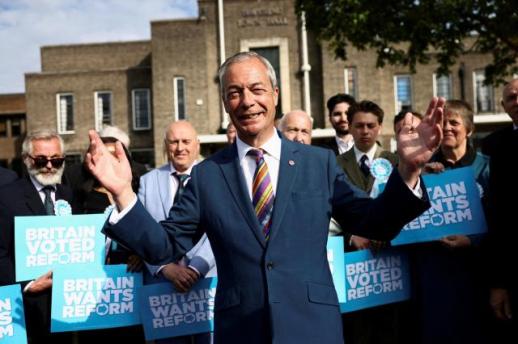 UK Elections Signal Shift in Political Landscape as Reform Party Gains Ground The long-standing two-party system in the UK, dominated by the Conservative and Labour parties for nearly a century, has shown signs of fracture. The recent local elections in England were not merely a referendum on the ruling party but a clear indication of the deep-seated fatigue and distrust voters have towards the existing political order. As of May 8, the Reform Party has swept approximately 790 seats in local councils across England, nearly all of which were newly acquired. In contrast, Labour lost 597 seats, while the Conservatives saw a decline of 366 seats. The number of councils where Labour maintains a majority has shrunk from 32 to 18. In Wales, the nationalist party Plaid Cymru has taken the top party position for the first time since the establishment of the devolved assembly in 1999. In Scotland, Labour leader Anas Sarwar failed to retain his own constituency seat. The geography of these losses is particularly shocking. The Reform Party made significant gains in traditional Labour strongholds, such as Teesside, represented by former Deputy Leader Angela Rayner, and Wigan, the base of Culture Secretary Lisa Nandy—areas in northern and central England that Labour has cultivated for decades. This shift indicates a movement beyond mere ideological realignment. Led by Nigel Farage, the Reform Party emerged in 2018 as the Brexit Party, growing on a platform of anti-immigration and anti-EU sentiment. Long regarded as a 'protest party' outside the mainstream political arena, this election has transformed its status. The Reform Party is now positioned as a potential right-wing alternative to the Conservatives. On the opposite end, the Green Party has expanded its influence, attracting younger progressive voters with radical agendas such as wealth taxes and the nationalization of public services. This marks a new political landscape where centrist parties are being eroded from both sides. Interpreting this phenomenon solely as an ideological shift misses the underlying issue: the politicization of economic insecurity. Rising prices, housing crises, local economic stagnation, the collapse of public services, and immigration tensions have culminated in a judgment that the existing political establishment has failed to address these long-standing grievances. The Conservatives are not immune to the fatigue of 14 years in power and economic failures, while Labour has not delivered the expected changes since taking office. Voters are now seeking stronger language and clearer messages. For Prime Minister Keir Starmer, the results serve as a dire warning. Once seen as a symbol of stable centrist leadership following a decisive victory in the 2024 general election, he is now labeled as 'the most unpopular prime minister in history' less than two years into his term. Economic downturns, policy retreats, and personnel controversies have compounded the challenges he faces. Despite this, Starmer has refused to resign, stating, "This is a painful result, and I take full responsibility. However, I will not plunge the country into chaos by stepping down." Notably, the financial markets reacted positively to his refusal to resign, with the pound strengthening and government bond yields falling. Markets appear more concerned about the potential emergence of a hard-left leadership following Starmer's departure than about his continued tenure. This situation illustrates how today's political upheaval is not confined to the ballot box but is immediately linked to financial markets and national trust. Just four years ago, in the 2019 general election, the combined vote share of the Conservative and Labour parties was around 75%. That figure has now become a relic of the past. The political landscape has shifted to a multi-party competition, with the Liberal Democrats, Scottish National Party (SNP), Plaid Cymru, Green Party, and Reform Party all vying for influence. The structure of British politics is changing. The implications for South Korean politics are significant. In South Korea, ahead of local elections, fatigue towards the two major parties has already accumulated. Disappointment with the ruling party does not directly translate into support for the opposition, and distrust towards the opposition does not lead to stable support for the ruling party. The centrist electorate is rapidly becoming more fluid, while younger voters remain cynical. Regional sentiments have become more sensitive to livelihood issues than to ideology. The warning from the UK is clear: the history, organization, and branding of large parties are no longer sufficient to guarantee victory. Voters are asking not 'who is right?' but 'who can change my life?' Can they control inflation, create jobs, reduce housing insecurity, and revive local economies? If these questions remain unanswered, even long-established parties can quickly become outdated. Local elections are the stage for livelihood politics. Issues such as transportation, housing, education, care, safety, and local economies directly influence voter sentiment far more than grand national discourses. Just as issues like garbage collection, public housing, and local welfare have sparked national outrage in the UK, livelihood insecurities in South Korea could also erupt as a variable that disrupts the political landscape at any moment. Yesterday's overwhelming victory can become today's arrogance, and today's defeat can serve as the starting point for tomorrow's reversal. In the UK, the door to that reversal has opened for the Reform Party and the Green Party. Where that door will lead in South Korea remains uncertain. However, one thing is clear: if the political sphere, ahead of local elections, continues to rely solely on factional unity while ignoring the signals from the electorate, voters will respond in another way. Public sentiment is borrowed; it can never be owned forever. * This article has been translated by AI. 2026-05-09 09:05:34
 -
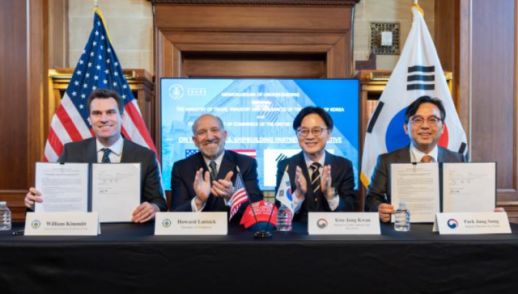 Korea and US move toward materializing MASGA with MoU on shipbuilding SEOUL, May 09 (AJP) -South Korea and the United States took the first concrete step Friday toward activating the $150 billion “MASGA” shipbuilding package embedded in Seoul’s broader $350 billion U.S. investment pledge, a move that could help ease lingering trade and tariff uncertainties hanging over Korean industries as Washington’s tariff regime faces mounting legal challenges. The U.S. Department of Commerce and South Korea’s Ministry of Trade, Industry and Resources (MOTIE) signed a memorandum of understanding in Washington establishing the Korea-U.S. Shipbuilding Partnership Initiative (KUSPI), a bilateral platform designed to deepen cooperation in commercial shipbuilding, industrial modernization, maritime manufacturing investment and workforce development. The agreement marks the operational launch of what Seoul has branded the MASGA initiative — shorthand for “Make American Shipbuilding Great Again” — which formed a central pillar of Korea’s commitment to invest $350 billion in the United States under last year’s trade understanding with Washington. Of the total, $150 billion was earmarked for revitalizing the U.S. shipbuilding sector. The signing comes at a delicate moment for Seoul’s trade strategy, as Korean exporters continue to navigate uncertainty surrounding President Donald Trump’s evolving tariff policies. U.S. courts have recently delivered a series of rulings questioning the legal foundation of several Trump-era tariff mechanisms, including challenges to “global reciprocal tariffs” imposed under emergency authorities. While the court setbacks have raised hopes in Seoul that some tariff pressure may eventually soften, Korean officials remain wary that Washington still retains powerful trade tools under Section 301 of the Trade Act, which allows the U.S. administration to impose tariffs or retaliatory measures over alleged unfair trade practices. Seoul’s aggressive investment push into strategic American industries such as shipbuilding is increasingly viewed as both an industrial partnership and a geopolitical hedge aimed at reducing bilateral friction with Washington. The MOU was signed by Park Jung-sung, South Korea’s deputy trade minister, and William Kimmitt, U.S. under secretary of commerce for international trade, under the oversight of Industry Minister Kim Jung-kwan and U.S. Commerce Secretary Howard Lutnick. Under the agreement, the two governments will establish a Korea-U.S. Shipbuilding Partnership Center in Washington later this year to coordinate collaboration among shipbuilders, suppliers, universities and research institutions from both countries. Planned projects include facilitating foreign direct investment into the U.S. maritime industrial base, workforce training programs, shipyard productivity upgrades and technical exchanges. “The MOU signing builds on ongoing U.S.-Korea cooperation in strategic industries and reflects continued efforts to strengthen allied industrial capacity, promote investment, and expand collaboration in advanced manufacturing sectors,” the U.S. International Trade Administration said in a statement. The partnership also arrives amid growing alarm in Washington over the collapse of America’s shipbuilding capacity and increasing dependence on Asian allies for maritime industrial strength. A CNN-highlighted CBS “60 Minutes” investigation in March portrayed U.S. shipbuilding as a national security vulnerability, contrasting America’s shrinking industrial base with the massive scale and efficiency of South Korean shipyards led by firms such as Hanwha Group . The report noted that the United States now produces only a handful of large commercial vessels annually compared with roughly 1,000 cargo ships built each year by China, while South Korea remains one of the world’s dominant shipbuilding powers. It also spotlighted Hanwha’s acquisition and modernization of the Philadelphia shipyard as a symbol of Korea’s growing role in reviving U.S. maritime manufacturing. In the program, Hanwha executives said the company plans to invest up to $5 billion into the Philadelphia yard and expand production capacity from roughly one ship per year to as many as 20 annually through automation, robotics and workforce expansion. The report framed the issue not simply as industrial policy but as a national security imperative for Washington amid intensifying competition with China and growing vulnerabilities in global supply chains. “Shipbuilding is a national security necessity,” Michael Coulter, Hanwha’s top executive overseeing U.S. operations, said in the broadcast. “The U.S. needs to be able to secure our own commerce.” The strategic logic has increasingly aligned Korean industrial ambitions with U.S. geopolitical priorities. For Seoul, the shipbuilding partnership offers an opportunity to lock Korean firms deeper into America’s industrial rebuilding push while potentially cushioning Korean exporters from future tariff escalation. For Washington, Korean capital and expertise provide one of the few realistic paths toward rebuilding a severely weakened domestic shipbuilding ecosystem. The Trump administration has repeatedly described America’s maritime decline as a national security crisis, with Trump himself signing executive orders last year to prioritize shipbuilding revival and establish a White House office dedicated to the sector. The MOU signed Friday signals that South Korea is moving beyond pledges and into implementation. Whether the MASGA initiative ultimately translates into large-scale projects, shipyard modernization and meaningful tariff relief for Korean industries may determine how durable the broader Seoul-Washington economic alignment becomes in an increasingly protectionist era. 2026-05-09 08:17:57
 -
 US court strikes down Trump tariffs again as Korea watches next trade front SEOUL, May 08 (AJP) -President Donald Trump’s global tariff regime has been struck down by U.S. courts yet again, marking the fifth consecutive major legal defeat for his second-term inward trade strategy and intensifying uncertainty for export-dependent allies such as South Korea. On Thursday, the U.S. Court of International Trade ruled that Trump illegally imposed a 10 percent blanket tariff on most imports using Section 122 of the Trade Act of 1974, concluding the administration exceeded powers granted by Congress. The ruling represents the latest collapse in a rapidly evolving tariff strategy that has repeatedly shifted legal foundations as earlier measures were invalidated by courts. The newly invalidated tariffs had themselves been introduced only hours after the U.S. Supreme Court struck down Trump’s earlier sweeping “reciprocal tariffs” in February. Those previous tariffs were imposed under emergency executive powers through the International Emergency Economic Powers Act (IEEPA), with Trump arguing that chronic trade deficits and supply-chain vulnerabilities constituted a national emergency. The administration used that authority to impose broad double-digit tariffs affecting nearly every major U.S. trading partner, including South Korea, the European Union, Japan and Canada. But courts increasingly rejected the legal rationale. The tariff regime was first challenged at the U.S. Court of International Trade, then blocked by a federal district court and later rejected again at the Federal Circuit Court of Appeals. The Supreme Court ultimately delivered the decisive blow earlier this year, ruling that Trump had exceeded presidential authority by using emergency powers to impose sweeping trade tariffs without congressional approval. Rather than retreat, the White House moved immediately to preserve the tariffs through a new legal pathway. Within hours of the Supreme Court ruling, Trump unveiled a replacement system using Section 122 of the Trade Act of 1974 — a little-used Cold War-era provision allowing temporary tariffs of up to 15 percent for a maximum of 150 days in response to “large and serious” balance-of-payments deficits or “fundamental international payments problems.” The law was originally written during the Bretton Woods monetary era, when the U.S. dollar remained tied to gold and policymakers feared destabilizing international payment imbalances. The move was largely met with scorns. A coalition of states and small businesses sued, arguing the United States does not face the type of balance-of-payments crisis envisioned by Congress in the 1970s. Economists also noted that modern U.S. trade deficits differ fundamentally from the monetary instability Section 122 was designed to address. The trade court agreed. In a split ruling Thursday, judges found the administration failed to demonstrate the specific economic conditions required under Section 122 and declared the tariffs “invalid” and “unauthorized by law.” The administration is expected to appeal again, potentially setting up another Supreme Court confrontation. But the latest defeat further exposes the increasingly unstable legal architecture behind Trump’s tariff offensive. The repeated setbacks, analysts agree, won't likely humble Trump’s trade agenda. The administration has been migrating toward a more legally durable mechanism: Section 301 of the Trade Act of 1974. Section 301 — the same authority Trump used during the original U.S.-China trade war — allows the U.S. Trade Representative to investigate unfair foreign trade practices and impose retaliatory tariffs following formal reviews and hearings. Unlike emergency powers or Section 122, Section 301 requires a lengthier procedural process. But once tariffs are implemented, they become substantially harder to overturn in court because they rest on clearer statutory authority delegated by Congress. The White House has already signaled that future Section 301 investigations will increasingly target strategic industries tied to economic security and industrial competition, including semiconductors, electric vehicles, batteries, pharmaceuticals and advanced manufacturing supply chains. The U.S. Trade Representative (USTR) in March announced it was launching investigations into Korea and 15 other major manufacturing economies under Section 301, accusing them of "structural excess capacity." The Korean trade minister has been in Washington for an USTR hearing to defend the industry anchored on "market economy principles" and explain how the two countries are in a complementary relationship that is expected to expand based on the Korea-U.S. strategic investment memorandum of understanding where Korea has pledged a combined investment of $350 billion. 2026-05-08 07:58:48
 -
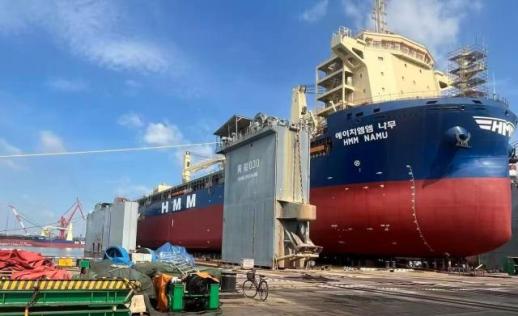 Iran Tightens Hormuz Strait Controls as Korean Ship Damaged, Dozens Still Stuck Iran has formally introduced a “prior transit permit” requirement for the Strait of Hormuz, tightening what amounts to sovereign control over a key international waterway, as the HMM-operated cargo ship Namuho — damaged by an explosion and fire in the strait — is being towed toward Dubai’s port. About 20% of the world’s seaborne crude oil shipments pass through the strategic chokepoint. A South Korean vessel has suffered actual damage, and 26 South Korean ships and 160 South Korean crew members remain stuck inside the strait. The Hormuz crisis is no longer a distant Middle East dispute, the column said, calling it a practical challenge now tied to South Korea’s energy security, public safety and national standing. Iran is requiring advance permission for all transiting ships and has warned of possible military action if vessels sail outside designated routes. The move effectively seeks to restrict the right of transit passage through international straits guaranteed under the U.N. Convention on the Law of the Sea, the column said. As the United States and Iran use the strait as leverage against each other, the area has moved beyond heightened tension into what the column described as a quasi-wartime situation. It said the United States has not presented a clear strategy. U.S. President Donald Trump has said through “Project Freedom” that he is willing to help civilian ships leave the strait, while also alternating between talk of halting operations and pursuing negotiations. The shifting message from Washington has added confusion for allies, the column said. It said South Korea’s caution is understandable, warning that hasty military involvement could endanger South Korean companies and citizens in the region and worsen diplomatic ties with Iran. But it argued that caution is not the same as inaction. With the blockade continuing for more than two months, some ships have raised concerns about shortages of food and drinking water. The column urged the government, separate from any multinational framework, to use all direct diplomatic channels with Iran to secure safe passage for South Korean ships and crews, saying the most urgent priority is protecting lives and safety. At the same time, it said South Korea should be ready to take part in international coordination. It noted that 44 countries, led by Britain and France, are discussing a defensive multinational mission to restore normal conditions in Hormuz, focused on protecting commercial vessels, clearing mines and ensuring safe navigation — not attacking Iran. The column said South Korea’s mine countermeasures capability is emerging as a practical option. Mine-clearing operations are defensive and rescue-oriented efforts aimed at civilian shipping safety, it said, adding that the South Korean Navy has world-class expertise in mine warfare and recently demonstrated high detection accuracy and rapid clearance in a combined U.S.-South Korea mine warfare exercise. It argued that South Korea’s mine-clearing capacity is not merely a military asset but a strategic tool that can serve as a public good by supporting international navigation order, and could also help demonstrate the competitiveness of South Korea’s defense and shipbuilding industries. Any contribution should be limited and guided by clear principles, the column said, arguing that South Korea should not be automatically folded into a U.S. pressure strategy against Iran but should act under the goals of protecting its citizens and ensuring maritime safety — an approach it said could be accepted internationally while preserving diplomatic space with Iran. The clashes unfolding in Hormuz are not simply a Middle East conflict, the column said, describing a geopolitical test where U.S. power, Iran’s survival strategy, international maritime order and resource security collide — with South Korea in the middle. It called for diplomatic precision and decisive execution, urging a balance of negotiating with Iran, coordinating with the international community and, if necessary, accepting limited security contributions to protect lives. * This article has been translated by AI. 2026-05-06 14:26:21
 -
 Coupang hit by biggest loss since 2021 as breach fallout dents growth SEOUL, May 06 (AJP) -Coupang, grappling with eroding confidence among South Korean regulators and consumers following a major data breach late last year, saw its largest quarterly loss in more than four years as revenue growth sharply slowed in the first quarter. The New York-listed company on Tuesday reported an operating loss of $242 million for the January-March period, reversing from a $154 million profit a year earlier and the red nearly wiping out half of its annual income of 2025 . Net loss attributable to shareholders widened to $266 million, marking Coupang’s weakest quarterly bottom line since the fourth quarter of 2021. Revenue rose 8 percent on year to $8.5 billion, extending a sharp deceleration from the double-digit expansion that had long defined the company’s rise since 2021 listing on the New York Stock Exchange. The disappointing quarter came as the Korea Fair Trade Commission redesignated Bom Kim as Coupang’s “identical person,” or controlling shareholder, replacing the previous corporate designation after concluding that Kim’s younger brother, Kim Yoo-suk, exercised meaningful influence within the group. The KFTC said Kim Yoo-suk, who holds a vice president-level role, receives compensation comparable to registered executives and exerts influence over parts of the company’s operations, undermining Coupang’s eligibility to maintain a corporate entity as its controlling designation. The change places greater direct accountability on Bom Kim at a sensitive moment for the company, which has faced intensifying criticism over governance, labor conditions, platform dominance and consumer protection issues. The earnings deterioration was largely tied to the aftermath of one of Korea’s most serious e-commerce data breaches. Coupang had rolled out a customer compensation program worth roughly $1.2 billion in shopping credits after leaked personal information triggered regulatory probes and consumer lawsuits. The company said the compensation credits were deducted directly from sales, weighing heavily on revenue and profitability throughout the quarter. The credits expired on April 15. At the same time, growth in Coupang’s flagship Product Commerce division continued to slow. Sales in the segment, which includes Rocket Delivery and Rocket Fresh, rose just 4 percent from a year earlier to $7.2 billion, sharply down from 12 percent growth in the previous quarter. Gross margin fell to 27 percent from 29.3 percent a year earlier, while adjusted EBITDA plunged 92 percent to $29 million. Total operating expenses reached $8.75 billion, exceeding quarterly revenue. Customer indicators also showed signs of strain. Active customers rose only 2 percent on-year to 23.9 million and fell by roughly 700,000 from the previous quarter. The slowdown extended to Coupang’s prized WOW membership ecosystem, long viewed as the company’s strongest loyalty engine. Industry observers have closely monitored whether the data breach and repeated controversy surrounding platform practices would weaken retention among high-frequency users. Bom Kim nevertheless sought to reassure investors that customer loyalty and spending trends remained resilient. “Customers cast a new vote with every purchase they make,” Kim said during an earnings call, arguing that consumers “will not hesitate to spend their money at another venue they deem to be better.” Kim emphasized that Coupang intended to respond by further expanding infrastructure investment, delivery coverage and WOW membership benefits. “We’ll be relentless in our pursuit of new moments of WOW for customers across selection, price and service,” he said. The company said it planned to expand WOW-related customer benefits to more than $4 billion this year, including free delivery, returns and streaming-linked perks. Chief Financial Officer Gaurav Anand also attempted to calm investor concerns over slowing growth and mounting external pressure, arguing that Coupang’s longer-term profitability trajectory remained intact despite short-term disruptions. “We believe we are still far from realizing the full margin potential of our business,” Anand said, adding that the company remained “confident in our ability to continue expanding consolidated margins.” Anand also defended the company’s aggressive investment strategy, saying Coupang continued to see strong returns from logistics optimization, advertising and fulfillment services for third-party merchants. He described shareholder returns as another priority, noting that the company continued evaluating stock repurchases and capital allocation opportunities “to drive long-term returns for shareholders.” While neither Kim nor Anand directly addressed the KFTC’s redesignation during the earnings call, the regulatory decision hovered over the results as investors weighed whether tighter scrutiny around governance and market dominance could further complicate Coupang’s expansion plans. Coupang and its logistics affiliates remain under repeated investigation by regulators and lawmakers over alleged unfair trade practices, warehouse safety issues and treatment of delivery workers. Despite the losses, Coupang continued aggressive shareholder returns, repurchasing 20.4 million shares worth $391 million during the quarter. Its board also approved an additional $1 billion stock buyback program. Wall Street expectations had projected a far narrower operating loss of around $39 million, according to Bloomberg consensus estimates. Coupang shares initially fell in after-hours trading following the earnings release before recovering part of the losses. 2026-05-06 09:25:05
 -
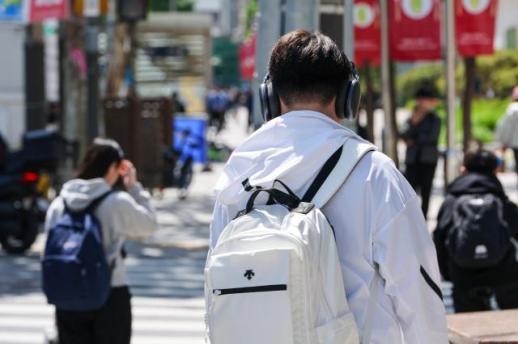 On Children’s Day, South Korea’s kids are still headed to cram schools "A magic trick that turns a golden holiday into a skills holiday." That was a promotional line from a private academy for Children’s Day 2026. The day is meant for children, but the copy’s real beneficiary is the parent — more precisely, parental anxiety. This year’s Children’s Day scene in the academy districts is familiar. Academies advertising special classes added that they would “maintain learning continuity and secure parents’ rest time.” It is Children’s Day, but children are not the subject of the sentence. In a survey by the National Center for the Rights of the Child, four in 10 children said the thing they most wanted to do after school was “play with friends.” But only two out of 10 were actually able to do so. The rest went to academies. More than half of elementary school students cited academies and private tutoring as the biggest barrier to free play. Children know they want to play. They are simply not allowed to. That time is filled with studying instead. Upper-grade elementary students study an additional average of 2 hours and 47 minutes a day after school ends. Middle school students study 3 hours and 12 minutes, and high school students 3 hours and 33 minutes. When out-of-school learning time is included, total daily study time far exceeds the OECD average. But studying longer does not necessarily mean doing better. In the 2022 PISA assessment, South Korean students studied much longer than Japanese students but scored lower in reading, math and science. A UNICEF survey found South Korean children ranked 34th out of 36 OECD and EU countries in mental health, and 28th out of 40 countries in physical health. Academic competence ranked fourth. That gap is a portrait of children in South Korea today: among the world’s hardest-working students, and among the most exhausted. The child happiness index stands at 45.3 out of 100 — not even half. Children who have lost playgrounds have moved into their smartphones. Half of upper-grade elementary students use smart devices for two hours or more after school. Four in 10 said it is hard to stop on their own. The figures rise for children who are alone more often. This is not a matter of willpower. Where alleys to run and play have disappeared, and where care has fallen away, algorithms have moved in. It is difficult to blame parents. One mother who sends her child to an academy even on Children’s Day said, “Rather than having make-up classes scheduled later, it’s better to just go to the academy.” In that sentence is not greed but structural fear: the worry of falling behind if you rest alone, and the pressure that if everyone else goes, you cannot be the only one to skip. The academy industry operates precisely on that anxiety. But when that anxiety becomes collective, Children’s Day quietly disappears. A day created for rest becomes a day when no one can rest. In 1923, Bang Jeong-hwan wrote in the Children’s Day declaration: “Please let them sleep and exercise enough. Do not look down on children; look up to them.” Now, 103 years later, those lines read less like advice than an indictment. For a long time, South Korean society has taught children first how to “endure well” — faster, more, earlier. To look up to children means seeing them not as units of competition, but as people fully present in this moment. The country that created Children’s Day is failing to give it back to children. What has been taken is not just a day off, but childhood itself. * This article has been translated by AI. 2026-05-05 08:49:30
 -
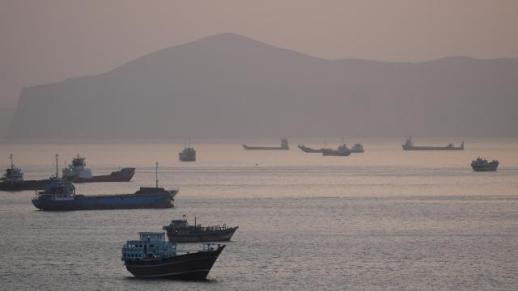 US to launch "Project Freedom" to guide trapped ships through Hormuz SEOUL, May 04 (AJP) -U.S. President Donald Trump said Sunday that Washington would begin guiding commercial vessels out of the Strait of Hormuz after ships became stranded amid the escalating conflict between the United States and Iran, raising fresh attention in South Korea where dozens of vessels and crews remain exposed to the disruption. “Countries from all over the World … have asked the United States if we could help free up their Ships, which are locked up in the Strait of Hormuz,” Trump wrote on Truth Social. He said the United States would help guide ships “safely out of these restricted waterways” so that global trade could resume. The initiative, dubbed “Project Freedom,” is set to begin Monday morning Middle East time, according to Trump and U.S. officials. As of Sunday, 26 South Korean-linked vessels with a total of 173 crew members remain waiting inside the Strait of Hormuz area. Seoul has been monitoring the situation around the clock while coordinating with shipping firms and related authorities to ensure the safety of ships and seafarers. The Seoul government is yet to respond whether it has been notified of the new U.S. venture. A senior U.S. official said the operation would create a coordination framework among governments, insurers and shipping organizations to move vessels through the strategic waterway. The effort does not currently involve direct U.S. Navy escorts for commercial ships, the official added. The move comes as concerns deepen over maritime security in the Gulf after Iran’s Islamic Revolutionary Guard Corps reportedly deployed naval mines in parts of the strait, increasing risks for passing vessels. The Strait of Hormuz handles roughly one-fifth of the world’s oil supply under normal conditions and is considered one of the most critical chokepoints in global energy trade. The latest U.S. initiative is expected to be closely watched in Seoul, as South Korea relies heavily on crude oil imports from the Middle East and prolonged disruptions in Hormuz could sharply affect energy prices, shipping costs and broader supply chains. Trump described the operation as a “humanitarian gesture” for the United States, Middle Eastern countries and Iran, while warning that any interference with the passage effort “will, unfortunately, have to be dealt with forcefully.” 2026-05-04 07:25:02
 -
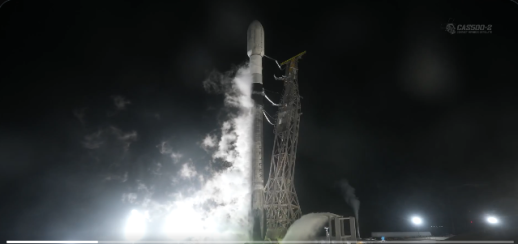 South Korea deploys CAS500-2 satellite in milestone for domestic space technology SEOUL, May 3 (AJP) — South Korea successfully launched its next-generation midsized Earth observation satellite on Sunday, marking a major step forward in the country’s push to strengthen homegrown space technology and private-sector satellite capabilities. The satellite, known as CAS500-2 or Next-Generation Mid-Sized Satellite No. 2, lifted off aboard SpaceX’s Falcon 9 rocket from Vandenberg Space Force Base in California at 4 p.m. Korea time Sunday, according to the Korea AeroSpace Administration (KASA). CAS500-2 separated from the launch vehicle about an hour after liftoff and later established its first communication with a ground station in Svalbard, Norway, confirming that onboard systems were operating normally. Developed primarily by Korea Aerospace Industries under South Korea’s next-generation satellite program, CAS500-2 is designed for high-precision Earth observation missions including land resource management, disaster monitoring and agricultural analysis. The satellite will orbit Earth at an altitude of about 498 kilometers in a sun-synchronous orbit. It is equipped with domestically developed optical imaging technology capable of identifying objects as small as 0.5 meters in black-and-white imagery and 2 meters in color imagery. KASA said the successful launch demonstrated a significant advancement in South Korea’s satellite independence, as key satellite body systems and payload components were developed using domestic technology. The satellite is expected to undergo about four months of initial operational testing before beginning full-scale missions later this year alongside CAS500-1, which was launched in 2021. The project was originally scheduled to launch aboard a Russian Soyuz rocket in 2022, but the plan was delayed for nearly four years following Russia’s invasion of Ukraine and the resulting disruption in the global launch market. SpaceX said the mission, dubbed “CAS500-2,” carried a total of 45 payloads for multiple international customers including KAI, Planet Labs and other commercial operators. The company also noted that the Falcon 9 first-stage booster used for the mission was making its 33rd flight before successfully landing at Landing Zone 4 at Vandenberg Space Force Base. “The successful launch of CAS500-2 is an important milestone opening the era of private-led New Space,” KASA Administrator Oh Tae-seok said in a statement. “By independently securing ultra-high-resolution imagery needed for land and disaster management on the Korean Peninsula, we have significantly strengthened the technological competitiveness of Korea’s satellite industry.” The Ministry of Land, Infrastructure and Transport, which will utilize the satellite’s imagery services, said the launch would improve the country’s ability to provide faster and more diverse geospatial information services through the combined operation of national satellites. The Falcon 9 mission also carried 44 additional payloads, including “BusanSat,” a cube satellite jointly developed by the city of Busan, the Korea Astronomy and Space Science Institute and Nara Space Technology. 2026-05-03 18:34:08
 -
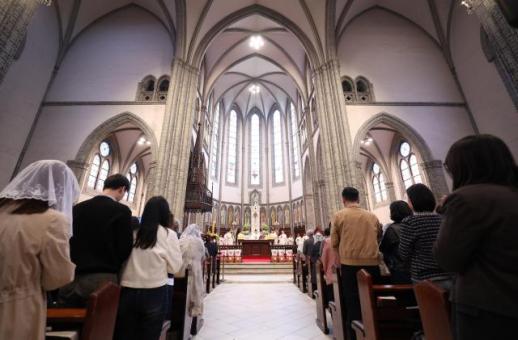 Three in four young Koreans say they are nonreligious SEOUL, May 03 (AJP) - Three out of four South Koreans in their 20s now identify as having no religion, highlighting a deepening generational shift that is accelerating the aging of the country’s faith communities and clergy. According to a recent report by Gallup Korea titled Religion of Koreans 1983–2025, only 24 percent of adults in their 20s said they currently practice a religion last year, meaning more than 75 percent described themselves as nonreligious. The figure compares with 29 percent among people in their 30s, 37 percent in their 40s, 45 percent in their 50s and 52 percent among those aged 60 and older. Overall, 40 percent of South Korean adults said they had a religion in 2025, including 18 percent Protestant, 16 percent Buddhist and 6 percent Catholic. The share of religious adults had climbed from 44 percent in 1983 to a peak of 54 percent in 2004 before entering a long decline. It fell to 37 percent in 2022 during the final stages of the COVID-19 pandemic before rebounding slightly last year. The generational divide, however, remains stark. Among respondents in their 20s who said they had no religion, 58 percent cited simple lack of interest as the main reason. Another 20 percent said they lacked the mental or time capacity for religious life, while 9 percent pointed to distrust or disappointment with religion and another 9 percent said they preferred to rely on themselves. Gallup Korea said the decline in religious affiliation over the past two decades has been driven primarily by younger generations. “The main cause behind the decline in religious populations over the past 20 years was among young people,” the report said. “Not only has the inflow of new young believers decreased, but existing followers have also left organized religion, weakening overall religious communities and accelerating population aging.” The trend is reshaping the demographic structure of South Korea’s major religions. Among adults identifying as Buddhists, 56 percent were aged 60 or older, according to the Gallup survey. The proportion stood at 34 percent among Protestants and 32 percent among Catholics, indicating broad aging across faith groups. Data released last month by the Catholic Bishops' Conference of Korea showed the number of Catholic believers aged 29 or younger fell 34 percent over the past decade, while believers aged 65 and older surged 80.4 percent between 2015 and 2025. Senior citizens accounted for 28.9 percent of all Catholics in South Korea last year, exceeding the country’s overall elderly population ratio of 21.2 percent. The report said the Korean Catholic Church had effectively entered a “super-aged society” as early as 2019. The aging trend is also spreading among clergy. The proportion of diocesan priests aged 65 or older rose steadily from 11 percent in 2015 to 19.7 percent this year, according to Catholic Church statistics. Over the same period, the number of seminarians fell 41.9 percent while newly ordained diocesan priests declined 42.1 percent, suggesting further strain on future clergy recruitment. Korea’s largest Buddhist sect, the Jogye Order, is facing similar pressures. The number of new monastic entrants has reportedly fallen to about one-third of levels seen two decades ago, while more than 30 percent of monks are now elderly. 2026-05-03 15:28:20
 -
 Samsung family completes $9 bn inheritance tax payment as AI boom reshapes empire SEOUL, May 03 (AJP) -The family of late Samsung Group patriarch Lee Kun-hee has completed payment of a record 12 trillion won ($8.8 billion) inheritance tax over five years, concluding what is widely regarded as the largest inheritance settlement in South Korean history while underscoring the dramatic resurgence of the Samsung empire during the artificial intelligence semiconductor boom. According to business industry sources on Sunday, Jay Y. Lee, along with his mother Hong Ra-hee and sisters Lee Boo-jin and Lee Seo-hyun, recently finalized the last installment of inheritance taxes first reported in April 2021 following the death of the late chairman in October 2020. The estate included stakes in key affiliates such as Samsung Electronics, Samsung Life Insurance and Samsung C&T, along with extensive real estate holdings. At the time of the filing, the family stated that “paying taxes is a natural duty of citizens,” pledging to fulfill the obligation in accordance with legal principles. Using South Korea’s installment payment system, the family paid the tax in six installments over five years. The 12 trillion won levy exceeded the government’s total inheritance tax revenue of 8.2 trillion won collected in 2024, making it one of the largest inheritance tax payments ever recorded globally. The completion of the payment also marks a sharp reversal from the uncertainty surrounding Samsung’s succession transition in 2020 and 2021. At the time of Lee Kun-hee’s death, the combined market capitalization of Samsung Group’s major listed affiliates was estimated at roughly 500 trillion won to 600 trillion won ($430 billion to $520 billion at the time), weighed down by the COVID-19 pandemic, a prolonged semiconductor downturn and leadership uncertainty surrounding the succession process. Samsung Electronics alone was valued at roughly 350 trillion won to 400 trillion won during that period. When the inheritance tax bill was announced in 2021, some analysts questioned whether the Lee family would be forced to dilute its control over Samsung through large-scale share sales to meet the payment obligations. Instead, the global AI semiconductor rally fundamentally transformed the conglomerate’s fortunes. Today, the Samsung empire’s combined listed market value has swollen to roughly 1,500 trillion won to 1,600 trillion won ($1.1 trillion), meaning the group’s value has nearly tripled in less than six years as Samsung Electronics emerged as one of the world’s core AI infrastructure suppliers. Samsung Electronics alone has approached or exceeded a market capitalization of 1,000 trillion won during peak periods amid explosive demand for high-bandwidth memory chips and AI data-center semiconductors. The AI-driven rally sharply improved both asset valuations and dividend income, allowing the family to preserve most of its core holdings while completing the unprecedented tax burden. According to the Bloomberg Billionaires Index, the Lee family’s combined fortune climbed to about $45.5 billion this year from roughly $20 billion levels during the succession crisis. Samsung’s economic influence has also expanded alongside the rally. Combined revenue from seven key Samsung affiliates reached the equivalent of 19.3 percent of South Korea’s gross domestic product in 2025, up from 15.1 percent a decade earlier, according to Bloomberg calculations. Alongside the tax payments, the Samsung family pursued one of the country’s largest private philanthropic campaigns rooted in the late chairman’s long-standing philosophy of “contribution to humanity.” In 2021, the family pledged 1 trillion won in medical donations, including 700 billion won to the National Medical Center to strengthen infectious disease preparedness and support construction of South Korea’s first dedicated national infectious disease hospital, scheduled for completion in 2030. Another 300 billion won was donated to Seoul National University Hospital for treatment of pediatric cancer and rare diseases, with Samsung saying roughly 28,000 children benefited from the program over the past five years. The family also donated about 23,000 artworks and cultural assets — collectively known as the “Lee Kun-hee Collection” — to institutions including the National Museum of Korea and the National Museum of Modern and Contemporary Art. The collection, estimated by the art world at up to 10 trillion won at the time of donation, has since toured globally, including exhibitions at the Smithsonian National Museum of Asian Art and the Art Institute of Chicago, with another scheduled at the British Museum later this year. 2026-05-03 15:13:24