

Journalist

Oh Joo-Seok
farbrother@ajunews.com
-
 Polestar Discloses Carbon Footprints for Full Lineup, Including Polestar 5 Swedish premium EV maker Polestar on 12일 disclosed the carbon footprints for its entire lineup, including the four-door grand tourer Polestar 5. Polestar has published lifecycle assessments, or LCAs, for all models since 2020 to identify emissions from materials and manufacturing and reduce the climate impact of vehicle production. For the Polestar 5, total greenhouse-gas emissions before delivery are 23.8 tons, covering the process from raw-material extraction through production and delivery to the customer. The company said it is working to cut emissions by using more environmentally friendly materials. Aluminum is considered one of the most carbon-intensive materials in vehicle manufacturing. Polestar said it overhauled how aluminum is sourced for the Polestar 5: 13% of the aluminum is recycled, and 83% is produced at smelters powered by renewable energy. The company said that reduces greenhouse-gas emissions by more than 14 tons per vehicle compared with conventional methods. Renewable energy also plays a key role in production, Polestar said. The Polestar 5 uses renewable power not only at its manufacturing facilities but also at sites producing battery cell modules and key battery materials, cutting emissions from vehicle, parts and battery manufacturing. Polestar also said it used new materials in the interior to reduce environmental impact and applied circular design to the front trunk. "If you don’t measure it, you can’t reduce it," said Fredrika Klaren, Polestar’s head of sustainability. Disclosing a car’s carbon footprint, she said, "clearly shows where emissions occur" and encourages industry efforts to cut emissions from materials and manufacturing. She added that such transparency is essential to expanding low-carbon materials, renewable energy and circular solutions and reducing the auto industry’s climate impact. 2026-03-12 09:55:05
 -
 BYD Joins IATF, Global Automotive Quality Standards Body BYD said Thursday it has officially joined the International Automotive Task Force, or IATF, which sets international automotive quality standards. The IATF is an international body that oversees global automotive quality management systems. Founding members include major auto industry associations such as the Automotive Industry Action Group in the United States, ANFIA in Italy, FIEV in France, SMMT in the United Kingdom and VDA in Germany, along with many global automakers. BYD said it was recommended by AIAG and approved through a vote of the full IATF membership. The company said the move will allow it to take part in developing international automotive quality management standards alongside global automakers including Volkswagen and General Motors. Zhao Jianping, BYD vice president and chief quality officer, said the membership is “a meaningful achievement” showing international recognition of BYD’s technology-driven, innovation-based development strategy. BYD said it has continued rapid growth in the global eco-friendly vehicle market. In 2025, it posted annual vehicle sales of 4,602,400, ranking No. 1 worldwide in eco-friendly vehicle sales for a fourth straight year. Overseas sales of passenger cars and pickup trucks totaled 1,049,600, up 145% from a year earlier. BYD said it plans to use its IATF membership to strengthen technical cooperation during the auto industry’s shift toward electrification and intelligent systems, and to take an active role in advancing international standards. It also said it will work with global partners to help build a sustainable automotive industry ecosystem and accelerate the transition to eco-friendly mobility.* This article has been translated by AI. 2026-03-12 09:30:18
 -
 Korea Toyota Opens Lexus-Toyota Hanam Showroom and Service Center Korea Toyota Motor said Thursday it has opened a new Lexus-Toyota Hanam showroom and full-service center in Hanam, Gyeonggi province. The site is a combined hub built around a “3S” concept, offering vehicle sales, service and parts in one location. Customers can handle everything from consultations and contracts to vehicle delivery, maintenance and after-sales service at the same facility. The complex spans about 11,570 square meters (about 3,500 pyeong) across two basement levels and seven above-ground floors, with a showroom, customer lounge and a full-service center. The service center has 10 work bays — six for Lexus and four for Toyota — and can perform regular inspections and general repairs on up to 1,090 vehicles a month. Solar power equipment has been installed on the rooftop to generate part of the building’s electricity use. Manabu Konyama, president of Korea Toyota Motor, said the opening will help provide more convenient service and brand experiences for customers in Seoul’s Gangdong district and eastern Gyeonggi province.* This article has been translated by AI. 2026-03-12 09:09:16
 -
 Autonomous A2Z Closes 40.5 Billion Won Pre-IPO Round South Korean autonomous driving company Autonomous A2Z (A2Z) said March 12 it raised 40.5 billion won ($40.5 billion won) in a pre-IPO funding round. Participants included existing investor DS Investment Partners, which served as an anchor, along with Nvestor, KB Investment, KB Securities and Hana Securities. New investors included Daesung Venture Capital, Suin Investment Capital and E&Venture Partners. With 45 billion won raised in the pre-IPO, A2Z said its cumulative funding has increased to 122.5 billion won. A2Z said it will use the funds across its business, including securing inventory to support domestic and overseas expansion, and investing in infrastructure and hiring to develop end-to-end AI autonomous driving technology. The company said the financing will also support preparations for a large-scale autonomous driving demonstration project led by the Ministry of Land, Infrastructure and Transport. A2Z plans to strengthen technical readiness for participation, including securing in advance controllers, sensors and other vehicle components needed for production. A2Z said it will also invest in diversifying overseas operations. In Singapore, it is operating what it described as the first autonomous shuttle bus service in the city center in collaboration with Southeast Asian super app Grab, and is installing and applying its in-house LiDAR Infrastructure System, or LIS, to the local transportation network. In the United Arab Emirates, A2Z said it recently obtained approval from the South Korean government for autonomous driving exports and is pursuing local contracts. In Japan, it has begun a robotaxi demonstration service. The company said it plans to expand commercialization by introducing autonomous driving technology in stages tailored to each country’s legal and regulatory environment. A2Z said it is accelerating development of hybrid end-to-end autonomous driving technology that combines its existing rule-based system with AI. It plans to invest in infrastructure and hiring to train on real-world driving data and advance its software, while focusing on strengthening safety and stability for commercialization of Level 4 fully driverless autonomous driving. A2Z said it will use the investment to begin full preparations to list on the KOSDAQ market within the year. It plans to file a preliminary review application with the Korea Exchange in April for a technology-special listing. The company selected Hana Securities and KB Securities as joint underwriters in 2023. Chief Executive Han Ji-hyeong said the pre-IPO round was a strategic decision to secure practical execution capability for key projects with governments and companies at home and abroad. He said A2Z will strengthen the foundation for commercialization as it pursues an IPO and aims to expand Korean autonomous driving technology globally through mass production of Level 4 vehicles and building a global data ecosystem.* This article has been translated by AI. 2026-03-12 08:33:45
 -
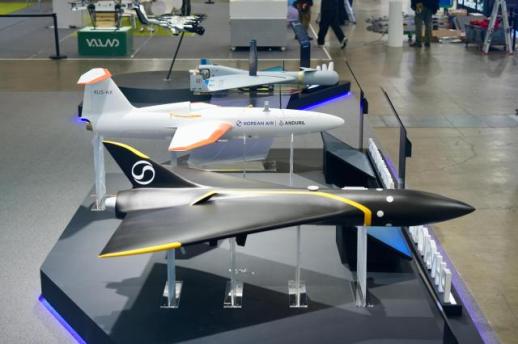 Korean Air Expands Defense Portfolio With Small Drones Rising military tensions in the Middle East amid U.S.-Iran friction have underscored drones as a core capability in modern warfare, with countries moving to field more systems that can deliver high operational impact at relatively low cost. Korean Air, South Korea’s largest airline, is adding drones to its portfolio beyond passenger and cargo transport as it pushes deeper into the defense aviation market. As of March 11, industry officials said Korean Air’s aerospace division is seeking to expand the scope of its unmanned aircraft business with U.S. defense firm Anduril. At Drone Show Korea (DSK) 2026 in Busan last month, the company showcased an AI small drone and swarm-flight drones, among other systems. The small unmanned aircraft drew interest from U.S. Forces Korea and officials from Southeast Asian and Middle Eastern countries, according to reports. Korean Air last year began developing small unmanned aircraft for battlefield use with the Agency for Defense Development and is nearing commercialization, the officials said. Small drones have recently reshaped battlefields in the Middle East and Europe, carrying out missions beyond reconnaissance, including precision strikes and disrupting air defenses. Bloomberg and other outlets have reported that Iran’s main loitering munition, the Shahed-136, costs about $20,000 per unit, while air-defense missiles used to shoot them down can cost billions of won. The U.S. Department of Defense has launched a “Drone Dominance Program” to deploy large numbers of high-performance, low-cost drones. It plans to invest about $1.1 billion through next year to field more than 350,000 expendable, low-cost loitering munitions. Korean Air is also widening its position in South Korea’s defense sector, pursuing development of a medium-altitude unmanned aerial vehicle about the size of a fighter jet and a low-observable unmanned wingman aircraft. The company completed rollout of its first prototype last year. In military aviation, Korean Air has secured major projects. In August, the Defense Acquisition Program Administration selected the company as the preferred bidder for a 961.3 billion won ($?) performance upgrade program for 36 UH-60 Black Hawk helicopters. In December, it won a 1.8 trillion won electronic warfare aircraft (Block-I) system development project as part of a consortium with LIG Nex1. It also won an airborne early warning and control aircraft project worth 3.9 trillion won. “To strengthen capabilities in the domestic aerospace business and build a foundation for sustainable growth, we are identifying a range of business opportunities based on the technology and experience we have accumulated,” a Korean Air official said.* This article has been translated by AI. 2026-03-11 18:03:42
 -
 T’way Air Says Top Shareholder Sono International Will Subscribe to Full Rights Offering Allocation T’way Air said its top shareholder, Sono International, will subscribe to 100% of the 26.85 million common shares allocated to it in the company’s rights offering for existing shareholders, which runs for two days from March 11-12. The airline said the decision reflects Sono International’s firm confidence in T’way Air’s mid- to long-term vision and future growth value. It added that, despite volatility in the domestic and global economic environment, the top shareholder’s full participation is intended to support shareholder value and responsible management. T’way Air said it will focus the funds raised on securing key future growth engines. Starting in the second half of this year, it plans to add A330-900NEO aircraft to strengthen fleet competitiveness. The carrier also said it will continue expanding long-haul routes, including to Europe, North America and Australia. The company said it will also invest in upgrading its flight safety systems and improving service quality, with the goal of building passenger infrastructure at a global level. The capital increase is expected to help improve T’way Air’s financial structure. A T’way Air official said, “Through this capital increase, we will strengthen T’way Air’s financial stability and lay the groundwork for a bigger leap to become a global airline.”* This article has been translated by AI. 2026-03-11 12:03:20
 -
 Mercedes-Benz Korea Launches In-Car App for Service Center Bookings Mercedes-Benz Korea said on the 11th it has launched an “Onboard Service Application” that lets drivers book service-center appointments through the vehicle’s central display. The company said the service is the first of its kind in the imported-car segment. It follows the official website and mobile app as another option aimed at improving digital convenience. Through the in-car screen, drivers can check the vehicle’s current service status. If the system identifies needed maintenance, it provides a suggested service along with an online booking notification. The app is available for vehicles equipped with second- or third-generation MBUX infotainment systems or later. If digital service activation requirements are met, the application is automatically installed via an over-the-air update.* This article has been translated by AI. 2026-03-11 11:07:30
 -
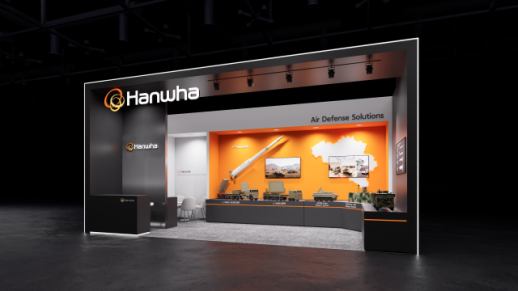 Hanwha to Debut L-SAM Missile Defense System at Belgium’s BEDEX Arms Show Hanwha will showcase South Korea’s long-range surface-to-air missile interceptor, known as the L-SAM, at the BEDEX defense exhibition in Belgium, aiming to expand sales in the global market. Hanwha Aerospace and Hanwha Systems said Wednesday they are taking part in BEDEX in Brussels from March 12-14, marking the first participation by a South Korean company. The exhibition, being held in Belgium for the first time, is set to draw major defense firms including Rheinmetall, KNDS and Raytheon, among other European and global companies. Hanwha said it is moving early to establish a foothold in Western Europe by exhibiting in Belgium, home to NATO headquarters. Belgium is pursuing a layered air defense network as a top defense priority. Hanwha Aerospace plans to display the L-SAM interceptor missile and launcher, while Hanwha Systems will exhibit a multifunction radar, the Cheongwang laser air defense weapon and a laser armored vehicle under development. Often described as a South Korean version of THAAD, the L-SAM is a long-range surface-to-air missile system designed to hit and destroy ballistic missiles at altitudes above 40 kilometers using a hit-to-kill method. Development was completed in 2024, and mass production began last year. Hanwha said the system can intercept fast, medium-range ballistic missiles descending from high altitude, enabling rapid response. The company also plans to emphasize its ability to support quick fielding tailored to local requirements as European countries accelerate efforts to strengthen missile defense networks. Hanwha Aerospace will also introduce the Chunmoo multiple rocket launcher to Western European customers. The system’s European operators have expanded beyond Poland to include Estonia and Norway. At the exhibition, Hanwha will display a Chunmoo launcher and four types of guided rockets with ranges of 80 kilometers to 290 kilometers. “Belgium is a key hub for European security, hosting NATO headquarters and major European Union institutions,” a Hanwha official said. “Building on Hanwha’s standing as a strategic partner to NATO, strengthened through exports such as the K9 self-propelled howitzer, we will actively seek cooperation to present our air defense and ground firepower capabilities in Europe and contribute to strengthening the defense capabilities of NATO member states.”* This article has been translated by AI. 2026-03-11 10:39:49
 -
 Porsche Unveils New Cayenne S Electric With 544-HP AWD System Porsche AG on Tuesday unveiled the new Cayenne S Electric, an all-electric sport utility vehicle. Positioned between the Cayenne Electric and the range-topping Cayenne Turbo Electric, the Cayenne S Electric adds 224 PS over the base model, with a sharper exterior design and a broad list of options, the company said. Its drive system uses permanent-magnet synchronous motors on the front and rear axles, producing 544 PS. With launch control, system output rises to as much as 666 PS. The model accelerates from 0 to 100 kph in 3.8 seconds and has a top speed of 250 kph. Driving range is up to 653 kilometers under the WLTP standard. An optional push-to-pass function can deliver up to an additional 122 PS for 10 seconds. The Cayenne S Electric uses the same 113-kWh high-voltage battery fitted to the Cayenne Electric and Cayenne Turbo Electric. At a compatible fast-charging station, it can charge from 10% to 80% in under 16 minutes at up to 400 kW, Porsche said. The exterior features model-specific front and rear aprons in Volcano Gray Metallic, with inserts and the diffuser finished in the body color. It also comes with 20-inch Cayenne S Aero wheels. Porsche said buyers can choose from 13 exterior colors, along with multiple interior and accent packages. Porsche Exclusive Manufaktur will offer packages under its “Style” product line developed with the Style Porsche design studio. One configuration pairs Mystic Green Metallic paint with a mix of colors and materials aimed at a modern, exclusive look. Aluminum trim in Isarbal Green contrasts with leather surfaces. A black leather GT sports steering wheel features a 12 o’clock marker and Delgada Green cross-stitching. In South Korea, the Cayenne S Electric will be priced at 163.8 million won and is scheduled to go on sale in the second half of this year.* This article has been translated by AI. 2026-03-11 10:24:17
 -
 BYD Korea Launches Nationwide Roadshow for Dolphin Electric Hatchback BYD Korea said Tuesday it is launching a nationwide traveling exhibition program, the “BYD Dolphin Roadshow.” The roadshow is designed to let people see and experience the small electric hatchback Dolphin, which was released in February, in everyday settings. The vehicle is carried in a specially made transparent showcase trailer that tours major cities as a “mobile showroom.” Running from Tuesday through April 4, the tour starts in the Seoul metropolitan area and will travel to Daegu, Busan, Daejeon, Gwangju and Jeju. The trailer will move among high-traffic locations such as areas near train stations and local landmarks. BYD Korea is also holding promotional events. Anyone who scans a QR code on the trailer and enters basic information will receive a mobile coffee coupon. The company will also hold a drawing for Dolphin buyers, offering prizes including airline tickets, a coffee machine and a hair dryer. “This roadshow was prepared to deliver the appeal of the BYD Dolphin, which is loved in global markets, in a closer and more friendly way,” a BYD Korea official said.* This article has been translated by AI. 2026-03-11 09:57:54