

Journalist

Oh Joo-Seok
farbrother@ajunews.com
-
 Hyundai Mobis Joins Global Open Source Ecosystem to Boost SDV Competitiveness Hyundai Mobis has joined the global open-source ecosystem to enhance its competitiveness in software-defined vehicles (SDV). The company plans to share some of its proprietary technologies to secure global standards and expand its ecosystem. On May 28, Hyundai Mobis announced its membership in the Eclipse Foundation's SDV Working Group and participation in the S-Core project. This initiative marks the beginning of its efforts to develop a software platform for SDVs. The S-Core project aims to standardize automotive software platforms and middleware through global collaboration. Launched in late 2024, primarily among European companies, it is working to develop the first open-source-based SDV platform with functional safety standards (ASIL-B). Thirteen companies, including automakers, parts suppliers, and software firms, are involved in the project. The adoption of open-source methods, traditionally used in the IT industry, is significant for mobility companies. Participating firms will share some of their code, allowing developers worldwide to utilize it freely. Hyundai Mobis plans to unveil a Linux-based 'container solution' as part of this project. This technology creates independent spaces in the SDV environment to prevent interference between various software applications, enabling stable execution of multiple functions simultaneously. According to Hyundai Mobis, the container solution operates over ten times faster than existing technologies in automotive control environments. It also features continuous integrity assurance to prevent software tampering from external intrusions. A Hyundai Mobis representative stated, "Through our participation in this project, we aim to emerge as a leading company in mobility software." Meanwhile, the automotive software market is experiencing rapid growth. According to market research firm MarketsandMarkets, the SDV market is projected to increase from $270.9 billion in 2024 to $419.7 billion by 2028.* This article has been translated by AI. 2026-05-28 11:06:00
 -
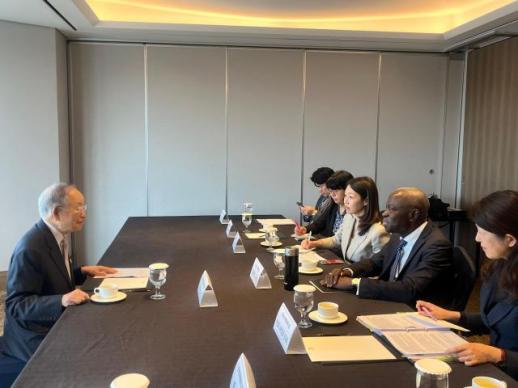 Korean Business Leader Warns of Samsung Electronics Bonus Controversy Sohn Kyung-sik, Chairman of the Korea Employers Federation, raised concerns on May 22 about the potential escalation of labor disputes stemming from the ongoing bonus controversy at Samsung Electronics. During a meeting in Seoul's Lotte Hotel with Gilbert Houngbo, Director-General of the International Labour Organization (ILO), Sohn discussed the Samsung bonus issue and ongoing domestic matters, including artificial intelligence (AI) collaboration initiatives. This year, Samsung Electronics is projected to achieve an operating profit of approximately 300 trillion won, prompting labor unions to demand a share of the company's profits. Sohn expressed that "the semiconductor industry requires substantial upfront investments" and warned that widespread demands for profit sharing could introduce uncertainties for corporate management and the national economy. He added, "Even after agreements, internal conflicts regarding equity among divisions continue," noting that such movements could exacerbate tensions not only between companies and industries but also within Samsung itself. The meeting between Sohn and Houngbo was part of a collaborative effort for a 'Global AI Hub' that the South Korean government is pursuing. A joint statement regarding the establishment of this hub, involving nine international organizations including the ILO, was released on May 21. Sohn remarked, "It is significant for Korea, a leader in AI technology, to play a pivotal role in global AI collaboration," emphasizing that the federation is actively participating in social dialogue with labor and government to effectively respond to the AI transition. He also mentioned plans to attend the ILO conference in Geneva next month, expressing hope that discussions would balance the perspectives of various countries and stakeholders.* This article has been translated by AI. 2026-05-23 19:00:53
 -
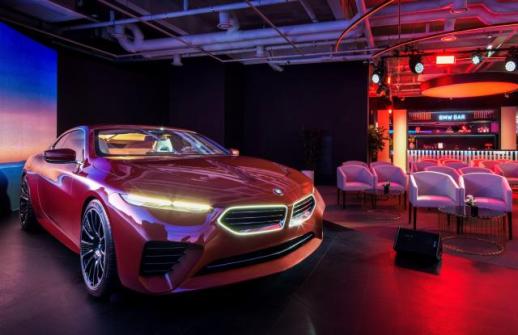 BMW Excellence Lounge 2026: A Fusion of Luxury and Culture "A very special day for BMW luxury car owners." BMW Korea hosted the 2026 BMW Excellence Lounge event on May 22 at the Project Space Line in Gangnam, Seoul. This exclusive event is aimed at owners of luxury brands, including the BMW 7 Series. This year's theme, "Progression," encompassed a premium experience that blended art and luxury lifestyle. The exhibition featured BMW's flagship vehicles alongside works by renowned contemporary Korean artist Lee Kang-soo. A docent guided attendees through the display, creating a cultural space that intertwined the brand's philosophy with the world of art. The BMW i7 showcased its presence with a large kidney grille and separated headlights, emphasizing its status as a flagship electric sedan. In the 8 Series display area, Lee's iron sculptures were strategically placed to highlight a strong image. The event also featured expert lectures, including a presentation by Dr. Kim Ji-yoon, a political scientist, who spoke on "The Leadership of South Korea: Their History." Dr. Kim discussed the trends of major corporations in South Korea, the U.S., the U.K., and Japan over the past 35 years, illustrating the evolution of South Korean leadership. He noted, "The country that has changed the least is the U.K., while South Korea has undergone the most transformation. South Korea has closely experienced changes and growth in leadership through military regimes, democratization, and the IMF crisis." Other speakers during the event included big data analyst Song Gil-young, music director Kim Moon-jung, humanities writer Jo Seung-yeon, former professional Go player Lee Sedol, and neuroscientist Jang Dong-seon, who discussed topics such as AI, art, psychology, and luxury. Now in its eighth year, the BMW Excellence Lounge has become a signature event for BMW Korea. Starting this year, a new lifestyle program called "Curation by Excellence" will be offered, allowing members to select from curated programs, including golf lessons and art exhibitions, to participate in up to twice a year. Following the event, a luxury class test drive program was conducted, where participants experienced the BMW 740i, driving through the Jamsil and Samseong areas for about 30 minutes, enjoying the sedan's substantial presence and smooth ride.* This article has been translated by AI. 2026-05-23 18:43:12
 -
 Stellantis to Launch Over 60 New Models, Including 29 Electric Vehicles by 2030 Stellantis plans to launch over 60 new models, including 29 electric vehicles, by 2030 as part of its electrification strategy. This move is seen as a response to recent challenges in the electric vehicle market and declining sales in North America. On May 21, Stellantis held an Investor Day at its North American headquarters, unveiling its €60 billion five-year strategic plan, dubbed "Fast Lane 2030." The strategy includes the introduction of 29 battery electric vehicles (BEVs), 15 plug-in hybrids and range-extended electric vehicles (PHEVs and REEVs), 24 hybrid electric vehicles (HEVs), and 39 internal combustion and mild hybrid vehicles (ICE and MHEVs), totaling over 60 new models. Additionally, more than 50 major model updates are planned. Stellantis has faced difficulties due to slowing growth in the electric vehicle market and poor sales in North America, leading to a reported loss of €22.2 billion ($26.5 billion) earlier this year after scaling back its electric vehicle operations. As part of its new plan, Stellantis is emphasizing a "multi-energy strategy" that incorporates electric vehicles, hybrids, and high-efficiency internal combustion engines. The company will allocate over €24 billion, approximately 40% of its total research and development and capital investment, to develop next-generation platforms, powertrains, and new technologies. By 2030, half of its global production will come from three global platforms, including the new "STLA One" architecture. The brand strategy has also been restructured. Jeep, Ram, Peugeot, and Fiat have been designated as core global brands, with 70% of new global assets prioritized for their development. Chrysler, Dodge, Citroën, Opel, and Alfa Romeo will share platforms and assets to enhance brand differentiation. Maserati plans to introduce two new models in the E-segment. Regional strategies have been clarified as well. In North America, 11 new models will be launched, increasing sales volume by 35%. The company aims to strengthen its presence in the mass market by introducing seven vehicles priced under $40,000 and two under $30,000. North America will receive 60% of the total €36 billion investment across all brands and products. In Europe, the focus will be on introducing next-generation urban electric vehicles (E-Cars) and improving production efficiency. The new urban electric vehicles will be produced at the Pomigliano d'Arco plant in Italy. In South America, Stellantis will expand its presence in the pickup truck market, while in the Middle East and Africa, it will pursue localization strategies and expand partnerships in Asia. The Asia-Pacific region, including South Korea, aims to enhance profitability through a lightweight business structure based on strategic alliances and increased exports. Antonio Filosa, CEO of Stellantis, stated, "Fast Lane 2030 is a long-term profitability growth strategy designed after meticulous analysis over the past several months."* This article has been translated by AI. 2026-05-23 17:03:28
 -
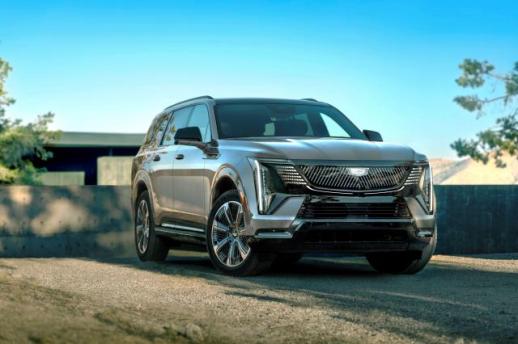 Cadillac Escalade IQL Launches as Longest Electric SUV in Korea Cadillac launched the all-electric long-body flagship SUV, the Escalade IQL, in Korea on May 22. The Escalade IQL builds on the exceptional performance of the Escalade IQ, unveiled last November, featuring an extended length and a more spacious interior. It comes standard with the 'Super Cruise' feature, allowing drivers to take their hands off the steering wheel while maintaining attention on the road. This advanced driver assistance system from General Motors (GM) is currently available on approximately 23,000 kilometers of highways and major roads in Korea. With a length of 5,820 mm and a wheelbase of 3,460 mm, the Escalade IQL is the longest electric SUV currently sold in Korea, offering impressive body proportions and ample interior space. The vehicle's body is 105 mm longer than the Escalade IQ, providing more room in the third row and increased cargo capacity. The driver’s area features a 55-inch Horizon Curved LED display (35 inches for the driver and 20 inches for the passenger), creating a stunning visual experience for passengers. The executive seats in the second row, equipped with massage functions, enhance the luxurious riding experience. The Escalade IQL is powered by a 205 kWh large-capacity battery, certified to provide a driving range of 710 km on a single charge (combined standard). Its electronic four-wheel steering system offers agility that surpasses typical large SUVs. Additionally, it features Magnetic Ride Control 4.0, which detects road conditions up to 1,000 times per second to adjust damping in real-time, and an adaptive air ride suspension that automatically adjusts the ride height based on driving conditions, enhancing safety. A representative from Korea GM stated, "The newly launched Escalade IQL stands out with its long body, making it the longest electric SUV in the domestic market. Customers can experience first-class comfort and outstanding driving performance as soon as they take delivery." According to the Korea Automobile Importers and Distributors Association (KAIDA), 128 units of the Cadillac Escalade were sold in the first quarter of this year, placing it among the top sellers in the domestic luxury large SUV market.* This article has been translated by AI. 2026-05-23 10:57:00
 -
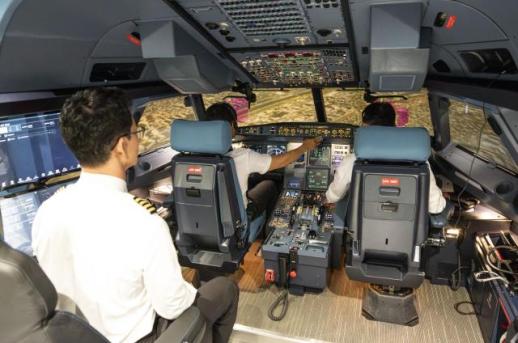 Jin Air Introduces Simulator for Aircraft Fire Response Training Jin Air has completed the introduction of a simulator aimed at enhancing flight safety in preparation for the Airbus aircraft. The A320neo simulator is a training device that allows pilots to conduct simulated flights in an environment identical to the aircraft cockpit. It provides a realistic training environment through precise movements and high-resolution 4K projectors. The simulator can replicate extreme situations where visibility is compromised, including takeoffs, adverse weather conditions, and emergency scenarios. Earlier this year, a series of incidents involving portable battery fires on domestic and international flights highlighted the importance of pilots being familiar with response protocols. U.S. aviation authorities have also recommended smoke response training that simulates real-life conditions. Jin Air is focusing on enhancing pilots' ability to react instinctively, moving beyond mere memorization of manuals. A Jin Air official stated, "Pilots undergo regular training to respond to in-flight fires." Currently, five affiliated airlines, including Korean Air, have completely banned the use of auxiliary batteries on board. Following the simulator, Jin Air plans to introduce a Flight Training Device (FTD) as well. This training device will help pilots master normal and abnormal response procedures using systems identical to those in actual aircraft. Once implemented, Jin Air will operate two Full Flight Simulators (FFS) and one FTD, with an investment totaling approximately 22 billion won.* This article has been translated by AI. 2026-05-21 20:57:00
 -
 Competition Heats Up for 'K-Palantir' in Defense Technology As artificial intelligence (AI) emerges as a crucial element in future warfare, South Korea is witnessing the rise of defense companies equipped with big tech capabilities. The importance of real-time battlefield situational awareness and data connectivity has increased, particularly following the conflicts involving the U.S., Iran, and the Russia-Ukraine war. The competition for what is being dubbed the 'K-Palantir' is intensifying. According to industry sources, defense startup MakinaRax recorded a 'double' on its initial public offering (IPO) on May 20, quadrupling its offering price and surpassing a market capitalization of 1 trillion won. Known as the Korean version of Palantir, MakinaRax is an AI-driven industrial defense platform that attracted significant investor interest even before its listing. Particularly in the defense sector, attention has focused on its self-developed AI enterprise operating system (OS) that supports decision-making in combat situations. This system is designed to maintain high security even in closed network environments and is reportedly supplying related technologies to the Agency for Defense Development (ADD). Human Technology, which holds the top market share in South Korea's anti-drone sector, is developing next-generation integrated defense solutions that combine AI with aviation, robotics, and electronics. On May 15, the company changed its name to 'Agos' to strengthen its identity as an AI defense firm. It is currently preparing to enter the European defense market in collaboration with five companies, including Rainbow Robotics. The rise of AI-based battlefield platform companies in South Korea is rooted in the recent changes in warfare dynamics. The conflicts involving the U.S. and Iran, as well as Russia and Ukraine, have highlighted the importance of real-time information connectivity using relatively inexpensive drones over costly advanced weaponry. The ability to quickly assess battlefield situations and find optimal responses has emerged as a key competitive advantage. At the center of this 'battlefield brain war' is the U.S. defense company Palantir. Palantir analyzes drone, satellite, and reconnaissance data in real-time, connecting it to command systems through its AI-based battlefield platform. It has reportedly supported the U.S. Department of Defense's strategic decisions during the ongoing conflict in Iran, establishing itself as a leading defense tech company in the U.S. Palantir's growth has been remarkable. In the first quarter of this year, its revenue reached $1.633 billion, an 85% increase compared to the same period last year. This growth was largely driven by an expansion in its defense and public sector business with the U.S. government, which generated $687 million. Its net income soared to $871 million, more than quadrupling. In terms of revenue, Palantir is on par with traditional South Korean defense manufacturers. Its first-quarter revenue is comparable to Hanwha Aerospace's reported 5.751 trillion won, excluding Hanwha Ocean's 3.2099 trillion won. It is more than double the first-quarter revenue of LIG Defense and Aerospace, which stood at 1.1679 trillion won. Among South Korea's major defense companies, Hanwha Systems is recognized as an AI battlefield platform firm. It is building future battlefield platforms based on military command and control systems and manned-unmanned teaming (MUM-T). Last year, it secured a contract worth 93.7 billion won for the 'Joint Command and Control System Performance Improvement Development Project' from the Defense Acquisition Program Administration. The development of an AI-based intelligent command decision support system is also underway, with a target completion date set for 2029. Industry experts believe that AI battlefield operating systems and platforms are likely to become a new revenue stream in South Korea's defense market. Professor Park Joo-hong from POSTECH's Department of IT Convergence Engineering stated, "There is a growing consensus within the military on the necessity of AI-based battlefield systems," but emphasized that AI should evolve into a platform that explains situations considering the decision-making structure of defense organizations rather than autonomously judging wartime scenarios.* This article has been translated by AI. 2026-05-21 18:22:16
 -
 KG Mobility Hires Former Hyundai Executive to Boost Exports KG Mobility has taken a significant step in its global market strategy by hiring a former Hyundai Motor executive. On May 21, industry sources reported that KG Mobility appointed Han Chung-seop as the head of its Overseas Business Division. The company disclosed the new executive in its first-quarter audit report. Han has extensive experience in overseas sales, having previously managed operations in Latin America and the Middle East at Hyundai Motor. His expertise is expected to support KG Mobility's strategy for expanding its international sales. Recently, KG Mobility has restructured its overseas business organization to enhance its responsiveness to the global market. KG Group Chairman Kwak Jae-sun visited Vietnam in March to assess the progress of local assembly production (KD). In April, the company held a global launch event for its Musso pickup truck in Turkey, its largest export market. The company's export share is also increasing. In the first quarter, out of 27,077 vehicles sold by KG Mobility, 15,608 were exported, accounting for 57.6% of total sales. A KG Mobility representative stated, "The hiring of Han Chung-seop appears to be a strategic move to expand into overseas markets."* This article has been translated by AI. 2026-05-21 16:33:54
 -
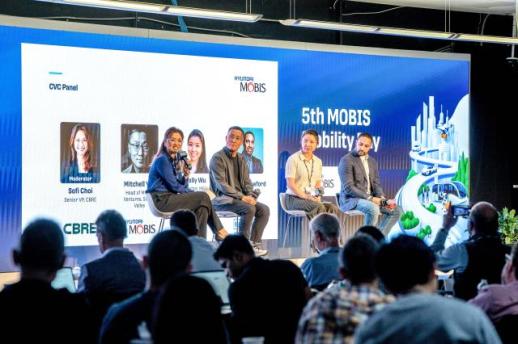 Hyundai Mobis Expands Robotics and AI Partnerships in Silicon Valley Hyundai Mobis is expanding its global network in robotics and physical AI in Silicon Valley. The company is increasing collaboration with local startups, investors, and developers to secure key technologies for future mobility. On May 18, Hyundai Mobis announced it held the 5th Mobis Mobility Day in Sunnyvale, California. This year's event focused on robotics and physical AI, attracting over 400 attendees, the largest turnout to date and more than double last year's participation. The audience included not only mobility industry professionals but also entrepreneurs and developers from new business sectors. During the event, Hyundai Mobis shared its investment and research strategies in robotics. Employees from the company's North American research center presented achievements in autonomous driving, software-defined vehicles (SDV), and electrification. Earlier, Hyundai Mobis signed a contract to supply actuators to Boston Dynamics, a subsidiary of the Hyundai Motor Group. Boston Dynamics' humanoid robot, Atlas, is set to assist with parts sorting at the Hyundai Motor Group Metaplant America in Georgia by 2028. Additionally, Hyundai Mobis established a partnership with Qualcomm, a leading global semiconductor company, at CES 2026 to jointly develop software-defined vehicles (SDV) and advanced driver-assistance systems (ADAS). Hyundai Mobis plans to hold another Mobis Mobility Day in Asia in the second half of this year to share its ongoing open innovation efforts in the mobility sector. A Hyundai Mobis representative stated, "Building collaborative relationships with promising companies in North America and the global market is crucial for creating a global parts ecosystem in the robotics sector."* This article has been translated by AI. 2026-05-19 12:15:47
 -
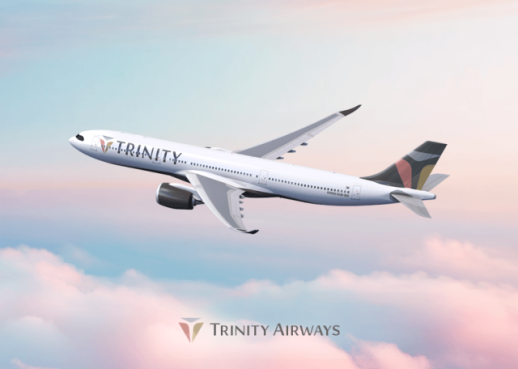 T'way Air Transitions to Trinity Air, Secures License from Ministry of Land South Korea's low-cost carrier T'way Air is accelerating its transition to Trinity Air, aiming to establish a comprehensive travel platform that encompasses flights, accommodations, and more.On May 18, T'way Air announced that it received a license from the Ministry of Land, Infrastructure and Transport to change its name to Trinity Air. The new name, derived from the Latin word "Trinitas," symbolizes the concept of three entities coming together to achieve completeness, reflecting the airline's goal of enhancing customer experience by integrating air travel with lodging and tourism.The issuance of this license follows a resolution passed during the regular shareholders' meeting on March 31, which approved the name change and initiated the necessary aviation licensing procedures.However, due to the nature of international air transport, the actual commencement of operations under the new name will occur gradually, pending the completion of approvals from foreign aviation authorities.The Ministry of Land has stipulated conditions for the approval process, including measures to prevent consumer confusion, maintain safety protocols, and ensure the completion of approvals from international aviation authorities. T'way Air plans to implement these procedures step by step to ensure a smooth transition.Until all approval processes are finalized, the airline will continue to operate under the T'way Air name. The airline code (TW) and flight numbers will remain unchanged, and existing customers will be able to use services without any additional changes.A T'way Air official stated, "This license approval is a significant first step toward the transition to Trinity Air."* This article has been translated by AI. 2026-05-18 12:28:09