
Journalist

SHIN JIA
fromjia@ajunews.com
-
 Refiners hit by avalanche of woes as crude volatility, supply risks mount SEOUL, April 5 (AJP) - A surge in oil prices has given domestic refiners a short-term boost, but industry watchers warn that their gains may quickly evaporate as market volatility and supply constraints are expected to continue amid the prolonged conflict in the Middle East. At least until last month, refiners managed to keep operations steady by relying on existing inventories and alternative supplies, but risks are rising as crude prices swing sharply and securing feedstock becomes increasingly difficult. As of March, exports of petroleum products including gasoline, diesel, and naphtha surged to US$5.11 billion, with an average unit price of $925 per ton, up 33.3 percent from the same period last year. Dubai crude, which accounts for the largest portion of South Korea's crude imports, soared to $128.5 a barrel last month, up from $72.5 a year earlier. Over the same period, international gasoline prices rose to $128.8 from $79.6, while diesel jumped to $192.8 from $86.5. The country's four major refiners - GS Caltex, HD Hyundai Oil Bank, SK Innovation, and S-Oil - which earn over half their revenue from overseas sales, are expected to post stronger first-quarter results thanks to rising exports. Refining margins, which measure the profit from turning crude oil into products like gasoline and diesel, also jumped to $29.3 a barrel in March from $11.8 in February, further boosting their sales, according to Hana Securities. They were able to maintain operations at certain levels as tankers that had left the Persian Gulf before the Middle East crisis arrived. However, after a 2-million-barrel shipment reached South Korea on March 20, supplies under long-term contracts that usually pass through the Strait of Hormuz reportedly stopped. Refiners are now turning to spot purchases of Middle Eastern crude that bypasses the Strait of Hormuz, a critical chokepoint for roughly one-fifth of the world's oil supply, while also seeking alternative supplies from the U.S. and Africa. But intensifying competition among Asian refiners is pushing prices even higher. Some of them are reportedly considering temporary shutdowns, adjusting scheduled maintenance, or cutting operations to minimum levels. "Until March, we were able to manage with our inventories, but crude and petroleum prices are now highly volatile, making it difficult to predict what comes next," said an industry insider. "The uncertainty is so severe that we can't even see a day ahead." 2026-04-05 11:40:42
 -
 Hanwha joins US Navy project as subcontractor for logistics ship SEOUL, March 31 (AJP) - Hanwha Group is participating in a U.S. Navy project as a subcontractor, the South Korean defense giant said on Tuesday. Hanwha Ocean's Philly Shipyard and Hanwha Defense USA said they will work with Vard Marine, a naval architecture and marine engineering company fully owned by Italian Fincantieri Group, to take part in the project for the U.S. Navy's next-generation logistics support ship or NGLS. It is the first time a South Korean firm is carrying out a U.S. Navy ship project using a shipyard on U.S. soil. Hanwha said this is its first U.S. Navy project since acquiring Philly Shipyard in December 2024, and it has invested more than US$200 million since then to expand staffing and facilities. The project involves developing smaller, more agile, and cost-effective vessels designed for refueling, rearming, and resupplying combat ships. Hanwha and Vard Marine will jointly conduct market research, concept design, and productivity and cost analyses with the project scheduled for completion in the first quarter of 2027. The participation in the project "represents an important step in our ability to leverage our world-class shipbuilding expertise in building the ships the Navy needs," said Tom Anderson, president of Hanwha Defense USA’s shipbuilding business division. Industry watchers expect the project to accelerate Hanwha's expansion of its shipbuilding and defense business in the U.S. Hanwha Defense USA is the American subsidiary of Hanwha Aerospace. 2026-03-31 09:35:42
 -
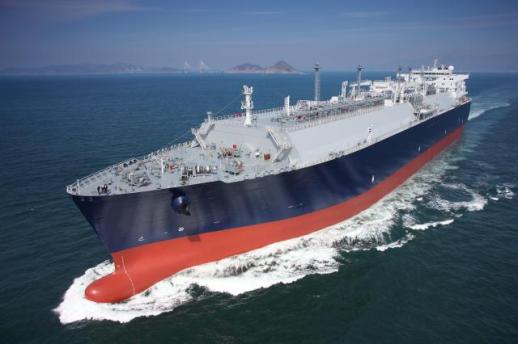 Samsung Heavy wins another deal, boosts order backlog SEOUL, March 20 (AJP) - Samsung Heavy Industries has won an order for one liquefied natural gas (LNG) carrier from an Oceania-based shipping company, the shipbuilder said on Friday. The order, worth 377.9 billion won (or about $252 million), is scheduled for delivery by April 2029. The deal brings the shipbuilder's cumulative orders for this year to 12 vessels worth $2.4 billion, reaching 17 percent of its annual target of $13.9 billion. They consist of four LNG carriers, two ethane carriers, two container ships, and four crude oil tankers. "We are taking a strategic approach to securing orders for highly profitable ships, while also responding flexibly to changes in market conditions," a Samsung Heavy spokesman said. 2026-03-20 09:51:19
 -
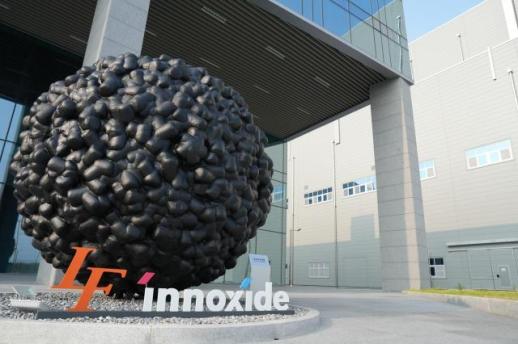 L&F Nears 60% Share of Korea’s NCM Cathode Exports, Sees Q1 Results Improving L&F said Friday it expects to enter a full-fledged earnings recovery starting in the first quarter, after posting an “earnings surprise” in the fourth quarter last year. The company said growth in shipments centered on high-nickel cathode materials, inventory valuation gains from rising lithium prices and steady demand from key customers are expected to keep results above market expectations. Even as demand in the electric-vehicle market slows, L&F said exports of NCM (nickel-cobalt-manganese) cathode materials continue to rise. According to NCM export data by local government released March 15 by the Korea International Trade Association, Daegu’s export weight in February 2026 totaled about 6,208 tons, about 59% of the national total of 10,496 tons. Daegu is home to L&F’s major production plants, and the market views the figures as a key indicator of the company’s shipment trend. On a cumulative basis for January and February, Daegu exports totaled 11,760 tons, about 62% of the national volume. L&F said its total shipments for 2025 rose 34% from a year earlier, while shipments of high-nickel cathode materials increased about 75%, marking a record sales volume. The company said it plans to strengthen both mid- to long-term growth and profitability by expanding volumes based on its sole-supplier position for Ni95 high-nickel products, starting mass production of LFP (lithium-iron-phosphate) cathode materials in the second half of this year — the first in South Korea — and ramping up supply of 46mm cylindrical cathode materials, which it began shipping late last year. “This year, based on expanded shipments and a more diversified product portfolio, we will accelerate improvements in both earnings and financials along with a return to operating profit,” Chief Financial Officer Ryu Seung-heon said. “We will enter a full growth track centered on 46mm products and the new LFP business.”* This article has been translated by AI. 2026-03-20 09:27:18
 -
Samsung Heavy Wins $260 Million Order for One LNG Carrier Samsung Heavy Industries said Friday it has won an order for one liquefied natural gas carrier from an Oceania-based shipping company for 377.9 billion won. The vessel is scheduled for delivery by April 2029. The shipbuilder said its year-to-date orders total 12 vessels worth $2.4 billion, reaching 17% of its $13.9 billion annual target. The tally includes four LNG carriers, two ethane carriers, two container ships and four crude oil carriers. A company official said Samsung Heavy is maintaining a selective order strategy focused on high value-added ships while responding flexibly to changes in market conditions.* This article has been translated by AI. 2026-03-20 09:18:14
-
 Hanwha Ocean to Inject 164.5 Billion Won Into U.S. Subsidiary via Rights Offering Hanwha Ocean is expanding overseas investment by injecting new capital into its U.S. subsidiary. The company said Thursday that its subsidiary Hanwha Ocean USA Holdings decided on a paid-in capital increase worth about 164.5 billion won to secure funds for investment, according to a regulatory filing. The offering will be conducted as a rights issue. Hanwha Ocean, which owns 100% of the unit, will subscribe to all newly issued shares, meaning the parent will provide the funds directly without bringing in outside capital. In the filing, Hanwha Ocean described the move as a decision on a paid-in capital increase to raise investment funds for Hanwha Ocean USA Holdings. Payments will be made in installments through Dec. 31, 2026, depending on business progress.* This article has been translated by AI. 2026-03-19 17:55:28
 -
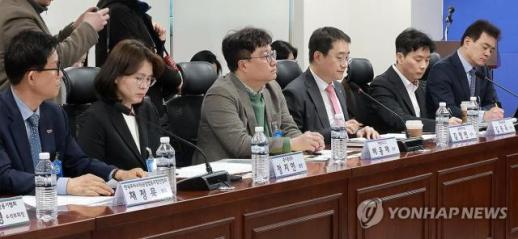 Naphtha Supply Shock Puts South Korea’s Plastics Industry at Risk, Calls Grow for Price-Linking System The National Assembly held a meeting with petrochemical and plastics industry representatives as disruptions in naphtha supplies deepened after the Strait of Hormuz was effectively blocked amid the war between the United States and Iran. The session focused on steps to ease pressure on small plastics manufacturers as synthetic resin prices rise with surging global oil prices. Attendees included LG Chem, Hanwha Solutions, Lotte Chemical and Yeochun NCC, along with the Korea Plastics Industry Cooperative Federation, the Korea Federation of SMEs, and officials from the Ministry of Trade, Industry and Energy, the Ministry of SMEs and Startups, the Ministry of Economy and Finance, the Fair Trade Commission and the Financial Services Commission, according to political officials on March 19. Petrochemical companies said spikes in feedstock prices such as naphtha and unstable supply were causing production disruptions and delivery delays, worsening profitability and adding to management strain. Plastics manufacturers countered that large petrochemical suppliers have raised synthetic resin prices citing higher feedstock costs, leaving factories squeezed between rising material costs and sales prices that do not reflect those increases. Industry officials said raw materials account for about 80% of plastics makers’ costs. Chae Jeong-mook, head of the Korea Plastics Industry Association, said raw materials make up about 83% of costs, leaving the sector directly exposed to oil price increases. He said prices have risen by about 200,000 won per ton since the war began and that there are signs of supply being cut off, adding, “The industry feels like it’s bleeding day by day.” Chae called for stable supply and measures to prevent sharp short-term price spikes. He also urged adoption of a delivery price-linking system so increases in raw material costs can be reflected immediately in contract prices. Petrochemical firms, while citing difficulties as naphtha cracking capacity (NCC) is being reduced, said they would do their best to stabilize the domestic supply chain. Jeong Jong-eun, an executive director at LG Chem, pointed to what he described as a lack of government-level stockpiling and support for naphtha. “For crude oil or LNG, the state expands storage tanks through the national power network, but naphtha is not in that situation,” he said, adding the company was making every effort to secure supplies. He said the industry understands the concerns raised and plans to respond while working to stabilize domestic supply. Kim Dong-wook, an executive director at Hanwha Solutions, said the company was trying to maintain production within its limits. He said inventories were already low because the market had been weak even before the situation escalated, making the impact appear quickly. Kim Young-beon, an executive director at Lotte Chemical, said Lotte has substantial ethylene facilities and is heavily affected by overseas market conditions, adding it is proceeding as “model No. 1” in petrochemical restructuring. On synthetic resin pricing, he said the company was taking preemptive steps to stabilize the domestic market, including minimizing export volumes in March and April and expanding the domestic supply share from 45% to 90%. Bae Yong-jae, a managing director at Yeochun NCC, said securing naphtha has become difficult due to the Strait of Hormuz blockade. He said the company had relied on that route for about 70% of its total volume and that prices have nearly doubled. He said the firm is maintaining minimum operating rates because naphtha is hard to obtain and called for broader discussions that include supply shortages, price pass-through and industry losses. After the meeting shifted to a closed session, participants were reported to have discussed limiting the volume of petroleum products refiners export overseas. Democratic Party lawmaker Kim Nam-geun said naphtha is sourced through domestic production (47%) and imports (53%), and that with the government also reviewing export controls, participants discussed ways to secure supplies quickly. Democratic Party lawmaker Min Byung-deok raised concerns about price increases occurring before higher crude prices were reflected in actual import costs. He said he asked the Fair Trade Commission and the Ministry of SMEs and Startups to monitor whether there was collusion or abuse of market power in the price-setting process and to submit their findings. On financial support, Kim Nam-geun said about 20.3 trillion won in financing is being prepared in response to the Middle East situation, and the plastics and petrochemical industries are expected to be included. On alternative naphtha sources, he said imports are being considered from India, Algeria and the United States, adding that Russia-related matters were mentioned only as a request and drawing a line on importing Russian supplies. 2026-03-19 14:45:23
 -
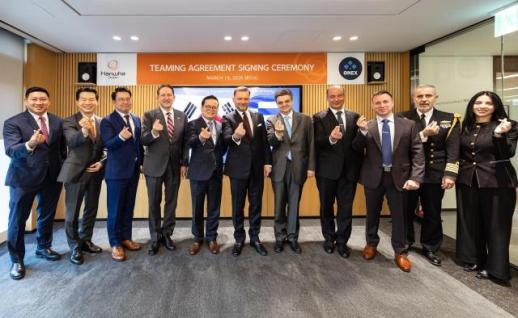 Hanwha Ocean Signs Deal With ONEX to Pursue Greece Naval Defense Market Hanwha Ocean is moving to expand into Greece’s maritime defense market after signing a strategic cooperation agreement with ONEX Group, Greece’s largest shipbuilder. Hanwha Ocean said the agreement was signed on the 19th by Eo Seong-cheol, president of its Special Ship Business Unit, and ONEX Group CEO Panagiotis Xenokostas. Greek Ambassador to South Korea Loukas Tsokos and Acting U.S. Ambassador to South Korea James Heller attended the event, the company said. Under the deal, Hanwha Ocean and ONEX Group plan to participate as mutually exclusive partners in projects ordered by the Greek coast guard and navy, including submarine programs. The companies also agreed to seek cooperation, by project, in third countries over the mid- to long term, including nations neighboring Greece in the Mediterranean and Black Sea regions. Xenokostas said, “It is an honor to stand in Seoul, the center of a world-class maritime power,” and called on South Korea, the United States and Greece to “sail together toward a future of shared security and prosperity.” Eo said the company plans to “enter the local market in a stable way through exclusive cooperation with a major local shipyard” and to take an active role in upcoming Greek coast guard and navy projects. ONEX Group is Greece’s largest shipbuilding and defense company and operates the Syros Neorion Shipyard and the Elefsis Shipyards. Hanwha Ocean noted that ONEX Group is backed by investment from the U.S. International Development Finance Corp., a U.S. government development finance institution. Heller also attended the event.* This article has been translated by AI. 2026-03-19 14:39:19
 -
 Korea Zinc Expands Ultra-Pure Sulfuric Acid Output for Semiconductors, Eyes U.S. Hub Korea Zinc said March 18 it is producing ultra-high-purity, semiconductor-grade sulfuric acid by refining sulfur dioxide (SO₂) generated in its zinc and lead smelting process, and plans to expand annual capacity to 320,000 tons starting in the second half of this year. The company also said it will build a production line in the United States. After Chairman Choi Yun-beom took office, the company has pursued efficiency improvements and investment to expand production lines. It now operates 19 lines at its Onsan smelter with annual sulfuric acid capacity of 280,000 tons. Korea Zinc said it has been expanding since late 2024 and plans further additions to raise annual capacity to 500,000 tons. “As the largest supplier of semiconductor sulfuric acid in Korea, we are supporting the semiconductor industry,” the company said. It added that after building an integrated smelter in the United States in 2029, it plans to help stabilize supplies for Korean chipmakers operating there and strengthen its role as a global supply hub. Korea Zinc also pointed to growing concerns about sulfuric acid supply amid the impact of the U.S.-Iran war. It said its semiconductor-grade sulfuric acid is produced through an integrated smelting process rather than oil refining, allowing it to supply the product more steadily outside the effects of the war and potential disruptions such as a closure of the Strait of Hormuz. Semiconductor-grade sulfuric acid is a key material used in wafer cleaning to remove impurities. The company said this step accounts for one-third of the overall cleaning process. As circuits become more miniaturized, it said, impurity tolerances have tightened and the need for stable purity and quality has increased because wafer contamination directly affects yield and reliability. Korea Zinc said it covers more than about 60% of domestic demand for semiconductor-grade sulfuric acid and supplies about 95% of its output to major chipmakers in South Korea. It also supplies global semiconductor manufacturers in Japan and Singapore. The company said it plans to build a semiconductor-grade sulfuric acid production line at its U.S. integrated smelter, reviewing annual capacity of about 100,000 tons. It plans to start production with the smelter’s trial operation in 2029, aiming to supply production bases of global semiconductor companies in the United States. A Korea Zinc official said demand is expected to keep rising as competition in AI intensifies and fabs expand globally. The official said the company will use its accumulated ultra-high-purity sulfuric acid technology to support supply-chain stability while expanding those capabilities into global markets and strengthening its position in semiconductor materials supply chains.* This article has been translated by AI. 2026-03-18 17:56:09
 -
 Yeosu petrochemical workers protest government-led plan to cut naphtha cracker output Yeosu industrial complex workers on Tuesday criticized a government- and creditor-led plan to voluntarily cut output at naphtha crackers, warning it could lead to mass layoffs and damage the local economy. They said it is unfair to push ahead with talks between the government (creditors) and companies without agreement from workers and the community. According to political circles, the labor-led Joint Countermeasures Committee for responding to petrochemical restructuring at the Yeosu National Industrial Complex held a news conference at the National Assembly press room and called for a halt to additional NCC cuts in Yeosu and the creation of a multi-party consultative body. The committee includes the Korean Confederation of Trade Unions’ South Jeolla headquarters, the Federation of Korean Trade Unions’ South Jeolla headquarters, the Yeosu Industrial Complex Labor Union Council, the KCTU Chemical, Fiber, Food Industries Union’s Gwangju-South Jeolla branch, and the FKTU Chemical Workers Federation’s South Jeolla headquarters. The committee said the government’s output-cut target for NCC facilities at three major industrial complexes is 2.7 million to 3.7 million tons, and about 3.43 million tons of cuts are already underway. It noted, however, that Ulsan is expanding capacity as S-Oil pursues its 1.8 million-ton Shaheen project. Yeosu’s cut volume is 1.67 million tons, about half of the nationwide reduction, the committee said. With the government seeking an additional 900,000 to 1.1 million tons in cuts, Yeosu’s total could rise to as much as 2.77 million tons — about 60% of the national total, it said. The committee said additional cuts by Yeocheon NCC and Lotte Chemical are expected to bring restructuring for regular workers and could trigger mass layoffs among subcontracted workers as downstream volumes fall. It warned of ripple effects across related industries and the broader regional economy. It also said employment at the Yeosu National Industrial Complex fell about 30% year over year as of the second quarter of 2025, down by about 7,000 workers, and argued that workers and the local community have been excluded from the restructuring process. The committee said a petrochemical special law enacted last year lacks sufficient measures to protect jobs and the regional economy, and that a recently announced enforcement decree does not adequately reflect views from industrial sites or broader social discussion. It urged the government to immediately stop unilateral plans for additional cuts. It also called for Yeosu to be upgraded to a higher-level “employment crisis area” designation and demanded legislation to establish a four-party joint committee involving the government, local governments, companies and labor to guarantee participation by workers and the community. The committee said policy should address what it called an imbalance of “maximum cuts in Yeosu, maximum expansion in Ulsan,” and it urged revisions to the special law and enforcement decree to ensure labor rights, regional balance and participation in governance. Rep. Jeon Jong-deok of the Progressive Party said, “A one-sided restructuring that excludes the field is not a solution but the start of another crisis,” and called for a multi-party consultative body with workers as key participants to protect jobs and develop practical alternatives to support the region. 2026-03-18 14:48:20