

Journalist

Shin Jia
fromjia@ajunews.com
-
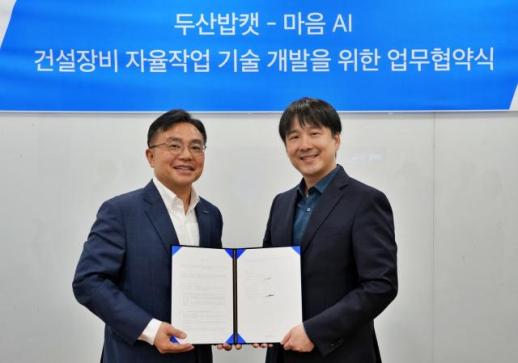 Doosan Bobcat Partners with Mind AI to Develop Construction Equipment Technology Doosan Bobcat announced on June 2 that it has signed a memorandum of understanding (MOU) with AI solutions company Mind AI to develop autonomous operation technology for construction equipment at Doosan Tower in Bundang, Seongnam. This collaboration is part of Doosan Bobcat's initiative in physical AI for the construction equipment sector. Doosan Bobcat will provide small construction equipment products and data, while Mind AI will explore the application of vision-language-action (VLA) based AI technology for autonomous operations on Doosan Bobcat equipment. The two companies plan to jointly verify the feasibility and conduct practical demonstrations of the autonomous operation technology. Doosan Bobcat has accumulated key technologies and data necessary for autonomous operations and automation through collaborations and investments with global companies, focusing on areas such as radar, equipment automation, information recognition, and decision-making. Mind AI possesses capabilities in VLA model-based AI technology and has experience in commercializing related technologies across various sectors, including agriculture, manufacturing, logistics, and defense. Park Hyun-cheol, Vice President of Doosan Bobcat, stated, "This collaboration will enhance the practical applicability of autonomous operation technology in the construction equipment sector. We will continue to develop technologies that improve productivity and operational efficiency for our customers, leading the future construction equipment market." Choi Hong-seob, CEO of Mind AI, remarked, "The scope of tasks that AI can understand and perform in the construction equipment industry will rapidly expand. Mind AI will focus on elevating the level of autonomy in industrial equipment through VLA-based physical AI technology and implementing AI technologies that can be utilized in real-world applications." Meanwhile, Park Jung-won, Chairman of Doosan Group, visited Doosan Bobcat's Incheon facility in February, where he received reports on the business performance of products produced for the ALAO (Asia, Latin America, and Oceania) region, including forklifts, skid loaders, and mini excavators, and inspected the manufacturing site.* This article has been translated by AI. 2026-06-02 16:54:00
 -
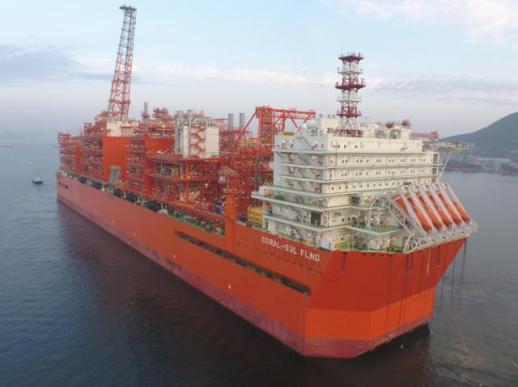 Samsung Heavy Industries Wins $3.2 Billion FLNG Contract in North America Samsung Heavy Industries has secured a contract for one floating liquefied natural gas production facility (FLNG) worth 4.33 trillion won (approximately $3.2 billion) from a client in North America. According to Samsung Heavy Industries, construction is set to begin following the issuance of the client's notice to proceed, with delivery scheduled for July 2030. The company has reportedly captured 64% of the global FLNG market, having secured seven out of the eleven new FLNG units built to date, including the world's largest FLNG, Shell's Prelude. A Samsung Heavy Industries official stated, "This contract reaffirms our overwhelming competitiveness in the FLNG sector, and we will continue to achieve success in the global FLNG market based on our proven technology and execution experience." Meanwhile, Samsung Heavy Industries' cumulative orders for the year have reached a total of 28 vessels worth $8.3 billion, achieving 60% of its annual order target of $13.9 billion. Following a recent order on May 27 for one LNG carrier, two large gas carriers, and two oil tankers from a Bermuda-based shipping company, Samsung Heavy Industries continues to build on its recent successes.* This article has been translated by AI. 2026-06-02 14:45:00
 -
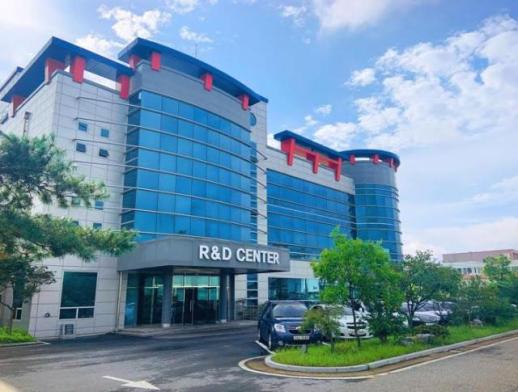 Namsun Aluminum Named GM's Supplier of the Year for 15th Consecutive Year SM Group's manufacturing subsidiary, Namsun Aluminum, has once again been named Supplier of the Year (SOY) by General Motors (GM), marking the 15th consecutive year it has received this honor. According to industry sources, Namsun Aluminum's automotive division was recognized at GM's 34th annual Supplier of the Year awards ceremony held recently in Austin, Texas. Jeong Soon-won, CEO of Namsun Aluminum's automotive division, attended the event to accept the award. The SOY award is given annually by GM to approximately 6,000 global partners based on a comprehensive evaluation of technology, innovation, supply stability, and sustainability. This year, a total of 103 companies, including 20 from South Korea, received the award. Namsun Aluminum's automotive division was commended for its key bumper systems and large injection molds supplied to GM Korea. A representative from SM Group stated, "In particular, there have been no issues with the Supplier Parts Quality System (SPPS) in the past year, and we achieved the highest rating of 'BIQS Level 5' in GM's quality evaluation system, which significantly contributed to our assessment." SPPS serves as a communication tool for suppliers and customers to resolve product quality issues. Jeong Soon-won remarked, "Being named SOY for 15 consecutive years is a testament to our consistent efforts in enhancing quality, developing new technologies, and ensuring stable supply. Our entire team has demonstrated that we are at the global top level in quality management." He added, "We will not rest on our laurels but will maximize our expertise and business know-how to become a more trusted partner in the global automotive parts market." Meanwhile, Namsun Aluminum, a core subsidiary of SM Group, focuses on manufacturing aluminum products such as windows and curtain walls, as well as supplying bumpers to GM Korea and others. Recently, it has expanded into eco-friendly and high-value markets, including solar structures and high-performance window systems.* This article has been translated by AI. 2026-06-02 09:45:00
 -
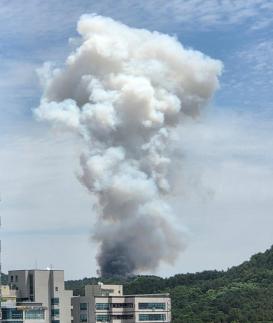 Hanwha Chairman Kim Seung-yeon Mobilizes Group Resources for Hanwha Aerospace Incident Response Hanwha Group has established a special response task force under the direction of Chairman Kim Seung-yeon to address the explosion incident at the Hanwha Aerospace Daejeon plant. The group is focusing on recovery efforts, supporting the families of the victims, and treating the injured. In a statement released on June 1, Hanwha Group expressed its condolences, stating, "We mourn the loss of five valued employees in this tragic incident at the Hanwha Aerospace Daejeon plant. We extend our deepest apologies to the families of the deceased, the injured employees, and the local community." Chairman Kim Seung-yeon expressed his sorrow in the statement, saying, "I am deeply saddened by the news of our employees who were dedicated to their work losing their lives and being injured. I offer my heartfelt condolences to the families of the deceased." He urged, "We must honor the memory of those who have passed and swiftly implement support for their families and treatment for the injured with utmost sincerity." The group plans to mobilize its special response task force to focus on recovery efforts. Son Jae-il, CEO of Hanwha Aerospace, has set up a command center at the accident site and is coordinating with fire and police authorities to manage the situation. CEO Son stated, "As the CEO of the company, I feel a heavy responsibility for this incident. We will provide all necessary support to the families of the victims and take full responsibility for the treatment and recovery of the injured." He added, "Hanwha Group will thoroughly investigate the cause of the accident to prevent such a devastating incident from happening again. We will conduct a comprehensive review of safety management measures across the group and allocate all resources to create a safe workplace." He concluded by saying, "We pray for the souls of the deceased and sincerely apologize to the local community and the public." The incident is believed to have occurred during the cleaning process of propellant materials. The exact cause of the accident is expected to be confirmed following investigations by relevant authorities once access to the site is secured.* This article has been translated by AI. 2026-06-01 18:30:00
 -
 Doosan Enerbility Secures Contract for Combined Heat and Power Plant in Saudi Arabia Doosan Enerbility has secured a contract for the construction of a combined heat and power plant in Saudi Arabia, valued at approximately 840 billion won. According to a statement released on June 1, Doosan Enerbility signed a contract with a consortium of Korea Electric Power Corporation and Saudi Aramco for the construction of the "Phase 2 of the Jafurah Combined Heat and Power Plant." Korea Electric Power Corporation will participate as the developer responsible for project development and operation. Doosan Enerbility plans to execute the project using an EPC (Engineering, Procurement, and Construction) approach, managing everything from design to equipment supply, installation, construction, and commissioning. The Jafurah Combined Heat and Power Plant Phase 2 will be built near the Jafurah gas field, approximately 400 kilometers east of Riyadh, the Saudi capital. The project aims for completion by 2029. Once operational, it will generate 330 megawatts of electricity and produce 465 tons of steam per hour to supply power and heat to the nearby gas field. The main equipment, including the steam turbine, will be manufactured and supplied by Doosan Enerbility's subsidiary, Doosan Skoda Power. Lee Hyun-ho, head of Plant EPC BG at Doosan Enerbility, stated, "We are pleased to secure this Phase 2 project following the Phase 1 project in 2022. We expect continued demand for large-scale power projects in Saudi Arabia and the Middle East, and we will strengthen our market penetration based on our accumulated technology and experience." Doosan Enerbility has been solidifying its presence in the local market by winning several large projects in Saudi Arabia recently. Last year, it secured contracts for a gas power plant with Qatar Electricity and Water Company worth about 290 billion won (February), a gas combined cycle power plant in Saudi Arabia valued at approximately 2.2 trillion won, and the construction of the PP12 gas combined cycle power plant worth around 890 billion won (March). Additionally, Doosan Enerbility has signed contracts with U.S. companies for the supply of four 370 MW steam turbines and generators. The company is also working to expand its global portfolio by establishing cooperation and supply chain agreements with two subsidiaries of Vietnam's state energy company.* This article has been translated by AI. 2026-06-01 16:39:00
 -
 GS Caltex Launches Family-Inclusive Online Exhibition 'Energy Gallery' GS Caltex unveiled its online exhibition "Energy Gallery" on June 1, featuring works from its family-inclusive cultural program, "GS Caltex Art Festa." The "Energy Gallery" is a special exhibition planned by GS Caltex to celebrate May, known as Family Month in South Korea. It showcases artworks created by employees' children, who reflected on the meaning of energy alongside their parents. The company noted that AI technology was utilized in the creation of the artworks. The exhibited pieces revolve around the theme "Stories of Energy that Move Our Daily Lives." Participating children chose one of three themes to express through their drawings: 1) Energy Creating a Peaceful Daily Life, 2) Energy Guardians Illuminating the World, and 3) A New World of Future Energy. Each artwork incorporates the children's imagination and conversations with their families. GS Caltex hopes this exhibition will serve as a platform for parents and children to share their insights on the significance of energy and work with the broader community. A GS Caltex representative stated, "The energy we create is invisible, yet it brightens someone's day, drives family life, and supports society in many ways. We hope 'Energy Gallery' conveys the essential value of energy through the pure perspectives of children, making it more relatable to many people." The "Energy Gallery" reflects GS Caltex's cultural and artistic philosophy of connecting people, society, and the value of energy through art. The exhibition is freely accessible to everyone via the Energy Gallery on GS Caltex's official blog, Media Hub. Additionally, GS Caltex is collaborating with the Korea Energy Foundation on the "2026 GS Caltex Energy Efficiency Improvement Public-Private Joint Project (Year 4)," focusing on enhancing living conditions and energy welfare for vulnerable communities.* This article has been translated by AI. 2026-06-01 13:24:00
 -
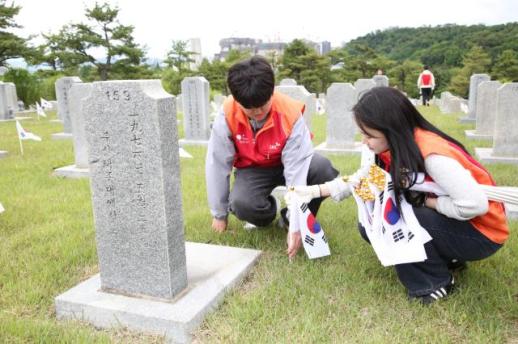 Companies Honor Fallen Heroes with Memorial Activities As Memorial Day and the Month of National Defense approach, various companies are engaging in social contribution activities to honor veterans. Executives and employees are participating directly to commemorate the sacrifices of fallen heroes and fulfill their social responsibilities. According to industry sources, SKC conducted a grave site cleaning activity at the National Seoul Memorial Cemetery to honor fallen heroes ahead of the 71st Memorial Day. The event included participation from CEO Kim Jong-woo and CFO Park Dong-joo, along with other executives and employees. Since establishing a volunteer group in 2004 and forming a sister relationship with the National Seoul Memorial Cemetery in 2008, SKC has continued its activities for 19 years. The volunteer team began with a moment of silence at the Memorial Tower before moving to the 19th grave site, which honors 913 military personnel who died in service. They placed national flags, removed weeds, and cleaned the gravestones. A SKC representative stated, "Through this activity involving both executives and employees, we were able to once again honor the sacrifices of our fallen heroes. We will continue our regular social contribution activities as a responsible company that contributes to the nation and the community." Hyosung also visited the National Seoul Memorial Cemetery on May 22 to conduct a grave site cleaning volunteer activity. Since 2014, Hyosung has held this event twice a year, with employees participating directly. On that day, 15 participants from Hyosung, including employees from Hyosung TNC, Hyosung Heavy Industries, and Hyosung Chemical, as well as university student supporters, paid their respects at the Memorial Tower and engaged in cleaning activities at the 9th grave site, which is part of their sister relationship, including placing national flags and collecting wilted flowers. Hyosung Chairman Cho Hyun-jun has emphasized the importance of continuing social contribution activities to honor and remember the noble sacrifices of those who dedicated their lives to protect the country. GS Global announced that on May 27, about 40 employees, including CEO Kim Sung-won, participated in a grave site cleaning and environmental beautification activity at the National Seoul Memorial Cemetery. After paying their respects at the Memorial Tower, employees engaged in cleaning tasks such as washing gravestones, removing weeds, and organizing the surrounding area, reflecting deeply on the significance of honoring veterans. A GS Global representative stated, "To fulfill our corporate social responsibility, we have linked our grave site cleaning activities with support for childcare, ensuring our employees are directly involved. We will continue to engage in social contribution activities that provide tangible help to the nation and the community." Global shipping company Pan Ocean also held volunteer activities at the National Seoul Memorial Cemetery in honor of Memorial Day. About 30 Pan Ocean employees first visited the Memorial Tower to express gratitude for the noble sacrifices of those who gave their lives for the country. They then conducted maintenance activities at the 43rd grave site (with 1,122 interments), which is part of their sister relationship. Since 2010, Pan Ocean has continued its grave site maintenance and flower offering activities annually. A Pan Ocean representative remarked, "This was a meaningful time for employees to reflect on their love for the country while honoring the sacrifices of those who dedicated their lives for it. We will continue to fulfill our social responsibilities through various social contribution activities." Memorial Day commemorates the loyalty of those who sacrificed their lives for national defense and marks its 71st observance this year.* This article has been translated by AI. 2026-06-01 10:00:00
 -
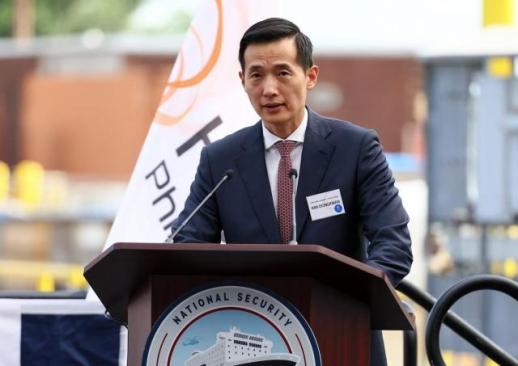 Hanwha Group Intensifies Efforts to Secure $60 Billion Canadian Submarine Contract The Canadian submarine project (CPSP), valued at up to 60 trillion won, is emerging as a critical opportunity for Hanwha Group to establish itself as a global defense contractor. The company plans to leverage its submarine technology, maintenance, repair, and overhaul (MRO) capabilities, artificial intelligence (AI), and local production of ground weapons as part of a comprehensive defense package strategy to secure the contract. According to industry sources on May 31, Hanwha is ramping up efforts to secure the CPSP contract, having successfully concluded the CANSEC 2026, Canada’s largest defense exhibition. Hanwha Ocean emphasized its submarine capabilities and contributions to the Canadian economy at the exhibition, where Chief of Naval Operations Kim Kyung-ryul and Defense Acquisition Program Administration Commissioner Lee Yong-cheol visited Hanwha's booth to engage with Canadian political and industrial figures in support of the bid. Ministers from Ontario and Nova Scotia, along with key representatives from Canadian defense and shipbuilding sectors, also visited Hanwha's booth to discuss collaboration opportunities. On May 21, Hanwha signed a memorandum of understanding with Canadian aerospace firm Reaction Dynamics to explore strategic investments aimed at enhancing Canada’s launch capabilities. Business analysts note that under the leadership of Vice Chairman Kim Dong-kwan, Hanwha is consolidating all its resources to secure the CPSP contract. At the heart of the bidding process is Hanwha Ocean's long-established submarine technology. The company is showcasing its capabilities with the Changbogo-III class submarine, a 3,000-ton vessel developed in South Korea. When the lead ship, the Dosan Ahn Chang-ho, docked at the Esquimalt naval base in British Columbia on May 24, Canadian naval officials were able to verify its long-range operational capabilities and operational stability. The Canadian government views the rapid delivery of next-generation submarines as a key factor in addressing capability gaps, and Hanwha Ocean's adherence to delivery timelines, a strength of the 'K-Shipbuilding' initiative, is emerging as a core competitive advantage. Hanwha Ocean has proposed delivering four submarines to Canada by 2035. However, analysts caution that securing the contract may not be easy, as competitor TKMS from Germany is leveraging its NATO interoperability and experience in European defense collaboration. In response, Hanwha has launched a group-wide package strategy as a decisive move. The company has submitted plans to the Canadian government to maintain and operate submarines within Canada while expanding collaboration into ground weapons and defense electronics. Hanwha Ocean will handle submarine construction and MRO, while Hanwha Aerospace aims to establish a joint venture in Canada to set up a local production base for military vehicles and other ground weapons. Hanwha Systems plans to broaden cooperation in satellite communications, AI, and surveillance technologies in the defense electronics sector with Canada. A Hanwha Ocean representative stated, "We are committed to becoming a trusted long-term partner for Canada through local investment, industrial cooperation, workforce development, and continuous economic contributions that support Canada's 'Buy Canadian' policy." 2026-05-31 16:03:00
 -
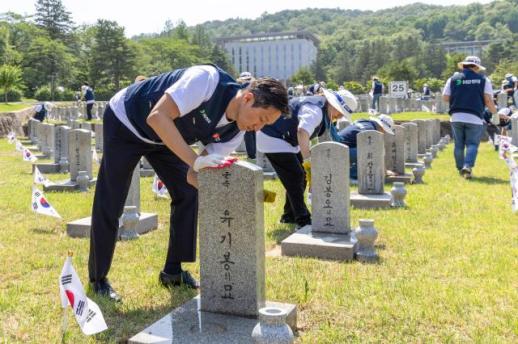 HD Hyundai Chairman Chung Ki-sun Remembers Sacrifices of Veterans HD Hyundai has continued its efforts to honor the noble sacrifices and dedication of war heroes this year. On May 31, the company announced that it commemorated fallen soldiers at the National Cemetery in Seoul, the National Cemetery in Yeongcheon, and the National Cemetery in Goesan in observance of National Defense Month.Chairman Chung Ki-sun visited the National Cemetery in Seoul, where he laid flowers and offered incense at the Memorial Tower to honor the fallen soldiers. He then participated in a cleanup effort in Section 25, a designated area for HD Hyundai, where he and employees removed weeds and cleaned gravestones, enhancing the memorial's significance and encouraging those who joined him.On the same day, HD Construction Machinery signed a memorandum of understanding (MOU) with the Ministry of Veterans Affairs at the National Cemetery to establish a memorial facility honoring UN veterans. The agreement was signed by Minister Kwon Oh-eul and CEO Moon Jae-young of HD Construction Machinery, with Chairman Chung and Dessie Dalkie Dukamo, the Ethiopian Ambassador to South Korea, in attendance.Under the MOU, HD Construction Machinery will support the construction of a memorial facility for veterans from UN member countries and provide the necessary construction equipment. The first overseas memorial facility will be established in Addis Ababa, the capital of Ethiopia, which was the only African country to send ground troops during the Korean War.HD Hyundai is also committed to supporting veterans and the families of national heroes. Since 2022, HD Korea Shipbuilding & Marine Engineering and HD Hyundai Heavy Industries have alternately donated 20 million won annually to support children of Navy veterans and those facing financial difficulties. Additionally, since 2021, HD Construction Machinery has partnered with the Ministry of Veterans Affairs on a 'House Remodeling Project' to improve the living conditions of families of national heroes, with plans to assist a total of 21 households by the end of this year.Chairman Chung stated, "It is our responsibility to remember the sacrifices and dedication of veterans who faced fear without hesitation and to pass this legacy to future generations. HD Hyundai will continue to honor and remember those who dedicated themselves to our country."Approximately 200 employees, including Chairman Chung and CEO Moon, participated in this memorial activity. Furthermore, the HD Hyundai 1% Sharing Foundation continues to support descendants of veterans with living expenses and essential goods. Notably, in 2024, the foundation established a sisterhood with frontline military units and donated construction equipment and vans to enhance the welfare of soldiers fulfilling their national defense duties. 2026-05-31 13:03:00
 -
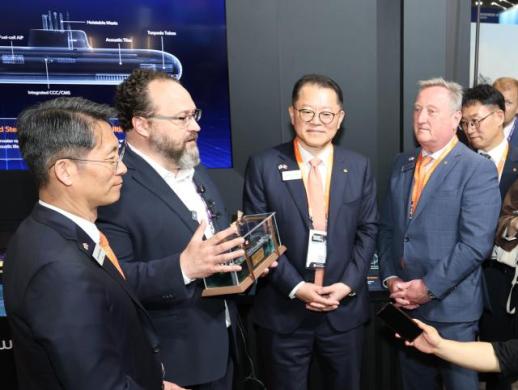 Hanwha Ocean Concludes CANSEC 2026, Intensifies Efforts for CPSP Contract Hanwha Ocean successfully concluded Canada’s largest defense exhibition, CANSEC 2026, and is ramping up efforts to secure the Canadian Submarine Program (CPSP) contract. According to industry sources on May 31, Hanwha Ocean showcased the proven capabilities of the KSS-III submarine, currently in operation with the Republic of Korea Navy, along with its industrial cooperation strategy across Canada. The key themes highlighted were "submarine capabilities" and "contributions to the Canadian economy." Notably, on the second day of the exhibition, Ontario's Minister of Economic Development Victor Fedeli visited the Hanwha Ocean booth. During the event, major defense companies such as Seaspan, Irving Shipbuilding, Babcock Canada, and CAE, as well as representatives from Invest Nova Scotia and the University of Waterloo, also visited. Hanwha Ocean presented its "Pan-Canada Economic Strategy," detailing the industrial cooperation network it has built and its economic impact. The company has established partnerships with over 100 Canadian firms and institutions across sectors including shipbuilding, defense, automotive, advanced manufacturing, energy, aerospace, infrastructure, and high technology. This foundation supports local production, technology transfer, supply chain participation, workforce development, and maintenance capabilities. If selected as the contractor for the CPSP, Hanwha Ocean envisions creating over 22,500 jobs annually and generating an economic impact of approximately $94 billion. This initiative is seen as a national industrial project that extends beyond mere submarine acquisition, providing long-term growth momentum for Canada's manufacturing and defense ecosystems. Colton LeBlanc, Minister of Growth and Development for Nova Scotia, discussed provincial cooperation regarding the CPSP project with Hanwha Ocean and LIG D&A during his visit to the booth. Flavio Volpe, President of the APMA, who visited on the first day, stated, "The collaboration between Hanwha and APMA will serve as an important starting point for expanding industrial cooperation between Canada and South Korea. I hope we can continue long-term cooperation with our partners in Korea to enhance Canada's future industrial competitiveness." Hanwha Ocean actively promoted the KSS-III submarine's verified operational capabilities and technological strengths. The KSS-III is the world's first diesel submarine to utilize both air-independent propulsion (AIP) and lithium-ion batteries, offering excellent submerged endurance and operational flexibility. With advanced low-noise design technology and combat systems, it is evaluated as a platform that meets the Canadian Navy's requirements for next-generation submarines. Additionally, Kim Kyung-ryul, Chief of Naval Operations, Lee Yong-cheol, Director of the Defense Acquisition Program Administration, and Lim Gi-mo, South Korea's Ambassador to Canada, visited the Hanwha booth to engage with key figures in Canadian politics and industry, supporting efforts to secure the CPSP contract. Kim Hee-cheol, CEO of Hanwha Ocean, remarked, "CANSEC 2026 demonstrated that the CPSP project proposed by Hanwha Ocean is not just a submarine acquisition initiative but a long-term industrial cooperation model that grows alongside the Canadian industry. Hanwha Ocean aims to be a reliable long-term partner that contributes to enhancing Canada's security capabilities and economic growth based on our proven submarine technology and extensive industrial cooperation network across Canada." Meanwhile, Hanwha Ocean is working to increase its chances of securing the contract by establishing a "Pan-Canada Economic Strategy" that includes partnerships with over 100 Canadian defense companies and universities, promising local job creation and technology transfer. 2026-05-31 13:03:00