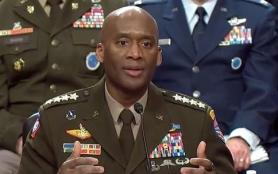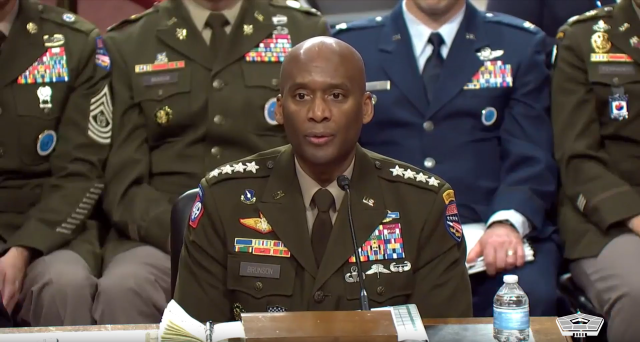
Testifying before the U.S. Senate Armed Services Committee, Brunson stressed that the focus should remain on meeting the necessary requirements rather than adhering to a fixed timeline. His remarks come as the government of Lee Jae Myung pushes to complete the wartime OPCON transfer within its term, with the timeline to be determined based on agreed conditions under the allies’ framework.
“We’ve got to stay focused on the conditions because the United States is safer that way and the Republic of Korea is safer that way,” Brunson said.
Under this framework, the OPCON transition hinges on three key conditions: South Korea’s military capability to lead combined defense; the alliance’s comprehensive ability to respond to North Korea’s nuclear and missile threats; and a security environment on the Korean Peninsula and in the broader region conducive to a stable transfer. Seoul’s five-year state policy plan, unveiled in August, includes the goal of reclaiming OPCON, with speculation that a target year for the transition could be proposed at the annual Security Consultative Meeting (SCM) in Washington in October.
The USFK commander also reaffirmed his position that the focus of U.S. forces in Korea is shifting from troop levels to capabilities. “The Korean Peninsula is key strategic terrain vital to defending the American homeland and advancing American interests in the region,” he said, noting that USFK is undergoing modernization to address rapidly evolving strategic challenges.
“That’s why my focus remains strictly on capabilities over numbers,” Brunson added, emphasizing that while forward deployment remains a baseline, understanding the shift from force size to operational capability requires prioritizing the specific capabilities needed on the peninsula.
His remarks come amid broader discussions under the administration of Donald Trump on adjusting the global posture of U.S. forces in line with a new National Security Strategy, fueling speculation that some USFK units could be redeployed or restructured as part of efforts to counter China.
Brunson also pointed to USFK participation in Indo-Pacific Command exercises, saying it demonstrates the potential to project capabilities from Korea to support deterrence across the region. His comments are seen as signaling a possible expansion of USFK’s role beyond deterring North Korea to contributing to broader efforts to counter China in the Indo-Pacific.
On reports that a Terminal High Altitude Area Defense (THAAD) system had been moved to the Middle East amid tensions involving Iran, Brunson denied any such transfer. “We’ve not moved any THAAD systems. So THAAD still remains on the peninsula currently,” he said, marking the first public confirmation by a senior U.S. official.
He added that munitions are being sent “forward” and are “sitting right now waiting to move,” though it remains unclear whether he was referring to THAAD-related components or general ammunition.

Copyright ⓒ Aju Press All rights reserved.