

Journalist

Shin Jia
fromjia@ajunews.com
-
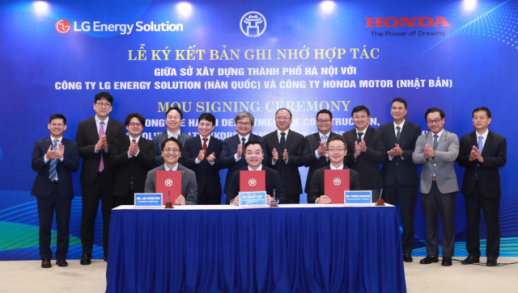 LG Energy Solution Partners with Honda and Hanoi to Expand Electric Motorcycle Market LG Energy Solution announced on May 19 that it has signed a memorandum of understanding (MOU) with Honda and the city of Hanoi to collaborate on the establishment of public battery swapping stations for electric motorcycles. The partnership will focus on several key areas: building battery swapping stations in central Hanoi, developing battery standardization and safety management systems, and jointly creating business models for electric motorcycle platforms. Starting in the third quarter of this year, LG Energy Solution, Honda, and Hanoi plan to set up approximately 50 battery swapping stations in major areas of the city and introduce a fleet of 500 electric motorcycles to launch a pilot project. The project will utilize LG Energy Solution's 2170 cylindrical batteries. Honda will be responsible for the battery packs, swapping equipment, and electric motorcycles, while the city of Hanoi will provide regulatory support and local operational collaboration. Hanoi, known as the "Motorbike Capital," has a population of about 8.5 million, with registered motorcycles exceeding 6 million, making two-wheelers an essential part of daily life. Deputy Mayor Truong Viet Trung expressed hope that the collaboration with LG Energy Solution and Honda will lead to a convenient battery swapping infrastructure for the citizens of Hanoi. A representative from LG Energy Solution stated, "Vietnam is a key country for the transition to electric motorcycles in Southeast Asia. We will continue to contribute to the development of eco-friendly transportation infrastructure in Vietnam based on our differentiated technology in the battery sector." 2026-05-19 13:09:52
 -
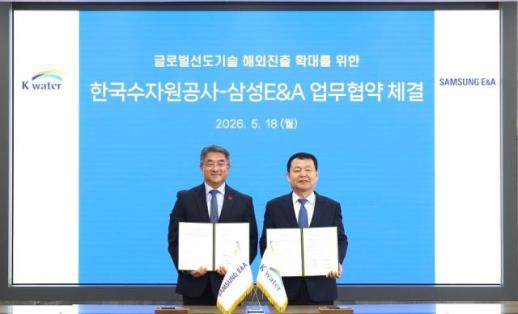 Samsung E&A and K-water Sign MOU to Expand Water Business Samsung E&A is accelerating its expansion into the water business in collaboration with K-water. On May 18, Samsung E&A announced that it signed a memorandum of understanding (MOU) with K-water to expand their water business. The signing ceremony took place at K-water's Han River Headquarters in Gwacheon, attended by top executives from both companies, including Hong Nam-goo, President of Samsung E&A, and Yoon Seok-dae, President of K-water. This agreement aims to combine the core competencies of both companies to seize substantial business opportunities in the domestic and international water markets. The two firms plan to develop optimal business models that integrate Samsung E&A's technology with K-water's operational expertise, marking the beginning of joint development on previously discussed water-related projects. Following the MOU, the companies plan to pursue several initiatives, including: leveraging each company's technological capabilities and networks for water-related project development and information sharing; developing and jointly operating domestic water treatment and reuse projects; and identifying opportunities for overseas water business development, commercialization, and joint operations. They will also establish a 'regular consultation body' to coordinate the direction of ongoing domestic and international water business initiatives and to strengthen their efforts in discovering new global projects. Hong Nam-goo, President of Samsung E&A, stated, "Collaboration with K-water, which possesses world-class operational management expertise, will be the most ideal model for entering the water business. We will successfully complete the upcoming joint projects and fully engage in the global water market." Meanwhile, Samsung E&A is expanding its water-related business as part of its environmentally friendly future growth strategy, accelerating its entry into the global water treatment market. The company has been involved in advanced water treatment projects for semiconductor and chemical plants, focusing on industrial water purification and zero-discharge system implementation. Recently, it has actively participated in large-scale seawater desalination projects and water treatment plant bids in the Middle East, including the United Arab Emirates. Additionally, it is broadening its business scope into areas such as wastewater reuse and environmentally friendly water treatment utilizing biogas, enhancing its high-value environmental projects in line with the carbon-neutral era.* This article has been translated by AI. 2026-05-19 10:45:00
 -
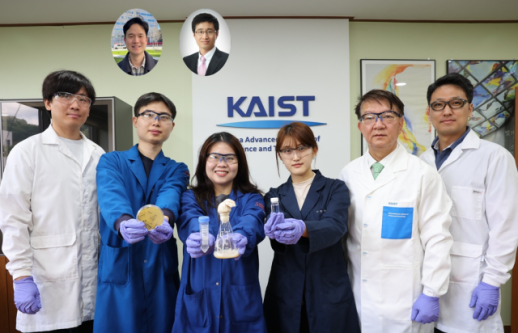 Hanwha Solutions and KAIST Develop Bio-Plastic Technology to Replace Naphtha Hanwha Solutions announced that it has partnered with KAIST to develop bio-technology capable of mass-producing eco-friendly raw materials for plastics and textiles using waste resources. The need for alternative raw materials has increased due to soaring naphtha prices and supply instability in the petrochemical industry. This achievement is being recognized as a next-generation key technology that ensures both resource supply stability and environmental sustainability. The technology developed by the Hanwha Solutions-KAIST Future Technology Research Institute utilizes glycerol, a byproduct of biodiesel production, as a raw material. The research team has developed high-efficiency microorganisms for producing 1,3-propanediol (1,3-PDO), a substance used in plastics and cosmetics, and has advanced the fermentation process to convert waste resources into high-value materials. The research has progressed to the stage of practical industrial application. The team successfully demonstrated high productivity in a 300-liter pilot process, which is a precursor to large-scale production facilities. This success indicates that results achieved in the laboratory can be replicated in real-world processing environments. Additionally, the research team applied a 'non-antibiotic process' that allows for stable raw material production without antibiotics, utilizing computer simulation-based 'digital design technology' to pre-design microbial metabolic processes. This approach has led to reduced production costs, mitigated environmental regulatory risks, and enhanced eco-friendliness. This achievement is the result of collaboration that began in November 2015, exemplifying a successful industry-academia partnership that combines KAIST's research capabilities with Hanwha Solutions' commercialization expertise. The teams have filed six patents and published 13 papers through this eco-friendly bio-platform research. Kim Jeong-dae, head of Hanwha Solutions' research institute, stated, "This research is significant as it confirms the potential to replace existing petrochemical processes using bio-based raw materials. We expect it to serve as an important foundation for sustainable chemical material production and industrial application in the future." Lee Sang-yeop, a distinguished professor in the Department of Bio-Chemical Engineering at KAIST, remarked, "This research demonstrates that microbial-based chemical production can be scaled up from the laboratory to actual industrial levels, contributing to the more eco-friendly production of various chemical materials." Meanwhile, Hanwha Solutions is collaborating with the Korea Energy Technology Institute and KAIST on key catalyst and process development as part of a national project led by the Ministry of Trade, Industry and Energy. Together with its affiliate Hanwha TotalEnergies, the company is also advancing commercialization validation and designing a commercial process with an annual capacity of 30,000 tons. In addition, it is concurrently developing bio-plastics and biodegradable materials to establish a plastic resource recycling ecosystem.* This article has been translated by AI. 2026-05-19 10:30:00
 -
 High Oil Prices and Exchange Rates Strain Steel and Oil Industries The prolonged conflict in the Middle East has led to rising international oil prices and a surge in the won-dollar exchange rate, which has now exceeded 1500 won, increasing the burden on heavy industries such as steel and oil. According to industry sources on May 18, there are concerns that the exchange rate, which has surpassed 1400 won, may become a new norm at 1500 won. In March, the won-dollar exchange rate briefly crossed 1500 won for the first time in nearly 17 years since the financial crisis. The rate has remained above 1500 won, continuing the trend of high exchange rates. Meanwhile, the price of West Texas Intermediate (WTI) crude oil rose from $65.21 per barrel on February 26, before the conflict began, to $105.41 as of May 15, marking an increase of approximately 61.6%. With the ongoing conflict in the Middle East driving up oil prices, companies are expected to face even greater challenges in managing costs. The structure of industries that import key raw materials such as iron ore and crude oil in dollars and sell them in won means that rising exchange rates directly translate into increased costs. The steel industry is particularly vulnerable to high exchange rates. Major South Korean steelmakers, including POSCO, Hyundai Steel, and Dongkuk Steel, rely heavily on imports for iron ore and coking coal. While raw material payments are made in dollars, a significant portion of their sales is supplied to domestic shipbuilding, construction, and automotive sectors in won. The challenge lies in the difficulty of passing on increased costs to product prices. The influx of low-priced steel plates and products from China has limited the ability of domestic steelmakers to raise prices. With a downturn in the construction market leading to weak domestic demand, the combined pressure of rising exchange rates is rapidly deteriorating profitability. The steel industry is increasingly burdened as it struggles to transfer rising costs to product prices while facing additional pressures from exchange rates. The oil industry is also feeling the strain. The four major oil companies—SK Innovation, GS Caltex, S-Oil, and HD Hyundai Oilbank—are entirely reliant on imported crude oil, making them vulnerable to fluctuations in oil prices and exchange rates. The simultaneous rise in international oil prices and the sharp increase in exchange rates have significantly raised the costs of crude oil imports and increased cash outflow burdens. An industry insider stated, "The price of crude oil we are currently importing has risen significantly, and once supply shocks ease, oil prices will normalize. However, if that happens, the rising exchange rates combined with declining inventory asset values will create risks that the oil companies must fully bear, leading to significant operational burdens." While the first quarter saw some performance protection due to inventory valuation gains from soaring oil prices following the outbreak of the Middle East conflict, industry experts predict that if high exchange rates persist, the burdens of raw material procurement and increased financial costs will become more pronounced starting in the second quarter. Professor Heo Jun-young of Sogang University’s Department of Economics noted, "It seems increasingly difficult for the exchange rate to drop back to the 1300 won range this year." Regarding strategies to cope with the prolonged high exchange rates and the Middle East conflict, he explained, "While the oil industry has alternatives like the Red Sea if crude oil cannot pass through the Strait of Hormuz, the steel industry currently lacks effective short-term responses. Ultimately, they will have to endure."* This article has been translated by AI. 2026-05-19 05:15:00
 -
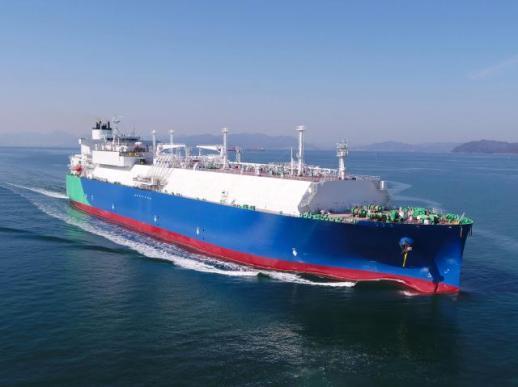 Samsung Heavy Industries Secures Orders for Three LNG Carriers Worth 1.12 Trillion Won Samsung Heavy Industries continues to expand its orders for liquefied natural gas (LNG) carriers. The company announced on May 18 that it has secured orders for three LNG carriers from a shipping company in Oceania, totaling 1.12 trillion won. This month, Samsung Heavy Industries has recorded a total of six orders, including one LNG floating storage and regasification unit (LNG-FSRU) and five LNG carriers, amounting to 2.36 trillion won. In the LNG carrier sector, the company has already surpassed last year's total of 11 vessels before the end of the first half. A Samsung Heavy Industries official stated, "As geopolitical instability in the Middle East continues, the importance of energy security and supply chain diversification is increasing, leading to a growing demand for high-efficiency LNG carriers. We will actively respond to customer needs based on our proven capabilities and quality competitiveness in LNG carrier construction to maintain our order momentum." Additionally, Samsung Heavy Industries participated in the Data Center World (DCW 2026) event held in Washington, D.C., in April to address the rising demand for data center infrastructure. At the event, the company obtained conceptual design certification for a 50MW floating data center (FDC) from the American Bureau of Shipping (ABS) and Lloyd's Register (LR), laying the groundwork for its entry into the global market with its self-developed floating data center.* This article has been translated by AI. 2026-05-18 16:26:39
 -
 SKC Achieves Oversubscription in Capital Increase, Accelerates Glass Substrate Business and Financial Improvement SKC has successfully achieved oversubscription in its capital increase of 1.1671 trillion won, with both existing shareholders and employee stock ownership plans exceeding expectations. According to SKC on May 18, the subscription rate for existing shareholders reached 113.01%, surpassing the 100% mark, while the employee stock ownership plan recorded a high subscription rate of 131.4%. The company attributed the strong interest in the capital increase to improved performance and market expectations surrounding its restructuring focused on semiconductor-related businesses. Notably, the transition to positive EBITDA (earnings before interest, taxes, depreciation, and amortization) after ten quarters and the acceleration of the commercialization of the glass substrate business have positively influenced investor sentiment. SKC stated, "The funds secured through this capital increase will be used to secure future growth drivers and establish financial stability." The company plans to invest 589.6 billion won in its semiconductor glass substrate business partner, Absolix, to expedite commercialization, while 577.5 billion won will be allocated to repay significant debts, improving key financial metrics. This is expected to reduce the debt ratio from approximately 230% at the end of last year to about 129%. A representative from SKC commented, "The success of this large-scale capital increase confirms the market's strong belief in SKC's fundamental restructuring and the potential of next-generation core businesses like glass substrates. We will strategically invest the secured funds to seize the global glass substrate market while striving to enhance shareholder value based on unwavering financial stability." One small shareholder expressed, "When I first heard about the capital increase, I was worried that the stock value might drop. However, SKC's investment in the capital increase is larger than the planned debt repayment, and I am optimistic about the significant investment in the growth of the glass substrate business as a shareholder." Meanwhile, the public subscription for the fractional shares resulting from the allocation process, totaling 23,687 shares, will take place from May 19 to 20. The new shares from this capital increase are set to be listed on June 8.* This article has been translated by AI. 2026-05-18 16:19:51
 -
 LG Energy Solution Honors 12 Researchers to Strengthen Global Technology Leadership LG Energy Solution held an awards ceremony to honor researchers who secured intellectual property rights in key technology areas essential for dominating the future market of secondary batteries, aiming to enhance its global technology leadership. On May 18, LG Energy Solution announced that it hosted the '2026 Inventor and Application King Awards' at its headquarters in Yeouido Park One, recognizing 12 individuals for their outstanding research achievements. The event was organized to reward talents who have filed innovative patents across various fields, including LMR (Lithium Manganese Rich) batteries, cylindrical 46-series batteries, and next-generation pack designs, which are expected to reshape the future battery market. This year's gold award for Inventor of the Year went to Park Byeong-cheon, who secured a key patent in the 'LMR Cell Chemistry' field. The LMR battery technology enhances price competitiveness by increasing the manganese content while achieving high energy density. Park focused on the technical potential of combining LMR cathodes with silicon anodes, establishing patent barriers before the industry began development. LG Energy Solution praised this achievement for securing strong proprietary technology that competitors would find difficult to bypass. Other awardees included: △ Eun-sang, Jeong In-hyeok for the core structure of the CAS (Cell Array Structure) applied to the 46-series cells (silver award) △ Lee Jae-hwan for tracking technology for electrode process quality management (silver award) △ Lee Jeong-min for additives to improve the high-temperature durability of LMR batteries (bronze award) △ Jo Min-ki for the insulation structure of cylindrical 46-series batteries (bronze award) △ Choi Soon-joo for non-destructive cell lifespan status verification technology through charge and discharge signals (bronze award). The gold award for Application King was awarded to Jang Hyuk-kyun, who filed numerous key patents in dual cooling for battery packs and upper and lower venting. Jang was recognized for his contributions to developing pack design technologies that enhance battery safety, including thermal transfer delay and gas-spark control structures. Additionally, Kim Gwang-mo (silver award), Lee Hyun-hee (silver award), Kim Dae-cheon (bronze award), Ko Gil-nam (bronze award), and Lee Soo-ho (bronze award) were also recognized as Application Kings. Kim Dong-myung, CEO of LG Energy Solution, stated, "In the battery industry, patents are a powerful weapon for maintaining a global competitive edge and a source of customer value. We will fully support our members' creative challenges in R&D to ensure we maintain overwhelming technological leadership." Meanwhile, LG Energy Solution appointed 17 new research and technical experts in April to enhance the development of next-generation products and strengthen technological competitiveness. The company has operated a research and technical expert system annually since 2008, with the average age of new appointees being 44, significantly increasing the proportion of young researchers while also ensuring diversity by including global and female talents.* This article has been translated by AI. 2026-05-18 12:05:03
 -
 Samsung Electronics Union Plans to Discuss After Strike Ends on June 7 Samsung Union Rejects Dialogue, Plans to Continue Strike Until June 7 Despite repeated calls from Samsung Electronics management and the government to resume talks, the union has refused to engage in dialogue and remains committed to its planned strike. On May 15, the largest union at Samsung, the Samsung Electronics branch of the Korean Federation of Trade Unions, stated in response to a letter from the company urging dialogue that it is willing to negotiate after June 7, the date it has set for the end of the strike. The union expressed its determination to exercise its constitutionally guaranteed rights, indicating that the planned strike will proceed as scheduled. With the union rejecting dialogue, the anticipated strike beginning on May 21 is expected to take place over the next 18 days. Won-Dollar Exchange Rate Surpasses 1500 Won Amid U.S. Inflation Concerns The won-dollar exchange rate has exceeded 1500 won for the first time in over a month. As of 2:50 PM on May 15, the exchange rate in the Seoul foreign exchange market stood at 1504.7 won per dollar, rising from an opening rate of 1494.2 won, which was an increase of 3.2 won. This marks the first time the rate has surpassed 1500 won since April 7. Blue House Protests Bloomberg's Report on AI Profit Sharing The Blue House has confirmed that it sent an official letter of protest to Bloomberg News regarding its interpretation of Policy Chief Kim Yong-beom's proposal for a 'national dividend' as a distribution of 'excess profits' from artificial intelligence (AI) companies. The Blue House expressed serious concerns about the way Bloomberg reported on Kim's personal social media posts. In the letter sent the previous day, the Blue House urged Bloomberg to acknowledge the 'inaccurate framing' that has caused 'substantial confusion in the market and negatively impacted investor sentiment' and requested an official apology for the adverse effects on the market. Tensions Rise Over Seoul Mayoral Debate Between Candidates Oh and Jung Tensions are escalating between Seoul mayoral candidates Oh Se-hoon of the People Power Party and Jung Won-o of the Democratic Party over a proposed debate. On May 15, Oh stated at a campaign event in Gangdong-gu that he had suggested a debate to discuss how to address citizens' concerns but received no response from Jung. He criticized Jung for rejecting the debate and opting for individual press conferences instead, labeling him as an irresponsible candidate who does not consider the public's right to know. In response, Jung urged Oh to reflect on his own statements, asserting that he would only participate in legally mandated debates as defined by election law. Jung also pointed out that Oh had previously rejected debates with his primary opponents, questioning his credibility. Trump Reveals Xi's Proposal to Mediate Iran Agreement During China Visit President Donald Trump announced that Chinese President Xi Jinping expressed a willingness to help resolve issues related to Iran. During a recent U.S.-China summit, the reopening of the Strait of Hormuz and China's import of Iranian oil were key topics of discussion. In an interview with Sean Hannity following his meeting with Xi in Beijing, Trump stated, 'Xi wants an agreement to be reached.' He added that Xi mentioned he would like to assist if he could. Trump also noted that Xi expressed a desire for the Strait of Hormuz to be reopened, highlighting its significance as a crucial route for Middle Eastern oil transport, which has become a major variable in the international energy market due to shipping restrictions and safety concerns following the Iran conflict.* This article has been translated by AI. 2026-05-16 01:04:51
 -
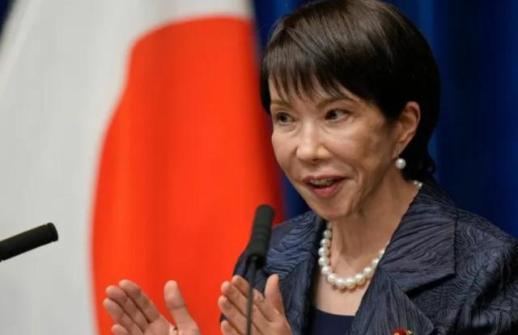 Japan's Takaichi Discusses China with Trump, Affirms Strong US-Japan Alliance Japanese Prime Minister Sanae Takaichi spoke with U.S. President Donald Trump on May 15, following his visit to China. According to Yonhap News, citing Kyodo News and NHK, Takaichi held a 15-minute phone call with Trump starting at 7:30 p.m. that evening, during which she received detailed insights about the president's trip to China. Takaichi reported that they exchanged views on various issues concerning China. She also conveyed Japan's position to Trump regarding the situation in Iran, emphasizing the importance of a swift resolution to the crisis. Takaichi stated, "This call confirmed the unwavering U.S.-Japan alliance." * This article has been translated by AI. 2026-05-16 00:58:23
 -
 Local Election Candidate Registration Rate Hits Record Low at 1.8 to 1 As of 8 p.m. on May 15, the second day of candidate registration for the June 3 local elections and National Assembly by-elections, a total of 7,787 candidates have submitted their registration documents. According to a report by Yonhap News, citing data from the National Election Commission, 7,664 candidates have completed their registration. The overall average competition rate stands at 1.8 to 1 based on completed registrations. While the final tally for candidate registration is still pending, the current competition rate matches the record low of 1.8 to 1 seen during the 2022 local elections. This local election will see the election of 4,227 local officials, including 16 heads of metropolitan governments and education superintendents, 227 heads of basic local governments, 933 metropolitan council members, and 3,035 basic council members. In the metropolitan government elections, 54 candidates (3.2 to 1) have completed their registration. The number of registered candidates for other election categories includes 585 for basic local government heads (2.6 to 1), 1,649 for metropolitan council members (2.0 to 1), 354 for proportional representation in metropolitan councils (2.3 to 1), 4,389 for basic council members (1.7 to 1), 656 for proportional representation in basic councils (1.7 to 1), and 57 for education superintendents (3.3 to 1). Alongside the local elections, by-elections for the National Assembly will also be held in 14 regions, with 47 candidates (3.4 to 1) having completed their registration for these races.* This article has been translated by AI. 2026-05-16 00:55:01