

Journalist

Shin Jia
fromjia@ajunews.com
-
 Hanwha Solutions Delays 1.8 Trillion Won Capital Increase to July Hanwha Solutions announced a revised schedule for its capital increase on May 14. The date for the new share allocation has been moved from May 5 to July 5, and the date for confirming the new share issuance price has been changed from June 17 to July 7. The expected listing date for the new shares has also been postponed from July 10 to July 31. The total amount of the capital increase is 1.8144 trillion won, with 907.7 billion won allocated for facility funds and 906.7 billion won designated for debt repayment. The purpose of the fundraising remains consistent with previous announcements. After receiving a second correction request, Hanwha Solutions had previously changed the related schedule to unspecified on May 12. A company representative stated, "We plan to submit a revised report to the Financial Supervisory Service soon." Additionally, Hanwha Solutions will conduct an in-person and group investor relations (IR) meeting in Hong Kong from May 27 to 28, organized by UBS, to discuss the details of the capital increase, the intended use of funds, and the company's current management status while gathering investor feedback.* This article has been translated by AI. 2026-05-15 02:56:59
 -
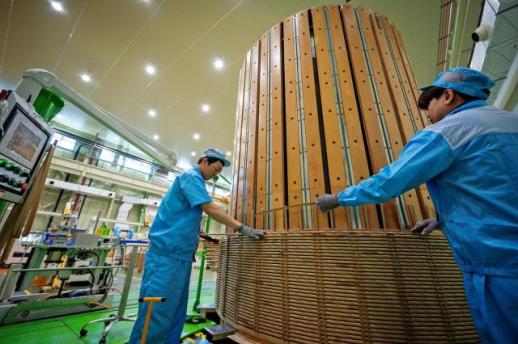 Surging Copper Prices Boost Power Equipment Sector Amid AI Supercycle Copper prices are nearing record highs due to the prolonged conflict in the Middle East and increasing global demand, creating a favorable outlook for the domestic power equipment industry. The demand for transformers and circuit breakers has surged, driven by the need to upgrade North American power grids and the expansion of artificial intelligence data centers (AIDC), placing the sector in a supercycle. Additionally, manufacturers are able to pass on rising costs to consumers, further accelerating this supercycle. As of May 14, copper prices on the London Metal Exchange have surpassed $14,400 per ton, continuing their upward trend. This marks a nearly 40% increase from last May's price of $10,360 per ton and a 10% rise from approximately $13,150 per ton at the beginning of this year. Copper constitutes about 20% of the weight of transformers, making the industry particularly sensitive to fluctuations in copper prices. Typically, rising raw material costs pose challenges for manufacturers. However, the current power equipment market is characterized by supplier dominance, allowing companies to effectively pass on these cost increases to their prices. Notably, there is a growing demand for high-value products such as high-voltage transformers and low-loss transformers for AI data centers, with the rise in copper prices supporting this trend. Hyosung Heavy Industries has seen an increase in high-voltage transformer orders, particularly in North America and Europe. The proportion of low-cost orders has decreased, and high-value projects are beginning to positively impact profitability. In the first quarter, the company secured approximately 4 trillion won in new orders, becoming the first domestic power equipment firm to exceed a backlog of 15 trillion won. HD Hyundai Electric has also benefited from the booming North American high-voltage transformer market, with its operating profit margin rising above 20% in the first quarter. The company has already achieved 42.6% of its annual order target of $4.222 billion and has secured orders extending to 2029. LS Electric is demonstrating strength in the medium and low-voltage distribution equipment sector for AI data centers. The company recorded its highest-ever performance in the first quarter and is planning to expand its distribution equipment at the Bestrop site in Texas, while also considering expansions at its Southeast Asian factories in Vietnam. Industry insiders are optimistic that the growth of the AI sector will lead to stable growth for the power equipment industry. The four major domestic power equipment companies have already secured workloads for at least three years. Furthermore, demand for high-voltage power equipment is expected to continue rising not only in North America but also domestically, driven by semiconductor clusters, AI data centers, and new industrial complexes. One industry official stated, "Given that the market is currently supplier-driven, when raw material prices rise, companies can pass those costs onto consumers. Thus, even with rising raw material prices, supplying companies may see increased revenues."* This article has been translated by AI. 2026-05-15 02:51:45
 -
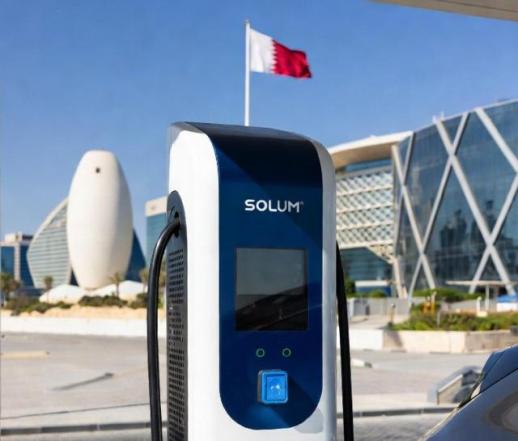 Solum to Participate in Qatar Electricity Authority EV Charger Pilot Project, Targeting GCC Market Solum is participating in a pilot project for electric vehicle chargers with the Qatar Electricity Authority (Kahramaa), marking its entry into the Middle East's electric vehicle charging infrastructure market. According to industry sources on May 14, the Gulf Cooperation Council (GCC) region has similar public procurement structures and energy policies among its member states. As a result, previous business experience or pilot projects with public institutions in one country often influence market entry in neighboring countries. Solum plans to leverage its reference from the Qatar Electricity Authority to gradually expand its operations into Saudi Arabia, the UAE, Kuwait, and other GCC nations. This initiative is being carried out in collaboration with VIM Automotive, a local automotive company in Qatar that operates a public and private network for electric vehicles and sustainable mobility. Solum's participation in the Qatar Electricity Authority project is based on this local partnership. The Middle East market is considered a region where establishing local networks and business partnerships is crucial. An industry insider noted, "Collaboration with local companies is nearly essential for public projects in the Middle East, and access to public institutions through local partners significantly impacts business expansion." Solum is also exploring additional collaborations for business expansion and establishing a local procurement system following this pilot project. Both companies are reportedly discussing the potential for expanding electric vehicle charging infrastructure projects within the GCC market. Currently, the electric vehicle charging infrastructure market in the GCC region is in its early stages but is viewed as having significant growth potential. As energy transition policies led by governments, such as Saudi Arabia's Vision 2030 and the UAE's decarbonization initiatives, gain momentum, the demand for public charging infrastructure is also increasing. Notably, Middle Eastern countries are accelerating investments in related infrastructure as they push for sustainable mobility and smart city development. Industry experts suggest that securing references from initial pilot projects could influence future market leadership. The domestic charging industry is also increasingly focusing on the Middle East as a new market and is expanding local business opportunities. Lee Chang-seop, head of Solum's Middle East division, stated, "Based on this reference, we will deepen our collaboration with local partners and gradually build a business model suitable for the GCC market."* This article has been translated by AI. 2026-05-14 19:46:31
 -
 POSCO Holdings Partners with Korea Development Bank to Support Non-Metropolitan Startups POSCO Holdings has partnered with the Korea Development Bank (KDB) to attract investment and support the growth of startups outside the metropolitan areas. POSCO Holdings announced on May 14 that it signed a memorandum of understanding with KDB at Ground Gwangyang to collaborate on revitalizing the venture ecosystem and promoting balanced regional development. The agreement aims to combine POSCO Group's venture development capabilities with KDB's financial support infrastructure to discover promising regional startups and facilitate their continuous growth. The memorandum includes provisions for KDB to review direct investments or loans for startups located in regions recommended by POSCO Group, support for attracting investments for recommended companies through KDB's regional specialized venture platform, and collaboration on nurturing regional startups and discovering promising ventures. Following the signing ceremony, an investor relations (IR) session was held for five regional venture companies recommended by POSCO Group. This session is part of the investment attraction support activities outlined in the agreement, featuring five promising ventures in the fields of secondary battery materials, biotechnology, and robotics, either currently based at or intending to move to Ground Gwangyang. CEO Lee Joo-tae stated, "Through our open innovation venture platform, CHANGeUP, POSCO Group has been strengthening ties with venture companies in our core business areas, including steel and secondary battery materials, while also discovering new business opportunities. With our collaboration with KDB, we aim to solidify the support framework for the growth of regionally based ventures and contribute to regional economic revitalization and national balanced development." The signing ceremony was attended by approximately 110 people, including Lee Joo-tae, CEO of POSCO Holdings, Ko Jae-yoon, head of POSCO Gwangyang Steelworks, KDB Senior Vice President Lee Bong-hee, representatives from venture companies, venture investors, and officials from startup-related organizations. Meanwhile, POSCO Holdings reported on April 30 that it achieved consolidated revenues of 17.876 trillion won, operating profit of 707 billion won, and net profit of 543 billion won for the first quarter of this year. Despite increased uncertainty in energy supply chains and financial markets due to the Middle East conflict, the commercial production of lithium at POSCO Argentina significantly reduced losses in that sector, leading to increases in both revenue and profit.* This article has been translated by AI. 2026-05-14 18:24:48
 -
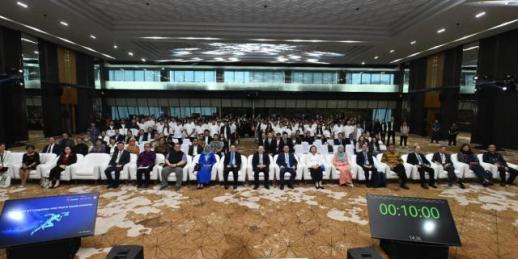 Huawei Hosts ICT Talent Development Event in Jakarta Huawei has launched initiatives to enhance ICT talent development in the Asia-Pacific region by hosting the 10th Huawei ICT Competition APAC finals and awards ceremony at the ASEAN headquarters in Jakarta. According to Huawei, over 8,600 students from 14 countries and regions, including South Korea, participated in this year's competition. Students showcased their ICT skills in practical and innovation categories, which included cloud, network, and computing tracks. After several selection rounds, more than 160 students from 13 countries and regions advanced to the APAC finals. In his opening remarks, ASEAN Secretary-General Kao Kim Hourn emphasized, "Nurturing young talent is the driving force behind creativity, innovation, and entrepreneurship in the ASEAN region. As highlighted in the ASEAN Digital Masterplan 2030, digital talent is at the core of ASEAN's future vision." During the event, Huawei also announced new collaborations and initiatives aimed at fostering artificial intelligence (AI) talent. Peter Pan, Huawei's Vice President for Asia-Pacific, stated, "On the 10th anniversary of the Huawei ICT Competition, we will continue to expand innovation and collaboration, actively supporting the development of the next generation of digital talent in the Asia-Pacific region." In the innovation category, the team from the National University of Singapore won the grand prize for their recognition of innovation and commercial and social value. In the practical category, the University of Danang - University of Science and Technology from Vietnam won the grand prize in the computing and cloud track, while Bulacan State University took the top prize in the network track. The 16 teams, including the grand prize winners, will represent the APAC region in the global finals scheduled for June in Shenzhen, China. The event also featured the first international release of a white paper titled "ICT Job Roles and Core Competencies in the Intelligent Era." This white paper was jointly developed by Huawei, the International Data Corporation (IDC), the OpenAtom Foundation, and the Global Intelligent Internet of Things Consortium. It outlines changes in ICT job roles and core competencies, as well as educational directions for the intelligent era. Notable attendees included ASEAN Secretary-General Kao Kim Hourn, Fauzan Azima, Director General of Research and Development at Indonesia's Ministry of Education, Culture, Research, and Technology, and other key figures from various organizations. Additionally, Huawei Korea signed agreements with domestic universities last August to support the global IT leadership development of South Korean youth. The partnerships were established with Dongguk University, Ewha Womans University, and Hanyang University, based on Huawei's flagship corporate social responsibility program, "Seeds for the Future."* This article has been translated by AI. 2026-05-14 12:45:43
 -
 HD Hyundai to Support Partners Amid Ongoing Middle East Crisis HD Hyundai is stepping up to support its partners facing difficulties due to the prolonged conflict in the Middle East by expediting payments for materials. On May 14, HD Hyundai announced it would advance a total of 740 billion won in material payments by up to nine days. This decision comes in response to the increased financial burden on partners caused by global supply chain instability and rising raw material costs. In the shipbuilding and marine sectors, HD Hyundai Heavy Industries and HD Hyundai Samho will prepay approximately 568 billion won in material costs. HD Hyundai Marine Engines and HD Hyundai Marine Solutions are also set to expedite payments of 25.7 billion won and 10 billion won, respectively. Additionally, HD Hyundai Electric in the energy sector will advance 133 billion won. In the construction machinery sector, HD Construction Machinery will adjust the payment linkage system to reflect fluctuations in raw material prices for partners struggling with supply issues due to the ongoing crisis. The company will also enhance its response speed to urgent requests from partners, expanding its support. A representative from HD Hyundai stated, "In a situation where external uncertainties persist, these measures are aimed at supporting the stable operation of our partners' businesses. Since our partners are in a community of shared destiny, we will continue to pursue win-win strategies for mutual growth." Meanwhile, HD Hyundai reported the previous day that its consolidated revenue for the first quarter of this year reached 19.6019 trillion won, with an operating profit of 2.8348 trillion won. This marks a 14.7% increase in revenue and a 120.4% increase in operating profit compared to the same period last year.* This article has been translated by AI. 2026-05-14 11:17:48
 -
 Lotte Chemical Reports 1st Quarter Operating Profit of 73.5 Billion Won Amid Middle East Conflict Lotte Chemical announced on May 11 that it recorded preliminary first-quarter revenues of 4.99 trillion won, an operating profit of 73.5 billion won, and a net profit of 33.5 billion won for 2026. The company achieved a turnaround in its basic materials sector despite the impact of the ongoing conflict in the Middle East, largely due to a lagging effect worth 250 billion won. Lotte Chemical stated, "The expansion of product spreads and the positive inventory valuation effect from rising naphtha prices at the end of the quarter were key factors in the improved performance." They added, "We are currently securing a stable supply of domestic naphtha and expect continued supply in the future," noting that current plant operating rates remain unaffected. To strengthen the domestic petrochemical industry, Lotte Chemical is reviewing a restructuring of its business operations. During a conference call, the company indicated, "Considering the sluggish petrochemical market expected to persist over the next 2-3 years, we are contemplating shutting down one of the two naphtha cracker (NCC) units in Daesan and two of the four units in Yeosu." At the same time, Lotte Chemical plans to expand its functional materials and high-value-added businesses in the long term. The company aims to produce 500,000 tons annually of engineering plastics, a high-value specialty material, at its single largest compounding plant, set to be completed within the year. Future plans include expanding the production lineup to include high-performance products like Super EP. A Lotte Chemical representative stated, "We will continue to closely monitor external conditions and market situations to optimize production operations for stable material supply. Additionally, we will enhance competitiveness through business restructuring in basic chemicals and pursue a balanced portfolio to ensure our long-term growth strategy remains steadfast."* This article has been translated by AI. 2026-05-12 03:55:52
 -
 Refinery Sector Anticipates Earnings Surprise Amid High Oil Prices Domestic refiners are expected to report an earnings surprise for the first quarter of 2026 due to high oil prices stemming from the ongoing conflict in the Middle East. However, the increase in profits is attributed to low-cost crude oil inventories, raising concerns about deteriorating performance in the second quarter without compensation for losses incurred under the price cap policy. On May 11, S-Oil announced an operating profit of 1.2311 trillion won for the first quarter. According to securities firms, SK Innovation is projected to report 2 trillion won, GS Caltex around 1.9 trillion won, and HD Hyundai Oilbank approximately 200 billion won in operating profit. In the same period last year, the combined operating profit of the four refiners was only 811 billion won, but this year it is expected to exceed 5 trillion won. The significant profits are largely due to the sale of crude oil purchased at relatively low prices before the conflict, resulting in substantial inventory valuation gains. However, these gains are seen as temporary, and the sustainability of improved performance in the second quarter remains uncertain, depending on oil price trends. The refining sector argues that reasonable compensation for losses related to the price cap policy is urgently needed following the war. The government has been controlling the prices of petroleum products sold at gas stations under a "price cap policy" since March 13, aimed at stabilizing oil prices and living costs. The government also announced that it would provide financial support in the event of losses incurred by refiners due to this measure. The lack of clarity regarding the compensation method and criteria is problematic. It is estimated that the cumulative losses for the four domestic refiners have exceeded 3 trillion won, with weekly losses around 500 billion won. The rapid accumulation of losses is due to insufficient reflection of price increases. Industry insiders contend that the first-quarter earnings surprise is merely an illusion caused by inventory valuation gains, emphasizing the necessity for loss compensation. With high oil prices persisting, the cost burden is expected to be significantly reflected starting in the second quarter. Additionally, if international oil prices plummet due to a ceasefire or peace agreement, there are concerns about reduced refining margins and substantial inventory valuation losses. A representative from the refining sector stated, "The improvement in first-quarter results reflects the benefits of low-cost crude oil inventories secured before the surge in oil prices. Currently, we are purchasing crude oil at high prices, but the selling prices are restricted by the price cap, creating significant pressure. Furthermore, the lack of clear criteria for loss compensation could greatly increase performance volatility if oil prices decline in the future."* This article has been translated by AI. 2026-05-12 03:42:28
 -
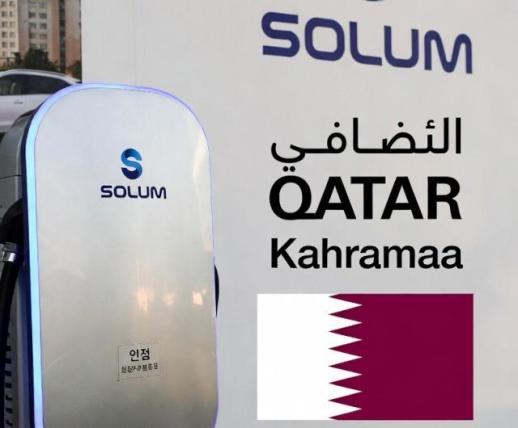 Solum to Participate in Qatar Electricity Authority EV Charger Pilot Project Solum has taken its first step into the Middle Eastern public charging infrastructure market by participating in a pilot project for electric vehicle (EV) chargers with the Qatar Electricity Authority. On May 11, Solum announced that it secured a contract on April 12 to implement the EV charger pilot project in collaboration with Chaevi, targeting the public sector of the Qatar Electricity Authority. Solum will supply one Chaevi third-generation 180kW fast charger utilizing its 30kW power module. A representative from Solum stated, "This is the first instance of a domestic EV charging company entering the Qatar Electricity Authority's public sector proof of concept (PoC)." Qatar has set carbon footprint reduction and the electrification of public transport as key goals in its National Vision 2030. Member countries of the Gulf Cooperation Council (GCC) are accelerating the expansion of EV infrastructure as part of their strategies to transition to a post-oil economy, with Qatar including the establishment of EV charging infrastructure as a major task in its national transportation strategy. To support this initiative, the Qatar Electricity Authority (Kahramaa) is overseeing the installation and bidding for EV charging stations, with plans to gradually expand the charging infrastructure to 300 stations by the end of 2024, 600 by 2025, and 1,000 by 2030. Qatar is gaining recognition as a leading country in building EV infrastructure in the Middle East. Kahramaa is the public agency responsible for managing Qatar's national power and water resources and plays a crucial role in implementing the country's energy infrastructure policies. Beyond merely supplying electricity, it is also a key demand source for national energy transition projects, including EV charging infrastructure. Solum explained that securing this PoC was not a straightforward process. Through local business development activities led by Lee Chang-seop, Solum's head of Middle East operations, the company identified influential partners in Qatar and opened access channels to the public sector of the electricity authority. Lee Chang-seop stated, "The pilot project with the Qatar Electricity Authority allows us to directly assess the high entry barriers in the Middle Eastern market and objectively validate the performance of our products. Based on this reference, we will deepen our collaboration with local partners and gradually establish a business model suitable for the GCC market."* This article has been translated by AI. 2026-05-12 03:24:05
 -
 S-OIL Reports 1st Quarter Operating Profit of 1.23 Trillion Won Amid Rising Oil Prices S-OIL announced on May 11 that it recorded a consolidated revenue of 8.94 trillion won and an operating profit of 1.23 trillion won for the first quarter of this year. This marks an increase of approximately 231% compared to the previous quarter's operating profit of 371.9 billion won, and a turnaround from an operating loss of 21.5 billion won in the first quarter of last year. The net profit was reported at 721 billion won. The operating profit was significantly influenced by inventory effects due to rising oil prices, which accounted for more than half of the total. Despite the impact of scheduled maintenance and the implementation of a maximum oil price policy, the refining division's profits improved compared to the previous quarter due to a lagging effect. This lagging effect arises from the time difference between crude oil purchases and product sales, leading to a cost input delay. By business segment, the refining division reported sales of 7.10 trillion won and an operating profit of 1.04 trillion won. The petrochemical division achieved sales of 1.10 trillion won and a slight operating profit of 25.5 billion won. The lubricants division recorded sales of 737 billion won and an operating profit of 166.6 billion won. The refining division benefited from a surge in oil prices due to disruptions in global crude supply caused by the blockade of the Strait of Hormuz. Additionally, reduced operations at regional refineries and export restrictions from some countries led to an expanded spread between gasoline and diesel, boosting refining margins in Asia. In the petrochemical division, high operating rates at downstream facilities in China improved the aromatic market conditions. However, since March, a sharp rise in raw material prices has dampened demand, leading to a decline in spreads. The olefin downstream also faced worsened profitability due to soaring raw material prices following the Middle East conflict, although the drop in propylene oxide (PO) prices was relatively limited due to downstream demand effects. In the lubricants division, despite tight supply conditions, the increase in raw material prices outpaced product price increases, resulting in a decline in spreads. S-OIL anticipates that solid market conditions will continue into the second quarter due to supply disruptions. However, it warned of potential risks to profitability from inventory-related losses and lagging effects if oil prices decline in the future. S-OIL stated, "We are maintaining a stable crude oil import system despite increasing uncertainties in supply and demand." The Shahin project reported an EPC (engineering, procurement, and construction) progress rate of 96.9% as of the end of April, with plans for mechanical completion by the end of June. Major equipment installations have been completed, and the company aims to prepare for commercial operations by the end of the year after conducting trial runs. A company official stated, "There are no delays in the plan for mechanical completion by the end of June," adding that it is expected to be a positive project with competitive cost advantages in the global market.* This article has been translated by AI. 2026-05-11 11:16:49