

Journalist

Shin Jia and Kim Hee-su
fromjia@ajunews.com
-
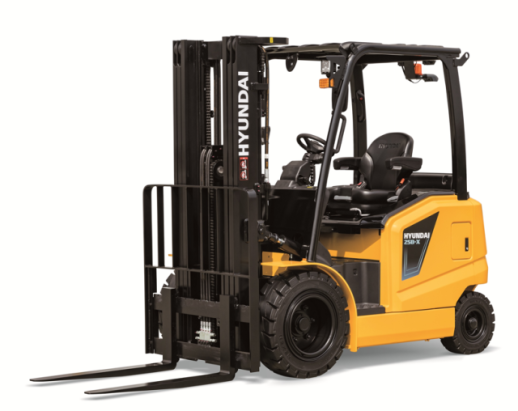 HD Hyundai Site Solutions Wins S-Mark Safety Certification for 17 Electric Forklifts HD Hyundai Site Solutions said it has strengthened safety standards for its electric forklifts. The company said April 24 it recently received the S-Mark safety certification from the Korea Occupational Safety and Health Agency for 17 small electric forklift models rated at 3.5 tons or less, and plans to expand the number of certified models. The S-Mark is an official certification issued by the agency, a government-designated occupational safety body, after a comprehensive review of product safety and the manufacturer’s quality management capabilities. To qualify, companies must pass technical document reviews based on ISO and agency standards, on-site audits and product testing, requiring safety and reliability to be verified from design through production. Customers who buy certified models are eligible for government subsidies and policy financing support, and may receive purchase recommendations for domestic public institutions, the company said. With electric forklifts now accounting for about 60% of South Korea’s forklift market, demand for eco-friendly, low-noise equipment is rising, particularly at logistics centers and in urban work settings, driving electrification. HD Hyundai Site Solutions sells about 1,500 electric forklifts a year in South Korea and said it aims to raise market share by emphasizing safety and quality following the certification. “This safety certification recognizes both product safety and our quality management system,” a company official said. “We will continue to expand certified models to provide safer, more reliable products.”* This article has been translated by AI. 2026-04-24 10:03:16
 -
 Hyosung Heavy Industries signs Vietnam power grid MOU, plans $50 million motor plant Hyosung Heavy Industries is moving to expand its business in Vietnam by pursuing both power grid cooperation and a new production base. The company said it signed a memorandum of understanding with Vietnam Electricity on April 23 at the Korea-Vietnam Business Forum at the JW Marriott Hotel Hanoi. The MOU covers power asset management, grid stabilization and strengthening technical capabilities. Vietnam’s power demand is rising quickly amid economic growth, industrialization and the spread of data centers and advanced industries. Ensuring grid stability has also emerged as a key task as renewable energy expands. Under its eighth Power Development Plan, or PDP8, the Vietnamese government plans to raise power generation capacity to 221 gigawatts by 2030 and invest about $136 billion. Hyosung Heavy Industries said cooperation will focus on three areas: a pilot application of its AI-based power asset management solution, ARMOUR+; expanded adoption of STATCOM systems, or static synchronous compensators; and support for education and training to strengthen the design and manufacturing capabilities of EVN subsidiary Dong Anh Electrical Equipment Manufacturing Co., or EEMC. Also on April 23, Hyosung Heavy Industries signed an MOU with an investment promotion center under Vietnam’s Ministry of Finance to build a high-voltage motor plant. Under the agreement, the company plans to invest about $50 million to build a production base on the site of its Vina Electric plant in Dong Nai province, targeting annual revenue of $100 million. It aims to begin mass production in February 2027 and install facilities to produce 25,000-kilowatt-class high-voltage motors. High-voltage motors operate at more than 1,000 volts and are used in large industrial facilities such as power plants and industrial complexes. Demand has been expanding for uses including data center cooling systems and equipment linked to renewable energy. Market research firm Omdia forecasts the global high-voltage motor market will grow more than 5% annually to about $6.5 billion by 2028. Hyosung Heavy Industries said that after establishing a low-voltage motor production base in 2015, the new high-voltage motor plant will broaden its motor business portfolio. It plans to become the first foreign company to carry out the entire high-voltage motor production process in Vietnam. Hyosung has invested about $4 billion in Vietnam since entering the country in 2008, building six production bases and employing more than 10,000 local workers. The company said sales by its local units account for about 1% of Vietnam’s total exports, contributing to the country’s economic growth and the expansion of global supply chains. Hyosung Chairman Cho Hyun-joon said, “This agreement is meaningful in that it expands our business foundation in Vietnam into the heavy industries sector,” adding, “We will grow together with Vietnam as a global partner.”* This article has been translated by AI. 2026-04-24 10:01:10
 -
 Samsung Heavy Industries Signs U.S. MOUs to Enter Global Data Infrastructure Market Samsung Heavy Industries said it has laid the groundwork to enter the global data infrastructure market with a floating data center, or FDC. The company said it attended Data Center World (DCW 2026), held April 20-23 (local time) in Washington, and secured a foothold for global market entry for its in-house developed FDC. An FDC is a model that builds data centers at sea as demand surges with the spread of artificial intelligence. It is drawing attention as an alternative that can address land acquisition, power supply and cooling efficiency constraints. At the event, Samsung Heavy said it obtained approval in principle for a 50-megawatt FDC concept design from U.S. classification society ABS and U.K.-based Lloyd’s Register. The certified design is based on a standardized shipyard construction process that integrates design, fabrication and equipment installation, which the company said can shorten delivery times compared with land-based data centers. It can also be fitted with an in-house power generation system, reducing reliance on onshore electricity, it said. Samsung Heavy said it also expanded cooperation with global companies during the event. It is pursuing collaboration with electrification and automation firm ABB to develop an FDC power system, and signed a memorandum of understanding with U.S. data center developer Musterian to develop an FDC in the United States. The company said it plans to use the certifications as a starting point to push commercialization by linking power-system development with U.S. permitting and partnerships for local operations. Choi Won-young, chairman of Samsung Heavy’s workers’ council, attended the event, highlighting labor-management participation. “The council will actively take part in the growth of new businesses such as the FDC,” Choi said. Ahn, the technology development chief, called the FDC “a new business model that expands shipbuilding technology into the digital infrastructure industry.” He said it would “set a new standard in the global data market” when combined with eco-friendly energy.* This article has been translated by AI. 2026-04-24 10:00:19
 -
 POSCO Expands Tactile Exhibits Using Steel-Based 'PosArt' for Visitors With Visual Impairments POSCO Group is combining steel technology with art and giving to expand access for visitors, including people with visual impairments. Industry officials said April 23 that the group is producing tactile exhibits using PosArt to help people with disabilities and other underserved visitors experience museum displays. PosArt is POSCO Group's premium color steel sheet made by applying high-resolution inkjet printing to specialized steel. Using 3D layering that builds ink in stacked layers, it delivers image quality more than four times sharper than conventional color steel sheets, the company said. In February, the POSCO 1% Sharing Foundation produced tactile exhibits using PosArt and donated them to the National Museum of Korea. The foundation said applying PosArt to artworks allows delicate raised textures, enabling visitors with visual impairments to feel details by hand. POSCO Humans, a POSCO Group social enterprise and a standard workplace for people with disabilities, handled production to help link steel technology with art and support a broader culture of giving. The donated items fall into three categories: a large feature wall at the entrance to the calligraphy and painting gallery; a tactile table that lets visitors explore representative calligraphy and paintings with their fingertips; and four showcases designed to store artifacts safely. Separately, POSCO Art Museum is running exhibitions where visitors can experience PosArt. The shows, titled 'Spirits of Water' and 'Recorders of Nature,' examine the value of the Korean Peninsula's disappearing natural ecosystems as artistic records and run through May 3. The exhibitions include a hands-on area featuring PosArt works made with POSCO Group's steel technology, allowing visitors with visual limitations to explore the shapes of fish, insects and plants through touch.* This article has been translated by AI. 2026-04-24 05:03:21
 -
 OCI Holdings Q1 Operating Profit Falls 77.7% to 10.8 Billion Won OCI Holdings said in a regulatory filing on the 23rd that it posted first-quarter consolidated revenue of 892.4 billion won, operating profit of 10.8 billion won and net profit of 8.8 billion won. Revenue fell about 77% from a year earlier. The company said it has continued a recovery trend after returning to the black in the fourth quarter of last year. The company said higher sales at key units helped drive the profit, excluding Malaysia-based OCI TerraSus, which underwent legal restructuring in the first quarter. The units cited were OCI Enterprises, a U.S. solar holding company; OCI SE, which operates the Saemangeum combined heat and power plant; and operating company OCI. OCI Energy, a unit of OCI Enterprises, contributed to the operating profit increase as remaining proceeds from the sale of the Sun Roper project last year were recognized as revenue, the company said. OCI Energy is pursuing the sale of a large-scale 500-megawatt project. If related procedures are completed within the second quarter, the company said, it expects to recognize new revenue and profit. Chairman Lee Woo-hyun said silicon-based technology is increasingly seen as extending beyond terrestrial and space applications into next-generation semiconductors and data infrastructure. “OCI Holdings will take this trend as an opportunity for future new businesses and will continue to enhance product competitiveness so we can meet customers’ next-generation technology shifts, including silicon photonics,” he said. In the fourth quarter of last year, OCI Holdings reported revenue of 810.6 billion won, operating profit of 27.3 billion won and net profit of 26.6 billion won.* This article has been translated by AI. 2026-04-23 22:15:17
 -
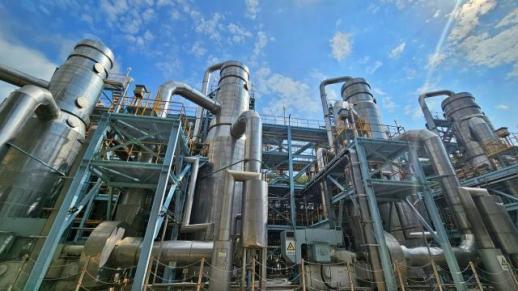 Court Dismisses Damages Suit Against Young Poong Executives Over Environment Ministry Penalty Young Poong said Thursday it welcomed a first-instance court ruling dismissing a damages lawsuit filed against its current and former executives based on an Environment Ministry penalty. In November 2024, the Good Corporate Governance Research Institute and the Citizens’ Coalition for Economic Justice filed the suit, arguing that the executives violated duties under the Commercial Act — including the duty of care and oversight — and caused losses to the company, citing the ministry’s imposition of a penalty. The Seoul Central District Court’s Civil Division 30 rejected the plaintiffs’ claims and dismissed the case in full. The court said the plaintiffs failed to specify concrete illegal acts by Young Poong or its executives. It also found that the penalty alone was insufficient to establish liability for damages and that it was not adequately proven the company suffered actual losses. Young Poong said it has pursued improvements across water, air and soil at its Seokpo smelter since establishing an “environmental improvement innovation plan” in 2019. It said it invested about 540 billion won through the end of last year and plans additional investment. The company also noted it was found not guilty in both the first and second trials in a Water Environment Conservation Act case brought by the Daegu District Prosecutors’ Office in 2022, and the rulings became final after prosecutors did not appeal. The court said at the time it was difficult to conclude the defendants intentionally allowed cadmium to leak, and that they appeared to have worked step by step during their terms to improve smelter facilities and the surrounding environment. A Young Poong official said the ruling again confirmed that some claims the company neglected water pollution or failed to pursue environmental improvements were “groundless speculation.” The official said the company would continue “thorough monitoring and proactive responses” to build a sustainable, eco-friendly workplace for more than 100 years.* This article has been translated by AI. 2026-04-23 14:33:48
 -
 SKC, Hanwha Solutions Face Diverging Risks in Major Stock Offerings SKC and Hanwha Solutions have launched large rights offerings to fund future growth, but uncertainty is rising over whether the deals will succeed as SKC faces a share-price slide and Hanwha Solutions awaits a financial regulator’s review. Industry officials said Tuesday that SKC is pursuing a 1 trillion won offering, but recent volatility has raised concerns that the final offering price could come in lower than expected, reducing proceeds. SKC plans to invest 590 billion won of the funds in its glass substrate business and use 410 billion won to repay debt. The company expects its debt-to-equity ratio to fall to about 142% from 233% after the offering, though the extent of improvement and the pace of investment will depend on how much money is ultimately raised. Some investors worry that a lower issue price would shrink funding and force cuts to investment in future businesses such as glass substrates. SKC shares, which had traded in the 100,000-won range, fell to the 80,000-won range after the offering was announced. The first issue price was set at 70,600 won per share. The company will set a second issue price by applying a 20% discount to the May 11 share price, then finalize the lower of the two as the issue price. Hanwha Solutions’ offering was reduced to 1.8 trillion won from 2.4 trillion won after the Financial Supervisory Service on April 9 requested revisions to its securities registration statement. The company adjusted planned debt repayment to 900 billion won from 1.5 trillion won. The number of new shares also fell to 56 million from 72 million, lowering the dilution rate to 24.6% from 29.5%. Still, uncertainty remains until the regulator completes its review and the schedule is finalized. Hanwha Solutions held an investor relations session for analysts Monday to explain why it says the offering is unavoidable. The company said it has carried out about 3.9 trillion won in balance-sheet improvements through noncore asset sales and equity-like financing, and reiterated that additional self-help measures are limited. Both companies cite future growth as the rationale. SKC plans to expand its semiconductor materials business centered on glass substrates as it accelerates a portfolio shift. Hanwha Solutions aims to ease financial strain amid a weak solar market while pursuing mid- to long-term investments including its U.S. “Solar Hub.” Some investors, however, have criticized the offerings as using shareholder money to pay down company debt. Lee Chang-min, a professor of business administration at Hanyang University, said, “A recurring problem in recent rights offerings by Korean companies is that explanations of the need for funding and reviews of alternatives are not sufficient,” adding, “In particular, it is hard to view positively a structure in which a large portion of the funds is used for debt repayment.”* This article has been translated by AI. 2026-04-23 05:03:27
 -
 SK Group to Turn Off Lights at Major Offices for Earth Day SK Group said it will join an Earth Day lights-out event to underscore the seriousness of the climate crisis and the need to cut carbon emissions. The group said lights at major headquarters buildings of SK Inc. and affiliates including SK Innovation, SK Telecom, SK ecoplant, SK Gas, SK Square, SK Networks and SK Chemicals will be turned off for 10 minutes starting at 8 p.m. on April 22. SK said it is encouraging participation through internal bulletin boards and social media so employees can take part in saving energy in daily life. Separately, SK said it has also been voluntarily switching off nighttime lighting for SK logos attached to the exteriors of key buildings since April 8, including SK Seorin Building, T Tower, Susong Square, Jongno Tower, Samil Building, SK U Tower and Pangyo ECO Hub, as part of broader efforts to conserve energy amid a growing national energy crunch.* This article has been translated by AI. 2026-04-22 15:16:51
 -
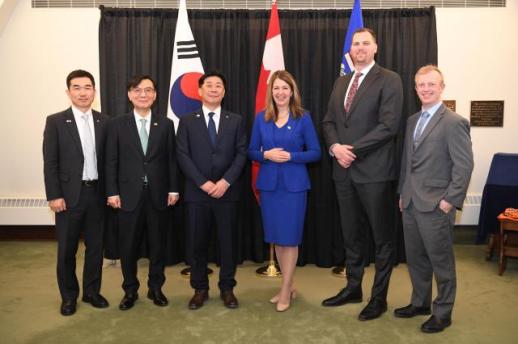 Korea's Hanwha expands partnership with Alberta for submarine bid in Canada SEOUL, April 22 (AJP) -South Korea's Hanwha Group pitching for a $40 billion submarine program in Canada is widening its support base across the North American country to win favor against its European competition. Hanwha Group is expanding cooperation with the Canadian province of Alberta across key industries including energy, defense and shipbuilding as it seeks to broaden local industrial partnerships and economic cooperation tied to Hanwha Ocean’s bid for Canada’s Canadian Patrol Submarine Project, or CPSP. The group signed a memorandum of understanding with the Alberta government Tuesday (local time) at the provincial government building in Edmonton. Attendees included Alberta Premier Danielle Smith, Economic Development and Trade Minister Joseph Schow, South Korean Ambassador to Canada Lim Ki-mo and Hanwha Energy CEO Lee Jae-kyu. The two sides agreed to pursue mid- to long-term investment and build an industrial ecosystem in Alberta beyond individual projects. Hanwha Energy, Hanwha Ocean, Hanwha Aerospace and Hanwha Power will take part, expanding cooperation in oil, liquefied natural gas, hydrogen, carbon capture and storage, and defense and shipbuilding supply chains. Hanwha said the MOU focuses on a low-carbon energy transition, industrial growth and stronger supply-chain stability. In the near term, the sides plan to expand trade in resources such as natural gas. Over the mid to long term, they aim to broaden cooperation to hydrogen- and ammonia-based clean energy and carbon-management infrastructure. Hanwha also said it will support efforts aligned with Canada’s Defense Industrial Strategy, including strengthening domestic industrial capabilities, maintenance and operations capacity, and building a regional defense ecosystem. Alberta is attracting about $6.5 million in investment from the federal government as it grows into a defense manufacturing hub. Smith said, “Alberta is a global business hub, and this agreement with Hanwha Group shows our competitiveness as a destination for international investment.” Lee said, “This MOU has elevated our cooperative relationship with Alberta by another step,” adding, “We will bring together the group’s capabilities to deliver tangible results across a range of areas.” Hanwha has been mounting a groupwide push to win the Canadian submarine project, expanding its outreach beyond inland industrial bases to key maritime hubs. Earlier, Hanwha Ocean CEO Kim Hee-cheol visited Halifax on April 14 and discussed defense and industrial cooperation with officials from Nova Scotia. Halifax is a strategic center of the country’s naval industry. The talks covered defense readiness, maintenance, repair and overhaul (MRO) capabilities, workforce development and industrial infrastructure, as Hanwha Ocean shared its long-term strategy for the project. The local partnership is part of Hanwha Ocean’s strategy to shorten delivery timelines and strengthen localization as it competes with Germany’s ThyssenKrupp Marine Systems (TKMS) in the final stage of the bid. The company has also partnered with five Canadian firms — OSI Maritime Systems, EMCS Industries, Techsol Marine, Jastram Technologies and Curtiss-Wright — to reinforce its local industrial base. Such localization efforts are seen as critical, as Canada places strong emphasis on domestic industrial and economic contributions in major defense procurement programs. Canada’s CPSP involves the procurement of up to 12 diesel-electric submarines of around 3,000 tons. The contract value alone is estimated at $13.5 billion, with the total project size, including 30 years of MRO, potentially reaching $40 billion. A consortium of Hanwha Ocean and HD Hyundai Heavy Industries is competing against Germany’s ThyssenKrupp Marine Systems, with a final decision expected around June. 2026-04-22 09:51:46
 -
Hanwha signs MOU with Alberta to expand energy, defense and shipbuilding cooperation Hanwha Group said it will strengthen cooperation with the government of Alberta across key industries including energy, defense and shipbuilding. The group said April 22 it plans to systematically expand local industrial partnerships and broader economic cooperation, linked to Hanwha Ocean’s bid for Canada’s Canadian Patrol Submarine Project, or CPSP. Hanwha signed the memorandum of understanding April 21 (local time) at the Alberta Legislature Building in Edmonton. Attendees included Alberta Premier Danielle Smith, Minister of Jobs, Economy and Trade Joseph Schow, South Korean Ambassador to Canada Lim Ki-mo and Hanwha Energy CEO Lee Jae-gyu. The two sides agreed to pursue joint, mid- to long-term investment and industrial ecosystem development with Alberta as a base, beyond individual projects. Hanwha Energy, Hanwha Ocean, Hanwha Aerospace and Hanwha Power will take part, expanding cooperation in oil, liquefied natural gas, hydrogen, carbon capture and storage, and defense and shipbuilding supply chains. Hanwha said the MOU focuses on a shift to low-carbon energy, industrial growth and stronger supply-chain stability. In the near term, the sides plan to expand trade in resources such as natural gas. Over the mid to long term, they aim to broaden cooperation to hydrogen- and ammonia-based clean energy and carbon-management infrastructure. Hanwha also said it will support efforts aligned with Canada’s Defence Industrial Strategy, including building independent industrial capabilities, strengthening maintenance and operations capacity, and developing a region-based defense industrial ecosystem. Alberta is attracting about $6.5 million in investment from the federal government as it grows into a defense manufacturing hub. Smith said, “Alberta is a global business hub, and this agreement with Hanwha Group shows our competitiveness as a destination for international investment.” Lee said, “This MOU has elevated our cooperative relationship with Alberta,” adding that the group will “bring together its capabilities to deliver tangible results across a range of fields.” Hanwha said it is mounting a groupwide effort to win the Canadian submarine project. Earlier, Hanwha Ocean CEO Kim Hee-cheol visited Halifax on April 14 and discussed defense and industrial cooperation with officials from Nova Scotia.* This article has been translated by AI. 2026-04-22 09:12:10