

Journalist

Shin Jia and Kim Hee-su
fromjia@ajunews.com
-
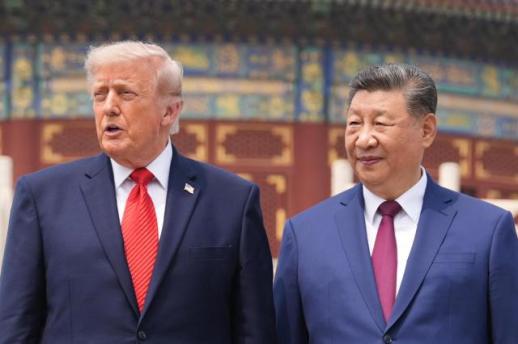 Trump Discusses North Korea with Xi, Says No Promises on Taiwan During his visit to China, President Donald Trump stated on May 15 that he exchanged views with President Xi Jinping regarding North Korea. Trump made these remarks while returning to the U.S. on a private jet after his trip to Beijing, as reported by Yonhap News, citing Reuters. Trump also addressed the Taiwan issue, which was a significant topic during the U.S.-China summit, saying, "I had many discussions with President Xi and do not believe there is a dispute with China." He added, "I made no promises regarding the Taiwan issue." Regarding negotiations with Iran, Trump emphasized that a "real" commitment would be acceptable if Iran agrees to suspend its nuclear program for 20 years.* This article has been translated by AI. 2026-05-16 00:54:32
 -
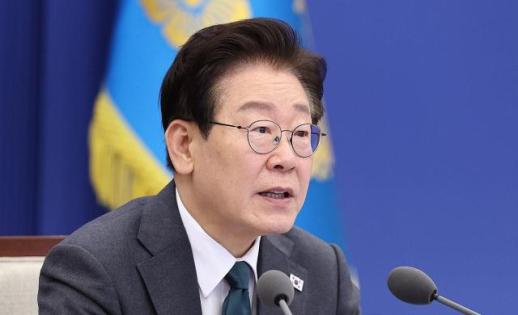 President Lee's Approval Rating Drops to 61% Amid Controversy President Lee Jae-myung's approval rating has slightly decreased to 61%. This decline follows discussions within the Democratic Party regarding granting the special prosecutor investigating allegations of manipulated investigations and prosecutions the authority to dismiss charges. According to a survey released by Gallup Korea on May 15, 61% of respondents rated President Lee's job performance positively, a decrease of 3 percentage points from the previous survey, which recorded a 64% approval rating. Meanwhile, the disapproval rating rose by 2 percentage points to 28%, with 11% of respondents remaining undecided. The primary reasons for the positive evaluations included 'economy and livelihood' at 26%, followed by 'diplomacy' at 10%, and 'overall performance' at 7%. On the other hand, the main reasons for disapproval were 'excessive welfare and livelihood support' and 'issues of morality and evasion of personal trials,' each cited by 10% of respondents. This was followed by 'economy, livelihood, and high exchange rates' at 9%, and 'overall poor performance' at 8%. In terms of party support, the Democratic Party's approval rating fell by 1 percentage point to 45%. The People Power Party saw an increase of 2 percentage points, reaching 23%. While the Democratic Party maintained higher support in most regions, the People Power Party led in Daegu and North Gyeongsang Province with 41% compared to the Democratic Party's 23%. The survey was conducted through interviews with randomly selected wireless phone numbers, with a margin of error of ±3.1 percentage points at a 95% confidence level and a response rate of 12.5%. For more details, please refer to the Central Election Survey Deliberation Commission's website.* This article has been translated by AI. 2026-05-16 00:50:15
 -
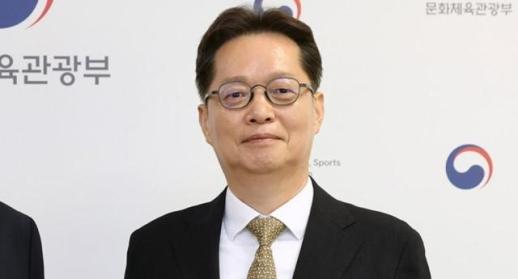 Prosecutors Seek 5-Year Sentence for Former KTV Chief Over Censorship Charges Lee Eun-woo, the former chief of the Korea Policy Broadcasting (KTV), has been sentenced to five years in prison for allegedly ordering the removal of broadcast subtitles that criticized the constitutionality and legality of the martial law declared on December 3. According to Yonhap News on May 15, the special prosecutor's team, led by Cho Eun-seok, requested this sentence during the final hearing of Lee's case at the Seoul Central District Court, presided over by Judge Oh Se-yong. The prosecution stated, "As the head of programming and a public servant, the defendant had a duty to provide fair and balanced information regarding the martial law declaration, which threatens the existence of the state and the basic rights of citizens, yet he failed to do so. The defendant's actions not only increased public confusion but also amounted to promoting and endorsing unconstitutional and illegal martial law." In his closing argument, Lee's attorney contended, "Considering the nature of KTV, the application of fairness under broadcasting law should be relaxed. Even if deemed illegal, it is questionable whether actions contrary to broadcasting fairness warrant criminal punishment." Lee also stated in his final remarks, "KTV is not a typical media outlet that checks and criticizes power; it exists solely as a government agency under the Ministry of Culture, Sports and Tourism to promote government policies. Broadcasting political disputes without editing violates the political neutrality expected of public servants." The court has set June 26 as the date for its ruling. Lee was indicted for abuse of authority for allegedly instructing news department staff to delete reports criticizing the martial law while serving as KTV chief on December 3, 2024. He was accused of directing the broadcast editing team leader, Choo Mo, to remove news related to politicians' statements, political parties, the National Assembly, and the judiciary, stating, "These do not align with KTV's broadcasting principles; only include factual information about the president and proclamations." When freelance subtitle specialist Ji Mo refused to comply, Lee contacted the head of the broadcasting department, Park Mo, to ensure the subtitles were deleted. As a result, some subtitles were removed.* This article has been translated by AI. 2026-05-16 00:42:00
 -
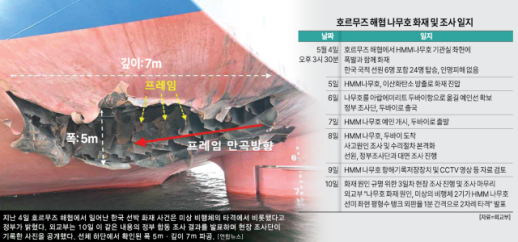 Debris from Drone Strike on South Korean Ship Arrives in Country for Analysis Debris from the drone that struck the South Korean vessel Namooho in the Hormuz Strait has arrived in South Korea. The Ministry of Foreign Affairs announced on May 15 that the debris was transported via air after consultations with the United Arab Emirates (UAE) government and that a detailed analysis will be conducted by specialized institutions. The debris was reportedly transported in a diplomatic pouch on a commercial flight from Abu Dhabi to Incheon. A senior official from the Foreign Ministry stated the day before, "Once we have the debris, I believe our defense ministry's investigative agency will thoroughly examine it and uncover all necessary details." The debris consists of the engine section of the drone. The government plans to conduct a thorough investigation to determine whether the object is a drone or a missile and to confirm if Iran was indeed the attacking party. Meanwhile, an explosion and fire occurred on the South Korean ship HMM Namooho on May 4 while it was in the Hormuz Strait. The vessel had a total of 24 crew members on board, including six South Koreans.* This article has been translated by AI. 2026-05-16 00:36:45
 -
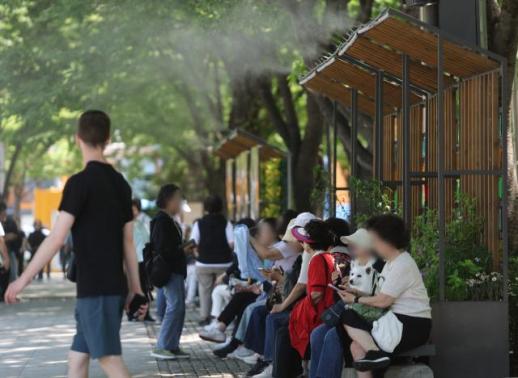 Weekend Weather Forecast: Early Summer Heat with Temperatures Above 30 Degrees On Saturday, temperatures are expected to exceed 30 degrees Celsius in most regions of South Korea, continuing the early summer heat. Morning lows are forecasted to be between 12 and 18 degrees Celsius, while daytime highs will range from 23 to 32 degrees Celsius. Notably, Daegu is expected to reach a high of 32 degrees Celsius, indicating a significant heat event, particularly in inland areas. Most regions, including the capital area, will experience generally clear weather. However, the temperature difference between day and night could reach around 15 degrees Celsius, necessitating attention to health and well-being. The expected morning lows across the country are as follows: Seoul 18 degrees, Incheon 16 degrees, Suwon 16 degrees, Chuncheon 15 degrees, Gangneung 17 degrees, Cheongju 15 degrees, Daejeon 15 degrees, Sejong 14 degrees, Jeonju 14 degrees, Gwangju 15 degrees, Daegu 14 degrees, Busan 14 degrees, Ulsan 12 degrees, Changwon 14 degrees, and Jeju 16 degrees. Daytime highs are projected to be: Seoul 31 degrees, Incheon 29 degrees, Suwon 30 degrees, Chuncheon 31 degrees, Gangneung 28 degrees, Cheongju 31 degrees, Daejeon 31 degrees, Sejong 30 degrees, Jeonju 31 degrees, Gwangju 31 degrees, Daegu 32 degrees, Busan 25 degrees, Ulsan 28 degrees, Changwon 28 degrees, and Jeju 24 degrees. Wave heights in the seas will be between 0.5 to 1.0 meters in the East and South Seas, and around 0.5 meters in the West Sea. Offshore wave heights are expected to be 0.5 to 1.5 meters in the East and South Seas, and 0.5 to 1.0 meters in the West Sea.* This article has been translated by AI. 2026-05-16 00:36:00
 -
 Kolon Industries Reports 1st Quarter Operating Profit of 98.8 Billion Won, Up 158.3% Year-on-Year ㈜코오롱 announced on May 15 that it recorded sales of 1.5188 trillion won, an operating profit of 98.8 billion won, and a net loss of 44.7 billion won for the first quarter of 2026. Compared to the same period last year, sales increased by 7.7% and operating profit rose by 158.3%, although the net loss persists. Its subsidiary, Kolon Industries, saw both sales and operating profit rise year-on-year, driven by the success of its operational efficiency (OE) projects and strong sales growth in the industrial materials and chemicals sectors. Kolon Global, another subsidiary, experienced a slight decline in sales compared to the previous year, but significantly increased its operating profit due to enhanced site management and improved cost ratios. Kolon Mobility Group also reported growth in both sales and operating profit, benefiting from strong sales of premium imported vehicles. The net loss was attributed to increased valuation losses related to convertible bonds due to the rise in Kolon TissueGene's stock price. Kolon Industries' manufacturing division is expected to continue its profitability-focused growth, supported by ongoing operational efficiency efforts and an increased share of high-value products. Kolon Global recorded new orders worth 404.4 billion won in the first quarter, marking a 19% increase from the same period last year. Meanwhile, Kolon Industries is concentrating on strengthening its competitiveness through initiatives centered around its research and development (R&D) hub, the Kolon One&Only Tower. These initiatives include reorganizing the R&D team, expanding AI-based R&D processes, and enhancing its intellectual property portfolio.* This article has been translated by AI. 2026-05-16 00:15:32
 -
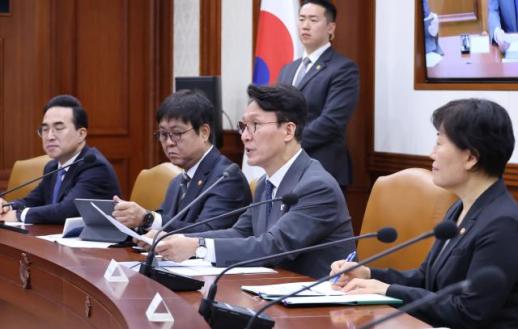 Counterterrorism Center to be Reformed into National Counterterrorism Headquarters The government is reforming the Counterterrorism Center, currently under the Prime Minister's office, into the National Counterterrorism Headquarters. On May 15, a final report meeting of the public-private counterterrorism task force was held at the Government Seoul Building, chaired by Prime Minister Kim Min-seok, where the reform was confirmed. The National Counterterrorism Headquarters will serve as a central control tower overseeing and coordinating government-wide counterterrorism activities. Plans include expanding the recruitment of private experts, implementing a long-term employment system, and enhancing preventive and response systems using technologies such as artificial intelligence (AI), data analysis, and drones. In the event of a terrorist incident, a unified command system led by the police will ensure efficient responses. Additionally, new threats such as drone and unmanned aerial vehicle risks will be explicitly categorized as types of terrorism, and the criteria for defining terrorism will be clarified. The National Counterterrorism Committee will be granted the authority and procedures to directly designate and declassify domestic terrorist organizations. The training and education system will also be improved. Furthermore, plans will be pursued for regional joint national training, central-local cooperation bodies, reflecting field demands for counterterrorism equipment, establishing budget coordination systems, and building strategic cooperation with key overseas institutions. Prime Minister Kim stated, "New types of risks continue to increase, including traditional terrorist threats, the spread of extremism in online spaces, crimes motivated against unspecified individuals, and risks utilizing new technologies such as drones. We will create a national response system that proactively addresses the changing terrorism environment so that citizens can feel safe in their daily lives."* This article has been translated by AI. 2026-05-16 00:09:00
 -
 SeAH Steel Holdings Reports 1st Quarter Operating Profit of 26.7 Billion Won, Down 59% Year-on-Year SeAH Steel Holdings announced on May 15 that it recorded consolidated sales of 991.9 billion won and an operating profit of 26.7 billion won for the first quarter. While sales increased by 4.7% compared to the same period last year, operating profit fell by 59%. Despite weak demand in key sectors like construction, sales rose due to strong product sales in the North American oil and gas market. However, a decline in the selling price of oil country tubular goods (OCTG) and delays in logistics and raw material procurement caused by geopolitical risks in the Middle East led to the drop in operating profit. A representative from SeAH Steel Holdings stated, "The North American energy market is expected to maintain a solid trend due to ongoing demand for supply chain restructuring and inventory replenishment. We anticipate a gradual recovery in profitability from price increases starting in the second quarter." The company also plans to continue expanding product sales by responding to new demands from Middle Eastern oil and gas and LNG projects, as well as data centers in the Americas and offshore wind projects. On a standalone basis, SeAH Steel reported first-quarter sales of 415.8 billion won, a 17.8% increase from the same period last year, while operating profit decreased by 11.1% to 23.2 billion won. This growth was attributed to the recognition of sales from the Shin An Woo I offshore wind and Canadian natural gas pipeline projects, along with increased sales volumes driven by rising LNG demand in North America. However, the imposition of steel tariffs in the United States and rising raw material costs have negatively impacted profitability. SeAH Steel noted, "The effects of the rising won-dollar exchange rate and a profitability-focused sales strategy have improved operating profit compared to the previous quarter." Meanwhile, SeAH Besteel Holdings is working towards achieving carbon neutrality by 2050, having obtained verification for its carbon footprint assessment solution under the international standard 'ISO 14607.'* This article has been translated by AI. 2026-05-15 23:06:00
 -
 Hanwha Solutions Reschedules Rights Offering Amid Ongoing Debt Repayment Controversy Hanwha Solutions, which had postponed its rights offering schedule due to two correction requests from the Financial Supervisory Service, has confirmed a new schedule just two days later. However, the structure remains unchanged, with about half of the raised funds still allocated for debt repayment, leading to ongoing controversy over using shareholder money to pay off debts. According to industry sources on May 15, Hanwha Solutions announced in a correction disclosure that it has changed the date for determining the new stock issuance price from early June to July 7. The subscription period for existing shareholders will run from July 10 to 13, with the new shares expected to be listed on July 31. The scale of the rights offering and the purpose of the funds remain the same. The company plans to issue 600,000 new shares, representing a 32.10% increase. The total amount to be raised is 1.8 trillion won, with an expected issuance price of 32,400 won per share. Of this, approximately 907.7 billion won will be used for facility funds, while the remaining 906.7 billion won will go toward debt repayment. Initially, Hanwha Solutions aimed for a rights offering of 2.4 trillion won. The company explained that improving its financial structure was essential to avoid a credit rating downgrade due to the deteriorating global solar and chemical market. However, regulatory intervention forced the company to reduce the offering size to 1.8144 trillion won. During the rights offering process, financial authorities have repeatedly questioned whether there are alternative funding methods aside from the rights offering. On May 11, Hwang Seon-o, deputy director of the Financial Supervisory Service, stated, "There was insufficient explanation regarding whether Hanwha Solutions truly has no other means of raising funds apart from the rights offering." In the first review of the rights offering, the Financial Supervisory Service raised concerns about why Hanwha Solutions was pursuing a rights offering despite holding a significant amount of non-operational assets. Subsequently, the company revised the offering size down to approximately 1.8 trillion won from the previous amount. However, similar criticisms arose during the second review. The Financial Supervisory Service assessed that the company lacked sufficient disclosure. They also questioned the 5 trillion won worth of non-operational assets, including real estate and shares in other companies, held by Hanwha Solutions. Hanwha Solutions stated, "This revised disclosure includes plans for selling non-core assets, capital raising strategies, anticipated benefits from the Advanced Manufacturing Production Tax Credit (AMPC), and long-term profit and loss estimates." With the additional explanations in the revised disclosure, attention is focused on whether the rights offering will pass this time. Some analysts suggest that Hanwha Group, the parent company, may need to participate in the rights offering with an amount larger than the debt repayment amount to ensure its success. Hanwha Group is expected to participate in the rights offering with about 843.9 billion won, which is less than the 906.7 billion won needed for debt repayment. This has fueled the narrative of using shareholder money to pay off debts. In contrast, SKC recently confirmed its final issuance price, with its parent company, SK, investing 6.295 trillion won, exceeding the 5.775 trillion won debt repayment amount. Industry analysts warn that if Hanwha Solutions' newly submitted revised disclosure is rejected again, the entire rights offering could be jeopardized. A representative from Hanwha Solutions remarked, "We have made every effort to address the concerns raised by shareholders, the media, and the Financial Supervisory Service regarding the issues they identified."* This article has been translated by AI. 2026-05-15 14:33:00
 -
 SM Vexel Returns to Profitability in Q1 with 500 Million Won Operating Income SM Vexel, a manufacturing affiliate of the SM Group, has successfully returned to profitability in the first quarter. According to a disclosure on May 15, SM Vexel reported consolidated sales of 36.6 billion won and an operating income of 500 million won for the first quarter of this year. While these figures show a slight decline compared to the same period last year (sales of 42.2 billion won and operating income of 800 million won), they represent an improvement over the previous quarter, which saw an operating loss of 300 million won and sales of 32.3 billion won. The defense boom has driven this strong performance. Earlier in February, SM Vexel successfully supplied lithium ampule batteries for the Cheonmu (K-239, Korean Multiple Launch Rocket System), a key weapon system in the K-defense sector. In the automotive division, diversification of the product portfolio has had a positive impact. SM Vexel has stabilized its business base for internal combustion engine parts while also expanding its portfolio to include hybrid vehicle engines. A company representative stated, "The automotive division has entered a recovery phase after confirming its lowest point, and the battery division continues to generate stable profits. With the notable performance of K-defense, we expect the high-profit structure of the defense business to contribute to our growth moving forward." Additionally, SM Vexel was awarded the top prize in the battery category at the 2026 Korea First Brand Awards for the second consecutive year in January. The company is also working to enhance its competitiveness by signing a memorandum of understanding (MOU) with Kongju National University for technology exchange and joint research and development (R&D) in eco-friendly automotive parts.* This article has been translated by AI. 2026-05-15 11:27:00