

Journalist

Shin Jia and Kim Hee-su
fromjia@ajunews.com
-
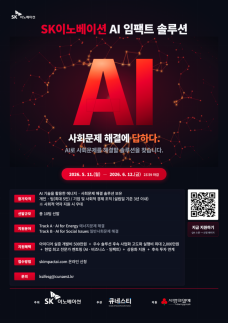 SK Innovation to Foster Startups Addressing Energy and Social Issues Using AI SK Innovation is launching an initiative to support startups that address energy and social issues, guided by the management philosophy of SK Chairman Chey Tae-won, which emphasizes the pursuit of both economic and social value. The program will leverage artificial intelligence technology. On May 11, SK Innovation announced the recruitment of participants for its new social contribution program, 'AI Impact Solution.' This initiative aims to discover and nurture startup teams that develop AI-based solutions to tackle energy and social challenges. The program is hosted and sponsored by SK Innovation, with operations managed by Qunesty, a foundation specializing in impact investment and acceleration. SK Holdings, the holding company of the SK Group, is setting a direction for creating social value at the group level. It measures and publicly discloses the outcomes of corporate activities in areas such as employment, environment, and social contributions in monetary terms. The group also invests in social ventures that generate profits while addressing social issues and provides incentives based on the achievements of social enterprises, contributing to the establishment of a sustainable ecosystem. As SK Innovation transitions from a refining and chemicals-focused company to an eco-friendly energy enterprise, it is intensifying its efforts to address environmental issues. The company aims to achieve net-zero emissions by 2050, actively reducing carbon emissions while expanding its circular economy initiatives, such as the pyrolysis of waste plastics and the recovery of metals from used batteries. Additionally, it collaborates with startups in the environmental sector on projects involving seaweed-based biodegradable plastics and coffee grounds recycling to help solve problems related to carbon emissions, waste, and resource depletion. The program is designed to provide comprehensive support beyond just idea solicitation, encompassing nurturing, commercialization, and investment linkage. Ten selected teams will receive funding for proof-of-concept development, along with mentoring from experts in AI technology, business, and impact fields, as well as support for commercialization and follow-up investment. Outstanding teams will be eligible for additional funding of up to 20 million won for subsequent commercialization and enhancement efforts. In its second year, the program will continue to provide additional support to top teams through the Ministry of SMEs and Startups' TIPS program for discovering and nurturing entrepreneurs, as well as impact investment connections. The recruitment focuses on two tracks: 'AI for Energy' and 'AI for Social Issues.' The 'AI for Energy' track seeks solutions addressing energy accessibility, efficiency, and carbon reduction, while the 'AI for Social Issues' track invites ideas for solving social challenges related to care, safety, environment, mobility, and education. Individuals or teams of five or fewer can apply, provided that businesses and social economy organizations are within three years of establishment. Teams that include socially disadvantaged members will be given preference. The application period runs from May 11 to June 12, and applications can be submitted through the official website. An SK Innovation representative stated, "AI technology is driving change not only in industrial innovation but also in addressing various social issues. We plan to provide practical support from idea validation to commercialization."* This article has been translated by AI. 2026-05-11 08:51:08
 -
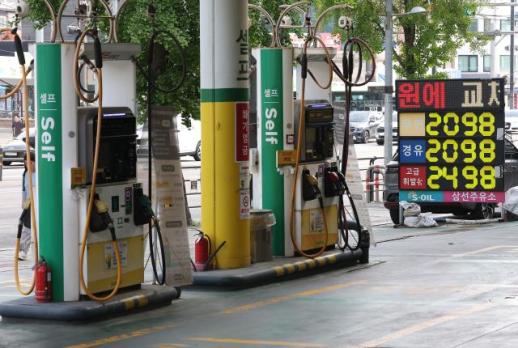 One Month After Gas Station-Refinery Cooperation Pact, Concerns About Effectiveness Grow Amid rising oil prices due to the conflict in the Middle East, the "Social Dialogue Cooperation Agreement between Gas Stations and Refineries to Overcome the Middle East Crisis" was signed a month ago under the leadership of the ruling party. However, concerns about its effectiveness have emerged. Although the agreement includes provisions to abolish the post-settlement system and ease exclusive transactions, the specific implementation criteria remain unclear. According to a report by Aju Economy on May 10, many gas stations are reportedly unaware of the agreement's details. Critics argue that measures intended to stabilize oil prices and improve the oil distribution structure have not been effectively applied on the ground, leading to confusion. The key points of the cooperation agreement, signed on April 9, include changing the existing full purchase contracts to a mixed contract that stipulates purchasing "at least 60%" and abolishing the post-settlement system, which had been a major complaint from gas stations, although it can still be allowed upon request. However, the refining industry claims that the agreement has not significantly changed existing trading practices. An industry insider stated, "There are hardly any substantial changes compared to before," adding that the post-settlement system was originally optional and that exclusive contracts could be renewed annually. One of the main concerns for the refining industry is the issue arising from the easing of the "60% exclusive contract volume." If gas stations displaying a specific refinery's brand are allowed to sell up to 40% of products from other companies, it could lead to unclear quality control and accountability. An industry representative expressed, "The biggest practical concern is how to allocate responsibility if issues arise with the quality and quantity of products mixed with those from other companies while displaying a specific refinery's logo," adding that there is also a dilemma regarding whether to provide the same marketing services and benefits to mixed-selling gas stations as those offered to branded facilities. While the government and lawmakers expedited the signing of the agreement, the lack of detailed guidelines on how to implement it on the ground has been identified as a problem. An industry representative noted, "We are currently in discussions to implement the agreement's related contents." In contrast, a gas station representative stated, "We were not even properly informed that the cooperation agreement was signed," expressing that the lack of official communication made it feel like mere media play. With even the gas stations directly involved not receiving information about the agreement, there are criticisms that the political sphere is merely highlighting the achievement of signing the agreement under the pretext of stabilizing oil prices and promoting cooperation. Key issues remain unresolved, including accountability for quality due to the easing of exclusive contracts, standards for post-settlement after its abolition, and brand management for mixed-selling gas stations, but specific follow-up coordination at the government level is still lacking. A gas station representative remarked, "While we agree with the intention to alleviate the burden on people's livelihoods amid oil price instability, we have no idea if it will be effective. The agreement will be meaningless if not implemented, so we hope to see measures applied on the ground as soon as possible."* This article has been translated by AI. 2026-05-11 03:51:57
 -
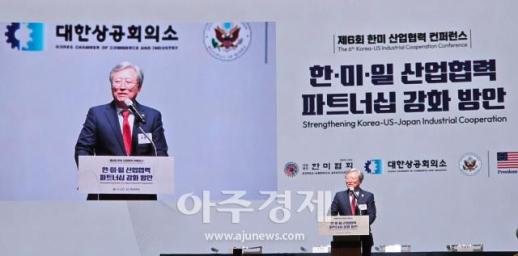 South Korea urges U.S.-Japan AI and energy alliance to strengthen supply chains The Korea Chamber of Commerce and Industry and the Korea-U.S. Association held the sixth Korea-U.S. Industrial Cooperation Conference on Wednesday at the KCCI building in Seoul, calling for closer South Korea-U.S.-Japan coordination on artificial intelligence and energy security. Speakers said surging power demand driven by AI and growing energy instability tied to the Middle East underscore the need to deepen cooperation in semiconductors, liquefied natural gas and small modular reactors. Choi Joong-kyung, chairman of the Korea-U.S. Association, said in opening remarks that the world has entered an era in which “security is industry, and industry is security.” He said trilateral industrial cooperation could become “the most powerful industrial alliance in human history” and reshape global industry. Lee Hyung-hee, vice chairman of the Seoul Chamber of Commerce and Industry and vice chairman of SK, said South Korea should build strategic ties with U.S. big tech companies around its strengths in semiconductors. In energy, he cited joint South Korea-Japan investment in U.S. LNG and cooperation on SMRs as practical steps that could improve supply stability and industrial competitiveness. Lee said companies would be better positioned if the government more boldly laid the groundwork for cooperation and provided targeted support. “The government needs to open barriers that are difficult to overcome through private-sector efforts alone,” he said. Yeo Han-koo, trade minister at the Ministry of Trade, Industry and Energy, said the Middle East crisis shows energy volatility can threaten industrial stability and national security. With AI driving “explosive” growth in electricity demand, he said securing a stable power supply is critical. Yeo said South Korean companies are expanding investment in key U.S. industries such as semiconductors, batteries and electric vehicles, making bilateral cooperation “no longer a choice but a necessity.” He said that cooperation could also help drive a broader rebound in U.S. manufacturing, including shipbuilding, civilian nuclear power and energy. He called on the three countries to build a successful model in advanced manufacturing, forge an innovation partnership for the AI era and strengthen an energy security alliance. In a keynote address, Sung Yun-mo, a distinguished professor at Chung-Ang University, said U.S.-China competition is unlikely to end soon and that South Korea must secure “irreplaceable” core technologies in semiconductors, AI and future vehicles. Sung said China is expanding its ecosystem around homegrown AI, and argued South Korea needs cooperation that combines its hardware capabilities with U.S. data platforms, financial investment and talent, along with Japan’s global supply chains. On energy, he said South Korea and Japan face instability in energy supply and therefore need supply cooperation with the United States, which has greater energy autonomy. He said South Korea should strengthen core technology and manufacturing competitiveness in the energy industry to exercise strategic autonomy. During a panel discussion, Kwon Seok-jun, a professor of chemical engineering at Sungkyunkwan University, said the first step in trilateral cooperation should be resolving a “memory bottleneck.” He said South Korea has a strong base in memory manufacturing, Japan has strengths in packaging and manufacturing, and combining those with U.S. design technologies and AI-specialized models could create a powerful shared platform. Cho Hong-jong, a professor of economics at Dankook University, said trilateral coordination is needed in energy security to prevent “China’s monopoly and productivity.” He proposed a fast-track system for cooperation on rapid licensing and permitting for SMRs. Cho said cooperation should combine U.S. foundational technology, Japan’s precision parts and finance, and South Korea’s construction and equipment capabilities, adding that regulations are an obstacle and that a fast track could support joint entry into third countries. About 120 people attended, including Choi; Lee; Yeo; James Heller, chargé d’affaires at the U.S. Embassy in Seoul; James Kim, chairman of the American Chamber of Commerce in Korea; Sung; and Ahn Se-hyun, dean of the College of Economics and Public Affairs at the University of Seoul.* This article has been translated by AI. 2026-05-07 14:19:13
 -
 Hanwha Ocean Rejects Union Demand to Reverse Safety-Related Discipline Hanwha Ocean said it will not accept what it called improper union demands to reverse discipline tied to workplace safety, as disputes over the issue intensify following the implementation of the so-called Yellow Envelope Act, a revision to labor law. Industry officials said Hanwha Ocean issued a statement on the 7th regarding the Korean Metal Workers’ Union’s Hanwha Ocean branch demand to withdraw disciplinary action, saying it “cannot accept any demand that undermines safety principles at worksites.” Hanwha Ocean previously decided to suspend three employees for one month, saying they failed to follow safety rules and directly contributed to accidents that occurred at its Geoje facility in February and March. The union has continued holding rallies at the site calling for the suspensions to be rescinded. It was also reported that on April 28 union members entered the head of manufacturing’s office and removed items including laptops, tablet PCs and phones. Hanwha Ocean said those involved in the accidents were found to have violated safety rules, including breaching crane signaling standards, leaving their work area without authorization during operations, failing to follow safety controls and not sharing a crane movement route that had been provided in advance. The company said two injured workers remain hospitalized at rehabilitation facilities and were reported to have received assessments indicating a labor capacity loss rate close to 100%. Hanwha Ocean said the one-month suspensions were imposed through proper procedures after convening a personnel committee, based on its collective bargaining agreement and work rules. The company said it has a duty to prevent similar accidents and that discipline is a minimum measure to protect industrial safety. “Demanding the withdrawal of discipline by going beyond the rules, regardless of who is involved, cannot be justified for any reason,” the company said, adding it will not yield to “any coercion or pressure” that threatens employees’ lives and safety. Kim Seong-hui, a professor at Korea University’s Graduate School of Labor Studies, said the union may believe the company interpreted the incidents in a way favorable to itself without fully disclosing information. He said a thorough investigation that includes workers is needed on the causes and responsibility, and that the causal link to the accidents should be closely examined before discipline is imposed.* This article has been translated by AI. 2026-05-07 14:15:31
 -
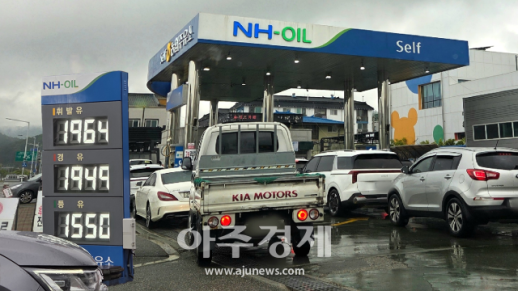 South Korea’s Fuel Price Cap Faces Strain as Refiners, Gas Stations Near Breaking Point As the war in the Middle East drags on and global crude inventories shrink, pressure is building on international oil prices, raising doubts that the government’s cap on petroleum product prices can be maintained. Industry officials said Tuesday that since the cap took effect, refiners’ losses and gas stations’ weakening profitability have mounted. If oil prices rise further, the government’s fiscal burden and industry pushback are expected to intensify. According to the industry on Tuesday, both gas stations and refiners are struggling to secure supply and set prices under the current system. With supply prices and settlement rules unstable, uncertainty in the market is growing. Gas stations say volatile supply prices and thinner margins are making it harder to lock in volumes. A gas station industry official said, “With no way to know how the next price-cap bracket will be set, it feels like a gamble, so it’s hard to either increase or cut volumes.” Refiners also say the burden is rising because the government has set a ceiling on supply prices without clearly defining how losses will be compensated or what standards will apply. The industry estimates that since the cap began, losses at the country’s four major refiners have run to about 500 billion won a week and may have exceeded 3 trillion won in total, as price increases have not been fully reflected. The government and the industry remain far apart on how to calculate compensation. Refiners argue that because petroleum products are produced jointly from crude oil, it is effectively impossible to calculate costs for each product, and losses should be assessed based on actual market prices. The government, however, is sticking to settlements based on verified costs, citing concerns about excessive compensation, fiscal strain and market distortions. The industry also points to repeated gaps between market signals and policy decisions. In the second adjustment, factors pointed to increases of 260 won for gasoline and 480 won for diesel, but the actual increase was limited to 210 won. In the third price notice, gasoline was frozen despite upward pressure, while diesel rose 300 won. In the fourth, downward factors emerged but prices were again frozen. As a result, the suppressed increase factors have reached 125 won for gasoline and 628 won for diesel. Industry officials say that apart from any short-term inflation relief, prolonged controls could shrink supply and raise the risk of a sharp price jump later. They also warn that if international oil prices climb further, refiners’ losses and the government’s fiscal burden would rise together, making the cap difficult to sustain. Song Heon-jae, a professor of economics at the University of Seoul, said the cap “had some effect in the short term, but it will not be easy to keep it in place.” He added, “If enough crude does not come in, gas stations will not be able to get gasoline properly, and in extreme cases it would be hard to rule out sales only during certain hours or cars concentrating at some stations.”* This article has been translated by AI. 2026-05-07 05:04:36
 -
 POSCO Future M, S-Oil Added to S&P Global DJBIC World Sustainability Index POSCO Future M and S-Oil have been included in the DJBIC (Dow Jones Best-in-Class) sustainability index, according to industry officials on Tuesday. DJBIC is published annually by S&P Global, one of the world's three major credit rating agencies. It evaluates 2,500 companies worldwide across governance, supply-chain management, environmental performance and human resources development, among other economic, social and environmental factors. The index is used by global investors as a benchmark for responsible investing. POSCO Future M was added to the top-tier DJBIC "World" index, the first company in South Korea's battery materials industry to be included. The company said it received strong marks for systematically carrying out efforts to cut carbon emissions, strengthen supply-chain management, and reinforce safety and health management under ESG criteria. It said it is pursuing expanded renewable energy use, a shift to lower-carbon fuels and process-efficiency improvements, with a goal of achieving decarbonization by 2050. It also said it uses responsible minerals recognized as free of human rights violations, including tungsten and cobalt. The company added that it has strengthened human rights management by establishing a system aligned with international standards, including nondiscrimination and industrial safety guarantees, since February 2025, and by checking and improving potential risks through human rights impact assessments. S-Oil was named a DJBIC World company for the 16th consecutive year, the only refiner in Asia to do so. A company official said S-Oil was selected again based on recognized performance in ESG risk management, stakeholder communication and advanced carbon management. The official said the company is pursuing key sustainability tasks including climate change response, safety and pollutant management, employee capability building and expanded social contributions. The official said the Shaheen project, being pursued with completion targeted this year, is expected to further strengthen the company's sustainability capabilities based on energy efficiency that is superior to that of competitors. The Shaheen project is underway with a target of mechanical completion in June 2026. S&P Global includes the top 10% of companies in its sustainability assessment among the world's 2,500 largest companies by market capitalization in the "World" index. It also includes the top 20% among 600 leading companies by market capitalization in Asia and Oceania in the "Asia Pacific" index, and the top 30% among South Korea's 200 largest companies in the "Korea" index.* This article has been translated by AI. 2026-05-06 14:27:36
 -
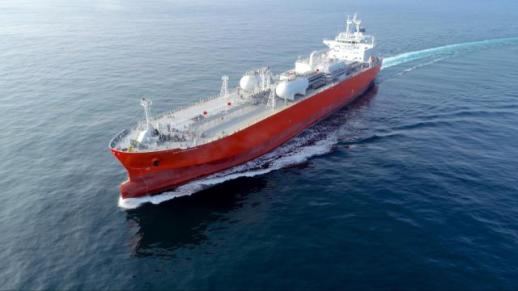 South Korea’s Big 3 Shipbuilders Win $1.1B in Energy Vessel Orders in One Day South Korea’s three major shipbuilders won about 1.5 trillion won ($1.1 billion) in combined orders within a day, reflecting a broader mix of vessel types and customers, industry officials said. Analysts said the deals point to growth beyond ship orders into a wider market for energy transport and storage infrastructure. According to the industry on May 5, HD Korea Shipbuilding & Offshore Engineering, Hanwha Ocean and Samsung Heavy Industries each secured orders a day earlier from shipowners in different regions for energy-related vessels. HD Korea Shipbuilding & Offshore Engineering won an order from KSS Shipping for three very large gas carriers, or VLGCs, worth about 500 billion won. VLGCs, which transport LPG, are seen as a steady-demand segment as global gas trade expands. Hanwha Ocean secured an order worth about 500 billion won from an Africa-based shipowner for three very large ammonia carriers, or VLACs. Ammonia is drawing attention as a next-generation carbon-free fuel, and demand for transport is expected to grow. Samsung Heavy Industries signed a contract worth about 480 billion won with an Asia-based shipowner to build one floating storage and regasification unit, or FSRU. An FSRU stores LNG and converts it back into gas for supply, serving as an offshore terminal that can be built faster than an onshore terminal. It is also widely used as a tool to respond to power supply needs. The latest orders are notable not only for the range of vessel types but also because customers now include Africa, a sign that energy demand is spreading more broadly across regions rather than concentrating on specific fuels or markets, the industry said. With power demand rising alongside the spread of artificial intelligence data centers, demand for LNG-based power generation is increasing, while transport demand for other fuels such as LPG and ammonia is also growing. As a result, shipbuilders are expanding from transport vessels into parts of offshore storage and supply facilities. Clarksons Research said its newbuilding price index, a benchmark for ship prices, has recently climbed above 180 and continues to rise. The trend suggests a seller’s market is becoming entrenched as shipbuilders, backed by solid order backlogs, focus on high value-added vessels. The high per-ship prices in the latest deals have fueled assessments that the three shipbuilders are moving into a phase of higher-quality growth centered on energy-related vessels. “Domestic shipbuilders are widening their order portfolios around high value-added ships,” an industry official said. “After selective ordering strategies were reflected in strong results, we expect the trend of improving profitability to continue.”* This article has been translated by AI. 2026-05-05 18:03:17
 -
 L&F posts 118.9 billion won Q1 operating profit on higher high-nickel shipments L&F said in a regulatory filing on April 30 that it posted first-quarter 2026 revenue of 735.2 billion won and operating profit of 118.9 billion won. Revenue rose 19% from the previous quarter and 102% from a year earlier. Operating profit increased 44% from the prior quarter and swung to a profit from a year earlier. The company attributed the improvement to higher shipments of high-nickel products that lifted utilization, along with higher selling prices and a favorable exchange rate. It also cited the impact of inventory valuation reversals as raw material prices rebounded. L&F said shipments of its high-nickel products set a quarterly record for the third straight quarter, helped by sole supply of its ultra high-nickel products and expanding shipments of a new 46-pi product that began shipping late last year. Overall product shipments in the first quarter rose about 12% from the previous quarter, about double the volume guidance the company presented at the start of the year. CFO Ryu Seung-heon said, "The first quarter clearly showed improved earnings as high-nickel volume growth and higher selling prices appeared at the same time." He added, "In the second quarter, we will continue stable performance improvement based on rising shipments, while diversifying our business portfolio through a two-track NCM+LFP strategy and steadily strengthening our mid- to long-term growth foundation."* This article has been translated by AI. 2026-04-30 17:18:16
 -
 Samsung Heavy Industries Q1 2026 Operating Profit Jumps 122% to 273.1 Billion Won Samsung Heavy Industries said it extended its first-quarter earnings improvement on a larger share of higher-margin vessels. The company on Wednesday reported preliminary first-quarter 2026 results of 2.9023 trillion won ($2.9 trillion won) in revenue and 273.1 billion won in operating profit, according to a regulatory filing. Revenue rose 16% from a year earlier, while operating profit surged 122%. In shipbuilding, a higher proportion of construction for high-margin vessels such as LNG carriers, along with a strategy to diversify global production, supported results, the company said. In offshore operations, revenue also increased as work accelerated on FLNG projects including Malaysia’s ZLNG, Canada’s Cedar and Mozambique’s Coral. On that trend, Samsung Heavy said it expects to meet its annual revenue target of 12.8 trillion won. A company official said revenue is expected to rise further starting in the second quarter as production volumes increase. The official added the company will strengthen a stable profit structure based on an order backlog secured for more than three years.* This article has been translated by AI. 2026-04-30 16:27:46
 -
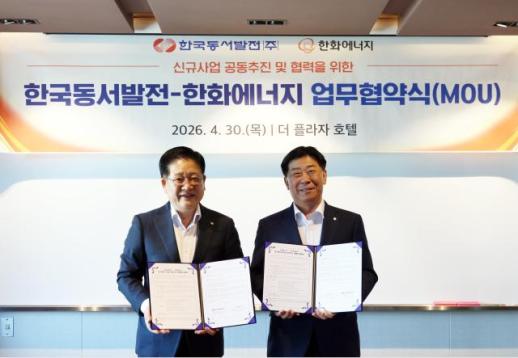 Hanwha Energy, Korea East-West Power Sign MOU on Distributed Power Projects Hanwha Energy Co. and Korea East-West Power Co. said April 30 they signed a memorandum of understanding to jointly cooperate on power development projects, including distributed energy. The agreement is aimed at expanding cooperation in power projects tied to industrial complexes and distributed energy, drawing on both companies’ experience and capabilities in power generation development. Under the MOU, the companies said they plan to work together on power development projects at major domestic industrial complexes and in distributed energy; cooperate on government policy programs such as RE100 industrial complexes and clean hydrogen power generation; identify and attract new energy-intensive demand, including from AI-related advanced industries; and coordinate on permitting for new power projects. They also said they will jointly review ways to build a distributed energy model centered on industrial complexes, based on a structure in which energy is consumed where it is produced. In addition, the companies said they will continue cooperation on energy operations linking renewable energy, distributed power sources and combined heat and power, and on the potential application of low-carbon generation technologies such as hydrogen co-firing. Hanwha Energy will handle project development, including fuel supply, securing demand and sites, and planning business models, the companies said. Korea East-West Power will provide technical support and operational cooperation based on its operating experience and technical capabilities. “This cooperation will serve as an opportunity to lay the groundwork for collaboration on power development projects centered on industrial complexes,” Hanwha Energy CEO Lee Jae-gyu said. “Through cooperation with Korea East-West Power, we will continue to identify new business opportunities.” Korea East-West Power President Kwon Myung-ho said it was meaningful to build a cooperative relationship with Hanwha Energy to develop the distributed energy market. “Based on the two companies’ expertise and experience, we will strengthen competitiveness and continue to identify new opportunities in future energy markets, including distributed energy,” he said.* This article has been translated by AI. 2026-04-30 16:26:36